Tag: CO2

  • Building envelope as a living CO₂ filter

    Building envelope as a living CO₂ filter

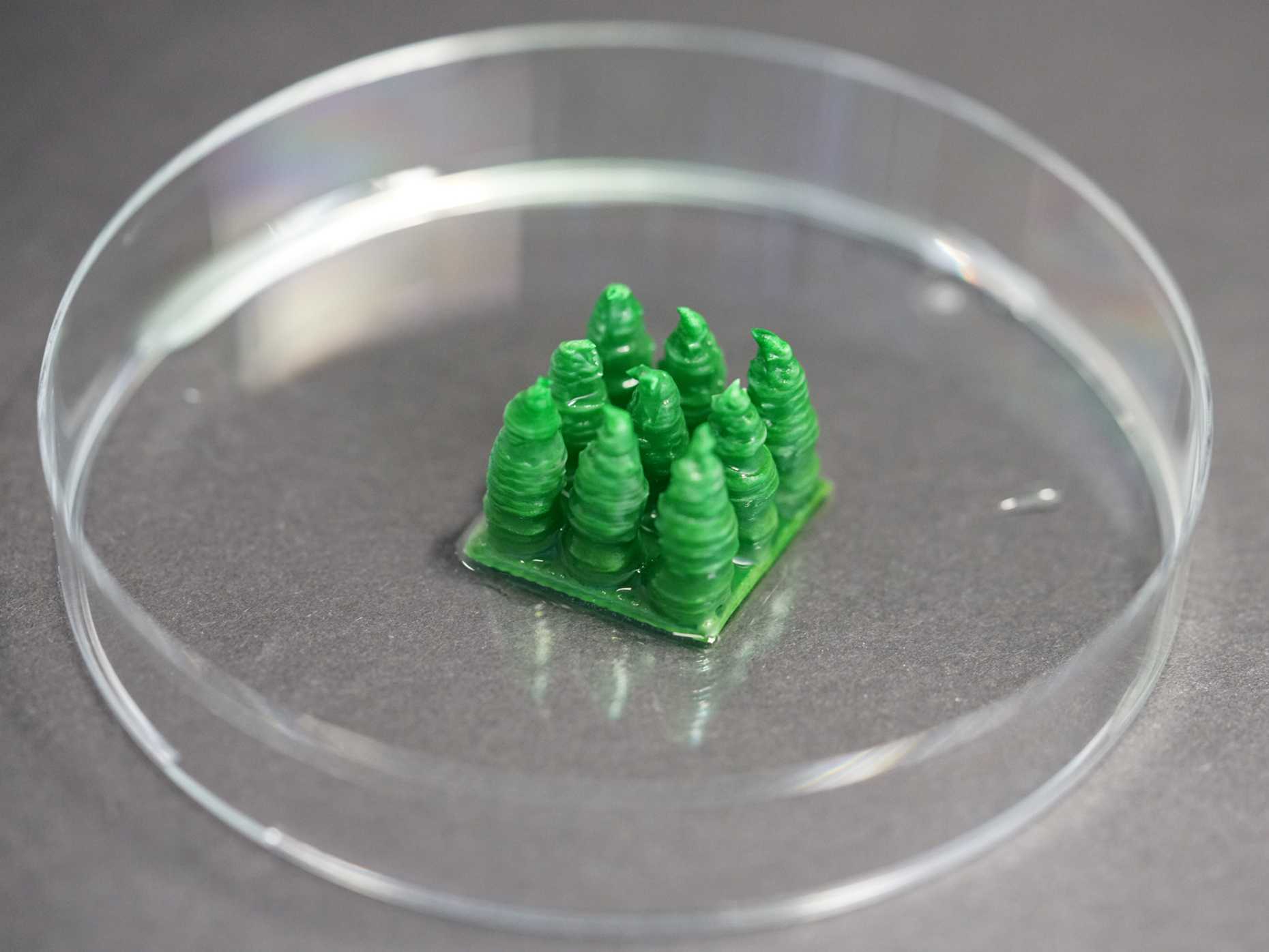
    The construction sector is considered one of the biggest sources of CO₂ emissions worldwide. Researchers at ETH Zurich are now pursuing a radically different approach. They have developed a living, organic building material that actively binds carbon dioxide from the atmosphere during its lifetime. Inside this material live cyanobacteria, also known as blue-green algae, which produce biomass via photosynthesis and also form carbon-containing minerals.

    The innovation combines biology, material science and 3D printing to create a promising concept for climate-neutral construction. The material is not only functional, but also structurally customisable. It can be moulded into freely selectable shapes, is lightweight and only requires sunlight, CO₂ and artificial seawater to grow.

    3D printing with photosynthesis in the system
    The project is led by Mark Tibbitt, Professor of Macromolecular Engineering at ETH. Together with his interdisciplinary team, he has succeeded in developing a hydrogel that stably coats the sensitive cyanobacteria and makes them printable at the same time. The result is a biologically active system that is architecturally mouldable and at the same time continuously binds CO₂.

    The double binding effect is remarkable. The material stores carbon both in the growing biomass of the bacteria and in the form of stable minerals. This creates a permanent carbon store that can potentially significantly reduce the carbon footprint of buildings.

    From the laboratory to the built environment
    The researchers see the primary area of application in the future in the building sector, for example as a façade coating. In contrast to conventional building materials, which cause emissions, this material could absorb CO₂ throughout its entire life cycle.

    Its implementation in architectural formats has already been tested at renowned platforms such as the Venice Biennale and the Triennale in Milan. The experience gained there shows that the concept can prove itself not only in the laboratory, but also in an architectural context.

    Potential for urban cycles
    The material is more than just an ecological experiment. It could become part of future urban material cycles. By not only housing users, but also serving as biological CO₂ sinks, buildings open up a new chapter in climate-conscious architecture.

    The ETH researchers’ findings have been published in the journal Nature Communications. An indication of the scientific relevance and level of innovation of the development. Now it is time to take the next steps towards scalability and long-term stability.
  • Building materials without CO₂ – the change in the industry has begun

    Building materials without CO₂ – the change in the industry has begun

    The construction industry is one of the largest CO₂ emitters in the world. It accounts for around 37 per cent of energy-related emissions. A significant proportion with enormous potential for improvement. The production of conventional materials such as cement, steel and glass is particularly problematic, as their manufacture involves high energy consumption and CO₂ emissions. Cement alone causes eight per cent of global CO₂ emissions – more than all international air traffic.

    But the industry is beginning to rethink. New technologies are enabling materials that are more resource-efficient, durable and climate-friendly. Recycled concrete, alternative binders and CO₂-negative bricks are already demonstrating today what could become the standard tomorrow. This shows that sustainability does not have to be at odds with stability, quality or cost-effectiveness.

    Innovation from Switzerland
    The ETH spin-off Oxara is pursuing a particularly visionary approach. The Zurich-based company has developed a patented process that converts mineral waste from the construction industry into cement-free, low-CO₂ building materials. Oxara’s so-called Earth Concrete reduces energy requirements by up to 80 per cent and CO₂ emissions by around 90 per cent. The new “Oulesse” product replaces traditional cement with an innovative mixture of mineral salts and recycled materials such as bricks and concrete. This not only significantly reduces emissions, but also represents an important step towards a circular economy in the construction industry.

    Oxara’s innovations prove that sustainable construction is scalable and economically viable. At the same time, they promote a new understanding of material use, in which not only the building material counts, but also its origin, life cycle and deconstructability.

    The value of natural building materials
    Traditional materials such as wood are also experiencing a renaissance. However, in a new technological form. Cross laminated timber, composite systems and hybrid constructions make wood a high-performance building material with excellent climatic properties. Every cubic metre used binds around one tonne of CO₂, which massively improves the carbon footprint. At the same time, new production techniques ensure maximum load-bearing capacity, even in multi-storey buildings.

    Other promising approaches include sand-lime bricks or CO₂-negative bricks, which actively bind carbon. This shows that stone-based building materials can also have their place in a sustainable future if they are further developed accordingly.

    From trend to obligation
    Sustainable building has long been more than just an image factor. It is increasingly becoming a regulatory and economic necessity. Building owners, planners and investors are under growing pressure to assume ecological responsibility and promote innovative solutions. At the same time, demand for low-emission construction projects is growing, both among institutional investors and end customers.

    The sector has the opportunity to move from being a climate problem to a climate solution. The technologies are available, the expertise is growing and the pressure to act is real. It is up to the players in the construction and property industry to seize this opportunity for the market, society and future generations.

  • Comparison of differences in life cycle assessments for building products

    Comparison of differences in life cycle assessments for building products

    The company conspark has published a fact sheet that highlights the differences between the EU and Swiss accounting rules for construction products. It is now available for download in German and English and is intended to provide a compact guide for construction industry professionals involved in planning, production and sustainability. After all, the life cycle assessment results of building products form the basis for the future assessment of buildings.

    In Switzerland, the Coordination Conference of Building and Property Bodies of Public Building Owners (KBOB) specifies accounting rules for the life cycle assessment of construction products and publishes these results in the list of life cycle assessment data in the construction sector. In the EU, life cycle assessments are drawn up in accordance with EN 15804 A2 and their results are presented as environmental product declarations (EPDs).

    For comparison purposes, the life cycle assessment of different types of recycled concrete was prepared in accordance with the two standards. This showed that the greenhouse gas emissions and energy requirements of the same concrete vary greatly depending on the standard, with the KBOB life cycle assessment showing higher values in each case. According to conspark, this is due to the background data sets used: The EPD life cycle assessment is based on more up-to-date data, which already takes into account technological advances such as lower clinker content and the increased use of alternative fuels.

    “The comparability of life cycle assessment data plays a decisive role for future regulations and CO2 limits,” said the Managing Director and co-author of this factsheet, Florian Robineck, in a press release. Accordingly, the authors of the factsheet recommend: “A regular update of the KBOB background data sets and greater harmonisation of the two approaches would help to reduce existing differences and enable comparable sustainability assessments.”

  • Research into concrete as a carbon sink

    Research into concrete as a carbon sink

    Researchers at the Swiss Federal Laboratories for Materials Science and Technology(Empa) want to remove large quantities of excess carbon dioxide from the atmosphere with the Mining the Atmosphere working group. According to a press release, 5 to 10 billion tonnes of carbon could be used annually as concrete aggregate. This would be enough to permanently store the excess CO2 within 100 years after the energy transition and thus bring the atmosphere back to a climate-friendly level. This is estimated to be 400 billion tonnes of carbon or the equivalent of around 1500 billion tonnes of CO2.

    However, surplus renewable energy is needed to realise this. This is the only way to convert the carbon dioxide into methane or methanol and then process it into polymers, hydrogen or solid carbon. “These calculations are based on the assumption that sufficient renewable energy will be available after 2050,” Pietro Lura, Head of Empa’s Concrete and Asphalt Department, is quoted as saying in the press release.

    However, the amount of building materials required worldwide far exceeds the surplus carbon in the atmosphere. “Even if sufficient renewable energy is available, the key question remains as to how these huge amounts of carbon can be stored in the long term,” Lura continues. The researchers see one approach here in the production of silicon carbide, which can be used as a filler in building materials and the production of asphalt. This should bind the carbon in the long term and have excellent mechanical properties. However, Lura describes the production process as extremely energy-intensive. Production still requires considerable material and processing research in order to make it economically viable.

  • How wood can be better utilised

    How wood can be better utilised

    Switzerland is aiming for net zero by 2050. Wood plays a key role in this endeavour. It binds CO₂ from the atmosphere, is versatile and offers sustainable alternatives to fossil fuels. But how much wood is actually available for construction, industry or energy generation? Researchers from Empa and WSL have provided the answers by analysing the material flows of wood in Switzerland in detail for the first time as part of the SCENE project.

    For their analysis, the researchers used data from 21 different sources for the year 2020, from wood harvesting to disposal. “In contrast to other studies, which often only use modelled values, we were able to draw on real data,” explains Nadia Malinverno from Empa. The effort paid off, as the study provides a precise picture of the entire wood flow in Switzerland.

    Recycling potential and the correct use of wood
    Only eight per cent of wood is currently recycled, compared to around 70 per cent for paper. In addition, 40 per cent of the wood harvested each year is used directly as fuel. “This is not ideal from an ecological point of view,” emphasises Claudia Som, co-author of the study. In order for wood to fulfil its role as a CO₂ store, it should be used as a material for as long as possible.

    The researchers’ vision is cascade utilisation
    Here, wood is first processed into durable products such as beams and boards that remain in the construction industry for as long as possible. Only after repeated use is the wood further processed into wood chips or fibres before it is finally burned. “Wood should only be used as an energy source when it is no longer usable as a material,” explains Som.

    The path to sustainable wood flows
    As part of the SCENE project, the researchers want to investigate more closely in future which uses of wood make the most ecological and economic sense. They are focussing on specific material flows. In what form is the wood available? How is it processed? Where is there potential for optimisation?

    “The sustainable use of wood is a key component of the energy transition,” says Malinverno. “Our work shows that Switzerland still has many untapped opportunities here, both in terms of climate protection and resource efficiency.”

  • 101. immoTable – Geneva economic area

    101. immoTable – Geneva economic area

    [smartslider3 slider=”16″]

    The 101st immoTable, the renowned event for the property industry at Signatur Rhône in Geneva, focused on important topics that will have a significant impact on the future of the property world. From sustainable spatial development and geothermal energy as part of the energy transition to health risks in water and legal issues relating to renovations in Geneva, the event provided a comprehensive platform for dialogue on current challenges and innovations in the sector.

    The Director of the Department of Territory of the Canton of Geneva, Marta Alonso, presented pioneering urban development and spatial planning projects. By 2060, over 12,000 new residential units, 6,000 workplaces, schools, a large park and revitalised river areas are to be built on an area of 230 hectares. Modern visualisation techniques and 3D models enable a transparent presentation of the development scenarios.

    David Faehndrich, Head of the Western Switzerland division at EKZ Contracting SA, emphasised the role of sustainable and economical energy supply systems. Several important projects have already been realised, such as the geothermal energy supply for the new flats in the “Jardins du Bourg” in Châtel-St-Denis. These measures reduce CO₂ emissions and promote the energy transition.

    In his presentation, Pierre Descloux, CEO of Dipan SA, emphasised the importance of treating hydraulic systems, particularly with regard to rust, limescale and legionella. He emphasised the importance of ensuring the hygiene and efficiency of these systems.

    Cosima Trabichet-Castan, a specialist in property law at MLL Legal, spoke about the challenges of obtaining planning permission and complying with local building regulations. She also spoke about the complex regulatory requirements in Geneva, which according to a recent UBS study has the longest waiting times for building permits in Switzerland. Her presentation highlighted the importance of integrating sustainable practices in this context-rich regulatory environment.

    Fabio Nairi from IWG Switzerland spoke about measures to reduce commuting times and CO₂ emissions as well as the transition to hybrid working models.

    The 101st immoTable once again proved why the event is one of the top platforms for the property industry. The topics discussed are of key importance for the future development of the industry and offer valuable solutions for current challenges.

    Further information on the event and future dates can be found at www.immotable.ch

  • Green cities as trailblazers for global climate impact

    Green cities as trailblazers for global climate impact

    The MCC study, published in the journal Nature Cities, highlights four key methods of CO2 removal in urban environments that could sequester one gigatonne of CO2 annually by the middle of the century. The methods analysed include adding biochar to cement, increasing the use of wood in construction, enriching urban soils with biochar and installing CO2 filters in commercial buildings. Together, these approaches could make a significant contribution to achieving net-zero urban emissions.

    Urban strategies for the climate and more
    Quirina Rodriguez Mendez, PhD student at the MCC and lead author of the study, emphasises that these techniques are of great benefit not only in terms of climate protection, but also for environmental quality and well-being in cities. For example, the use of special colour pigments and surface materials to improve the reflectivity of urban surfaces could significantly lower the temperature in cities and reduce the energy required for air conditioning systems.

    Local actions with a global impact
    The study emphasises the role of cities as “test laboratories” for climate protection, where local measures can be implemented quickly and potentially scaled up globally. Felix Creutzig, head of the MCC working group and co-author of the study, emphasises that local climate solutions, although often underestimated, can have an impressive impact and improve quality of life. The research findings offer important insights and recommendations for policymakers shaping urban infrastructure and policies.

  • Implenia kooperiert mit Empa und Eawag für NEST-Projekt „Beyond Zero“

    Implenia kooperiert mit Empa und Eawag für NEST-Projekt „Beyond Zero“

    Implenia, ein führender Anbieter im Schweizer Bau- und Immobilienmarkt, hat sich mit der Empa und Eawag zusammengeschlossen, um an der Planung und Errichtung einer neuen NEST-Unit namens „Beyond Zero“ mitzuwirken. Diese Einheit soll mehrheitlich aus CO2-reduzierten und CO2-negativen Baumaterialien bestehen, die während des gesamten Lebenszyklus von Gebäuden und Infrastrukturen getestet und bewertet werden. Zu den innovativen Materialien zählen unter anderem Wärmedämmstoffe und Zement, die CO2 aus der Luft binden, sowie lehmbasierte Mauersteine, die ohne Brennvorgang auskommen.

    Die Partnerschaft mit NEST unterstreicht Implenia’s Engagement in der Nachhaltigkeit. Das Unternehmen wurde bereits für seine nachhaltigen Bestrebungen von verschiedenen Organisationen wie Sustainalytics, Ecovadis und MSCI anerkannt. Jens Vollmar, Head Division Buildings bei Implenia, betont die Bedeutung dieser Kooperation für das zukünftige Bauwesen und die nachhaltige Entwicklung der Branche. Die gewonnenen Erkenntnisse sollen in alle Divisionen von Implenia einfließen, einschließlich in der Bewirtschaftung durch Wincasa und im nachhaltigen Immobilienportfolio von Ina Invest.

    Prof. Dr. Tanja Zimmermann, Direktorin der Empa, sieht in der Partnerschaft ein großes Potenzial für die praxisnahe Anwendung nachhaltiger Innovationen. Bereits realisierte Projekte auf dem Empa Campus in Dübendorf, wie ein Labor- und Bürogebäude sowie das erste Parkhaus in Holz-Hybridbauweise in der Schweiz, zeigen die Fortschritte in der nachhaltigen Bauweise. Diese neue Kooperation soll den Transfer innovativer Baumaterialien in die Praxis weiter vorantreiben und den Weg für zukunftsträchtige Anwendungen im Bauwesen ebnen.

  • Ecospeed simplifies energy accounting for buildings

    Ecospeed simplifies energy accounting for buildings

    Ecospeed, the Zurich-based software developer specialising in environmental accounting, has integrated new functions into its software. According to a media release, these were developed as part of a relaunch of the Enercoach software and will be available to the company’s customers before the end of the year.

    The software shows users the energy status of buildings and provides an accurate picture of the development of consumption, emissions and costs over a certain period of time. Until now, when calculating the consumption of electricity, heating oil, gas and district heating, the difficulty arose that the accounts did not follow the course of the calendar year. With the software renewal, this problem is to be solved and the calculation simplified.

    “You simply enter the raw data in the corresponding mask, i.e. the current meter reading or the consumption value and the date of recording,” Thomas Herzberger, managing director of Ecospeed, is quoted as saying in the statement. “The software converts the values to the calendar year.”

    Thus, an exact comparison including descriptive visualisation is possible. The data can be displayed in the form of tables, graphs and over a period of several years. Likewise, the effectiveness of improvement measures can be precisely determined.

  • 10 million Swiss francs in funding for concrete recycling technology

    10 million Swiss francs in funding for concrete recycling technology

    Almost 40% of global CO2 emissions are attributable to the construction and building sector. Around 30 billion tonnes of concrete are produced worldwide every year and demand continues to rise. The binding agent cement and the composite material concrete are important building materials – but their production contributes to climate change. Estimates suggest that the cement industry alone is responsible for more than 8% of global greenhouse gas emissions. With reCO2ver® Sika has developed an innovative technology that enables complete recycling of concrete demolition material and is unique in the concrete industry.

    17,000 tonnes of CO2 storage in concrete demolition material by the end of 2030

    Sikas not only processes old concrete into the high-quality individual components gravel, sand and cement stone, but can also bind additional CO2 thanks to a chemical process. Approximately 15 kilogrammes of CO2 can be permanently stored per tonne of demolition material. In addition, the performance of the cement paste powder produced in the process is optimised by Sika additives

    Additives and can thus be used again as a cement substitute in concrete production. A pilot plant has been in operation in Switzerland since October 2021 – the test phase has now been successfully completed.

    In order to be able to provide standardised proof of the plants’ added climate value, Sika is developing a climate protection programme together with South Pole in accordance with the specifications of the Swiss Federal Office for the Environment (BAFU). A significant milestone has now been reached with regard to the implementation and use of this technology for CO2 capture and storage: the Swiss Climate Cent Foundation guarantees the purchase of CO2 certificates from this programme of initially CHF 10 million until the end of 2030.

    The implementation of the industrial plants is a central component of the certified climate protection programme. By the end of 2030, around 17,000 tonnes of CO2 are to be stored in concrete demolition material. This is roughly equivalent to the amount of CO2 released during the construction of 850 single-family houses made of concrete. Philippe Jost, Head Construction Sika: “With our innovative strength and our sustainable technologies, we enable our customers in the construction and automotive industries to reduce their ecological footprint and make the transition to more sustainability. We are very pleased that the reCO2ver® technology is being specifically promoted. We are convinced that through the programme we are creating great added value for the construction industry, the environment and for future generations.”

  • With microorganisms against the winter power shortage

    With microorganisms against the winter power shortage

    The joint study by Energie 360° and partners now shows that implementation is possible and economically interesting if existing gas storage facilities are used. These exist in Switzerland’s neighbouring countries. To this end, Switzerland must agree on rules for the import of renewable gas with its neighbouring countries. In geo-methanisation, surplus renewable energy, for example solar power, is converted into hydrogen (H2) in summer. This is injected into a natural underground storage facility together with CO2, which comes from biogas plants, for example. At a depth of more than 1000 metres, microorganisms – primeval bacteria known as archaea – combine hydrogen and carbon to form renewable methane gas (CH4). In winter, when the demand for electricity and heat is high, the renewable gas can be stored and used in a variety of ways.

    Realisation possible in nearby countries
    The research project “Underground Sun Conversion – Flexible Storage” (USC-FlexStore) by Energie 360° and the Austrian energy storage company RAG Austria AG investigated technical, operational, economic, ecological and regulatory aspects of the innovative process. The University of Bern, Empa and the University of Applied Sciences of Eastern Switzerland collaborated as Swiss research partners. The results of the project now show that such storage facilities are feasible – ideally, for economic reasons, where storage facilities already exist, for example in the Austrian Pilsbach.

    Enormous potential for energy demand in Switzerland
    The existing and good international cooperation on energy supply issues remains central. Thus, the existing infrastructure, i.e. the European gas grid, can be used and the stored energy can be used as renewable gas or electricity for industrial processes and peak load coverage, for example. Jörg Wild, CEO of Energie 360°: “The potential is enormous: annually, renewable energy of several terawatt hours can be stored seasonally with this process. This will substantially alleviate the winter electricity shortfall in Switzerland.” However, a prerequisite for the use of winter energy is that Switzerland concludes binding regulations with its neighbouring countries for the purchase of renewable gases.

    Energie 360° is examining participation in the project
    In a next step, Energie 360° wants to deepen the expertise it has gained for geo-methanisation and storage and to contribute its know-how to future projects in Switzerland and internationally. In addition, the company is looking into participating in a renewable gas storage project in a neighbouring country.

  • Neustark inaugurates its largest CO2 storage facility

    Neustark inaugurates its largest CO2 storage facility

    Neustark, a pioneer in the permanent removal of carbon from the atmosphere, is launching its largest ever facility for storing CO2 in demolition concrete. It has been built in Biberist on the demolition site of a paper mill and was planned together with the two demolition recycling and concrete production companies Alluvia AG and Vigier Beton, according to a media release. The two companies operate the facility.

    The Bern-based company, which was spun out of the Swiss Federal Institute of Technology Zurich in 2019, is tackling the world’s largest waste stream with its technology: Neustark has developed a technology and a value chain that transforms demolition concrete into a carbon sink.

    To do this, the company works with biogas plants to capture CO2 there. It is then transported to nearby storage facilities where the CO2 is injected into the granules of demolition concrete. This triggers a mineralisation process. In the process, the CO2 is converted into limestone and thus permanently bound to the granulate. Recyclers can reuse the granulate enriched in this way according to the usual process.

    “Neustark was the first company to demonstrate in practice that permanent CO2 storage through mineralisation in concrete demolition makes economic and ecological sense,” founder and co-CEO Johannes Tiefenthaler is quoted as saying. In its first months of operation, Neustark says it has already permanently removed more than 300 tonnes of CO2. The goal is to reach at least 1 million by 2030. Further plants are currently being built in Germany, Austria and France. Clients include UBS, Microsoft and Verdane.

  • Energie 360° wants to store summer electricity underground with methane

    Energie 360° wants to store summer electricity underground with methane

    In a new study, the energy service provider Energie 360° has highlighted geo-methanisation as a way to store surplus electricity in summer for use when there is a shortage of electricity in winter. According to a media release, the study, conducted together with the energy storage company RAG Austria AG in Vienna, focuses on the economic use of this method.

    In geo-methanisation, surplus renewable energy, such as solar power, is converted into hydrogen (H2) in summer. This is injected into a natural underground reservoir together with CO2, which comes from biogas plants, for example. At a depth of more than 1000 metres, microorganisms combine hydrogen and carbon to form methane gas (CH4). In winter, when the demand for electricity and heat is high, the renewable gas can be stored and used in a variety of ways, according to the technical explanation in the press release.

    The University of Bern, the Swiss Federal Laboratories for Materials Testing and Research (Empa) and the OST – Ostschweizer Fachhochschule (University of Applied Sciences of Eastern Switzerland) collaborated on the Underground Sun Conversion – Flexible Storage (USC-FlexStore) research project by Energie 360° and RAG Austria. The joint study shows that implementation is possible and economically interesting if existing gas storage facilities are used. These exist in Switzerland’s neighbouring countries, such as Pilsbach in Austria.

    “The potential is enormous: annually, renewable energy of several terawatt hours can be stored seasonally with this method. This will substantially alleviate the winter electricity shortfall in Switzerland,” Jörg Wild, CEO of Energie 360°, is quoted as saying. The prerequisite is that Switzerland concludes binding regulations with its neighbouring countries for the purchase of renewable gases.

  • Kone wants to promote sustainable construction

    Kone wants to promote sustainable construction

    More than a quarter of all CO2 emissions are caused in the construction industry, Kone informs in a press release. This is where the globally active manufacturer of lifts and escalators wants to contribute to remedying the situation. To this end, the Kone subsidiaries in Switzerland, Germany and Austria, together with Martin Pfeiffer from the University of Hanover, have developed a comprehensive guideline for a sustainable construction and maintenance industry. The white paper “Green Buildings” shows enormous potential for reducing emissions in all phases of a building, writes Kone.

    As examples, the communication mentions recycled building materials and the deconstruction of buildings in line with the circular economy. In addition, low-waste prefabricated building components are recommended, which can be used again after deconstruction. In general, the motto is dismantling instead of demolition.

    Kone also pays attention to sustainability in its own core business. For example, the lift manufacturer relies on energy recovery for its lift systems and reduces malfunctions with the help of the use of artificial intelligence during maintenance. “With the white paper, we want to show that sustainability in the building sector has many different facets and must be thought about and lived in all construction and operating phases,” Petru Huurinainen, Managing Director of Kone Austria and Switzerland, is quoted as saying in the press release. That is why Kone not only installs CO2-free lifts, but also maintains them in a CO2-neutral manner and dismantles them in a circular economy-friendly manner. “The publication is intended to broaden the horizon to the green buildings of tomorrow.”

  • Plant-based insulation as a CO2 sink?

    Plant-based insulation as a CO2 sink?

    The building sector is responsible for 40% of global energy consumption, 30% of greenhouse gas emissions and 36% of waste in the EU. Energy efficiency measures have reduced emissions in operations. Material production remains an underestimated source. “Grey” emissions from modern buildings are comparable to operational emissions. Building materials that sequester CO2 over the long term reduce the ecological footprint.

    How CO2 can be sequestered in the long term
    Empa is developing new insulation materials for buildings that can sequester CO2 in the long term. Plant waste products from agriculture and forestry are processed into insulating materials and fixed during a heat treatment. This “plant carbon” remains fixed during the life of the building and can be directly introduced into fields when the building is deconstructed, where it increases the fertility of the soil and remains stable. This is in contrast to other building materials, such as wood or cellulose insulation, which release the stored CO2 when they rot or are thermally recycled.

    Physicist Wernery from Empa is conducting research with his group and the ZHAW on insulating materials made from plant carbon. The insulation material must be thermally insulating, fireproof and suitable for later use as fertiliser. Plant carbon insulation could improve Switzerland’s CO2 balance by a good 1% by replacing insulating materials such as EPS or mineral wool with plant carbon. This would save half a million tonnes of CO2 equivalents annually by avoiding emissions from the production of conventional insulation materials and by storing CO2 in the plant carbon over the long term.

    Financial support – from several sources
    Wernery receives financial support for his promising concept from funding institutions such as the Minerva Foundation, the ETH Board and the Swiss Federal Office of Energy. The climate fund from the Winterthur municipal utility has made a contribution to the development of the basic principles, which comes from voluntary contributions from customers who purchased two centimes per kilowatt hour of electricity.

  • Dormakaba supplies Hörmann with CO2-neutral products

    Dormakaba supplies Hörmann with CO2-neutral products

    The companies dormakaba in Rümlang and Hörmann in Steinhagen, Germany, have agreed to cooperate in the area of sustainability. According to a media release, Hörmann will purchase CO2-neutral products from dormakaba Germany from 1 June 2023. This measure is an important step in the climate protection commitment of the door and gate manufacturer Hörmann, it continues.

    The company Hörmann wants to strengthen its climate protection commitment, it says in the press release. The company is aware that emissions in the upstream or downstream supply chain are the most difficult to influence. However, this area, known as Scope 3, accounts for the largest share of all emissions. For this reason, Hörmann also wants to include suppliers and partners in its climate protection commitment. In dormakaba, Hörmann has found a partner who is considered a pioneer in sustainability in the industry.

    “With this step, we at dormakaba are sending a clear signal of how important the topic of sustainability is to us and are taking responsibility as a company,” Michael Hensel, Managing Director of dormakaba Deutschland GmbH in Ennepetal, is quoted as saying.

    “Our long-standing partner dormakaba is already known as a pioneer in the industry in the field of sustainability and climate protection,” Martin J. Hörmann, personally liable partner of the Hörmann Group, is quoted as saying. “Its achievements there have been recognised by leading bodies. We are therefore pleased that dormakaba will be supplying all products with an environmental product declaration in a CO2-neutral manner from 01.06.2023.”

  • Dormakaba supplies Hörmann with CO2-neutral products

    Dormakaba supplies Hörmann with CO2-neutral products

    The companies dormakaba in Rümlang and Hörmann in Steinhagen, Germany, have agreed to cooperate in the area of sustainability. According to a media release, Hörmann will purchase CO2-neutral products from dormakaba Germany from 1 June 2023. This measure is an important step in the climate protection commitment of the door and gate manufacturer Hörmann, it continues.

    The company Hörmann wants to strengthen its climate protection commitment, it says in the press release. The company is aware that emissions in the upstream or downstream supply chain are the most difficult to influence. However, this area, known as Scope 3, accounts for the largest share of all emissions. For this reason, Hörmann also wants to include suppliers and partners in its climate protection commitment. In dormakaba, Hörmann has found a partner who is considered a pioneer in sustainability in the industry.

    “With this step, we at dormakaba are sending a clear signal of how important the topic of sustainability is to us and are taking responsibility as a company,” Michael Hensel, Managing Director of dormakaba Deutschland GmbH in Ennepetal, is quoted as saying.

    “Our long-standing partner dormakaba is already known as a pioneer in the industry in the field of sustainability and climate protection,” Martin J. Hörmann, personally liable partner of the Hörmann Group, is quoted as saying. “Its achievements there have been recognised by leading bodies. We are therefore pleased that dormakaba will be supplying all products with an environmental product declaration in a CO2-neutral manner from 01.06.2023.”

  • Daetwyler relies on solar power

    Daetwyler relies on solar power

    Nine of Daetwyler ‘s 27 production sites already cover their electricity needs entirely from renewable energy sources, the Uri-based industrial group says in a statement. Most of the energy is sourced from local electricity suppliers. However, Daetwyler also produces its own solar power for self-consumption at six locations.

    A start was made in 2021 on the roofs of the Indian plant in Kesurdi. Some 8000 square metres of solar panels installed there will reduce the Group’s CO2 emissions by 1500 tonnes annually, Daetwyler writes. Last year, another five production sites in Switzerland, Italy and Germany were equipped with photovoltaic systems. In total, the systems at the six sites are expected to supply around 4.4 gigawatt hours of solar power annually for Daetwyler’s own consumption.

    The switch to electricity from renewable sources, combined with measures to improve energy efficiency, has led to a 4.7 percent reduction in CO2 emissions in 2022 compared with the previous year. Daetwyler aims to achieve climate-neutral production worldwide by 2030. To this end, the Group is currently examining further projects, such as the installation of solar cells on the façade of the plant in Schattdorf UR. Daetwyler also intends to increase the share of electricity from renewable sources at the sites of Xinhui and QSR, acquired in 2022.

  • Five technologies on the way to net zero

    Five technologies on the way to net zero

    The TA-Swiss study aims to inform policy-makers and the public about the opportunities, limits and risks of different methods for CO2 extraction and storage. Aspects such as feasibility, climate effectiveness, costs, resource consumption and impacts on the environment and population were considered.

    The five technologies are:

    • the storage of CO2 as biomass in forests and the use of wood
    • storage in the form of humus in the soil and the use of plant carbon
    • capture and storage of CO2 from biomass combustion (BECCS)
    • removal from the air and storage (DACCS)
    • the accelerated weathering of demolition concrete and rock (carbonation)

    Each of the five NETs was assessed based on the current state of knowledge and with the help of expert interviews. Potential opportunities, risks, synergies and conflicts were identified and considered from a system perspective. Based on this, general and specific, technology-related options for action and recommendations were derived and reflected on together with selected stakeholders.

    The most important general recommendations of the study
    In order for NET’s contribution to the net-zero target to be implemented in an environmentally and socially compatible manner, politics and society should address the issue at an early stage. This requires in particular that the public is involved in shaping the conditions of use of NET by means of fact-based and comprehensible information.

    There is a need for an overarching strategy for the use of limited resources, such as renewable energy, water, biomass and soil, and for financing for the development and implementation of NET.

    Further research is needed to determine the potential of the different technologies.

    It must be possible to record the amount of CO2 removed from the atmosphere in the long term in a transparent and simple way to create a reliable assessment framework and avoid counting the same CO2 more than once.

    The minimum period of CO2 fixation from which a technology or NET project is recognised in terms of the Climate Strategy should be reflected.

    NETs can only be used as a supplement to the priority reduction of greenhouse gas emissions when achieving the net zero target. Therefore, it is important that separate targets apply to the reduction of CO2 emissions and to CO2 removal.

    Switzerland currently has a pioneering role in the development of NET. This competitive advantage should be further strengthened by promoting the relevant research and development, as well as demonstration projects.

  • Materials researchers work on climate-friendly concrete

    Materials researchers work on climate-friendly concrete

    A group of materials researchers led by Franco Zunino from the Institute of Building Materials at the Swiss Federal Institute of Technology Zurich is researching compositions for concrete that can significantly reduce its CO2 emissions. The world’s most important building material is responsible for up to 9 percent of man-made CO2 emissions, the Swiss National Science Foundation(SNSF) informs in a press release. It is supporting the research with an Ambizione grant for Zunino.

    The researchers are using two approaches to develop a climate-friendly concrete. The first is to reduce the particularly CO2-intensive cement content of concrete by 60 to 70 per cent. To achieve this, new types of chemical additives are used, in particular so-called polymer dispersants. In the second approach, the use of binders is reduced.

    In its research, the group is “working closely with a major cement manufacturer”, explains the SNSF. An alternative to concrete is unrealistic, according to Zunino. It would take “a forest the size of India” to replace concrete with wood. Even a completely new building material would hardly be able to establish itself “on the streets in Nigeria, where concrete is perhaps mixed together with bare hands”. With a climate-friendly concrete that is suitable for everyday use, however, “the industry would have a solution in hand to implement its CO2 targets and save CO2 taxes”.

  • Ecospeed develops software for CO2 balancing of hospitals

    Ecospeed develops software for CO2 balancing of hospitals

    Ecospeed AG will soon begin the so-called roll-out of its software for CO2 balancing of hospitals. According to a media release, the development work is almost complete. “Our goal is to provide hospitals and their operating companies with a very easy-to-use software for the overall balancing of greenhouse gas emissions,” Ecospeed CEO Christoph Hartmann is quoted as saying. “We are building an industry-specific platform for this task.”

    As Hartmann further explains, each hospital will be able to use the software “to determine its individual ‘Corporate Carbon Footprint’. This will enable hospitals to identify fields of action and plan paths for gradual decarbonisation.” It can also be used to document successes. In addition, the hospitals would comply with the future CSR reporting obligation, with which companies in the EU must disclose from 1 January 2024 how and to what extent they fulfil their responsibility with regard to their impact on society and the environment.

    The first pilot customer is a hospital association with 17 clinics in the German state of North Rhine-Westphalia. Initial results are already available. “In terms of direct emissions, there are big differences that can be attributed to the condition of the building envelope and the age and condition of the heating systems,” says Hartmann. “Scope 3 emissions, however, are significantly higher, caused in particular by purchased materials and transport. The collected and processed data give the clinics clear indications of where there is potential for improvement.”

  • Holcim sets itself more ambitious climate targets

    Holcim sets itself more ambitious climate targets

    Holcim documents the progress it has made on its climate strategy in its second climate report, which has just been published. With this report, the company, one of the world’s largest producers of building materials, also announces its accelerated climate targets, according to a media release.

    These have been updated in line with the 1.5 degree framework of the Scienced Based Targets Initiative, according to sustainability and innovation chief Magali Anderson. Holcim wants to be “a pioneer in low-carbon and circular construction”.

    According to the report, Holcim has increased its investment in green technologies by 15 per cent to 403 million Swiss francs in 2022. As a result, the group reportedly reduced its CO2 emissions per unit of net sales by 21 per cent. this is expected to increase by a further 10 percent in 2023.

    Furthermore, Holcim commits to invest a cumulative CHF 2 billion in mature technologies for capturing CO2 from the air by 2030. This should remove more than 5 million tonnes of CO2 from the atmosphere per year.

    6.8 million tonnes of construction and demolition waste recycled into new buildings. With this interim result, the company is expected to exceed its target of achieving around 10 million tonnes by 2025. “We are committed,” says CEO Jan Jenisch, “to driving low-carbon and circular construction and using buildings more sustainably to build cities that work for people and the planet.”

    This second climate report will be submitted to the General Assembly for a vote on 4 May. According to the statement, this reflects Holcim’s commitment to giving its shareholders a say in its climate strategy.

  • Save energy and CO2 when showering

    Save energy and CO2 when showering

    Hot water needs about as much energy as heating. Up to 80 percent of all hot water is needed for showering alone. But while developments to make heating more efficient and energy-saving have been in focus for years, a lot of hot water still simply flows unused down the drain. But this does not have to be the case! The new Kaldewi shower channel uses the heat of the outflowing shower water to preheat the cold fresh water on its way to the shower fitting. A heat exchanger integrated into the drain thus ensures efficient heat recovery. In the spirit of sustainability, significantly less hot water needs to be added to achieve a pleasantly warm shower temperature. This saves a lot of energy, noticeably lowers costs and reduces the CO2 footprint.

    The new shower channels were designed by the internationally renowned Studio Aisslinger and meet the highest design standards. Patented handling for easy opening and closing of the cover, great flexibility in channel positioning and the wide range of dimensions are further convincing arguments. And with exclusive colours and surfaces, the branded channel becomes a true jewel in the bathroom.

  • Flumroc will melt rock with renewable energy in future

    Flumroc will melt rock with renewable energy in future

    As part of the comprehensive renovation work, the stone wool producer is replacing its cupola furnaces, which were previously operated with coking coal, with an electric melting furnace. Flumroc AG will cover the energy requirements of the electric melting furnace entirely with certified, sustainable electricity from Swiss hydropower. With the conversion of the production process, Flumroc is reducing its CO2 emissions by 80 percent and thus massively improving its ecological footprint. “For the future, we need climate-friendly solutions in all areas – including industry. Our customers, our environment, the Flums site and our company all benefit from the renewal,” says Flumroc managing director Damian Gort. The commissioning of the plants is expected to take place in the summer of 2023. Only a small part of the total energy demand will still be covered by fossil fuels.

  • Ernst Schweizer is the energy transition maker 2022

    Ernst Schweizer is the energy transition maker 2022

    According to a press release , Ernst Schweizer AG was named Energy Transition Maker 2022 as one of eight innovations in the energy sector for its climate-optimized photovoltaic mounting system MSP project at the 8th national congress of AEE Suisse .

    The MSP mounting system developed for the positioning of solar modules creates the structural basis for the attachment of photovoltaic modules and thus for solar power production. According to the company, it can be adapted to any roof topography and uses low-emission aluminum with an above-average recycled content. This climate-optimized design promises CO2 savings of an estimated 7,400 tons in the current year compared to the EU average for the same production volume.

    Of central importance and rare in the industry is the property of the MSP system to transparently display the greenhouse gas emissions generated by the respective photovoltaic installation. "Environmentally conscious investors, architects, planners and installers can thus optimize the CO2 footprint of their construction project," it says.

    AEE Suisse is the industry's umbrella organization for renewable energies and energy efficiency and, according to its own information , represents 35,000 companies and energy suppliers from 32 industry associations.

  • UBS works with Climeworks and neustark

    UBS works with Climeworks and neustark

    UBS has entered into a long-term collaboration with Climeworks and neustark . According to the UBS press release , the two cleantech companies are to permanently remove a total of 39,500 tons of CO2 from the atmosphere for the bank. The agreement has a term of 13 years. It is intended to give Climeworks and neustark planning security and make a contribution to UBS's net-zero goal by 2025.

    Both Climeworks and neustark are spin-offs from the Swiss Federal Institute of Technology in Zurich . Both are dedicated to permanently removing CO2 from the air, but with different methods.

    Zurich-based Climeworks is now one of the so-called unicorns with a market capitalization of over CHF 1 billion. The company captures CO2 from the air at its Orca facility in Iceland, powered by renewable energy. It is then stored underground in basalt rock for thousands of years using the Carbfix method. Orca is the largest carbon capture and storage facility in the world.

    Neustark from Bern permanently stores the CO2 extracted from the air in recycled concrete. The concrete granulate enriched in this way allows the cement content in fresh concrete to be reduced and improves its climate balance by around 10 percent. This enables neustark to produce what it says is the most climate-friendly concrete in Switzerland.

    "With this commitment, UBS shows its pioneering role in the area of climate protection and hopefully inspires others to follow this example," said Valentin Gutknecht, co-founder and co-CEO of neustark. "Long-term off-take agreements are an important prerequisite for the much-needed expansion of carbon capture technologies."

  • Climate neutral by 2050

    Climate neutral by 2050

    Many homeowners cannot afford a renovation. Long-term loans are now intended to support builders who want to make their property climate-friendly but do not have sufficient financial resources or prefer to invest their money in their core business. At least that's what the state wants. Whether and how this can be done remains questionable. Because the financial institutions intended for this, such as banks and insurance companies, are hardly interested in loans with terms of more than 30 years. The federal government therefore wants to act as a security guarantor. A pilot project in Berne is now to examine whether this financing idea is realistic.

    The Zuger Energeek Group AG proposes another way. "With Energeek®, the solar panel with rental for you", she gets people to invest in solar energy, whether they own real estate or not. Energeek provides the solar panels and the real estate projects. Anyone who wants to invest can buy one or more panels online and then rent them out to a project company. Upon purchase, the buyer also benefits immediately from the one-time payment (EIV), the federal subsidy for solar systems. The panels acquired will be integrated into a larger panel network that generates electricity sustainably; the buyer of these panels thus becomes a producer of electricity through renewable energy with the right to rental income. A minimum rental price is guaranteed when the contract is signed. However, upward rent adjustments are possible at any time. For example, when the price of electricity rises with inflation. The purchased solar panels can also be resold, inherited or given away at any time together with the rental agreement and the associated rental income.

    Another big advantage: so that solar panels and the projects work very efficiently, solar trackers are used whenever possible and in addition to the permanently installed PV area. With these, the panels are not permanently installed, but rotate according to the sun. This means that, for example, the morning and evening sun is also optimally used. Or discover the smallest gap in the cloud on a cloudy day and use it to generate electricity. This achieves an increase in production of an additional + 63% kWh on average. This in comparison to permanently installed solar panels.

    Energeek Group AG presents the projects for which solar panels can be purchased on its website. The buyer can decide for himself which project the acquired panels should be rented to. For example, a project on a horse farm and hotel in the Freiberge is currently on offer. There, the group, together with its certified partners, will set up photovoltaic systems on a planned area of 1,590 square meters and thus supply the hotel building infrastructure, neighbors, heat pumps and e-charging station(s) with electricity. A panel in this project currently costs a little more than CHF 900, the annual rental income is CHF 82.50. A respectable return.
    More information at www.energeek.biz

  • Whitepaper: Energetic renovations as an opportunity

    Whitepaper: Energetic renovations as an opportunity

    Knowing that the building sector is responsible for around a quarter of emissions, there is an urgent need to renovate the building stock. Because the few climate-friendly and energy-efficient new buildings will not have a major effect on the entire sector. At the moment we are in a renovation backlog. The current renovation rate of one percent must be doubled in order to achieve the climate targets.

    Practical experience shows that during renewal processes, too little attention is paid to energy-related refurbishment compared to replacement new buildings. The landowners often lack basic information that shows them the economic, ecological and social potential of energy-related renovations. The whitepaper is intended to make a contribution to precisely this. There is a basic overview of the urgency, legal framework, benefits, opportunities and possible strategies of energy-related renovations.

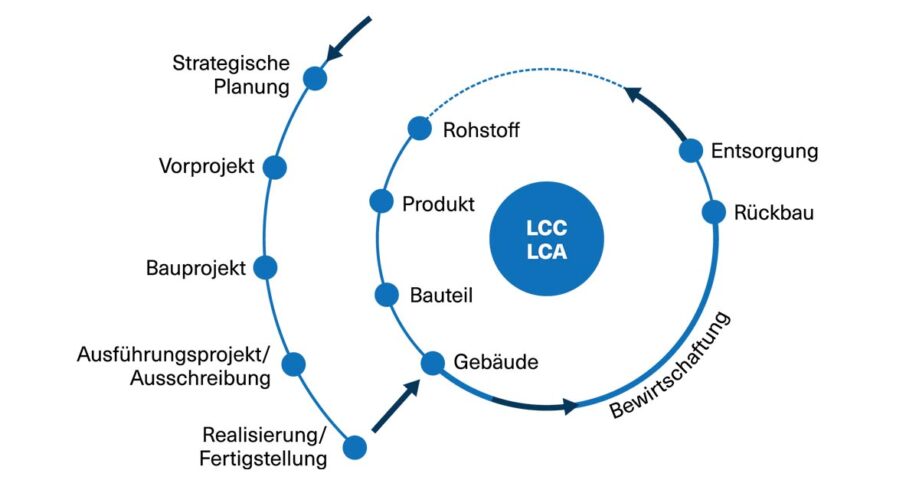
    The results of an ecological balance sheet (life cycle analysis, LCA) and an analysis of the life cycle costs (LCC), for example, form an excellent basis for decision-making. These quantitative assessment methods take into account the entire building life cycle.

    To the white paper

    Comprehensive redevelopment of the Webermühle housing estate
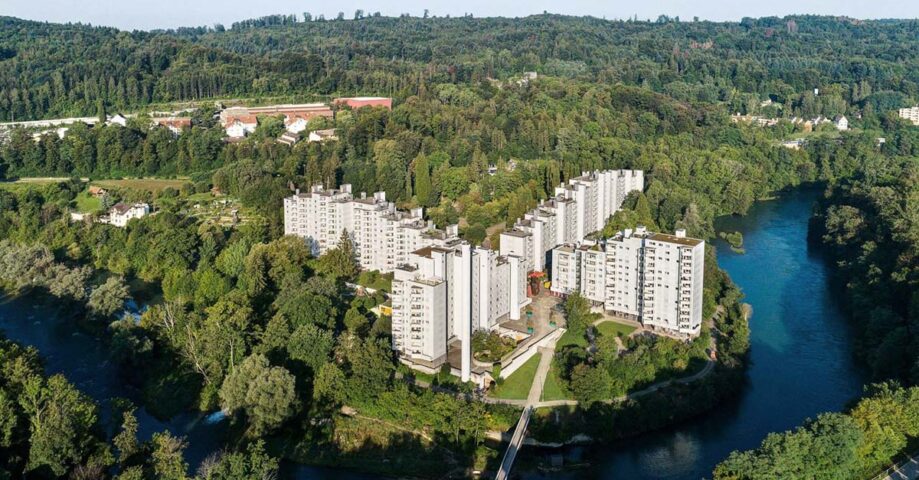
    One example of a successful renovation is the large Webermühle development in Neuenhof. The former Göhner settlement, which was occupied in 1984 and has been owned by a real estate fund from Credit Suisse Asset Management since 2008, houses 368 rental apartments with around 1,500 residents.

    The core of the energetic renovation of the Webermühle is the reorientation of the heat supply. To this end, the client defined a clear goal right from the start: in the future, the heat supply should be at least 70% CO₂-free. Due to the size of the facility, Credit Suisse Asset Management wanted to have the heating system replaced by a contractor instead of producing heat itself. The sustainability of the solution proposed by ewz with a river water heat pump convinced the client.

    Find out more

  • Microsoft kauft CO2-Zertifikate von neustark

    Microsoft kauft CO2-Zertifikate von neustark

    Der Technologieriese Microsoft setzt bei der Reduzierung seines CO2-Fussabdrucks auf das Jungunternehmen neustark. Die Ausgliederung der Eidgenössischen Technischen Hochschule Zürich (ETH) mit Sitz in Bern hat eine Technologie entwickelt, mit der CO2 aus der Atmosphäre dauerhaft in Recyclingbeton gespeichert werden kann. Dafür wird flüssiges CO2 in Abbruchmaterial eingeleitet. Die Technologie der Firma ist bereits mehrfach in einer Pilotanlage getestet worden.

    Neustark setzt im Rahmen seines Geschäftsmodells auch auf den Verkauf von CO2-Zertifikaten. Damit können Unternehmen ihren CO2-Ausstoss kompensieren. Microsoft wird einer Medienmitteilung zufolge solche Zertifikate von neustark beziehen. Das Technologieunternehmen will bis 2030 mehr CO2 aus der Atmosphäre entfernen als es selbst ausstösst.

    „Microsoft hat sich für neustarks technologiebasierte Lösung für Carbon Removal entschieden, weil die Leistung bereits 2022 erbracht werden kann und ein erhebliches Skalierungspotenzial hat“, heisst es in der Mitteilung.

    Weiter wird Microsoft neustark auch im Rahmen seines Förderprogramms für Schweizer Start-ups unterstützen. Dabei erhält das Jungunternehmen kostenlosen Zugriff auf verschiedene Software-Lösungen von Microsoft.

  • Paperi's first "2000-watt area" in the canton of Zug

    Paperi's first "2000-watt area" in the canton of Zug

    The paper mill shaped the community of Cham and the Zug West region for more than 360 years. A new living and working quarter with industrial charm is now being built on the former industrial site. Formative existing buildings are being supplemented with striking new buildings directly on the Lorze and implemented sustainably. The story continues and bridges are built between past and future, between people and nature, between living and working. “Sustainability” has played an important role as an overall topic since the beginning of the site development. As the client, the Cham Group committed itself to the goals of the 2000-watt society early on in the planning process and made the decision to use fossil-free heat supply out of conviction and even before the intention of certification. As the crowning glory of the ongoing sustainability efforts, the Papieri was the first area in the canton of Zug to be awarded the “2000 Watt Area” certificate today. On behalf of the Swiss Federal Office of Energy, Daniel Kellenberger thanked the Cham Group for their commitment and perseverance in not only talking about energy and CO 2 targets, but actually implementing them with the “2000 Watt Area” certificate, among other things.

    Zero CO2 emissions
    The Papieri area offers completely new foundations for an energy-efficient, climate-neutral and sustainable society. This makes it a pioneering project throughout Switzerland. Practically from the beginning of the development of the site, the Cham Group decided to completely dispense with fossil fuels for heat generation and to rely fully on the favorable location factors with hydropower, geothermal probe fields and photovoltaics. The highlight of the area is the completely CO 2 -free energy system. The entire energy supply on the site is based on 100% renewable energies. This is achieved by means of geothermal probes and a river water catchment, which each serve a central heating and cooling network via heat pumps. Thanks to a ZEV (association for self-consumption) with the renovated small hydroelectric power plant on the Lorze and large-scale photovoltaic systems of 6,500m2 on the new buildings, around 40% of the total energy required can be generated on site. “Moreover, other aspects of comprehensive sustainability are explored in practically every project, be it through “building recycling”, ie intelligent conversion of the existing building, the use of CO 2 -optimized construction principles such as timber construction, or through intelligent sharing offers in the field of mobility,” explains Lukas Fehr, Head of Development at the Cham Group.

    Lighthouse character for municipality and canton
    So far, only 43 areas in Switzerland have been certified with this label by the Swiss Federal Office of Energy –
    26 of them as a 2000-watt area “in development”. Government Councilor Florian Weber is also pleased that the canton of Zug is playing a role in this. “100 percent for 2000 watts: the Cham Group is opening up a new era of comprehensive and sustainable energy concepts for large-scale developments at the Papieri site,” says the construction director. As Energy City Gold, the municipality of Cham also celebrates the award of the papers as a “2000-watt area”. “The award is a seal of quality for the Cham Group’s site development, an incentive for others and at the same time corresponds to the community’s commitment to climate protection. After all, Cham wants to become climate-neutral internally by 2030; by 2050, “net zero” greenhouse gas emissions should even be achieved for the entire municipality,” explains Drin Alaj, Head of Traffic and Safety for the Cham municipality. And Mayor Georges Helfenstein adds: “We see the developments on the Papieri site as an opportunity and are pleased about this certification and about the new, vibrant and now also certified sustainable quarter”.

    Marketing start of the first office and commercial space
    On February 10, 2022, the rental of the shop, office and commercial space on the ground floors of the properties in the first construction phase, which will be ready for occupancy at the end of 2022, will start on the papieri-cham.ch website. The Papieri area offers space for every business model and company of different sizes. Not interchangeable and arbitrary, but sustainable, well thought out and in the middle of a lively district.