Tag: CO2-Reduktion

  • Research project promotes the reuse of concrete in construction

    Research project promotes the reuse of concrete in construction

    The Materials and Structures Group of the Institut du patrimoine construit, d’architecture, de la construction et du territoire(inPACT) at the Haute école du paysage, d’ingénierie et d’architecture de Genève(HEPIA) is leading the Concrete Upcycling Techniques(CUT) research project. The project, led by Professor Maléna Bastien Masse, aims to integrate the reuse of concrete slabs into construction practice, as detailed in a press release. The aim is to reduce the industry’s CO2 footprint. The project is supported by the Swiss National Science Foundation(SNSF) and is being carried out in collaboration with Professor Corentin Fivet’s Structural Xploration Lab at the Swiss Federal Institute of Technology Lausanne(EPFL).

    The project aims to preserve concrete slabs during the demolition of buildings. The slabs are sawn up on site and then analysed by HEPIA researchers. The aim is to find out whether these slabs can be reused. The panels approved for reuse are then used in new buildings. The project is also investigating how they can be joined together during reuse. Advanced techniques and materials such as high-performance fibre-reinforced cementitious composite (CFUP) will be used.

    “The construction industry loves concrete. It is an indispensable, versatile, adaptable and cost-effective material, but it is also extremely harmful to the environment. One solution is obvious: reuse,” reads the press release. “By recovering and reusing components from existing buildings for new construction projects, concrete consumption is reduced, resulting in a lower CO2 footprint.”

    HEPIA is a Geneva-based university that specialises in education and research in the fields of engineering, architecture and the environment, particularly in the areas of materials and sustainable construction. The university is part of the University of Applied Sciences Western Switzerland(HES-SO).

  • Fuel cells to support power grids

    Fuel cells to support power grids

    Researchers from the Swiss Federal Laboratories for Materials Science and Technology(Empa) have conducted a joint project on the effect of hydrogen fuel cells in collaboration with the Hälg Group from St.Gallen, the Osterwalder Group, also based in St.Gallen, and Zurich-based H2 Energy AG. The experiment at the Empa Center in Dübendorf showed that the electrical energy generated by the fuel cells could relieve the burden on local power grids in district centers, according to a press release.

    The core of the project was to reduce the electricity consumption of heat pumps by producing electrical energy from local district energy cells using hydrogen fuel cells. This energy is fed into the grid to operate the heat pumps, thus reducing the load on the grid. At the same time, the experiment tested using special heat exchangers to supply average temperatures of around 35 degrees Celsius to the heating network of the NEST innovation building and the Empa campus in Dübendorf. The test, which ran from October 2023 to September 2025, showed that the district energy cells were able to smooth out peaks in electricity consumption and reduce the overall cost of peak load by 10 percent.

    “Our trials showed that fuel cells can effectively balance electrical and thermal peak loads in buildings. This made it clear that hydrogen-based peak load shaving is technically feasible and provides valuable insights for the control of complex energy systems,” Binod Prasad Koirala, Deputy Head of Empa’s Urban Energy Systems research department, is quoted as saying in the press release. When using green hydrogen, the fuel cells also make a contribution to reducing CO2 emissions.

  • Solar diesel to make construction machinery more climate-friendly

    Solar diesel to make construction machinery more climate-friendly

    The construction company Eberhard Bau from Kloten will in future operate its machinery with solar diesel from the Zurich-based cleantech company Synhelion. The long-term purchase agreement, which has now been announced in a press release, provides for the use of renewable diesel from 2027 onwards. According to Synhelion, this will reduce net CO2 emissions by up to 100 per cent compared to fossil fuels. The sustainable fuels can be used in all existing combustion engines.

    Eberhard Bau is Synhelion’s first customer in the construction industry, which has had little leverage to defossilise construction machinery and construction sites. Until now, solar diesel has been used by companies in the aviation, shipping and road transport sectors. Construction machinery, however, is heavy, is used in undeveloped terrain and is difficult to electrify due to its high power requirements. Solar diesel provides a sustainable solution for CO2 reduction “where there was previously no viable alternative,” says Silvan Eberhard, Head of Logistics at Eberhard Unternehmungen.

    According to its own information, Synhelion has been operating the world’s first industrial plant for the production of solar fuels since 2024 with DAWN, which manufactures in Germany. The construction of the first commercial plant is in the planning stage and is scheduled to go into operation in 2027.

    In addition to Eberhard Bau AG, Swiss International Air Lines, Pilatus Aircraft, Zurich Airport, AMAG Group and the Lake Lucerne Shipping Company have signed purchase agreements for renewable fuel with Synhelion.

  • Modernization and building mobility: Why we need to build on the existing infrastructure

    Modernization and building mobility: Why we need to build on the existing infrastructure

    This is particularly evident in ageing elevators and escalators. Around 10 million of these systems are in operation worldwide, most of them in densely populated city centers. They are more susceptible to faults and safety risks. Ageing elevators also often restrict the freedom of movement of people with disabilities, for example by making it difficult to open revolving doors.

    Modernization is not just a question of safety or comfort. It is also one of the most effective instruments for reducing emissions. The construction industry is already responsible for around 40% of global CO₂ emissions – a figure that could double within 25 years if nothing is done. The European Commission estimates that 85 to 95% of the buildings that will exist in 2050 are already standing today. Replacing these buildings is not an option. The key to reducing CO₂ is therefore not to build new buildings, but to retrofit the older but still functioning systems.

    For all those who want to keep their buildings and cities alive, modernization is a necessary investment in resilience, sustainability and general well-being. Today, networked, data-driven systems can detect wear and tear, predict maintenance requirements and extend the service life of systems – making cities not only safer, but also smarter and more environmentally friendly.

    For many building owners, modernization is still a challenge. High investment costs, long downtimes and uncertainty about where to start are common concerns. Partial modernization is often a sensible middle way. It combines the advantages of new technologies with the continued use of intact components and thus significantly reduces costs and operational interruptions – without having to accept the expense and downtime of a complete replacement. In the elevator sector, this can save up to 90 percent CO₂ compared to a complete replacement.

    Our cities cannot be redrawn, but they can be developed further. When we modernize the mobility systems that move millions of people every day, we create urban environments that are safer, more inclusive and more climate-friendly – and ready for the challenges of the coming decades.

  • Production relies on virtually CO2-free aluminium

    Production relies on virtually CO2-free aluminium

    The sun shading manufacturer Griesser Holding AG used 95 percent sustainable green aluminium in the production of its window shutter ranges in Nenzing in September, according to a press release. By using green aluminium at the Austrian site, Griesser Holding AG saves up to 30 percent CO2 per kilogram of aluminium and achieves a new low of 3.3 kilograms of CO2 emissions per kilogram of aluminium produced. The sustainable aluminium consists of 65 percent pre-consumer and post-consumer scrap and 35 percent primary aluminium, explains the company. The primary aluminium is produced using renewable energy in Europe, which results in up to five times lower CO2 emissions than conventional production.

    The switch to green aluminium started in Nenzing in November 2024. “The largest quantities of aluminium are used in our range of window shutters. With the material changeover in Nenzing, we were therefore able to achieve a major impact quickly,” says Urs Neuhauser, CEO of the Griesser Group.

    Quality and sustainability are guaranteed to remain compatible at Griesser Holding AG, according to the company. The previous guarantee periods apply to all Green Aluminium products. As with the rest of the Griesser range, the greener model variants are also EPD-certified (Environmental Product Declaration).

    Griesser Holding AG specialises in the manufacture of sun shading solutions for windows and patios and, according to its own statements, is the European leader in high-quality and aesthetic sun shading.

  • Climate-friendly heat supply for Zofingen and Oftringen

    Climate-friendly heat supply for Zofingen and Oftringen

    StWZ Energie AG and Primeo Energie want to jointly create a sustainable district heating supply in the lower Wiggertal valley. To this end, the energy service providers have founded the joint company Fernwärme Unteres Wiggertal AG (FUWI) as of 19 September 2025. The aim is to combine “infrastructure, customer proximity and energy expertise” in order to further develop the heat supply in a climate-friendly way.

    The new network is to be operated using waste heat from the erzo-KVA waste incineration plant and from existing decentralised StWZ energy centres. Existing heating networks from StWZ in Zofingen and Primeo Energie in Oftringen are to be integrated.

    The first households are to be supplied with low-CO2 heat energy from the new network from summer 2027. Two phases are planned for the expansion. Phase one is to begin in 2026 from the erzo-KVA waste incineration plant and run towards Oftringen Süd and Zofingen. The second phase will follow in 2030 at the earliest and will depend on the planned new construction of the waste incineration plant. This will require the consent of the people of Oftringen for the zoning of a required piece of land. If both construction phases go into operation, 10,000 households could be supplied with heat and 30,000 tonnes of CO2 could be saved.

    Michael Schneider, Managing Director of Primeo Wärme AG, sees the energy revolution as a heating revolution. This step lays a “foundation stone for a long-term sustainable heat supply in the lower Wiggertal”. “By combining regional energy sources with modern technology, we are reducing CO2 emissions in a targeted manner and expanding the supply of reliable, decarbonised heat,” Paul Marbach, Managing Director of StWZ Energie AG, is quoted as saying.

  • Helicopter deployment for climate-friendly energy supply

    Helicopter deployment for climate-friendly energy supply

    The Clinique Valmont in Montreux has been equipped with a climate-friendly heat supply system by BRUGG Pipes. It consists of a Siemens air heat pump, which is connected to the clinic via a district heating pipe, BRUGG Pipes explains in a press release. The heating capacity of the system is estimated at 321 kilowatts. With the new sustainable heat supply, the clinic, which is part of the Swiss Medical Network, will be able to avoid around 263 tonnes of CO2 emissions every year.

    BRUGG Pipes took an unusual approach to the delivery of the district heating pipe. “As space was limited and an incline had to be negotiated between the unloading and installation sites, we used a helicopter to transport the four sections, each weighing around 700 kilograms,” said René Hilty, Project Manager Specialist Construction Planning at the company, which is part of BRUUG GROUP AG in Brugg, in the press release. The Siemens heat pump even weighs 2.8 tonnes. It will be transported by a Super Puma helicopter on 30 September.

  • New concrete reduces CO2 emissions in the construction industry

    New concrete reduces CO2 emissions in the construction industry

    Omya is a new partner in NEST, the modular research and innovation building of Empa and Eawag in Dübendorf. In the Beyond.Zero unit, which has been based there since the beginning of 2024, they want to test a cement-reduced concrete that they developed in a joint research project, according to a statement from Empa.

    Omya contributed its expertise as a globally active specialist in industrial materials. “The fact that we can now jointly develop sustainable building materials and test them directly in NEST under real conditions accelerates the transfer of innovations into climate-friendly construction methods,” said Empa Director Tanja Zimmermann.

    This innovative building material replaces up to 70 per cent of its clinker content with natural minerals. As Empa explains, this significantly reduces its CO2 footprint. “For a new type of concrete to be widely accepted, it needs to be tested in practice,” Empa researcher Mateusz Wyrzyklowski from Empa’s Concrete and Asphalt department is quoted as saying. “By using it in the NEST Beyond.Zero unit, we can comprehensively validate our cement-reduced concrete: from processing to durability.”

    The aim is a building material “that not only fulfils the ecological requirements, but also impresses in terms of workability, mechanical properties, volume stability and durability,” says Empa. The Beyond.Zero unit goes beyond the net zero target in construction. It pursues the vision that buildings can serve as carbon sinks in the future – in other words, they will have a negative CO2 balance on balance. The construction sector currently accounts for around 28 per cent of CO2 emissions in Switzerland.

  • NEST tests CO₂-reduced building materials

    NEST tests CO₂-reduced building materials

    The “Beyond.Zero” project brings together leading industry and research partners to test innovations in the construction industry under real-life conditions. The focus is on the development of new material technologies with significantly lower emissions and high innovation potential for the construction industry.

    A central element is the cement-reduced concrete developed by Empa and Omya. By replacing up to 70 percent of the clinker content with natural minerals, CO₂ emissions can be significantly reduced without compromising mechanical properties or durability.

    Practical test for new concrete technology
    The building material is being comprehensively validated in a real construction context for the first time in the NEST unit. From processing and volume stability to durability in operation. “Only by testing it in real buildings can we show that the new type of concrete is not only ecologically convincing, but can also withstand the demands of practical use,” explains Empa researcher Mateusz Wyrzykowski. This creates a basis for translating sustainable concretes into marketable solutions more quickly.

    Industry meets research
    As the world’s leading producer of industrial minerals, Omya is contributing its expertise and production capacities to the project. “The fact that we can test sustainable building materials directly in NEST under real conditions accelerates the transfer of innovations into climate-friendly construction methods,” emphasizes Empa Director Tanja Zimmermann.

    In addition to the cement-reduced concrete, further CO₂-reduced and CO₂-negative material solutions are to be developed and tested in the “Beyond.Zero” project. The aim is a construction system that significantly reduces the ecological footprint over the entire life cycle, from production to operation and dismantling.

    Signal for the construction industry
    With this project, Empa and its partners are creating a practical platform that will provide groundbreaking impetus for the transformation of the construction sector. In view of the high proportion of emissions from cement and concrete production worldwide, the project could become a milestone towards climate-neutral construction.

  • New paving blocks reduce CO2 emissions in construction

    New paving blocks reduce CO2 emissions in construction

    CREABETON, a building materials company based in the canton of Lucerne and a subsidiary of Müller-Steinag Baustoff AG, has developed a new series of cement-free paving blocks in collaboration with the start-up Oxara. According to a press release, the new concrete blocks produce 30 percent less CO2 emissions than conventional paving blocks.

    The new product is available in three variants. In addition to the standard paving block version, water-permeable or grass paving blocks can also be laid. Instead of conventional cement, the material uses the Oulesse binder developed by Oxara, a spin-off of the Swiss Federal Institute of Technology in Zurich(ETH).

    “With these products, we are responding to the growing demand for climate-friendly construction solutions,” said Hendrix Müller, CEO of the Müller-Steinag Group, in the press release. “Our collaboration with Oxara enables us to offer our customers more sustainable alternatives – today, not in a few years’ time.” Martin Bodmer, Head of Operations at Oxara, is convinced that the collaboration with CREABETON can scale up his company’s sustainable developments.

  • Underground facility to reduce CO2 emissions

    Underground facility to reduce CO2 emissions

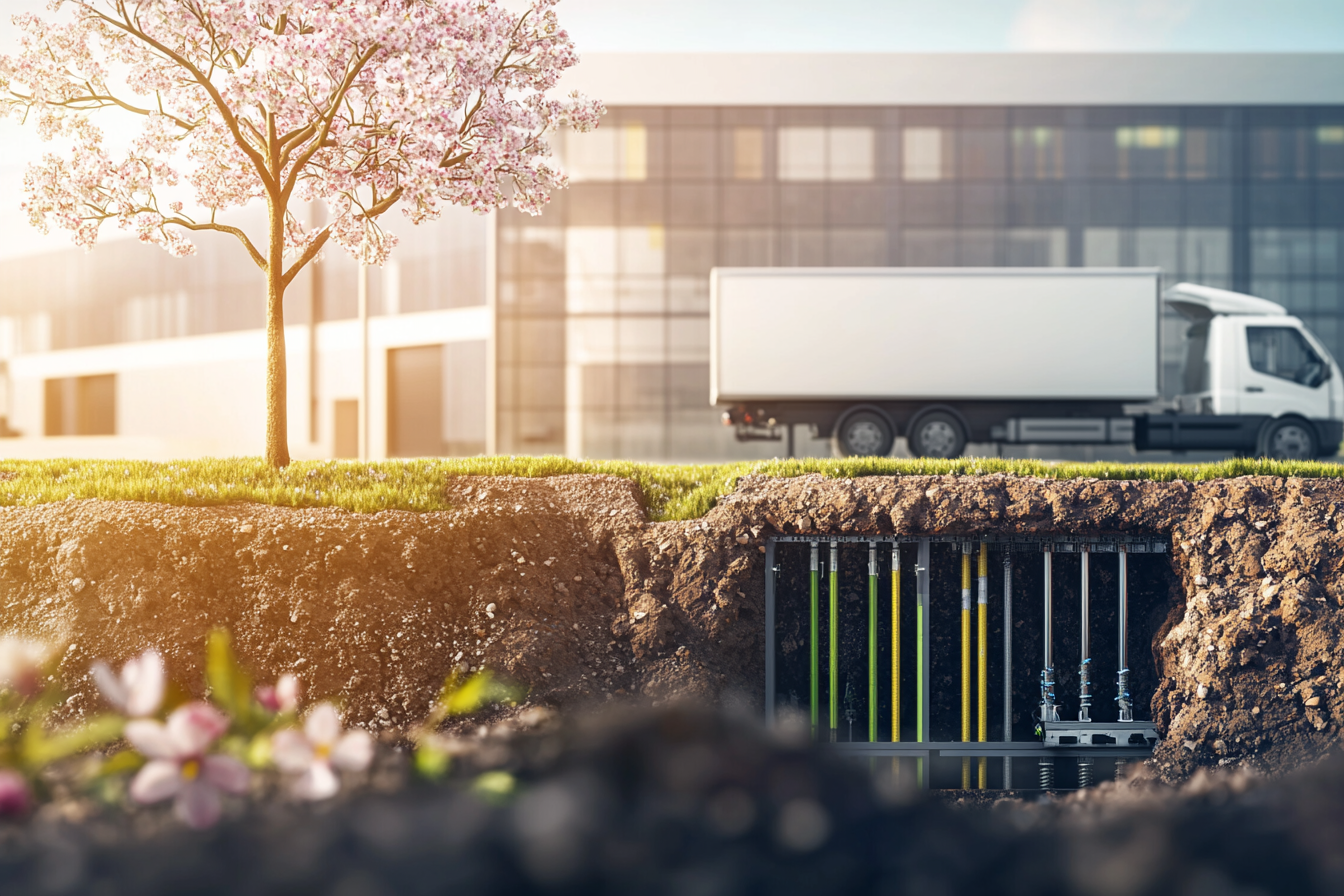
    Flughafen Zürich AG is building an underground energy centre located between multi-storey car park 6, the Radisson Blu Hotel and Operation Center 1. The centre will be equipped with heat pumps and chillers with a total output of 12 to 15 megawatts. In the medium term, it will cover around two thirds of the heating and cooling requirements of the terminal and the surrounding buildings at the airport head. Commissioning is planned for autumn 2027, Flughafen Zürich AG announced in a press release.

    At the same time, the company is exploring an ice-age channel at a depth of 300 metres in order to store thermal energy there and make it usable again. The first well has been in operation since 2024 and a second one is being built. Exploration of the channel is being funded by the Swiss Federal Office of Energy.

    Together with the energy centre and a planned low-temperature network, the channel should save around 6,500 tonnes of CO2 per year in future and help to reduce CO2 emissions at the airport head by 35% to 15,900 tonnes per year by 2030. Flughafen Zürich AG aims to reduce its own CO2 emissions to net zero by 2040.

    “Technically, we are relying on innovative systems with our plan to decarbonise the infrastructure. The combination of heat pumps, seasonal energy storage in an ice-age channel or via geothermal probe fields and a low-temperature network allows us to significantly reduce the climate impact of heating and cooling,” says Guido Hüni, Head of Energy and Decarbonisation at Flughafen Zürich AG.

  • Digital modelling reduces CO2 in cement production

    Digital modelling reduces CO2 in cement production

    A PSI research team is looking for formulations that reduce the proportion of CO2-intensive clinker in the cement mix. Alternatives to clinker are already in use, but can only cover a fraction of the cement requirement. The researchers are looking for material combinations that are available in large quantities and allow high-quality cement production. They are using an AI-supported modelling method to do this. They want to improve the CO2 balance of the formulations while maintaining the same material quality, according to a press release. “Instead of testing thousands of variants in the laboratory, our model generates concrete recipe suggestions within seconds – like a digital cookbook for climate-friendly cement,” said lead author and mathematician Romana Boiger in the press release.

    The researchers use artificial neural networks to replace computationally intensive physical modelling. The AI models are trained with known data and learn by adjusting the weighting of their links to predict similar relationships.

    The researchers trained their AI model with the open source software GEMS for thermodynamic modelling. They used it to calculate mineral formation and geochemical processes in various cement formulations and combined this with experimental data and mechanical models. This made it possible to estimate the material quality of different cement formulations. The researchers also determined the CO2 emissions of the formulations. The AI model learnt from this data. “Basically, we are looking for a maximum and a minimum – from this we can directly deduce the desired recipe,” says Boiger. To do this, they use genetic algorithms, another AI method, to identify recipes that combine both target values.

    The researchers have already discovered promising cement formulations that are still being tested in the laboratory to finalise the development cycle.
    The study was conducted as part of the interdisciplinary SCENE project (Swiss Centre of Excellence on Net Zero Emissions).

  • Large-scale decarbonisation through district heating expansion in Zurich

    Large-scale decarbonisation through district heating expansion in Zurich

    The city of Zurich wants to reduce CO2 emissions to net zero by 2040. In order to achieve this goal, thermal networks and a district heating network are to be significantly expanded. According to a press release, the city council is proposing a new framework credit of CHF 2.26 billion to voters. This credit includes the funds from the credits of CHF 330 million and CHF 573 million already approved in 2021 and 2022.

    The new loaned funds are intended to take into account both the increased financial requirements for the expansion of thermal grids and their degree of greening. Currently, 70 per cent of the energy generated by existing networks is fossil-free; the target is 100 per cent.

    “We want to double the proportion of the city supplied with district heating to around 60 per cent of the residential area by 2040. This is a generational project and requires a major expansion of the infrastructure. This will require major investments,” said City Councillor Michael Baumer, Head of the Department of Industrial Operations, in the press release.

    The entire project to reorganise the city’s heating supply, including the consolidation of all thermal networks in the city, is to be carried out under the umbrella of Elektrizitätswerk der Stadt Zürich(ewz).

  • Investing in depth saves costs and improves carbon footprint

    Investing in depth saves costs and improves carbon footprint

    Pistor’ s initial assessment of the first winter with its new geothermal storage system is positive: “It works so smoothly that we haven’t had to burn a drop of heating oil so far,” Michael Waser, Pistor’s Head of Infrastructure, is quoted as saying in a company press release.

    This saves Pistor over 100,000 liters of heating oil per year at its headquarters in Rothenburg and prevents the release of 330 tons of CO2. This amount is released by more than 200 direct flights from Zurich to Tokyo, for example. Waser expects “that the underground storage facility will save us money in the medium term”.

    Pistor has invested CHF 1 million in the construction work. This involved drilling 75 boreholes to a depth of 250 meters. The result is one of the largest geothermal storage facilities in Central Switzerland, according to the trading and service company for the bakery and confectionery industry as well as for restaurants and care facilities.

    According to Waser, the Pistor cooperative is responding to the wishes of its customers, who are increasingly demanding supply chains that are as socially and environmentally friendly as possible: “We meet them.” The twelve electric trucks in the fleet and renovations with sustainable materials also contribute to this.

    In addition, Pistor transports its more than 27,000 products by train from one distribution center to another. Thanks to this rail transport, an additional 785 tons of CO2 are saved each year.

  • Kitchen production relies on environmentally friendly material

    Kitchen production relies on environmentally friendly material

    According to a blog post, the two companies Hans Kohler AG from Zurich and Suter Inox AG from Brugg are following a common path and using green stainless steel for more environmentally friendly kitchen production. This is produced using hydrogen instead of carbon. According to Hans Kohler AG, it has up to 92 percent lower CO2 emissions than the global industry average. The stainless steel sheets are produced by the Finnish company Outokumpu, based in Helsinki.

    “The demand for environmentally friendly and socially responsible products has increased significantly in various industries in recent years,” says Marco Borter, CEO of Kohler AG, in the blog post. “The stainless steel industry is also placing an increased focus on reducing CO2 emissions throughout the entire value creation process. As a producer of our ‘Green Steel’ stainless steel sheets, Outokumpu is a global leader in the production of stainless steel.” It wants to produce climate-neutrally by 2050.

    “This collaboration with Kohler enables us to offer high-quality, future-oriented kitchen solutions that are manufactured in Switzerland and meet the highest ecological standards,” says Suter Inox CEO Attila Castiglioni. “Our stainless steel worktops, sinks and basins not only impress with their aesthetics and functionality, but also actively contribute to reducing CO2 emissions. This partnership creates real added value – for us, our customers and the environment.

  • Intelligent energy management optimizes power consumption in buildings

    Intelligent energy management optimizes power consumption in buildings

    A predictive control algorithm developed by Empa optimizes energy management in buildings in such a way that security of supply is guaranteed throughout the entire energy system. Automated building systems communicate directly with energy providers and the power grid.

    According to a report by Empa, automated systems can optimize electricity consumption in such a way that both grid stability and consumer flexibility are guaranteed at all times. At the same time, energy surpluses are not necessarily stored locally, but fed into the power grid wherever possible so that demand can be met at all times.

    During the practical test by Empa’s Urban Energy Systems Lab in its NEST test building in Dübendorf, the focus was on reducing CO2 emissions, the flexibility of energy demand and the comfort of the residents. Using the predictive control algorithm, the team succeeded in optimizing energy management within the building with the following setup: a photovoltaic system for electricity production, a battery storage system, a heat pump and a bidirectional charging station for electric vehicles.

    The system reportedly reduced the building’s CO2 emissions by more than 10 percent. The building was able to communicate the consumption and feed-in of electricity in advance. “The experiment has therefore shown that the flexible availability of renewable energies is not a problem a priori,” says Empa.

    However, in order to implement these results on a large scale, buildings will have to be consistently digitalized in the future. The technology developed by scientist Federica Bellizio is to be brought to market by the start-up Kuafu. She was recently awarded the Empa Entrepreneur Fellowship for her work.

  • Bern-Wabern heating network promotes energy transition and CO2 reduction

    Bern-Wabern heating network promotes energy transition and CO2 reduction

    The energy company Energie Wasser Bern(ewb) and the municipality of Köniz want to make a contribution to reducing CO2 emissions and achieving the climate policy goals of Köniz and Bern with the Bern-Wabern energy network, according to a press release.

    The ewb Board of Directors decided to build the Bern-Wabern heating network on March 7, 2025, based on the “great interest” of the population as determined by a survey. Construction of the production facilities is scheduled to start in 2027. The first heat supply is expected from 2028.

    Specifically, the heat production concept envisages using the energy from surplus water from the Schönau pumping station for thermal use. The production facilities will be installed in the existing heating center of the Morillon residential complex on Bondelistrasse.

    With the cooperation agreement that has now been signed, the heating and cooling supply in Wabern will be the responsibility of ewb, which is also responsible for the operational and financial responsibility for the construction.

    The heating network could help to promote the energy transition and climate protection. The sustainable energy project will create a replacement for many oil and gas heating systems in Wabern and the neighboring districts of Bern. “In densely built-up areas, a heating network is often the only solution for heating buildings with renewable energy in a CO2-free and economical way,” says Hansueli Pestalozzi, a local councillor in Köniz.

  • Digital building solutions company receives top marks for climate protection

    Digital building solutions company receives top marks for climate protection

    KONE has received an A grade from the Carbon Disclosure Project (CDP) for outstanding environmental transparency and climate protection measures. The global manufacturer of lifts, escalators and automatic doors, which is based in Espoo, Finland, and has its Swiss headquarters in Brüttisellen, is one of the few companies out of a total of 25,000 to receive a top grade, KONE announced in a press release. In addition, CDP has awarded the company an A or A- rating for the twelfth time in a row. KONE sees this as confirmation of its consistent sustainability and environmental management.

    “It is an honour for us to receive a place on CDP’s prestigious A-list for climate protection,” Kirsi Simola-Laaksonen, Senior Vice President Sustainability and Environment at KONE, is quoted as saying in the press release. “We are accelerating our efforts to reduce our carbon emissions and help our customers decarbonise.” For example, KONE’s technologies help to reduce the energy consumption of lifts, explains the KONE manager.

    In its own operations, KONE has committed to halving its operational emissions (Scope 1 and 2) by 2030 compared to 2018. Indirect emissions from the value chain (Scope 3) are to be reduced by 40 per cent over the same period. Last year, KONE’s operational emissions were already 29 per cent lower than in the base year 2018. At the same time, Scope 3 emissions were reduced by 12.8 per cent. In addition, KONE was “the first company in the industry” to achieve “carbon-neutral production units worldwide” as early as summer 2023, according to the press release.

  • Partnership for climate protection and innovation

    Partnership for climate protection and innovation

    The Bern-based ClimateTech company Neustark has been awarded a long-term contract by AXA Switzerland to reduce CO2 emissions. From 2026 and until 2030, the company is to reduce 1800 tons of the greenhouse gas with its technologies for capturing and mineralizing carbon dioxide, according to a press release. The project is part of AXA’s strategy, which aims to reduce operational carbon dioxide emissions by 43 percent between 2019 and 2030. AXA is also working with the German-Brazilian start-up InPlanet, which aims to remove a total of 1950 tons of CO2 by 2028 and store it for the long term.

    “By supporting these projects, we are making a contribution to net zero and at the same time promoting future-oriented technologies and Switzerland as a location for innovation,” said Daniela Fischer, Chief Sustainability Officer at AXA Switzerland, in the press release.

    Neustark has developed a technology that captures CO2 from biogas plants and stores it in demolition concrete. “Partnering with pioneering companies like AXA Switzerland that are investing in permanent CO2 removal helps us to scale the carbon removal industry,” explains Lisa Braune, Head of Carbon Removal at Neustark.

  • Timber construction as the key to CO2 reduction in the construction sector

    Timber construction as the key to CO2 reduction in the construction sector

    The European research project TIMBERHAUS was launched in Copenhagen at the beginning of November, Empa announced in a press release. It is one of 19 partners from a total of ten countries participating in the project, which is funded by the EU and the State Secretariat for Education, Research and Innovation to promote timber construction in Europe. Within four years, innovative timber construction technologies and structures are to be developed with which CO2 emissions in the construction sector can be significantly reduced.

    According to Empa, the construction sector is responsible for 40 percent of global CO2 emissions. The use of wood could help here. Currently, however, European forest resources, half of which consist of hardwood, are only used “very inefficiently” and limited to a few types of softwood for construction, explains project coordinator Anders Kjellow from the Danish Technological Institute. “With TIMBERHAUS, we are trying to overcome this challenge in order to increase the sustainable use of wood in construction.”

    Empa is contributing to the project with innovative prototypes created using digital tools such as machine learning and artificial intelligence. “The prototypes will serve as practical examples of how we can effectively utilize a wider range of wood resources,” Empa researcher Mark Schubert is quoted as saying in the press release. “Our goal is to provide the construction sector with viable and efficient products that meet current building standards while promoting the principles of the circular economy and supporting European climate goals.”

  • Launch of the EU research project TIMBERHAUS to promote timber construction

    Launch of the EU research project TIMBERHAUS to promote timber construction

    The European research project TIMBERHAUS was launched in Copenhagen at the beginning of November, Empa announced in a press release. It is one of 19 partners from a total of ten countries taking part in the project, which is funded by the EU and the State Secretariat for Education, Research and Innovation and aims to promote timber construction in Europe. Within four years, innovative timber construction technologies and structures are to be developed with which CO2 emissions in the construction sector can be significantly reduced.

    According to Empa, the construction sector is responsible for 40 per cent of global CO2 emissions. The use of wood could help here. Currently, however, European forest resources, half of which consist of hardwood, are only utilised “very inefficiently” and limited to a few types of softwood for construction, explains project coordinator Anders Kjellow from the Danish Technological Institute. “With TIMBERHAUS, we are trying to overcome this challenge in order to increase the sustainable use of wood in construction.”

    Empa is contributing to the project with innovative prototypes created using digital tools such as machine learning and artificial intelligence. “The prototypes will serve as practical examples of how we can effectively utilise a wider range of wood resources,” Empa researcher Mark Schubert is quoted as saying in the press release. “Our goal is to provide the construction sector with viable and efficient products that meet current building standards while promoting the principles of the circular economy and supporting European climate goals.”

  • Aargau energy subsidy programme limited until 2026

    Aargau energy subsidy programme limited until 2026

    The Aargau energy promotion programme will be continued until 2026 with a gross credit of CHF 97.2 million. This decision by the Grand Council, which was passed by 89 votes to 47, deviates from the original proposal by the cantonal government. The government had envisaged an extension until 2028 and a total budget of CHF 176.5 million. The shorter period was chosen due to possible cost-cutting measures by the federal government, which could make cantonal co-financing more difficult.

    Controversy surrounding the funding
    While the SP, Centre Party, GLP and Greens welcomed the increase in the credit, the FDP and SVP were sceptical. The FDP called for a budget of CHF 88.25 million, which would cover half of the originally proposed total costs for four years. The SVP rejected the programme in principle and criticised state intervention.

    Focus of the programme
    The funding programme supports measures to improve energy efficiency and reduce CO₂ emissions. Among other things, the programme supports

    • Improvements to the building envelope
    • Wood heating systems and heat pumps
    • Connections to heating networks
    • Solar thermal systems
    • Projects for the development of heating networks

    Funds are also available for pilot projects. According to the cantonal dispatch, previous programmes have shown that energy efficiency has been increased and CO₂ emissions have been significantly reduced.

    Funding from CO₂ levies
    The majority of the funding comes from federal contributions, including from the CO₂ partial earmarking and the federal impulse programme. The canton itself bears around 25 % of the total costs.

    Prospects for homeowners
    The two-year limit raises questions about long-term planning. Homeowners and builders emphasised the need for continuity in funding programmes in order to promote investment in sustainable building technologies.

    The Canton of Aargau’s energy subsidy programme remains an important instrument for reducing CO₂ emissions and increasing energy efficiency. However, the limited duration of the programme until 2026 reflects the uncertainties surrounding federal funding and poses planning challenges for the future.

  • Property sector facing change with obstacles

    Property sector facing change with obstacles

    Growing awareness of climate risks is increasing the pressure on the property sector to find solutions. According to the latest C-Change survey, 93 per cent of the investors surveyed take climate-related risks into account in their decisions. This trend reflects the increasing commitment to not only recognising climate policy requirements, but actively integrating them into the corporate strategy.

    Lack of data and knowledge
    Despite positive developments, there are obstacles to the implementation of decarbonisation measures. According to the survey, 61 per cent of companies lack the in-depth knowledge and qualitative data needed to take the right steps to reduce CO2 emissions. Aleksandra Smith-Kozlowska from ULI emphasises the need for systematic knowledge transfer and better availability of high-quality data.

    Transition risks on investment strategies
    The survey shows that transition risks are increasingly influencing investors’ strategies. 94 per cent of the companies surveyed report that the risks influence their portfolio decisions. Although 51 per cent make investments in properties with these risks and 30 per cent feel compelled to divest themselves of affected properties. The cost of retrofitting and the risk of asset losses are becoming the focus of attention.

    An instrument for risk mitigation
    The survey highlights the growing interest in a CO2 tax as a strategic tool for decarbonisation. 21 per cent of companies have voluntarily introduced internal carbon pricing mechanisms in the last 12 months. Around 71 per cent use a shadow price per tonne of CO2 to incorporate potential emissions costs into business planning

    Obstacles to the sustainable property industry
    Despite the progress made, there are concerns about competitiveness that have so far slowed down the industry-wide introduction of the carbon tax. Critical factors include lack of data consistency, lack of stakeholder support and uncertainty about the impact on financial results and operational strategies.

    As measures, the ULI calls for more intensive education and the introduction of clear guidelines. The ULI’s latest publications, including “Accelerating Accountability: The Case for Carbon Pricing” and “Universal Principles for Carbon Pricing in the Real Estate Sector”, are intended to help the industry establish carbon pricing as an integral part of the value chain and thus promote long-term sustainability goals.

  • Green aluminum shutters

    Green aluminum shutters

    The Aadorf-based sun protection manufacturer Griesser will produce window shutters made from so-called green aluminum at its Austrian site in Nenzing in the future. According to a press release, the material used will consist of 65 percent process and consumer scrap and 35 percent primary aluminum. The latter will be manufactured using renewable energy from producers in Europe. By using green aluminum in the production of folding shutters, Griesser aims to significantly reduce its CO2 footprint.

    “Folding shutters account for very large production volumes within the window shutter range,” Urs Neuhauser, CEO of the Griesser Group, is quoted as saying in the press release. “With 53 percent of the sashes, Model A is the top model. We want to prioritize clearly according to impact, which is why we have decided to start with these products.”

    By switching to green aluminium, 160 tons of the material will be used in the production of window shutters in Nenzing every year. At the same time, Griesser will reduce its CO2 emissions by 300 tons. This corresponds to 35 percent of emissions in the shutters product area. The company assures that the use of the new material has no disadvantages in terms of stability and quality. The six-year guarantee remains in place, according to the press release. According to Neuhauser, the entire range of window shutters is to be converted to production with green aluminum by the end of 2025.

  • Zug adopts sustainable energy targets

    Zug adopts sustainable energy targets

    Energy consumption in the canton of Zug amounts to almost 3,000 gigawatt hours per year, with buildings and mobility accounting for the largest share. The cantonal government’s new energy and climate strategy (EKS) aims to reduce energy consumption and rely more heavily on renewable energies. At the same time, the government wants to strengthen security of supply in the canton and reduce greenhouse gas emissions to net zero by 2050. With clear interim targets up to 2030, the government is concretising the path to these ambitious goals.

    Investments in solar power and energy storage
    A central component of the strategy is to increase the production of solar power in the canton. At the same time, investments in innovative energy storage technologies such as hydrogen are planned. “We want to shape the energy infrastructure of the future through close collaboration with industry and science,” explains Construction Director Florian Weber. Buildings in the canton should also increasingly serve as energy producers and thus become an energy hub.

    Sustainability in agriculture and negative emission technologies
    As part of the KERB sustainability project, the canton is focussing on measures in agriculture to reduce CO2 emissions. Forests and moors play a central role in CO2 sequestration. For unavoidable emissions, the canton is focussing on negative emission technologies that are intended to permanently remove CO2 from the atmosphere. A study is to determine the potential of these technologies in the canton.

    Adapting to climate change
    In addition to reducing emissions, the canton of Zug is also preparing for the effects of climate change. A cantonal natural hazard strategy aims to minimise climate-related risks such as heat and invasive pests. At the same time, investments are being made in climate-adapted road surfaces and sustainable forest management to ensure both protection and recreational areas.

  • Buildings as carbon sinks

    Buildings as carbon sinks

    The construction industry is one of the largest CO2 emitters in the world. However, projects such as “Beyond Zero” and the “Mining the Atmosphere” initiative could turn the tide. The aim is not only to reduce the harmful greenhouse gas, but to actively bind it in building materials. These materials, which are being tested in the new NEST unit, could revolutionise concrete and insulation materials and have the potential to make the construction industry climate-neutral or even CO2-negative.

    Technology undergoing practical testing
    Nathalie Casas from Empa explains that “negative emissions technologies” (NET) are the key to achieving climate targets: “We need to remove excess CO2 from the atmosphere in order to achieve the 1.5-degree target. NETs, which already work in the laboratory and are now being used in the construction industry, will help us achieve this.” Casas emphasises the urgency of taking action as emissions continue to rise.

    Sustainability in the construction industry
    Corinne Reimann from Implenia sees NET as a great opportunity for the construction industry: “The new materials will finally enable us to make decisive progress in the area of sustainability. The industry has enormous leverage here, but also challenges. Price and acceptance will be crucial.” Reimann emphasises that the functionality and cost-effectiveness of new materials must be ensured in order to enable their widespread use.

    The contribution of architects and planners
    Christoph Kellenberger, co-founder of OOS, sees the early involvement of architects and planners as a decisive factor: “With our knowledge, we can help develop the right building materials from the outset and integrate them into construction practice. We also need to publicise the potential of CO2-storing materials in the industry and show what effects can be achieved with them.” For Kellenberger, the key to success lies in transparent knowledge transfer and practical solutions.

    Political framework conditions and social responsibility
    In addition to technological innovation, the construction industry also requires political and economic framework conditions. According to Casas and Kellenberger, clear cost transparency is necessary in order to promote the widespread use of NET. CO2 emissions must be priced fairly and subsidies could help to offset the initial higher costs of the new materials. “The transformation will only succeed if everyone pulls together – politics, business and society,” says Casas.

    The “Beyond Zero” project shows that it is possible to turn buildings into carbon sinks. However, this requires not only technological solutions, but also the will of politics, business and society to break new ground. The construction industry has the opportunity to develop from one of the largest CO2 emitters into a pioneer of the climate transition – and the potential to do so already exists today.

  • Investment in low-CO2 cement promotes market launch

    Investment in low-CO2 cement promotes market launch

    Holcim is making a financial contribution to the scaling and rapid market launch of Sublime Systems‘ low-CO2 cement. The investment by the Zug-based company, one of the world’s largest producers of building materials, is driving forward the construction of Sublime’s first commercial production plant. The start-up had already received 87 million dollars from the US Department of Energy in March.

    According to a statement from Holcim, the Sublime Systems team has developed a “unique technology” for the decarbonisation of cement, which covers the entire production process from the use of clean electricity to carbon-free raw materials. “We are excited about the potential of this technology and look forward to jointly bringing it to market on a large scale,” Holcim’s Head of Sustainability Nollaig Forrest is quoted as saying.

    Holcim has secured a large proportion of the Sublime Cement produced there through a binding purchase agreement. Both partners have set up their own project team to jointly develop further plants.

    “In the cement industry, size is everything,” says Leah Ellis, CEO and co-founder of Sublime Systems. “By combining Sublime’s technology with Holcim’s advanced global operations, from manufacturing and logistics to commercial distribution, together we can increase our impact.”

    The company currently operates a pilot plant with a production capacity of up to 250 tonnes per year at its headquarters in Somerville, Massachusetts, and is developing its first commercial plant with an annual capacity of 30,000 tonnes, which is scheduled to open in Holyoke, also in Massachusetts, as early as 2026.

  • Building program for energy-efficient renovations records record demand

    Building program for energy-efficient renovations records record demand

    A record year has been reported for the federal and cantonal building program. According to a press release, subsidies amounting to CHF 528 million were paid out in 2023. This is the highest amount since the program was introduced in 2010 and represents an increase of 25 percent compared to the previous year.

    Over their lifespan, the funded measures led to an energy reduction in buildings of 11.2 billion kilowatt hours and 3.4 million tons less CO2 emissions, according to the report.

    The reasons for the increased demand are the topics of energy supply security and energy saving, which continue to be of great importance to the public. As a result of rising energy costs, the cantons have increased their funding budgets and, in some cases, subsidies, thereby creating incentives in the renovation sector.

    It also states that, in addition to disbursements, commitments for subsidies for energy-related measures that will be implemented and paid out over the next five years have almost reached their 2022 peak of CHF 592 million at CHF 587 million.

    Most of this was spent on renovation projects for building services. The subsidy francs will be used to replace 26,500 heating systems over the next few years. CHF 114 million has been earmarked for system renovations.

    In addition to the climate targets, the building program had a positive effect on employment and added value. 3,000 full-time equivalents and 150 million francs in additional domestic added value were generated as a result.

  • New white paper: ‘Energy storage systems for properties: Using renewable energy efficiently’

    New white paper: ‘Energy storage systems for properties: Using renewable energy efficiently’

    Link to the whitepaper

    Switzerland is aiming for a target of net zero by 2050. This means replacing fossil-based energies with renewables. However, the output from systems is dependent on weather conditions, the time of day, and the season. Getting supply and demand in sync calls for storage solutions. This also improves the property’s carbon footprint, because it requires less oil or gas to cover peak loads.

    Electricity storage systems: battery-powered flexibility
    Battery storage systems can temporarily store surplus solar power locally and supply household consumers, electric vehicles or the heat pump later on. This significantly increases the level of self-consumption and with it the cost-efficiency of solar power plants. Not only the operator benefits from a storage system – the electricity grid does as well. This means, for example, that when a solar power plant produces a surplus, it doesn’t have to be shut off for fear of overloading the grid. And in the reverse scenario – when demand outstrips supply – locally stored energy can help cover peak loads, which stabilises the grid and keeps costs low. Currently the standard means of electricity storage is the lithium-ion battery, while alternatives such as sodium-ion batteries and salt batteries have yet to become established. This also applies to bidirectional charging, in which the battery of an electric vehicle is used for local electricity storage.

    Heat storage units: geothermal probes and containers
    One alternative to storing surplus solar power is to transform it into thermal energy. Heat can be stored over weeks or months and used later for heating and hot water supply as required. This makes heat storage a great fit with renewable heating systems such as heat pumps and thermal networks. And some types of storage system can be used as heat sinks in summer to cool buildings with minimal use of energy. The most common storage types in Switzerland are geothermal heat storage units and container heat storage units. One interesting variant that requires less space is ice storage.

    Hydrogen and methane: seasonal storage
    Another way to store surplus solar power seasonally is to transform it into a carbon-neutral gas like hydrogen or methane (‘power-to-gas’). If required, the gas can be used either to produce heat and electricity or as a fuel for vehicles. Hydrogen is produced through the electrolysis of water, and the degree of efficiency in this transformation is up to 80 per cent. Transforming it further into methane has the advantage that it can be stored in the natural gas grid, so it doesn’t require separate infrastructure. The overall degree of efficiency depends on the method used, but with a current best-case result of 50 to 70 per cent, it is not yet cost-effective.

    You can find much more information and real-life examples in the new ewz white paper ‘Energy storage systems for properties: Using renewable energy efficiently’.

  • Environmentally friendly innovation in the construction industry

    Environmentally friendly innovation in the construction industry

    Griesser is switching to even more sustainable aluminum. Previously, the internationally active developer of sun protection systems for buildings from Aadorf used aluminum that consisted of 64 percent primary raw material and 36 percent recycled aluminum, Griesser explains in a press release. Griesser now uses aluminum that consists of only 35 percent primary raw material. The remaining 65 percent is obtained from scrap or consumer scrap generated during the aluminum production process.

    “Our climate vision envisages complete decarbonization by 2050,” Griesser CEO Urs Neuhauser is quoted as saying in the press release. “In the material area of aluminum, we have the greatest leverage to significantly reduce our CO2 footprint.” The aluminum previously used by Griesser had a footprint of around 4.7 kilograms of CO2 emissions per kilogram of aluminum produced. Switching to the even more sustainable aluminum will reduce this figure by 30 percent to 3.3 kilograms of CO2 per kilogram of aluminum. The press release cites a European average of 6.7 kilograms and a global average of 16.7 kilograms as comparative values.

    Griesser is working with two European suppliers to reduce its footprint. They offer certified low-carbon aluminum. In addition to the use of recycled aluminum, the aluminum is produced in Europe using energy from renewable sources and modern technologies, explains Griesser. Compared to conventional production, the production process therefore has “up to five times” lower CO2 emissions.