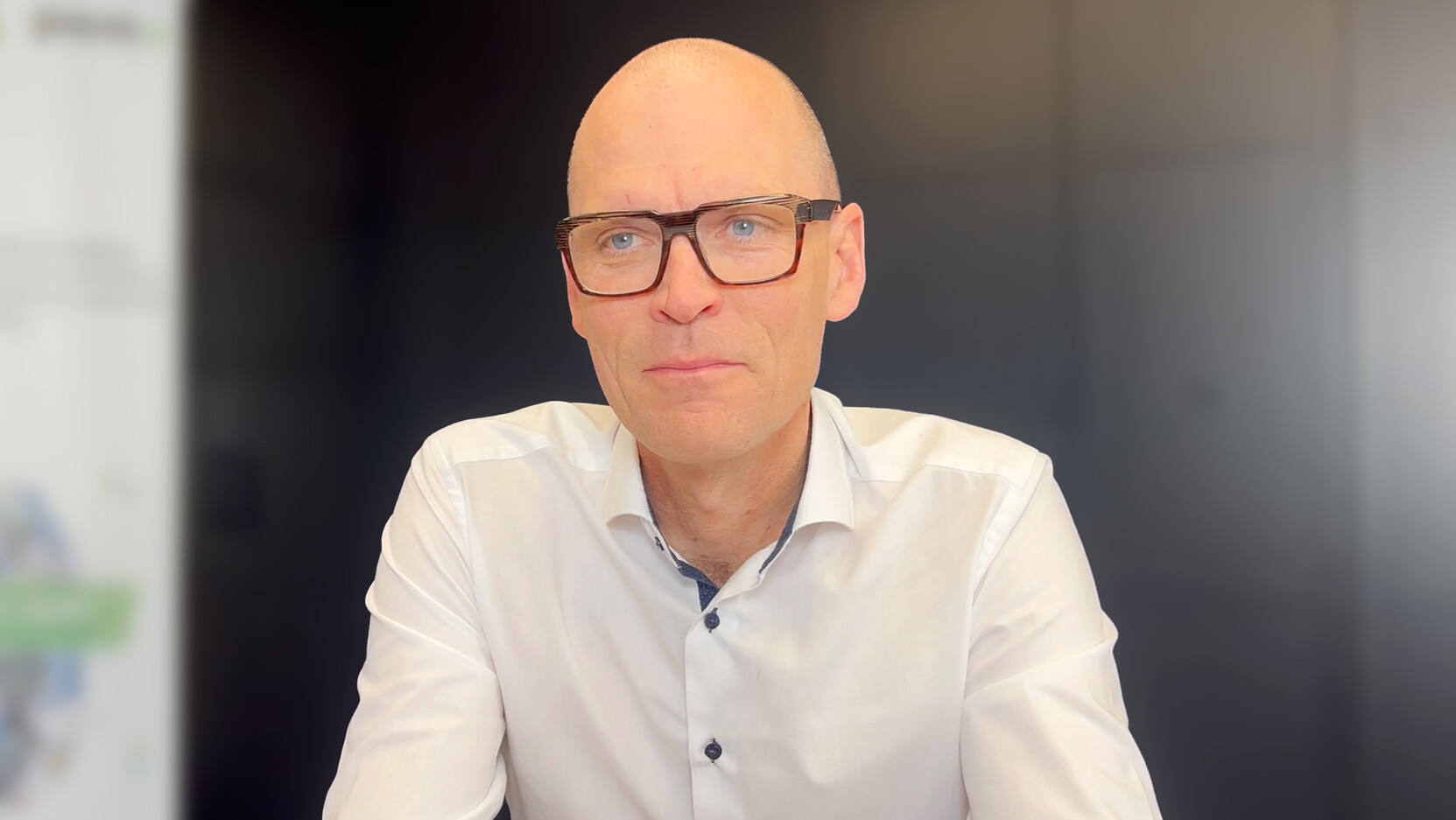
Mr Caspar, pom is regarded as one of the leading consulting companies in the areas of digitalisation, transformation and sustainable property development. How would you describe your role within this ecosystem?
At pom, we see ourselves as an intermediary between research, development and practice in the property industry. Our role is to recognise new topics at an early stage, classify trends and develop an understanding of what will move the industry in the future. We translate this knowledge into concrete use cases, recommendations and a basis for decision-making for our clients. In doing so, we help companies to separate the important from the unimportant and to focus specifically on those methods, technologies and data that actually create added value for their role in the property industry.
Which topics are your customers currently most concerned with: data, processes, organisation or technology?
There is no simple answer to this question. In recent years, the focus has been very much on technology. Many companies have introduced new systems and launched numerous digitalisation projects. This has certainly brought progress, but has also led to a certain amount of disillusionment. Projects were more time-consuming, more expensive and more complex than expected. This was often due to the fact that data and processes were underestimated. We are currently observing a clear shift away from purely technology-driven projects towards more data- and process-orientated approaches. The current AI hype is further reinforcing this development.
pom emphasises that data is the foundation of modern property management. Where do Swiss companies stand today in terms of data readiness?
Basically, Swiss property companies are not in a bad position. Most of them have sufficient data readiness to operate their core processes reliably and answer relevant stakeholder questions, but we see a need for development in automation in particular. This requires data to be structured, consistent and available company-wide. Data-intensive topics such as ESG show where the limits lie. Another important point is collaboration across company boundaries. The property industry has always been highly networked. Greater data readiness is crucial to making this collaboration more efficient, digital and automated in the future.
What are the most common misconceptions about the digitalisation of property portfolios?
The effort and complexity are often underestimated. In particular, the provision and preparation of the required data is estimated too optimistically. Although data is available, it is often not of the necessary quality or structure. This leads to delays, additional costs and extra work for the specialist departments that should actually be doing their core business. Another misconception is that digitalisation projects can be implemented “on the side”. Professional project structures and the corresponding expertise are often lacking. This has a negative impact on motivation, acceptance and ultimately the success of the project.
Which technological developments will change the property sector the most in the next 5-10 years?
Basically, we distinguish between two levels: the digitalisation of the property itself and the digitalisation of the companies that operate these properties. At building level, we are seeing major advances in the cloud, IoT and digital models. The digital mapping of properties, often referred to as the digital twin, is increasingly becoming the standard and enables new forms of automation, while at company level, development will be strongly characterised by AI and process digitalisation. A small number of core applications, combined with flexible low-code platforms, will make it possible to automate processes efficiently and across companies.
Many companies are experimenting with AI. Where do you see realistic fields of application in the next 24 months?
In the short term, there is great potential in analysing and evaluating documents and unstructured data. Content can be summarised, evaluated and created more quickly. Another important step is the integration of AI tools into everyday working life, for example as assistance solutions. The next step will be to increasingly link these systems with company-specific data. Reporting and analyses will also change: instead of fixed reports, information will be compiled according to the situation and needs.
What risks do you see in the use of AI in the property industry?
We see the biggest challenges less in the regulatory area and more at a cultural and technological level. Many companies do not yet have the necessary skills and structures in place to deal with data and technology. In addition, the Swiss market is highly fragmented and heterogeneous, which makes it difficult to introduce standardised solutions. The property industry is project-orientated and has little serial logic. This further slows down the introduction of new technologies.
Rate of adoption instead of technology: what are the biggest cultural hurdles?
A key hurdle is that digitalisation is not yet anchored as a strategic topic in many companies. A lack of expertise, unclear responsibilities and the expectation of implementing digitalisation “on the side” are slowing down implementation. In addition, there is often a lack of willingness to consistently scrutinise and change existing ways of working.
How is digitalisation changing roles in real estate companies?
Digital skills will be part of the basic qualification of many roles in the future. The focus will be less on a deep understanding of technology and more on secure user knowledge. At the same time, new roles are emerging, for example for the management of digitalisation projects and digital platforms. These functions ensure that systems are used, developed and operated sensibly.
This allows asset, property and facility managers to continue to focus on their core business.
What makes a digitally mature company?
A digitally mature company anchors digitalisation, technology and data at the highest management level. There is a clear strategic stance, defined goals and responsibilities. Digitalisation is not delegated to IT, but is seen as an entrepreneurial task.
Such a company also has the necessary roles, processes and expertise to continuously develop digital solutions and adapt them to changing conditions.
ESG and PropTech are growing together. Which technologies are already creating real impact?
ESG is a strongly data-driven topic. There are now functioning solutions along the entire data chain, from measurement to key figures. Smart meters, automated analyses of energy bills and the consolidation of data across several buildings are technically feasible. The challenge lies less in individual components and more in end-to-end integration and automation within companies. We do not yet see a comprehensive all-in-one solution.
Where do you see the biggest gaps between requirements and reality on the market?
The biggest gaps arise where requirements are only implemented selectively without considering the entire value chain. Data-driven topics in particular show that technical possibilities are available, but organisational and structural requirements are often lacking.
How do you assess the maturity of the Swiss PropTech market in an international comparison?
Switzerland has a very lively and innovative PropTech scene. Many solutions are internationally successful. The biggest challenge lies in scalability due to the size of the market and the federal structures. Overall, however, the level of maturity is high and competitive.
Which PropTech areas are underdeveloped and which are overheated?
The ESG sector is currently very overheated. There are a large number of solutions, which leads to a certain disillusionment. In international comparison, the consistent use of BIM across the entire property life cycle is particularly underdeveloped. Other countries are further ahead here, especially when it comes to institutional investors.
Where do you see potential for partnerships between established companies and start-ups?
Partnerships offer great potential, but are challenging. Established companies think long-term, start-ups are dynamic and innovation-driven. Cooperations are successful where there is mutual understanding and clear expectations are defined, be it in projects, partnerships or targeted funding models.
Which developments currently surprise you in particular, both positive and negative?
The AI hype is both positive and challenging. Positive because it promotes innovation, efficiency and new ways of thinking. Negative because expectations are often overestimated in the short term. Sustainable success requires an in-depth examination of data, processes and governance.
If you could change one thing in the industry immediately, what would it be?
I would like to see more consistency across the entire property life cycle.
The project-based, highly individualised way of working makes it difficult to use scalable digital solutions. Approaches such as prefabrication and standardised construction methods could help to enable technological leaps without losing quality and design freedom.
What drives you personally to drive forward the transformation of the industry?
I am motivated by change, new projects and the opportunity to develop things further.
Property is a particularly exciting field because it shapes our daily lives, from living to working. I find shaping digitalisation and transformation in this context to be meaningful and highly relevant.