Tag: Denkmalpflege

  • How much of the past can densification tolerate?

    How much of the past can densification tolerate?

    The Brunnergut estate was built in two stages in the mid-1950s and early 1960s and marked the transition to the functionalist, automotive city. As one of Winterthur’s first residential ensembles with underground parking, it replaced the Villa Malabar and reshaped an entire inner block between Lindstrasse, Kreuzstrasse, Sulzbergstrasse and St. Georgenstrasse. The 1954 planning application itself sparked a fierce controversy. Early debates about density, traffic and cityscape, as they occupy the entire agglomeration today

    in 2016, the city of Winterthur added Brunnergut to the inventory of buildings worthy of protection, followed by its entry in the cantonal inventory of listed buildings of supra-municipal importance in 2018. This made it clear that the estate was not only considered everyday architecture, but also an ensemble with architectural and socio-historical significance that should be taken into account in any further planning

    Legal ping-pong over protection
    With the cantonal dismissal in 2024, the building department wanted to relax the protection status again. Based on an expert opinion from the cantonal monument preservation commission and subsequent additions. The Zurich Heritage Society challenged this, and the Building Appeal Court demanded a supplementary or top-level expert opinion during the proceedings and criticized gaps in the expert assessment

    At the same time, the Winterthur city council planned to remove Brunnergut from the municipal inventory. The Zurich Heritage Society lodged another appeal against this. In its decision of November 6, 2025, the Building Appeals Court has now ruled that the city is unlawfully relying unilaterally on the KDK report and that the facts of the case have not been sufficiently clarified for the property to be removed from the inventory. The judges demanded an expert opinion from an independent expert who had not previously been involved. A clear signal for higher requirements for the justification of de-protection decisions

    More than just a technical issue of monument preservation
    The criticism focuses not only on formal deficiencies, but also on gaps in content. Imprecise plans, insufficient discussion of the qualities identified in the inventory sheet and an insufficient appreciation of the social and economic-historical significance. Specifically, the court criticized the fact that the role of the estate as an early example of dense, car-oriented post-war modernism and as part of Winterthur’s settlement history was not seriously included in the comparison with other estates

    For urban planning and the real estate industry, Brunnergut is therefore far more than an isolated case. The procedure shows how strongly inventory decisions must be legally and professionally underpinned today if they are to survive in an environment of housing shortages, pressure to densify and politically heated debates about objections and heritage protection

    What the case means for future projects
    The Zürcher Heimatschutz sees the decision as a strengthening of the inventory concept. Inventories are not mere lists, but planning instruments that must meet high standards before they can be dismantled. For cities like Winterthur, this means that anyone wishing to subsequently remove protection must transparently explain why arguments relating to building culture, urban development and social history outweigh the interests of densification, renewal or returns

    For investors, owners and planners, this increases the importance of well-documented surveys and early involvement of heritage conservation. Especially in the case of post-war housing estates, which were long regarded as “ordinary” existing buildings. Brunnergut shows that the second half of the 20th century is increasingly understood as part of the architectural heritage and that the path to conversion or replacement construction will in future often lead via independent expert reports and carefully balanced conservation concepts

  • Swiss Cultural Message 2025–28 for building culture

    Swiss Cultural Message 2025–28 for building culture

    The draft Cultural Message 2025-28 places building culture at the centre of sustainable spatial development. In the face of climate change, resource scarcity and the loss of biodiversity, the design of living space is gaining strategic importance. With its holistic approach, Baukultur provides answers to key challenges and enables a sustainable future.

    Design as a social mission
    Baukultur encompasses all spatially effective activities from monument preservation and urban planning to the design of contemporary buildings. Well-designed buildings, settlements and infrastructure promote the well-being of the population, strengthen the cultural heritage and combine ecological, social, economic and cultural values. This integrative quality makes Baukultur a decisive instrument for the transformation of cities and regions.

    Forward-looking impetus from Davos
    The international Davos Baukultur process and the latest declarations by European culture ministers confirm the need for a holistic understanding of Baukultur. Switzerland is taking up this impetus and is planning to enshrine Baukultur in the Nature and Cultural Heritage Protection Act, an important step towards strengthening the federal government’s role model function and making targeted use of existing funding instruments.

    Circular economy and innovation as guidelines
    Future building culture must be consistently geared towards the circular economy and sufficiency. New standards such as life cycle limits for emissions, the conscious use of resources and a culture of remodelling form the foundation. In addition, a culture of innovation is needed that promotes new materials, technologies and processes.

    Recommendations for coherent implementation
    The signatory organisations have made specific demands. The environmental sector should be more closely integrated, municipalities and cities should be included in advisory and training programmes and effective construction taxation should be taken into account when adjusting subsidies. In addition, a consistent application of the concept of Baukultur is required, for example in the Swiss Culture Awards or in the work of Pro Helvetia. The Swiss Building Culture Round Table offers itself as a national platform for coordination with international initiatives.

  • Monument becomes a home with history

    Monument becomes a home with history

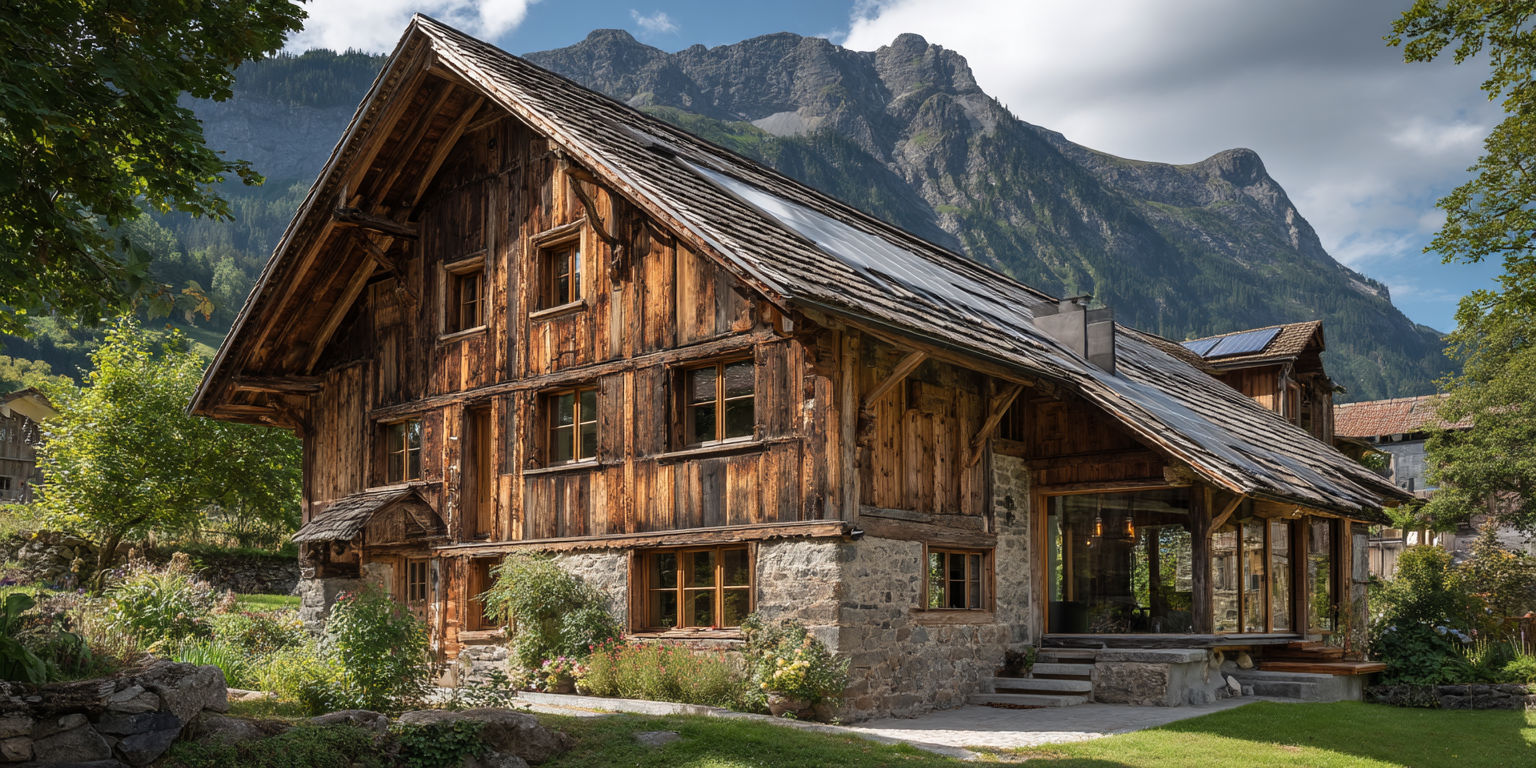
    It only took nine months to turn the listed Gütsch farmhouse in Lauerz SZ into a modern detached house. Strüby now reports on this in a press release. The company was commissioned to carry out the extensive conversion and renovation work. Strüby was able to contribute its strength and experience in dealing with listed buildings in project development, architecture, engineering and implementation.

    The early, close, constructive and solution-oriented collaboration with the cantonal monument preservation authority and its head Monika Twerenbold proved its worth, “so that the result was extremely satisfactory for everyone involved,” Kilian Boog, Head of the Conversion division at Strüby Unternehmungen, is quoted as saying.

    A lot has been done on the outside and inside, with the late medieval block building from 1492/93 “largely retaining its original character”. In combination with modern elements, an architectural “jewel” has been created that is “full of history and stories and fascinates with its symbiosis of old and new”.

    The wooden cladding, roof and windows were renewed. The outer shell was given an energy-efficient refurbishment, while the heating technology inside was switched to an energy-efficient heat pump and photovoltaics. When planning the rooms, emphasis was placed on highlighting existing “handcrafted details, interesting signs of use, religious symbols to protect against evil spirits and decorative elements”. The floor plan and room heights remained unchanged.

  • Design guidelines for historic residential quarter

    Design guidelines for historic residential quarter

    Negotiations are underway for the design and further development of the Winterthur terraced single-family housing estate Eigenheimquartier for 120 owner-occupiers. Urban planners OSRI from Lucerne, the Eigenheimquartier Winterthur association and the cantonal monument preservation authority are involved in the process. The results should lead to greater legal certainty and faster building permits for the historic properties, according to a press release from OSRI.

    The housing estate known as the “self-help colony” dates back to the period after the First World War. It was built as a counter-reaction to the great housing shortage and is one of the most important small housing estates in the canton of Zurich with a historically significant residential character, according to OSRI.

    The appearance is characterized by a “generally simple design language”. In order to maintain uniformity, the current negotiations are subject to a design guideline, which was drawn up on behalf of the cantonal monument preservation authority and with the participation of the landowners. This is intended to set out criteria that must apply when redesigning the existing 90 detached and 28 semi-detached houses. Specifically, the following questions will be addressed: Should the rows of houses once again have a uniform color scheme? What shape can skylights have? How much can the ridge height increase after the roof has been insulated?

    OSRI is responsible for deadlines, documentation and communication in the process. In the fall, it is planned to let the residents have their say. Their results will be presented at an information and dialog event and put up for debate.

  • Solar shading for historical architecture in Spain

    Solar shading for historical architecture in Spain

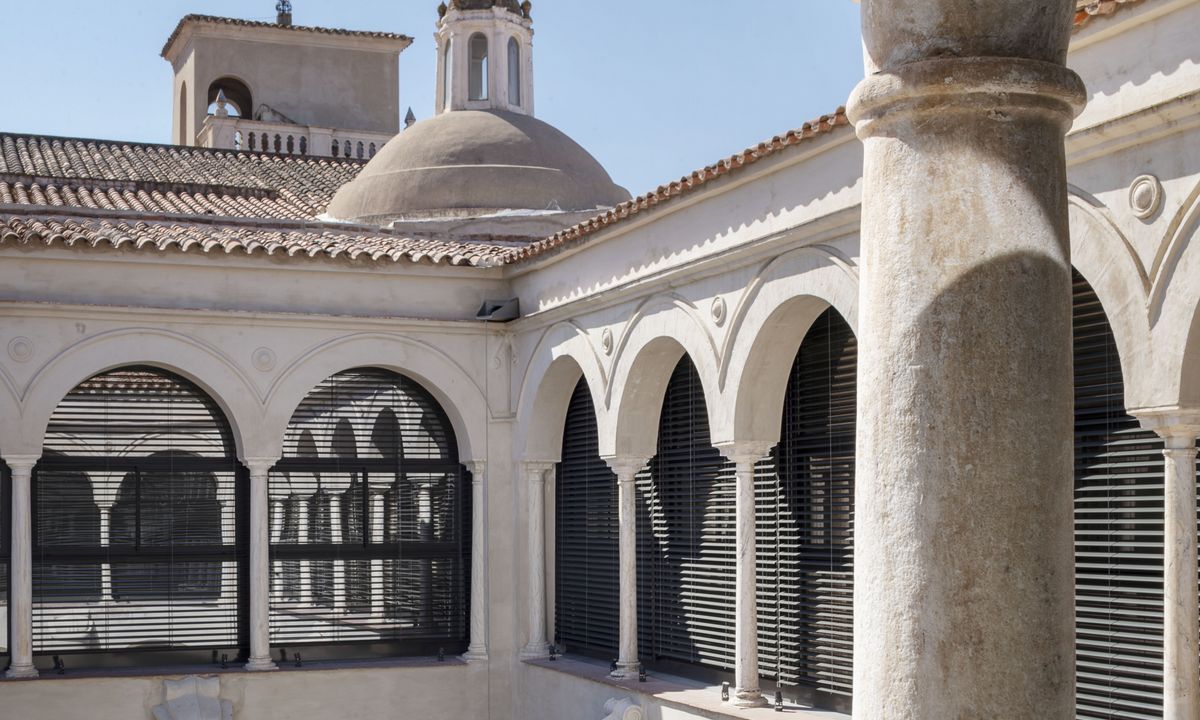
    Aadorf-based sun shading manufacturer Griesser is involved in the reconstruction and remodelling of the listed former San Agustín monastery in Badajoz, south-west Spain. This is being remodelled into a school of arts and crafts. According to a press release, the straight-lined building offers good conditions for an educational institution. In the past, the former monastery has been used as barracks, a courthouse and a school.

    The cloisters are also to be incorporated into the school during the current remodelling. Their arcades will be extensively glazed and require solar shading. Griesser is supplying its Solomatic 80 system for this purpose: the customised louvre blinds provide good shading on the one hand and a good supply of natural light on the other. Both the classic design of the slats and their colour scheme in RAL 7022, an almost anthracite grey shade, fit in with the historic appearance of the building.

    In addition, the incidence of daylight is controlled automatically. The resulting “harmonious atmosphere” is intended to increase “the students’ ability to concentrate and their sense of well-being”.

  • Historic spa centres in the canton of Vaud sustainably renovated

    Historic spa centres in the canton of Vaud sustainably renovated

    The renovated buildings in Bière, Dommartin, Romainmôtier, Rougemont and Vufflens-le-Château date from the 17th to 19th centuries. The restoration was carried out with the utmost care in order to preserve the historical substance. At the same time, facades, roofs, windows, insulation and technical installations were modernised to increase energy efficiency without changing the original character of the buildings.

    “Every restored stone, every renovated roof conveys a message to future generations, that of a canton that takes care to preserve its heritage. By modernising these five cures, we are combining heritage conservation with sustainable development,” emphasised Isabelle Moret, Head of the Cultural Heritage Department, during her visit to the site.

    Strengthening the local economy through traditional crafts
    The renovations were carried out in close collaboration with regional craftsmen. This not only strengthens the local economy, but also provides the canton with valuable craftsmanship expertise. The project shows that monument protection and sustainability are not opposites, but together form a forward-looking strategy for building culture.

  • A historical heritage in new splendour

    A historical heritage in new splendour

    in 1896, Richard Theiler laid the foundation stone for the Electrotechnical Institute, which later became world-famous as Landis Gyr, with the construction of the Theilerhaus. The importance of the Theilerhaus for the people of Zug cannot be denied and its preservation became a priority in 1989 when the Canton of Zug acquired the site in order to preserve it for future generations.

    Preservation of historical substance
    The Canton of Zug has developed a comprehensive concept entitled “The Theilerhaus and its spirit”. This outline of ideas aims to preserve the “spirit” of the buildings and to bring together aspects of economy, technology, architecture and culture in a holistic framework.

    Refurbishment in keeping with the heritage
    The maintenance measures extend to all existing old buildings, focussing on earthquake safety, fire protection and accessibility. The renewal of windows, sun protection and roof cladding as well as the insulation of the Shedhalle are important steps towards meeting the requirements. The new building in the eastern area respects the historical substance and creates an appealing overall urban structure.

    A new urban accent
    The planned new building complements the urban ensemble and consists of a five-storey head building and a four-storey intermediate building. This design, which is connected to the high-rise building by a modern stair tower, blends harmoniously into the existing surroundings and strengthens the identity of the site.

    The Shedhalle as a cultural, creative space
    Once the renovation work has been completed, the Shedhalle will not only function as a place of remembrance of the past, but also as a lively space for cultural and artistic events. This use offers added value for the people of Zug and emphasises the versatility of the site and its relevance in today’s world.

    Forward-looking project
    Overall, this project represents a significant step in the urban development of the Canton of Zug and should benefit future generations. The planned measures emphasise how important it is to view historical heritage as part of a living, constantly evolving society and to shape it accordingly.

  • Hächler maintains the Vindonissa amphitheater

    Hächler maintains the Vindonissa amphitheater

    Hächler AG Umbau und Renovation tackles a special task every year. Under the management of Reto Schwitter, the Wettingen-based company preserves and protects the Vindonissa amphitheater in Windisch, Hächler announced in a press release. The expert in monument preservation at Hächler is contributing his extensive specialist knowledge, valuable experience and passion to the maintenance of the largest facility of its kind in Switzerland, according to the statement.

    “The renovation and refurbishment of such a building requires absolute expertise, many years of experience and a high level of sensitivity,” writes Hächler. The annual maintenance work mainly involves repairing defective joints through which water could otherwise penetrate the masonry. Hächler uses a mortar specially adapted for this purpose.

    The amphitheatre in Windisch was built in the first century AD in the immediate vicinity of the Roman legionary camp of Vindonissa. It measures 111 by 99 meters and offers space for 11,000 spectators. The site, which is owned by the Swiss Confederation, is a cultural asset of national importance.

  • The 24th report of the Zurich Heritage Society

    The 24th report of the Zurich Heritage Society

    With its 24th report, the Zurich Cantonal Monument Preservation Office has published a detailed documentation of its work in recent years, providing important insights into the restoration of architectural monuments throughout the canton. This volume contains 34 detailed texts on individual buildings and ensembles spanning a period of more than 700 years of building culture. The selected projects illustrate the typological diversity and regional distribution of monuments in Zurich.

    Particularly noteworthy in this report is the increase in projects from the 20th century, including striking buildings such as the Tibet Institute in Zell, the landscaping of the Wintower in Winterthur and the Pavillon Le Corbusier in Zurich. The report also presents a number of educational and catering buildings as well as agricultural structures that are characteristic of regional architecture.

    Outstanding examples include the castle ruins of Alt-Wülflingen near Winterthur, the guild house “Zur Meisen” and the “Schildner zum Schneggen” society house in Zurich as well as the historicist Wart Castle in Neftenbach. Two villas with extensive parks in Horgen and Männedorf are also included in the report.

    The documentation of each property in the report includes a timeline of the construction history, detailed descriptions of the measures carried out and extensive illustrations. The report is supplemented by two introductory articles dealing with liturgical buildings in Dielsdorf and innovations in timber construction in the early 20th century in the canton of Zurich. These articles shed light on the influence of civil engineering on architecture and the importance of building with wood during a period of major technical and cultural change.

    Finally, the report contains around 90 short reports on renovations accompanied by monument conservationists, which illustrate the breadth and depth of monument conservation activities in the Canton of Zurich. The 24th Report on the Preservation of Historical Monuments in Zurich thus offers a valuable resource for specialists in monument preservation, architecture and urban planning as well as for anyone interested in the preservation of cultural heritage.

  • Launch of the competition for the “Aerogel Architecture Award 2024”

    Launch of the competition for the “Aerogel Architecture Award 2024”

    The fourth “Aerogel Architecture Award” is looking for inspiring examples of the use of aerogel in architecture and construction. The competition, which takes place in the categories “Realised Solutions” and “Student Designs”, offers a unique platform to present and honour innovative ideas and projects. An expert jury will select the finalists from all submissions, who will compete for the “Aerogel Architecture Award 2024” at an event on the Empa campus in Dübendorf on 12 July 2024.

    Architecture and civil engineering firms with projects in the areas of renovation, refurbishment or new construction can take part. Students of architecture and civil engineering are also invited to submit their designs and proposals for the use of aerogel. All projects will be assessed in a selection process that will be held in English. Realised renovation projects for listed buildings that have been improved with aerogel insulation materials will be particularly recommended.

    The award ceremony on 12 July 2024 in the NEST building on the Empa campus in Dübendorf will be available as a public livestream. The winning projects will not only receive recognition and public attention, but will also be published in international journals and on online platforms.

    Interested parties are invited to submit their projects in the form of a ZIP or RAR file by the closing date. Submissions should include a PDF poster in A1 format, JPEG images of the project, details of the use of the aerogel insulation and a registration form with a detailed description of the project. By entering the competition, participants agree to the publication of their project and confirm that they respect the rights to images, graphics and drawings of their submissions.