Tag: Denkmalschutz

  • When architectural monuments pack their suitcases

    When architectural monuments pack their suitcases

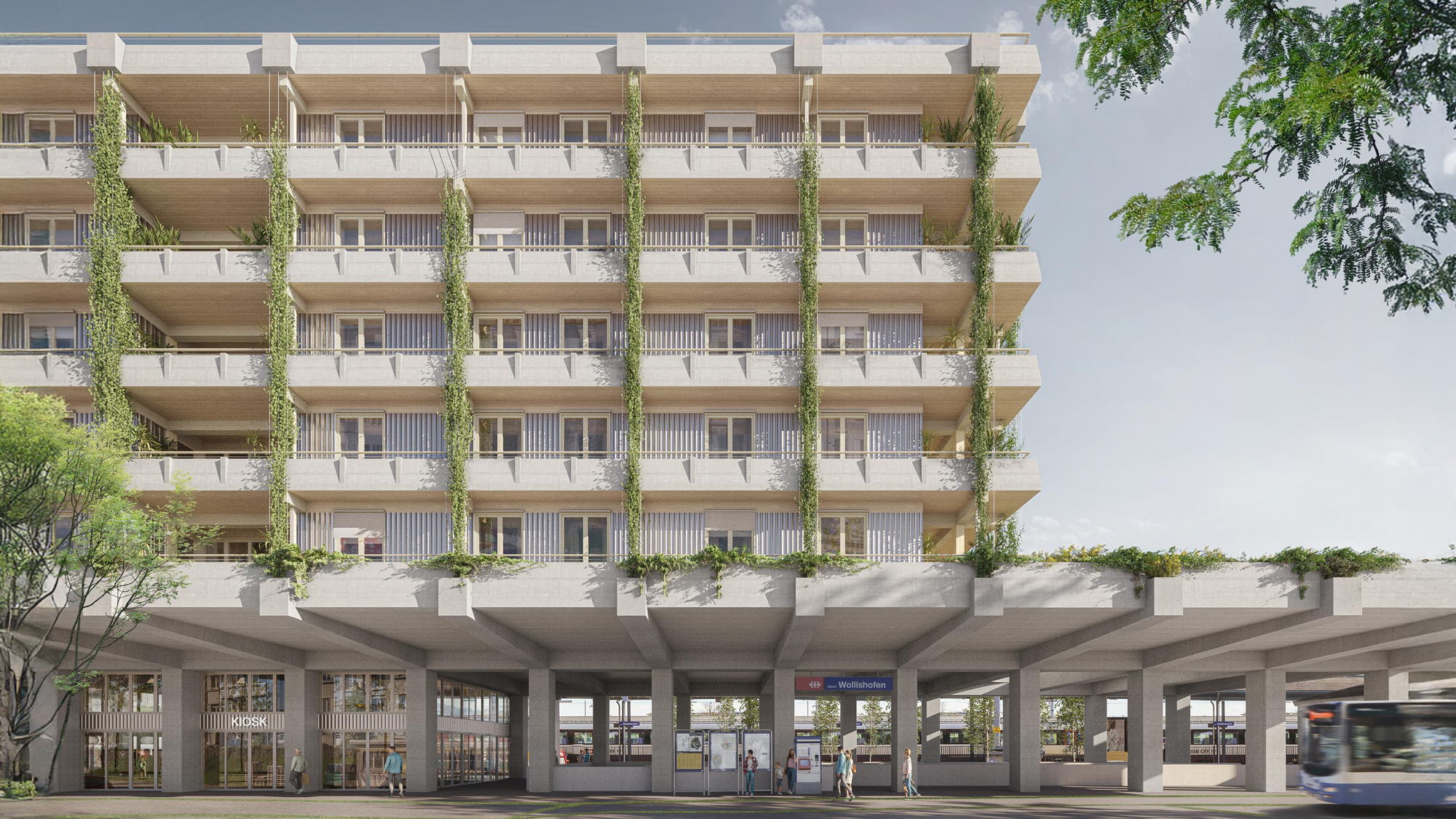
    Two apartment buildings with 57 apartments ranging in size from 2.5 to 5.5 rooms are being built on a 6500 square meter site to the north of the historic station building. Commercial and restaurant space is planned on the first floors, as well as a small commercial building and an underground garage with 59 car and 92 bicycle parking spaces. A park-like open space with a playground will be created between the two buildings.

    Less, but social
    The project has become smaller. SBB originally planned four buildings with 90 apartments, a third of which would be affordable. However, the signal box next to the station building must remain, which means that an entire building is no longer needed. Of the remaining 57 apartments, 20 are to be offered at affordable prices. This corresponds to 35 percent and is even slightly higher than the original quota.

    Switzerland’s last goods shed
    What residential construction demands requires space. Four existing buildings have to make way, including the goods shed from 1928, designed by Meinrad Lorenz, SBB’s chief architect at the time, one of only four buildings of this type in the whole of Switzerland. Following the demolition of the identical shed in Heerbrugg, the one in Wollishofen is the last remaining example of its kind. It is listed in the cantonal inventory of listed buildings.

    A wooden building packs its bags
    Nevertheless, the goods shed will not disappear. It will be dismantled into individual parts, professionally refurbished and rebuilt at the Zurich Oberland Steam Railway Association in Bauma an der Töss. There it will be made accessible to the public and given a museum function as part of the “Bauma 2020 depot area” project. The approval documents for the dismantling are already largely in place.

    History repeats itself
    This move is not the first in the history of Wollishofen station. The current station building was once the first station building in the city of Zug, built in 1864 and moved stone by stone to Lake Zurich in 1897. What was forced by the scarcity of building materials in the 19th century is now a deliberate act of preservation. Wollishofen is thus writing another chapter in an unusual building history.
  • What was considered a bargain becomes a billion-euro project

    What was considered a bargain becomes a billion-euro project

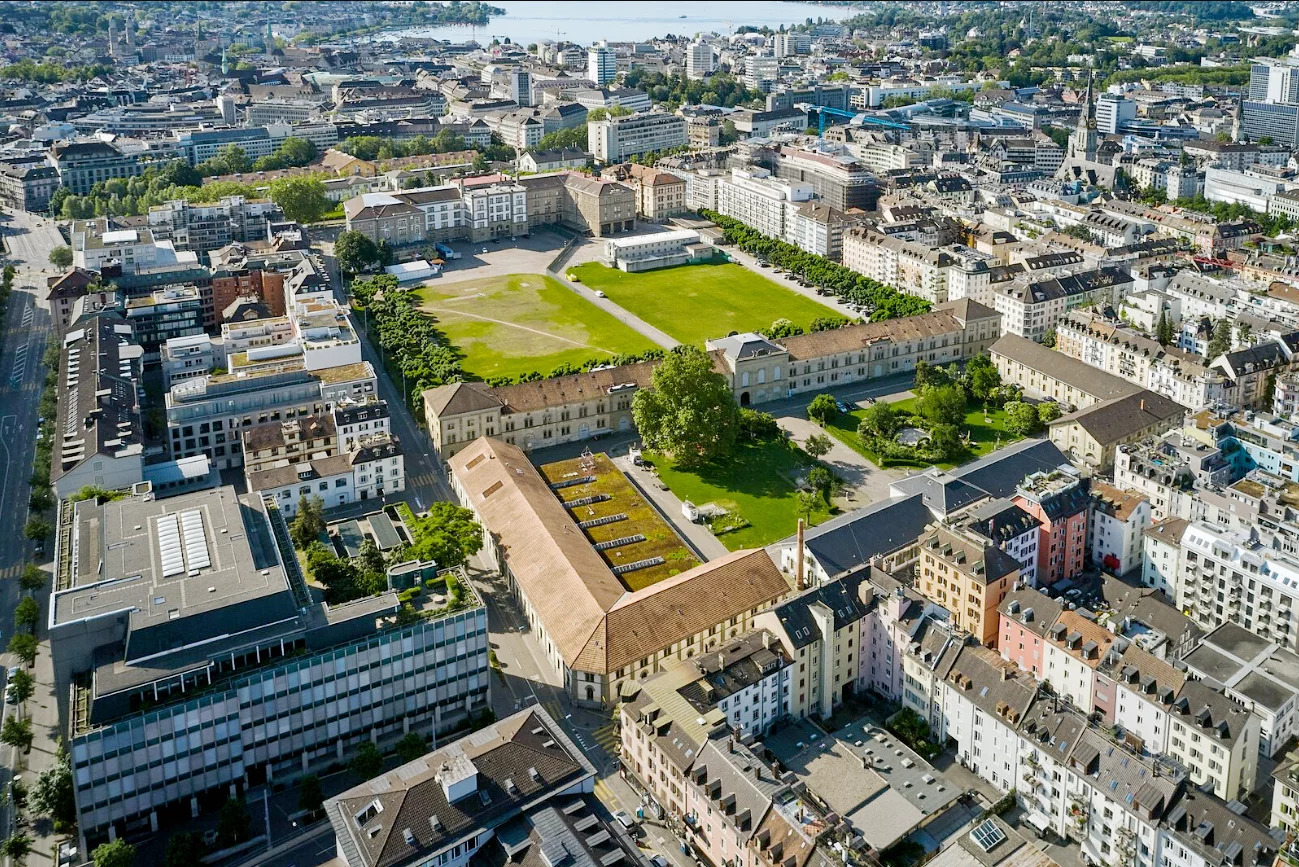
    When the city of Zurich announced the renovation of the armory on the barracks site in Zurich-Aussersihl, it still sounded like a manageable project. The initial cost estimate was around 55 million francs. Today, a figure of just under 200 million francs is on the table that makes even experienced city parliamentarians sit up and take notice. A multiplication that needs to be explained.

    Dilapidated fabric drives up costs
    The main driver is the fabric of the building itself. The historic arsenals are in a far worse condition than originally assumed. Pollutant remediation, structural interventions and monument conservation requirements add up to a cost that was simply underestimated in advance. Added to this are increased construction costs and an expanded usage concept that requires higher technical standards.

    Culture, commerce and community
    What is to be created after the renovation has substance. The city council is planning a mixture of cultural use, small businesses and publicly accessible spaces. A lively meeting place in the middle of Zurich-Aussersihl. The social mix is an explicit part of the concept. The aim is to enhance the barracks area as a whole, not just the arsenals themselves.

    Long road to opening
    The timetable is ambitious and the history of the project calls for caution. The renovated arsenals should be ready for occupation in 2034 at the earliest. Until then, the municipal council will need to approve a loan, an approved construction project and a smooth construction process. In Zurich, experience shows that these three factors rarely all work smoothly at the same time.

    Monument obliges
    The arsenals are part of the protected barracks area. An ensemble that makes the city’s history visible. Demolition is out of the question. If you want to preserve historic buildings, you have to be prepared to pay for them. The question is not whether, but how the city finances this task and communicates it transparently, comprehensibly and with clear added value for all Zurich residents.

  • Historic Spa District gets a new perspective for use

    Historic Spa District gets a new perspective for use

    Verenahof AG, based in Baden, wants to revitalize the building complex in Baden’s Spa District. To this end, it concluded a contract with the city on February 5. According to a press release, this forms the basis for the development and use of the complex and is intended to provide planning security.

    Verenahof AG has developed a utilization concept in collaboration with the city and the cantonal monument preservation authorities. This envisages combining assisted living for older people with cultural offerings and publicly accessible uses. The technical feasibility has already been examined. Now a building application and a cost estimate are to be drawn up within twelve months under the management of Verenahof AG.

    “The concept for services in the areas of prevention, rehabilitation and healthy ageing is a perfect fit for this historically valuable location for Baden,” said Markus Schneider, Mayor of Baden, in the press release. “The Spa District has been investing in health since Roman times – it is important for Baden and the region that this offering continues to be expanded in the future.”

    The complex has been vacant since the closure of the Verenahof, Bären and Ochsen hotels in 1987 and 2004. It has been under national protection since 2019. As the owner of Verenahof AG, the Bad Zurzach Baden Health Promotion Foundation has examined several uses, including for a rehabilitation clinic. These possible uses came up against the economic and structural framework conditions as well as the requirements for the preservation of historical monuments.

  • Historic thermal baths get a green future

    Historic thermal baths get a green future

    The city of Baden and the canton of Aargau have granted the Bad zum Raben cooperative planning permission to renovate the Bad zum Raben swimming pool. According to a statement issued by the cooperative, the renovation will combine monument preservation, water hygiene, fire and flood protection, and efficient operations. Once financing has been secured, the renovation is scheduled to start at the end of 2026 and be completed in early 2028.

    “We are very pleased about this important milestone. The building permit gives us planning security and is the basis for further fundraising,” said Andreas Rudow, co-president of the Bad zum Raben cooperative, in the press release. “With the project approved, it will be easier to find funding.”

    The total cost of the renovation will be around CHF 4.5 million. While CHF 1 million has already been covered by own funds, donations and initial funding commitments, the remaining financing is to be secured through contributions from the public sector, foundation fundraising, donations and the sale of cooperative shares. The Bad zum Raben cooperative is also continuing to seek additional members and is symbolically selling components of the future baths.

    The renovation aims to preserve the historic building fabric and enable the communication of history and culture through sustainable bathing operations and flexible use. In addition to four pools with natural thermal water, the Bad zum Raben will feature a small bistro, a stage for cultural events, rooms for art and relaxation, and a bathing media library. The entrance area will offer insights into the history of the old bathhouse and the historic water system. After the renovation, thermal water will also be used to heat the showers in the baths and the apartments on the former hotel floors.

  • New Center for Social Sciences

    New Center for Social Sciences

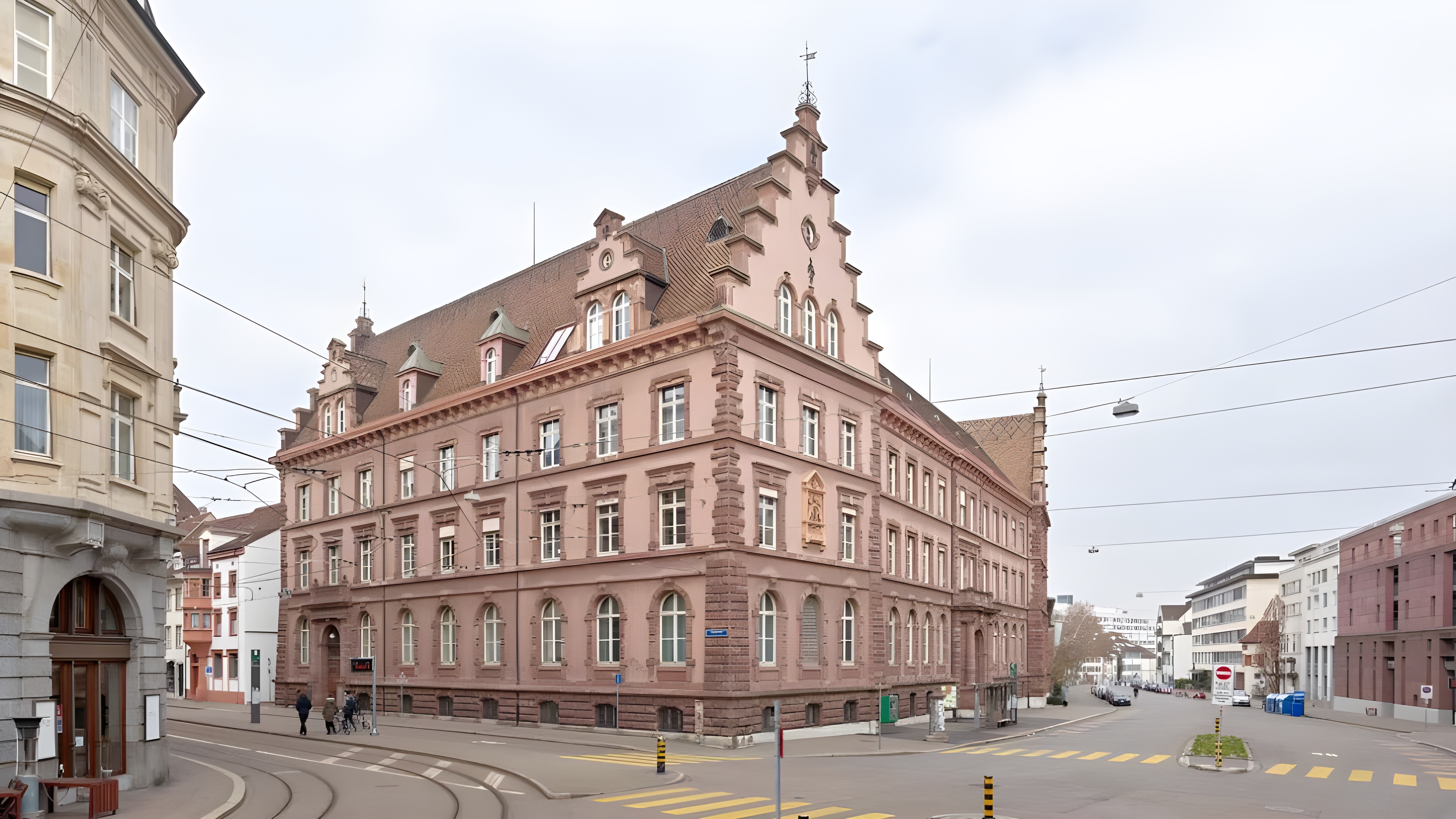
    The Alte Gewerbeschule, once built in the German Neo-Renaissance style, will remain architecturally and culturally significant following its extensive renovation. The Canton of Basel-Stadt is investing around 63 million francs in the renovation, which is based on strict monument protection regulations and current standards for accessibility and energy efficiency. Specialist departments and general planners are working closely with the cantonal monument preservation authorities to preserve the façade, interior and historical details.

    With the renovation, eight university departments, the dean’s office and central services will be concentrated at Petersplatz, which will strengthen academic dialog and the use of shared resources. The UVB Social Sciences will have a new, modern library in the inner courtyard and attractive learning and working areas on the mezzanine floor. This will create a university center for the humanities and cultural sciences with a high quality of stay and optimal infrastructure.

    Refurbishment under the banner of sustainability
    Construction work began in November 2025 and will last until summer 2029. The building will be modernized in terms of energy efficiency, made earthquake-proof and contaminated sites will be removed. The new interior design combines functionality and monument protection. Characteristic building elements will be restored and the technical infrastructure and flexibility of use will be brought up to the level of a modern campus. It is being carried out under the leadership of the cantonal monument preservation authorities and specialized architects, accompanied by federal expert committees, in order to ensure maximum protection of the historical substance.

    The Alte Gewerbeschule Basel will be an innovative bridge between academic excellence and historical identity. A strong signal for the future of urban learning.

  • Digital twin makes the invisible visible

    Digital twin makes the invisible visible

    At the heart of the project is a digital co-pilot that acts as an intelligent assistant and supports restoration decisions. Laser scans and photogrammetric images are used to create a precise 3D twin of the cathedral, supplemented by detailed data on each stone. Age, material composition and condition are scientifically documented

    At the same time, the mechanical loads in the building are simulated using methods such as Thrust Network Analysis. Damage is not only visible, but also localized in space and its development can be traced. The XR technologies show restorers, engineers and architects interactive holograms directly on the original building

    Climate as a challenge
    The ETH Zurich team correlates local weather extremes such as wind-driven rain with the real damage patterns on the sandstones. Sensors measure humidity and microclimate; the data obtained flows into models that predict future developments in the event of increasing climate change. This results in strategies for the long-term preservation of the building fabric, adapted to the individual climatic stresses at the location

    New standards for buildings worldwide
    The “Heritage ” project is a role model for digitalization in heritage conservation. The combination of digital twin, XR and AI is transferable to bridges, castles and other historic buildings. The public app for the anniversary of the cathedral communicates restoration work to visitors in a transparent and participatory way. Monument conservation not only becomes more efficient, but can be experienced by everyone.

  • Shanghai relocates Shikumen complex with robots

    Shanghai relocates Shikumen complex with robots

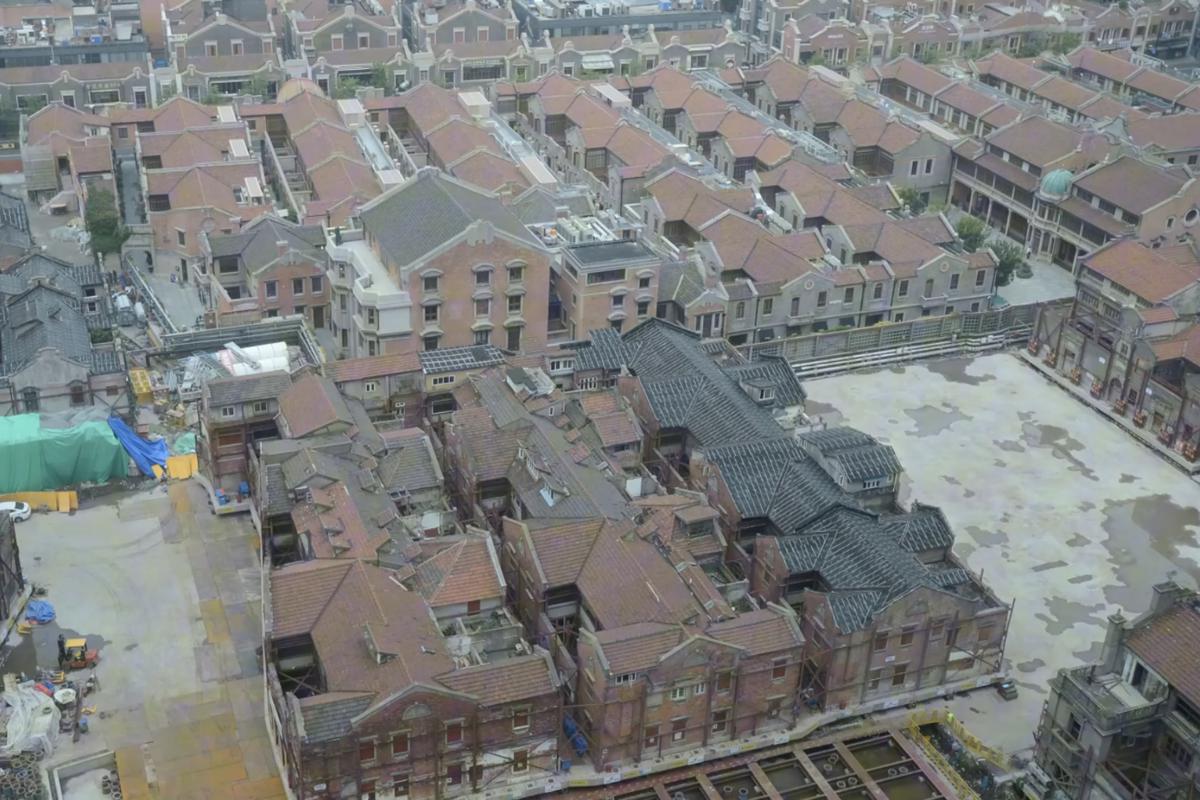
    With this project, the city of Shanghai is demonstrating its ability to combine heritage conservation and urban development. The Huayanli complex, built between 1920 and 1930, is part of the Zhangyuan district, which looks back on over 140 years of history. With a total area of 4,030 square meters and three brick and timber buildings, it is not only architecturally significant, but also an important testimony to urban identity.

    The temporary relocation is necessary in order to construct a three-storey underground facility of over 53,000 square meters. This will create cultural and commercial spaces, more than 100 parking spaces and connections to three subway lines. An ambitious project in a densely built-up historical environment.

    Robot-assisted precision work in the historic core
    Given the narrow alleyways and limited space, the construction team relied on a combination of advanced technologies and customized robotics. A total of 432 self-propelled robots move the ensemble at a speed of around 10 meters per day. A logistical masterpiece that enables minimal disruption with maximum precision.

    In addition, miniaturized robots were used for foundation work, which move through narrow doors and corridors thanks to remote control. Supported by BIM and point cloud scans, precise 3D models of the existing building were created to identify potential collisions and structural challenges at an early stage.

    Smart earthmoving and minimally invasive interventions
    Another technical innovation is the specially developed earthmoving robots with foldable gripper arms. These can move in spaces less than 1.2 meters wide and use deep learning algorithms to distinguish between clay and obstacles. As a result, the construction project is progressing with high efficiency and minimal risk to the historic building, despite the cramped conditions.

    Zhang Yi, General Manager of the Shanghai Construction No 2 subsidiary responsible for urban renewal, explains the approach: “We designed several curved transportation routes for the excavated earth and implemented a conveyor belt system like in a factory. This allows us to reduce disruption and achieve high working speeds at the same time.”

    Linking old and new
    The project is more than just a technical masterpiece. It exemplifies an urban vision that sees historical heritage not as an obstacle, but as a resource. Once the work is complete, the Huayanli complex will return to its original location. However, above a modern infrastructure that connects it to the surrounding high-rise buildings, shopping centers and residential districts. The integration of above-ground conservation measures with modern underground facilities offers a model for the sustainable revitalization of historic districts in growing metropolises. For Shanghai and for international urban planners and engineers, this project is a milestone. It shows how cultural identity and urban modernization can be combined to form a harmonious whole.

  • Monument protection and technology in harmony

    Monument protection and technology in harmony

    According to a press release, the Schlieren-based construction company STRABAG AG and its building construction department are taking on “central tasks in the comprehensive renovation of the Landhaus Solothurn”. In addition to measures to modernize the building’s technical infrastructure, including plumbing, ventilation, lighting and stage technology, the focus is on modernizing the heating system.

    This will be converted to resource-saving energy generation by means of a heat pump. Water from the River Aare will be used as a heat source to supply both the Landhaus and adjacent public buildings such as the youth hostel, Kollegium school and municipal theater.

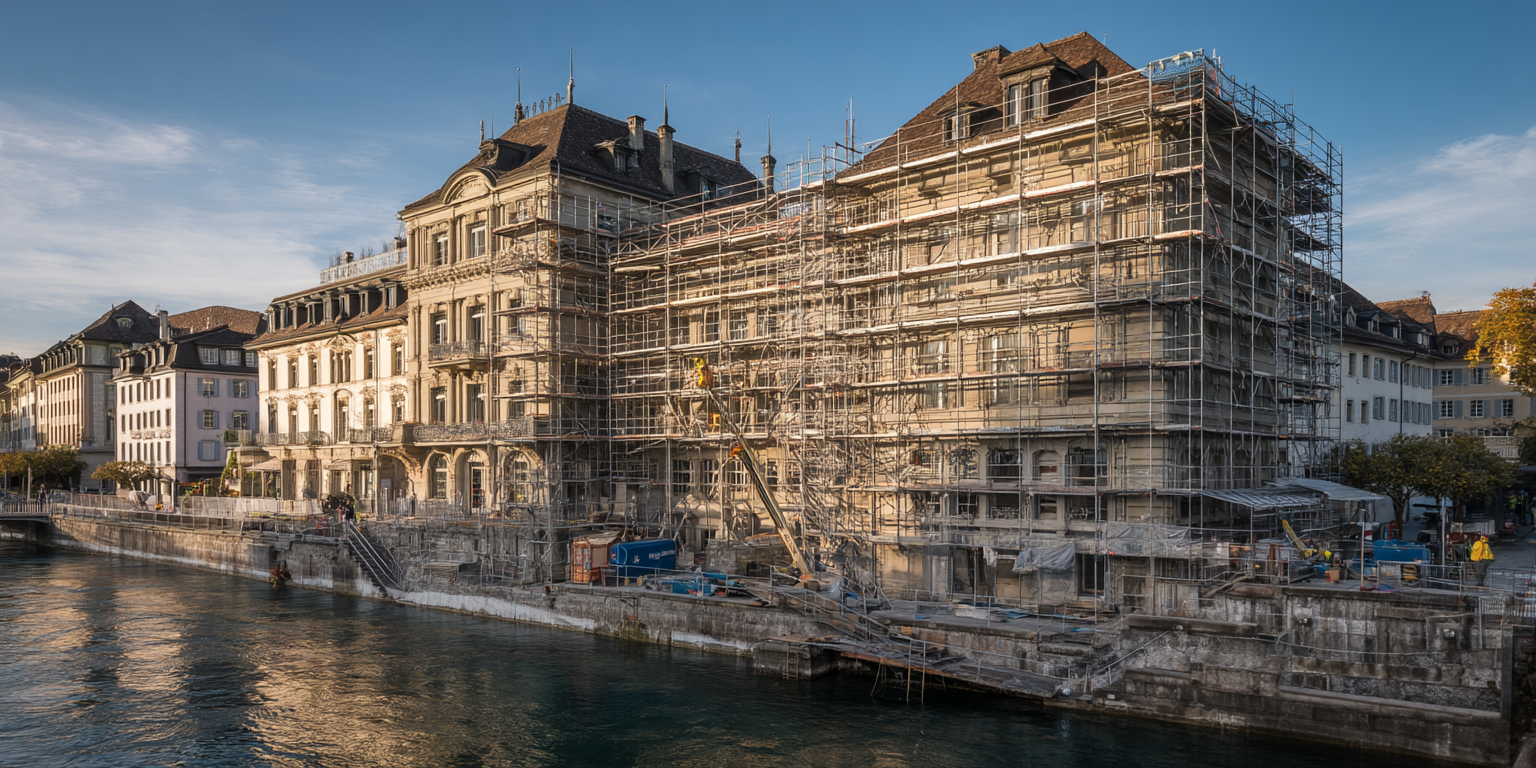
    The location between the old town and the River Aare requires logistical attention. Material deliveries and waste disposal had to take place in the morning so that the riverside promenade could be used as a promenade from midday.

    It was also necessary to take into account the stringent requirements of monument protection. The listed country house is like a “winding architectural work of art with six levels, each with its own renovation requirements”. The approach required “sensitivity” in order to preserve the historical character and the fabric of the building. In particular, the original Solothurn limestone staircases are to be preserved in their uniqueness, it is said. Special protective devices have been created for this purpose.

    Solothurn voters approved the renovation in October 2023. Construction work has been underway since January 2025. Construction is scheduled to end in October 2026. In January, construction site operations will be suspended in consideration of the Solothurn Film Festival 2026.

  • How nonsensical regulations are slowing down residential construction

    How nonsensical regulations are slowing down residential construction

    In Swiss cities, rental flats are scarce and expensive, and there are many reasons for this. One decisive factor is the increasingly long waiting time between planning application and building permit. The number of waiting days has increased by around 12 per cent on average across Switzerland in the last ten years. Whereas a decade ago, building applications still took an average of 118 days to be approved, today the figure is already 133 days.

    The cantons of Geneva, Fribourg and Basel-Stadt are particularly affected, where it takes up to 188 days to review a planning application. The waiting time in the canton of Zurich is also considerable at 152 days. These delays are a symptom of more far-reaching problems in the Swiss construction industry.

    Nonsensical regulations act as a brake
    Architects and experts see nonsensical building regulations as a key obstacle to the rapid construction of new rental flats in urban centres. Peter Sturzenegger, owner of the architectural firm Isler Architekten AG in Winterthur, cites the multiple length allowance (MLZ) as an example. This regulation stipulates that the boundary distance must be increased for buildings over 14 metres in length, which has made many construction projects impossible. In Winterthur, it is planned to abolish this regulation by the end of 2025, but in other cities such as Zurich, the future of this rule remains uncertain.

    Outdated laws and their consequences
    Another example of outdated building regulations is the orientation of living spaces in the canton of Zurich. The Planning and Building Act requires that the majority of living spaces must not face north-east or north-west in order to maximise daylight and prevent mould growth. However, Pascal Müller from Müller Sigrist Architekten AG argues that this regulation is no longer appropriate in the context of today’s urban conditions, such as noise pollution and climate change.

    In addition to the legal hurdles, Müller also criticises the role of the courts. The large number of court rulings and judgements creates uncertainty for building owners, as they constantly change the regulations and significantly restrict the scope for planners.

    Monument protection and energy-efficient refurbishment
    Aargau architect Daniel Huber emphasises the restrictive requirements for monument protection and the complex requirements for energy-efficient refurbishment as further obstacles. For him, the inconsistent implementation of building regulations, which depends heavily on the interpretation of the responsible authorities, is particularly problematic.

    The mass of regulations as a central problem
    The Swiss Federation of Master Builders sees the growing number and complexity of building regulations as the biggest challenge. Jacqueline Theiler, Head of Communications at the association, explains that the increasing density of regulations and the associated appeal procedures considerably lengthen the building permit process. The over-interpretation of existing noise regulations by the Federal Supreme Court is particularly problematic.

    The association is now pinning its hopes on swift changes to the law by parliament in order to get the faltering housing construction back on track and realise the urgently needed flats in Switzerland.

  • Neuchâtel equips three historic buildings with 33,300 solar roof tiles

    Neuchâtel equips three historic buildings with 33,300 solar roof tiles

    According to a press release, roof surfaces on three listed buildings in the city of Neuchâtel will be used for sustainable energy generation in future. The city’s Collège des Parcs and the cantonal school and university buildings Beaux-Arts and A.-L. Breguet will be equipped with a total of 33,300 solar tiles from Freesuns. The renovation project is supported by the CSEM research and development centre. For the city and canton, it represents a further step towards the energy transition.

    According to the press release, the college can generate 150,000 kilowatt hours of electricity itself each year, which is equivalent to the consumption of 50 Swiss households. The installed capacity on the cantonal buildings is 130 kilowatts peak for A.-L. Breguet and 95 kilowatts peak for Beaux-Arts.

    Architectural conditions required special solutions: At the Collège des Parcs, the tiles had to be installed in such a way that they followed the curved lines of the roof without damaging it.

    The conversion of historic buildings to solar energy could provide an inspiring model for other cantons and municipalities. The tiles could “enable the balance between cultural preservation and sustainable development”, Deborah Learoyd, General Manager at Freesuns, is quoted as saying.

    The renovation projects are “an example of how we can combine roof tiles, photovoltaics, energy transition and preservation of architectural heritage”, Matthieu Despeisse, Group Leader Solar Modules at CSEM, is quoted as saying.

    The work should be completed between September and November 2024. CSEM and Freesuns are considering continuing their collaboration.

  • Alternative location for energy centre in Zurich

    Alternative location for energy centre in Zurich

    The feasibility study conducted by the Swiss Center of Applied Underground Technologies in collaboration with Amberg Engineering AG, Rapp AG and experts from ETH Zurich and Lucerne University of Applied Sciences and Arts has confirmed that there are underground locations in Zurich that are suitable for an energy centre. The focus is particularly on the construction of a cavern beneath the ETH machine laboratory. The disused Latentunnel could be used as an access shaft to ensure access without serious emissions.

    It would also be possible to use the Latvian tunnel as a location for a heat storage facility. According to the HSLU experts, all of CoolCity’s CO2 emissions could be avoided in this way. This would enable the city to achieve its climate targets more effectively than with the Selnau site, where the combustion of gas is planned to compensate for peak loads and excess heat would have to be discharged into the Limmat.

    An underground site also has advantages in terms of rapid realisation and costs. In contrast to the Selnau site, the location under the ETH does not require any permits from the monument protection authorities and minimises the impact on the groundwater. The SCAUT engineers estimate the additional costs for the construction of an energy centre at CHF 15 to 30 million compared to the Selnau substation, plus around CHF 20 million for a heat storage facility. However, this is offset by the advantages of a large above-ground building that can be used for decades, as well as the climatic and environmental benefits of an underground structure.

  • Historic preservation in Zug under criticism

    Historic preservation in Zug under criticism

    The revised Zug Monument Protection Act came into force in 2019 and limits protection to “extremely important” buildings. As a result, many historic buildings in the canton of Zug that are valuable but not “extremely important” are at risk. Critics argue that this strict criterion concerns world-famous monuments such as Notre Dame Cathedral or Cologne Cathedral, but not local monuments such as the Zurlaubenhof.

    Appeal and decision of the Federal Court
    The Zug Heritage Society had challenged the law on the grounds of violations of the Granada Convention, an international treaty for the protection of architectural monuments. The Federal Court partially ruled in their favour, but the decision was not upheld in a more recent case, which means that many buildings in the canton of Zug remain at risk.

    Future prospects
    According to recent court decisions, many historic buildings in Zug are not protected. Owners and residents who want to campaign for the protection of these buildings now face the challenge of challenging the legality of the laws and bearing the associated legal costs. They can rely on international agreements and previous court decisions, but the hurdles are high. Homeland Security regrets that the earlier decision of the Federal Court was not upheld.