Tag: Dietikon

  • Modular school pavilions as a temporary solution to secure school operations in Dietikon

    Modular school pavilions as a temporary solution to secure school operations in Dietikon

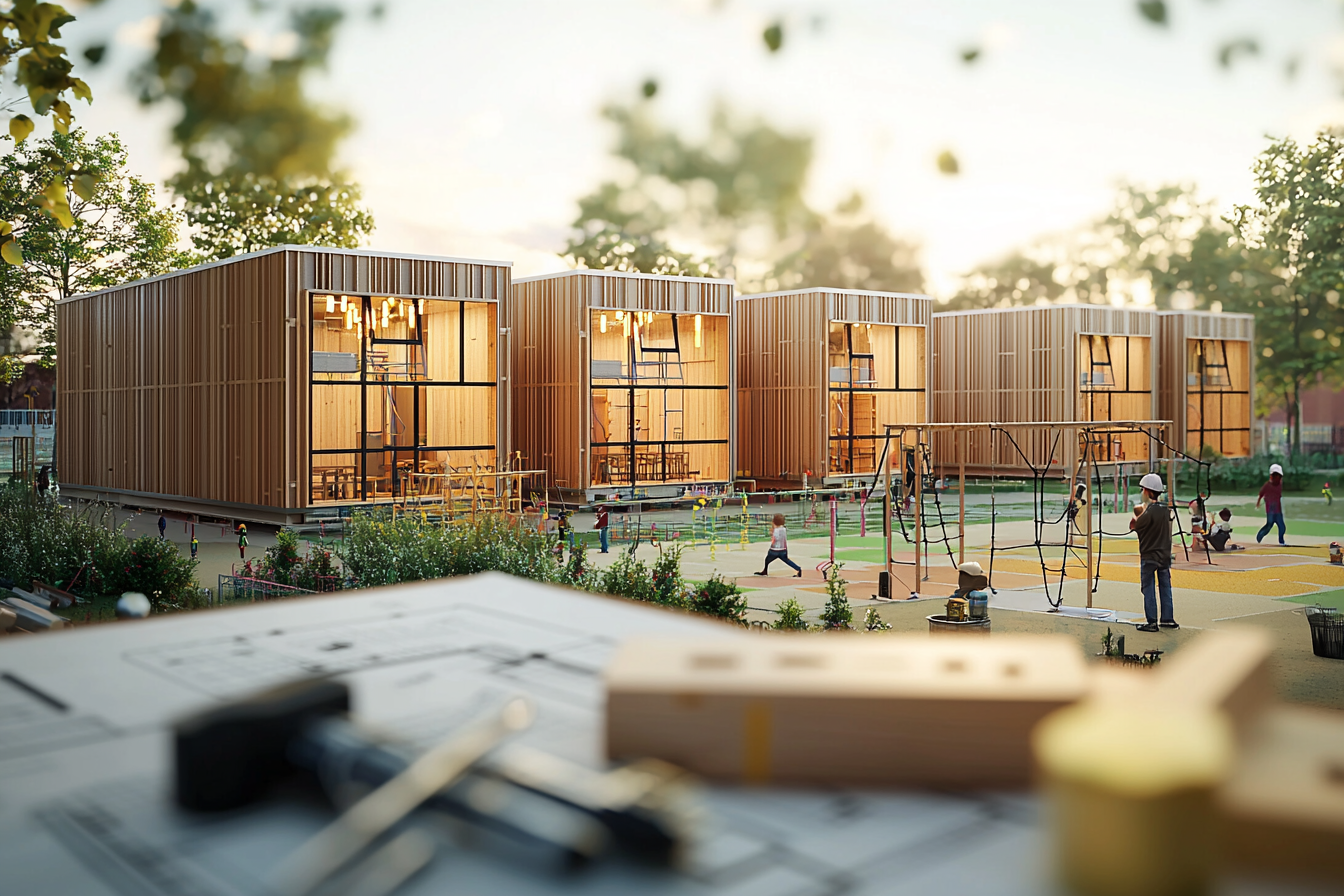
    The town of Dietikon is renovating the Wolfsmatt school complex. Three new school pavilions have been built on the city-owned site on Vogelauweg in order to be able to continue teaching. This provides an additional 27 classrooms. Aare Limmat Elektro AG was commissioned with the planning and execution of the complete electrical installations. The entire electrical installation was newly installed and corresponds to the current state of the art, according to a press release from the company based in Baden and Olten SO.

    The three school buildings were built entirely in modular construction and prefabricated. The temporary buildings will serve as a fully usable transitional solution during the renovation of the Wolfsmatt school complex, the statement continues.

    Around 500 children attend kindergarten and elementary school in the Wolfsmatt school unit, according to the Dietikon school. The school unit comprises 21 regular classes. Eight kindergartens are located in the residential areas around the school building. Daycare facilities with lunch are offered on the school grounds.

    Around 3,000 pupils attend public school in Dietikon, from kindergarten to secondary level. There are a total of six school units in the town.

  • Listed building celebrates its opening on 8 March

    Listed building celebrates its opening on 8 March

    The town of Dietikon invites you to the inauguration of the Haus der Bevölkerung on Saturday, 8 March. The Haus der Bevölkerung has been set up in the historic tithe barn. The listed building, which dates back to around 1600, will shine in new splendour following extensive renovation and will be available as a versatile event venue in future, according to a press release from the town of Dietikon. With a new digital booking system, reservations for cultural events, exhibitions and private functions will be possible from 1 June.

    On the open day, visitors will be able to view the new premises from 11 a.m. and see for themselves the wide range of possible uses for the building, according to the press release. Sibylle Baumann will be reciting various stories in dialect. At 3 p.m. she will talk about “The golden bird – funny animal stories” and at 4 p.m. she will present “About eating and being eaten – adventurous stories”.

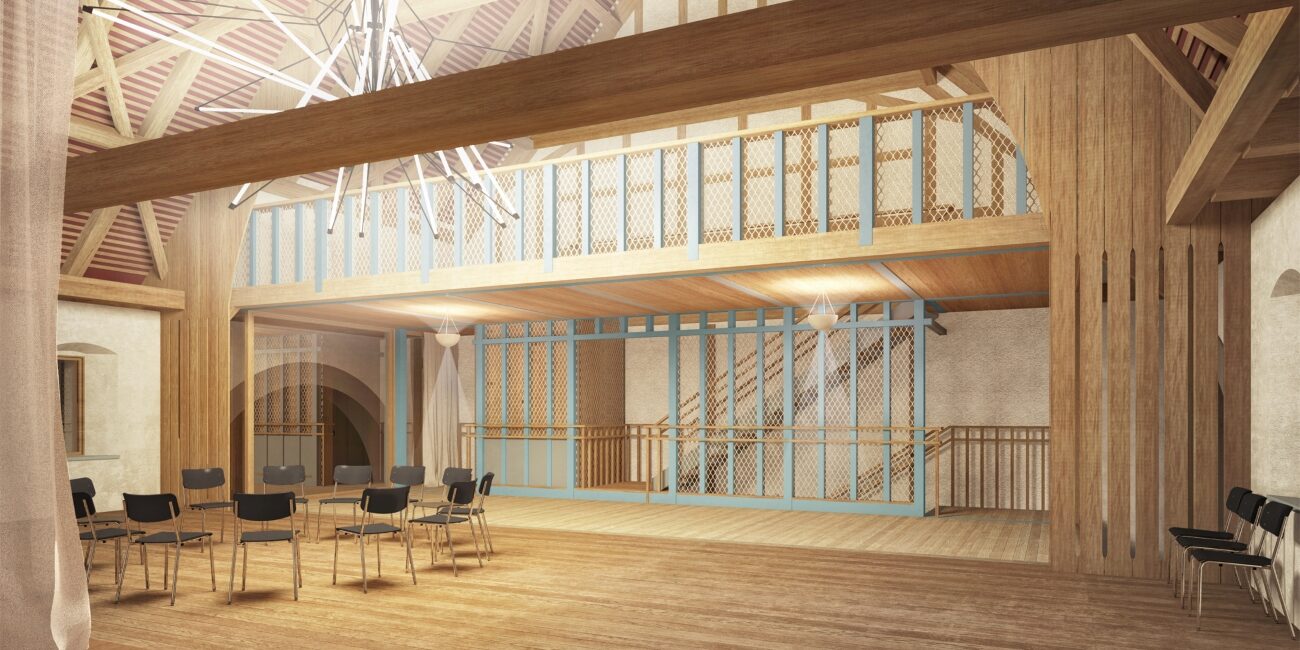
    The Zehntenscheune is one of Dietikon’s oldest buildings. With a capacity of around 120 seats, a new grandstand and modern facilities, the large hall is suitable for events. A passenger lift also provides accessibility.

    The foyer on the ground floor has been redesigned. The massive plank wall, a relic from its original use as a stable or storage room, has been retained. A long bar is intended to turn the foyer into an attractive meeting place. An old archway leading into the garden area of the house was also uncovered.

  • Westspitz neighbourhood in Dietikon enters the planning phase

    Westspitz neighbourhood in Dietikon enters the planning phase

    The Basel-based insurer Baloise has completed the study contract for the urban development of the Dreispitz site in Dietikon, according to a statement from the city of Dietikon. The Westspitz neighbourhood is to be built there. The design plan process will begin in summer 2025 and run until the end of 2027, with the building permit procedure and project planning scheduled for 2028/2029. The construction phase is set to last from 2030 to 2032, with completion and occupation scheduled for 2032/2033.

    According to the press release, the consortium Penzel Valier in Zurich and ROBERTNEUN, based in Berlin, was unanimously recommended by an independent jury as the winning project for further development. The jury was appointed by Baloise as the owner and leaseholder of the site. The project, known as Westspitz Dietikon, meets the urban planning requirements of the city of Dietikon, supports its development strategy and provides new impetus for an urban, sustainable neighbourhood, it added.

    Westspitz Dietikon is located at the intersection of Badenerstrasse and Überlandstrasse. In the coming years, Westspitz is set to grow into a lively, mixed and well-connected neighbourhood. The neighbourhood consists of 80 to 90 percent residential space. Compact residential units for smaller households and larger flats for families are planned, as well as communal areas and noise-protected outdoor spaces. The ground floor zones along Badenerstrasse are to be enlivened by small-scale commercial spaces that meet the needs of residents and the surrounding neighbourhoods, the report continues.

  • Dietikon presents new building and zoning regulations

    Dietikon presents new building and zoning regulations

    The building and zoning regulations of the town of Dietikon are undergoing a complete revision. On 31 October 2024, the town presented the overall revision to the population. The BZO regulates what, where and how can be built in Dietikon in the future. According to a press release, the draft revision is open to the public until 23 December. During this period, all interested parties are invited to submit written comments and suggestions, according to the city’s press release.

    The municipal building and zoning regulations date back to 1987, and Dietikon’s binding municipal structure plan was approved in autumn 2022. This and requirements such as the new planning and building law of the canton of Zurich were the impetus for the revision.

    With this overall revision of the BZO, the city is creating the strategic and building law framework for the renewal and further development of the current settlement structure, according to the city’s press release. Increasing the building density and thus changing the settlement structure in the outer residential neighbourhoods will be avoided in order to protect the green and uniform structures. Instead, the focus is on the development of central areas that are accessible by public transport, such as the city centre or the city boulevard.

    According to the city, the desired development should not simply offer more space for residents and employees, but also contribute to a higher quality of settlement. There are various specifications for private open and recreational spaces as well as measures to promote biodiversity and improve the urban climate.

  • Demolition of the Hasler site in Dietikon

    Demolition of the Hasler site in Dietikon

    Limeco is having the Hasler site in Dietikon dismantled. Between October 2024 and April 2025, the glasshouses and halls of the former Hasler plant nursery are to be demolished and the contaminated soil removed, the Limmattaler Regiowerk announced in a press release. Limeco acquired the site last year as a land reserve for the Limmattal Energy Center generation project.

    The Regiowerk is obliged to rebuild its waste recycling plant and expand the wastewater treatment plant (WWTP) by 2034. The Limmattal Energy Center is to be created in the process. The necessary work is to be carried out in stages and make the greatest possible contribution to the energy and climate transition in the Limmat Valley.

    Limeco already acquired the Coop site in Dietikon in 2018 for the implementation of the generation project. The Hasler site will serve as an assembly and installation site during the construction phase. Otherwise, Limeco intends to offer it to third parties for rent or use it for a land swap for more suitable areas.

  • Mosaic project wins Redesign of the Luberzen school complex

    Mosaic project wins Redesign of the Luberzen school complex

    The offices of VPA Architektur from Zurich, extrã Landschaftsarchitekten from Bern and Timbatec Holzbauingenieure from Zurich have won the competition announced by the city of Dietikon for the redesign of the Luberzen school complex. Their project, called Mosaik, convinced the evaluation committee both financially and in terms of urban planning and ecology, the Dietikon building department explained in a statement. Mosaik was unanimously chosen as the winner from a total of 15 proposals.

    The winning project is characterised by good urban planning and external spatial coordination and multi-layered neighbourhood networking. The existing classrooms of the school complex are to be extended using a modular timber construction. In addition, the construction of a new community wing and a sports building are planned. The proposal by VPA Architektur, extrã Landschaftsarchitekten and Timbatec Holzbauingenieure also scored points with the jury due to its resource-saving handling of the existing building and its ecological construction method. “Despite the small floor area compared to the other project entries, it convincingly fulfils the required space programme from an organisational and operational point of view,” writes the building construction department.

    The new concept provides for the expansion to four kindergarten, 16 primary and 18 secondary school classes. In addition, a canteen, a library, a triple gymnasium and a teaching pool are to be built. Interested parties can view all 15 proposals submitted until 24 September on the first floor of the Stadthalle Dietikon.

  • Dietikon and SBB present winning project for station area

    Dietikon and SBB present winning project for station area

    SBB and the town of Dietikon have selected the winning project of the architectural competition to redesign the station area. The jury chose the design by Hosoya Schaefer Architekten from Zurich and BRYUM Landschaftsarchitekten from Basel. The three best competition projects are now on display in the foyer of the Stadthaus.

    According to a press release, the Dietikon railway station area is to become a contemporary transport hub and a lively urban district. To this end, the station square and bus station will be redesigned over the next few years, the station building from 1977 will be renovated and extended, and new residential and commercial space will be created on the station site.

    The winning project of the tender envisages a tree canopy varying in density from the centre of Dietikon to the railway station and connecting the station building to the market square and town centre on foot. The final stops of the bus station are divided between the north and south bus islands separated by the tree canopy. Under the tree canopy is a chaussiered area that is intended as both a movement and recreation space. There will be space for event areas, fountains and seating.

    The city council followed the jury’s recommendation and decided to continue working on the winning project with the corresponding planning team. The completion of the redesign of the station square and bus station is planned for between 2027 and 2030.

    In addition to the three best architectural projects, the SBB design plan will also be available for public inspection for 60 days. After the public display, the documents will be revised, approved by the city council and submitted to the municipal council for approval. The design plan is expected to become legally binding in 2025.

  • City of Dietikon approves credit of 83 million Swiss francs for school renovations

    City of Dietikon approves credit of 83 million Swiss francs for school renovations

    At its meeting on 4 May, Dietikon ‘s parliament approved a construction loan of CHF 83,372,746 for the Wolfsmatt school building. This means that the renovation and expansion of the aging building can begin next year, according to a media release. The prerequisite is that the voters of Dietikon also approve the project in September.

    The building was constructed in 1962 as a typical pavilion school of the 1950s and 1960s and is now in serious need of renovation. The listed building neither meets the legal requirements nor the demands of modern teaching or the increased number of pupils. Therefore, it is to be renovated and extended by two primary classes, group, after-school and multi-purpose rooms as well as a gymnasium. The existing buildings are to be ready for occupancy in 2028.

    The corresponding plans were drawn up by a general planning team under the leadership of the Zurich architectural firm Bünzli Courvoisier. They won the city’s project competition four years ago from a total of 59 submissions. The winning project, called Im Grünen, “occupies a top position among the competition entries from both an economic and an ecological point of view,” according to a media release. The new buildings will be certified according to the Minergie-ECO standard. In terms of construction costs, it was among the most favourable.

    Im Grünen retains the basic idea of a pavilion school. The cohesive overall architectural effect remains. Extension buildings complement the existing ensemble in a southerly direction. Parallel to the Vogelaustrasse, the new buildings will form a new second entrance to the school complex. The limited existing open space will be preserved.

  • Axpo spins off battery innovation

    Axpo spins off battery innovation

    A team from Axpo has been working on an environmentally friendly generator for four years in collaboration with regional construction companies. The result is a battery storage solution that can replace diesel generators at construction sites. The technology called emost (electric mobile storage) can also be used at events or in emergencies. It has already been awarded the IDEE SUISSE Innovation Prize in spring 2021.

    Now Axpo has decided to sell the technology to a consortium of the project’s existing management and several Swiss entrepreneurs. This will ensure optimal management continuity and knowledge transfer, Axpo writes in a media release. All relevant rights and contracts have been transferred to the newly founded emost AG, headquartered in Dietikon, as of the end of October 2022.

    The founding team reportedly consists of the entire management team that has developed the technology over the past several years. Benedikt Domke becomes CEO of emost AG. Christoph Sutter, who previously headed Axpo’s Renewables Division, will become Chairman of the Board of Directors. He intends to focus in particular on international expansion.

  • The first projects of the Dietiker Smart City project have been implemented

    The first projects of the Dietiker Smart City project have been implemented

    On the evening of September 27, the population of Dietic was informed on the church square about the implementation of the Smart City project developed by the city of Dietikon and the electricity company of the Canton of Zurich ( EKZ ). The inauguration of the first sub-projects took place.

    According to the press release , there is now a charging station for electric cars on Zelgliplatz, which is available while shopping, but can also be used by residents. Electric bikes can be charged in the basement of the two-storey bike house near the train station. A camera detects free parking spaces in the Hedinger car park. Public WiFi is available to the public at the market hall. There, an air measuring station records temperature, humidity and air pollutants such as fine dust or ozone. The station is supplemented by a network of other environmental sensors distributed across the city. In winter, measuring the ground temperature warns of possible black ice.

    "Only networking and the intelligent use of data leads to added value for the population and for the administration, as one strives for in a Smart City," Jörg Haller, Head of Smart City and Public Lighting at EKZ, is quoted as saying.

    The environmental data recorded at the measuring stations should be displayed transparently, for example on monitors in the town hall. "The city's extensive data is already used today for traffic and construction planning," Mayor Roger Bachmann is quoted as saying. "The prize money from the SFOE gave us another boost," continued Bachmann.

    The Smart City project won the main prize in the Smart City Innovation Challenge of the Swiss Federal Office of Energy ( SFOE ) at the beginning of 2021 and thus received funding of CHF 100,000.

  • Alexander Carisch becomes the new head of the Dietikon location promotion

    Alexander Carisch becomes the new head of the Dietikon location promotion

    Alexander Carisch will be the new head of the Dietikon location promotion as of December 1st. According to a media release , Carisch convinced the city council at the September 5 meeting. His innovative spirit, his professional competence and his integrative communication were decisive.

    As a former head of urban development and location marketing in the city of Baden and also as head of the location development department in the Canton of Schwyz Economic Office, Carisch has the right experience for the position, according to the statement from the city of Dietikon . Through his previous activities, the newly appointed head of Dietiker Location Promotion is also connected to the Limmattal.

    The head of the Dietikon location promotion, Adrian Ebenberger, is retiring after four and a half years in office for reasons of age at the end of 2022.

    The Dietikon location promotion submits semi-annual interim reports on activities in the areas of location promotion, economic development and city marketing. The most recently published report from June covering the period from November 2021 to April 2022 highlights the progress made in the Cleantech Hub Dietikon project, which started last autumn 2021, and in the Smart City Dietikon project as particular highlights of this work. Demand for commercial space remains high. There are regularly more rental requests than offers. The number of start-ups and liquidations is said to be relatively constant.

  • Phenomena presents the design of the main building

    Phenomena presents the design of the main building

    The design for the iconic buildings in the Phenomena exhibition was presented on July 6th in the new Limmattalbahn facility in Dietikon . According to a press release, the winning design for the main building, which is made entirely of wood, came from Professor Yves Weinand of the Swiss Federal Institute of Technology in Lausanne ( EPFL ).

    After a word of welcome from the mayor of Dietic, Roger Bachmann, overall project manager Urs J. Müller presented the winning project of the architectural competition. “Phenomena provides the basis for a better understanding of central themes of the present and future. Therefore, it demands an architecture that corresponds to its objectives and promotes the improvement of our planet through the understanding and use of modern science,” Müller is quoted as saying.

    The main building on the Dietiker Niderfeld will be a structure made of regional logs. Intelligent robots process the natural trunks on site. You create a reusable plug-in system. After the phenomena, the wood can be used in other projects with almost no waste.

    “With the buildings of the phenomena I want to show how one of the oldest building materials – wood – in connection with modern digital tools promotes local use and circularity,” Weinand is quoted as saying. The architect and head of the IBOIS laboratory for wooden structures at EPFL and founder of the Bureau d’Études Weinand has designed and built numerous emblematic wooden buildings. For example, the Saint Loup chapel, the new Vaud Parliament or, more recently, the Vidy Theater pavilion in Lausanne.

  • Walo installs new flooring in the Gübelin Museum

    Walo installs new flooring in the Gübelin Museum

    Walo Bertschinger has installed a new floor covering in Lucerne’s Gübelin Museum. According to a message from the Dietiker construction company on Facebook, the order was placed in the summer of 2021. The work is in the final phase, the message says. The goal is a floor covering that adorns the museum as an additional work of art.

    The client imagined a warm floor with various rubber granules and a wooden frieze, according to the Walo report. The company ‘s own HALTOPEX rubber granulate was recommended to her. According to the company, this covering is particularly suitable for conversions, is very elastic, hard-wearing and easy to maintain. The optics are also inviting.

    After inspecting a similar property, the client placed the order. From this April, work was carried out in the museum. The sub-floor was reprofiled and reinforced and a new sub-layer of epoxy mortar installed. The final installation of the HALTOPEX covering began in May. The work is nearing completion.

  • Location promotion Dietikon presents interim report

    Location promotion Dietikon presents interim report

    The interim report on the promotion of the city of Dietikon covers the period from November 2021 to April 2022. According to the press release , it is intended to provide an overview of the activities carried out in the reporting period. As particular highlights of this work, the communication highlights the progress made in the Cleantech Hub Dietikon project, which started last autumn 2021, and in the Smart City Dietikon project.

    According to the report , the mayor and location promoter visited 14 companies in the area of economic development and offered them help with various matters. Demand for commercial space remains high. There are regularly more rental requests than offers. We are looking for logistics areas and workshops with truck access and high ceilings. The number of start-ups and liquidations is said to be relatively constant.

    According to the report, there are also bottlenecks in the supply of suitable commercial premises at the Cleantech Hub Dietikon. But the project is making progress. A core team has been working intensively on the structure since October. The Cleantech Hub Dietikon association was founded on February 15. There are currently several inquiries from start-ups who would like to rent space in the Cleantech Hub.

    Regarding the progress of the Smart City Dietikon project, it is said that the implementation of the first sub-projects has been delayed. An e-mobility charging station at Zelgliplatz, an e-bike charging station at Velohaus and public WiFi at Kirchplatz are already in operation.

    There are other reports on the “Mitenand für Dietike” ideas competition, the NetzwerkStadt for an attractive center and on city marketing and on fresh markets and seasonal markets such as the spring market.

  • Dietikon takes part in Zurich's image campaign

    Dietikon takes part in Zurich's image campaign

    The image campaign for Zurich's cities and municipalities starts on April 26th under the motto: There for you. Your Zurich communities. The city of Dietikon is also there, as a media release shows . The campaign is supported by the Association of Zurich Community Clerks and Administrative Experts (VZGV) and the participating cities and municipalities. It includes billboard advertising, videos and a special page on the Internet. The aim of the communication is to make residents aware of the wide range of services that city and municipal administrations provide on a daily basis. With “great commitment and a high level of quality awareness”, as it is called there.

    The campaign in Dietikon will also start on April 26th. The services are to be presented in striking motifs. For example, several symbols such as wedding rings, a voting envelope, but also a dome lid to cover a sewer pipe are shown on the online campaign page. The latter is accompanied by a video about the laying of such lines. If you click on one of the symbols, a new window opens with comprehensive information.

    The campaign is to run in three phases. After the first part, which is now starting, the VZGV wants to start the second part in autumn to present Zurich's cities and municipalities as attractive employers. The final third part of the campaign is to follow in 2022. In it, the municipalities will present themselves as companies and present their offers for training and any further training.

  • Dietikons Bahnhofsplatz is being redesigned with the SBB

    Dietikons Bahnhofsplatz is being redesigned with the SBB

    The planned competition program for the redesign of the Dietikon station area can now be started. The Dietiker city council has approved a loan of 56,000 francs for the preparation of the "Bushof / Bahnhofplatz competition program" and the necessary clarifications, according to a message from the city chancellery. The contract for procedural support had been awarded to the Zurich consulting firm Eckhaus AG. In addition to upgrading the public space with quality of stay and a wheelchair accessible hub for public transport, an attractive location for living and working is to be created on the SBB site, according to the city of Dietikon about the project .

    The city of Dietikon and the SBB jointly awarded an urban planning study contract for the Dietikon station area in 2019. The "in-depth study of the Dietikon station area" was exhibited in plans and models in November and December 2020 on the window front of the Dietikon town hall. The results report was also available on the Internet.

    According to the plans of the city of Dietikon, the bus station is to be redesigned around two islands. This creates a largely traffic-calmed space in front of the train station, which is to be landscaped and planted with trees to create a lingering zone. According to the announcement, the SBB wants to develop a lively district from its parcels west of the track field. The station building is to be extended. Two construction sites for an office building and a complex with 200 apartments are planned on the parking lot.

  • Dietikon relies on location advertising with comedian duo Lapsus

    Dietikon relies on location advertising with comedian duo Lapsus

    The city of Dietikon relies on humor in its location advertising. According to a media release, the well-known Dietiker comedian duo Lapsus has therefore received the order to subject their residential area to a critical examination and to record their impressions. It is said that funny, self-deprecating video productions were created.

    The videos can now be viewed on YouTube, Facebook and Instagram. The first is entitled “Dietikon from its most beautiful side”. Dietikon is presented as a noisy and urban city with idyllic green areas as the train passes by. The second video introduces the open-air gallery “DietikON – experience light art”, which will run until the end of February, with humorous puns. Further topics are planned.

    The core of the campaign, which will last in May, is self-irony, according to the media release. The plan is to publish six to seven videos, which will make the qualities and location advantages of the city visible and promote the city's positioning as a center for business, culture, education, local recreation, sport and leisure.

    It is emphasized that the topics have been discussed with the city. The comedians are free to implement it.

  • Dietikon chooses architecture project for school expansion

    Dietikon chooses architecture project for school expansion

    The winner in the architecture competition for the expansion of the Wolfsmatt school complex in Dietikon has been determined. The Zurich architectural office Bünzli Courvoisier was awarded the contract by the Dietiker city council. On the one hand, according to the media release, the design “In the green” was convincing by retaining the basic idea of a pavilion school with arcades between the units and a structurally enclosed playground. On the other hand, the offer was also among the cheapest, it is said.

    The school house expansion has become necessary because of the increasing number of students. The Wolfsmatt facility was built in 1962 and has become too small. Today, according to the announcement, it has to be expanded to include two more primary class trains, group, daycare and multi-purpose rooms as well as a gym. The extensions will be built to the south of the existing facility. This should also create a new access. From a landscape point of view, the current figure of pavilion buildings and surrounding open spaces will be preserved and logically supplemented, according to the announcement.

    The contract for the general planning team under the leadership of Bünzli Courvoisier Architekten AG is to be awarded in a referendum in 2022. If approved, construction is to begin in 2024. The model for the project can be viewed in the foyer of the town hall from now until February 12th.

  • Dietikon bietet Lichtkunst in der dunklen Jahreszeit

    Dietikon bietet Lichtkunst in der dunklen Jahreszeit

    Mit Lichtkunst der Kulturabstinenz trotzen lautet das Motto der abendlichen Dauerpräsentation „DietikON – Lichtkunst erleben“ vom 15. Januar bis 28. Februar im Stadtzentrum von Dietikon. Die Lichtkunst wird jeweils von 17 bis 22 Uhr das Zentrum erhellen. Das Spektrum der Arbeiten von zwölf Künstlerinnen und Künstlern aus der ganzen Schweiz reicht laut einer Ankündigung von poetischen Arbeiten bis hin zu kräftigen, plakativen Werken.

    „Das Projekt ‚DietikON – Lichtkunst erleben‘ soll Licht in die Stadt bringen und den vielen Menschen Trost und Zuversicht spenden, die sich in dieser dunklen Jahreszeit einsam oder in ihrer Freiheit eingeengt fühlen“, wird Stadtpräsident Roger Bachmann in einer Mitteilung zitiert. Schliesslich habe die Dietiker Bevölkerung im Dezember auf den Chlauseinzug und den Weihnachtsmarkt verzichten müssen. Auch sei die Weihnachtsbeleuchtung im Dietiker Stadtzentrum bescheidener ausgefallen als in den Vorjahren, weil infolge der Bauarbeiten viele Kandelaber fehlten. Deshalb habe ein Projektteam rund um die Standortförderung mit „DietikON“ eine Ausstellung organisiert, die Kunstschaffenden die Möglichkeit bietet, ihre Werke im öffentlichen Raum vorzustellen und so Licht und Trost in die dunkle Jahreszeit zu bringen.

    Der Grossteil der Objekte werde im Aussenraum stehen, heisst es auf der Kulturseite der Stadt Dietikon. Dort sind auch die Standorte auf einem Stadtplan eingezeichnet. Vereinzelt werden auch Schaufenster und Innenräume bespielt. Die wenigen im Innenraum aufgestellten Kunstwerke können, ganz corona-konform, durch Schaufenster betrachtet werden, die Räumlichkeiten müssen dafür nicht betreten werden, heist es dort.

    Gezeigt würden sowohl neu erarbeitete Werke, die einzig für die Stadt Dietikon geschaffen wurden und auch mit den örtlichen Gegebenheiten spielen, als auch bereits bestehende Werke, die durch den neuen Kontext der urbanen Stadtlandschaft eine andere Bedeutung erhalten, wird Cinzia Marti von der Standortförderung Dietikon zitiert.

  • EKZ supplies the Limmat Valley with a further 80 megawatts

    EKZ supplies the Limmat Valley with a further 80 megawatts

    With the facility in Oberengstringen, the electricity works of the canton of Zurich (EKZ) put their third substation in Limmat Valley into operation. The Limmattal is now supplied by the three substations Schlieren, Dietikon and Oberengstringen. The new substation with an output of 80 megawatts will gradually be put into operation by next February.

    "This means that we are very well prepared for the steadily growing energy demand in the region", Hans-Peter Häberli, Head of Construction and Systems at EKZ, is quoted in an interview . The economic upswing in the Limmattal with the settlement of new companies, a large data center and the Limmattalbahn is causing the demand for electricity to rise sharply. Häberli: “We have generally seen strong increases in load in the Limmat Valley over the past few years. In the future, the energy demand will be driven by the Limmattalbahn and the establishment of a data center in the region. The Schlieren substation, which previously supplied the region with energy, must therefore be relieved. Its capacity would soon no longer be sufficient. "

    The electrical energy is converted in the new substation. In the case of Oberengstringen, EKZ takes over the electricity with a voltage of 110 kilovolts from the Axpo high-voltage network. The energy is converted to 16 kilovolts with two 40-megawatt transformers, according to the EKZ website. After that, the electricity would be further stepped down until it is fed into the grid for end users such as housing estates.

    The connection of the new plant is to take place gradually by February. According to Häberli, Oberengstringen will then be fully connected to the Axpo high-voltage network. The communities of Ober- and Unterengstringen, Weiningen and parts of Schlieren are then supplied.

  • Quickpac now distributes packages from Dietikon

    Quickpac now distributes packages from Dietikon

    With the newly opened depot in Dietikon, the parcel delivery company Quickpac intends to serve large parts of the cantons of Aargau, Zug and Zurich in the future. With Dietikon, Quickpac expands the number of its distribution centers to three. Up to 25,000 parcels can be transported daily from the three depots. The subsidiary of Quickmail AG is planning to open further depots in St.Gallen in 2021 and, according to a media release , is currently looking for locations in the regions of Bern, St.Gallen, Upper Lake Zurich, Lucerne and Basel.

    55 new parcel deliverers have been hired in Dietikon. The number should double in 2021, it is said. 75 new electric vehicles were purchased for delivery. With 176 Renault Kangoo ZE, Quickpac has the largest electric car fleet in Switzerland. According to the announcement, the head of the Dietikon depot is Matthias Merz (47), previously Head of Operations at Cargo Solution GmbH.

    The new parcel center would allow even more recipients in Switzerland to benefit from “the fact that their parcels are delivered quietly and with low emissions,” says Thomas Ulmann, COO of Quickpac, quoted as saying. In addition, there is the rapid delivery. A quarter of the parcels are delivered on the day of delivery. Even between 5 and 9 p.m. when working people are at home. Ulmann: "That saves unnecessary and unecological trips to collection points."

  • Standortförderung Dietikon legt Zwischenbericht vor

    Standortförderung Dietikon legt Zwischenbericht vor

    Die Standortförderung Dietikon hat ihren Zwischenbericht für die Zeit von Mai bis Oktober vorgelegt. Die Auswirkungen und Beschränkungen aufgrund der Corona-Pandemie machten sich deutlich bemerkbar. So zwang diese Situation die Gemeindeführungsorganisation GFO der Stadt Dietikon laut dem Bericht dazu, den Herbst- und Weihnachtsmarkt mitsamt dem Chlauseinzug abzusagen. Die Standortförderung habe allerdings die Einschränkungen als Chance gesehen und die frei gewordene Kapazität dazu genutzt, verschiedene Initiativen zur Stärkung des Zentrums und des lokalen Gewerbes ins Leben zu rufen.

    So lancierte die Stadt Anfang Oktober eine Testimonial-Kampagne mit 19 Dietiker Persönlichkeiten. Die drei Staffeln der Imagekampagne dauern bis Herbst 2021. Der Imageförderung dient auch eine 40-seitige Broschüre über Dietikon, die  an Schulen, Neuzuzügerfeiern, zur Personalrekrutierung sowie für die Ansiedlung von Unternehmen und Arbeitskräften eingesetzt werden soll. Sie ist gedruckt und online erhältlich.

    Schon im Juli hat sich auf Initiative der Standortförderung das NetzwerkStadt gebildet, das sich für ein attraktives Zentrum und den Einzelhandel einsetzt. Weitergeführt wird auch „Kunst und Kulinarik in leeren Mieträumen“, durch die Mieträume sichtbar gemacht und durch Veranstaltungen belebt werden.

    An weiteren Projekten nennt der Zwischenbericht die Suche nach einem Standort für die Schaffung eines Wirtschaftsclusters und das mit den Elektrizitätswerken des Kantons Zürich (EKZ) durchgeführte Projekt „Smart City im öffentlichen Raum erlebbar machen“. Positiv vermerkt wird, dass trotz der Corona-Beschränkungen seit Mai der im Zentrum stattfindende Frischmarkt wieder geöffnet ist und, dass die Bauarbeiten der Limmattalbahn nach Plan verlaufen. Eine anlässlich des Herbstmarktes geplante Baustellenbegehung dort allerdings musste wegen Corona abgesagt werden.

  • Mammoth project in Niderfeld

    Mammoth project in Niderfeld

    The Niderfeld is located in the northeast of the Dietikon municipality and partly borders on Spreitenbach. With around 40 hectares, Niderfeld is Dietikon's last large reserve of building land. And good things take time: The planning of what the area used for agriculture up to 1890 will look like in the future has been going on for around ten years. Around 3000 people will one day live here and another 4000 people will work. The association “Landowner Niderfeld Dietikon” (VGND), founded at the end of 2012, is behind the project. This accompanies the development in the Niderfeld, promotes the interests and concerns of the landowners and represents them to the authorities. The three largest owners are Planzer Transport AG, the city of Dietikon and Josef Wiederkehr AG from Dietikon.

    In the course of time, applications have been made twice to convert all or part of the Niderfeld into an industrial zone. Both times the applications were rejected: first by the municipal council and then at the ballot box. In 1995, in the cantonal structure plan, Niderfeld was assigned cantonal importance as a central area. Settlement parts with a high structural density as well as recreation areas are prescribed in a central area. The aim is to create an attractive economic location with good access to public transport. At the beginning of 2002 the city of Dietikon turned to the regional planning of Zurich and the surrounding area (RZU) with the aim of finding a politically viable zoning. This should allow an orderly structural development based on an overall concept. In addition to representatives of the city and municipal council, landowners, business organizations, representatives of the canton of Aargau, ideational organizations and residents of Dietikon also took part in the Niderfeld open planning process. This ensured that all interest groups were represented and could contribute accordingly.

    This resulted in two rough concepts: One provided for an access network that was largely adapted to the existing parcelling. The second sketched the creation of a park along the Teischlibach, which divides the Niderfeld into a work area in the west, a park in the middle and a residential / mixed area in the east. In 2010 the zoning draft finally became legally binding: the core elements of the new zones are the mandatory design plan and the requirement for an eight-hectare city park. The urban planning concept developed in 2013 formed the basis for the subsequent design and district plans. The master plan was finally approved by the city and municipal council in 2015 and submitted to the landowners and the public for consultation. The Dietikon City Council initiated the district plan procedure at the end of August 2017. After that, the landowners had to agree on various parameters and the redistribution of the land. The design and neighborhood plan, the revision of the building and zoning regulations plus the Teischlibach hydraulic engineering project were submitted to the canton for review in mid-2020. The answer is still pending.

    This is what the new quarter should look like
    The large, central park forms the heart of the Niderfeld district. Quiet park islands, play areas, residential gardens and spacious lawns are planned and are intended to attract people from the surrounding area. Around the park there is a mixed area along the route of the Limmattalbahn, a residential area on the northern edge of the park and a work area in the west towards Mutschellenstrasse. For reasons of noise protection, the mixed area towards the Ueberlandstrasse forms a largely closed development. The residential part should consist of smaller building units, the height of which is graded towards the park.

    The entrance to the new city quarter is marked by the Torplatz at Dreispitz, where a stop for the Limmattalbahn is planned. The residents of Niderfeld should find restaurants and various shops at Torplatz. To the east is the neighborhood square, which is intended to serve as a play and meeting point for the residents. Another space will be created at the second tram stop at the intersection of the workplace and mixed area. The Limmattalbahn runs along the boulevard on its own route. In addition, a dense network of paths for bicycle and pedestrian traffic is to be created. The depot for the Limmattalbahn is planned to the west of Mutschellenstrasse. The residential and mixed zones of the Niderfeld will be designed as a 30 km / h zone. The road network is designed in such a way that there is no crawl traffic from the workplace area in the west to the mixed and residential area in the east.

    So far, the city has received financing loans of over CHF 1 million – the planning effort turned out to be greater than expected and due to the high density of regulations there are still many hurdles to be overcome. The desired elevated railway from Niderfeld to Silbern is also still in progress. Construction is scheduled to start in 2028 at the earliest. ■

  • Regional 2025 – projects for diversity

    Regional 2025 – projects for diversity

    The Limmattal – a diverse, coherent mosaic
    Despite urban thrusts, the development and the initial situation are not the same everywhere. For example, Spreitenbach and Neuenhof are changing from the formative 1970s modernism to more urban locations, but the dynamic cannot be compared to Schlieren, for example, until now. Wettingen is also discussing densification, and the concept of the garden city, which has been so formative up to now, is being questioned.

    It looks completely different on the right bank of the Limmat. The communities with their large single-family house areas look in amazement at the other side of the valley and watch the development from a distance. They are still villages and want to stay that way. This heterogeneity of the Limmat Valley, which can be interpreted as a difficulty, is above all its strength. In addition, with the formative landscape there is a kit that holds these pieces of the puzzle together. Above all the Limmat as namesake and identity bearer, as a unifying force of nature that meanders through the valley. But “spaces in between”, such as the Sulperg-Rüsler or Hüttikerberg-Sandbühl landscape corridors, are becoming increasingly important and are developing into a park landscape.

    "City" is only of limited use as a guiding term for this diverse fabric and does not do justice to the differences in places and the role of the landscape as a framework for the whole. Experts therefore speak more of “urban landscapes” in order to do justice to this phenomenon. That is why the edge of the block, the square and the boulevard, as tried and tested city elements, are not always the cure-all. In doing so, it is often not considered that this does not correspond to the complex social, economic and spatial structures of the Limmat Valley. The implementation of this idea can be seen, for example, in the Limmatfeld, where the new structures have so far represented an island in the context of the surroundings and have not yet been able to form the desired lively center beyond the railway.

    These new city modules are definitely a good contribution to the discussion about the future of the Limmat Valley, but they ignore many of the realities of the existing Limmat Valley and the sensitivities of the population. The starting point in the Limmat Valley is too complex to take just one approach. Industrial wastelands such as the Rietbach area in Schlieren or the Limmatfeld for consistent new urban building blocks are practically no longer available. Everything that is now added in the course of the consolidation must deal with the existing. The further construction of the Shoppi Tivoli in Spreitenbach requires different strategies than the densification of Wettingen or Neuenhof. And the strategies for the further development of the villages to the right of the Limmat require completely different recipes.

    Overcoming boundaries – spatially and thematically
    The whole thing becomes interesting in the combination of different strategies for the long-term further development of the Limmat Valley. In the longitudinal direction, the Limmattalbahn establishes the linear connection with high-density nodes along the stops. It is also exciting when the cross-connections are considered. So far, hardly trained, they have the potential to form completely new gravity lines: both in built-up space and in the landscape. The axes such as Schlieren-Unterengstringen or Dietikon-Fahrweid-Geroldswil, like the landscape corridors, offer an opportunity to connect the differences spatially and socially and to enable a new interaction across the longitudinal barriers.

    This is also of great importance within the towns and cities themselves. Examples of this are various plans and concepts that must be pursued further: Schlieren would like to link the rapidly emerging new districts on both sides of the railway with the existing districts and the village center. In Dietikon there is the idea of a connection between Silbern and Niederfeld. Spreitenbach would like to extend the central axis as far as the Limmat, and Neuenhof is developing transversely to the main axis into “Neuenhof am See”. This requires new connections and bridges over the railway, the Limmat or over roads. These are not only spatial connections, but also bring long-term residents and newcomers closer to one another.

    Growth and change therefore not only affect the areas of construction and mobility, but all areas of life of the population: The everyday life lived across borders is already reflected today in work, living and leisure behavior as well as in mobility and consumer behavior. What began with a visit to the Shoppi Tivoli in Spreitenbach in the 1970s will intensify with the construction of the Limmattalbahn and result in further investments. The cantons of Zurich and Aargau have therefore decided, together with 16 cities and municipalities in the Limmat Valley, to actively shape the development across borders using a new format. To this end, they founded an association in 2015, the “Regional Project Show Limmattal”.

    To cope with the challenges and also to alleviate the “growing pains” in the Limmattal, the Regionale 2025 is pursuing a thematically broad approach which, in addition to the classic spatial planning issues, also includes the areas of culture and society. ■