Tag: digitale Planung

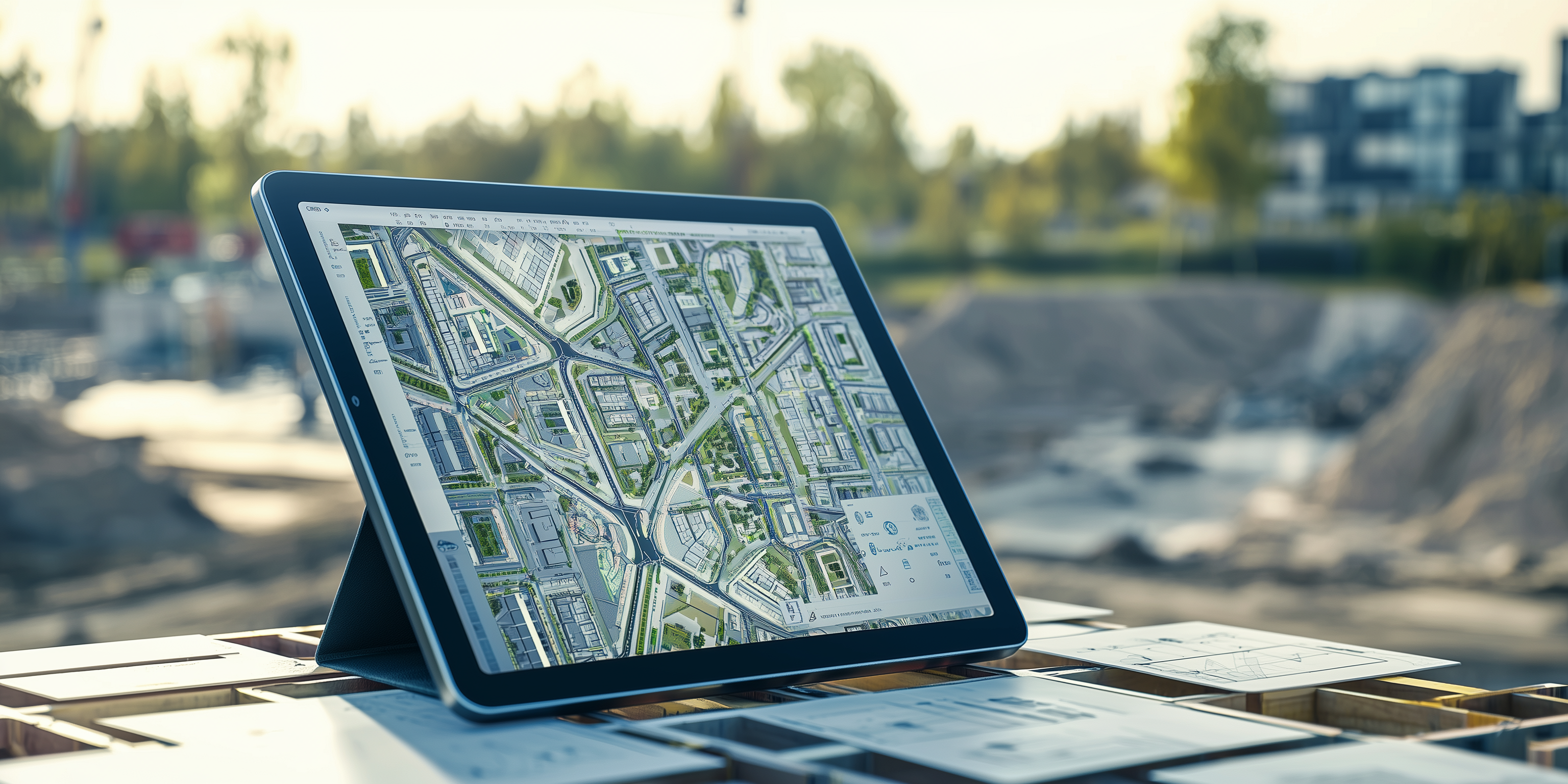
  • Steel profiles expand digital planning software

    Steel profiles expand digital planning software

    The steel profiles from Pestalozzi AGwill be available in LogiKal from April, according to a statement from the Dietikon-based company. The software was developed by the German company Orgadata and is used for planning window construction. According to the statement from Pestalozzi, it is also used for planning projects involving doors and façades.

    A total of more than 400 suppliers have stored their components in the software. Open interfaces allow LogiKal to be connected to machine control systems, enterprise resource planning (ERP) and computer-aided design (CAD) software. An integrated automatic error check also reduces costly calculation errors, according to Pestalozzi.

    The Dietikon-based company describes the integration of steel profiles into LogiKal as a “digital milestone”.

  • Think circular, reprint wood

    Think circular, reprint wood

    Stricter regulations on the energetic use of waste wood mean that large quantities of wood waste can no longer simply be incinerated, but can still be recycled. The “Experimental and Digital Design and Construction” department at the University of Kassel is working with Buro Happold to develop a 3D printing process that converts waste wood particles into load-bearing wall components. The project is being funded as part of the “Zukunft Bau” program of the Federal Institute for Research on Building, Urban Affairs and Spatial Development.

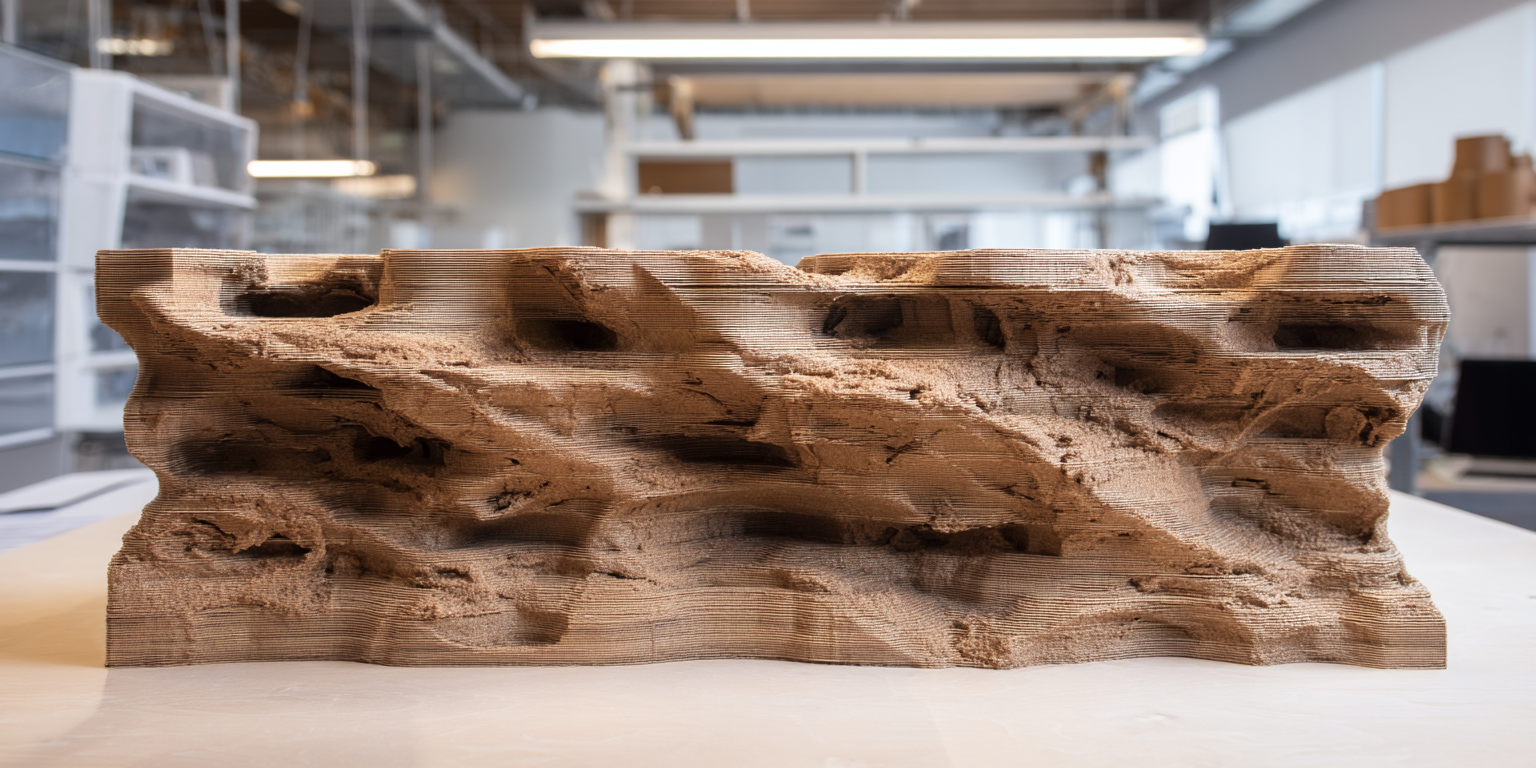
    the focus is on a bio-based printing material made from shredded waste wood particles, which mainly originate from secondary material flows from the wood industry – i.e. from post-consumer wood. Industrial partners process the material and mix it with biogenic binders to create a paste-like mass that can be extruded with robotic support.

    lightweight components from the 3D printer
    The result is clearly different from the familiar 3D concrete printing process. The mass of wood particles and binder is applied in layers on a scale of 1:1 and forms lightweight but stable components. Flat wall structures are possible, as are freely curved geometries that can be precisely adapted in terms of construction and architecture.

    the current Rafa 2.0 project phase will run for 18 months and builds on the previous Rafa project, in which the researchers fundamentally investigated the suitability of waste wood particles for additive manufacturing. Material formulations are now being refined, the extrusion process optimized and the components tested under laboratory conditions, with the aim of achieving an end-to-end digital manufacturing process through to the full-scale prototype.

    load-bearing, fire-resistant and circular
    For the concept to work in practice, the printed elements must do more than just show shape. Load-bearing capacity, rigidity and fire protection properties that meet the requirements of interior construction are required. The project partners see an initial field of application in modular wall systems that can be easily assembled, dismantled and reused elsewhere.

    this principle fits in with circular building approaches, in which building components are not disposed of at the end of their life cycle, but are transferred to new uses. The components can be dismantled by type because no components containing harmful substances are used. This is a prerequisite for closed material cycles in timber construction.

    digital planning as a key technology
    Digital planning plays a central role. Buro Happold is responsible for computational design and structural planning and uses simulations to predict the structural behavior of the components. Geometries are optimized so that material is only used where it is structurally necessary – resource efficiency becomes a design task.

    “We turn waste into an opportunity, reclaimed wood is turned into high-performance components through digital design and additive manufacturing,” says Shibo Ren from Buro Happold, describing the approach. Away from linear consumption and towards a circular, data-based construction practice that closely interlinks robotics, engineering and design.

    practical prospects
    In the short term, the process aims to use less material and reduce emissions compared to concrete-based 3D printing technologies. In the long term, it could open up new markets for bio-based additive construction methods. Especially where low weight, deconstructability and architectural freedom are required.

    whether and how quickly the approach becomes commercially viable depends on scaling, standards and acceptance in construction practice. Technically, however, the project already shows that circular construction does not begin with recycling, but with design. Where materials, processes and life cycles are rethought.

  • Engineering highlight and architectural vision in Barcelona

    Engineering highlight and architectural vision in Barcelona

    The central Christ Tower, part of an ensemble of 18 towers, marks the latest step in a construction process that began in 1882 and has now reached a new dimension. The tower will reach its final height of 172.5 meters by mid-2026, just in time for the 100th anniversary of Antoni Gaudí’s death. The spire, made of steel, glass and ceramic elements, was prefabricated in segments from Bavaria and installed using special cranes. The choice of materials and production process follow strict requirements for wind stability, UV resistance and temperature resistance.

    Building in generations
    The construction process of the Sagrada Família can be read as a mirror of technological evolution. From the handcrafted 19th century to the reconstruction phase after the Civil War to the CAD-supported planning and digital production of the present day. The temple is both a monument and a research laboratory. Since the 1980s, parametric models, 3D simulations and robot-assisted stone processing have revolutionized its construction. Final completion is scheduled for 2033, subject to construction logistical challenges.

    Structural design without buttresses
    Gaudí’s structural concept deliberately dispenses with classic Gothic buttresses. Inclined load-bearing columns, whose lines follow the force curves of natural structures, as well as hyperbolic and parabolic geometries efficiently direct loads into the ground. This is complemented by real-time monitoring of the structure, analysis of natural frequencies and adaptive construction processes. The church demonstrates how biomimicry, engineering mathematics and sensor-based monitoring can keep a project of the century stable.

    Financing without public funds
    The Sagrada Família is still financed by donations and entrance fees. This principle gives the project autonomy, but has historically led to delays and social debate. Critical voices still accompany the construction to this day. Nevertheless, the basilica is considered a global symbol of visionary construction beyond conventional time and financing models.

  • Digital tool for site development

    Digital tool for site development

    Site development is one of the most challenging tasks in municipal planning. Smaller municipalities in particular face structural hurdles. There is a lack of resources, access to IT tools is limited and a lack of standards makes it difficult to make well-founded decisions. The digital guide is a modular, user-friendly and technically precise tool that closes this gap.

    Interplay of knowledge and technology
    The project combines the interdisciplinary know-how of the Institute for Spatial Development (IRAP) and the Institute for Information and Process Management (IPM). The centerpiece is a digitally supported guideline that systematically structures planning processes and enables automated analyses. Research, evaluation and variant development can thus be organized more efficiently. Municipalities receive a tool that improves planning quality, regardless of their size.

    Focus on employment areas
    While inner-city development has so far concentrated primarily on residential and mixed zones, this project focuses specifically on workplace areas. The strategic development of such areas is crucial to the future viability of companies and locations, especially in times of scarce space. The digital guideline provides a unique solution in Switzerland.

    Participation through echo chamber ensures quality
    An echo chamber was set up to guarantee practical application. This committee of experts from municipal administrations and planning offices contributes valuable expertise. At the first meeting on January 24, 2025 in St. Gallen, the participants discussed basic requirements and defined the next steps. The dialog between research and practice is thus established at an early stage.

    Efficient and sustainable planning and decision-making for the future
    The final software solution should be easy to use. It enables an objective and systematic evaluation of development scenarios according to relevant sustainability criteria, thereby promoting well-founded decisions in politics and administration. The creative design process is retained, supplemented by digital efficiency and reliable comparative values.

    Time horizon and outlook
    The project was launched in June 2024 and will run until May 2026. It is intended as a contribution to modern, digitally supported spatial planning. The vision is a national competence platform that makes site development tangible, scalable and of high quality.