BIM, Building Information Modelling, replaces static 2D plans with a shared, digital building model in which architecture, technology and costs interact in real time. All components are recorded as BIM objects with dimensions, services, prices, warranty and maintenance information, from the brickwork to the door, from the sensor to the pump.
Instead of sending plans back and forth, everyone involved works in the same 3D model, recognises collisions early on and experiences the building virtually before the first excavator rolls in. This reduces the risk of errors, makes deadlines easier to plan and lays the foundation for clear budgets instead of later addenda.
From the BIM model to the building twin
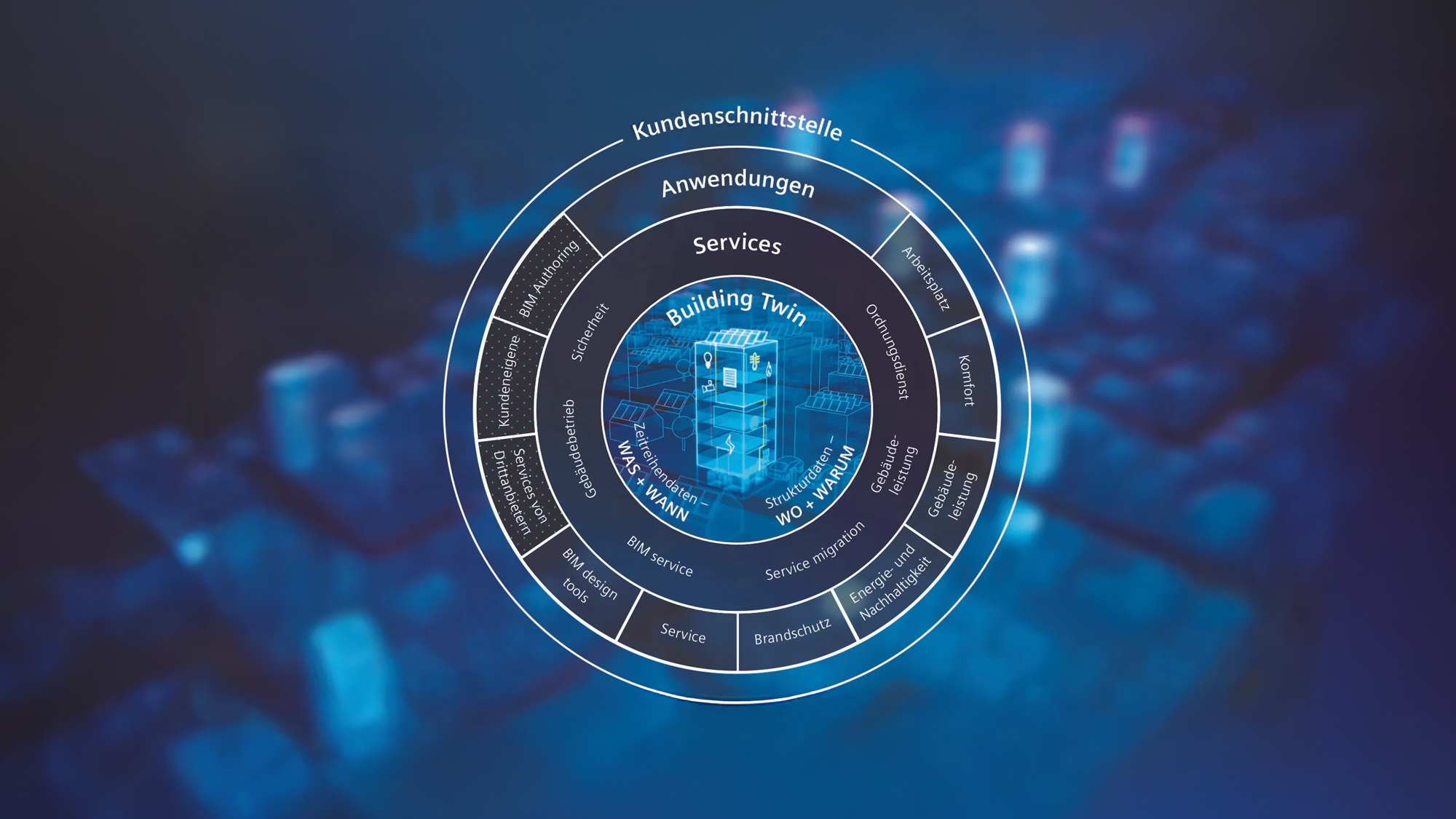
The digital twin is created from the BIM model during operation. The building twin, which takes over up to 95 per cent of the planning information and links it with live data from the building. It forms the “single source of truth” for areas, technology and sensors and visualises performance, occupancy and comfort levels in real time.
Cloud-based building twin platforms enable buildings to be monitored virtually, scenarios to be simulated and new applications to be scaled quickly, from energy monitoring to user-centred service suites with AI analytics. This transforms the rigid plan into a learning system that evolves with the requirements of operators, tenants and cities.
Added value in operation instead of just on the construction site
Around 80 per cent of a building’s life cycle costs are incurred during operation. This is precisely where BIM, in combination with digital twins, has the greatest leverage. Facility managers access maintenance cycles, operating instructions, manufacturer and warranty data in the 3D model, plan conversions precisely and reduce downtimes and journeys.
Structured product and live data allow predictive maintenance, bundled procurement or automated reactions such as closing blinds in the event of severe weather warnings. At the same time, the transparent database supports ESG goals, decarbonisation and the circular economy, from energy and water tracking to the valuable reuse of materials in dismantling.
Digital ecosystems as a model for the future
Digital twins connect buildings, campuses and neighbourhoods to form intelligent ecosystems in which energy, use and mobility are coordinated. They provide insights into comfort, health, utilisation and emissions and help to manage net-zero strategies, new working environments and mixed-use urban building blocks based on data.
For owners and operators, BIM and digital twins are thus becoming market differentiators. Those who understand their own portfolio digitally can better prioritise investments, manage risks and prove the return on investment of refurbishments, conversions and services. In an industry caught between decarbonisation pressure and user expectations, they are becoming the key to transforming properties from static objects into adaptive, future-proof infrastructures.