Tag: Effizienz

  • Strategisches Wachstumsprogramm setzt auf Digitalisierung und Effizienz

    Strategisches Wachstumsprogramm setzt auf Digitalisierung und Effizienz

    Sika hat ein strategisches Wachstumsprogramm vorgestellt. Das weltweit operierende Unternehmen für Spezialchemie mit Sitz in Baar will mit dem Fast-Forward-Programm sowohl Investitionen als auch an anderer Stelle Einsparungen im dreistelligen Millionenbereich vornehmen, heisst es in einer Mitteilung.

    So will Sika im Bereich digitaler Transformation 120 bis 150 Millionen Franken investieren. Für effiziente Strukturanpassungen in China und anderen Märkten wird für das laufende Jahr mit einem Umfang von 80 bis 100 Millionen Franken gerechnet. Parallel zu den Investitionen will das Unternehmen in verschiedenen Bereichen jährlich 150 bis 200 Millionen Franken einsparen, mit „voller Wirkung ab 2028″. Zudem bestätigt Sika seine Strategie 2028 und damit ein angestrebtes Umsatzwachstum zwischen 3 und 6 Prozent.

    „Sika lanciert das Fast Forward-Programm aus einer Position der Stärke. Wir verzeichnen die höchste Gewinnmarge unserer Unternehmensgeschichte und machen Sika mit Fast Forward fit für die Zukunft“, wird Thomas Hasler, CEO von Sika, in der Mitteilung zitiert. „Wir investieren gezielt in Digitalisierung und Effizienz, um weltweit noch näher an unseren Kunden zu sein. Unser Ziel ist es, digitaler Spitzenreiter in unseren Märkten zu werden – als Grundlage für weiteres Wachstum und zur langfristigen Stärkung unserer hohen Profitabilität.“

  • sfb course in building automation HF increases efficiency in companies

    sfb course in building automation HF increases efficiency in companies

    Students on the Building Automation HF programme at sfb – Höhere Fachschule für Technologie und Management develop innovative projects for practical application, almost all of which are implemented, according to the press release. This benefits the Swiss economy, for example in the context of the Energy Strategy 2050 or other efficiency improvements. According to the sfb, the programme, which focuses on energy efficiency and building informatics, provides knowledge on how to operate the trades in a complex building as energy-efficiently as possible. 90 per cent of the final theses have a practical relevance, and it is not uncommon for students to make a career leap as a result. This is demonstrated, for example, by alumni Fabian Haist, who has completed further training to become a qualified building automation engineer HF and was available to answer questions for a series of sfb interviews.

    Based on his experience as an electrical planner, Fabian Haist prepared for his next career step with the sfb further training programme. “It played a key role in helping me to reach my current position, as a lot of the content was a perfect fit for my job profile,” he is quoted as saying. As an energy engineer at the Office for Environment and Energy of the Canton of Basel-Stadt (AUE), he is now responsible for implementing the cantonal energy law.

    In his diploma thesis, he planned an energy-related operational optimisation in a Basel school building and further developed the enforcement practice. According to Fabian Haist, the analysis has shown that even simple energy optimisations can lead to considerable savings: Energy savings of 15 per cent and cost savings of 17 per cent had been achieved in the Basel school building. The measures he has defined should now simplify the verification of operational optimisation.

    According to the sfb, the further education programme in building automation takes six semesters to complete, provided that the student has completed relevant vocational training. In addition to building automation, the module content includes data security, digital construction, renewable energies and fire protection. Skills in leadership, communication and teamwork are also taught. Details are available at information events in person and online as well as from a further education counselling service. The next start date is 13 August 2025.

  • Robot platform ensures safety and efficiency on construction sites

    Robot platform ensures safety and efficiency on construction sites

    Work such as drilling, sanding, spraying insulation or lifting heavy materials harbours high risks. According to recent figures, in 2024 there were 30 fatalities on construction sites in Europe alone within four months.

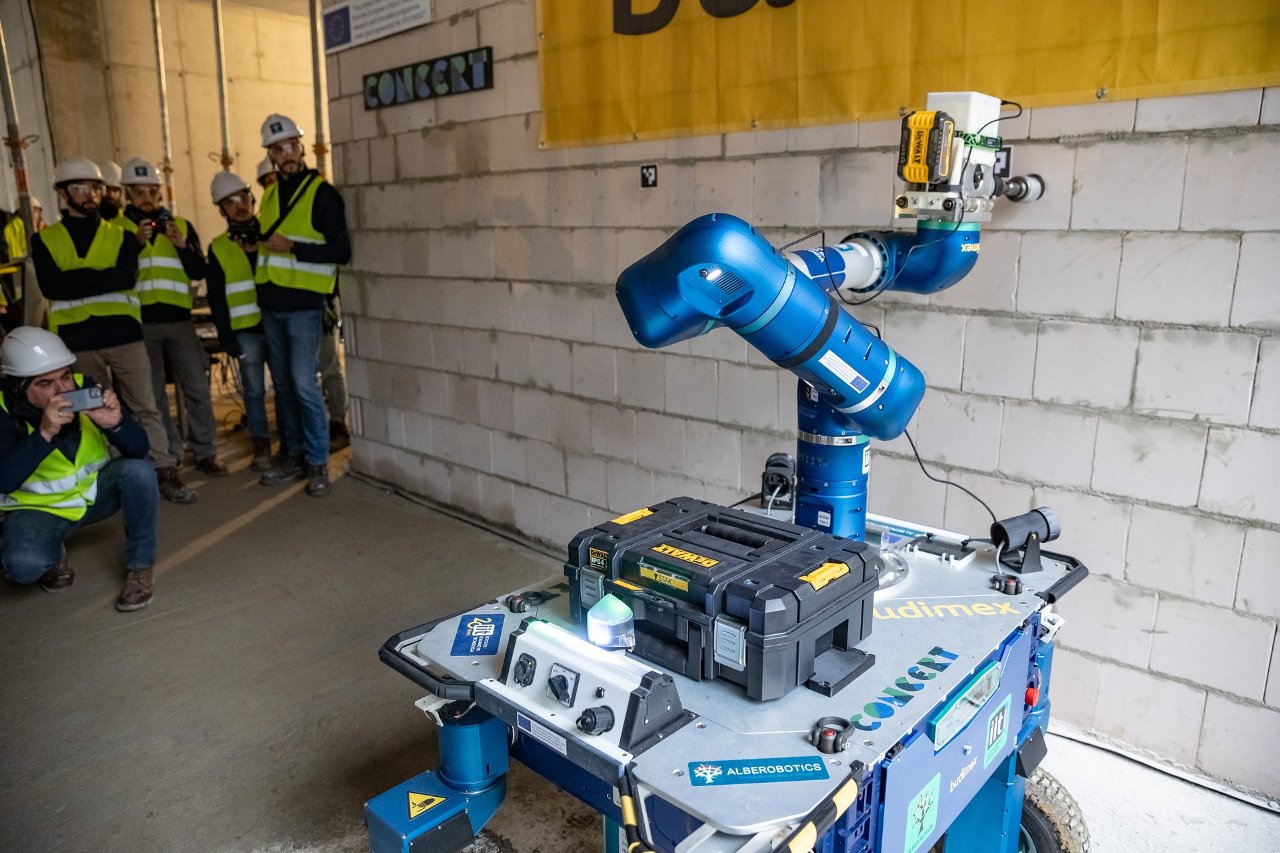
    With the support of the EU-funded CONCERT project, IIT has developed an innovative, modular robot platform. “Our aim was to create a flexible and adaptable solution that optimises construction processes, reduces the workload on people and improves safety,” explains Nikolaos Tsagarakis, project coordinator at IIT.

    Robot as a support – not a replacement
    Although the CONCERT robot can work autonomously, it was primarily designed as an assistance system for construction workers. While the machine takes over repetitive or dangerous tasks, skilled workers can concentrate on more complex activities. This not only increases work safety, but also efficiency on construction sites.

    “Instead of using a separate robot for each task, we have developed a fully reconfigurable solution that can be customised directly on the construction site,” continues Tsagarakis.

    Seamless integration into the digital construction site
    The robot was successfully tested under real construction site conditions. It not only demonstrated its performance, but also its flexibility by being able to adapt to the spontaneous requirements of the construction team.

    One major advantage is the link to digital building information models (BIM). This allows the robot to be controlled directly via a tablet without workers having to operate heavy power tools.

    A breakthrough for construction robotics
    CONCERT has ushered in a new era in digital construction site automation with the first reconfigurable multi-purpose construction robot platform.

    The solution not only has the potential for broad industrial application, but also exceeds the usual technology maturity level in research projects. “The flexibility of the platform makes it usable for many other construction tasks,” says Tsagarakis. Future developments will expand the areas of application even further.

  • AI accelerates perovskite solar cells for the mass market

    AI accelerates perovskite solar cells for the mass market

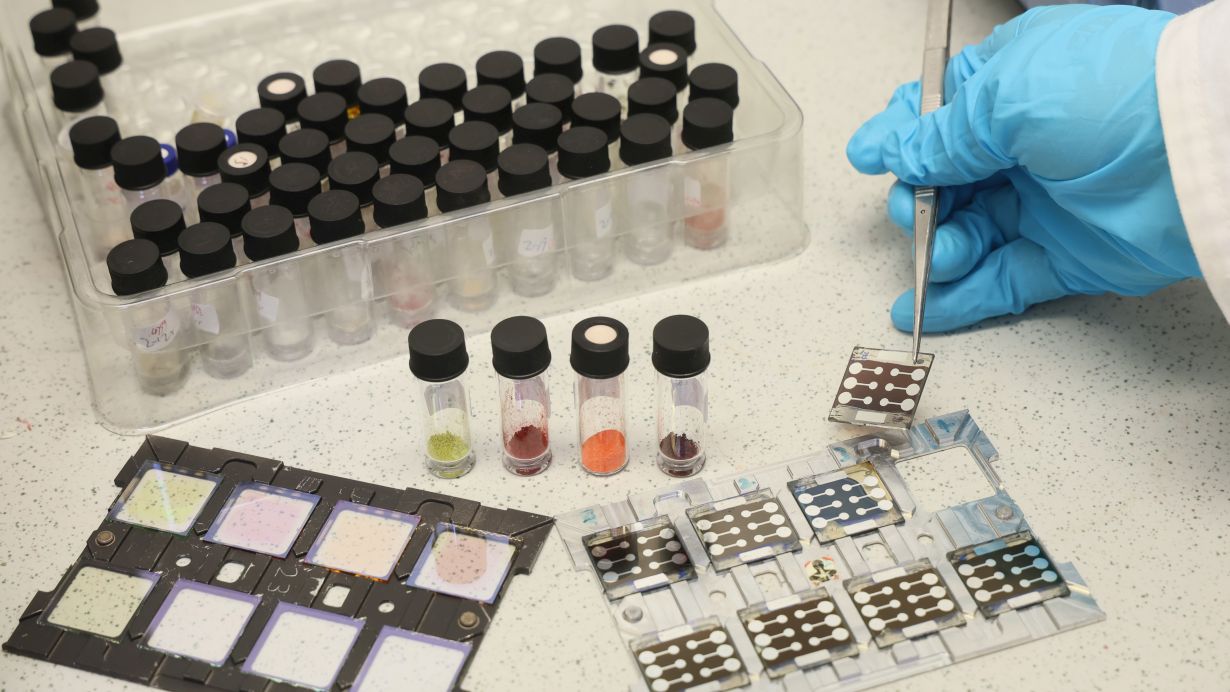
    Perovskite solar cells already achieve efficiencies of over 26% and are light, flexible and inexpensive to produce. They are considered a promising alternative to conventional silicon modules. However, challenges such as long-term stability and scalability still stand in the way of industrial utilisation.

    AI as the key to optimising production
    The Karlsruhe Institute of Technology (KIT) is researching how machine learning can improve the manufacturing process for perovskite cells. Deep learning models analyse material properties in real time and optimise the parameters for maximum efficiency.

    Detecting errors before they occur
    AI uses in-situ imaging techniques to monitor thin-film formation and detect errors at an early stage. This allows process deviations to be corrected immediately and expensive rejects to be avoided.

    Simulations for maximum efficiency
    AI-supported simulations allow production conditions to be precisely adapted. The control of the vacuum quenching time in particular plays a decisive role. AI optimises this process to ensure the best possible material structure.

    The path to market maturity
    The KIT study shows that AI is a key driver for the further development of perovskite photovoltaics. The technology could revolutionise the solar energy market and become industrially usable faster than ever with AI.

  • Der Switzerland Innovation Park Central

    Der Switzerland Innovation Park Central

    At Suurstoffi in Rotkreuz, the SIPC offers an inspiring environment that promotes dialogue and collaboration between over 120 partners from business, science and society. A vibrant innovation ecosystem is created here that efficiently translates new ideas into marketable solutions in the construction sector.

    Diverse formats to promote innovation
    In order to drive innovation, the SIPC works in five thematically focussed Future Labs, which specifically address current challenges such as the transformation to a circular economy in construction or new processing models
    in construction or new processing models. These labs are hybrid working environments with structured processes and formats that promote collaborative innovation. A variety of event and workshop formats as well as the digital community platform Jointcreate – a kind of “LinkedIn for innovation” – provide inspiration, empower participants and support the innovation process. The focus is always on implementation to achieve real impact. Financing and start-up advice as well as office and project space are available for this purpose.
    The SIPC also manages various programmes, such as the Circular Building Charter, an association of major real estate investors who are increasingly focusing on circular procurement and construction methods. The SIPC imparts knowledge in regular experience workshops. The open sharing of experiences in pioneering projects promotes dialogue within the industry.

    A contribution to the construction industry of tomorrow
    With its clear values – openness, fairness and professionalism – the SIPC makes a decisive contribution to the transformation of the construction industry. As a non-profit organisation, it pursues the motto “Building Excellence” and invites all interested parties to become part of this movement. Switzerland Innovation Park Central shows how innovation in the construction industry can promote not only technological progress but also social responsibility. By combining vision and practice, the SIPC is shaping a sustainable future and is an indispensable partner for anyone who wants to contribute to the construction industry of tomorrow.

  • New requirements for office space

    New requirements for office space

    The way in which companies utilise their office space has changed significantly in recent years. As the “Office Space Barometer” survey shows, workstations for individual desk work are no longer the central focus, which is understandable given the average occupancy rate of around 72%. Instead, companies are prioritising spaces that enable both collaboration and concentrated work. Meeting rooms, customer areas as well as relaxation and retreat areas are becoming increasingly important. Traditional open-plan offices are giving way to flexible space concepts that meet the diverse needs of employees.

    City or conurbation?
    Although around 24% of the companies surveyed still prefer a city centre location, locations in conurbations are also increasingly in demand due to good transport links and attractive rental prices. In large centres, as many as 53% of companies prefer a central location. The modern infrastructure enables companies to save costs outside the centres without having to accept losses in accessibility.

    Quality and sustainability as key criteria
    When choosing new office space, the quality of the working environment is the top priority. 59% of companies rate high-quality and ergonomically equipped workplaces as very important, while 37% rate this as somewhat important. Aspects such as sustainable construction and energy-efficient operation are becoming increasingly important, as they not only help to reduce costs but also support companies’ sustainability goals. Mobility factors such as good public transport connections or accessibility by car are also crucial.

    Efficient use of space through data-based strategies
    The fluctuating utilisation of office space poses challenges for many companies and owners. More and more companies are turning to technologies such as automated counting systems to analyse the actual use of office space. This data provides valuable insights and enables flexible customisation of the working environment. By transforming underutilised spaces into communal and meeting areas, space utilisation can be maximised and operating costs reduced while promoting employee wellbeing.

  • New partnership strengthens construction technology in Mexico

    New partnership strengthens construction technology in Mexico

    Leica Geosystems, part of Hexagon, and Dimanor have announced their new partnership. The two companies have agreed that Dimanor, a provider of machinery solutions in agriculture, mining and construction based in Mexico City, will expand its portfolio to include Leica Geosystems’ machine control solutions. Dimanor’s presence in Mexico spans the states of Baja California North and South, Sonora, Sinaloa, Chihuahua, Nayarit, Jalisco, Michoacán, Guerrero, Estado de México, Hidalgo and Mexico City. In these regions, heavy industry customers will have access to Leica Geosystems’ construction technologies.

    “Adding Leica Geosystems’ advanced machine control solutions to our offering is a strategic step to further increase the efficiency and productivity of our customers’ projects,” said Product Manager Ricardo Ortega, explaining his company’s motivation for partnering with Leica Geosystems.

    Evandro Manffra, head of Leica Geosystems’ heavy construction segment in Latin America, describes Dimanor as an ideal partner: “Together, we look forward to bringing our state-of-the-art machine control solutions to a wider audience in Mexico and improving the efficiency and precision of construction projects throughout the region.”

  • Achieving success even more efficiently with digital tools

    Achieving success even more efficiently with digital tools

    In the current market situation, efficiency in marketing and management processes is more important than ever for property professionals. A quick letting or sale means lower costs. With optimised digital operating and communication processes, estate agents and property managers also gain valuable time to focus on the essentials: looking after tenants and owners. The new digital solutions from SMG Real Estate offer the ideal support to save time and money in the property business while improving the quality of customer communication.

    Automation and artificial intelligence (AI) are two important new details that SMG Real Estate is using to support its business customers in making the marketing process more efficient. New tools based on these technologies significantly simplify and speed up the listing process. All you need to do is enter the address and some specific data about the property and the advert is created automatically. The software accesses IAZI’s extensive database.

    In a matter of seconds, concise and appealing property texts are also created that optimally present the specific advantages of the property. The new AI solution is conveniently integrated into the Business Manager user interface and is available as an option.

    Strengthen customer loyalty through fast and professional communication

    Communication with potential prospective tenants is now much easier thanks to the Flatfox tools, which are also integrated into the Business Manager. The Flatfox Messenger enables efficient management of the entire rental process. From scheduling viewings to online application management and the automatic generation of rejections – everything can now be done with just a few clicks. This simplification creates space for the essential tasks, such as intensive support for owners and tenants. A particularly useful feature is the digital reference check, which allows quick access to all relevant information on prospective tenants and thus increases the chances of swift rental agreements.

    In addition, improved lead qualification ensures that all contact enquiries contain all the necessary information to qualify customers, including relevant financial aspects. Property professionals thus receive all decision-relevant information at a glance, which increases the chances of success in the letting process and facilitates faster deals.

    Last but not least, it provides access to a comprehensive digital ecosystem that includes numerous other partner services. Customers can now access all SMG Real Estate services via a single login. This means that they can access the entire SMG Real Estate ecosystem with just one login, including daily updates in the Business Manager and third-party services – all available in a centralised and user-friendly way.

    There has already been a lot of positive feedback from existing and new customers who have tested SMG Real Estate’s digital tools in a practical check. The numerous pieces of feedback flow directly into processes that are used to further develop the solutions and services on offer and work on additional innovations. The aim is to enable property professionals in Switzerland to digitally let and manage their properties with maximum efficiency and professionalism.

  • The art of interior design – Zurich’s path to the future

    The art of interior design – Zurich’s path to the future

    You are the Director of Spatial Planning for the City of Zurich. Can you give us an overview of your responsibilities?
    Together with my staff, as director of the office I help plan the future of the city of Zurich. In order to make the most of the opportunities offered by a city in transition, we have specialist departments such as architecture and planning, including archaeology, monument preservation, the architectural history archive and a competence centre for geoinformation. The exchange gives us a very precise view of Zurich – from its prehistory to 2040.

    What are the goals of urban and spatial development in Zurich and what roles do you play in site and area development?
    We not only want to maintain the high quality of life in the city of Zurich, but also expand it. It should be able to improve selectively, both ecologically and socially sustainably. This requires suitable utilisation planning instruments – and we are in charge of developing and refining them.

    The municipal structure plan for settlement, landscape, public buildings and facilities is essential in this regard. We use it to specify which areas are suitable for building densification. We also designate areas for the provision of public open spaces as well as for communal public buildings and facilities – such as for primary schools or sports facilities. It is also an important coordination tool, as it shows how building density must be coordinated with transport and the supply of renewable energy, and it sets guidelines for other spatial aspects of environmentally and socially compatible urban development.

    What challenges does urban development face compared to other Swiss cities and what advantages does Zurich offer?
    Zurich shares many challenges with other cities in Switzerland and Europe. The focus is on growth and the associated demand for living space, whereby affordable housing in particular must be secured in the city. Demographic change and the pluralisation of lifestyles are leading to a variety of housing types and housing needs – which we need to address.

    In addition to socio-spatially compatible densification, the climate is a key issue. Around a quarter of all CO2 emissions come from the building sector. Urban planning and architecture today must be climate and environmentally friendly, conserve resources and preserve landscapes. In addition to climate protection, we need to curb heat island effects.
    What we no longer have, unlike other cities, are vacant industrial sites for conversion. Density reinforces the various interests in land and buildings in a city. In addition, as the economic engine of Switzerland, Zurich is under particular public scrutiny. Planning decisions require political discussion – participation is demanded. If there is no debate, a number of new buildings are appealed.

    What are the most important construction projects in Zurich and how do they contribute to the city and spatial development?
    I include planning in this. For example, the Josef site, the Schlachthof site, the Wollishofen lakeside and the Papierwerd site. They are important for Zurich’s urban development due to the previously mentioned shortage of space. This results in the challenging task of utilising these sites sustainably and efficiently in terms of planning.
    The city is also building itself – particularly affordable housing. The Leutschenbach and Tramdepot Hard housing estates alone will offer over 550 flats. In the case of Thurgauerstrasse or the Koch site, the city is allocating building land to non-profit housing developers.

    In connection with such large-scale projects, it is important to plan the associated social infrastructure. In particular, the provision of sufficient school space and cultural buildings such as the theatre and opera house are important for the city as a whole.
    In addition to the site developments and buildings mentioned above, the updating of the high-rise guidelines and the revision of the building and zoning regulations are among the most important tasks entrusted to Zurich’s urban planning department. The aim of these planning instruments is to find a way of dealing with monument protection, the inventory and the ISOS and to reconcile this with the planned building developments.

    Which areas in Zurich are particularly attractive for companies and why?
    This is highly dependent on the size and type of company; each company defines its own individual requirements for the choice of location. For a corporation that wants to develop and expand its own site in the long term, other locations are certainly considered attractive than for an SME that aims to develop within the neighbourhood.

    In principle, all neighbourhoods in Zurich are attractive, as there are good public transport connections everywhere. There has been a positive development here compared to recent years and decades – Zurich no longer has a real “periphery”.

    Where do you still see development potential and how could this be tapped?
    There is potential in cooperation with neighbouring municipalities. One of the special features of spatial planning is that it does not end at the city boundary, even if this boundary means a political change. Examples of this are the Limmat region or the Glattal with its shared public transport service. In these areas, it is important to coordinate planning across borders in order to secure the services and networking of the neighbourhoods.

    There is also potential in coordinating with the canton or federal government on issues such as noise and ISOS. Federal or cantonal regulations have a major impact in a city like Zurich. I see great potential in closer coordination with the association of cities.

    How is Zurich positioning itself in the area of mobility development and planning?
    In the municipal structure plan, the focus for urban mobility is on efficient and well-developed public transport and the further development of functional and attractive urban and street spaces. We are striving for a city of short distances. Neighbourhood centres will be strengthened and new ones developed. It will become more attractive for residents to shop locally, and retailers will open new shops in the neighbourhood as they can count on customers.

    The mobility figures show that the urban population is increasingly relying on bicycles and public transport. The city is specifically promoting walking and cycling in particular. The city provides targeted advice to companies and property managers through the “Impuls Mobilität” programme.

    Has the pandemic brought about changes in Zurich’s planning?
    Public spaces have become more important during the coronavirus pandemic. Especially for children and young people, who are dependent on open spaces in their immediate neighbourhood. On the whole, individual transport modes such as walking, cycling and driving have become more important, while public transport has been avoided due to the potential risk of infection. It is important to take the positive effects of the pandemic, such as the use of bicycles and the smoothing of traffic peaks through increased working from home, into the future.

    The pandemic and mobile working have brought about changes whose effects on urban planning we will only see in a few years’ time. In Zurich, neighbourhood centres in particular are also benefiting from the home office trend. During the pandemic, quick access to shopping, healthcare facilities, sports centres, restaurants and green spaces that did not require public transport was key. More attention must be paid to the need for liveable urban spaces in the future.

    What factors make Zurich an attractive place to live?
    Zurich is attractive and offers a high quality of life. There are many reasons for this: For example, the wide and attractive range of childcare and cultural facilities, attractive open spaces, educational centres, good infrastructure and high architectural quality. The location by the lake and the proximity to nature are also attractive. Despite lively building activity, the urban neighbourhoods have not lost their identity. In my opinion, this is a great strength of our city.

    How do you envisage the ideal development of the city of Zurich?
    What would be the core elements?

    Ideal is the wrong phrase in this context; there is no such thing as ideal development. Rather, urban planning is dynamic and is significantly influenced by political decisions. It must continuously respond to current and future socio-spatial and ecological concerns. It is important that we have a common vision of what Zurich should be and how it should develop in the future. The municipal structure plan formulates a target image, from differentiated structural densification and sufficient open spaces for recreation to the city’s centres and infrastructure. Below this, there are countless smaller levels, projects and events that are part of the city in transition. Zurich has a lot of potential that needs to be secured and utilised through urban planning. Not overnight, but for future generations of Zurich residents.

  • Viennese and German cities use new construction software

    Viennese and German cities use new construction software

    Two companies belonging to Wien Holding are working on the smino platform, according to a press release. According to the Rapperswil-Jona-based developer of construction software, Wiener Infrastruktur Projekt GmbH and Wiener Standort Entwicklung GmbH have used the app for two residential construction projects and the construction of a social centre. The reason for this is increasing cost pressure and the high demand for living space.

    Several German cities also want to use the app to save resources, time and money in urban development. According to the press release, Essen and Darmstadt are among the users. Essen is using it for the construction of a new comprehensive school, while in Darmstadt the app is being used for several projects, including the construction of the North Fire Station.

    The digital tool represents a solution in view of rising costs and the growing demand for living space, according to the press release. With smino, cities and municipalities can “successfully meet the challenges of modern urban development” and thus also make a sustainable contribution to the well-being of their residents.

    According to the company, the smino app connects developers, authorities, planners and contractors to form an efficient unit. Thanks to its central availability, workflows can be optimised and projects can be realised in a time and cost-efficient manner. It also makes communication between project participants more transparent.

    The Managing Partner of smino, Sandor Balogh, quoted in the press release, is delighted with the internationalisation. “The collaboration with local authorities underlines our endeavours to increase the efficiency and transparency of construction projects and promote sustainable, liveable cities.”

  • Dormakaba increases profitability

    Dormakaba increases profitability

    Dormakaba generated global sales totalling 1.38 billion Swiss francs in the first half of the 2023/24 financial year, which ended on 31 December 2023. This corresponds to a year-on-year decline of 3.0 per cent, dormakaba announced in a press release. The Rümlang-based locking technology company attributes this to a “significant negative currency effect of 95.2 million Swiss francs”.

    Excluding this effect, organic sales growth amounted to 3.9 per cent, explains dormakaba. The adjusted operating result at EBITDA level increased by 8.7 per cent year-on-year to CHF 200.7 million. The corresponding margin improved by 1.6 percentage points to 14.6 per cent. At 48.5 million francs, however, Group profit in the half-year under review was 5.8 million francs lower than in the same period of the previous year.

    “Our results clearly show how everyone at dormakaba is contributing to the effective implementation of our transformation programme as planned,” said dormakaba CEO Till Reuter in the press release. “The significant increase in our margins shows that the expected positive financial effects are bearing fruit and that we have made progress on our path to sustainable growth and profitability.”

    For the second half of the 2023/24 financial year, dormakaba is sticking to its targets for the year as a whole. The aim is to achieve organic sales growth of between 3 and 5 percent. In terms of profitability, dormakaba is aiming for an improvement in the EBITDA margin compared to the previous year’s 13.5 per cent.

  • Digitisation of building permit procedures in the canton of Zurich

    Digitisation of building permit procedures in the canton of Zurich

    As part of its efforts to modernise and digitalise administrative processes, the canton of Zurich has taken a decisive step to simplify and speed up the building permit procedure. From 1 April 2024, the procedure for submitting building applications will be completely digitalised with the introduction of the platform. This development marks a step forward in the administration and processing of building projects by reducing paper consumption and increasing efficiency.

    Since its launch in February 2020, the platform has already made a significant contribution to simplifying the building permit process. It enables a smooth exchange of information between applicants, authorities and other parties involved and supports the entire process from submission to approval of a building project. Until now, however, the process was not completely paperless, as legal provisions prevented the exclusive use of digital means.

    The latest amendments to the Planning and Building Act, the Building Procedure Ordinance (BVV) and the Special Building Ordinance I, which were passed by the Government Council, remove these hurdles. The new legal basis paves the way for a fully digitalised building permit procedure. Building Director Martin Neukom emphasises the importance of this development and stresses that the implementation of this digital project will create a customer-oriented and resource-saving service that meets today’s requirements and simplifies the processing of building applications for all parties involved.

    To ensure full implementation, all cities and municipalities in the canton of Zurich must switch to the new, exclusively electronic process within three years. This changeover promises to make the building permit process more efficient and environmentally friendly, which represents a significant innovation for property management professionals.

  • Introduction of BIM in facility management: a paradigm shift

    Introduction of BIM in facility management: a paradigm shift

    In the property sector, where various stakeholders – from owners to facility management – have specific requirements for a property, access to up-to-date and detailed information about the building structure and technical systems is essential. Effective utilisation and linking of this data makes a significant contribution to increasing efficiency. The increasing use of technology in property increases the complexity of the data, which in turn requires sophisticated data management.

    Synchronisation of planning and operation
    BIMtoFM, or BIM2FM, stands for the seamless transition of BIM data from the planning and construction phase to the operational phase of a property. This enables an efficient flow of information and the automation of operational processes, which leads to a significant increase in efficiency and a reduction in costs. The benefits of integrating BIM into FM processes are manifold and include easier access to building-related data, support for preventive maintenance and the minimisation of operating costs and downtime. These aspects are particularly important for strictly regulated areas such as hospitals or critical infrastructures. The introduction of BIM2FM creates the basis for automated administrative processes, solid budget planning and advanced order management in facility management. For property owners, this means access to up-to-date information that supports efficient yield planning and target definition. BIM2FM is thus establishing itself as an indispensable tool in the modern property sector.

  • Zum umweltfreundlichen Spital mit «Best Practices»

    Zum umweltfreundlichen Spital mit «Best Practices»

    Im Gesundheitssektor wurde der Umweltaspekt bisher oft vernachlässigt. Das Forschungsprojekt „Green Hospital – Ressourceneffizienz bei Schweizer Spitälern“ hat dazu beigetragen, das Bewusstsein für umweltrelevante Prozesse in Schweizer Spitälern zu schärfen. Im Rahmen des Nationalen Forschungsprogramms „Nachhaltige Wirtschaft: ressourcenschonend, zukunftsfähig, innovativ“ (NFP 73) wurde eine Liste von praxisorientierten Maßnahmen veröffentlicht, um Spitäler in ihrer Nachhaltigkeitsstrategie zu unterstützen.

    Die Studie, geleitet von Matthias Stucki am ZHAW-Institut für Umwelt und Natürliche Ressourcen, hat ergeben, dass insbesondere die Bereiche Wärme, Catering, Gebäudeinfrastruktur und Medikamente für den Großteil der Umweltbelastung durch Spitäler verantwortlich sind. Aber auch andere Faktoren wie Stromverbrauch, Abfallmanagement und die Verwendung von medizinischen Produkten spielen eine Rolle.

    Die aus der Studie abgeleiteten „Best Practices“ wurden aus einer Vielzahl von Literaturquellen und Praxisbeispielen zusammengestellt. Diese Massnahmen zielen darauf ab, die Umweltauswirkungen bei gleichbleibender Qualität der Gesundheitsdienstleistungen zu minimieren. Dabei wurde besonderer Wert auf die Auswahl von Maßnahmen mit hoher Klimarelevanz und großer Umsetzbarkeit gelegt.

    Insgesamt zeigt die Studie, dass die größten Chancen für eine Verbesserung der Umweltbilanz in der Konstruktion von langlebigen und ressourceneffizienten Gebäuden, der Nutzung erneuerbarer Energien und der Einführung von pflanzenbasierten Gerichten im Verpflegungsangebot liegen.

    Dieses Forschungsprojekt stellt einen wichtigen Schritt dar, um die schweizerische Krankenhauslandschaft nachhaltiger zu gestalten und setzt einen Meilenstein für zukünftige Initiativen in diesem Bereich.

  • HRS strengthens regional development competence

    HRS strengthens regional development competence

    In line with the new organisational structure, the HRS Executive Board will be expanded. Four Executive Board members are now responsible for the area of site and real estate development in the top operational management body: Michael Breitenmoser for Eastern Switzerland and Ticino; Yves Diacon for Central Eastern and Northwestern Switzerland; Herbert Zaugg, who has just joined HRS, for Central Western Switzerland; and Thierry Müller, as before, for Western Switzerland.

    The rest of the Executive Board remains unchanged. As before, the strategic management of the company is carried out by CEO/owner Martin Kull and COO/owner Rebecca Kull. Peter Keller will continue to be responsible for the finances as CFO.

    Separate Managing Director for IPZ Property AG
    The Generation Project Innovation Park Zurich on the site of the former military airfield in Dübendorf, which is being driven forward by IPZ Property AG and in which HRS is a shareholder, will now be managed as a separate unit by Andrea C. Thöny as Managing Director. He was already responsible for the project as development manager for HRS.

    “We are convinced that this strategically conscious harmonisation will enable us to significantly strengthen our already extensive development competencies in all regions of Switzerland. This offers great advantages for the building owners. It generates synergies in development and construction projects at an early stage and creates more security and speed in the increasingly complex planning and approval processes,” CEO and owner Martin Kull is convinced.

    Michael Breitenmoser, born in 1980, is an architect FH and holds a Master’s degree in Real Estate Management. After working in two architecture firms, he joined HRS in 2011 as project manager for real estate development and, from 2015, head of the real estate development department. In addition to competition management, he is responsible for the development of the Saurer WerkZwei site in Arbon, the “Chez Fritz” high-rise in Buchs, Wankdorfcity 3 in Bern, Bundesplatz in Lucerne, the Stadler Rail Competence Centre in St. Margrethen and centre development on the Gschwend site in Steffisburg.

    Yves Diacon, born in 1986, is a construction economist FH and holds a Master’s degree in Real Estate Management. After three years with another real estate development company, he joined HRS in 2011 as a project manager for real estate development and became head of department for real estate development in 2015, where he was responsible for all investor and overall performance competitions in the Central-East region. His portfolio includes the Ensemble project on the Hardturm site in Zurich, the Rosentalturm in Basel, the Nova Brunnen site development in Ingenbohl, Aere in Aesch and Reinach, the C+D building sites in Regensdorf and Am Schänzli in Muttenz.

    Andrea Claudio Thöny, born 1985, is an architect ETH. After working as an architect and in real estate consulting, he joined HRS in 2018 and has been Head of Real Estate Development since 2020. His focus is on the development of special projects in the field of research and development, commercial and special uses, as well as business development, M&A and restructuring. Since 2019, he has been responsible for the Zurich Innovation Park as overall project manager. Other important projects at HRS were the New Festival Hall at BERNEXPO and the Baden East high-rise.

    Herbert Zaugg, born in 1972, is an HF architecture technician and has completed further training in real estate trusteeship and business administration. He has many years of experience in project development, realisation, refurbishment and the acquisition of development projects up to total service contracts. In his last function of many years, he developed visions and strategies and was responsible with his team on a conceptual and structural level for many acquisitions, real estate and business developments in the Bern Mittelland region. He has been heavily involved in the area of non-profit housing, but also in site development, and is particularly interested in forward-looking forms of living and working.

    Source: www.hrs.ch

  • Warmer Winter senkt Stromverbrauch

    Warmer Winter senkt Stromverbrauch

    Die Schweiz hat 2022 insgesamt 61,3 Terawattstunden Strom benötigt, informiert das Bundesamt für Energie in einer Mitteilung. Nach Abzug von Übertragungs- und Wärmeverlusten ergibt sich ein Stromendverbrauch von 57,0 Terawattstunden. Im Jahresvergleich fiel der Stromendverbrauch damit um 1,9 Prozent oder 1,1 Terawattstunden geringer als 2021 aus.

    Zur Senkung des Stromverbrauchs hat vor allem der warme Winter 2022/23 beigetragen. Darüber hinaus wirkten auch Effizienzsteigerungen und Stromsparappelle verbrauchssenkend. Die positive Wirtschaftsentwicklung und eine leichte Steigerung der Bevölkerung wirkten hingegen verbrauchssteigernd.

    Die inländische Elektrizitätserzeugung belief sich 2022 auf 63,5 Terawattstunden gegenüber 64,2 Terawattstunden im Jahr zuvor. Nach Abzug des Verbrauchs der Speicherpumpen ergibt sich 2022 eine Nettoerzeugung von 57,9 Terawattstunden. Der Löwenanteil von 52,8 Prozent wurde dabei von den Wasserkraftanlagen geleistet. Kernkraftwerke trugen 36,4 Prozent, die konventionell-thermischen Kraftwerke und die Anlagen für Erneuerbare zusammen 10,8 Prozent bei.

    Den Importen von Strom im Umfang von 33,1 Terawattstunden standen im Berichtsjahr Exporte von 29,7 Terawattstunden gegenüber. Trotz des Importüberschusses von 3,4 Terawattstunden konnte im Stromhandel jedoch ein kleiner positiver Aussenhandelssaldo von 71 Millionen Franken verbucht werden.

  • Swap interest rates rise

    Swap interest rates rise

    The yield curve for swap transactions is currently undergoing a non-parallel shift. Since the last decision on June 16, the curve has flattened, with sub-year rates staying high and longer-term rates falling. This decline speaks to the credibility of monetary policy that it will be successful in its efforts to maintain price stability over the long term. For medium-term maturities in particular, this decline reflects the market attitude: the SNB is not tightening the interest rate screw as much as previously expected for this venture. Although the maturities during the year signal an imminent increase in key interest rates, the size of the step will depend on future inflation data and currently leaves a lot of leeway for their estimation. The scenario of a 75bps rate hike, similar to the Fed, would not be inconceivable with surprisingly high inflation numbers.

    In any case, the end of negative interest rates is imminent. The prices for fixed-rate mortgages have become cheaper since the last decision by the SNB, but money market mortgages will also be affected in the future and will most likely become more expensive.

    Positive signs in the interest rate market
    The interest rate market has reacted positively to the monetary policy strategy in the past few weeks, thus underpinning the SNB's credibility in being able to guarantee price stability in the long term. Even if long-term interest rates have fallen and the strong domestic currency is likely to have a positive impact on inflation in the coming months, further increases are essential for successful monetary policy. However, it's over

    From today's perspective, it is very difficult to quantify the next rate hike, although we consider all scenarios from 25 to 75 bps to be extremely likely. Therefore, we will be closely monitoring the upcoming inflation numbers and the swap market to inform the next decision.

    Fed decision
    At its meetings on July 26th and 27th, the Federal Open Market Committee decided to raise the key interest rate again by 75%. The return to neutral monetary policy has so far resulted in the desired slowdown in macroeconomic activity to counteract the imbalance between supply and demand. Although inflation still appears to be rising unchecked, the Fed's monetary policy – thanks to the high pace of tightening in recent months –

    gained more credibility. This is supported, among other things, by the decline in bond yields and break-even inflation rates. In addition, the latest decision was in line with market expectations, which are currently pricing in another tightening of at least 50bps for the next meeting in September – along with the Fed's comments. It is now important to monitor inflation developments closely in the coming weeks.

    The ECB completed the exit from negative interest rates on July 21st and hiked rates by 50 instead of 25 bps. The strong fall in the value of the euro since the beginning of the year was of particular relevance to the decision, as this increases the imported inflationary pressure. Further interest rate adjustments could increase the attractiveness of the European currency and counteract inflation through exchange rate appreciation, at least in the short term. Furthermore, the Governing Council approved a new instrument called the Transmission Protection Mechanism (TPM) to measure the spread of bond yields between different member states

    to ensure the efficient transmission of monetary policy signals to all euro area countries.

    Will interest rate hikes pick up again in September?
    If there is no sign of a slowdown in inflation by September, we expect the Fed to hike rates by at least 50bps a third time. In any case, it is important to understand that due to the short succession of large rate hikes, the effectiveness of monetary policy is unlikely to be immediate and it will take some time for the economy to fully respond. We therefore think that stagnation or even a fall in prices is to be expected and that so-called peak inflation will soon be reached. Due to the development of the euro exchange rate and the significantly high inflation figures, we clearly expect further interest rate hikes from the ECB. In view of the interest rate moves by the Fed and also the SNB, we currently expect at least a 50bps adjustment for the September meeting.

  • Comprehensive energy systems by EKZ

    Comprehensive energy systems by EKZ

    The pressure on holistic ecosystems around real estate and their energy solutions is growing. EKZ simplifies this task with clever solutions.

    The combination and central management of electricity generation and storage, heat and cooling generation and electromobility in an integrated energy system leads to the simplification of property management, maximum living and working comfort and optimal energy efficiency in production. In addition, ecological sustainability is ensured.

    The goals of the Energy Strategy 2050 are being built here. Most of the Verdeblu development has been completed and inhabited since autumn 2019. It is noteworthy that this development covers a large proportion of its energy needs itself, and that exclusively from renewable sources.

    "The specifications of the Energy Strategy 2050 are also an opportunity for the real estate industry," explains Dieter Stutz from Atlantis AG, which is active in the areas of environmental consulting, settlement planning and architecture and who developed the project. The heat supply via groundwater was the best and most convincing solution for the area. Atlantis planned and implemented this complex construction project together with EKZ.

    On-site energy production
    The “Grand Chemin” development was built in Epalinges in western Switzerland, with some of the electricity required being produced on site by a photovoltaic system (PV). A new multi-family house is being built in Emmen (LU), which will be characterized by four heat pump systems with groundwater as an energy source and a photovoltaic system with ZEV. Seen in this way, the future of energy has long since begun in this country as well.

    Text: Mohan Mani, Image: zVg.