Tag: Eigentümerin

  • Transfer of ownership of the Schützengütli site for residential development takes place

    Transfer of ownership of the Schützengütli site for residential development takes place

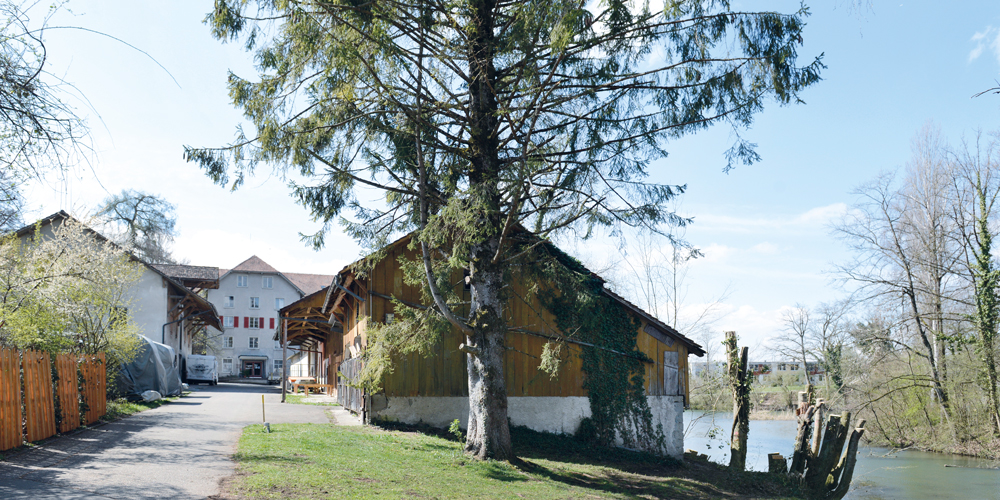
    In February 2022, Halter AG acquired the Schützengütli site in Bischofszell with two areas of around 6500 and 1000 square metres. The property, which had served the Schiffli embroidery factory from 1907 and later the glass rectifier construction, passed into the ownership of the Laumann & Co. malt factory and fruit pressing plant in 1946. Essences and syrups were produced here until a few years ago. On 10 February 2023, the revised building and zoning plan of the city of Bischofszell came into force, allowing residential use with a design plan obligation on the site.

    For a lively and attractive Bischofszell
    “With this site development in an intact neighbourhood, we will create attractive living space in a very well-developed location right next to the railway station,” says Rolf Zäch, project manager at Halter Entwicklungen, with conviction. “The development of the site makes a valuable contribution to an attractive Bischofszell.” Thomas Weingart, mayor of Bischofszell, is also pleased about the upcoming development: “The centre of our town continues to develop positively. The town council is pleased about that. We are particularly honoured that Halter AG, a well-known company, will be active in Bischofszell and can contribute its great experience in urban development.”

    Harmonious integration into the neighbourhood and the city
    Around 50 owner-occupied flats are planned, for which the existing buildings will be removed except for individual elements. In a two-stage study contract, the aim is to achieve a high-quality site development that offers future residents a high quality of living and blends harmoniously into the surrounding neighbourhood. Taking economic criteria into account, an urban planning concept for the site will be developed, which will be followed by the architectural design in a second step. The study commissioning process already initiated by Halter Entwicklungen will start this spring.

  • Foundation stone laid on the JED campus

    Foundation stone laid on the JED campus

    Since 2018, the former location of a large industrial printing plant has been transformed into a modern place of work and living space with diverse and flexible types of use

    transformed. Urs Baumann, CIO Swiss Prime Site Immobilien: “The revitalization and the change of use initiated with the conversion of the existing buildings have turned the area into a think and work tank for business, industry and trade. The gratifyingly high level of first-time lettings proves that large spaces that interact with one another are very much in demand. The new building perfectly complements the existing ensemble with laboratory and office space.» Stefano Kunz, City Councilor of Schlieren adds: "Swiss Prime Site has successfully managed to give the former self-contained NZZ area new life and flair through new paths and the open and spacious architecture." The new building, which is being built on a land reserve of the site, with five floors, a rentable area of over 14,000 m2 and its unique external appearance, is particularly aimed at tenants who need large, connected and adaptable areas. According to the project plan, the first tenants will move into the building from mid-2024 .

    "Space as a Service" in the attractive Life Science Hub Schlieren
    The JED campus forms a center for know-how transfer, innovation and entrepreneurship and brings together companies from a wide range of industries and sizes. In addition to the already established anchor tenants Zühlke and Halter in the existing buildings, two more will be added in the new building with Superlab Suisse and FlexOffice and will ensure an additional strengthening of the ecosystem. According to their business models, they will offer space as a service to various start-ups and companies as "Space as a Service". Superlab Suisse focuses on young companies in the life sciences sector and offers them fully equipped laboratories with flexibly scalable services. After Lausanne and Basel in 2023, the third location operated by Superlab Suisse will be opened in Schlieren from 2024. FlexOffice already successfully offers fully equipped office space for SMEs in several Swiss cities and is now planning another location on the JED campus. «With Superlab Suisse and FlexOffice, we already had two successful anchor tenants at the time the foundation stone was laid, which fit perfectly into the existing structure of the area and the adjacent cluster. Together with the neighboring Wagi area, we will continue to strengthen the economic cluster and the infrastructure for companies in the life sciences sector and beyond,” concludes Urs Baumann.

  • Schönau Wetzikon: creative and residential district in the middle of nature

    Schönau Wetzikon: creative and residential district in the middle of nature

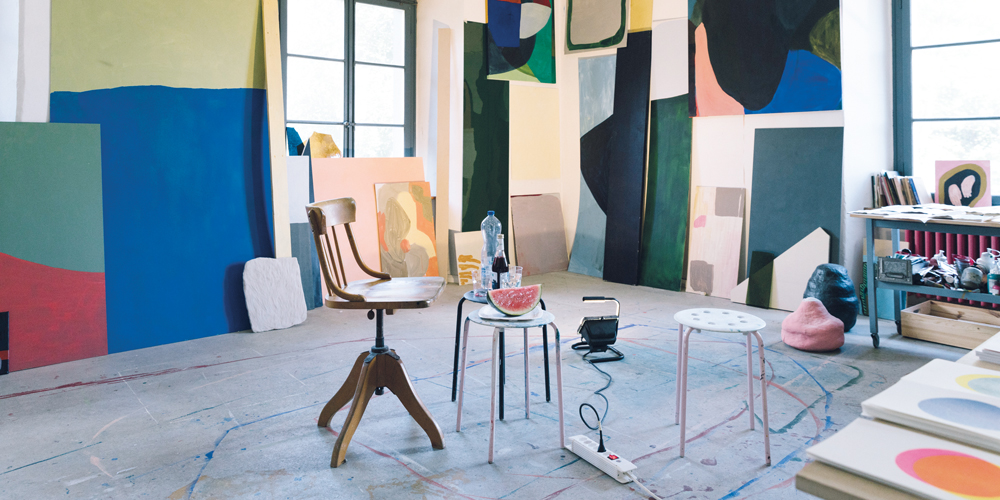
    Since the spinning mill was shut down at the end of 1991, the former Schönau textile factory site in Wetzikon has been used temporarily. A sound artist creates impressive sounding sculptures here, photographers, graphic artists, painters and sculptors have their studios here, there are cultural events, open studio days or, like last summer, a Schönau summer bar with concerts. A children's clothing store, a musical theater group, a carpenter's workshop or the job bus of the Stiftung Netzwerk also use the historic rooms, some of which are even used today. Since 2006, storks have lodged on the former factory chimney during the summer months. The natural landscape forms an idyllic setting around this colorful world of Schönau.

    Hiag intends to develop the area in stages up to 2030, taking up the character of Schönau and continuing to tell its story. There will also be room for creativity here in the future. In the heart of Schönau, new public facilities are to be created, such as a café,
    Shops, market stalls with regional products or a showroom, but also commercial premises. There will also be new residential buildings with around 100 apartments and innovative forms of housing such as studios or cluster apartments.

    The almost 200-year-old listed factory buildings are to be carefully renovated. The historical buildings lie in a spacious park and are embraced on the west side by the Schönauweiher, which is actually a technical body of water: it was dammed to generate hydroelectric power. A historic hydroelectric power plant, which is to be preserved and renovated, still bears witness to this today. There is a small raft in the pond. It was installed in 2012 as part of the Wetziker Fjord Strategy, which strengthens the natural space along the Aabach from the neighboring Kulturfabrik to the Pfäffikersee. This natural area is preserved as a place for recreation and meeting, upgraded and partly made accessible to everyone. Large parts are reserved exclusively for the animal and plant world.

    The Schönau lies on a hilltop. Wetzikon train station and Oberwetzikon town center can each be reached on foot in just under a quarter of an hour. There are various bus stops nearby.

    Participation and communication are important issues in the process. The development of the Schönau should be a project in which everyone could participate. Information events are held regularly and there are various information channels. The current tenants participate and help with projects and events.
    Since the end of 2020, the participation process for future uses in the historic cotton magazine, which is to become the public meeting place of Schönau, has been running. The collected ideas are currently being further developed into a concrete utilization concept.

    The city of Wetzikon has drawn up a public design plan for the Schönau with various experts. To ensure that his specifications are as specific and meaningful as possible, several well-known architectural offices and landscape architects have carried out a guideline project for the area. The Wetzik city parliament is expected to vote on the design plan in the first half of the year. When it is final, the new building projects will be worked out. A first construction project could be the design of the future heart of the Schönau in 2023 at the earliest – the renovation of the cotton magazine. The main building will remain in its current state until at least 2025.

    The historic buildings are to be gently renovated.
    There should also be room for creativity in Schönau in the future.