Tag: empa

  • New findings on the stability of steel under the influence of hydrogen

    New findings on the stability of steel under the influence of hydrogen

    Researchers from the Joining Technology and Corrosion Laboratory at the Swiss Federal Laboratories for Materials Science and Technology(Empa) are investigating the mechanisms that lead to the hydrogen embrittlement of steel. The team led by Chiara Menegus and Claudia Cancellieri is focussing in particular on the effect of hydrogen at the boundary layer between a passivation layer and the metal, according to a press release.

    The passivation layer is an oxide layer around 5 nanometres thick that is formed during the oxidation of chromium contained in the steel. The passivation layer protects the steel from further corrosion. However, tests have shown that individual hydrogen atoms can react at the interface between the passivation layer and the metal and break down the protective oxide layer. This ultimately leads to embrittlement of the steel and can cause material fractures, as observed in buildings such as the Carola Bridge in Dresden, the London skyscraper 122 Leadenhall Street or parts of the Bay Bridge in San Francisco.

    However, detecting the hydrogen atoms in the interface is complicated. “It is difficult to investigate a hidden interface inside the material without destroying the sample,” research leader Claudia Cancellieri is quoted as saying in the press release.

    The researchers used hard X-ray photoelectron spectroscopy (HAXPES) for their investigations. This method showed that the hydrogen degraded the passivation layer.

    In a further step, in collaboration with the Ion Beam Physics Lab at the Swiss Federal Institute of Technology in Zurich(ETH), various iron-chromium alloys are to be analysed and resistant oxide layers found. According to the press release, findings from this research could lead to the construction of more durable bridges and better infrastructure for the storage and transport of hydrogen.

  • Wooden computer mouse

    Wooden computer mouse

    Printed circuit boards are the invisible backbone of electronics. Until now, they have mostly been based on fossil plastics. Their conventional production uses glass fiber-reinforced epoxy resin. A petroleum-based material that is almost impossible to recycle at the end of its life cycle and requires costly disposal. This recycling problem is becoming increasingly urgent in view of the growing quantities of electronic waste.

    Empa’s “Cellulose and Wood Materials” laboratory has therefore developed a carrier material based on wood that can be completely biodegraded. Under the leadership of Thomas Geiger, the team in the EU project HyPELignum developed a technology in which lignocellulose – a previously underutilized by-product of wood processing – is transformed into a robust, functional board.

    Closing the loop between function and cycle
    At its core, the new material consists of a mixture of cellulose fibrils and lignin. Finely tuned mechanical processes create a stable mesh that hardens in a “hornified” board. The printed circuit boards made from this material can be printed with conductor tracks and fitted with electronic components.

    Moisture resistance remains the key challenge. This is because it is precisely the material’s openness to water that makes it biodegradable at the end of its life. A conflict of objectives that the Empa team wants to resolve even better in future. In their first experiment, they have already succeeded in building a fully functional computer mouse and other devices. After use, these could be composted under suitable conditions and valuable metals and components simply recovered.

    From research to practice
    The developers at the Empa laboratory are working closely with companies such as Profactor to transform the new circuit boards into products ready for series production. The potential for industry is huge. Especially in the case of short-lived electronic items, this creates a solution that conserves resources, reduces disposal costs and minimizes the ecological footprint.

    The HyPELignum project also emphasizes sustainable overall strategies. The focus is not only on raw materials and production, but also on life cycle analyses and industrial partnerships. With demonstration devices and planned industrial scaling, the aim is to make the leap from laboratory solution to market-ready product by 2026.

  • Lighter and stronger: new generation of network arch bridges

    Lighter and stronger: new generation of network arch bridges

    A new border bridge has been spanning the Oder near Küstrin since last year. It is held in place by a network arch with a span of 130 metres and 88 carbon girders. According to a recently published Empa press release, these carbon tensioning cables were developed by Carbo-Link, an Empa spin-off from Fehraltorf. The carbon carriers are made of carbon fibre reinforced plastic (CFRP).

    This innovative material not only enables flexible processing, but also saves a large amount of carbon dioxide that would be released by conventional steel constructions. The use of carbon fibre beams significantly reduces the dead weight compared to conventional flat steel hangers. Around 500 tonnes of steel and 1350 tonnes of reinforced concrete were saved in the construction.

    A major advantage of the new suspension cables is their high tensile strength and lower fatigue than steel. Most of the fatigue tests were carried out by a team from Empa’s Structural Engineering department and confirmed the necessary fatigue strength of the new CFRP material. “We have thus created the basis for a new generation of filigree network arch bridges with carbon hangers as load-bearing elements,” Giovanni Terrasi, Head of Empa’s Mechanical Systems Engineering department, is quoted as saying in the press release.

    Visually, the new materials offer design freedom, as the Oder bridge shows. Carbon girders have already been used in other bridge constructions, but the special feature of the Oder bridge is that it is being used for the first time for heavy goods railway transport. Trains can pass over it at a speed of 120 kilometres per hour. The bridge has been honoured with both the German Bridge Construction Award and the British Bridges International Award.

  • Pioneering civil engineering

    Pioneering civil engineering

    With a total length of 266 metres, the bridge replaces an outdated structure from 1926 that no longer met the requirements of modern rail traffic. The central component is a gleaming white network arch with a span of 130 metres, which spans the border river Oder without supports. Instead of classic flat steel cables, 88 carbon tension members made of carbon fibre-reinforced plastic are used. These hangers were largely developed, tested and assessed at the Empa Institute in Dübendorf. They replace the steel segments weighing several tonnes and thus significantly reduce the overall weight of the supporting structure. An advantage for material efficiency and design freedom.

    Economic and sustainable benefits
    The innovative bridge technology made it possible to save around 600 tonnes of steel and 1,350 tonnes of reinforced concrete. A project-specific scaffolding solution was used in the construction process to ensure efficient assembly and welding of the bridge segments. Thanks to the high fatigue, tensile and corrosion resistance of the carbon fibre cables, both the maintenance effort and the service life of the bridge are positively influenced. A sustainability study shows that the use of carbon causes around 20 per cent less CO₂ emissions than a conventional steel structure.

    International appeal and future potential
    The railway bridge can be used by freight and passenger trains at speeds of up to 120 km/h and fulfils the highest safety standards. Extensive tests by Empa confirmed the fatigue strength of the material under real loads. The bridge has received several awards, including the Bridges International Award and the German Bridge Construction Prize. It is regarded as a pioneer for the use of high-performance composite materials in infrastructure construction.

    New aesthetics and symbolic significance
    The striking, elegant arch creates an architectural accent in the border region and emphasises the connection between the countries. The network arch bridge with carbon hangers symbolises both technical innovation and ecological responsibility. In future, it could serve as a standard for comparable major projects in European rail transport.

  • New plant in Dübendorf produces renewable methane

    New plant in Dübendorf produces renewable methane

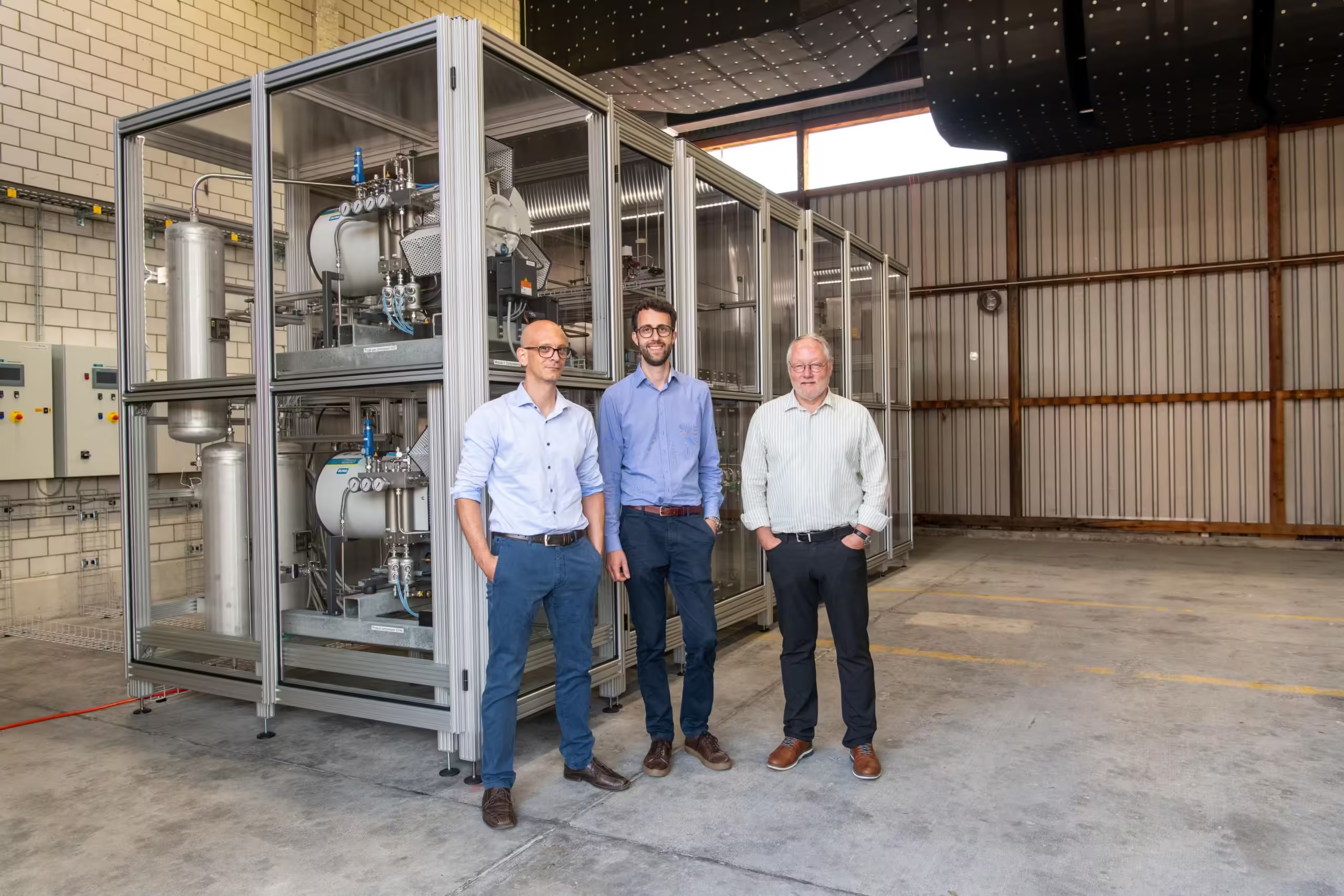
    Empa has commissioned the move-MEGA methanisation plant in Dübendorf. The project demonstrates the sorption-enhanced methanisation developed by Empa and is intended to improve the power-to-gas process, as detailed in a press release. The plant demonstrates how solar power is converted into hydrogen using electrolysis and then processed into methane by adding CO2. The synthetic methane can be fed directly into the gas grid and replace fossil natural gas.

    According to the press release, sorption-enhanced methanisation is central to the plant. Zeolite pellets absorb the water produced during the reaction and shift the chemical balance in favour of methane formation. As a result, the methane produced can be used directly or fed into the grid. “Thanks to sorption-enhanced methanisation and heat management, we achieve high sales and significantly greater load flexibility than with conventional processes. This makes the technology particularly attractive for direct coupling with photovoltaic or wind power plants,” explains move-MEGA project manager Florian Kiefer.

    The use of CO2 from the ambient air for methanisation enables negative CO2 emissions through methane pyrolysis. The synthetic methane can be broken down into solid carbon and hydrogen downstream. The carbon is used in concrete or asphalt.

    “Methanisation in conjunction with methane pyrolysis opens up a way to combine the supply of renewable energy with the permanent removal of CO2 from the atmosphere,” explains Christian Bach, initiator of the move-MEGA project and head of the Chemical Energy Carriers and Vehicle Systems department at Empa.

    In addition to methanisation, the focus of the move-MEGA project is also on the use of the waste heat generated. The project is supported by the ETH Board, the Canton of Zurich, Glattwerk, Avenergy Suisse, Migros, Lidl Switzerland, Armasuisse and Swisspower.

  • Precise timing for perfect thin films

    Precise timing for perfect thin films

    Piezoelectric thin films are indispensable components in a wide range of electronic applications. They are used in frequency filters, sensors, actuators and tiny energy converters. Their ability to convert electrical voltage into mechanical movement and vice versa makes them a central component of modern communication technology. However, the production of these highly sensitive layers is a complex matter. Their quality determines the performance and durability of the end products.

    HiPIMS process with new possibilities
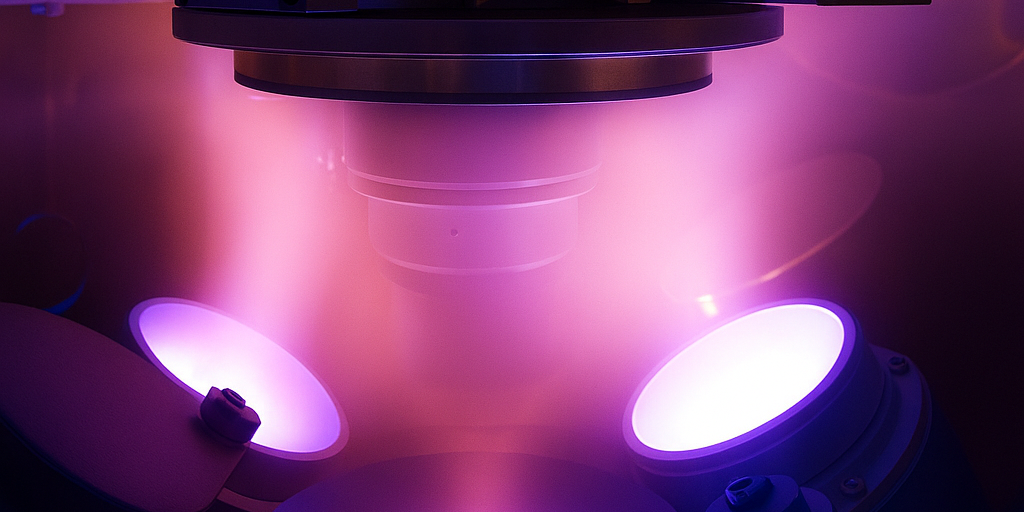
    High Power Impulse Magnetron Sputtering (HiPIMS) is a well-known process for coating substrates with high-density layers. High-energy pulses are generated in a vacuum chamber environment, which knock atoms out of the target material. These atoms are deposited as a thin film on the substrate. For piezoelectric applications, such as aluminium nitride coatings, the process has not yet offered an optimal solution. This is because along with the desired target ions, argon ions from the process gas also reach the substrate, which leads to undesirable inclusions.

    Avoiding argon inclusions
    Argon, a common process gas in magnetron sputtering, is chemically inactive, but it can remain in the coatings in the form of inclusions. This is problematic for piezoelectric coatings as they are operated under high electrical voltages. Even small amounts of argon lead to an electrical breakdown and jeopardise the functionality of the components. In classic HiPIMS process control, however, it is difficult to eliminate the argon ions as they hit the substrate at the same time as the target ions.

    Timing as a decisive factor
    Under the leadership of Sebastian Siol, the team led by PhD student Jyotish Patidar has developed precise timing in order to accelerate only the target ions and avoid argon inclusions. As the argon ions are faster and reach the substrate first, the accelerating voltage is applied to the substrate with a delay. At this point, the argon ions have already flown past and can no longer penetrate the growing layer. This results in piezoelectric layers of outstanding quality that were previously not possible with HiPIMS.

    A new standard for sensitive substrates
    The researchers call this innovative process “Synchronised Floating Potential HiPIMS”. Particularly noteworthy is the possibility of creating layers on non-conductive substrates such as glass or sapphire. Normally, no electric fields for ion control can be applied to such substrates. By utilising the so-called “electron shower”, which is generated with the magnetron pulse, ions can nevertheless be accelerated at the right moment. The substrate is briefly negatively charged so that the desired ions are introduced in a targeted manner.

    Practical relevance for semiconductor and quantum technologies
    Lower process temperatures protect the sensitive components in semiconductor production and enable the coating of temperature-sensitive components. At the same time, a high layer density and associated resistance is achieved, which is crucial for a long service life of the components. The possibility of depositing layers on insulating substrates also opens up completely new applications in photonics and quantum technologies that previous methods could not achieve.

    Cooperations and next steps
    The Empa team has not reached the end of its research with these successes. The group is already working on optimising the process with machine learning and high-throughput experiments. At the same time, collaborations are being established with other research institutions and industrial partners in order to bring the technology into application. Research into ferroelectric thin films, which pose similar challenges in terms of precision and material purity, is already underway.

  • Empa wins bridge builder

    Empa wins bridge builder

    Matthias Sulzer is not your typical researcher. His career path took him from a trade to engineering studies to founding a company and finally back to research. Today he heads the Empa Department of Engineering Sciences, where he is helping to shape the built environment of tomorrow. His office is just as structured as his way of thinking. On a poster he drew himself, a mountain road shows the stages of a strategic development. For Sulzer, visualizations are not just a working tool, but an expression of pragmatic, goal-oriented thinking.

    He recognized early on that sustainable change can only succeed if research and practice work closely together. Even when he founded his company, he focused on scientific cooperation. This attitude later led him to Empa as a senior researcher, where he led national innovation projects and translated scientific findings into concrete applications.

    Innovation as a combination of systems thinking and responsibility
    Today, Sulzer deals with a wide range of topics, from sustainable robotics and new materials to the decarbonization of entire energy systems. Its work is particularly impressive in the context of climate change. After all, the built environment is responsible for a large proportion of resource consumption. Sulzer sees this not only as a technological task, but also a social one. His vision ranges from closed material cycles to the recovery of atmospheric carbon. For him, climate protection begins in the laboratory, but it ends in application.

    His department covers the entire spectrum of research, from molecular material developments to the evaluation of national energy strategies. From drones for infrastructure repairs to biocompatible implants, the work of the Empa teams is as diverse as it is relevant. According to Sulzer, it is crucial that the various disciplines work together. Where individual experts used to work side by side, today the focus is on real teamwork.

    Research that empowers people
    For Sulzer, however, the focus is not on technology, but on people. Research should not only be measured in terms of excellence, but must also empower the next generation to take responsibility. He sees himself as an enabler who creates spaces for scientific excellence. And he believes in the added value of teams in which individual strengths are combined to create collective intelligence. Where disciplinary boundaries are crossed, new solutions emerge, often with an impact beyond research.

    With Matthias Sulzer, Empa is not only gaining a technically skilled head of department, but also a leader who brings together science, entrepreneurship and social responsibility. At a time when technological developments alone are no longer enough, Sulzer relies on attitude, cooperation and a clear vision. Research that works through people, for people.

  • DroneHub in NEST

    DroneHub in NEST

    The “DroneHub” at Empa’s NEST provides a platform for the development of pioneering technologies that revolutionise the interaction of drones and robots with the natural and built environment. The focus is on drones that can perform autonomous tasks such as inspections, repairs and data collection. The aim is to reduce environmental pollution and promote climate protection.

    Research at the cutting edge
    The “DroneHub” has three central test environments that simulate real-life conditions. Additive manufacturing from the air enables drones to carry out infrastructure repairs in a vertical area with 3D printing from the air, defying wind and weather. In the biosphere, researchers are testing robots that move around in nature, collect data and use biodegradable materials that decompose after use. In building façades, a modular façade serves as a testing ground to explore how drones can be integrated into buildings to ensure maintenance and safety.

    Autonomous systems as an environmental immune system
    “Our vision is to establish drones as a kind of immune system for the environment,” explains Mirko Kovac, head of the project. These robots are designed to perform precise tasks, such as repairing buildings or monitoring ecosystems, while minimising both costs and risks.

    Collaboration for sustainable solutions
    The development of the “DroneHub” was initiated by Empa in collaboration with Imperial College London. This collaboration enables the exchange of knowledge and technologies to effectively tackle global environmental challenges.

    Sustainable technologies for global goals
    The “DroneHub” plays a key role in the development of autonomous, sustainable technologies that can contribute to global climate goals. Practical tests and interdisciplinary approaches create an interface between technology, the environment and everyday life.

  • Empa succeeds in implementing a quantum model

    Empa succeeds in implementing a quantum model

    Quantum technologies are revolutionizing science and offer enormous potential for communication, computing power and measurement technology. In a major collaboration, Empa researchers and their partners have precisely recreated a theoretical quantum model in a synthetic material. This step brings us a significant step closer to the practical application of quantum technologies.

    A new era from bits to qubits
    In conventional computers, the bit, a binary state of 0 or 1, is at the center of information processing. Quantum computers, on the other hand, use qubits, which can be 0 and 1 at the same time thanks to quantum effects. This superposition, also known as “superposition”, enables a potentially infinite number of states and therefore revolutionary computing power. However, the interaction of qubits is extremely complex. By precisely aligning and connecting electron spins, the Empa researchers have now overcome an important hurdle in putting theory into practice.

    The synthesis of the Heisenberg model
    In the “nanotech@surfaces Laboratory”, the researchers succeeded in building a chain of spins that replicates the one-dimensional alternating Heisenberg model of Nobel Prize winner Werner Heisenberg. They used the nanographene molecule Clar’s Goblet, a special carbon nanomaterial with an hourglass shape that has the necessary spin configuration. Connected on a gold surface, a perfect realization of the Heisenberg chain was achieved, allowing the researchers to conduct detailed studies on this quantum system.

    Quantum technologies of the future
    The experimental implementation of this model confirms the predictions of quantum physics and opens up new horizons in research. Roman Fasel, head of the nanotech@surfaces Laboratory, sees the potential in this work for a wide range of quantum materials and systems that can be further developed for new applications. The collaboration with international teams of experts in Portugal and Germany shows that quantum technologies require a transdisciplinary effort to reconcile theory and practice.

  • Researchers develop commercially viable salt batteries for safe energy storage

    Researchers develop commercially viable salt batteries for safe energy storage

    Researchers from the Dübendorf-based Materials for Energy Conversion Laboratory of the Swiss Federal Laboratories for Materials Science and Technology(Empa) are continuing an Innosuisse project started by Ticino-based salt battery manufacturer Horien Salt Battery Solutions. The aim of the research collaboration is to develop economically attractive and usable salt batteries, according to a press release. Salt batteries are batteries in which the electrolyte is a solid, namely a ceramic ion conductor based on sodium aluminium oxide. The cathode is based on a granulate of common salt and nickel powder. The sodium metal anode is only formed during charging. Unlike conventional lithium-ion batteries, salt batteries are not flammable. They can therefore be used in areas where lithium-ion batteries are not permitted, such as in mining and tunnelling or on oil and gas platforms. Further advantages are their longevity and the significantly cheaper procurement of the raw materials. In contrast to the lithium-ion competition, the raw materials are cheap and available in large quantities, according to the press release.

    One disadvantage of these batteries is their high operating temperature. To be ready for use, a salt battery requires a temperature of 300 degrees Celsius. The researchers are looking for options to make the applications more economical. “Depending on the application, it is more economical to keep a battery warm than to cool it,” Empa researcher Meike Heinz is quoted as saying in the press release.

    Another endeavour is to operate the solid-state batteries nickel-free. The aim is to replace the cathode material nickel with other metals such as zinc. The aim is to establish salt batteries as long-term stationary storage systems thanks to their safety, long service life and the absence of critical raw materials.

  • Successful expansion of the “co-operate” research campus in Dübendorf

    Successful expansion of the “co-operate” research campus in Dübendorf

    The expansion of the research campus in Dübendorf, which took place from 2021 to 2024, includes a state-of-the-art laboratory building, a multifunctional building and a new multi-storey car park. These infrastructure measures are crucial in order to meet the increasing demands of research. The additional 30 laboratories and offices offer researchers an improved working environment that meets the latest technological and environmentally friendly standards.

    Sustainability and innovation go hand in hand
    A special feature of the new campus is its focus on sustainable energy generation and utilisation. A newly developed high-temperature geothermal probe system stores waste heat in summer and uses it to heat the buildings in winter. These and other technological innovations, which come directly from the Empa and Eawag laboratories, will not only be used on the campus, but will also be further researched to optimise their efficiency and environmental compatibility.

    A green and car-free campus
    In order to make the campus site more environmentally friendly and pedestrian-friendly, existing parking spaces were moved to the new multi-storey car park and the site was extensively landscaped. A “green belt” connects the two research institutes and creates an inviting atmosphere for employees and visitors. The new campus square at NEST also offers an attractive open space for socialising and recreation.

    Looking to the future
    With the completion of the “co-operate” project, Empa and Eawag have not only modernised their research infrastructure, but also laid the foundations for future innovations. The combination of state-of-the-art construction, sustainable energy utilisation and an improved working environment promotes cutting-edge research and strengthens Switzerland’s position as a leading location for scientific innovation.

  • Empa repurposes old asphalt

    Empa repurposes old asphalt

    In a research project, the Swiss Federal Laboratories for Materials Testing and Research has investigated the possibilities of recycling asphalt deposited on waste heaps in new construction and in the repair of road surfaces. According to a media release, researcher Martins Zaumanis’ goal was to increase the recycling content of asphalt. To this end, two test sections with recycled asphalt were set up in Uster ZH and on the Lukmanier Pass between the cantons of Graubünden and Ticino. The results are reportedly promising.

    The research project is called HighRAP (Reclaimed Asphalt Pavement) and was carried out by Zaumanis together with the Federal Roads Office, the Federal Office for the Environment, the cantons of Zurich and Graubünden and several industry partners from 2019 to early 2023.

    The tests showed that on the busy road near Uster, 30 per cent RAP content could easily be introduced without any loss of performance. “Typically today, for such a heavily trafficked road, RAP is completely dispensed with in the surface course,” says Zaumanis. For the underlying binder course, between 40 and 50 per cent RAP was possible.

    The road section at the Lukmanier Pass is not exposed to heavy traffic, but to harsh climatic conditions. At an altitude of 1900 metres, the strong temperature fluctuations can cause cracks in the road surface. Nevertheless, RAP admixtures of 85 percent in the foundation layer and 70 percent in the base and binder layers above were possible.

  • Until the chemistry is right

    Until the chemistry is right

    The fact that she has mastered her field from A to Z is, as she points out, also thanks to know-how built up by colleagues at Empa – such as engineer Gabor Kovac. He pushed the production of stack actuators with expandable silicone discs for many years and developed them to operational maturity with his partner Lukas Düring until their spin-off “CTsystems” was recently taken over by the Daetwyler Group.

    “The devices for measuring how actuators stretch in different electric fields were developed by them,” Opris says, “we were early on this topic, and that helped me enormously.” Unlike her colleagues, however, the chemist is working less on the technology for printing such components, but one “floor below” – on the synthesis of novel polymers that are suitable as non-conductive layers for stacked transistors, elastic films for power generation and other elements.

    The desired profile: as thin as possible, with the long-term goal of many layers only ten micrometres thick; easily stretchable, sensitive to low current voltage and robust at the same time. And above all: printable, i.e. without solvents for the conductive layers between which the polymers lie. “Solvents can damage the polymer layers. Besides, the material would have to dry for a long time in order not to give off harmful vapours,” explains Opris, “so we try to do without them – with the right chemistry.”

    There are many different requirements that researchers all over the world are dealing with. Suitable compounds that raise hopes are polysiloxanes, which the Empa specialist is also working on. An important advantage of these polymers: they are relatively easy to synthesise; the “backbone” of their strands is very mobile – and they can be specifically manipulated with polar groups, i.e. plus-minus charged molecules.

    Snake-like molecules
    What is difficult for laypeople to understand, Dorina Opris explains with a vivid image: “You can imagine these polysiloxanes like a pot full of snakes that want to move all the time.” The polar groups have a twofold effect on them. On the one hand, they make the molecular snakes more sensitive to electric fields so that they respond to low voltages. On the other hand, they act like a kind of glue between the molecules; this “stiffens” them and thus reduces the important elasticity. It is necessary to fine-tune both effects to achieve maximum success. For a practical application, the transition from the solid to the elastic state at low temperatures is important so that the technology can later be used at room temperature. In addition, such polymer structures still have to be chemically “cross-linked” so that they can become elastic layers – for example by UV light and with the help of so-called end groups: quasi molecular “hats” that the snakes wear at their ends. But in laboratory practice, it has so far proved tricky to reliably provide these polymers with defined end groups. “That annoys me already!” admits Opris with a smile.

    Healthy ambition is needed for the TRANS project, which the chemist herself calls “very, very ambitious”. The team is optimistic because earlier work has already produced encouraging results; for example, a polysiloxane compound that reacted to a voltage of only 300 volts and deformed strongly – an extremely low value. Printing capacitor layers without solvents has also already been achieved. And a doctoral student recently developed a piezo-electric elastomer that, when stretched, shows a significantly higher electrical response than other compounds currently in use.

    Creativity and team spirit for success
    Of course, many more steps are needed to achieve usable successes – and those qualities that have brought Dorina Opris to Empa and ETH Zurich. Not only stamina and the ability to turn failed attempts into progress, but also to create an inspiring environment for employees that allows open debate and also mistakes so that good ideas emerge.

    And above all: optimism. The boss believes that young researchers should be given exciting and challenging projects and then be allowed to work independently so that they remain motivated. Her advice to talented women based on her own biography: “Don’t wait until someone pushes you to do research. You have to be self-motivated and strong, and go for it! And also take a risk sometimes.”

  • “co-operate” – a model for climate-friendly construction

    “co-operate” – a model for climate-friendly construction

    As far as the sparing use of resources and the reduction of CO2 emissions are concerned, the campus that is taking shape on the Empa site in Dübendorf should certainly become a model student – from the top to the bottom, from the roofs to a depth of 100 metres, where the earth probes of a unique experimental seasonal energy storage system end. In summer, these “tubes” will store the waste heat from, for example, the refrigeration machines, ventilation systems and laboratory equipment, and then use it in winter for heating or for the production of hot water. The goal: to reduce the CO2 emissions of the buildings on the entire campus to a minimum and at the same time explore this innovative technology for a sustainable energy future.

    Minimising greenhouse gas emissions: This aspiration also shapes the constructions of the new campus. The three-storey building to the right of the entrance is a unique “wood-concrete car park” whose ceilings are a sophisticated construction of spruce beams and slabs with concrete overlay. According to the construction company Implenia, this hybrid construction method made it possible to reduce the thickness of the concrete layers to about one third. A significant saving was made on the “climate polluter” cement: around 9,300 m2 of concrete ribbed ceilings were replaced with wooden beam ceilings – also a contribution to the current trend of replacing concrete, where possible and sensible, largely with constructions made of wood.

    According to Kevin Olas, Head of Real Estate at Empa, one of the challenging aspects of this project was the cleverly integrated installation of lighting, electrical lines and waste water pipes, so as not to detract from the aesthetics of this sophisticated hybrid construction. In addition, the planning also had to take future aspects into account: With a view to climate change, the multi-storey car park was planned as a modular construction made of demountable prefabricated parts – with a view to a more distant future in which individual mobility may play a lesser role than it does today. Then parts of the building could also be converted into workshops or for other purposes.

    Urine as raw material for fertiliser
    In this future, environmentally friendly recycling will also determine building: Not only steel, concrete or wooden elements can be recycled in a climate-friendly way, but also human “raw materials”. Take urine, for example: in the large laboratory building at the centre of “co-operate”, “NoMix” toilets have been installed, which experts from the Eawag Water Research Institute have developed over the past few years. Without changing the usual use, they separate human urine from the so-called black water from faeces, flushing water and toilet paper.

    Because urine contains valuable nutrients such as nitrogen, phosphorus and potassium, it can be used to produce fertiliser for agriculture. In a process specially developed by Eawag, the raw material is first stabilised in the basement of the NEST building using a biological process, thus losing its strong odour. An activated carbon filter removes all drug residues before the liquid is finally evaporated – to produce a high-quality fertiliser called “Aurin”, which is marketed by the Eawag spin-off Vuna GmbH. 1000 litres of urine produce 100 litres of this fertiliser, which since 2018 has also been approved by the Federal Office for Agriculture for use on edible plants.

    Many mosaic stones for a good carbon footprint

    In addition to the inconspicuous urine collection system, many obvious details document the campus’ claim to be a signpost for environmentally friendly construction. Photovoltaic installations will massively increase the campus’ own electricity production. And on more than 14,000 m2 of floor space, people move on recycled asphalt with a high proportion of 80 percent recycled material in the base layer and 20 percent in the thin surface layer.

    At the same time, the landscape architects have freely dispensed with asphalt in order to design close to nature: Previously sealed areas are “liberated”, such as Ludwig-Tetmajer-Strasse on the Empa site. “This ‘car park asphalt desert’ will become a green and shady zone,” explains Kevin Olas. And behind the large new buildings, biodiversity is also being promoted with diverse plants and trees – thanks to selected heat-resistant species that will also feel at home in future climate conditions.

  • New Empa and Eawag campus takes shape

    New Empa and Eawag campus takes shape

    The Swiss Federal Laboratories for Materials Testing and Research (Empa) and the ETH Domain’s water research institute, Eawag, are expanding their campus on the Empa site in Dübendorf, which will soon go into operation under the name co-operate, according to a media release. The architecture and design of the extension are conceived as a “signpost” for climate and environmentally friendly building and show approaches for less resource consumption and minimal CO2 emissions, for more circular economy through less material consumption as well as for gaining and saving energy, it says.

    A attractive building has been erected near the entrance to the campus. The construction is a wood-concrete car park, which was realised by Implenia using a hybrid construction method. Instead of concrete ribbed ceilings, wooden beam ceilings were used over an area of 9300 square metres. As a result, the building requires considerably thinner concrete layers and reduces the consumption of cement, which is “harmful to the climate”.

    According to Kevin Olas, head of Empa’s real estate division, lighting, electrical lines and sewage pipes had to be installed with consideration for the aesthetics of the hybrid construction. In addition, the modular construction method using prefabricated parts had to be used in view of climate change. This meant that parts of the building could be converted into workshops, for example.

    In addition to building materials such as steel, concrete and wooden elements, human “raw materials” can also be recycled: urine, for example, is suitable as a raw material for fertiliser production because it contains the nutrients nitrogen, phosphorus and potassium. The urine collection system NoMix-WCs installed in the laboratory building creates the raw material for the recycled fertiliser Aurin. This is marketed by the Eawag spin-off Vuna.

    Other building blocks on the campus include photovoltaics, recycled asphalt and no asphalt in the landscaping, which focuses on promoting biodiversity and provides for the planting of a diverse flora.

    Source: empa.ch

  • Empa develops heat-resistant drone for fire brigade

    Empa develops heat-resistant drone for fire brigade

    The FireDrone from Empa and the Aerial Robotics Laboratory of Imperial College in London has passed its baptism of fire: Initial tests with the flying robot, which is intended to support fire brigades in their operations, were positive, according to a media release from Empa. In Empa’s flight arena in Dübendorf, they showed that the flight characteristics and controllability of the special drone, which is around 50 centimetres tall, were “excellent” despite its special equipment. The autonomous aircraft was equipped with a new type of insulation jacket, an additional built-in cooling system and aluminium cladding.

    The design, which the researchers have just published in the scientific journal “Advanced Intelligent Systems”, was convincing in this dry run. However, in order for the drone to provide the emergency services with initial information about the source of the danger, it must also be able to withstand high heat. “The extreme heat generated by a fire is too great for conventional drones to fly closer,” David Häusermann from Empa’s Sustainability Robotics laboratory is quoted as saying.

    The Empa laboratory Building Energy Materials and Components was able to synthesise the insulating material with which this was also possible. It is an ultra-light aerogel made of polyimide and silica. It was also reinforced with glass fibres. The electronics, thermal imaging camera and CO2 sensors of the FireDrone prototype survived several test flights undamaged during tests with a gas fire on the training grounds of the Andelfingen training centre. Now they are also to be tested under heavy soot development.

    “If a drone makes the first reconnaissance of the situation, we don’t have to send the firefighters into the danger zone immediately,” Stefan Keller, training coordinator for the fire brigade of the building insurance of the canton of Zurich, is quoted as saying. “For us, this progress is enormously interesting.”

  • Plant-based insulation as a CO2 sink?

    Plant-based insulation as a CO2 sink?

    The building sector is responsible for 40% of global energy consumption, 30% of greenhouse gas emissions and 36% of waste in the EU. Energy efficiency measures have reduced emissions in operations. Material production remains an underestimated source. “Grey” emissions from modern buildings are comparable to operational emissions. Building materials that sequester CO2 over the long term reduce the ecological footprint.

    How CO2 can be sequestered in the long term
    Empa is developing new insulation materials for buildings that can sequester CO2 in the long term. Plant waste products from agriculture and forestry are processed into insulating materials and fixed during a heat treatment. This “plant carbon” remains fixed during the life of the building and can be directly introduced into fields when the building is deconstructed, where it increases the fertility of the soil and remains stable. This is in contrast to other building materials, such as wood or cellulose insulation, which release the stored CO2 when they rot or are thermally recycled.

    Physicist Wernery from Empa is conducting research with his group and the ZHAW on insulating materials made from plant carbon. The insulation material must be thermally insulating, fireproof and suitable for later use as fertiliser. Plant carbon insulation could improve Switzerland’s CO2 balance by a good 1% by replacing insulating materials such as EPS or mineral wool with plant carbon. This would save half a million tonnes of CO2 equivalents annually by avoiding emissions from the production of conventional insulation materials and by storing CO2 in the plant carbon over the long term.

    Financial support – from several sources
    Wernery receives financial support for his promising concept from funding institutions such as the Minerva Foundation, the ETH Board and the Swiss Federal Office of Energy. The climate fund from the Winterthur municipal utility has made a contribution to the development of the basic principles, which comes from voluntary contributions from customers who purchased two centimes per kilowatt hour of electricity.

  • Five technologies on the way to net zero

    Five technologies on the way to net zero

    The TA-Swiss study aims to inform policy-makers and the public about the opportunities, limits and risks of different methods for CO2 extraction and storage. Aspects such as feasibility, climate effectiveness, costs, resource consumption and impacts on the environment and population were considered.

    The five technologies are:

    • the storage of CO2 as biomass in forests and the use of wood
    • storage in the form of humus in the soil and the use of plant carbon
    • capture and storage of CO2 from biomass combustion (BECCS)
    • removal from the air and storage (DACCS)
    • the accelerated weathering of demolition concrete and rock (carbonation)

    Each of the five NETs was assessed based on the current state of knowledge and with the help of expert interviews. Potential opportunities, risks, synergies and conflicts were identified and considered from a system perspective. Based on this, general and specific, technology-related options for action and recommendations were derived and reflected on together with selected stakeholders.

    The most important general recommendations of the study
    In order for NET’s contribution to the net-zero target to be implemented in an environmentally and socially compatible manner, politics and society should address the issue at an early stage. This requires in particular that the public is involved in shaping the conditions of use of NET by means of fact-based and comprehensible information.

    There is a need for an overarching strategy for the use of limited resources, such as renewable energy, water, biomass and soil, and for financing for the development and implementation of NET.

    Further research is needed to determine the potential of the different technologies.

    It must be possible to record the amount of CO2 removed from the atmosphere in the long term in a transparent and simple way to create a reliable assessment framework and avoid counting the same CO2 more than once.

    The minimum period of CO2 fixation from which a technology or NET project is recognised in terms of the Climate Strategy should be reflected.

    NETs can only be used as a supplement to the priority reduction of greenhouse gas emissions when achieving the net zero target. Therefore, it is important that separate targets apply to the reduction of CO2 emissions and to CO2 removal.

    Switzerland currently has a pioneering role in the development of NET. This competitive advantage should be further strengthened by promoting the relevant research and development, as well as demonstration projects.

  • Building insulation – Light masonry

    Building insulation – Light masonry

    Glazed building elements are a popular method in architecture for letting light into a building. This makes better use of environmentally friendly daylight, and less artificial lighting is needed. However, in order to maximise this advantage, the glass elements should preferably be used to construct entire walls for the building envelope, which requires that the elements have effective thermal insulation and can bear a certain load – a combination that has not been available on the market in this way until now.

    Both requirements fulfilled: highly insulating and translucent
    Silicate aerogels are high-performance thermal insulation materials that are becoming increasingly popular in the building sector. The most common are opaque insulation mats and plasters. Empa researcher Jannis Wernery and his colleagues from the “Building Energy Materials and Components” department already had the idea in 2017 to integrate the insulating material directly into a building block and presented a new type of brick filled with aerogel, the so-called “Aerobrick”. Thanks to its excellent thermal insulation, this brick saves heating costs – without the need for an additional insulation layer on the masonry.

    However, aerogel can also be almost transparent, which enables a translucent, insulating building system. To take advantage of this and further improve the insulating performance of the “aerobrick”, Wernery, Michal Ganobjak and Co. developed a new type of modular component based on float glass and silicate aerogel granulate that combines both properties – it is translucent and thermally insulating: the aerogel glass block.

    The glass blocks filled with translucent aerogel granulate allow the construction of aesthetically pleasing and even load-bearing façade elements that allow daylight to enter over a large area. The Empa researchers achieved this combination of strength, insulation and light transmission by using staggered spacers between the glass panes within the glass block, which ensure static stability with minimal heat transmission.

    The glass block has a measured thermal conductivity of 53 mW/(m∙K) and a compressive strength of almost 45 MPa. This is the highest insulating performance of a brick to be found in the technical literature, let alone on the market. At the same time, there is also the property of light transmission.

    Multiple applications in view
    The aerogel glass block is suitable for applications in which there are simultaneous requirements for high daylight input, glare protection and privacy protection, for example in offices, libraries and museums. An important aspect here is that a building envelope made of such glass blocks couples the inside of the building with the outside in terms of daylight. This can have a positive effect on the daily rhythm of the building users. Possible applications include:

    • Rooms that should not have a line of sight to the outside, for example for reasons of privacy, security or to avoid disturbances, but should still allow diffuse daylight into the interior, such as libraries, galleries, museums, foyers, offices, staircase cores, gymnasiums, multi-purpose halls, residential buildings or art workshops.
    • Spaces where daylight is necessary for a healthy circadian rhythm, such as dormitories, hospitals and sanatoria, but also zoos, stables and animal breeding facilities up to greenhouses
    • Places where a maximum of daylight is to be brought in and space is to be saved, for example in densely built-up city quarters with high-rise buildings and many city apartments
    • Architectural elements such as Trombe walls in solar architecture, courtyards or atriums that generate heat from the infrared radiation of sunlight

    An analysis of material costs shows that the insulating glass block can be quite competitive in such applications. The glass block thus offers architecture new design possibilities for more daylight in buildings – both for new buildings and for renovations. The researchers have now applied for a patent for the aerogel glass block and are looking for possible industrial partners.

  • Empa erfindet tragfähige und isolierende Glasbausteine

    Empa erfindet tragfähige und isolierende Glasbausteine

    Dank der Empa wird es in Zukunft erstmals möglich sein, auch tragende Wände aus Glasbausteinen zu errichten. Die dort entwickelten Glasbausteine haben eine weitere Eigenschaft, die ihnen bisher fehlte: Sie weisen die höchste Dämmleistung auf, die Ziegel theoretisch haben können, in der Praxis jedoch selten haben.

    Das neue Material, das all dies gewährleistet, ist Silikat-Aerogel. Dieser thermische Hochleistungsdämmstoff findet im Bausektor zunehmend Verbreitung, allerdings meist in Form von undurchsichtigen Dämmmatten und -putze. Es kann jedoch auch transparent sein. In Verbindung mit Floatglas haben Forschende der Empa-Abteilung Building Energy Materials and Components laut einer Mitteilung einen lichtdurchlässigen und wärmedämmenden Baustoff entwickelt: den Aerogel-Glasbaustein.

    Damit gebaute tragende Wände lassen viel diffuses Tageslicht in Innenräume, sowohl bei Neubauten als auch bei Renovierungen. Das ermöglicht vielfältige Anwendungen, etwa in Bibliotheken, Museen, Foyers und Mehrzweckhallen. Sie können in Räumen sinnvoll sein, wo es um einen gesunden Tag-Nacht-Rhythmus geht wie Wohnheime, Zoos, Ställe, Tierzuchten und Gewächshäuser. Sie können in dicht bebauten Stadtquartieren Licht schaffen und bei sogenannten Trombe-Wänden zum Einsatz kommen, eine in der Solararchitektur verwendete Kombination aus einer Kollektor- und Speicherwand zur passiven Nutzung der Sonnenenergie.

    Laut Empa kann der Isolierglasbaustein in solchen Anwendungen durchaus wettbewerbsfähig sein. Die Forschenden haben ihn zum Patent angemeldet und sind nun auf der Suche nach Industriepartnern. Schindler increased its sales by 6 percent to CHF 2.8 billion in the first quarter of 2023. Adjusted for special effects, net profit rose disproportionately year-on-year to CHF 186 million. Order intake, on the other hand, was almost 9 percent lower.

  • Summertime has a positive effect on the energy balance of office buildings

    Summertime has a positive effect on the energy balance of office buildings

    Researchers from the Urban Energy Systems-Lab of the Swiss Federal Laboratories for Materials Testing and Research(Empa), based in Dübendorf, have studied the influence of the changeover from winter to summer time on the heating and cooling energy required by office buildings. They came to the conclusion that setting the clocks forward by one hour has a positive effect on the energy balance, according to a media release.

    Accordingly, the scientists simulated the heating and cooling energy expended with and without daylight saving time for different climatic regions based on data from various office buildings in 15 American cities. In order to include the influence of climate change, they took into account not only the current climate, but also future climate scenarios up to 2050.

    They were able to determine energy savings across all climate scenarios and zones. The highest possible saving was 3 per cent. “Since much more cooling than heating energy is consumed in summer, the time change has an overall positive impact on the energy balance of a building,” Massimo Fiorentini, one of the four study authors, is quoted as saying.

    Therefore, in the debate about abolishing the time change, political decision-makers should not only consider the electricity savings, as has been the case up to now, but also the potential for energy savings in office buildings during summer time.

    Nevertheless, the researchers see the clock change as only one of many possibilities for reducing energy consumption. Improving the building stock, behavioural changes and a general adjustment of working hours are also important building blocks in climate protection.

  • Intelligent building technology thanks to shared innovation

    Intelligent building technology thanks to shared innovation

    Today, real estate has to meet a multitude of requirements. As a significant driver of CO2 emissions in Switzerland, they play a central role in Swiss climate and energy policy. The requirements for economical and efficient energy use in buildings are correspondingly high. On the other hand, there are ever-increasing demands for safety and comfort on the part of the users – with a simultaneous reduction in the complexity of the application. One component for solving these sometimes seemingly contradictory requirements lies in the digital networking of sensors and devices in buildings.

    Valuable partnerships as innovation drivers
    The cooperation with the Swiss Federal Laboratories for Materials Testing and Research (Empa) in Dübendorf is proving to be an extremely valuable and fruitful partnership with regard to the development of intelligent and sustainable buildings. In the modular research and innovation building NEST, Empa develops and tests technologies, systems and materials together with partners from research, industry and the public sector.

    Bouygues Energies & Services supplied prefabricated HVAC components as part of the NEST unit HiLo (“High Performance – Low Emissions”). Using Building Information Modelling (BIM), a factory and assembly plan including manufacturer’s specifications were created, allowing materials to be ordered directly from the model. In the NEST unit “Sprint”, Empa has successfully put circular construction and “urban mining” into practice. Recycled materials and components were used to create flexible office space in a very short time, while conserving resources.

    In the field of predictive control, learning algorithms enable considerable energy savings compared to conventional, rule-based control algorithms, while at the same time increasing the comfort and user-friendliness of building systems.

  • Viboo wins Empa Innovation Award

    Viboo wins Empa Innovation Award

    Every two years since 2006, Empa has honored in-house innovations or successful technology transfers from science to industry with the Empa Innovation Award. This year, the CHF 5,000 prize went to the Empa spin-off viboo , the research institute said in a statement . The young company based in Dübendorf has developed a self-learning algorithm that uses weather and building data to calculate the optimum energy use of a building several hours in advance.

    The algorithm developed by Felix Bünning and Benjamin Huber together with Empa Senior Researcher Matthias Sulzer in Empa's Urban Energy System Lab has already been tested in pilot tests in the NEST innovation building and in an Empa administration building. It has been shown that the approach can save around a quarter of the heating energy, according to the statement.

    For the application, only the analogue thermostats have to be replaced by intelligent thermostats. Here, viboo is already working with Danfoss and wants to get other manufacturers of such thermostats, such as ABB and Schneider Electric , on board for further pilot projects. Huber wants to reciprocate the award with a contribution that “empa will get through the coming heating period well”, the viboo co-founder is quoted as saying in the press release.

  • viboo saves heating energy with a learning algorithm

    viboo saves heating energy with a learning algorithm

    viboo has developed an algorithm to save heating energy. According to a press release , the spin-off of the Federal Materials Testing and Research Institute ( Empa ) can also heat older buildings with around a quarter less energy. The user comfort remains the same or even improves.

    Researchers Felix Bünning and Benjamin Huber developed the idea while working in Empa's Urban Energy Systems Lab. Based on weather and building data, the control algorithm can calculate the ideal energy consumption of a building several hours in advance. The first experiments in NEST , Empa and Eawag 's research and innovation building in Dübendorf, reduced energy consumption by 23 percent. The researchers worked together with the thermostat manufacturer Danfoss . In comparison, the Danfoss Ally thermostat saved only twelve percent.

    In March 2022, the two researchers founded viboo together with Matthias Sulzer, Senior Researcher at Empa, to bring the solution to market. In the next heating season, the company will carry out further test projects, apart from with Danfoss also with other manufacturers such as ABB and Schneider Electric .

  • Empa has a share in the German Civil Engineering Award 2022

    Empa has a share in the German Civil Engineering Award 2022

    Experts from Empa and its spin-off Carbo-Link AG have developed a global innovation that was used for the first time in the construction of a new network arch bridge in the Degerloch district of Stuttgart. The jury has now awarded it the German Engineering Prize 2022 . She justified her decision with the fact that "the network arch bridge with carbon-fibre-reinforced plastic cables with carbon hangers as an innovation is an extremely successful example of the art of engineering worldwide and provides formative answers to current questions in the construction industry".

    The well-known German State Prize, endowed with 30,000 euros, honors "outstanding innovative engineering structures" that "combine building culture, climate protection and sustainability". This year it goes to the international engineering office schlaich bergerman partner ( sbp ) with headquarters in Stuttgart. It implemented the "delicate light rail bridge" from the first draft to the finished structure – "with the active support of experts from Empa and the company Carbo-Link AG in Fehraltorf", according to an Empa statement .

    The idea of replacing the originally planned steel hangers with prestressed carbon fiber reinforced (CFRP) hangers that had never been used before came from the sbp team. A team from Empa's Structural Engineering department headed by Masoud Motavalli began experiments with this new material for the Stuttgart bridge in 2016. Empa expert Urs Meier, a pioneer in CFRP research, and Peter Richner, today Empa's deputy director, handed her over to her in 2017 final report to Stuttgart. In 2018, the responsible approval authority gave the green light for the pioneering project.

  • Empa is researching climate-friendly concrete

    Empa is researching climate-friendly concrete

    The Swiss National Science Foundation ( SNSF ) is funding a five-year project by the Swiss Federal Laboratories for Materials Testing and Research ( Empa ) to research CO2 binding in cement. As part of the SNSF Advanced Grant, the scientists working with project manager Barbara Lothenbach will receive 2.2 million francs for their research project, according to a press release .

    The grant replaces funds from the European Research Council of the European Commission , to which Swiss researchers currently have no access.

    With the help of the funding, the Empa experts will carry out basic research in the field of CO2 binding in cement together with partners from the Finnish University of Oulu.

    The background to the project called Low Carbon Magnesium-Based Binders is that the cement industry releases large amounts of carbon dioxide. At the same time, concrete is considered a beacon of hope for binding CO2 and thus as a potential reducer of climate-damaging greenhouse gases if it is based on magnesium and not on lime as is usually the case.

    Starting in 2023, the researchers will find out how stable magnesium concrete is in the long term, how it can best be produced on construction sites and how temperature, pH value and other factors affect the molecular level.

  • Swisspor is building in Reiden

    Swisspor is building in Reiden

    Swisspor wants to set up a production plant for mineral insulating materials and a service center in Reiden Mehlsecken. The internationally active company based in Stans has secured the area of 200,000 square meters designated by the canton of Lucerne as a strategic work area, according to the Lucerne State Chancellery in a press release . The establishment of a building and environmental technology cluster planned by swisspor is supported by the canton of Lucerne and the municipality of Reiden .

    swisspor will use 145,000 square meters of the total area of the site for its own facilities. The remaining area is reserved for research institutions and other companies active in the field of building and environmental technology. The Lucerne University of Applied Sciences and Arts wants to expand its existing cooperation with swisspor in Reiden Mehlsecken.

    In addition, other industry-related companies and research partners are to be recruited. The coordination for this was taken over by the Switzerland Innovation Park Central , according to the statement. The Federal Materials Testing and Research Institute ( Empa ) was also addressed.

    “We support the creation of a building and environmental technology cluster with swisspor and the Lucerne University of Applied Sciences and Arts,” government councilor Fabian Peter is quoted as saying in the statement. The head of the construction, environment and economic department sees a double opportunity for the region and canton: “On the one hand, jobs, innovation and value creation are created and on the other hand, the cluster makes a contribution to achieving our climate goals”.

  • Wooden floor is designed to absorb sound

    Wooden floor is designed to absorb sound

    According to a press release , researchers at the Swiss Federal Laboratories for Materials Testing and Research ( Empa ) are working on a world first in soundproofing wooden buildings. In particular, it is about reducing footfall noise. The researchers use a physical theory from the 1990s.

    The theory is about so-called acoustic black holes. Parabolic recesses in a material should be able to “swallow” vibrations such as sound. However, this theory has not yet been tested in either timber construction or building acoustics. Stefan Schoenwald, head of Empa’s building acoustics laboratory in Dübendorf, has now carried out precisely such experiments with his team.

    In its experiments, the team has already calculated acoustic spectra on the computer. Then it tested whether the computer model corresponded to reality. In fact, there were only deviations of up to 5 percent, which the researchers explain, among other things, with the natural variation of the wood.

    The researchers now also want to develop a method that can automatically show the best arrangement and shape of the acoustic black holes on any ground size and shape. Then it is necessary to look for industrial partners. During the tests, Empa has already cooperated with the timber construction company Strüby AG in Seewen SZ.

  • Superblocks make cities more livable

    Superblocks make cities more livable

    A study by the Swiss Federal Laboratories for Materials Testing and Research ( Empa ) examined which cities have the potential to be transformed using superblocks. This means of urban planning can counteract increasing heat, noise and air pollution and dwindling green spaces due to climate change or population growth. Urban planning is key, study author Sven Eggimann is quoted in a statement by Empa: “The design and use of street space influences the quality of life of residents and has the potential to significantly improve the urban climate.”

    Barcelona is a model for the formation of superblocks. There, ideally, 3 by 3 blocks and their inner courtyards are combined into a super block. The development traffic is routed around the outside, the inside remains completely car-free. Instead of streets and parking lots, bicycle paths and footpaths, green areas and meeting zones will be created. In addition, heat-reducing measures can be implemented.

    According to Eggimann, the potential of this urban design is so high because streets make up a significant part of the total area in today’s urban areas. In European cities, this is typically between 15 and 25 percent.

    Eggimann calculated the superblock potential of individual cities with values between 1 percent and a third of the streets. Cities such as Mexico City, Madrid and Tokyo showed the greatest potential. However, according to Eggimann’s study, cities whose streets are laid out less grid-like than in Barcelona are also suitable for super blocks: “This offers the opportunity to make urban districts more attractive by putting people and not vehicles at the center.”

  • NEST data center helps with heating

    NEST data center helps with heating

    The ECO-Qube project examines how the electrical and thermal worlds can be brought together with IT infrastructure. For this purpose, the waste heat potential of micro data centers for building heating is to be examined. The field tests are taking place in the newly installed data center in Empa ‘s NEST research building and at two other locations in Turkey and the Netherlands.

    ECO-Qube is designed for three years. After that, the team wants to provide guidelines for planners and operators of buildings. The project is supported by the EU funding program Horizon 2020. It brings together research and industry partners from Switzerland, Turkey, Spain, Germany, Sweden and the Netherlands. “Our goal is to reduce both the energy requirements and the CO2 emissions of small data centers by a fifth,” says Çağatay Yılmaz, Innovation Manager at the Turkish IT solution provider Lande and project manager of ECO-Qube, in an Empa press release quoted.

    With the help of big data structures and artificial intelligence, sensor data from the individual IT components is accumulated and combined with air flow simulations for precise cooling. At the same time, the computing loads would be distributed in such a way that the systems work as energy-efficiently as possible.

    The three data centers will also be integrated into the energy systems of the surrounding districts. If possible, they should be powered by renewable energy. “It is interesting for us to consider the micro data center not just as an electrical consumer, but as a dynamic component in the overall system,” explains Philipp Heer, head of the Energy Hub energy research platform at Empa.