Tag: energetische Sanierungen

  • Insight into building permits and renovation dynamics

    Insight into building permits and renovation dynamics

    With the white paper “Retrofitting the Future”, the CRML at HEC Lausanne, together with E4S, is presenting a sound basis for assessing progress in the building sector. The analysis of over 45,000 building permits issued in 2024 provides a precise picture of how the Swiss real estate sector is progressing towards climate neutrality and where it is still encountering obstacles.

    Lots of potential, little energy efficiency
    The study shows that significant trends are emerging in the renovation of buildings. However, only a small proportion of renovations are directly aimed at improving energy efficiency. Although the transition to low-emission buildings has begun, it is not yet sufficient to achieve the ambitious climate targets.

    Financial challenge for real estate funds
    The report also highlights the role of real estate investment vehicles (REIVs). In order to achieve the climate targets by 2050, they would have to mobilize an average of 13 percent of their net assets, a total of CHF 28.3 billion, for energy-efficient renovations. Some market players will have to invest far more than this average, as the authors emphasize.

    Data-based perspective for the future
    “By combining current data and detailed project typologies, we create a bridge from theoretical analysis to a concrete basis for action,” explains Dr. Nathan Delacrétaz, co-author of the white paper. Together with Professors Eric Jondeau and Fabio Alessandrini, he is thus providing a decisive impetus for the urgently needed real estate turnaround in Switzerland.

  • Energy-efficient refurbishments pay off

    Energy-efficient refurbishments pay off

    In a study,Wüest Partner has analysed the economic viability of energy-efficient renovations to the Swiss residential building stock. Two scenarios were analysed for all 931,000 residential buildings that are not yet sustainably heated, the service provider for the real estate industry explains in a press release on the study. In the first scenario, a comprehensive energy refurbishment was analysed, in the second scenario only the replacement of the heating systems.

    In terms of ecological sustainability, both scenarios fulfil the requirements of the Climate Act, explains Wüest Partner. The property service provider’s experts put the investment requirement up to 2050 at between CHF 52 billion and CHF 228 billion. This is offset by increases in value of between 81 billion francs in the case of pure heating replacement and 168 billion francs in the case of comprehensive energy-efficient refurbishment.

    Replacing heating systems alone is therefore economically attractive across the board. In the case of comprehensive energy-efficient refurbishments, investments and increases in the value of the building stock balance each other out overall. In the case of apartment blocks with rental properties, a good half of the refurbishments can cover the costs. In the case of owner-occupied housing, the financial benefit increases due to the considerable savings in heating costs.

    The falling heating costs also benefit tenants of refurbished properties, as they generally more than compensate for a possible increase in net rents, writes Wüest Partner. “Purely energy-efficient refurbishment of rental flats can therefore be socially acceptable, so that ecological sustainability does not have to stand in the way of social sustainability.”

  • Whitepaper: Energetic renovations as an opportunity

    Whitepaper: Energetic renovations as an opportunity

    Knowing that the building sector is responsible for around a quarter of emissions, there is an urgent need to renovate the building stock. Because the few climate-friendly and energy-efficient new buildings will not have a major effect on the entire sector. At the moment we are in a renovation backlog. The current renovation rate of one percent must be doubled in order to achieve the climate targets.

    Practical experience shows that during renewal processes, too little attention is paid to energy-related refurbishment compared to replacement new buildings. The landowners often lack basic information that shows them the economic, ecological and social potential of energy-related renovations. The whitepaper is intended to make a contribution to precisely this. There is a basic overview of the urgency, legal framework, benefits, opportunities and possible strategies of energy-related renovations.

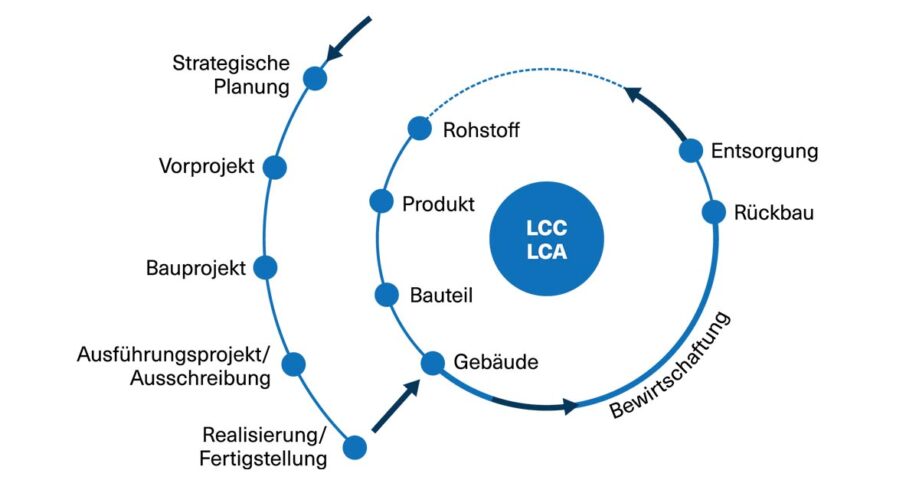
    The results of an ecological balance sheet (life cycle analysis, LCA) and an analysis of the life cycle costs (LCC), for example, form an excellent basis for decision-making. These quantitative assessment methods take into account the entire building life cycle.

    To the white paper

    Comprehensive redevelopment of the Webermühle housing estate
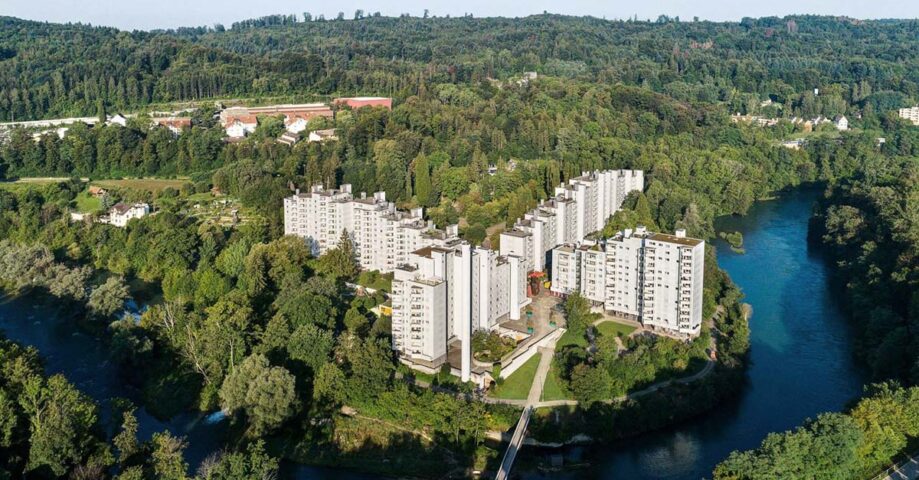
    One example of a successful renovation is the large Webermühle development in Neuenhof. The former Göhner settlement, which was occupied in 1984 and has been owned by a real estate fund from Credit Suisse Asset Management since 2008, houses 368 rental apartments with around 1,500 residents.

    The core of the energetic renovation of the Webermühle is the reorientation of the heat supply. To this end, the client defined a clear goal right from the start: in the future, the heat supply should be at least 70% CO₂-free. Due to the size of the facility, Credit Suisse Asset Management wanted to have the heating system replaced by a contractor instead of producing heat itself. The sustainability of the solution proposed by ewz with a river water heat pump convinced the client.

    Find out more

  • Canton Uri provides 3 million energy-saving renovations

    Canton Uri provides 3 million energy-saving renovations

    The canton of Uri has adopted its Energy Uri 2021 funding program. In the coming year he wants to make a total of 3.1 million francs available for energy-efficient renovations. This means that the funds available are roughly as high as in the current record year 2020.

    The focus of the support program is the renovation of building envelopes, as the canton explains in a press release. These make a major contribution to ensuring that the federal and cantonal energy and climate targets can be achieved. With a subsidy rate of 60 francs per square meter, a high incentive will continue to be set for the renovation of the building envelope, it is said. The canton also offers advice in this area. In addition to the non-binding initial consultation at the Uri Energy Office, more detailed advice is now being launched.

    In addition to the renovation of buildings, the program also supports the replacement of old oil heating systems or solar energy.