For Switzerland to become CO₂-neutral by 2050, transport, heat supply and industry must be largely electrified. Today’s electricity demand of 56 terawatt hours will increase to around 75 TWh by 2050. At the same time, 23 TWh will come from nuclear energy. The necessary reorganisation of the energy system is far-reaching in technical, economic and social terms.
Massive expansion of renewable energy According to the EDGE report, around 60 % of electricity must be covered by new renewable energies by 2050, specifically 45 TWh per year. This would be possible with 28 TWh from photovoltaics, 13 TWh from wind power and 4 TWh from biomass. To achieve this, photovoltaic capacity would have to be quadrupled to 26.8 GW. Wind power would need to be expanded 80-fold to 8.4 GW, especially for winter operation. According to the researchers, this is hardly realisable without strong subsidies.
Limiting electricity imports makes the system more expensive The new Electricity Act limits net electricity imports in winter to 5 TWh. In order to meet this target, an additional 80 % more wind power, 11 % more gas capacity and 10 % more solar capacity would be required. This would increase electricity generation costs by 20 % and electricity prices could more than double.
Europe remains decisive If European electricity trading were to be severely restricted, e.g. through a 70 % reduction in cross-border grid capacities, Switzerland would have to expand wind power by a further 20 %. Supply costs would rise by an additional 8 %. A survey by the EDGE consortium shows the conflicting priorities. 60 % of the population would like to cooperate with Europe, while at the same time 70 % want energy independence and favour domestic energy sources.
Investments flow abroad Another study shows that more than half of the annual investments made by Swiss energy suppliers in large-scale renewable energy projects are channelled mainly to Germany, France and Italy. Only 1 % of these funds are invested in Switzerland. There is a lack of suitable projects or framework conditions in Switzerland. This means that Switzerland is often financing the energy transition indirectly, but not at home.
Net zero has its price The cost of living could rise between 2020 and 2050, for example due to CO₂ taxes, emissions trading or higher production costs. The annual consumption loss of a household could be 0.63-0.75 %, depending on the global climate protection pathway. Without offsetting options abroad, the costs could rise to up to 1%. In the long term, however, this would be more favourable than the consequences of unchecked climate change.
The energy transition is feasible and challenging A CO₂-neutral electricity supply by 2050 is technically possible if photovoltaics and wind power are massively expanded, imports are used intelligently and investments are channelled in a targeted manner. Access to the European electricity market remains crucial. At the same time, we need broad social support and an understanding that inaction will be more expensive than a bold transformation.
Around half of the photovoltaic modules that currently end up in the waste stream are basically still functional. Over the past year and a half, the Swiss PV Circle project hastherefore developedpractical tools, technical principles, market analyses and policy recommendations to promote the reuse of PV modules, as detailed in a press release. SENS eRecycling, Swissolar and the Bern University of Applied Sciences are behind the project.
Policy recommendations focus on financial incentives, such as a reuse contribution similar to existing recycling contributions. In addition, harmonisation options such as a nationwide label and certification system are called for in order to make quality visible and create trust in used modules. According to the press release, harmonised authorisation practices for the handling of used modules throughout Switzerland and systematic data collection during the installation and dismantling of solar systems will reduce further hurdles.
Practical tools such as a platform prototype with an underlying data model make it possible to assess the appropriate recycling strategy for used modules at an early stage. The project calculated a return of 23,000 to 90,000 tonnes of used photovoltaic modules by 2050.
The project’s market analysis found that the economic viability of reused modules is still limited due to low new prices. Used modules are currently mainly used in smaller applications. In order to achieve wider acceptance, attractive prices, tested quality and a high residual output of the modules are therefore required.
The Swiss PV Circle project aims to reduce future waste volumes by increasing the secondary use of modules. To this end, SENS eRecycling, Swissolar and Bern University of Applied Sciences are working together with partners from the Swiss PV industry.
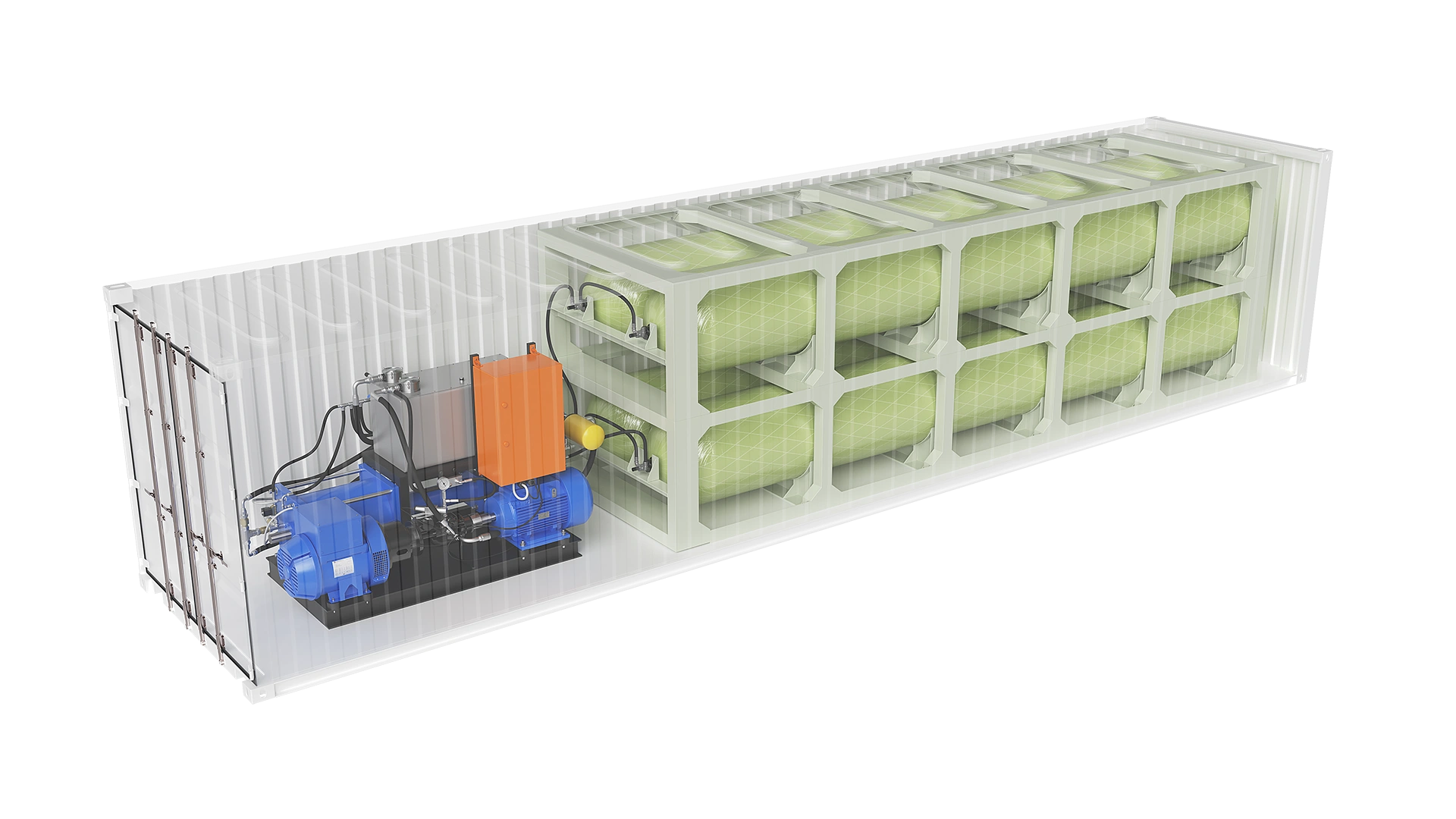
When wind and sun fail, reliable reserves are needed. Conventional battery systems reach their limits with large amounts of energy and long storage times. This is precisely where compressed air storage systems come in. They convert surplus energy into compressed air and store it in underground caverns for days, weeks or even months. When required, the air is expanded again and electricity is generated. The AirBattery and modernised CAES systems represent a turning point in storage technology.
Innovative combination of compressed air and water The AirBattery uses salt caverns to store compressed air at up to 200 bar. The expansion of the air displaces water, which drives a turbine. A closed water circuit ensures high efficiency with low use of resources. Initial pilot projects show efficiencies of 47%, and the first industrial plant is due to be built in Germany in 2027/2028.
CAESwith over 70% efficiency While older CAES systems were 40-55 %, new developments such as those at the North China Electric Power University show that thermal recovery and hybridisation can now achieve up to 70 %. This innovation makes CAES economically attractive for the first time, with electricity generation costs of between €55 and €120/MWh. At the same time, the consumption of raw materials is drastically reduced as no rare metals are required.
The potential is huge In Europe alone, there are many suitable salt caverns with a storage potential of two thirds of annual electricity consumption. In Switzerland, granite formations, old fortresses and strategic cavities offer comparable opportunities. Utilising existing infrastructure makes CAES particularly sustainable and cost-efficient.
Cost-effectiveness and market potential CAES scores with economies of scale and a long service life. Investments are particularly worthwhile for large systems with storage times of over 8 hours. The amortisation period is 6 to 11 years and the ROI can be up to 12 %. By 2030, 10-20% of global storage requirements could be covered by CAES, which corresponds to a market with a capacity of over 100 GW.
China shows what Europe can learn China is demonstrating how targeted political control can advance storage technologies. Clear regulations, state subsidies and green credit lines are massively driving expansion there. A comparable framework is still lacking in Europe. In order to realise the potential, we need funding instruments that are open to all technologies, faster approvals and incentives for grid services.
Carbon footprint and sustainability CAES achieves life cycle emissions of just 20-50 g CO₂/kWh, far below gas-fired power plants and often better than battery systems. Thanks to durable components, low space requirements and resource-saving design, CAES is becoming a building block for a climate-neutral energy future. The combination with power-to-gas or battery systems offers additional flexibility.
Compressed air storage systems are becoming a strategic success factor AirBattery and modern CAES systems could become the backbone of tomorrow’s energy supply. Their ability to efficiently store renewable energy over long periods of time makes them a real alternative, both economically and ecologically. Now is the time for suppliers, municipal utilities and investors to realise pilot projects and create the regulatory conditions. The next few years will decide whether CAES will go from being a niche product to a system component of the energy transition.
The Stadtwerk Winterthur climate fund is awarding 70,000 Swiss francs for environmentally friendly projects this year, according to a press release. The climate fund has been supporting climate protection, energy efficiency and CO2 reduction projects since 2007.
Next Gas GmbH, based in Kloten, will receive a sum of 30,000 Swiss francs. It develops biogas reactors for small and medium-sized farms. This utilises the potential of liquid manure to generate decentralised heat and electricity. The funding will be channelled into a pilot project in which Next Gas’s fermentation process will be tested during ongoing operations.
A pilot project organised by the Soily association will be supported with CHF 20,000. Here, a special compost with an ideal mixture of microorganisms is being tested on farms in the Winterthur region. A test field of 50 square metres will initially be set up for this purpose.
SimpleTrain GmbH, based in Wallisellen, offers an online platform for international train journeys. The expanded platform will also enable bookings for routes that were previously not connected. With the support of Klimafonds Stadtwerk Winterthur, specific routes such as the one from Winterthur to Barcelona via Lyon will be offered. SimpleTrain is also receiving support totalling CHF 20,000 for the project.
The fund is financed in part by voluntary contributions from electricity customers amounting to 2 centimes per kilowatt hour consumed. For an average household of four, this amounts to CHF 8 per month, according to the press release.
Following its meeting on 14 May 2025, the Federal Council will conclude contracts with energy service providers for the operation of five reserve power plants. According to a press release, the Swiss Federal Office of Energy(SFOE) has conducted direct negotiations with potential providers in advance. Following the end of the tendering process in February 2025, the Federal Department of the Environment, Transport, Energy and Communications(DETEC) decided to select five projects with a total capacity of 583 megawatts (MW).
The selected projects include the reserve power plant Monthey VS with 55 MW from CIMO, the reserve power plant Sisslerfeld 1 in the municipality of Eiken AG with 13 MW from Getec, the reserve power plant Stein AG with 44 MW from Getec, the reserve power plant Sisslerfeld 2 in Eiken AG with 180 MW from Sidewinder and the reserve power plant Auhafen in Muttenz BL with 291 MW from Axpo. All five plants will run on CO2-neutral fuel, according to the press release.
The five projects should be ready for operation between 2027 and 2030. For the transition, DETEC is currently working on variants using hydropower, emergency power generators and consumption reserves.
The global economy is at the beginning of a profound transformation. Artificial intelligence has the potential to stimulate growth on a historic scale by 2035. Globally, up to 15 per cent additional GDP growth could be achieved, in Western Europe up to 13.8 %. However, for this boost to become a reality, transparent, ethically supported framework conditions are needed to create trust in the technology. Companies and countries are called upon to actively help shape the social and regulatory framework.
The pressure to transform is increasing Switzerland is well positioned to play a key role internationally. 84% of CEOs in Switzerland introduced AI technologies in their companies last year, a sharp increase on the previous year. At the same time, the study shows that USD 7.1 trillion in value creation will be redistributed worldwide in 2025 alone. For companies in Switzerland, now is the time to rethink business models, utilise potential and strategically develop innovation-friendly locations.
Growth areas along basic human needs Growth in the future will no longer take place along traditional industry boundaries. Instead, new ecosystems will emerge, for example in the areas of mobility, housing, food, energy and communication. In these networks, technology providers, utilities and industrial companies are working together on integrated solutions. Investing in this cross-sector cooperation at an early stage can open up new value chains and secure locational advantages.
Climate change as a counterforce The positive potential of AI is offset by the burden of climate change. By 2035, there is a threat of a global decline in GDP of up to 7 %. At the same time, energy requirements will increase due to data-intensive AI applications. Targeted increases in efficiency, for example in buildings or production processes, can reduce CO₂ emissions and conserve resources. The challenge lies in taking a systemic approach to climate protection and digitalisation.
Linking technological innovation and sustainable development will determine the attractiveness of tomorrow’s business locations. Those who invest in trustworthy AI applications, form cross-sector alliances and at the same time assume ecological responsibility will position themselves in the competition for future markets. Switzerland has the potential to become a globally relevant centre of innovation if politics, business and society actively and jointly shape change.
The conversion of the Swiss energy supply to renewable sources is only making slow progress. This is shown by the seventh benchmark study by the Swiss Federal Office of Energy(SFOE), in which 111 energy suppliers from all over Switzerland took part this time.
According to the study, the share of renewables has stagnated compared to the sixth study in 2021/22 for the participating suppliers at just over 80 per cent for electricity, slightly below that for heat and just under 10 per cent for gas. Four suppliers have already met the targets for electricity with over 90 per cent, including Energie Wasser Bern(ewb) and Services Industriels de Genève with 95 per cent and Eniwa in Aarau and EWZ in Zurich with 94 per cent. In the heat sector, EWZ is ahead with 95 per cent and Energie Uster and Eniwa with 92 per cent target fulfilment each. In the gas supply sector, only ewb with 88 per cent and Technische Betriebe Glarus with 84 per cent are above 80 per cent target fulfilment.
Digitalisation is a major challenge for small suppliers in particular. A quarter of them do not even have a strategy for this. Just under half have a strategy, but no specific targets.
Energy efficiency measures are also lagging behind. Only 45 per cent of the participating electricity suppliers already have a strategy with quantified targets.
According to a BfE press release on the study, the benchmarking itself has contributed to knowledge transfer in the sector with webinars, events and information material.
The environmental product declarations (EPD) in accordance with SN EN 15804 make it possible to transparently present the ecological impact of a building material over its entire life cycle. This provides building owners with a sound basis for making decisions on sustainable construction that goes beyond individual environmental parameters and allows a comprehensive assessment.
Baustoff Kreislauf Schweiz provides its members with independently verified average EPDs for various types of concrete and aggregates. This data forms a reliable basis for sustainable construction projects.
Life cycle assessment calculator as a digital tool An industry-specific life cycle assessment calculator has been developed to calculate CO₂ emissions, energy consumption and other environmental indicators. This verified calculation tool offers the construction industry a practical way to determine and optimise environmental product declarations.
The online tool at oekobilanz-rechner.ch enables an orientating analysis, but does not replace a complete EPD preparation. On request, the data entered can be further processed to create an officially verified environmental product declaration.
Transparency and optimisation for the construction industry The life cycle assessment calculator provides the construction industry with a valuable tool for making sustainable material decisions based on data. By optimising the recording and evaluation of environmental impacts, the tool contributes to reducing the ecological footprint in the construction industry and supports a resource-conserving circular economy.
By 2025, sustainability will no longer be a trend, but a matter of course. Building certificates such as Minergie or SNBS and circular construction will take centre stage. Companies that reuse building materials and offer innovative solutions will secure decisive competitive advantages.
Digitalisation enters the next round The digital transformation is reaching new dimensions. Technologies such as IoT, AI-based planning software and digital construction site management tools are being used more widely. At the same time, promoting digital skills among employees is essential in order to actively shape digital progress.
Skills shortage remains a challenge The industry continues to be characterised by a shortage of qualified workers. Companies are increasingly investing in training and further education programmes, focusing on international recruitment and pushing ahead with automation. Modern working conditions and attractive corporate values are becoming increasingly important.
Focus on urban development and densification Urbanisation calls for innovative concepts such as car-free zones, mixed-use districts and urban greening. At the same time, affordable housing remains one of the key challenges. Creative solutions are needed to meet the needs of the population.
Energy and raw material prices The energy crisis and the cost of building materials remain a dominant issue. Local and sustainable building materials are gaining in importance, while legal requirements are driving the expansion of renewable energies. Solar installations and innovative heating systems are setting new standards here.
Collaboration as the key to success The increasing complexity of construction projects requires closer cooperation between architects, engineers and technology providers. Companies that focus on partnerships benefit from synergies and can realise projects more efficiently.
The cantonal structure plan regulates the main features of the desired spatial developments. It sets out in text and on maps how the cantons and municipalities should develop.
The need for more affordable living space is recognised by politicians and the canton: In addition to “conventional” flats, flats for families, affordable flats and flats for the elderly are also being built in the various areas.
A wide variety of site developments are taking place across almost the entire perimeter of the “valley communities”. In addition to the sites, the traffic situation is also being further developed and adapted to the increased utilisation: Examples range from the conversion of bus stops to bypasses to relieve the burden on Cham town centre. This also includes car-sharing concepts, such as at the Papieri site in cooperation with AMAG.
A lot is also happening in public transport. In future, the Papieri site in Cham is to receive an express bus via the bypass motorway and the Unterfeld Süd site will have a bus stop in the neighbourhood.
Sustainability plays a decisive role in new projects in particular. The Zug area plays a pioneering role in this respect. The Papieri site in Cham was honoured with the prestigious Watt d’Or award from the Swiss Federal Office of Energy. This emphasises the site’s initiative in the field of renewable energies. A climate-neutral district is being created here that relies entirely on renewable energy sources and covers 75% of its energy requirements on site. The innovative technologies contributing to the high level of energy self-sufficiency include hydroelectric power plants and photovoltaic systems. Geothermal energy is used for heating and cooling.
The sustainability certificate, awarded by the Swiss Sustainable Building Council to Suurstoffi in Rotkreuz, recognises the sustainable construction methods and holistic planning of the project. The award proves that the highest standards in terms of energy efficiency, mobility and biodiversity have been met. The projects show that Zug not only assumes ecological responsibility, but also serves as a model for forward-looking urban development in Switzerland. By utilising innovative concepts and technologies, the canton of Zug is positioning itself as a pioneer in the sustainable design of urban living spaces.
The other sites are also impressive. The construction of a high-rise building in timber construction is planned on the Tech Cluster site. The “lighthouse project” called “Project Pi” envisages the construction of an innovative residential tower block. With a height of 80 metres, the plan is to build one of the tallest timber high-rises in Switzerland with affordable flats.
Baar – Unterfeld Süd A mixed-use neighbourhood with around 400 residential units and around 1,000 workplaces is planned for the Unterfeld Süd area. The basic structures were defined by representatives of the population of Baar together with experts under the leadership of the municipality. The development plan for the first of three construction phases was put to the people of Baar for a vote on 22 September 2024. The plan was approved with 74 per cent of votes in favour.
The realisation of the first stage includes the high-rise building at the Baar Lindenpark light rail station and the neighbouring commercial building. These will be transferred to a joint development plan. The earliest possible start of construction of the first stage is planned for 2025. The remaining building plots will be developed in parallel and realised in subsequent construction phases. According to current planning, Implenia’s project will be completed in 2029, provided the subsequent plans are approved by the relevant authorities and construction proceeds according to plan.
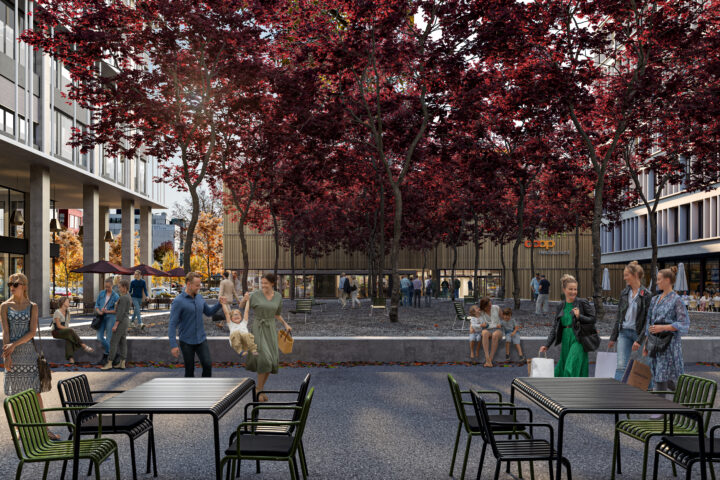
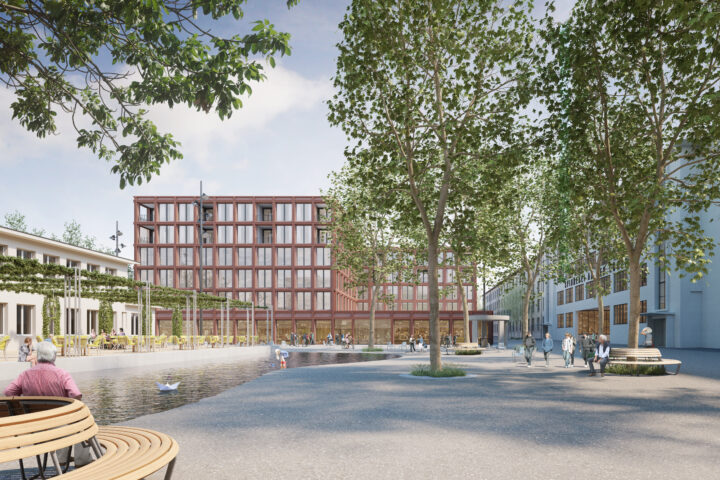
Hinterberg South (Städtler Allmend) The Hinterberg Süd site in the Städtler Allmend employment area in Cham will become a new, lively and easily accessible working and shopping centre for the local population. It offers attractive space for new companies to set up shop and ground-floor uses for the neighbourhood. The upper floors of the office buildings offer flexible spaces that can be customised to the individual needs of future companies.
Publicly accessible uses such as a restaurant, café or bakery are located on the ground floors. They offer workers, shoppers, visitors and passers-by various consumption options and contribute to the revitalisation of the area and the entire neighbourhood. The four buildings surround a public square – the actual centrepiece of the site, which is open to the general public as a place to meet and spend time.
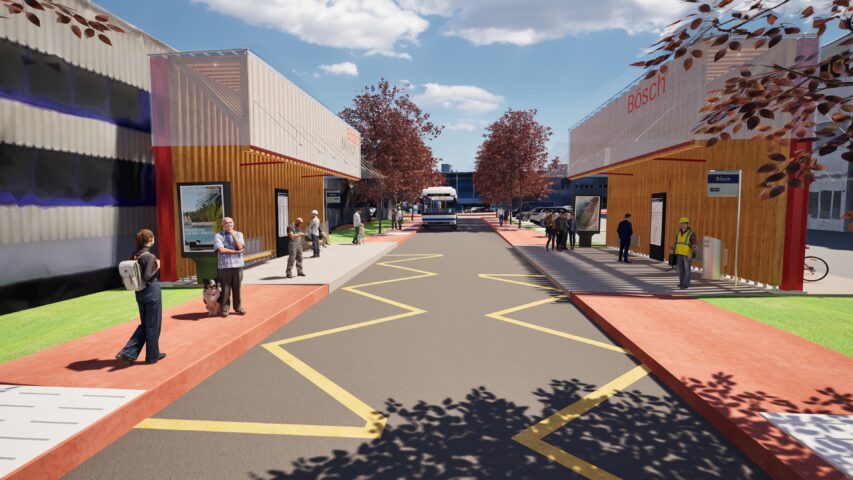
Bösch Hünenberg In order to meet the requirements of a growing service and commercial area, the infrastructure needs to be adapted. The Bösch area should become more attractive for workers and companies and offer space for 6,000 jobs in future. This densification is provided for in the cantonal structure plan. It is binding for the municipality of Hünenberg. The vision is for the Bösch area to develop into a modern and urban place of work that is attractive to investors. To this end, space is to be created through structural densification, which can also lead to an increase in jobs. A holistic landscape design and well-organised mobility will ensure a better quality of life in Bösch. New leisure, supply and catering facilities ideally complement everyday working life in Bösch. On 9 December 2024, the municipal assembly will decide on the road credit of CHF 2.9 million to finance the first stage of the implementation of the operating and design concept in Bösch.
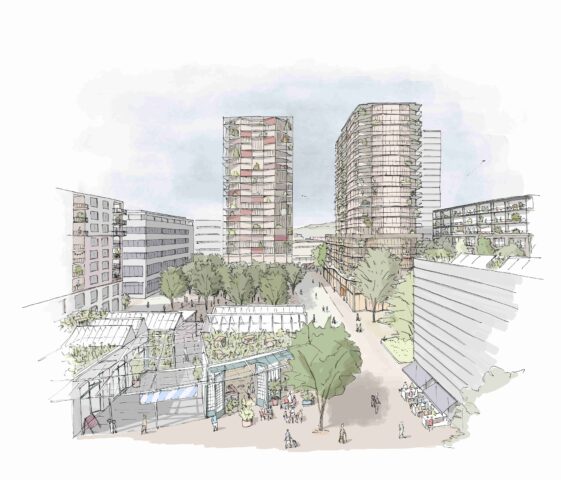
LG Zug Due to its size and prominent location, the LG site is of central importance for the urban perception and urban character of Zug. A lively urban district with a convincing architectural design is to be created on the site of the former industrial area. With the necessary development plan, the planning and building law of the Canton of Zug ensures high-quality development and realisation.
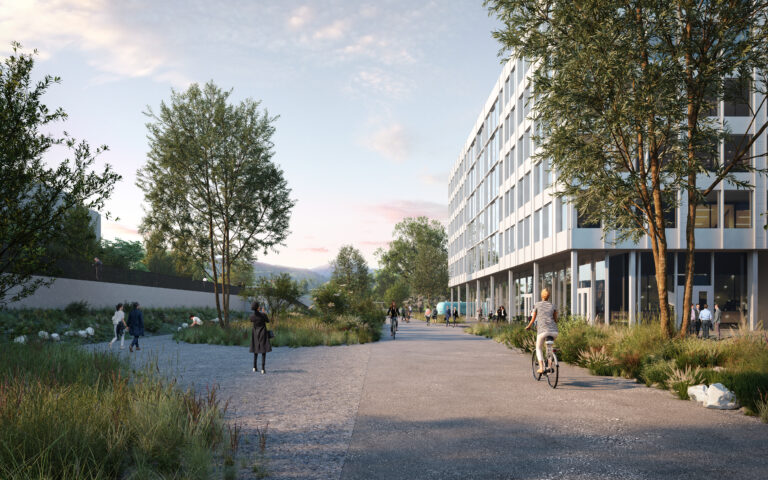
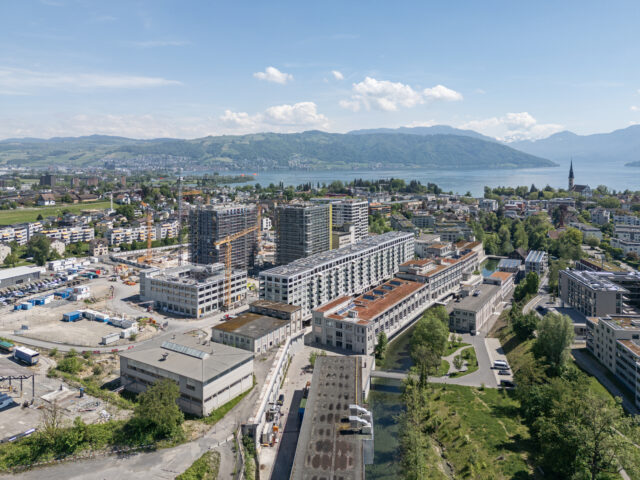
Papieri Cham The Cham Group is developing a new residential and working neighbourhood with industrial charm on the Papieri site. Directly on the River Lorze, the distinctive existing buildings of the former paper factory are being supplemented with striking new buildings and realised in a sustainable way. A new meeting place with supra-regional appeal is being created here, where past and present go hand in hand. A new urban district with around 1,000 flats and 1,000 jobs is being built in several stages over eleven hectares on the site of the former paper factory. It is not being built on a greenfield site, but in the midst of buildings steeped in history: The conversion of characteristic existing buildings preserves the connection to the past – the industrial roots of the neighbourhood remain tangible.
They are complemented by striking new buildings, including five tower blocks with impressive views. The new neighbourhood directly on the Lorze offers an attractive mix of commercial space, flats, lofts, workplaces, studios, open spaces and public-oriented uses. All of this on a sustainable and well-balanced site that maintains – and continues to write – its own history.
The Papieri site creates new foundations for an energy-efficient, climate-neutral and sustainable society. It is a pioneering project throughout Switzerland.
Spinning mill on the Lorze Many threads once ran together in the largest spinning mill in Switzerland. The construction of the spinning mill on the River Lorze shaped the development of Baar in the middle of the 19th century. A new, lively neighbourhood with shops, cafés and other local businesses is being created around the historic spinning mill building, which characterises the public pedestrian zone. In addition to family flats and affordable flats, there will also be flats for the elderly. These will be complemented by vegetable gardens, green façades and shady trees.
Suurstoffi The Suurstoffi site was the first site in Switzerland to be awarded the DGNB platinum certificate for sustainable neighbourhoods in planning and construction by the Swiss Sustainable Building Council (SGNI). The DGNB certification confirms that Zug Estates has realised a prime example of sustainable site development with the Suurstoffi site in Rotkreuz. It meets the comprehensive quality requirements of the DGNB certification system, which includes criteria such as energy efficiency, CO2 emissions, life cycle assessment, grey energy, flexibility of use and recyclability of the materials used. The Suurstoffi site is one of the first lighthouse projects of the last 10 years. This also includes the “XUND” health education centre, for which one of the last buildings is currently being completed.
Tech Cluster From June 2018 to May 2019, five renowned Swiss and one Austrian team took part in an overall performance study to explore how affordable living in a high-rise building can be made possible using state-of-the-art construction methods and sustainable materials. At the same time, a study contract was drawn up for an overall urban development concept for the surrounding area of the city of Zug between Baarerstrasse, Göblistrasse, Industriestrasse and Mattenstrasse.
The Tech Cluster Zug builds on the preliminary investments made by V-Zug and other companies in the Metall Zug Group. Its potential lies in the diverse relationships and synergies between the future users. These will transform the current factory site into an innovative and exciting part of the city of Zug.
Mayor André Wicki opened the event with an inspiring look at the economic future of the city of Zug. Under the motto “Zug remains Zug – liveable, visionary, vibrant”, he emphasised the challenges associated with sustainable growth, affordable housing and climate protection. His visions emphasise the aspiration to further develop Zug as an innovative and attractive place to live and do business.
Sustainable strategies and economic success Beat Bachmann presented the “Spirit of Zug” long-term strategy, which strikes a balance between growth and resource consumption. Regional cooperation and attractive conditions for companies will strengthen the region as a leading business location. The innovation platforms, such as HSLU and the Tech Cluster Zug, promote technological advances in areas such as energy, mobility and decarbonisation.
Successful projects for modern living and commerce Lukas Fehr presented the award-winning “Papieri Cham” project. The neighbourhood combines historical substance with modern new buildings, sustainable architecture and green open spaces. With around 1,000 flats and 40,000 square metres of commercial space, the Papieri site sets new standards for sustainable living and working.
Material innovation in timber construction Pius Kneubühler spoke about the advantages of board stack constructions made with Swiss timber and minimal glue. This technology promotes sustainable cascade utilisation and combines high load-bearing capacity with an excellent carbon footprint. Material identity is at the centre of sustainable construction.
Water treatment and infrastructure safety André Spathelf rounded off the event with a comparison of the Swiss market leaders in water treatment. He emphasised the importance of a proactive approach to monitoring and maintaining water networks. This approach ensures the quality and sustainability of vital infrastructure.
The 103rd immoTable Zug once again demonstrated the importance of dialogue between business, science and politics in shaping a sustainable future. Visionary projects, technological innovations and economic strategies strengthen Zug as a leading region in Switzerland.
Groupe E inaugurated its new district heating plant in Kerzers with open days on 15 and 16 November. According to a press release, the plant will have a capacity of 31 megawatts when completed and can therefore generate 61,000 megawatt hours of heat per year. The heat will be supplied to over 90 households, vegetable growers, the Papiliorama and public buildings.
The plant will be heated to 90 per cent with wood chips from the region. This will save around 9000 tonnes of CO2.
It is the third-largest district heating plant of the Fribourg energy supplier after the one in Fribourg and in the Entre-deux-Lacs region.
BKW presented its Solutions 2030 strategy on 8 November. According to a press release, this strategy aims to increase the operating result before interest and taxes to CHF 1 billion by 2030. according to the annual report, the operating result in 2023 was CHF 620.3 billion.
The operating result for the Energy Solutions division is set to rise to CHF 650 million. in 2023 it was 534.6 million. The result for the Grids division is expected to be CHF 150 million in 2030 (2023: CHF 146.7 million). The strongest growth is targeted in the area of infrastructure and building solutions. in 2023, the result should be CHF 200 million, with a loss of CHF 40 million in 2023. General planning in infrastructure and building construction as well as building technology solutions are to be expanded and profitability steadily increased.
The Bern-based energy supplier plans to invest CHF 4 billion to achieve this, at least half of it in Switzerland. The investments are to be financed from free cash flow, which is expected to total over CHF 5 billion during this period.
“With the comprehensive further development of the strategy, BKW is supporting its customers even more strongly in the transformation of the energy system with forward-looking solutions”, BKW Chairman of the Board of Directors Roger Baillod is quoted as saying in the press release. CEO Robert Itschner emphasises the breadth of the targeted growth: “All of BKW’s business areas will contribute to achieving these goals. BKW is investing in its strong Swiss base and growing in other European countries in a targeted manner.”
BKW aims to reduce its net greenhouse gas emissions to zero by 2040.
The Repower Group is significantly expanding its portfolio in Italy. According to a company press release, it has acquired the 35 per cent of shares in Repower Renewable previously held by the London-based investment firm Omnes Capital since it was founded in 2018. The Poschiavo-based electricity producer, distribution system operator and energy trader has also held the remaining 65 per cent since then. This means that the Repower Group now controls 100 per cent of Repower Renewable.
This means that Repower is now the sole owner of Repower Renewable’s Italian wind, solar and hydroelectric power plants. Their total output amounts to around 120 megawatts. According to the press release, there is also a “full pipeline” of already approved power plant projects with a total capacity of a further 150 megawatts.
According to the statement, Repower’s strategy envisages the consistent expansion of its portfolio of renewable energy plants in Switzerland and Italy. The 30,000 customers in Italy to date are to be supplied entirely with certified renewable energy in the future.
The city of Zurich has been awarded the Energy City Gold label for the sixth time in 2024, the city administration announced in a press release. Every four years, the Energy City Association awards the label to cities and municipalities that are committed to ambitious energy and climate protection goals. In the current evaluation, the city of Zurich achieved its best result to date.
Across Switzerland, 109 cities and municipalities have been awarded the Energy City Gold label. “As the largest city in Switzerland, the city of Zurich serves as a role model for other energy cities that also want to consistently achieve their ambitious energy and climate policy goals,” Katrin Bernath, President of the Energy City Association, is quoted in the press release from her speech at the award ceremony. The award was accepted by City Councillor Michael Baumer. “The top score for the city of Zurich shows that we are on the right path to net zero,” said the head of the City of Zurich’s industrial operations.
In the current re-audit, the City of Zurich’s energy and climate targets also included the area of climate adaptation for the first time. Zurich scored highly here with its specialised planning for heat reduction and urban trees. The city has also launched a programme for urban greening. This programme supports and financially promotes the ecologically valuable upgrading of outdoor spaces, green roofs and vertical greening by providing advice.
AEW Energie AG is opening up its heating network in Kaiseraugst to new customers. According to a press release, it will begin construction work on two branch lines of the “Ast Dorf” project on 4 November.
These two branch lines are located at Lindenweg 11 and 13 and between Dorfstrasse, at property no. 36 and Heidemurweg. According to a press release, the work is expected to be completed by Christmas.
Work on the main district heating line and the other sections along Dorfstrasse and Lindenweg will begin in January 2025. After deducting the municipality’s contribution to the costs, AEW is investing a total of around 3.2 million in the expansion of the Kaiseraugst district heating network.
The Kaiseraugst heating network has been in operation since October 2021. It is one of the largest in the canton of Aargau. in 2023, additional customers were connected in the industrial area, in the south-east and with the branch to the Rinau retirement home. The large-scale project, which took over four years to build, currently supplies over 1,500 households and numerous industrial and commercial customers with heat from at least 80 per cent renewable energy.
The Swiss-Liechtenstein Building Technology Association suissetec is expanding and modernising its training and further education centre in Lostorf, according to a press release. By the beginning of 2025, a building with workshops, laboratories, training rooms and meeting areas is to be built on around 1,800 square metres. The new building will be presented to the public at an open day on 16 November 2024.
The infrastructure offers new opportunities for the quality of training and further education in construction professions, according to the statement. Students can learn in a concrete shell at an outdoor workstation just like on a real construction site. Interdisciplinary workshops for plumbers and heating engineers as well as the integration of construction data modelling into the didactic concept would serve as a role model. Müller Wüst AG, which belongs to Debrunner Acifer, has created a digital fabrication model for construction, which is also intended for use in teaching.
Digital tools allow for flexible, hybrid forms of learning. “Learners will work with real materials, but also practise digitally with virtual reality glasses,” says suissetec Director Christoph Schaer.
The new two-storey building is the first part of an expansion comprising several buildings. From 2026, the other existing buildings will be renovated in three stages. Suissetec operates the campus as one of three training centres as a “meeting place as well as a place for training and further education” for the construction industry.
The campus was certified as the country’s first Minergie site in 2023. This means that it fulfils strict energy criteria. The aim is to maximise self-sufficiency with renewable energy, which is generated on the site itself all year round.
The salt battery, an integral part of early electromobility, is a safe and durable storage medium that is convincing in various applications. In contrast to lithium-ion batteries, the salt battery uses a solid, ceramic electrolyte that is neither flammable nor explosive. In Switzerland, Empa researchers are working with industrial partners to further improve the performance and efficiency of this technology.
Advantages over conventional batteries The solid-state architecture and high operating temperature of around 300°C make the salt battery particularly suitable for extreme applications such as tunnelling or offshore installations, where safety is a top priority. Due to its temperature resistance and low-maintenance design, it is also used for the emergency power supply of mobile phone antennas, which have to work reliably for decades even under harsh conditions.
Economic efficiency and challenges One disadvantage of the salt battery is its high operating temperature, which requires a basic consumption of energy. Empa researchers such as Meike Heinz and Enea Svaluto-Ferro are therefore working on cell structures that enable the battery to heat itself during use and thus work more efficiently. Despite the additional energy requirement, the salt battery is considered more economical and stable than many alternatives in certain applications.
Resource-saving raw materials and recycling systems Another advantage is the availability of the required raw materials: Sodium and aluminium are inexpensive and plentiful, making battery production cost-effective and sustainable. Empa’s current research focus is on reducing the nickel content in the cells in order to further reduce the ecological footprint. In future projects, zinc could even replace nickel – an option that could further improve access to sustainable energy storage systems.
Future prospects As research progresses, the salt battery could find its way from specialised fields of application to broad, stationary applications. Its use as a long-lasting and safe storage system for residential areas or neighbourhoods is being seriously considered. It thus offers an innovative alternative to lithium-ion batteries and shows how research at Empa can set the course for the future of energy storage.
Energy efficiency, energy self-sufficiency and heat protection are currently major issues and will become even more important in the future. Since 2023, not just a single house, but an entire site can be certified by Minergie, meaning that the surrounding area can also be increasingly included in the planning of residential construction projects. On 2 September 2024, the “Fischermätteli” in Burgdorf BE received the first definitive site certificate from Minergie in Switzerland and thus reached a new level in sustainable construction.
Label with high requirements The new, comprehensive Minergie site standard is supported by the Minergie Association, the cantons, the business community and the Swiss Federal Office of Energy. The Minergie site is characterised by very low energy consumption, minimised greenhouse gas emissions during construction and operation and maximum self-sufficiency with renewable energies. The buildings have above-average heat insulation and controlled air exchange. The design of the outdoor space increases climate resilience and the quality of stay, for example through suitable planting and shading. The Minergie site also incentivises climate-friendly mobility.
Over 6600m3 of Swiss wood The Fischermätteli residential construction project was successfully completed by Strüby Unternehmungen in autumn 2023 after a construction period of around three and a half years. The ten apartment blocks with a total of 168 condominiums were built on a former commercial site in Burgdorf BE. They were built using over 6600m3 of Swiss timber, making “Fischermätteli” the largest project in Switzerland to combine the Minergie-A-ECO standard and Swiss timber.
Climate-friendly environmental design
One hundred per cent of the energy for the entire site comes from renewable sources: the electricity from the photovoltaic systems on the building roofs, the heat for heating and hot water from a heating centre supplied with Swiss pellets. The finely meshed mobility concept focuses on electromobility, car sharing, bicycles and public transport. A co-working space promotes working from home and thus indirectly relieves traffic congestion. In addition, the climate-friendly environmental design based on the sponge city principle ensures natural and efficient cooling in summer and makes the “Fischermätteli” a hotspot of biodiversity thanks to the countless native plants.
Success thanks to a climate-friendly overall concept Pius Kneubühler, Managing Director Real Estate Development & Construction at Strüby Unternehmungen, can confirm that the climate-friendly overall concept in line with the Minergie site standard pays off not only for the residents, but also for the investor. “The success has already manifested itself in the marketing of the condominiums. Demand was so pleasing that all flats were sold by the time construction was completed.”
The world’s first industrial plant for the production of solar fuels is up and running. In collaboration with Empa, the ETH spin-off developed an innovative material for high-temperature heat storage that enables the plant to operate around the clock – even without sunlight.
The plant uses the power of the sun to convert CO₂ and water into synthetic fuels such as paraffin, petrol and diesel. This closed CO₂ cycle is a pioneering model that could pave the way for a sustainable energy economy. Particularly impressive is the solar energy source and the fact that operation is also maintained at night thanks to innovative heat storage technology.
Heat storage at 1200 degrees The key to this innovation lies in the plant’s heat storage system. A large array of mirrors concentrates sunlight onto a single point, reaching temperatures of up to 1200 degrees Celsius. This heat drives the chemical process that produces fuels from CO₂ and water. Excess heat is stored in specially developed bricks, which keep the system running even at night.
The challenge in developing the material was to find bricks that could withstand the extreme temperatures and corrosive water vapour atmosphere. In a two-year project, Empa researchers worked closely with Synhelion to develop a ceramic material that meets the high requirements and can also be produced cost-effectively.
From research to practice For the Empa researchers, it was a unique experience to see their research realised on such a large scale. The material, which was tested in a specially developed high-temperature tube furnace, withstood the extreme conditions and is now installed in the “DAWN” plant. This technological achievement not only offers a sustainable solution for fuel production, but could also play a decisive role in the construction and property industry in the future.
Looking to the future While the “DAWN” plant is already in operation, Synhelion and Empa are planning further steps. From 2025, an even larger plant is to be built in Spain, which will utilise higher temperatures and greater storage capacities to further increase the efficiency of fuel production. This development underlines the potential of renewable energies and shows how innovations can lead the energy and property industry into a sustainable future.
FlexBase intends to realise its new technology centre in line with the plans already presented. According to a press release, the technology company has secured the ERNE Group, also based in Laufenburg, as general contractor. Construction is scheduled to begin in 2025. An updated planning application has been submitted to the relevant authorities.
The technology centre is to be built on the former Swissgrid site. The centrepiece will be a new building opposite the existing building. In addition to many research facilities, a data centre with capacities for the use of artificial intelligence is to be built there. FlexBase also plans to build a 20,000 square metre battery storage facility with a capacity of more than 500 megawatts on the site. According to the press release, the non-flammable and non-explosive storage facility is the “world’s largest and most modern battery storage facility of its kind”. The construction of the new technology centre will create several hundred jobs for skilled workers and apprenticeships.
According to the press release, Marcel Aumer, CEO of the FlexBase Group, does not anticipate a delay in construction despite the relaunch of the project. He justifies this view with the close collaboration with ERNE: “In this project, I have not only experienced ERNE’s expertise right from the start, but also the full attention of the top management.” The CEO of ERNE, Giuseppe Santagada, is also optimistic: “My personal commitment goes far beyond the realisation of this project; it also includes the promotion of new technological skills and increasing the attractiveness of Laufenburg as a location for the vision of a prosperous region”.
According to a press release, Zurich’s two electricity suppliers are launching a joint training and communication campaign. Together, they want to train more grid electricians. The focus is on lateral entrants, according to a joint press release from EKZ and ewz.
Instead of poaching skilled workers from each other, the electricity suppliers have now developed a joint training concept that is specifically tailored to lateral entrants. The programme is aimed at professionals who have already completed training in electrical engineering or another trade. The two energy companies are organising an information evening on this topic on 13 November.
The programme is being run jointly by the two companies. During the internal training period, employees already receive a full salary. They are employed by either EKZ or ewz and receive their practical training on the job, supplemented by courses at the ewz training centre in Zurich-Schwamendingen. After around a year of further training, graduates receive an internal training certificate.
In order to reach candidates for the lateral entry programme, the electricity suppliers are launching the Komm ins Team Power campaign. It addresses the target group with short videos on various online channels and directs them to a special website. Advertising campaigns at sporting events, activation via employees of the two energy companies and cooperation with the netzelektriker-forum association are also planned.
The Swiss Federal Electricity Commission has published its calculations for electricity tariffs in 2025. A typical Swiss household with a consumption of 4,500 kWh will pay 29 centimes per kilowatt hour in the coming year, which corresponds to a reduction of 3.14 cents/kWh compared to 2024. This price reduction will result in an annual saving of 141 francs and reduce the electricity bill to a total of 1,305 francs.
The reductions affect both grid costs and energy tariffs. While the grid costs for a typical household will fall by 4 per cent from 12.71 cents/kWh to 12.18 cents/kWh, the energy tariffs will fall by 12 per cent to 13.7 cents/kWh. Charges to local authorities (1 Rp./kWh) and the grid surcharge (2.3 Rp./kWh) will remain unchanged. There are signs of similar reductions for small and medium-sized companies.
Fluctuating prices depending on the grid operator Electricity tariffs vary greatly depending on the grid operator. This is mainly due to differences in in-house production and procurement strategies. Some grid operators that focus more on long-term procurement are better able to compensate for short-term price fluctuations, but bear higher costs over longer periods. The differences in energy procurement strategies lead to considerable price differences between the regions.
Reasons for the price reductions The more stable wholesale electricity prices are one of the main reasons for the easing of tariffs. Following the significant price increases in 2023 and 2024, wholesale prices are currently quoted at around EUR 90/MWh, which represents a decrease compared to the previous year’s EUR 150/MWh. This market easing will now have a gradual impact on energy tariffs.
Another factor is the reduction in costs for the winter reserve. While these were still at 1.2 Rp./kWh in 2024, they will fall to 0.23 Rp./kWh in 2025. The return on capital for the grid, the so-called WACC, has also fallen slightly, which also has a cost-reducing effect.
Procurement strategies and own production as key The tariffs in the basic supply are strongly influenced by the production and procurement portfolio of the energy suppliers. In-house production and the timing of electricity procurement are decisive factors. Grid operators that spread their procurement strategies over longer periods of time are better able to cushion price fluctuations on the wholesale market. The level of in-house production also influences the production costs, which are sometimes lower than market prices.
However, grid costs remain relatively high due to the high market prices, as they are also affected by electricity price-dependent components such as active power losses and ancillary services (AS). Swissgrid provides these ancillary services for the short-term stability of the system and passes the costs on to the grid operators, who in turn charge them to end consumers.
Transparency for consumers ElCom has published the 2025 electricity tariffs for all municipalities and grid operators. These can now be viewed on the website www.strompreis.elcom.admin.ch and offer consumers the opportunity to compare tariffs and find out about the development of electricity prices.
GVZ is testing the use of hydrotreated vegetable oil (HVO) as a fuel for fire engines in a pilot project. “From today, Schutz & Rettung Zürich, the Kloten and Wallisellen fire brigades, the Männedorf-Uetikon fire brigade and the St.Gallen professional fire brigade will be refuelling some of their vehicles with HVO,” GVZ announced in a press release. The five fire brigades are particularly suitable for participating in the project as they have their own refuelling facilities.
“We would like to thank the five fire services for their participation in this promising project and look forward to the initial results,” said Renato Mathys, Head of Fire Services at GVZ, in the press release. “Our aim is to make a contribution to improving the environmental footprint of fire engines.” GVZ has procured a total of 28,000 litres of HVO for the pilot project. It is also paying the difference between the price of the fossil-free fuel and the current price of diesel.
According to the press release, hydrogenated vegetable oil has a significantly better carbon footprint than diesel and also scores highly in terms of energy density and storage stability. As the biofuel is produced from used cooking oils and fats, its production is not at the expense of food production. The GVZ cites its uncomplicated use as a further advantage: “Diesel engines do not have to be expensively converted, but can be operated and maintained according to the same plan as when running on diesel fuel.”
Researchers at the Paul Scherrer Institute(PSI) have focussed on the question of where hydrogen can be produced efficiently and cost-effectively with the aim of stopping climate change and emitting no more greenhouse gases in the future. According to a press release, the researchers have compiled geographical and economic data and forecasts to describe the development of a hydrogen economy. To do so, they analysed four scenarios with a hydrogen demand of between 111 and 614 megatonnes per year. The study can currently be read in the scientific journal “Nature Communications“.
There are various technologies for producing hydrogen. In polymer electrolyte membrane electrolysis (PEM), hydrogen is extracted from water in an electrolyser. The great advantage of this process is that the energy for the conversion can be obtained from green electricity. The question to be resolved is where the high demand for green electricity can best be met.
“We primarily applied economic criteria,” says Tom Terlouw, PhD student at PSI and lead author of the study, quoted in the press release. “In other words, where is production most favourable?” Two focal points crystallised: Where is there enough wind or sun to cover the enormous demand for green electricity? And where is there enough free space to set up the plants required for production? Canada proved to be ideal here. “There are many open areas there that are very windy and therefore ideal for setting up wind turbines,” adds Terlouw. The central USA, parts of Australia, the Sahara, northern China and north-west Europe are also ideal locations. Central European countries such as Switzerland, on the other hand, are less suitable as there is neither open space nor sufficient sunlight. The researchers also point out that the production of green hydrogen still generates residual greenhouse gas emissions from the production and transport of the required materials. In order to compensate for these residual emissions, corresponding quantities of carbon dioxide would have to be filtered out of the atmosphere, according to the study.
The Graubünden-based energy supplier Repower, the municipality of Klosters and Klosters-Madrisa Bergbahnen AG want to jointly construct an alpine solar power plant at the mountain railway. Voters in the municipality of Klosters approved the project on 22 October 2023.
According to a press release, the Graubünden government has now also approved the construction of the system by Madrisa Solar AG. The site is already well developed thanks to the existing tourist infrastructure and is connected to the power grid.
The plant in the Züg area is to comprise 25,000 solar modules at an altitude of around 2,000 metres and an area of 156,821 square metres, with a total output of 10.8 megawatt peak. Electricity production is expected to exceed 15,000 megawatt hours.
The mountain railways already operate five solar installations with an annual output of 294 megawatt hours. These cover up to 20 per cent of their own electricity requirements.
The purchasing organisation of the Swiss automotive and motor vehicle industry(ESA) has completed its own power supply network with a third system, according to a press release. On Thursday, 15 August, a photovoltaic system was put into operation at the ESA site in St.Gallen. ESA launched the first two systems at its headquarters in Burgdorf four months ago and in Giubiasco a month ago.
With around 1,800 modules and around 3,500 square metres, the photovoltaic system in St.Gallen is currently ESA’s second-largest system. The amount of electricity generated in future will roughly cover the annual consumption of 150 households. The plant in Burgdorf covers 200 households, the one in Giubiasco around 25 households.
The ESA purchasing organisation was founded in 1930. As a co-operative, it is owned by around 7000 co-owners from the automotive and motor vehicle industry. Around 670 employees, including around 60 apprentices, work at eleven locations throughout Switzerland.
In their award-winning bachelor’s thesis at the Zurich University of Applied Sciences, Fabian Maag and Marc Willi investigate the potential of photovoltaic thermal modules to increase winter electricity production. The PVT modules from Sunmaxx PVT GmbH use liquid heating to melt snow off the modules and thus increase the electricity yield. Their measurements show that the targeted melting of snow can increase electricity production in winter by an average of 34%.
Efficiency through snow melting The study showed that the combination of a higher inlet temperature and continuous melting during snowfall is particularly effective in minimising snow cover. This method proves particularly effective in snowy regions and also at lower altitudes, as the additional electricity yield always exceeds the required melting energy.
Economic profitability The profitability analysis shows that the additional costs for installing a PVT system through snow melting are amortised from an electricity price of CHF 0.39/kWh. PVT modules are therefore not only technically but also economically attractive, particularly in regions with high snowfall.
Recognising and promoting young talent Maag and Willi were honoured with the regional Siemens Excellence Award for their practice-oriented and forward-looking work and have been nominated for the national Siemens Excellence Award 2025. Gerd Scheller, Country CEO of Siemens Switzerland, emphasises the importance of promoting young talent: “With the Excellence Award, we want to motivate young people to work on scientific topics that can be put into practice.”
Future prospects in STEM The Siemens Excellence Award is part of the “Future Creators” programme, which promotes dialogue with the next generation and supports young talent in STEM (science, technology, engineering and mathematics). Gerd Scheller emphasises: “With this commitment, we support young people in their development and training and help them to make the most of their future opportunities.”
Maag and Willi’s work provides valuable insights into the use of PVT modules to increase the efficiency of winter electricity production. Their findings not only contribute to the scientific debate, but also offer practical solutions to the challenges of the energy transition.
The affordability of housing is currently at the centre of political and public attention. According to the Federal Statistical Office, prices for the “Housing and energy” category of the national consumer price index rose by an annual average of 9.3 per cent between 2020 and 2023, well above the general inflation rate of 5.6 per cent. This development has intensified political calls for more affordable housing and greater support for tenant households.
Stable trend in affordability The analysis of the affordability of housing costs – i.e. the ratio of housing costs to gross income – shows a stable trend over the last 20 years. Despite rising rents and property prices in real terms, the average burden ratio for Switzerland as a whole has remained constant at around 20 per cent of gross income, well below the limit of 30 per cent that is considered affordable. However, a breakdown of the burden ratio according to various household characteristics indicates a certain deterioration in affordability for mobile households – i.e. households that have recently moved into a flat. Single-person households and households in densely populated regions, which often have a high level of housing consumption, are subject to an above-average burden.
Costs of subsidised housing already exceed those of subsidised housing Subsidised housing is used more frequently than subsidised housing at all levels of government. The estimated direct costs of object support currently amount to around CHF 88 million. In addition, there are indirect costs such as lost interest, rental and building lease income, which are estimated at CHF 560 to 830 million per year. Subject assistance, which mainly takes the form of social welfare and supplementary benefits, already costs CHF 1.7 billion a year. Despite higher overall costs, subject assistance does not prove to be significantly more expensive per supported household compared to object assistance.
Advantages of subject assistance as a housing policy instrument Comprehensive subject assistance could improve the accuracy of Swiss housing policy. The study shows that the “supplementary benefits” model would require state support of around CHF 1.45 billion, with 12.6 per cent of Swiss households being eligible. A model like the one in Basel-Stadt, which only supports households with children, would cost just under CHF 700 million and cover 3.6 per cent of households. These costs would be only slightly higher than those of the current property subsidy.
Cost-benefit ratio crucial The study suggests that the introduction of nationwide subject aid could substantially improve the targeting of housing policy. Although subject aid may be more expensive, it has a better cost-benefit ratio. The possibility of tailoring subsidies to target groups, situations and needs makes subject aid an efficient and effective housing policy instrument. The financial outlay depends heavily on the practical organisation of the system, and fears of possible price pressure on the housing market are only justified under certain conditions.
CKW wants to protect operators of small solar plants from very low market prices, especially in summer, and help them to amortise the plant. To this end, the Axpo subsidiary is already applying the minimum remuneration for solar power planned by the federal government from the billing for the second quarter of 2024, CKW announced in a press release. Operators of solar plants with an output of up to 150 kilowatts are expected to receive a minimum price for their solar power from the beginning of 2025 if the reference market price set by the Swiss Federal Office of Energy is particularly low.
CKW is basing the amount of the minimum remuneration currently paid on the draft ordinance. It provides for different minimum remuneration per kilowatt hour depending on the size of the plant. In addition, the Lucerne-based energy service provider also voluntarily acquires a guarantee of origin for solar power. This amounts to 2 centimes per kilowatt hour for small solar plants and 1 centime per kilowatt hour for plants with an output of 100 kilowatts or more.
In the press release, CKW also advises operators of photovoltaic systems to optimise their own consumption. This is particularly worthwhile in phases with low reimbursements. In addition to its own energy management solutions and battery storage systems, CKW also recommends joining forces with neighbours to optimise self-consumption. The new Electricity Act, which was approved by voters on 9 July, also opens up further options such as the formation of local electricity communities or virtual associations for self-consumption.
Wir verwenden Cookies zur Unterstützung und Verbesserung unserer Dienste. Mit der Nutzung dieser Website erklären Sie sich mit der Verwendung von Cookies einverstanden. Weitere Informationen finden Sie in unserer Datenschutzerklärung.