Tag: Energien

  • City Council approves CHF 300 million for CoolCity

    City Council approves CHF 300 million for CoolCity

    On 10 July 2024, the Zurich City Council approved expenditure of CHF 303.7 million from the “Thermal grids” framework credit for the realisation of the CoolCity energy network. This will heat and cool Zurich’s city centre with renewable energy from Lake Zurich and thus represents a significant step towards reducing the city’s CO2 emissions to net zero by 2040.

    Expansion of thermal grids
    The expansion of thermal grids is one of the greatest levers that the city of Zurich has to reduce CO2 emissions. Fossil-fuelled heating systems can be replaced by connecting to district heating and the local gas distribution network can be replaced in stages. The CoolCity energy network, which runs on 100 per cent renewable energy, should make a major contribution to this.

    Network area and utilisation of lake water
    The network area extends from the main railway station to Bürkliplatz, bordered by the Limmat, Sihl and Schanzengraben rivers. It includes the City, Fraumünster Energy Network and Old Town perimeters. In future, the properties there are to be heated and cooled with Zurich lake water, which will enable the greenhouse gas emissions of the connected properties to be reduced to net zero.

    Lake water and energy centres at the heart of the network
    The construction of a lake water and energy centre is necessary to realise the network. Lake water will be collected at a depth of 28 metres at the Zürichhorn and transported to the lake water centre in the Kurt Guggenheim complex via a two-kilometre-long pipeline. There, energy is extracted from the lake water using heat exchangers, which is then channelled to the ewz Selnau substation. The cooled lake water is then returned to the Limmat.

    The heart of the energy network will be the energy centre in the former ewz Selnau substation. Here, the heat and cold obtained from the lake water will be brought to the required temperature using heat pumps and chillers. Following extensive investigations, the ewz Selnau substation has proven to be the ideal location to fulfil the technical and economic requirements.

    Staged construction between 2025 and 2039
    The energy network will be realised in stages between 2025 and 2039 and will be implemented in coordination with the civil engineering department’s road and utility projects. The first energy supply is planned for 2031, whereby the continuous expansion will have largely covered the supply area (excluding the perimeter of the old town) by 2035. The connection of the old town is planned for 2035 to 2039.

    The city council already approved CHF 8.5 million for preliminary investments from the framework credit in 2023. Ewz has started the initial construction work and is building a connecting structure between the CoolCity and Fraumünster energy networks, which will be completed in spring 2025.

    An important step towards climate neutrality
    The CoolCity energy network is a key building block on the path to climate neutrality in the city of Zurich. By using 100 per cent renewable energy from Lake Zurich, the city centre is supplied with sustainable and environmentally friendly heating and cooling, making a significant contribution to reducing greenhouse gas emissions.

  • High-temperature solar power plants for continuous energy supply

    High-temperature solar power plants for continuous energy supply

    The centrepiece of 247Solar’s technology is a high-temperature heat exchanger developed by David Gordon Wilson, Professor Emeritus at MIT. By integrating this heat exchanger into a conventional turbine similar to a jet engine, efficient and emission-free energy generation becomes possible. The turbine utilises hot air, which is heated to around 1,000 degrees Celsius by solar energy, to produce both electricity and heat.

    Solar power plant with integrated energy storage
    An innovative component of this system is combined heat and power generation, supplemented by thermal energy storage. These store heat in solid materials, which can then drive the turbine when solar radiation is not available. This enables a continuous energy supply, regardless of the time of day and weather conditions. The generation capacity of the model presented is 400 kilowatts of electricity and 600 kilowatts of heat.

    The modular design of the system offers a wide range of possible applications, especially for remote or self-sufficient communities. This technology is ideal for combining with other renewable energy sources such as wind power to provide a holistic and sustainable energy supply.

    Bruce Anderson, Managing Director of 247Solar, emphasises that the main aim of developing this system was to overcome the intermittency issues of conventional renewables. The ability to provide uninterrupted energy represents a significant advance in the utilisation of renewable energy sources and could play a key role in the global energy future.

  • Enshift automates path from large buildings to net zero

    Enshift automates path from large buildings to net zero

    The young Baar-based cleantech company enshift offers owners of large commercial properties a complete digital solution for the path to net zero. According to a media release, it is designed to automate and simplify the entire transformation process towards local and renewable energies.

    Its toolset reportedly includes everything needed for design, contracting, financing, implementation and performance optimisation. It spans the life cycle of all currently available renewable energy technologies.

    “We have set our 2050 net-zero targets, but the path to get there is completely unclear for the construction and real estate sector,” founder and CEO Pierre Bi is quoted as saying. “We believe our solution can accelerate the transformation and increase energy retrofits in Europe by a factor of 3.” As a sign of its “strong will” to make a positive contribution to change, enshift offers free property and potential analyses to commercial building owners in Switzerland.

    Bi had already launched Aeris Cleantech. The company, which focuses on air purification, was acquired by iRobot, a North American specialist in cleaning robots, in November 2021.

    In the first stage of a seed financing round, Bis new company enshift raised 3.5 million Swiss francs. International investors such as Israel’s Sarona Ventures, Vevey VD-based OneCreation and, via Berlin-based Global Founders Capital, the founder of start-up accelerator Rocket Internet, Oliver Samwer, participated. Meanwhile, 20 engineers and developers reportedly work at enshift, while the first green energy projects are already entering the implementation phase.

  • Self-consumption community in the double sense

    Self-consumption community in the double sense

    In three different pilot areas – a commercial area, a mixed-use area and a residential area – local businesses and residents are to cooperate both in the production and storage of solar energy (pooling for self-consumption) and in the use of electric vehicles (sharing, “Mobility as a Service”). This addresses two problems that are emerging in Switzerland and in Winterthur in the context of the Energy Strategy 2050: on the one hand, the sluggish expansion of solar energy and, on the other hand, the high density of fossil-fuelled motorised private transport.

    The project is based on the cooperation of various partners from Winterthur from the fields of higher education/education, industry, structural and civil engineering and city administration. In particular, the areas are confronted with the issue of combining self-use and shared mobility. While the installation of a PV system including ZEV will soon be a matter of course in new buildings, e-vehicle sharing is still not very widespread here either. ZEV^2, on the other hand, starts with existing buildings and aims to design the optimal solution for mixed areas by combining technologies (metering infrastructure, energy management system, charging infrastructure – and the digital networking of these three systems) and needs (use, billing, transparency).

    The project is being carried out by the City of Winterthur under the project management of the Climate Unit. The project is also financially supported by the Swiss Federal Office of Energy with the Front Runner programme.

    Further information is available on request from the Smart City programme management.

  • Milestone for the further development of CH energy policy

    Milestone for the further development of CH energy policy

    Particularly important decisions of the Commission meeting of 20-23.2.2023

    • A regulation for solar plants in the national interest: This will make it possible to build Alpine solar power plants even after the expiry of the urgent federal decree (“Solar Express”).
    • The obligation of operators of larger storage hydropower plants to participate in the energy reserve: Photovoltaics (PV) in combination with hydropower enables a secure power supply in winter, provided the reservoirs are not emptied prematurely for economic reasons.
    • The possibility of loans in case the resources of the grid surcharge fund are not sufficient for the intended promotion of renewable energy production: This can avoid a “stop-and-go”.
    • Data from smart metering systems are to be made available to end consumers in real time: This promotes the optimal coordination of electricity production (e.g. from PV systems) and consumption at the local level, which can reduce investments in electricity grids.
    • Storage facilities without end consumption are to be exempted from the grid fee for an unlimited period. And storage facilities with end consumption should also be able to benefit from a refund of the grid fee for the energy fed back into the grid from these storage facilities: This promotes the grid-serving use of stationary storage facilities as well as the bidirectional charging of electric vehicles.
    • The framework conditions for local electricity communities (LEG) have been significantly improved compared to the resolution of the Council of States: this is also a significant contribution to the intelligent use of the grids.
    • In rural areas, high costs for grid reinforcements often lead to PV projects being suspended. A cost pass-through is intended to provide relief here.
    • The parliamentary initiative by Swissolar President Jürg Grossen’s initiative to harmonise the taxation of the sale of solar electricity was unanimously approved. This is an essential contribution to clearing up the “patchwork” of framework conditions for solar plants.


    Detailed information at www.parlament.ch

  • The sustainable supply of goods for tomorrow

    The sustainable supply of goods for tomorrow

    Online trade has been booming since Corona at the latest. More and more huge goods transshipment halls are springing up all over the country. Until now, the ordered goods and merchandise have been transported to their end users via roads and railways. The Federal Roads Office (FEDRO) and the Federal Office for Spatial Development (ARE) estimate that the volume of goods traffic in Switzerland will increase by around 31 percent by 2050. However, the above-mentioned common freight transport routes cannot be expanded without limits.

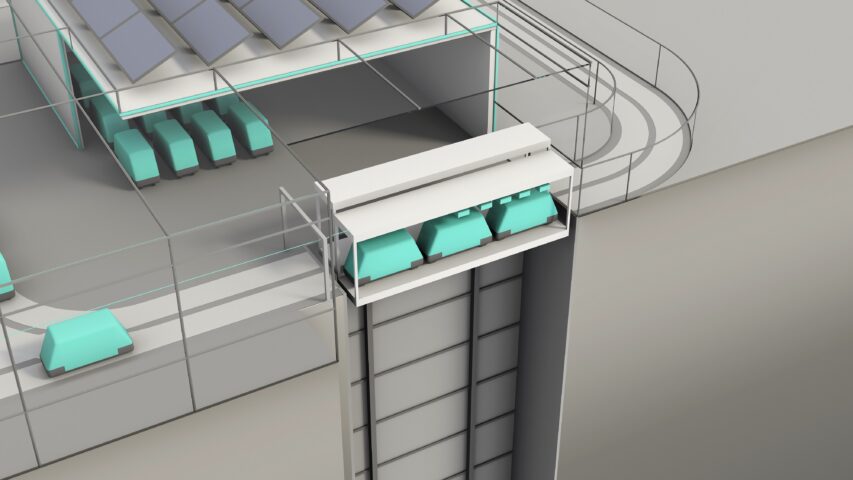
    New transport solutions were sought – and found with Cargo Sous Terrain (CST): By 2045, a 500-kilometre network of three-lane tunnels, each 6 metres in diameter and 20 to 100 metres deep, will be built between Lake Constance and Lake Geneva, with spurs to Basel, Lucerne and Thun. These will be connected to above-ground loading and unloading stations called hubs. In the hubs, the autonomously driving, unmanned vehicles are loaded and unloaded fully automatically via vertical lifts.

    The futuristic-looking cars travel at a constant 30 kilometres per hour on induction tracks around the clock. They hold goods the size of pallets. Fresh and refrigerated goods can also be transported. The system sorts and bundles the goods already in the tunnel so that the subsequent delivery to sales outlets and end customers takes place in a coordinated manner.

    At the hubs, the delivered goods are continuously picked up and delivered by manned vehicles powered exclusively by renewable energy. “It is possible that we provide our own fleet of energy-powered vehicles or also work with appropriate logistics partners,” says Patrik Aellig, Communications Officer CST. The disposal of waste and recyclables is also an integral part of the concept. Aellig explains: “Goods movements primarily take place from the logistics centres to the cities. But the system naturally runs in both directions and is predestined to pick up waste and recycling materials or even construction waste and transport it out of the cities.” One vehicle can pick up to two pallets or boxes and containers of this dimension.

    CST reduces noise emissions by 50 per cent and enables the transport of small quantities
    The advantages of such an underground network are obvious: national roads are relieved of heavy traffic by up to 40 per cent, cities by about 30 per cent. At the same time, noise emissions will be reduced – by about 50 percent in the cities. CO2 emissions can also be significantly reduced: The eco-balance is up to 80 percent better compared to today’s transport systems, as CST is powered 100 percent by electricity from renewable sources.

    The first stage is scheduled to be operational in 2031 and includes the 70-kilometre route from Härkingen-Niederbipp to Zurich Airport with 10 hubs. The hubs will be located in existing logistics centres and ensure connections to all transport systems (rail, road, water, air freight). The overall transport network is scheduled for completion in 2045. The sophisticated system includes innovative software that enables intelligent control. The IT behind CST and the automatic loading and transport of goods form the core of this system. As of today, the software has not yet been developed. But: “The IT team is in place – the first step involves developing the very extensive IT platform,” explains Aellig. With its customised technology, CST is aimed at the smart cities of the future and also takes care of the fine distribution of goods. In addition, CST enables the economy to transport small quantities in individual pallets or containers for the first time. This eliminates the intermediate storage of small-volume goods.

    The total costs amount to more than 30 billion Swiss francs. CST is privately owned and has its headquarters in Olten. Its 83 shareholders, investors and project partners include well-known Swiss names such as the insurance company Vaudoise, SAP, Siemens, Swiss Post, Coop, Migros, Mobiliar or the Zurich Cantonal Bank, Credit Suisse and Swisscom. These include numerous logistics, energy and construction companies, engineering firms and bicycle courier services or even the high-tech start-up Hyperloop One from California (USA). The infrastructure that is being created is available to all market participants. CST is being developed in close cooperation with the authorities, the federal government and the cantons. The federal government is not contributing to the costs.

    The planned, largely underground freight transport facility across cantonal borders is possible thanks to the Federal Underground Freight Transport Act (UGüTG) passed by the National Council and Council of States in December 2021. CST is being advanced in several parallel sub-projects. The cantons will include the exact locations and routes of the hubs and tunnels in their structure plans as planning progresses. The structure plan procedures will begin in the course of 2023 in the cantons of Aargau, Solothurn and Zurich. The preliminary project should be ready in the course of the coming year. “After that, the tenders for the construction contract for the underground network will be prepared,” says Aellig. Construction is scheduled to start in 2026.

    The 3D simulator shows the logistics connection of a hub.

  • 58 percent of Swiss buildings are heated with oil and gas

    58 percent of Swiss buildings are heated with oil and gas

    According to a press release , most heating systems in Swiss buildings were operated with oil or gas in 2021. This is the result of the building and housing statistics now published by the Federal Statistical Office ( BFS ) based in Neuchâtel. According to this, in 2021 there were 1.77 million residential buildings and 4.69 million apartments in Switzerland. 58 percent of the buildings were heated with fossil fuels – heating oil and gas are mentioned. Every fourth person heated with gas. 17 percent of the apartments were equipped with a heat pump. Their share of Swiss heating has quadrupled since 2000.

    Almost 40 percent of the population used heating oil in 2021. 25 percent heated with gas and 16 percent with a heat pump. The proportion of people who use heating oil was highest in the cantons of Ticino with 54 percent and Glarus (50 percent). Gas was used most frequently in the cantons of Geneva and Vaud, at 38 percent and 37 percent respectively.

    There are big differences in the share of gas between urban and rural areas. In urban communities, 30 percent of buildings were heated with gas, compared to just 4 percent in rural communities.

    More than 1 million of all buildings are single-family homes, of which more than half of the inhabited single-family homes were only occupied by one or two people, according to the BFS statement. An inhabited apartment in Switzerland was 102.4 square meters on average. Three and four room apartments make up 55 percent of all apartments in Switzerland.

  • Women's power for the energy transition

    Women's power for the energy transition

    Im Energiesektor ist der Frauenanteil seit jeher gering, in Führungspositionen erst recht. Die Bedingungen sind für Frauen schwieriger als für Männer. Das beginnt schon bei der Ausbildung, denn Frauen trauen sich immer noch zu selten, mathematisch-naturwissenschaftliche oder technische Berufe zu ergreifen. Dabei bringen sie nicht weniger mathematisches oder technisches Verständnis mit, sind aber gleichzeitig stark am Gemeinwohl und an Innovationen interessiert.  

    Klimabewegung in weiblicher Hand 
    Eine gute Nachricht vorweg: Der Frauenanteil im Bereich der erneuerbaren Energien wächst stärker als im konventionellen Energiesektor. Ein möglicher Grund könnte das steigende Bewusstsein für den Klimawandel sein, denn schlussendlich ist weltweit die Klimabewegung weitgehend weiblich. Zudem geben Frauen als Grund für ihre Berufswahl häufig an, mit ihrer Tätigkeit etwas Sinnvolles tun zu wollen. Frauenpower ist also erwünscht: Denn es ist längst erwiesen, dass Unternehmen von einer vielfältigeren Belegschaft und einem gemischten Führungsteam nachhaltig profitieren.

    Doch wie sieht es eigentlich beim Energielösungsunternehmen Helion aus, dass in einer typischerweise Männer dominierten Branche tätig ist. Oder ist dem überhaupt so? Und wo genau sind die Frauen im Unternehmen zu finden? Wir haben nachgefragt: Derzeit machen Frauen nur 12 Prozent der Belegschaft aus und sind vor allem in den Bereichen Marketing, Öffentlichkeitsarbeit und Personalwesen anzutreffen. Aber nicht nur! Weitere Infos auf www.helion.ch News.