Tag: Entwickler

  • Glarus North mobilises building land – opportunities for investors and developers

    Glarus North mobilises building land – opportunities for investors and developers

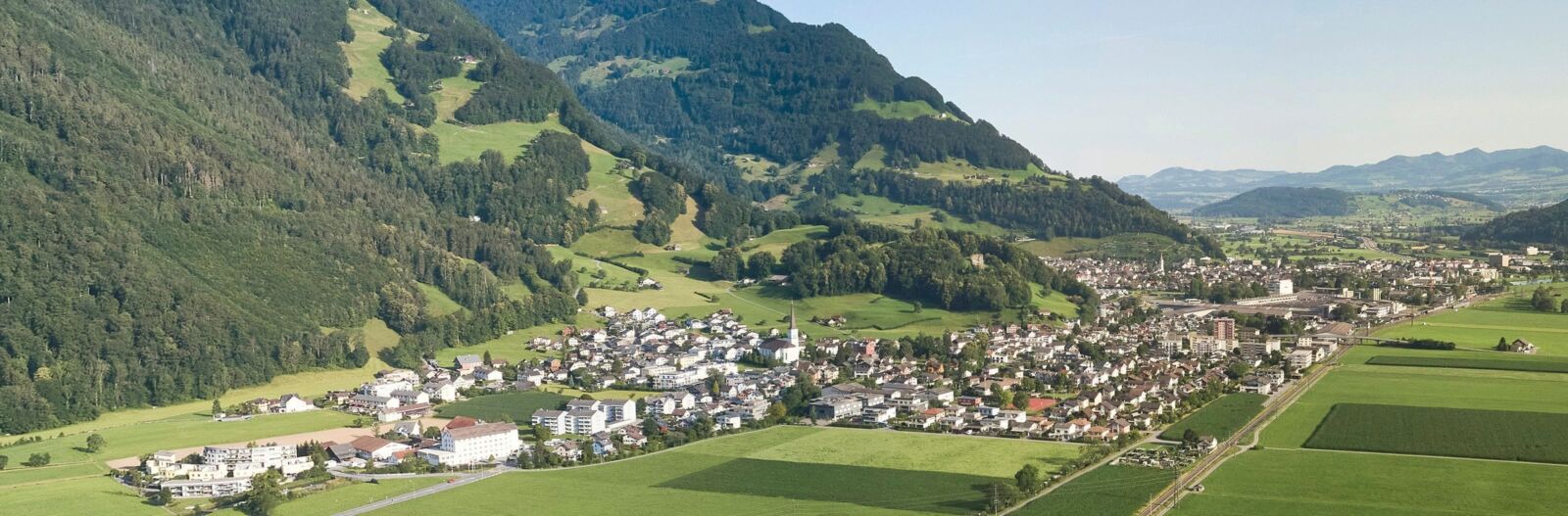
    The municipality of Glarus North has given the go-ahead for a comprehensive mobilisation of municipal land. The focus is on sites in Filzbach and Oberurnen. This initiative follows the newly defined guidelines for the allocation of building land and properties and emphasises the municipality’s commitment to sustainable and needs-based development.

    Attractive plots on offer
    Specifically, three plots of building land in the residential zone in Filzbach are being advertised for sale. In Oberurnen, the 5,084 m² Schranerwiese in the work zone is being allocated under building rights. These plots offer a wide range of opportunities for residential and commercial projects and are therefore of interest to a broad spectrum of investors and developers.

    Transparent and structured process
    The tendering process is clearly defined and transparent. Interested parties can find all relevant documents on the municipal website (www.glarus-nord.ch) and in the official gazette of the Canton of Glarus. A registration form is available for applications, which ensures a fair and objective evaluation based on the defined award criteria.
    The closing date for applications is 30 May at 16:00.

    Focus on future-oriented development
    The mobilisation of building zone areas is a central component of Glarus Nord’s new land use planning. The municipality is thus consistently implementing the requirements of the Spatial Planning Act and creating the conditions for orderly and future-oriented development. The continuous tendering of municipal land makes an important contribution to strengthening the location and creating attractive living and working space.

  • Sustainable solar shading in the Olympic Village

    Sustainable solar shading in the Olympic Village

    The French architecture firm KOZ is one of the main architects commissioned to build the Olympic Village in Paris. For the shading in the Belvédères neighbourhood of the village, KOZ relied on the Thurgau-based company Griesser. The internationally active developer of solar shading products for buildings has equipped various buildings in Belvédères with three different solar shading solutions.

    On the one hand, 265 slat blinds of the Lamisol 70 model were used, explained Griesser in a press release. A total of seven units of the Grinotex III slat blind model were installed. The sun protection was completed by 108 Tradi PUR roller shutters. Together, the sun shading solutions create a pleasant indoor climate and help to save heating and cooling energy.

    “Griesser has prevailed with its quality products,” the architectural firm KOZ is quoted as saying in the press release. “In addition, the solar shading products have already proven their worth in other projects.” For the Olympic Village, KOZ decided in favour of a metallic pink shade of slat blinds and roller shutters specially developed by Griesser for the project.

  • Developing alternative forms of housing with building groups: Lessons learnt from the Winkelhalden

    Developing alternative forms of housing with building groups: Lessons learnt from the Winkelhalden

    Alternative living concepts for the 55-plus age group are in demand: the “zusammenhalt” co-operative easily filled 75 flats in Winterthur. Winkelhalden AG in Oberrieden attracted almost a third of its residents from the “hip” city of Zurich. What these housing concepts have in common is that they are based on a committed community. However, it often takes a lot of initiative and luck for the communities to obtain plots of land.

    Developers and investors who have plots of land and want to supplement them with stimulating offers can attract such building groups as partners. The decisive factor here is the question of the right time to connect the building groups and the form of involvement in the development process. An evaluation of the Winkelhalden AG project provides answers to these questions.

    The Winkelhalden AG project comprises 44 flats and a wide range of communal spaces such as a bistro, star bar, fitness centre, sauna and studios. The project was initiated by two private individuals who acquired the land, developed the business model for the public limited company, secured the financing, carried out a study commission, looked for fellow campaigners and realised the project. All of this was only possible because the initiators had a high level of entrepreneurship and a lot of experience with community-orientated business models.

    One of the biggest challenges was generating the equity capital to finance the project. This required enlarging the group early on in the process and finding people willing to invest who were prepared to commit to the initially uncertain development process and the as yet unspecific housing concept. The consequences are visible in the evaluation. A tenant survey one year after moving in shows that the time of entry into the project characterises the relationship to the community: those who joined in the two years when the construction project was developed, the building permit was submitted and the flats were selected were the most successful in integrating into the community. They feel the least pressure to participate in community life. Of those who joined earlier, a third feel more under pressure to participate. They also have the highest proportion of those who have found it difficult to integrate into the community.

    In this context, developers and investors can make a valuable contribution to community concepts: they can relieve building groups of the burden of financing and thus the early integration of less convinced residents by providing temporary equity and pre-financing the project development. In return, they can benefit from a small and committed building group, which ideally develops the alternative living concept from the time the spatial programme is defined and initiates and implements the participation process from the time of the preliminary project, with which future co-inhabitants are connected and integrated into the community. The building group can be a mixture of people who will live in the project in the future or who have relevant experience in developing alternative housing projects.

    Alternative housing concepts do not appeal to the mainstream, but demand is far from being met: the fully let Winkelhalden AG currently manages a pool of interested parties with over 60 applications. Cooperations between professional developers and investors with experienced and proactive building groups help to distribute strengths and competences among the most suitable players.