Tag: ETH

  • Conserving resources and extending building life cycles

    Conserving resources and extending building life cycles

    ETH professors Catherine De Wolf and Maria Conen are advocating a radical change in the construction industry. Instead of sacrificing old, energy-inefficient buildings, they advocate their preservation, renovation and expansion. In addition to ecological aspects, the focus is on social and cultural factors. Buildings harbor identities and histories, the preservation of which is essential for city life. Sustainability thus becomes a link between the environment, society and architecture.

    Reuse of building materials
    A good example is the reuse of glass elements from the external escalators of the Centre Pompidou in Paris as office partitions. The time-consuming dismantling, sorting and reintegration is cost-intensive, but offers enormous ecological benefits through significant CO₂ savings and the avoidance of waste.

    Building materials such as wood and concrete have great, previously untapped potential for reuse. While wood is often simply burned, concrete slabs could be cut out and used as wall elements. Although steel beams are recycled, they are usually melted down in an energy-intensive process instead of being reused in a stable form. The challenges lie in technical feasibility, costs and complex planning.

    Digitalization and material passports for optimization
    Digital tools such as material passports should make it easier to gain an overview of the origin, composition and useful life of components in the future. This will make reuse and dismantling more efficient and transparent. The harmonization of such standards is the subject of research in order to create binding solutions in the industry.

    Legal and standardization barriers
    Another stumbling block is today’s prevailing standards, which are primarily designed for new buildings and take insufficient account of conversions and the context of existing buildings. This makes renovations and work on existing buildings more difficult from an energy perspective. Laws and regulations must be made more flexible in future in order to promote circular construction methods.

    Circular economy as a pioneer for CO₂ reduction
    The construction industry is responsible for around 50 percent of resource depletion and considerable amounts of CO₂ emissions. The circular economy significantly reduces these by cutting material costs, waste and energy consumption through reuse and modular construction. Deconstructability through bolted or plugged rather than glued connections is key here.

    Challenges and future prospects
    The biggest challenge lies in the effort involved in dismantling and reusing materials and finding buyers for reused materials. The lack of comprehensive market structures makes widespread implementation difficult. This is where initiatives such as digital marketplaces and the involvement of specialized engineering expertise come in.

    Modular construction and flexible usage concepts, such as the use of less well-insulated buildings as museums, show viable prospects for the future. The young generation of students and researchers at ETH and other institutes in particular are driving innovation, which gives hope for a more sustainable construction industry.

  • ETH project aims to make ultra-green concrete accessible worldwide

    ETH project aims to make ultra-green concrete accessible worldwide

    With its Ultra Green Concrete project, ETH aims to make low-CO2 high-performance concrete generally accessible. The researchers led by Franco Zunino, Senior Scientist at the ETH Institute for Building Materials, are adopting an approach from the Swiss Federal Institute of Technology in Lausanne: There, a cement formulation (LC3) of 50 per cent clinker with a combination of fired clay and limestone was found to save around 40 per cent CO2 compared to conventional cement. Zunino was involved in this development.

    In the ETH project, he is now focussing on a second strategy to save CO2: reducing the proportion of cement in the concrete. This dual strategy offers flexibility to adapt low-carbon concrete compositions to individual markets, according to a statement from ETH. “It would be ideal to implement both at the same time,” Zunino is quoted as saying. However, this is difficult in some markets, “as production capacities and infrastructure have to be built up. Nevertheless, it is possible to realise at least one of them and still save CO2.”

    According to calculations by Zunino and his team, the CO2 emissions of ultra-green concrete can be reduced from 300 to around 80 to 100 kilograms per cubic metre without compromising the performance of the material. In his opinion, there are therefore no excuses in industrialised countries for not switching to the new, more sustainable building material immediately.

    The low-CO2 cement is also more durable and cheaper than conventional cement. Its production is reportedly already underway in seven cement plants worldwide. Zunino is convinced that LC3 will be the most widely used type of cement worldwide in ten years’ time.

  • Pavilion on ETH campus receives an Arc Award

    Pavilion on ETH campus receives an Arc Award

    In a practical teaching project, students at the Swiss Federal Institute of Technology in Zurich(ETH) have used materials from the demolished Huber Pavilions to construct a building in the spirit of the circular economy. According to a press release, the Re-Use Pavilion on the ETH Hönggerberg campus has been honoured with the Arc Award in the Next Generation category. The Swiss Building Documentation honours the best buildings in Switzerland every year with the Arc Award, which was first presented in 2012.

    In summer 2022, three temporary wooden buildings – the “Huber Pavilions” – had to make way for a new building on the ETH Hönggerberg campus. According to a press release from ETH, the CircÛbi teaching project took advantage of this opportunity. Under the joint leadership of two ETH professors, civil engineer Catherine De Wolf and architect Momoyo Kaijima, students collected the structural elements or components of the dismantled teaching buildings in order to reuse the materials according to the principle of the circular economy. Around 30 students worked on the project for an entire semester. They inventoried the components with lasered QR codes and thus created a digitalised interface. This made it possible to create a new building from reused wooden components.

    The jury particularly recognised the fact that this study project was developed in collaboration with various disciplines. “Circular construction requires collaborative work: Bridging different disciplines and utilising digital technologies are urgently needed to spread the principles of the circular economy in the construction sector,” civil engineer Catherine De Wolf is quoted as saying.

  • “NEST provides the ideal environment to further develop our innovation”

    “NEST provides the ideal environment to further develop our innovation”

    Buildings are responsible for more than 40 per cent of global energy consumption. A large part of this is used to ensure user comfort – i.e. for heating and cooling. Especially in view of the current developments in the energy market, the big question is how we can cover our energy consumption in the future. Ways must be found to tap new energy sources and at the same time reduce the energy consumption of buildings. One of these could be the better use of façade surfaces.

    This certainly holds potential, since the majority of the building façade is still unused and at the same time the central factor for either letting energy into the building or keeping it inside. Researchers at ETH Zurich have therefore developed an innovation as part of the NEST HiLo unit that can exploit this potential: an adaptive solar façade that not only optimises electricity production, but also reduces energy loss at the same time. Attached to the actual façade, this forms a kind of second skin for the building. The innovation thus also bears the appropriate name “Solskin”.

    Simple architectural embedding
    “We wanted to develop a façade that could be very easily installed on a building and optimally integrated into the architecture,” Bratislav Svetozarevic explains the idea behind the innovation. He was significantly involved in the development of “Solskin” from the beginning, first in 2014 as a PhD student in Arno Schlüter’s “Architecture and Building Systems” group at ETH Zurich and from 2018 as a Post Doc at ETH and Empa, where he researched related topics.

    “Solskin” consists of a lightweight substructure that is attached to the façade. Mounted on it are small square thin-film solar panels that can be colour-matched to the existing building envelope. In this way, the solar façade blends in perfectly with the overall appearance of the building. At the same time, the panels can be turned individually in all directions. This is because behind each module there is a control unit that Svetozarevic and his colleagues have developed over the years. The special thing about it is that the panels are aligned using air pressure. The materials used are both robust and flexible so that the system can withstand strong gusts of wind and precipitation.

    Reality check
    The idea behind the flexible alignment is that the solar façade can follow the position of the sun, thereby optimising electricity production. At the same time, “Solskin” also serves to actively shade the building in summer, thus reducing the need for cooling, or to open the panels and let the sun’s rays into the interior, thus saving heating energy in winter.

    The first prototype tests at ETH Zurich have convinced the researchers of the innovation’s applicability. But would the innovative façade also work on a real building? To find the answer to this question, “Solskin” was attached to the façade of the HiLo unit. “HiLo offered us the opportunity to install and test our system on a busy building for the first time. This enabled us to record the usage and acceptance of the users,” explains Svetozarevic. An important factor, because in addition to the actual system, the researchers also developed an algorithm that records the needs of the people working in the HiLo unit and can thus improve user comfort in addition to optimising production. This is now being further developed with the help of data from operation at NEST.

    A bright future
    The results of the prototypes and the pilot project at NEST point in a clear direction: energy can be saved with “Solskin” – and saved enormously. While solar production can be increased by up to 40 per cent compared to conventional solutions, savings of up to 80 per cent are possible in heating and cooling energy compared to a conventional, non-adaptable shading system. “We are pleased that we were able to show at NEST that our system works and what potential it has,” says Svetozarevic, beaming. Various expert juries were also convinced of this potential and awarded “Solksin”. Among the awards is the renowned Watt d’Or, which is awarded annually by the Federal Office of Energy.

    The next step is now commercialisation. To this end, Bratislav Svetozarevic and his team founded the spin-off “Zurich Soft Robotics” in 2022 and have already landed a major contract. The company KELLER Druckmesstechnik AG in Winterthur wants to attach “Solskin” to its new production building – on a total area of 1,300m2.

    In addition to its use on new buildings, however, the innovation is also ideal for upgrading older buildings. Solskin” thus has great potential to optimise the energy efficiency of the entire building stock and thus provide an answer to the question of how we can continue to generate enough energy to operate our buildings in the future.

  • A stove for safe wooden buildings

    A stove for safe wooden buildings

    A house fire does not always proceed in the same way. The combustible material catches fire, the temperature increases, the fire grows and spreads. The existing room volume, the fire load, the temperature and the oxygen concentration in the fire room influence its course. The latest acquisition by the Institute of Structural Analysis and Design at the Department of Civil, Environmental and Geomatic Engineering at ETH Zurich is intended to show how wooden structures behave in different fire scenarios. The knowledge gained will in turn help to expand the possible uses of wood as a safe and sustainable building material.

    Precisely simulating fire processes
    The furnace, which was specially developed for fire simulations, cost around 2.5 million Swiss francs including conversion measures, looks robust and is housed in the heating centre of the Hönggerberg campus. It is a metal cube reinforced with steel beams with a combustion chamber that is one metre high, one metre wide and just under 1.7 metres long. It is fired by 10 gas burners, half of which are mounted on each of the two long sides. They can heat the kiln to over 1,400 degrees. Several cameras outside the combustion chamber record the tests and the composition of the fire gases can also be analysed.

    “We can precisely adjust the temperature in the kiln and also the oxygen content,” Andrea Frangi explains proudly. Furthermore, the wooden components or other common building materials can be loaded with up to 50 tonnes during the tests. The professor of timber construction initiated the procurement of the fire simulator and helped determine its specifications. “The kiln allows us to simulate different fire histories and test their effect on wood structures.”

    Woodas a building material is sustainable and safe
    Timber construction is booming in Switzerland. And the buildings are growing. In Regensdorf, Zug, Winterthur and Zurich, high-rise timber buildings with heights of 75 to 108 metres are currently being planned or are already under construction. The fact that this is possible at all is also due to decades of research work, such as that carried out by Frangis Group in the fire simulator. New building products and technologies for connecting wooden components are also making ever larger and more unusual constructions possible.

    Until 2004, only one- to two-storey buildings with a load-bearing structure made of wood were permitted in this country. From 2005, the limit was six storeys, and since 2015 there has effectively been no upper limit. “The planned high-rise buildings are certainly lighthouse projects,” says Frangi. “But for mid-rise buildings, wood has long since established itself as a building material and convinces with a good price-performance ratio, sustainability and safety.” The latter may be surprising, but while steel beams can deform in the event of a fire and thus become unstable, timber structures can retain their structural integrity for longer.

    The load-bearing capacity of a wooden beam in case of fire is essentially determined by its size. If the beam burns, about four centimetres of the wood are converted into charcoal per hour on the sides exposed to the fire. Possible weak points are connecting elements and constructional details. In order to expand the possible applications of modern timber construction, Andrea Frangi and his team want to further research the burning behaviour of timber components and connections under realistic conditions. “The construction sector causes a large proportion of climate-damaging emissions. With our research, we can help to ensure that even more of the renewable and CO2-storing resource wood is used as a building material,” Frangi is convinced.

  • ETH Campus Hönggerberg continues to develop

    ETH Campus Hönggerberg continues to develop

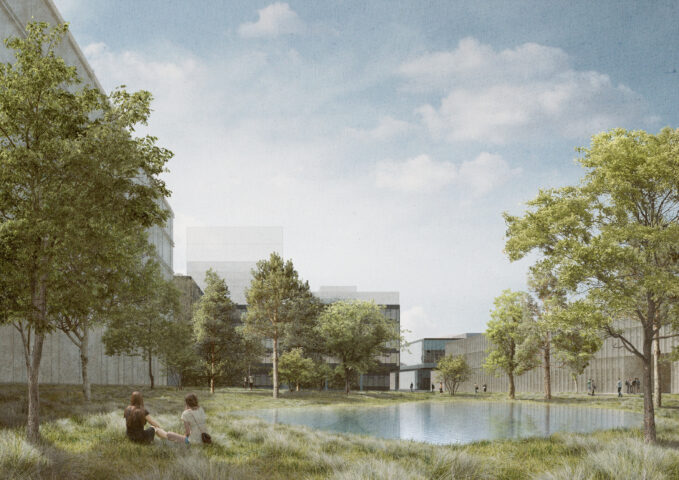
    The core mission of ETH Zurich is teaching and research as well as the transfer of knowledge to the economy and society. A modern infrastructure is a key factor in this. In order to cope with the increasing number of students and researchers and to create the necessary space for new research areas and innovative teaching methods, ETH Zurich is working on the further development of its main locations Zurich Centre and Zurich Hönggerberg. With regard to future space requirements, the Hönggerberg campus plays a central role. As a basis for its further development, ETH Zurich, together with the City and Canton of Zurich, has drawn up the master plan “Campus Hönggerberg 2040”. It describes the long-term spatial development goal. The structural densification and further development of the campus should preserve the current conditions of the site, such as the sensitive embedding in the local recreation area as well as listed buildings and gardens, and only take place in accordance with the emerging demand. In the next few years, a new building for quantum physics, a computer centre and a centre for student and entrepreneurial initiatives will be built, among other things. The central Wolfgang-Pauli-Strasse will also be renovated and upgraded as an important master plan element. Until the campus is fully developed, a conversion, new construction, extension or renovation of around a dozen buildings is planned, including four new high points. Various green areas are to be expanded. With the new master plan, ETH is building on the previous “Science City” master plan from 2005. ETH Zurich wants to develop its campus sustainably on various levels: ecologically, economically and socially. Among other things, it wants to take a big step towards climate neutrality and is focusing on energy supply without fossil fuels. A central element of this is the expansion of the current energy grid. Projects are also planned with regard to sustainable building, local climate, biodiversity as well as retention and drainage. For the further development of the campus, ETH Zurich is in dialogue with internal and external interest groups and involves selected people in a participatory manner on a selective basis.

    Attractive open spaces should ensure a high quality of stay and support biodiversity on the campus.

    In order to protect the surrounding landscape, the campus will be developed inwards and densified within the existing area. A green ring road around the campus symbolises this development and serves as a transition from the campus to the landscape. Attractive open spaces will ensure a high quality of stay and further promote biodiversity on the campus. The campus should be easily accessible by environmentally friendly means of transport such as public transport or bicycle. To relieve the local public transport system, a direct electrically powered bus, the so-called eLink, already runs between the Hönggerberg Campus and the Campus Zentrum for ETH members. Other local services such as bike sharing are available and are being continuously expanded. The current urban district character of the Campus is to be further strengthened. The central Wolfgang-Pauli-Strasse will become a lively and green promenade with versatile ground floor uses for the public. The central “piazza” will also gain in importance in the future and will invite people to meet and exchange ideas.

  • Intelligent building technology thanks to shared innovation

    Intelligent building technology thanks to shared innovation

    Today, real estate has to meet a multitude of requirements. As a significant driver of CO2 emissions in Switzerland, they play a central role in Swiss climate and energy policy. The requirements for economical and efficient energy use in buildings are correspondingly high. On the other hand, there are ever-increasing demands for safety and comfort on the part of the users – with a simultaneous reduction in the complexity of the application. One component for solving these sometimes seemingly contradictory requirements lies in the digital networking of sensors and devices in buildings.

    Valuable partnerships as innovation drivers
    The cooperation with the Swiss Federal Laboratories for Materials Testing and Research (Empa) in Dübendorf is proving to be an extremely valuable and fruitful partnership with regard to the development of intelligent and sustainable buildings. In the modular research and innovation building NEST, Empa develops and tests technologies, systems and materials together with partners from research, industry and the public sector.

    Bouygues Energies & Services supplied prefabricated HVAC components as part of the NEST unit HiLo (“High Performance – Low Emissions”). Using Building Information Modelling (BIM), a factory and assembly plan including manufacturer’s specifications were created, allowing materials to be ordered directly from the model. In the NEST unit “Sprint”, Empa has successfully put circular construction and “urban mining” into practice. Recycled materials and components were used to create flexible office space in a very short time, while conserving resources.

    In the field of predictive control, learning algorithms enable considerable energy savings compared to conventional, rule-based control algorithms, while at the same time increasing the comfort and user-friendliness of building systems.

  • Eberhard opens an interactive course for the circular economy

    Eberhard opens an interactive course for the circular economy

    According to a media release , Eberhard Bau AG has opened the first interactive educational trail for the circular economy in the Park of Circularity in Oberglatt. The park was developed in cooperation with the Swiss Federal Institute of Technology in Zurich ( ETH ), which is researching forward-looking building methods as part of the project. The recycling course is intended to convey responsible use of limited resources “physically with real materials you can touch”.

    The information, which can be called up easily with a smartphone, is aimed at the general public, schools, families with children, young people and, in more detail, at specialist audiences. A sensation is a robot that park guests can use to sort construction waste. An autonomously working robot has already been used to build a 65 meter long and 6 meter high dry stone wall and the park terraces.

    A tour on site is barrier-free 365 days a year and makes it possible to experience “what circular economy means in general, what challenges and solutions exist and that the construction industry plays a central role towards a functioning circular economy”. According to Eberhard Bau, it has been implementing the principle of the circular economy for more than 30 years. Circular economic and construction methods help to minimize the ecological footprint, which was symbolically addressed at the opening of the park by fifth-graders from Oberglatt by immortalizing their footprints in concrete.

    The park of circularity developed by the ETH Zurich, in which the latest research on promising construction methods, autonomous construction, robotics and architecture are combined, had its premiere together with the circular educational trail.

  • A wooden chalet trio for the highest demands

    A wooden chalet trio for the highest demands

    All three charming wooden chalets are connected with a passage. Behind the construction project is a comprehensive concept that focuses on sustainable tourism. At the same time, the Berg-Academy is set up, offering courses in the areas of healthy people, a healthy environment and sustainable entrepreneurship. The Academy will conduct the “live seminars” in the Berglodge37. External seminar providers can hold their own seminars on the Eggberge. Companies and organizations book the lodge for internal seminars in the mentioned areas. Adults looking for peace and quiet can use the place for a personal pit stop, a “digital detox” or simply for a few days of relaxation.

    With the Berglodge37, the two operators fulfilled a dream: “This heart project has been dormant in us for a long time,” says Ruth Koch. “Operating a mountain oasis where curious people can meet and be inspired is our common dream,” adds Martin Reichle. When building the Berglodge37, great importance was attached to an optimal energy balance and a lot of regional “moon wood” was used, wood felled during the waning moon. According to an ETH study, this wood has been proven to have a wide variety of positive properties such as better stability, better durability, fire resistance, hardness and resistance to pests. When it came to choosing the furniture, only the best was good enough. All rooms are equipped with bed systems from the Swiss manufacturer Leibundgut from the Bernese Oberland. The world’s only bed with automatic shape adjustment to every body shape and sleeping position offers perfect sleeping comfort and guarantees the best relaxation.

    As a consistently sustainable business, Berglodge37 relies on vegetarian cuisine. Guests should be able to experience that vegetarian food can taste just as good as dishes containing meat. The lodge sees itself as an innovative employer in the canton of Uri. This is reflected in the choice of employees, who practically all come from the region. The opening of the Berglodge37 is planned for mid-July 2022. More information: www.berglodge37.com.

  • ETH researchers build a dome from construction waste

    ETH researchers build a dome from construction waste

    A group of researchers from the Circular Engineering for Architecture Labs ( CEA ) at ETH have built a dome from construction waste. The aim of the project led by assistant professor Catherine De Wolf in the Department of Civil, Environment and Geomatics was to show the advantages of the circular economy and digitization for the construction industry, according to a press release .

    In doing so, the scientists should go through the entire reuse cycle of building materials – from the dismantling work to the design of a new building and its construction. Before the demolition of a car warehouse in Geneva, they collected usable old components under the guidance of demolition specialists.

    They stored and installed the parts on the Hönggerberg campus with the help of a self-programmed algorithm. This independently calculated the optimal geometry and dimensions of the wood supply in order to use it as efficiently as possible. “The aim was to design the computer program in such a way that it does not cut the largest bars into small pieces and leaves as few residues as possible,” doctoral student Matthew Gordon is quoted as saying in the press release.

    The participants also saved information on each component, which was marked with a QR code, in a database. The idea of the prototype: Architects could find out “when which materials from demolition objects will be available and plan them in new buildings”.

    Because in the project it turned out that the procurement of used components is one of the biggest challenges. “Ideally, the companies would be informed about demolition or dismantling as soon as possible, so that they can start looking for buyers for the materials right away,” De Wolf is quoted as saying in the press release. In fact, this often happens at short notice.

  • Dutch central bank builds with new strength

    Dutch central bank builds with new strength

    The Dutch Central Bank uses CO2-neutral concrete in the renovation of its Amsterdam headquarters. This is made possible thanks to a collaboration between the Dutch New Horizon Urban Mining BV and the Swiss start-up neustark , according to a LinkedIn announcement .

    New Horizon’s technology makes it possible to reduce the carbon footprint of concrete by 75 percent, they say. For this, cement is obtained from concrete recycling material. The remaining footprint is offset by neustark. The start-up has developed a technology with which CO2 from the atmosphere can be permanently stored in recycled concrete. For this purpose, liquid CO2 is introduced into demolition material.

    Neustark is a spin-off from the Swiss Federal Institute of Technology in Zurich ( ETH ) based in Bern. The company works with Holcim , among others, to drive innovation and sustainability in the construction sector. As part of the collaboration, neustark is investigating the CO2 conversion potential of Holcim’s recycled demolition concrete. Holcim, in turn, optimizes the concrete produced by neustark.

  • ETH Professor Kaijima receives Wolf Prize

    ETH Professor Kaijima receives Wolf Prize

    Professor of Architectural Behaviorology at the Swiss Federal Institute of Technology in Zurich ( ETH ), Momoyo Kaijima, and her partner Yoshiharu Tsukamoto have been awarded this year’s Wolf Prize for Architecture. Tsukamoto is a professor at the Tokyo Institute of Technology. Both run the Atelier Bow-​Wow together. According to the ETH media release , the jury chose the works of both professors as prizewinners because of their great sensitivity to local contexts and the social effects of architecture.

    The Wolf Prize has been awarded to scientists and artists by the Israel-based Wolf Foundation since 1978. Merits for the benefit of mankind and friendly relations between peoples are honored. According to the ETH announcement, former award winners in the architecture category include Frank O. Gehry, Jean Nouvel, Peter Eisenman and David Chipperfield. Momoyo Kaijima is only the third woman to receive the Wolf Prize for Architecture.

    After various guest professorships. at Harvard University, the Royal Danish Academy of Fine Arts and Columbia University, among others, Momoyo Kaijima came to ETH Zurich in 2017, where she established the Chair of Architectural Behaviorology.

  • Another location for start-ups is being created in the greater Zurich area

    Another location for start-ups is being created in the greater Zurich area

    As a first step, Elektron AG is making around 1,100 square meters available to the Wädenswil start-up organization grow . Two fast-growing life science start-ups will move in there: Araris Biotech AG , a spin-off from the Swiss Federal Institute of Technology Zurich ( ETH ) and the Paul Scherrer Institute ( PSI ), and Nemis Technologies AG . This is already a fourth location for ambitious young companies in the local area of Wädenswil.

    The technology company Elektron will finance the conversion to laboratory and office space. “The cooperation with grow fits perfectly with our philosophy of combining modern technologies and sustainability,” Elektron CEO Enrico Baumann is quoted as saying in a statement from grow. “For us, the settlement of the two start-ups is an investment in the future and a commitment to the Wädenswil workplace.”

    Araris Biotech is researching novel anti-cancer antibody compounds. Nemis develops diagnostic solutions to detect pathogenic bacteria in food. Both have completed successful financing rounds. Araris was able to earn over 15 million francs in October 2020, Nemis only recently 7.75 million francs.

    “In the past five years, growth has accelerated significantly,” says Wädenswil Mayor Philipp Kutter. He is also a member of the board of trustees of grow. Despite the corona pandemic, there are signs of further growth, “which is extremely positive for research and business in and around Wädenswil”.

  • Swiss Prime Site and Superlab are building laboratory space in Schlieren

    Swiss Prime Site and Superlab are building laboratory space in Schlieren

    Swiss Prime Site Immobilien has entered into a partnership with Superlab Suisse . Superlab is a provider of laboratory and research space. According to the press release , Superlab Suisse provides operational and fully equipped research and laboratory space as well as operational services. It already has such a location in Lausanne. Both partners plan to develop locations in Basel and Schlieren with a total area of more than 10,000 square meters. According to Superlab Suisse, the laboratory in Schlieren will have an area of 5,400 square meters.

    The city on the Limmat is home to facilities of the Swiss Federal Institute of Technology Zurich (ETH), the University of Zurich (UZH) and research centers of numerous national and international pharmaceutical companies. The demand for laboratory space is correspondingly high, it is said. Swiss Prime Site Immobilien is planning a modern new building project on the JED site in Schlieren. In cooperation with Superlab Suisse, research and laboratory areas for start-ups, spin-offs or established companies are to be created on two floors.

    “Due to the direct proximity to the Wagi area in Schlieren and the technology park in Basel, companies from the life sciences sector can benefit from significant synergy effects of these ecosystems,” says Zhang Xi, CEO of Superlab. In Basel, a state-of-the-art building with laboratory and research areas is to be built by Superlab Suisse at the Stücki Park in the next 18 months.

    For Martin Kaleja, CEO of Swiss Prime Site Immobilien, the modern standard of construction, the flexibility of the space and the guarantee of support and services are key success factors. Kaleja is quoted as saying that Swiss Prime Site Immobilien and Superlab Suisse together had the necessary know-how to ensure the space required for laboratory and research areas.

  • CondenZero wins Swiss Innovation Challenge

    CondenZero wins Swiss Innovation Challenge

    The Swiss Innovation Challenge has been decided, the three winners come from Zurich: on Thursday the main prize of CHF 20,000 was awarded to condenZero . The spin-off of the University of Zurich ( UZH ) received this award virtually when the award ceremony was broadcast from the Haus der Wirtschaft in Pratteln. According to a press release , a message from Federal Councilor Guy Parmelin was leaked.

    The physicists at condenZero develop and produce scientific sample holders that work at low temperatures of around minus 270 degrees. The innovative cooling principle was originally developed at the Swiss free-electron laser at the Paul Scherrer Institute . In the start-up phase, the team will concentrate on introducing the new technology to the cryo-electron microscopy market. The condenZero technology can hold cryogenic temperatures for up to 24 hours. With the current cryo-microscopy solutions, this is only possible for 15 minutes. CondenZero is also in the final round of the start-up CERN BIC incubator .

    Second place and the special life sciences prize of CHF 5,000 went to MyLeg . This is a “unique” device that recovers sensory information about the touch and movement of a prosthetic leg. It does this through non-invasive electrical stimulation. The device does not have to be used surgically and can be added to any existing prosthesis.

    Third place and the special construction prize were awarded to Oxara . The spin-off from the Swiss Federal Institute of Technology in Zurich converts construction waste into sustainable and affordable building materials with self-developed and patented mineral additives, thus promoting the circular economy. The company’s goal is to significantly reduce “the immense footprint” of conventional building materials.

  • ETH robots build hanging gardens for Zug

    ETH robots build hanging gardens for Zug

    The Tech Cluster Zug will have hanging gardens based on ancient models. The planted architectural sculpture intended for this purpose bears the name Semiramis. It is 22.5 meters high and consists of five differently sized and geometrically complex wooden bowls that are placed one on top of the other. A video presented in a media release from ETH shows how these are supported by eight slender steel supports.

    Researchers from the group of ETH architecture professors Fabio Gramazio and Matthias Kohler design and create Semiramis together with Müller Illien landscape architects , the timber construction engineers from Timbatec and other partners from industry and research. The design options come from a machine learning algorithm that was developed in collaboration with the Swiss Data Science Center .

    “The computer model enables us to reverse the conventional design process and to explore the entire scope for designing a project,” Matthias Kohler, Professor of Architecture and Fabrication at ETH Zurich, is quoted as saying. In the Immersive Design Lab , an ETH laboratory for augmented reality, the researchers were able to explore the designs in three dimensions. A software developed jointly with the Computational Robotics Lab at ETH allowed the designs to be modified. According to Kohler, this lighthouse project in architectural research is driving “key research topics such as interactive architectural design and digital fabrication”.

    The Semiramis sculpture is currently being built by four cooperating robotic arms in the robotic production laboratory at ETH Zurich. An algorithm prevents collisions if you each lift one of the wooden panels and place them in the room at the same time. The robots relieve humans of the heavy lifting and precise positioning. They also make complex scaffolding unnecessary.

    The individual shell segments each consist of 51 to 88 wooden panels. When one of them is ready, it is transported to Zug by truck. Semiramis is to be erected and planted in spring 2022.

  • Milestone for sustainable building is being created in Zug

    Milestone for sustainable building is being created in Zug

    The construction project for V-ZUG ‘s new production and assembly building called Zephyr Ost in the Zug Tech Cluster is the largest to date in which CO2-enriched concrete has been used. It is made from recycled concrete from the building materials group Holcim , which is enriched with CO2 using a neustark process. According to a press release , the construction work started on Wednesday. The building is scheduled to go into service in 2023.

    For this climate-friendly concrete, CO2 from Switzerland is being used for the first time. The start-up based in Bern and spun off from the Swiss Federal Institute of Technology Zurich ( ETH ) in 2019, neustark extracts the CO2 from the wastewater treatment plant of the ara region Bern AG .

    The recycled granulate for concrete production is processed by the recycling processing plant Arge EvoREC in Oberdorf NW. This is a joint venture between Holcim Kies und Beton AG and Zimmermann Umweltlogistik AG . The granulate is then carbonated by neustark using the dry process. The technology has been tested in the past few months and is now being used commercially.

    With the use of 4,200 cubic meters of recycled concrete and the binding of CO2, a total saving of 71 tons of CO2 is achieved compared to conventional construction. That corresponds roughly to the annual CO2 uptake of 3500 Swiss firs.

    “We are pleased to be able to come one step closer to our vision of climate-neutral and circular concrete production with the help of the innovative neustark process,” said Giovanni Barbarani, Head of Concrete Performance at Holcim Switzerland. “This project is a milestone on the way to sustainable building in Switzerland, also thanks to its regionality and short transport routes.”

    The Metall Zug Group wants to create “a new piece of the city for an industrial ecosystem” in the Zug Tech Cluster. Other industrial companies, start-ups, technology-related service providers, training institutions and apartments are also to be located there.

  • "The potential is enormous"

    "The potential is enormous"

    In the heart of the city of Zurich is the university area with the knowledge and health clusters of the University Hospital Zurich (USZ), the University of Zurich (UZH) and the Swiss Federal Institute of Technology (ETH) Zurich – three successful institutions with a high international reputation. The spatial proximity of the three institutions offers unique opportunities for intensive cooperation, which brings about innovations in research, teaching and medical care. However, numerous buildings in the Zurich center university area no longer meet the requirements of modern hospital, research and teaching operations. The infrastructure has reached its capacity limits. With the generation project at the Zurich Center University Area (HGZZ), the infrastructure of the USZ, UZH and ETH Zurich is being improved and the leading position of the institutions is being secured.

    Common vision
    The “Zurich Center University Area” building project is a Herculean task: “There are three levels of government (federal, canton and city) and three institutions (university, university hospital, ETH) involved,” says Roman Bächtold, head of the HGZZ office, which is responsible for the various projects in the Coordinated university area. “Getting the interests and needs of all these players under one roof, right in the center of Zurich, was and is a special challenge. The potential is enormous. If it succeeds, the population will benefit far beyond Zurich, and not just today and tomorrow, but across generations. ” Zurich has a unique knowledge and health cluster that integrally combines research, teaching and health care in a very small space. It is important to secure and strengthen this advantage. This shared vision made it possible to unite the parties. That was and remains demanding and time-consuming.

    Upgrading the quarter
    The planning goes way back. The main milestones were the location decision in September 2011, the elaboration of a master plan (2012/2013), its approval in August 2014, the tendering and implementation of the study contract for the urban space concept HGZZ (2016/2017). But the adoption of a joint white paper in March 2018 was also an important stopover on the way to our destination. The University of Zurich can be recognized from afar by its green dome. Will it stay that way? – «The green dome remains. But the quarter will be massively upgraded, greener, more accessible, more liveable, ”says Bächtold. And he adds: “There are hardly any projects in Switzerland that are so complex and varied. You come into contact with countless stakeholders from politics, business, the population and the media. This great challenge is appealing and exciting ».

  • Empa achieves record for flexible solar cells

    Empa achieves record for flexible solar cells

    The Empa team from the Laboratory for Thin Films and Photovoltaics , headed by Ayodhya N. Tiwari, has set its seventh record for the efficiency of flexible CIGS (Copper Indium Gallium Diselenide) solar cells. After a record high efficiency of 12.8 percent in 1999, it has now reached 21.38 percent, according to a press release. This new record was confirmed by the independent Fraunhofer Institute for Solar Energy Systems in Freiburg, Germany.

    The value now measured is already close to the best efficiency of conventional, non-flexible solar cells made of crystalline silicon of 26.7 percent. The highly efficient flexible solar cells are particularly suitable for use on roofs and building facades, for greenhouses, transport vehicles, aircraft and portable electronics. Together with the Niederhasli ZH-based company Flisom , a spin-off from Empa and the Swiss Federal Institute of Technology Zurich ( ETH ), the researchers are developing roll-to-roll production of lightweight, flexible solar modules for such applications.

    These solar cells are produced on a polymer film using a low-temperature evaporation method. The light-absorbing semiconductor material lies on top as a wafer-thin film. Empa researcher Shiro Nishiwaki optimized their composition. In this way he was able to further increase the efficiency. According to the team’s measurements, the increase in photovoltaic output remained stable even after several months.

    Tiwari’s team works closely with the Kovalenko Lab for Functional Inorganic Materials at ETH Zurich. The research and development work was supported by the Federal Office of Energy .

  • Managing Director Audergon leaves arv Baustoffrecycling

    Managing Director Audergon leaves arv Baustoffrecycling

    After five years at the helm of the arv building materials recycling association, Laurent Audergon is leaving. He wants to face a new professional challenge, it says in a letter from association president Adrian Amstutz and the two vice presidents Stefan Eberhard and Laurent Steidle to all members and partners of the association arv Baustoffrecycling Schweiz.

    The board of directors agreed on an immediate end of work with Audergon. However, the departing managing director is available to arv for an orderly handover, according to the letter. The association is therefore looking for a new managing director.

    In the meantime, the deputy managing director Gregor Schguanin will take over the management of the association with the support of the board. He has extensive and longstanding expertise in the areas of inspectorate and environmental protection as well as in-depth experience in project and team management. Schguanin studied cultural engineering and surveying at the Swiss Federal Institute of Technology in Zurich (ETH) and is a graduate engineer and certified consultant for organizational development.

    Audergon is a graduate chemist and civil engineer at the ETH. In his five years as managing director he had a decisive influence on the repositioning and continuous development of arv, the presidents state in their letter. He led the association with great commitment.

    The association arv Baustoffrecycling Schweiz is based in Schlieren.

  • Drone conducts measurement flights in cement works

    Drone conducts measurement flights in cement works

    An important milestone was reached this week at the Holcim cement plant in Siggenthal. After several years of research, the special drone from the Zurich start-up Voliro carried out its first official measurement flight campaign there. According to a press release, important measurements were taken to determine the steel wall thicknesses of the cement kiln and the cyclone preheater.

    Voliro, a spin-off from the Swiss Federal Institute of Technology Zurich ( ETH ), specializes in the development of flying robots for the inspection and maintenance of industrial plants. Your drones can be equipped with different sensors and carry out visual as well as thermal and contact-based measurements. A special feature of the drones is that they can rotate around all axes thanks to a special rotor system, which allows them to maneuver in vertical positions and even upside down. Thanks to the 360-degree design, they are also suitable for use when taking measurements on curved and inclined surfaces.

    According to the press release, the use of such special drones at great heights is considered a world first. The method saved both time and money. The use of drones also increases work safety.

    According to the information, Holcim has been accompanying Voliro's product development since 2019. The global cement company from Zug is making its infrastructure in Siggenthal available to the start-up for test flights and supporting it with its specialist knowledge.

  • Concrete 3D printed bridge unveiled in Venice

    Concrete 3D printed bridge unveiled in Venice

    The Striatus arch bridge was unveiled on Monday at the Venice Architecture Biennale. It was designed by the Block Research Group at the Institute for Technology in Architecture of the Eidgenössische Technische Hochschule Zürich ( ETH ), the Zaha Hadid Architecs Computation and Design Group and the Innsbruck specialists for additive manufacturing with concrete, incremetal3D . It was made possible by the building materials manufacturer Holcim Switzerland .

    Striatus is part of the “ Time Space Existence ” exhibition. It will be shown by the European Cultural Center as part of the Biennale. Its name (Latin: ribbed, grooved, striped) reflects the structural logic and the manufacturing process of the bridge, said Philippe Block from ETH in a press release from Holcim. “In arched and vaulted structures, the material is placed in such a way that the forces can be transferred to the supports in pure compression. The strength is generated by the geometry, whereby only a fraction of the materials are used that are used in conventional beams. ”This opens up a multitude of possibilities for building with lower strength and environmentally friendly.

    "Striatus stands on the shoulders of giants," says Shajay Bhooshan of Zaha Hadid Architects. “It revives ancient techniques of the past.” Its “tactile quality, aesthetics and strength” reflected the vision “that beauty is a promise of performance”. The joint work makes the striatus bridge "greater than the sum of its individual parts", says Johannes Megens, co-founder of incremental3D. According to Holcim CEO Jan Jenisch, the digital and circular design of the bridge uses "concrete at its best, with minimal use of materials and blocks that can be reassembled and reused infinitely".

    Holcim claims to be working on a range of 3D printing applications, from complex infrastructure to affordable housing for Africa. In Malawi, Holcim has put the world's first school made of 3D concrete printing into operation. The construction of the walls took only 18 hours and consumed 70 percent less material than with conventional construction methods.

  • University of Zurich relies on Winterthur water flow

    University of Zurich relies on Winterthur water flow

    Stadtwerk Winterthur has won the University of Zurich ( UZH ) as a new customer. In the corresponding tender, the UZH assumed electricity from renewable energies and opted for water electricity from the European Union, explains the city administration of Winterthur in a message . The municipal company will supply UZH with 69 gigawatt hours of electricity from hydropower annually from 2024 to 2028.

    In addition, Stadtwerk Winterthur was able to win two more tenders from existing customers, the communication further explains. According to this, on the one hand, the Swiss Federal Institute of Technology in Zurich ( ETH ) will also receive sustainable water power from the Winterthur municipal utility in the years 2024 to 2028. Of the 110 gigawatt hours contractually agreed annually, 4 gigawatt hours should meet the strict ecological guidelines of naturemade star.

    On the other hand, the Cantonal Hospital Winterthur will continue to receive electricity from hydropower from Stadtwerk Winterthur between 2024 and 2026. The corresponding contractual agreement includes the delivery of around 24 gigawatt hours of electricity annually, writes the city administration of Winterthur.

  • Researchers want to print tower

    Researchers want to print tower

    The Graubünden village of Mulegns on the Julier Pass is to receive a new cultural site: Giovanni Netzer, theater director and founder of the Origen cultural festival, wants to have a new white tower built. This should be 23 meters high and comprise four floors. At the very top, a stage for performances is to be built under a dome. The appearance of the tower should be reminiscent of the Graubünden confectioner tradition.

    Netzer wants to rely on digital construction technologies for the construction of the tower. To do this, he works with researchers from the Swiss Federal Institute of Technology in Zurich ( ETH ). The tower is designed and planned by ETH professor Benjamin Dillenburger and Michael Hansmeyer from the Digital Building Technologies research group together with the Origen Foundation by Netzer. In addition, with Robert Flatt, Walter Kaufmann and Andreas Wieser, three other ETH professors from the national research focus on digital fabrication are involved.

    The components of the tower are to be produced on site with a 3D printer. Interested parties can watch this process. Robots should then build the tower from these parts. According to an announcement from ETH, the tower will be one of the tallest structures ever to be 3D printed and built by robots. The construction using 3D printing enables complex geometries to be produced and raw materials to be used sparingly.

    When the project was presented on Tuesday, Federal President Guy Parmelin was also present. Construction is scheduled to start in April 2022. In addition, the dismantling is already planned. In this way, the concrete elements can be separated from each other again at a later point in time. Theoretically, the tower could then be rebuilt in another location.

  • FenX convinces with sustainable insulation material

    FenX convinces with sustainable insulation material

    FenX AG has secured 2.7 million francs in a seed financing round, according to a press release . Investors include the real estate company Swiss Prime Site, Zürcher Kantonalbank and CADFEM International, which specializes in simulation-based planning.

    FenX AG has developed a patented technology with which industrial waste can be converted into insulation boards using a cost-effective foam process at room temperature. According to the communication, the insulation boards produced in this way have good insulation properties and high mechanical strength. They are not flammable and cause almost no CO2 emissions.

    On the one hand, FenX intends to use the fresh funds to continue investing in research and development. On the other hand, the company wants to set up its first production facility and prepare for market entry. FenX's long-term goal is to produce recyclable building materials around the world. Production is to take place decentrally from locally available resources.

    FenX was spun off from the Swiss Federal Institute of Technology Zurich ( ETH) in 2019. Behind the company are researchers from the ETH Laboratory for Complex Materials.

  • Holcim drives innovation from start-ups

    Holcim drives innovation from start-ups

    The Zug-based cement giant Holcim is teaming up with three young Swiss companies, according to a media release . The aim is to advance innovative technologies in the construction sector and promote sustainability.

    In cooperation with the Freiburg start-up Mobbot , for example, the integration of recycled building materials into 3D printing technology is to be promoted. Mobbot has developed the necessary 3D printing technology. Together with Holcim, it now wants to develop a concrete recipe that enables the use of recycled material in 3D printing.

    Holcim has entered into another cooperation with the Bern-based company Neuustark . The spin-off from the Swiss Federal Institute of Technology Zurich ( ETH ) is developing a technology with which CO2 from the atmosphere can be permanently stored in recycled concrete. For this purpose, liquid CO2 is introduced into the demolition material. As part of the collaboration, neustark is investigating the CO2 conversion potential of the demolition concrete recycled by Holcim. In turn, Holcim is optimizing the concrete produced by Neustark. Holcim believes it is possible to integrate the neustark solution into its recycling process in the future.

    The third collaboration between Holcim and the Ticino start-up company HeatNeutral has been agreed. This has developed an innovative combustion system that is intended to promote the decarbonization of production facilities. According to the information, the heating system works particularly efficiently and achieves an almost 100 percent combustion of fuels. This means that less fuel is required for the same output. In addition, the HeatNeutral system can also burn CO2-neutral oils such as vegetable oils, used cooking oils and biodiesel. Holcim is testing the solution in its concrete plant in Birsfelden BL.

  • Sevensense co-founder praises Switzerland as a location for robotics

    Sevensense co-founder praises Switzerland as a location for robotics

    Roland Siegwart is Professor of Autonomous Systems at the Swiss Federal Institute of Technology in Zurich ( ETH ). He is also co-director of the Wyss Zurich funding program. In 2018 Siegwart co-founded the ETH spin-off Sevensense Robotics. The company, based in Zurich, develops technologies for robots that help them, for example, with independent orientation. Sevensense also works with Deutsche Bahn to develop technologies for the future of train travel.

    In an interview published on the Sevensense blog page, Siegwart praised Switzerland as a location for robotics. All important specialist knowledge for robotics is available in the country. On the one hand, precision mechanics, which have a "long tradition in Switzerland", are particularly important. On the other hand, sensor technology plays an important role in the industry. This is less known worldwide, but Switzerland is already very advanced in this regard.

    Siegwart also praises the ETH Zurich and the ETH Lausanne (EPFL). The two universities would provide the necessary control and intelligence to be able to make good use of the existing specialist knowledge, he emphasizes. They would also spawn a multitude of successful spin-offs – especially in the robotics area. Switzerland has also been able to attract a large pool of foreign talent who further strengthen the robotics scene.

    Switzerland still has some catching up to do when it comes to major investments. Investors in Europe are generally more risk averse compared to those in the USA. However, this also helps European start-ups develop a sustainable, customer-oriented approach. Accordingly, the survival rate of start-ups – for example in Switzerland – is much higher than that of those in the USA. The long-term survival rate of the ETH spin-offs is 80 to 90 percent.

  • Zurich and Singapore are exploring big cities

    Zurich and Singapore are exploring big cities

    The Swiss Federal Institute of Technology Zurich ( ETH ) and three Singapore-based universities – the National University of Singapore , the Nanyang Technological University and the Singapore University of Technology and Design – want to jointly research how the global growth of cities can be made more sustainable. To this end, according to a press release on December 1, they launched the Future Cities Lab Global research program. It is an extension of the Future Cities Laboratory of the Singapore-ETH Center , which was successfully completed after ten years.

    This program deals with the major global challenges of increasing urbanization caused by the expansion of existing cities and the emergence of new ones. This against the background that, according to the United Nations, two thirds of the world's population will live in cities by 2050.

    “The ecological and economic advantages of densely populated cities that do not take up much space are being wiped out by the urban sprawl in the hinterland,” explains Professor Stephen Cairns, co-director of the research program and ETH architecture professor in Singapore. "The extent to which we can curb climate change in the next hundred years depends on how well these contrasting city forms are planned."

    Numerous projects are being planned, according to ETH Zurich. Those that have already started dealt with compacted green buildings and quarters, the materials for them and new technologies for the recycling of building materials. In addition, solutions for polluted and flood-prone cities and surrounding regions are sought. Possibilities for sustainable food production in cities and their surrounding areas are also being explored.

  • ETH students create innovative bamboo pavilion

    ETH students create innovative bamboo pavilion

    Students in the master’s course in Advanced Studies in Architecture and Digital Fabrication at ETH have created a bamboo pavilion weighing just 200 kilograms and 40 square meters, the ETH informs in a message . For the design of the innovative pavilion, its creators developed their own digital design tools. In addition to the renewable raw material bamboo, recyclable plastic was also used in the production. All connecting pieces and shading elements were created using 3D printing.

    "The building system developed for this project aims to reduce the logistical effort of building and at the same time to use the advantages of digital production for a more sustainable building culture", Marirena Kladeftira, doctoral student at the Professorship of Digital Building Technologies at ETH, is quoted in the communication . Despite their complicated geometry and their high tolerance requirements, the tailor-made connection pieces can be 3D printed anywhere in the world due to their small size, explains the ETH. The shading elements made of recyclable plastic and Lycra textile can also be produced using 3D printing.

    “This construction method could therefore be used wherever bamboo is available and should be built inexpensively,” writes the ETH. In addition, the modular structure allows the building to be assembled and dismantled quickly. The students' bamboo pavilion was set up in Zurich within 48 hours and dismantled again in the same period of time.

  • VolkerWessels invests in Parquery

    VolkerWessels invests in Parquery

    Parquery has completed a successful financing round, according to a message on LinkedIn. The spin-off from the Swiss Federal Institute of Technology Zurich ( ETH ) was able to win the Dutch construction and plant engineering company VolkerWessels as an investor.

    Parquery has developed software that analyzes images from street cameras in real time. This enables drivers to find out, for example, whether there are free parking spaces in their vicinity. The platform can also be used, for example, to analyze the flow of traffic in cities. Overall, it helps build smart cities.

    With the fresh money, Parquery wants to strengthen its platform on the one hand in the area of intelligent parking. On the other hand, it is to be further developed for new solutions in the field of intelligent cities.

    Parquery has also been working with Hyrde , a subsidiary of VolkerWessels, for a number of years. Hyrde uses the Parquery solution, for example, for security applications at airports and for intelligent mobility projects in cities.