Tag: ETH Zürich

  • Construction project becomes a learning laboratory for students and researchers

    Construction project becomes a learning laboratory for students and researchers

    The two ETH departments of Architecture and Civil, Environmental and Geomatic Engineering are turning the complete renovation and extension of the HIL building on the ETH Hönggerberg campus into a research project. Instead of handing over the construction planning to an external planning office, an internal planning team involving professors, mid-level staff and students will be responsible for it, according to an ETH report. They will use their diverse construction expertise to research interventions and constructions in the HIL Living Lab in order to advance sustainable, circular and resource-saving construction in existing buildings.

    The HIL building was constructed between 1972 and 1976 and serves as the main building for the two architecture and construction departments. It has 800 workstations, 1600 seats in lecture theatres and seminar rooms as well as large drawing rooms and has reached the end of its first life cycle. In particular, there is reportedly a considerable need for refurbishment in terms of fire protection and building services. In addition, the striking building envelope is insufficiently insulated.

    In addition, the building is to be significantly expanded and extended by around 2035, as the ONA architecture centre is to be abandoned and integrated. The project also addresses the central question of how work, teaching and research should be organised at the HIL in the future. The aim is to create a modern space that is more conducive to interaction and collaboration with so-called hybrid teaching and learning landscapes. Those involved still want to define what this means in concrete terms.

    “The Living Lab enables us to incorporate teaching and research directly into a building project,” says Professor of Architecture Matthias Kohler on the project website. He initiated the project together with the Director of the ETH Real Estate Department, Hannes Pichler. “The fact that we are researching our own ‘home’ makes it all the more exciting for us because we can help shape our future.”

  • KOF between crises, AI and a clear stance

    KOF between crises, AI and a clear stance

    2024 was a year of significant upheaval. The KOF Swiss Economic Institute at ETH Zurich responded with new formats, expanded methods and a clear positioning that is evidence-based, independent and relevant. The weakening German economy and geopolitical uncertainties, such as the election of Donald Trump, also influenced the forecasts for Switzerland. The KOF favoured scenarios over rigid forecasts and adapted its forecasting model to current requirements.

    Third-party funding, data and dynamism
    In the intensified competition for third-party funding, KOF is focussing on practical, data-oriented research. Projects are becoming larger and international co-operation is increasing. At the same time, the claim remains clear: KOF remains an independent voice with scientific depth. With the expansion of the KOF Lab, the institution is creating space for cross-sector analyses on monetary policy, health and social inequality and is specifically promoting young talent.

    Utilising potential with a sense of proportion
    Both Sturm and Gersbach see great opportunities in AI, but not an overnight revolution. Rather, it is about continuous productivity gains, flanked by smart regulation. The KOF itself uses modern methods, but remains cautious about hypes. Research that has an impact is the goal, not technology for technology’s sake.

    Open questions for 2025
    Looking ahead to the new year, the directors see key challenges in analysing tariffs, non-tariff trade barriers and geopolitical tensions. The lessons from the collapse of Credit Suisse have not yet been fully learnt and the future of banking regulation also remains an issue. The KOF observes, analyses and remains clear in its stance, fact-based, forward-looking and independent.

  • New coating material dampens vibrations and noise

    New coating material dampens vibrations and noise

    Materials researchers at the Swiss Federal Institute of Technology in Zurich(ETH) have developed a layered material that is both rigid and load-bearing, as well as having a high level of vibration and noise damping. Ioanna Tsimouri achieved a feat in her doctoral thesis with Andrei Gusev and Walter Caseri, writes the ETH in a press release. The two properties are actually incompatible.

    The composite materials developed by Tsimouri are made up of several layers of glass and silicon plates that are connected by rubber-like polymer layers. Tsimouri initially worked with Gusev to calculate how thick the polymer layers needed to be in order for the layered material to be both rigid and damping. Computer models showed that the glass and silicon layers, which are only tenths of a millimeter thick, must make up at least 99 percent of the volume of the entire layered material. “If the polymer layer is too thin, there are hardly any damping effects,” explains Tsimouri in the press release. “If it is too thick, the material is not stiff enough.”

    The layered materials have already proven their mechanical properties in frequency- and temperature-dependent experiments. Production on an industrial scale should also be possible: “If a manufacturer has the appropriate machines, they can also produce the laminate in panels measuring several square meters,” says Caseri. The researchers have therefore applied for a patent for their technology. In their opinion, the material could find a variety of applications in sectors ranging from construction to mechanical engineering, aerospace and sensor technology.

  • Lasers enable internet backbone via satellite

    Lasers enable internet backbone via satellite

    The backbone of the internet – the so-called backbone – is formed by a dense network of fibre optic cables, each of which transports up to more than a hundred terabits of data per second (1 terabit = 1012 digital 1/0 signals) between the network nodes. The continents are connected through the deep sea – and that is enormously expensive: a single cable through the Atlantic requires investments of several hundred million dollars. The specialised consulting firm Telegeography currently counts 530 active submarine cables. And the trend is rising.

    Soon, however, this expenditure should no longer be necessary. Scientists at ETH Zurich have demonstrated optical terabit data transmission through the air in a European Horizon 2020 project together with partners from the space industry. In future, this will make it possible to establish much cheaper and also much faster backbone connections via satellite constellations close to the earth.

    Challenging conditions between Jungfraujoch and Bern
    However, the project partners did not test their laser system with a satellite in orbit, but with a transmission over 53 kilometres from Jungfraujoch to Bern. “Our test distance between the High Alpine Research Station on the Jungfraujoch and the Zimmerwald Observatory of the University of Bern is much more demanding from the point of view of an optical data transmission than between a satellite and a ground station,” explains Yannik Horst, the lead author of the study and a researcher at ETH Zurich in the Institute for Electromagnetic Fields headed by Professor Jürg Leuthold.

    The laser beam had to move all the way through the dense, near-ground atmosphere. In the process, the manifold turbulences of the air gases above the snow-covered high mountains, the water surface of Lake Thun, the densely built-up agglomeration of Thun and the Aare plain influenced the movement of the light waves and thus also the transmission of information. The extent to which this flickering of the air, triggered by thermal phenomena, disturbs the uniform movement of light can be seen by the naked eye on hot summer days.

    Satellite internet uses slow microwave radio
    Internet connections via satellites are nothing new. The best-known current example is Elon Musk’s Starlink constellation, which uses more than 2,000 satellites orbiting close to the earth to bring internet to almost every corner of the world. To transmit data between satellites and ground stations, however, radio technologies are used that are much less powerful. Like WLAN (Wireless Local Area Network) or mobile radio, they work in the microwave range of the frequency spectrum and thus with wavelengths of a few centimetres.

    Optical laser systems, on the other hand, work in the near-infrared light range with wavelengths that are around 10,000 times shorter and only a few micrometres. As a result, they can also transport correspondingly more information per unit of time.

    In order to obtain a sufficiently strong signal at the receiver over long distances, the parallelised light waves of the laser are sent through a telescope that can be several dozen centimetres in diameter. This wide beam of light must then be aimed as precisely as possible at a telescope at the receiver whose diameter is in the order of magnitude of the received light beam.

    Turbulence cancels out the modulated signals
    In order to achieve the highest possible data rates, the light wave of the laser is also modulated in such a way that a receiver can detect several distinguishable states per oscillation. This means that more than one bit of information can be transmitted per oscillation. In practice, different heights (amplitudes) and shifts of the phase angle of the light wave are used. Each combination of phase angle and amplitude height then defines a different information symbol. With a 4×4 scheme, 4 bits per oscillation can thus be transmitted and with an 8×8 scheme 6 bits.

    The changing turbulence of the air particles now causes the light waves to travel at different speeds inside and at the edges of the light cone. In the detector of the receiving station, this causes the amplitudes and phase angles to add or subtract each other to false values.

    Mirrors correct the wave phase 1500 times per second
    To prevent these errors, the French project partner supplied a so-called MEMS chip (micro-electro-mechanical system) with a matrix of 97 movable mirrors. The mirror movements make it possible to correct the phase shift of the beam on its cutting surface along the currently measured gradient 1500 times per second.

    This improvement was essential to achieve a bandwidth of 1 terabit per second over a distance of 53 kilometres, as Horst emphasises.

    New, robust light modulation formats were also used in the project for the first time. They massively increase the sensitivity of the detection and thus enable high data rates even under the worst weather conditions or with low laser powers. This is achieved by cleverly coding the information bits to properties of the light wave such as amplitude, phase and polarisation. “With our new 4D-BPSK modulation format (Binary Phase-Shift Keying), an information bit can still be correctly recognised at the receiver even with a very small number of only about four light particles,” Horst explains.

    Overall, the specific competences of three partners were necessary for the success of the project. The French aerospace company Thales Alenia Space masters centimetre-precise targeting with lasers over thousands of kilometres in space. Onera, another French aerospace research institute, has the expertise in MEMS-based adaptive optics, which has largely eliminated the effects of air flicker. And the most effective modulation of the signals, which is essential for a high data rate, is one of the specialities of Leuthold’s research group.

    Easily expandable to 40 terabits per second
    The results of the experiment, presented for the first time at the European Conference on Optical Communication (ECOC) in Basel, are causing a sensation worldwide, says Leuthold: “Our system represents a breakthrough. Until now, it was only possible to connect either large distances with small bandwidths of a few gigabits or short distances of a few metres with large bandwidths using free-space lasers”.

    In addition, the performance of 1 terabit per second was achieved with a single wavelength. In a future practical application, the system can easily be scaled up to 40 channels and thus to 40 terabits per second using standard technologies.

    Additional potential for the new modulation format
    However, Leuthold and his team will no longer concern themselves with this. The practical implementation in a marketable product will be taken over by the industrial partners. However, the ETH scientists will continue to pursue one part of their work. In the future, the new modulation format they have developed should also increase bandwidths in other data transmission processes where the energy of the radiation can become a limiting factor.

  • ETH Zurich and EPFL launch green energy coalition

    ETH Zurich and EPFL launch green energy coalition

    Switzerland is facing a combined energy and climate crisis. In order to achieve the set net-zero target by 2050 and at the same time avoid an energy gap, the country is dependent on renewable energy sources, seasonal storage options and an efficient connection to the European electricity market. In addition to pumped storage power plants, batteries or heat storage, synthetic fuels and gases such as hydrogen in particular offer an interesting way to store, transport and trade cheap electricity from photovoltaic plants in the summer for the winter. There are numerous promising technologies that are currently under development but not yet fully operational. This is where the “Coalition for Green Energy and Storage” comes in, which was publicly presented on 8 June at the Swiss Economic Forum in Interlaken.

    “With the coalition, we want to quickly bring existing technologies for CO2 capture and for the production and storage of carbon neutral gases and fuels to market maturity and raise them to an industrial level,” ETH President Joël Mesot explains the plan. The goal is to enable a scalable, climate-neutral and flexible energy system within a reasonable period of time.

    Wanted: partners from politics, industry and science
    Achieving this goal will require a joint effort by science, politics and industry. “The two Federal Institutes of Technology alone have 150 research groups in the field of energy, as well as around 460 researchers and four successful spin-offs in the field of CO2 capture and energy storage. Together with other research groups from PSI and Empa, the ETH Domain has both the know-how and the size to respond to current challenges together with companies,” says EPFL President Martin Vetterli. Now the two universities are looking for technology and implementation partners, as well as donors and supporters from politics and society.

    Around 20 companies and organisations have already expressed their interest in working together: Alpiq, AMAG, BKW Energie, SBB / CFF, Carvolution AG, Cemsuisse, Emil Frey Group, Edelweiss, FIR Group AG, Gaznat, Genève aéroport, GE Vernova, Gruyère Hydrogen Power SA, Implenia, MAN Energy Systems, Migros Industry, Romande Energie, Rolex, Swissmem, SWISS International Air Lines, VBSA, Viteos SA, Verband der Schweizerischen Gasindustrie / Association Suisse de l’Industrie Gazière.

    With the airline Swiss International Air Lines (SWISS) and the energy service provider Alpiq – who were present at the SEF alongside the two presidents – two heavyweights of the Swiss economy have been on board from the start. “We are proud to be part of this energy coalition. Together, we are driving forward the production of synthetic fuels, which are one of the biggest levers for us to fly ever more sustainably in the future. At the same time, new possibilities for energy storage are being created, which increases Switzerland’s security of supply and serves society as a whole,” says Swiss CEO Dieter Vranckx. The airline needs economic solutions quickly in order to achieve its own climate goals. Synthetic fuels play an important role in this. Alpiq, for its part, has a broad portfolio of hydropower and storage plants in Switzerland and is one of the pioneers in Switzerland with the production of green hydrogen in Gösgen. With numerous projects for the addition and expansion of renewable energies and various storage technologies in Switzerland and neighbouring countries, Alpiq can make a significant contribution: “With a broad coalition of business, science and society, we can achieve the set net-zero target and a sustainable energy supply at the same time. In this way we can strengthen Switzerland as a business and science location,” says Alpiq CEO Antje Kanngiesser, explaining her company’s clear commitment. The well-known philanthropist Hansjörg Wyss has also already pledged his support to the coalition.

    Planned: Research platforms in the megawatt range
    With new technical solutions, the coalition wants to create additional opportunities to exploit the seasonal differences in electricity production by means of energy storage in Switzerland and Europe. This will improve Switzerland’s security of supply and diversify energy trade with European and international partners, creating new business areas and opportunities for technology start-ups and Swiss industry. The technical options will be analysed systemically in order to find and implement the best possible solutions in terms of supply security and costs.

    The coalition will be formally established by the end of 2023 in order to launch the first projects in early 2024. Demonstrators in the megawatt range will be built on the basis of existing technologies, which should be productive from 2028 and will serve as research platforms. A budget of around CHF 100 million is needed for this project in the first phase.

  • The Hönggerberg campus of ETH Zurich is being further developed

    The Hönggerberg campus of ETH Zurich is being further developed

    ETH Zurich comprises two main locations. One of them is the “Campus Hönggerberg”, which was originally created as an outdoor location in the local recreation area of the Käferberg. Today, almost half of all ETH members study and work here. ETH Zurich expects further growth in student numbers over the next few years. The main location “Campus Zentrum” in the city of Zurich can only be expanded to a limited extent due to the historical district and city structures. For this reason, ETH Zurich is concentrating on the “Hoenggerberg campus” when planning the space it will need in the future. In the coming decades, this is to be further developed extensively.

    Together with the city and canton of Zurich, ETH Zurich developed the master plan Campus Hönggerberg 2040. This builds on the master plan of 2005 called Science City. The idea of a ring road around the campus as well as the development into a city district with offers for ETH members and visitors is being pursued further. An urban appearance with varying heights as well as gardens and squares is planned. In order to protect the environment, the campus will not be expanded in the direction of the surrounding quarters or the recreation zone, but will be compressed inwards and upwards.

    ETH Zurich attaches great importance to sustainability: In the future, the energy supply should be without fossil fuels. The energy network is being expanded for this purpose. On the side of the adjoining quarters Affoltern and Höngg, a portal building with public-oriented offers is to be built at both campus entrances. Along the central Wolfgang-Pauli-Strasse, two more high-rise buildings are planned, which will offer space for teaching and research. In addition, this street is to be developed into a lively, green promenade with a range of ground floor uses. According to the study contract, this redesign allows the needs such as urban planning, traffic, open space, lighting as well as retention and drainage to be taken into account.

    The existing open and green spaces will be upgraded and expanded. A new garden is planned for the central square. The development of sustainable means of transport and the expansion of bicycle connections are also planned. The credo is: We only build if there is a need for it on the part of teaching and research.

  • Innovation at the Dübendorf airfield

    Innovation at the Dübendorf airfield

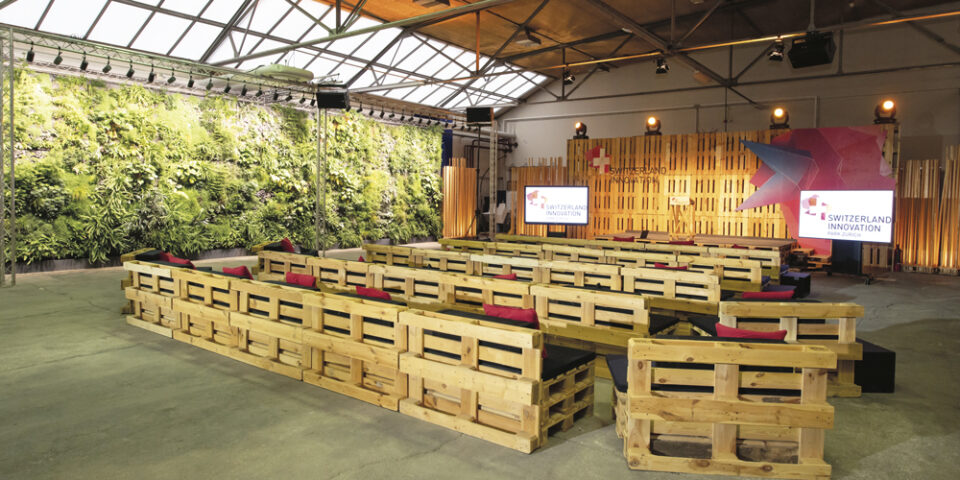
    The airfield area in Dübendorf is to be developed further. Among other things, a new platform for research, development and innovation is being created here with the Zurich Innovation Park. It is intended to promote cooperation and exchange between science and business – and thus support the implementation of research results in marketable products and services. According to the BAK study, the Zurich Innovation Park should create around 10,000 jobs and an annual added value of around CHF 1.9 billion.

    The Zurich Innovation Park Foundation is responsible for setting up and running it. It was founded in September 2015 by the Canton of Zurich, ETH Zurich and ZKB. The canton of Zurich, the three local communities of Dübendorf, Volketswil and Wangen-Brüttisellen and the federal government are developing the area together.

    The jointly developed synthesis report of the project partners forms the basis for the development of the area. This also shows how the Dübendorf airfield area should be presented overall in the future, which uses are planned and how these are spatially distributed. The area will be divided into four sub-areas:

    A first area is reserved for the Zurich Innovation Park, in which research is to be carried out in particular in the areas of mobility, robotics, aviation, space travel and advanced manufacturing & materials. In the second sub-area, the innovation park and a research, test and works airfield overlap to form an aviation cluster. In the third sub-area, the uses with high security requirements – the federal base of the Air Force and the Skyguide air traffic control center – can be further developed independently. In the fourth sub-area there are further aviation infrastructures. Nature conservation also plays a central role there. A continuous circular route around the airfield will also be created for the general public.

    The government council submitted three proposals to the cantonal council for further planning and implementation work. The cantonal government is requesting 97.45 million francs for the gradual development of the innovation park and 8.2 million francs for the planning of a research, test and works airfield.

    The cantonal council could decide on these templates by 2023. Renovation of the existing buildings is planned from 2023. Then the first building applications should be submitted. The implementation of the first buildings could therefore start from around 2024/2025.

    The Zurich Innovation Park aims to promote cooperation and exchange between science and business.
  • New GLC research building, ETH Zurich: Today's facade technology for tomorrow's health sciences

    New GLC research building, ETH Zurich: Today's facade technology for tomorrow's health sciences

    With the new building in Gloriarank (GLC), ETH Zurich is creating a modern development and laboratory building at the interface between health sciences and technology in the university district of Zurich Zentrum. Together with partners, ETH Zurich would like to set a milestone in medical technology research and application. Research groups will meet in the new building and work more closely together on research projects with industry, the University of Zurich, the University Hospital Zurich and other university hospitals. ETH Zurich is also making an architectural statement with the new building. The attractive connection of the structure to the existing ETZ building creates a central courtyard, the heart of which is the listed Scherrer lecture hall. The inner courtyard created in this way becomes the center around which the main entrances and public facilities are grouped.

    When it comes to architecture, “Everything is Roger” here.
    He speaks of "Maison de Verre", but in this case he does not mean the famous 1930s glass house in Paris – the Zurich architect Roger Boltshauser. Rather, with the GLC research building, he created a sensational building that, with its glass facade made of glass block elements assembled in a cassette-like manner and the ventilation wings staggered in depth, creates a sublime heaviness that does justice to its representative character. Since the use of glass blocks as a façade material in contemporary industrial and university buildings has a long tradition, the architect redesigned the material for this project in terms of design, technology and energy. It not only meets today's enormously high demands on energy and sustainability. Rather, through the combination of reduction and robustness of the elements used, the design corresponds to the basic urban planning attitude of the quarter.

    Thinking together means thinking ahead.
    3,866 m² of steel facade, 22,550 m² of floor space, 1,875 mm high casement windows with a projection of 2,800 mm, the strictest environmental and fire protection standards and much more: the new GLC building was a challenge in every respect, which was mastered thanks to the open and constructive exchange of ideas between the companies involved was mastered. A good example of this are the particularly heavy cleaning blades. Due to its complex geometry, Aepli Metallbau – in cooperation with Jansen AG – subjected it to an endurance test beforehand. A prototype was specially built for this purpose. Exactly 1250 problem-free openings and closings later, it was clear: everything works perfectly!

    Contact:
    Matthew Elmer
    Aepli Metallbau AG
    Direct phone +41 71 388 82 38
    matthias.elmer@aepli.ch
    www.aepli.ch

  • Forum UZH takes next hurdle

    Forum UZH takes next hurdle

    The UZH Forum has completed its preliminary project and thus completed the first phase of the project planning, the UZH informs in a press release . The planned nine-story building for the UZH research and education center will form “the future hub of the University of Zurich in the heart of the Zurich Zentrum university district,” the statement said. A large part of the building is to be made accessible to the public.

    The cost of the new building is expected to amount to CHF 598 million. The Government Council of the Canton of Zurich has now referred a corresponding loan application to the Cantonal Council, the State Chancellery of the Canton of Zurich informed in a separate statement . According to her, the Forum UZH provides “the urgently needed additional space for teaching and research”. In addition, the Communications Department of the Government Council emphasizes the function of the planned research and education center as a “link between the three traditional institutions of the University of Zurich, the University Hospital Zurich and the ETH Zurich “.

    The seven above-ground floors of the Forum UZH are reserved for research and teaching. Law, economics and modern philology will occupy the top four floors. In addition, seven of the 40 locations of the university library will move into the new building. In the center of the building there will be an inner forum in the form of a large hall that breaks through the entire structure, which gives the building “an open, pleasant atmosphere across all floors”, writes the UHZ in its press release. The Forum UZH is scheduled to open in 2029.

  • Shared micromobility harms the climate

    Shared micromobility harms the climate

    Shared micromobility is more harmful to the climate than expected. This is shown by a study by the Swiss Federal Institute of Technology in Zurich ( ETH ). This becomes clear if the evaluation of the climate impact of micromobility also includes how electric scooters and bicycles are actually used: “At first glance, e-scooters and e-bikes are climate-friendly because they do not have internal combustion engines,” says Daniel Jan Reck from the Institute for Transport Planning and Systems at ETH Zurich in a report by ETH. “Ultimately, however, what is decisive for their carbon footprint is which modes of transport they typically replace.”

    The transport researchers working with Reck were able to show in their study that shared e-scooters and e-bikes in the city of Zurich mainly replace sustainable modes of transport: walking, using local public transport and cycling. They do more harm than good to the climate. “I think the sharing principle makes sense,” said Reck. “With micromobility and its climate impacts, however, the situation actually seems to be the other way around.”

    The picture is different for privately used e-scooters and e-bikes. These replace more frequent journeys with one’s own car. This is why private micromobility reduces CO2 emissions “and benefits the climate on balance”. That is why it makes sense for authorities to promote commuting by means of private micromobility.

    For his research, Reck received the Young Researcher of the Year Award from the International Transport Forum of the OECD in summer 2021. The think tank of the industrialized countries, based in Paris, awards the prize to young researchers whose work is important in matters of transport policy.

  • ETH Zurich helps with the construction of the Zug wooden high-rise

    ETH Zurich helps with the construction of the Zug wooden high-rise

    A ten-story office building with wooden components is to be built on the Suurstoffi site in Risch Rotkreuz. With a height of 80 meters, it will be one of the tallest wooden houses ever, as the Swiss Federal Institute of Technology Zurich ( ETH ) writes in an article. A lot of basic research is also required for the construction. Due to fire protection, this type of construction has only been allowed in Switzerland since 2015.

    According to the article, basic research for the new building is being carried out in the ETH building hall on the Hönggerberg. There, for example, it is simulated how the timber structure would behave in strong winds. Computer models are not always sufficient for such simulations. This is why experiments are carried out in the ETH building hall. "For us, testing something usually means loading it until it is destroyed," explains Dominik Werne, head of the construction hall, in the article. In the case of innovations in particular, computer models have to be validated through tests, adds Andrea Frangi, Professor of Timber Construction at the Institute for Structural Analysis at ETH.

    Tests on the structure of the Zug high-rise are currently being carried out in the building hall. This is planned by the Zurich engineering firm WaltGalmarini and built by the general contractor Implenia . After the tests at the ETH, the researchers decide together with engineers from WaltGalmarini which systems Implenia should use during construction.