Tag: Europa

  • Strategic expansion on the European door market

    Strategic expansion on the European door market

    Arbonia AG is strengthening its market position in Europe. The Arbon-based company, which specialises in interior doors made of wood, glass and metal, has taken over the Portuguese door manufacturer Cicomol with effect from 15 October, Arbonia announced in a press release. On 9 October, Arbonia also completed the takeover of the German specialists for special metal frames from Rüthener Zargenbau GmbH & CoKG. Last year, the two companies generated a combined turnover of around 20 million euros.

    Arbonia expects the takeover of Cicomol SA, the market leader in Portugal, to strengthen its presence in the specialised trade in Portugal and to generate sales synergies in Spain, Portugal and France. The acquisition of Rüthener Zargenbau, in turn, is intended to close a gap in Arbonia’s portfolio. To date, the international company has largely purchased its metal frames externally. According to Arbonia, both acquisitions will also strengthen margins and increase value.

    The transactions include the takeover of around 130 employees from Cicomol and almost 40 employees from Rüthener Zargenbau. The management of the two companies will also remain unchanged.

  • Between AI dynamics and stable services

    Between AI dynamics and stable services

    In Switzerland, the increase in employment in the second quarter of 2025 was only 0.6 %. The long-term average is 1.3 %. Germany is stagnating, France is even recording a decline, only Italy and the United Kingdom are still showing growth, albeit below the norm. In Switzerland, the service sectors are affected differently. While the healthcare and education sectors are experiencing robust growth, the ICT sector is down 1.4% and has lost almost 3,000 jobs

    ICT weakens
    The ICT sector has been a growth driver for years. Currently, a combination of productivity gains through artificial intelligence, automation and economic restraint is causing a noticeable slowdown. Routine tasks are being automated and the demand for traditional software developers is falling. Junior positions in particular are coming under pressure as a result of the use of AI. Tasks are being completed faster and with fewer staff, and entry-level opportunities are becoming rarer. In contrast, specialized roles for cloud architecture, machine learning and cybersecurity remain scarce and in demand

    After some above-average growth in ICT in recent years, a correction phase can be observed, which is also accompanied by a shift in job profiles.

    Government-related services remain stable
    The picture is different for healthcare, education and public administration. These government-related sectors continue to grow steadily, in some cases even above average. They are driven by three factors.

    • Demographics: Ageing societies, retirements and a shortage of skilled workers are increasing the need for care, support and education.
    • Political initiatives: Programs and wage incentives specifically promote new hires, for example in care or early childhood education, and ensure employment growth.
    • Productivity limit: Many activities in the education and social sector can hardly be automated, the need for personnel remains constantly high (“Baumol effect”)

    Specialization is in demand
    The labour market remains dual. Growth continues in government-related sectors, driven by social and political trends. In the ICT sector, demand remains fundamentally present, but is shifting more towards specialized and higher-skilled roles. Investments in the cloud, AI and cyber security will be key job drivers in the long term. However, there will be no broad-based increase in employment. Those who focus specifically on the skills of the future will remain successful in the changing job market.

    After strong years, 2025 marks a turning point in Switzerland and Europe. Declines in the ICT sector, robust growth in government services. The dualization of labour market trends will continue to intensify. Specialized skills and all services related to healthcare, education and administration have a bright future.

  • Ticino is one of Europe’s most innovative regions

    Ticino is one of Europe’s most innovative regions

    According to the European Commission’s Regional Innovation Scoreboard 2025, the canton of Ticino is one of the ten most innovative regions in Europe. In Switzerland, it is in second place directly behind Zurich. The high proportion of small and medium-sized companies that introduce process or product innovations is particularly noteworthy. The canton also occupies a top position nationally in terms of trade mark registration.

    University excellence with international networking
    The Università della Svizzera italiana (USI) strengthens the region’s academic innovative power with over 20 specialised research institutes. It specialises in areas such as biomedicine, computational science and finance. Its close integration into national and international funding networks makes the USI a key player in Ticino’s innovation system.

    Practice-orientated research for companies
    The University of Applied Sciences of Southern Switzerland (SUPSI) is also a key player in the innovation landscape. It has a high level of expertise in industrial automation, robotics and materials science and is characterised by the highest success rate in accessing European funding of all Swiss universities of applied sciences. Companies benefit from practical co-operation in applied research projects.

    Statutory innovation promotion with a broad impact
    The canton provides targeted support for innovation through the Economic Innovation Act. This offers comprehensive funding opportunities, from support for research programmes and investment projects to participation in trade fairs and internationalisation projects. It is implemented by the Office for Economic Development.

    Switzerland Innovation Park Ticino as a hub
    With the Switzerland Innovation Park Ticino, the canton is promoting the transfer between business and science. The emerging centres of excellence focus on key areas such as life sciences, ICT, drone technologies and the leisure industry. The aim is to develop technical and technological solutions that are highly relevant to the canton’s economy.

    https://projects.research-and-innovation.ec.europa.eu/en/statistics/performance-indicators/european-innovation-scoreboard/eis#/ris?compare_year=2025&year=2025
  • Europe’s electricity mix is changing

    Europe’s electricity mix is changing

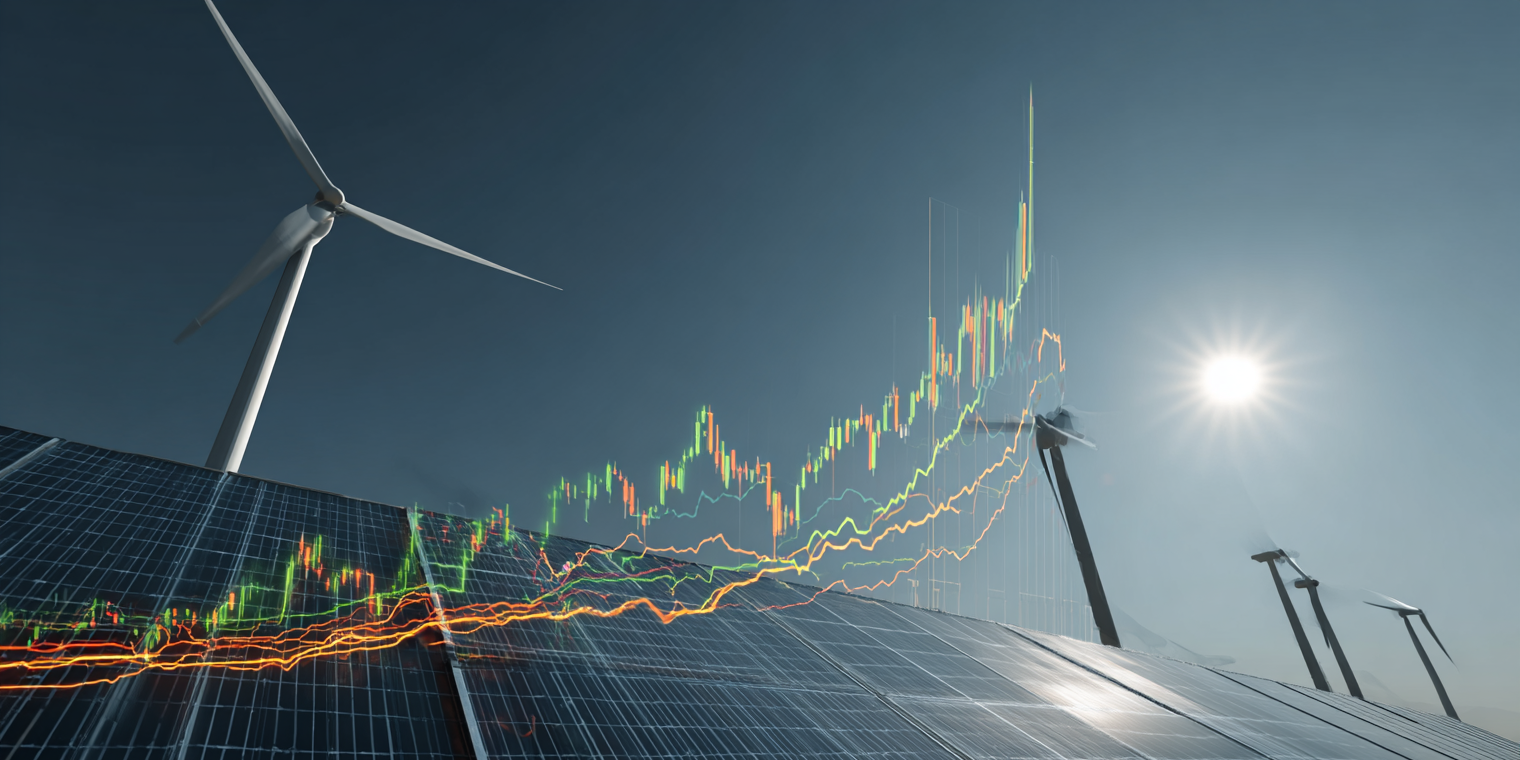
    Germany produced around 40 terawatt hours of solar power between January and June 2025, an increase of 30 per cent compared to the same period last year. France, Belgium, Denmark and Poland also recorded growth in photovoltaics. The expansion is having an impact, but the parallel lull in wind power weighed on the overall balance. At 60.3 TWh, wind power generation was around 18% down on the previous year. As a result, the share of renewable energies in net public electricity generation in Germany fell slightly to 60.9% (2024: 65.1%).

    Europe-wide trend with regional differences
    Within the EU, combined electricity generation from wind and solar fell slightly to 344.4 TWh in the first half of 2025, compared to 358.1 TWh in the previous year. The figures from Fraunhofer ISE show that while solar expansion is bearing fruit in many countries, meteorological fluctuations such as wind lulls are having a greater impact.

    Electricity trading adapts to
    Germany imported 7.7 TWh of electricity in the first half of the year, primarily from Scandinavia, where wind and hydropower continue to offer favourable prices. These imports were more attractively priced than domestic electricity from fossil-fuelled power plants. Exports went to Austria, the Czech Republic and Poland, among others.

    Electricity prices rise slightly – customer prices stable
    After falling in recent years, the average exchange electricity price rose again to €86.64/MWh in the first half of 2025. The highest prices were recorded in January and February, when there was little wind. At an average of 27 cents per kilowatt hour in June, electricity prices for new customers were back at the 2021 level.

    CO2 costs and gas prices on the rise again
    In parallel with the electricity market, CO₂ certificate prices rose by 11 per cent compared to the previous year, and natural gas was also more expensive than in the first half of 2024. These developments illustrate how sensitively the energy market reacts to fluctuations in supply and political conditions and how important a sustainable, resilient energy infrastructure is.

  • Challenges and opportunities in Europe’s battery industry

    Challenges and opportunities in Europe’s battery industry

    Global demand for batteries is expected to triple by 2030 and reach between 4.0 and 4.6 terawatt hours. It could double again by 2040. The market is currently dominated by technologically leading companies from Asia, particularly China. Significant overcapacities there are leading to falling prices globally, which is putting additional pressure on European manufacturers with higher production costs and uncertainties in the ramp-up of electromobility.

    European strengths
    Despite these challenges, Europe has the potential to play a significant role in battery production. Competitive advantages lie in innovative approaches, high-quality production technologies and a focus on the ecological footprint of batteries. In order to catch up with the Asian market leaders, Western manufacturers must establish cost-efficient mass production, conduct intensive research and enter into close co-operation, including with Asian partners.

    Market volatility and future scenarios
    Volatility in the battery cell market increased significantly in 2024. The main reasons for this are the lower-than-expected sales figures for electric vehicles and regulatory uncertainties in the USA and the European Union. Experts have therefore developed three scenarios for future demand.

    Positive scenario: Rapid progress in electrification leads to demand of 4.6 TWh by 2030 and 8.8 TWh by 2040.

    Base scenario: Despite temporary declines in electric car sales, emissions targets are achieved, leading to demand of 4.3 TWh in 2030 and 8.6 TWh in 2040.

    Negative scenario: Significant delays, for example due to a postponement of the ban on combustion engines in the EU, result in demand of 4.0 TWh in 2030 and 8.1 TWh in 2040.

    These forecasts emphasise the uncertainties and the need for flexible planning for European manufacturers.

    Strategies for European manufacturers
    In order to be able to compete globally, European companies should pursue the following approaches.

    Focus on sustainability: Reduce CO₂ emissions in battery cell production to 30 to 40 kilograms per kilowatt hour by optimising raw material procurement and innovative production processes such as dry coating or laser drying.

    Early integration of innovations: Focusing production plans on new, cost-efficient battery types for small and mid-range electric vehicles in order to enter mass production more quickly and benefit from increasing volumes.

    Strengthen cooperation: Close cooperation with other European manufacturers and partnerships with leading Asian companies that are ahead in research, development and industrialisation in order to benefit from their expertise.

    By implementing these strategies, European battery manufacturers can increase their competitiveness and play a significant role in the growing global battery market.

  • Europe needs more capital for start-ups

    Europe needs more capital for start-ups

    Europe’s economic strength depends to a large extent on technological innovation. However, access to capital remains a challenge for many start-ups in the growth phase. The new study “Mapping investors for European innovators”, published by the EPO’s Patent and Technology Observatory, shows that private and public investors play a crucial role in promoting new technologies. Compared to the USA, however, there is a lack of capital in Europe for later financing phases, which hinders the growth of innovative companies.

    Technology Investor Score as a guide
    To make it easier for technology-oriented companies to find investors, the EPO is introducing the Technology Investor Score. This new indicator shows the proportion of companies with patent applications in an investor’s portfolio. The TIS helps start-ups to identify suitable partners and promotes targeted investment in technological innovations.

    The study analysed over 6100 investors in Europe and 8000 investors in the USA and shows that 88% of European investors have companies with patents in their portfolio. However, only 8% of these investors focus primarily on start-ups with patents. A clear sign of restrained capital flows into innovative growth companies.

    Europe needs to invest in scaling
    A key problem in the European innovation ecosystem is insufficient funding in the late stages of development. While public investors such as the European Innovation Council, the European Investment Bank or national innovation agencies strongly support early-stage financing, there is a lack of private investors for scalable start-ups in Europe.

    The analysis shows that 62% of the 100 largest European private investors focus on early-stage financing, while only 22% invest in later stages. In comparison, 98 of the top 100 investors in the US are private investors, of which more than half invest specifically in scaling start-ups. This funding gap in Europe means that promising technology companies are moving abroad to find better conditions for growth.

    Targeted solutions for more access to capital
    To overcome these challenges, the EPO has added a new filter function to its Deep Tech Finder. The free online tool enables start-ups to conduct a targeted search for investors based on criteria such as financing phase, location and technology focus. This enables technology-driven companies to efficiently find investors who specialise in their specific needs.

    In addition, the Observatory for Patents and Technology offers a new information platform that provides detailed insights into financing strategies, investor profiles and the use of patents to raise capital. The aim is to support start-ups and SMEs so that they can realise their full innovation potential.

    Strengthening Europe’s innovative power
    The results of the study underline the need to optimise financing structures in Europe. Public funding alone is not enough to ensure the transition from idea to market maturity. More private capital is needed for later growth phases in order to keep innovative companies in Europe and remain competitive in the long term.

  • Strengthening Europe’s innovation financing

    Strengthening Europe’s innovation financing

    Technology start-ups are crucial for the progress of disruptive innovations. However, financial hurdles are hampering their growth, as a new study by the EPO makes clear. A comparison with the USA shows that there is a lack of private capital in Europe, particularly in the later financing phases. This forces many innovative companies to look outside Europe for investors.

    A new evaluation system
    With the TIS, the EPO has developed a precise indicator to evaluate the specialisation of investors in patented technologies. The TIS is based on over 1000 individual values and indicates the proportion of patent-active companies in an investor’s portfolio. This enables start-ups to search specifically for investors who are particularly innovation-friendly.

    Public investors as a central pillar
    The study shows that public institutions play a key role in promoting innovation. Programmes such as the European Innovation Council, national funding agencies such as Innosuisse or Bpifrance and the European Investment Bank offer essential support in the early financing phases. However, there is a lack of seamless follow-up financing from private investors, which makes it difficult to scale up innovative technologies.

    A comparison of European and US financing models
    While 62% of private investors in Europe focus on early-stage financing, the proportion is significantly higher among the 100 largest US investors with a later-stage financing focus. 98 of the top 100 investors in the US are private, over half of whom specialise in growth financing. These differences illustrate the gap in the European capital structure.

    New digital tools for finding investors
    The EPO is expanding its digital tools to make it easier for start-ups to access capital. A filter has been added to the Deep Tech Finder that allows investors to be found specifically according to financing phase, location and technology field. This enables start-ups to efficiently identify suitable investors and improve their financing opportunities.

    Paths to a stronger innovation ecosystem
    The study emphasises the need for action to improve the networking of public and private innovation financing in Europe. With new digital tools such as the TIS and the Deep Tech Finder, the EPO is providing decisive impetus to close the financing gap and keep start-ups in the European market in the long term.

  • Transformation in focus EXPO REAL 2024

    Transformation in focus EXPO REAL 2024

    Once again this year, EXPO REAL conducted a survey among its participants. Of the 516 exhibitors and visitors surveyed, 91 percent consider digitalisation to be a very important or important topic, followed by interest rate policy and energy solutions for neighbourhoods. Stefan Rummel, Managing Director of Messe München, emphasises: “EXPO REAL 2024 is not only dedicated to the important topics of the future in the conference programme, but also in the new ‘Transform & Beyond’ exhibition area.”

    Changing types of use and investor interests
    The survey also shows that new types of use are gaining in importance. For 70 per cent of respondents, the residential sector is in first place, followed by care properties and data centres, which have become much more relevant. Interest from future-oriented investors such as pension funds and family offices also remains high.

    Focus on affordable housing
    Another key issue is the creation of affordable housing. 95 per cent of respondents see building in existing buildings as a decisive factor, closely followed by the cost of land and serial construction. These topics will also take centre stage at this year’s EXPO REAL, with a special exhibition and practical examples.

    Europe remains attractive
    Globally, Europe remains a key market for property investment, with 81 per cent of votes. Western Europe and the D-A-CH region are seen as particularly important future markets. The USA and the Asia-Pacific region also continue to offer potential.

    The survey for EXPO REAL 2024 makes it clear that the transformation of the real estate portfolio and digitalisation are key factors for the future of the industry. With diverse discussions and new exhibition formats, EXPO REAL from 7-9 October will address the pressing challenges and offer space for exchange and solutions.

  • Marktexpansion in Europa: Unternehmen stärkt Position durch Akquisitionen

    Marktexpansion in Europa: Unternehmen stärkt Position durch Akquisitionen

    Der Gebäudezulieferer Arbonia will laut einer Mitteilung die europäische Wettbewerbslandschaft im Bereich Innen- und Spezialtüren konsolidieren. Dazu hat das Unternehmen mit Sitz in Arbon sowohl die spanische Dimoldura, Marktführer für Innentüren in Südwesteuropa, sowie das tschechische Unternehmen Lignis für Spezialtüren akquiriert. Mit den Übernahmen erweitere Arbonia seine Marktpräsenz nach Südwest- und Osteuropa und komme dem eigenen Anspruch der Marktführerschaft in Europa einen grossen Schritt näher, heisst es weiter.

    «Durch die Diversifikation unserer Märkte Richtung Ost- und Südwesteuropa machen wir mit Dimoldura und Lignis einen grossen Schritt in der Weiterentwicklung und Umsetzung der Strategie von Arbonia Doors, von einem primär zentraleuropäischen, hin zu einem marktführenden europäischen Vollsortimenter», wird Claudius Moor zitiert, CEO der Division Türen bei Arbonia.

    Dimoldura in Quintanar de la Orden in der Provinz Toledo erwirtschaftete laut der Firmenmitteilung 2023 einen Umsatz von rund 120 Millionen Euro. Das organische Umsatzwachstum in den vergangenen drei Jahren betrug über 13 Prozent pro Jahr. Die Gruppe hat Produktionswerke in Spanien, Portugal und Frankreich. Das tschechische Unternehmen Lignis in Koritschan (Koryčany) ist Spezialist für Funktionstüren. Wie Dimoldura verfügt auch Lignis über eine kosteneffiziente Produktion. Lignis erwirtschaftete 2023 einen Umsatz von rund 14 Millionen Euro. Das organische Umsatzwachstum in den vergangenen drei Jahren betrug über 25 Prozent pro Jahr.

    Arbonia übernimmt alle Aktivitäten von Dimoldura und Lignis inklusive der rund 600 Mitarbeitenden. Die beiden Akquisitionen werden hauptsächlich durch einen Überbrückungskredit in Höhe von 100 Millionen Euro sowie durch vorhandene Kreditlinien finanziert.

  • Council of Europe and Switzerland set standards for AI

    Council of Europe and Switzerland set standards for AI

    The new Convention on Artificial Intelligence was officially adopted at the 133rd session of the Committee of Ministers of the Council of Europe, which took place in Biel/Bienne. Swiss Federal Councillor Ignazio Cassis, Head of the Federal Department of Foreign Affairs, was present at this historic moment. Switzerland, known for its precise and prudent approach in international negotiations, played a decisive role in the one and a half years of intensive discussions and development work.

    The agreement not only emphasises the importance of AI in our future society, but also establishes a solid, legally binding framework to ensure that AI systems are developed according to the highest ethical standards. The core principles include transparency, robustness, non-discrimination and the protection of privacy. These measures are crucial to strengthening public trust in the new technology while safeguarding the rights of every individual.

    Promoting international cooperation
    The timing of the adoption coincides with the 75th anniversary of the Council of Europe, which further emphasises the importance of this convention. From September 2024, the document will be submitted to all member states for signature. Once ratified by Switzerland, which requires its transposition into national law, it will serve as a key component of international AI governance.

    In practice, the Convention will serve as a guide that promotes a harmonised approach to the responsible development and use of AI systems not only in Europe, but also worldwide. By creating this framework, the Council of Europe is making a significant contribution to ensuring that AI is used as a force for good, strengthening and advancing the foundations of our democratic societies.

  • Neustark expands into the EU

    Neustark expands into the EU

    Neustark has opened a commercial plant for the permanent storage of CO2 in demolition concrete together with the construction and recycling company Heim. In the plant, more than 1000 tonnes of biogenic CO2 can be removed from the atmosphere and bound annually, informs the Bern-based ClimateTech company in a statement. The CO2 mineralised in demolition concrete comes mainly from MVV’s biowaste fermentation plant in Dresden-Klotzsche.

    “According to the Intergovernmental Panel on Climate Change, negative emissions are indispensable in order to achieve our net zero targets,” Johannes Tiefenthaler, founder and co-CEO of neustark, is quoted as saying in the press release. The young Bernese company has developed a method for this, in which demolition concrete is transformed into a corresponding sink for CO2 emissions. “New also in Germany, which is a big step for neustark, but above all for the entire CO2 removal market,” Tiefenthaler says.

    In neustark’s technology, CO2 is converted into limestone, which is bound to the pores and surface of the concrete granulate. The granulate carbonated in this way can then be used in road construction or for the production of recycled concrete. In the twelve large-scale plants currently operated by neustark in Switzerland and Germany, around 5000 tonnes of CO2 are bound each year.

    Neustark has set itself the goal of expanding its annual capacity to 1 million tonnes of CO2 by 2030. To this end, 15 additional plants are planned in the DACH region and in France. Another major step is the adoption of the technology in Holcim‘s recycling plants.

  • Holcim acquires German company Cooper Standard

    Holcim acquires German company Cooper Standard

    Holcim has completed the acquisition of Cooper Standard Technical Rubber GmbH in Mannheim, Germany, according to its media release. Its highly durable technical rubber products are used for roofing systems. The company reportedly has an innovative research and development department, a state-of-the-art production facility and an experienced team of 130 employees.

    This acquisition is expected to drive further growth of Holcim’s roofing business across Europe. “By expanding our range of roofing systems, we can play a greater role in providing innovative and sustainable solutions for energy-efficient buildings and contribute to the European Union’s Green Deal,” Jamie Gentoso, Global Head, Solutions & Products, is quoted as saying.

    Holcim sees the German firm’s “innovation-driven approach” as an “excellent complement” to its existing umbrella business. With its strategic location in the Rhine-Neckar region, it complements other recent roofing and insulation acquisitions, he said.

    The business will be expanded under the new name Holcim Technical Solutions & Products GmbH. As part of its “Strategy 2025 – Accelerating Green Growth”, Holcim aims to expand the Solutions & Products business to 30 percent of Group net sales by 2025 “and move into the most attractive segments of construction – from roofing systems to insulation and renovation”.

  • 40 years on the grid – Europe's first photovoltaic system in Switzerland

    40 years on the grid – Europe's first photovoltaic system in Switzerland

    Ticino Solare was installed on the roof of a technical college building near Lugano. On May 13, 1982, the south-facing facility supplied power to the grid. The installed power: 10 kWp. That was unusual at the time. Later the panels were transferred to another building.

    The condition, quality, color and performance of the solar cells were regularly checked and measured. An investigation after 35 years of operation came to the conclusion that the cells are showing signs of wear – keywords are corrosion, burned areas (hot spots), cracks in the cells or defective connection cables. But: The majority of the modules still worked well and still delivered at least 80 percent of the power overall. Manufacturers of solar panels usually guarantee a service life of 25 to 30 years.

    Energeiaplus asked Mauro Caccivio what makes TISO-10 special. Caccivio heads the photovoltaics laboratory at the Ticino University of Applied Sciences SUPSI. "It's absolutely amazing. Looking at the black and white photos from back then and considering the technological advances that have been made since then, you can understand how visionary the project was and how courageous the team behind it was. TISO was important for the subsequent massive spread of solar energy: right from the start of its industrial phase, photovoltaic technology was able to return the energy required for the production of solar modules to the power grid many times over. This is crucial to minimize the impact on the environment and nature, and this is even more true today given the tremendous evolution we are witnessing,

  • Tangible assets become indispensable

    Tangible assets become indispensable

    Many are still talking about whether she’s coming – but she’s already here. The turnaround in interest rates has also reached Switzerland. The word turning sounds a bit bigger than what actually happened. It is simply a matter of a change of sign: For the first time in many years, the yields on medium- and long-term Swiss franc bonds are again nominally in positive territory. The same trend can be observed in the euro area and spreads in the peripheral countries are also widening.

    Is the real estate boom coming to an end?
    The reason for the nervousness on the interest rate markets is quickly found. Inflation is rising on both sides of the Atlantic – and now so fast that the US Federal Reserve is now clearly tightening the reins. That’s why everyone is now staring at the European Central Bank (ECB): Will it follow the USA and thus also burden the local economy with higher capital costs? And what would that mean for the Swiss National Bank (SNB)? Are we threatened with an end to the good economic environment and the long-standing real estate and material asset boom?

    Neither nor. Because the situation in Europe is fundamentally different than in the USA. First of all, real interest rates and, in some cases, nominal interest rates have been negative in the euro area and in Switzerland for years. This has never happened in the USA. Negative interest rates, such as those demanded by the ECB and the SNB for deposits for many years, are also unknown in the USA. Just like the negative interest rates for larger sight deposits that are now common here from commercial banks. Second, growth in Europe is structurally weaker than in the US. The American gross domestic product grew by 5.7% last year and even increased by 6.9% in the fourth quarter. This even puts inflation into perspective, which at 7.5% recently reached its highest level in 40 years. Employment in the USA has risen sharply and unemployment is falling. And at the same time, after two years of the pandemic, US citizens are sitting on a lot of money. All of this enables the Fed to fight inflation vigorously.

    Slow rate hikes
    The ECB, on the other hand, is stuck at low interest rates. Even if it did so to curb inflation, there’s no way it can raise rates as quickly and decisively as the Fed. Because the large amount of cheap money that they pumped into the market over the past ten years has increased the debt burden of the EU countries so massively that the central bank not only chokes off the upswing with a rise in interest rates, but also gives their own member states the air to breathe would take. Even the triple-A nation Germany is now stuck in the interest rate trap.

    As a result, the hands of the SNB are largely tied. On the one hand, the franc is stronger against the euro than it has been since January 2015. On the other hand, inflation in Switzerland is currently contained. The economic research center Kof expects consumer prices to rise by 2.0% in 2022 and by 1.3% in 2023. Rising energy costs are having less of an impact on the Swiss economy than the economic areas of the USA and the euro zone, and the strong currency generally has a price-inhibiting effect. If the SNB does not want to take the risk of an even stronger currency, it will have to wait for the ECB’s first interest rate hikes before it can move its key interest rates closer to zero.

    In other words, the monetary policy turnaround is here. But in Europe, including Switzerland, we do it in slow motion. The ECB will scale back its bond-buying programs; it doesn’t have the leeway for large rate hikes. The ECB must and will let inflation run its course for a while. The SNB is unlikely to be under pressure as inflation will remain moderate. It will proceed cautiously with regard to rate hikes.

    Tangible assets remain trumps
    In such an environment, investors are dependent on real assets, the only investments that offer them protection against inflation and prospects for returns. Investments in real estate and other tangible assets are therefore becoming indispensable, and because investment pressure is increasing, prices in the segment are also continuing to rise. What we are witnessing here is not bubble formation. Normal market forces are at work here. Anyone who fears a bubble in the USA can also relax: There, the yield levels for most asset classes – especially on the real estate markets – are structurally higher than in the euro area. This in turn acts as a buffer against rising capital costs. If the Fed is now planning to return to interest rate normality, this is no cause for concern, but rather proof of economic strength.

    We are a long way from that in Europe and in Switzerland. Instead, we must brace ourselves for a phase of persistently low real interest rates. In this environment, which penalizes holding cash and investments that pay nominal interest, equities, real estate and commodities continue to promise the greatest success. Against this background, securities of globally active real estate companies continue to show good prospects. In Switzerland, the real estate market has moved up sharply in terms of prices in recent years. From an economic perspective, however, there is little reason why prices should fall as long as negative real interest rates persist.

  • Edmond de Rothschild REIM finances repositioning of Hotel Londra

    Edmond de Rothschild REIM finances repositioning of Hotel Londra

    Hotel Londra, owned by Eurazeo and managed by Grape Hospitality, is located in the city center of Florence, close to the train station and the city’s main cultural attractions. The hotel was acquired by Eurazeo in December 2020. It is currently undergoing extensive refurbishment and conversion into a 160-room 4-star superior lifestyle hotel. The hotel is scheduled to reopen under the Intercontinental Group’s “Indigo” brand in Q4 2023.

    The financing has been structured in the form of senior secured bonds in which the two funds invest jointly. The closing was successfully completed on May 12, 2022.

    Eurazeo is a leading global investment firm with expertise in private equity, private debt, real estate and infrastructure. It manages a diversified portfolio with EUR 31 billion of assets under management, of which almost EUR 22 billion on behalf of third parties, invested in 450 companies.

    Grape Hospitality is a pan-European hotel platform founded in 2016 and majority-owned by Eurazeo. Grape Hospitality owns, operates and manages 106 franchised hotels with over 10,000 rooms and 70 restaurants in eight European countries.

    Ralf Kind, Head of Real Estate Debt at Edmond de Rothschild REIM, states: “This transaction is the first financing under our pan-European debt strategy in Italy and also the first in the hotel sector. Having already made four real estate debt investments in Germany, France and the Netherlands, this demonstrates our team’s ability to identify and execute attractive investment opportunities across Europe, backed by strong and experienced partners and sound financing structures . We will further intensify our international fundraising activities in order to expand the pan-European High Yield Debt Fund, which is to be finally closed by the end of 2022.”

    In March 2022, the Edmond de Rothschild REIM team completed another equity closing for its European High Yield I Real Estate Debt Fund, bringing the current equity commitments for the fund to over EUR 160 million. The final closing with a target of EUR 300 million is scheduled for December 2022.

    Edmond de Rothschild REIM was advised by Gianni & Origoni (Simone D’Avolio, Maria Rosa Piluso), Mayer Brown (Alban Dorin) and Nauta Dutilh (Nicolas Bonora).

  • Data centers conquer Switzerland – second highest density in Europe

    Data centers conquer Switzerland – second highest density in Europe

    In terms of population, Switzerland already has an extremely high density of data centers, after the Netherlands it is even the second highest in Europe. The 93 colocation data centers identified in a current study by CBRE Switzerland have an area of at least 154,000 m2, which corresponds to around 22 football fields.

    Zurich ranks sixth in Europe
    With 68 megawatts (MW), the Zurich region ranks sixth in Europe after London (711 MW), Frankfurt (510 MW), Amsterdam (365 MW), Paris (204 MW) and Dublin (94 MW), which is what the data center Capacities. An increase in output by a further 50 MW by 2022 is already assured, as illustrated by various construction projects in Glattbrugg (Interxion), Winterthur (Vantage Data Centers) or Dielsdorf (Green Datacenter). More data centers are already planned, and this will double capacity in a few years.
    The Swiss market currently consists of a mix of wholesale and retail providers. The major projects initiated in recent years are mostly so-called hyperscaler data centers, which are set up by Swiss or foreign operators and used by major international cloud providers such as Google, Oracle, Microsoft and Amazon.

    Good economic conditions and sovereign data protection requirements
    New customer wins from financial service providers, a growing fintech sector and the ongoing migration of international companies to the cloud have encouraged providers to set up cloud regions in Switzerland. Switzerland has its own data protection requirements, which promote sovereignty, but allow international companies to operate on a European basis without having to meet the requirements of the European Union (e.g. General Data Protection Regulation). Problems with the provision of land and electricity, long planning processes and compliance with sustainability criteria remain the most important challenges.

    Even if the market for data centers in Switzerland is considered a niche, private equity firms and increasingly infrastructure funds are discovering this growth market for themselves. The data center market requires specific know-how that is different from other types of property. While traditional real estate investors are not yet showing much interest in data centers, they should keep a close eye on this market over the long term as it offers rapidly growing potential for alternative real estate investments.

  • Crowdlitoken launches platform in Europe

    Crowdlitoken launches platform in Europe

    Crowdlitoken has launched its platform for real estate investments in Europe. According to a press release , the company is playing a global pioneering role. Investors can use the platform to purchase digital bonds on real estate and put together their own portfolio.

    Investors can, for example, participate in a commercial property in Switzerland, with which Crowdlitoken decided to work together in October. The property is located in Oensingen SO and has a market value of 9.15 million francs. Investors can use the platform to participate in real estate from CHF 100.

    "A great day. With this platform we are finally keeping our promise to investors, ”Domenic Kurt, CEO of Crowdlitoken, is quoted in the press release. "At this point, many thanks to the trust and patience of the investors from the very beginning."

    Crowdlitoken is currently preparing the second financing round. To this end, it has only recently brought new personalities to the Board of Directors .

  • Zurich moves into the bubble zone

    Zurich moves into the bubble zone

    UBS explains in a press release on the current edition of the UBS Global Real Estate Bubble Index that the euro area has the most overvalued housing markets of the 25 cities observed around the world. For Munich, Frankfurt, Toronto, Hong Kong, Paris, Amsterdam and Zurich, the analysts even identify a bubble risk. Overvaluations of residential real estate are attested in the cities of Vancouver, London, Tokyo, Los Angeles, Stockholm, Geneva, San Francisco, Tel Aviv, Sydney, Moscow and New York.

    This year, Zurich has risen to the bubble risk category for the first time, the analysts explain in the press release. You have also observed the strongest price increase of all Swiss economic regions for the metropolis. The supply on the housing market grew relatively quickly in the reporting period. If, according to the announcement, the market for owner-occupied properties has dried up, the majority of the newly built apartments will ultimately be rented out.

    The analysts put Geneva at a lower price level and a lower index value than Zurich. However, the city made up for its losses from 2013 to 2016 in the wake of the recent price hike. Despite the overvalued housing market, the city can benefit from its international orientation and its attraction to foreign nationals.

    Compared to last year's Bubble Index, prices in many European metropolises have risen by more than 5 percent, the press release explains. "At this point in time it is impossible to say to what extent higher unemployment and a bleak outlook for household incomes will affect house prices," said Mark Haefele, chief investment officer at UBS Global Wealth Management, quoted there. "It is clear, however, that the current acceleration is not sustainable in the short term."