Tag: Fachkräfte

  • Glarus – truly fabulous

    Glarus – truly fabulous

    The canton of Glarus is also progressive at other levels, for example in terms of digitalization. The MINTGL initiative promotes enthusiasm for the subjects of mathematics, IT, natural sciences and technology among children and young people. Coverage with UHB Internet via mobile communications or fiber optics has increased significantly and is being continuously expanded. And the economy benefits from subsidies for the digital transformation of its products and business models.

    Room for development
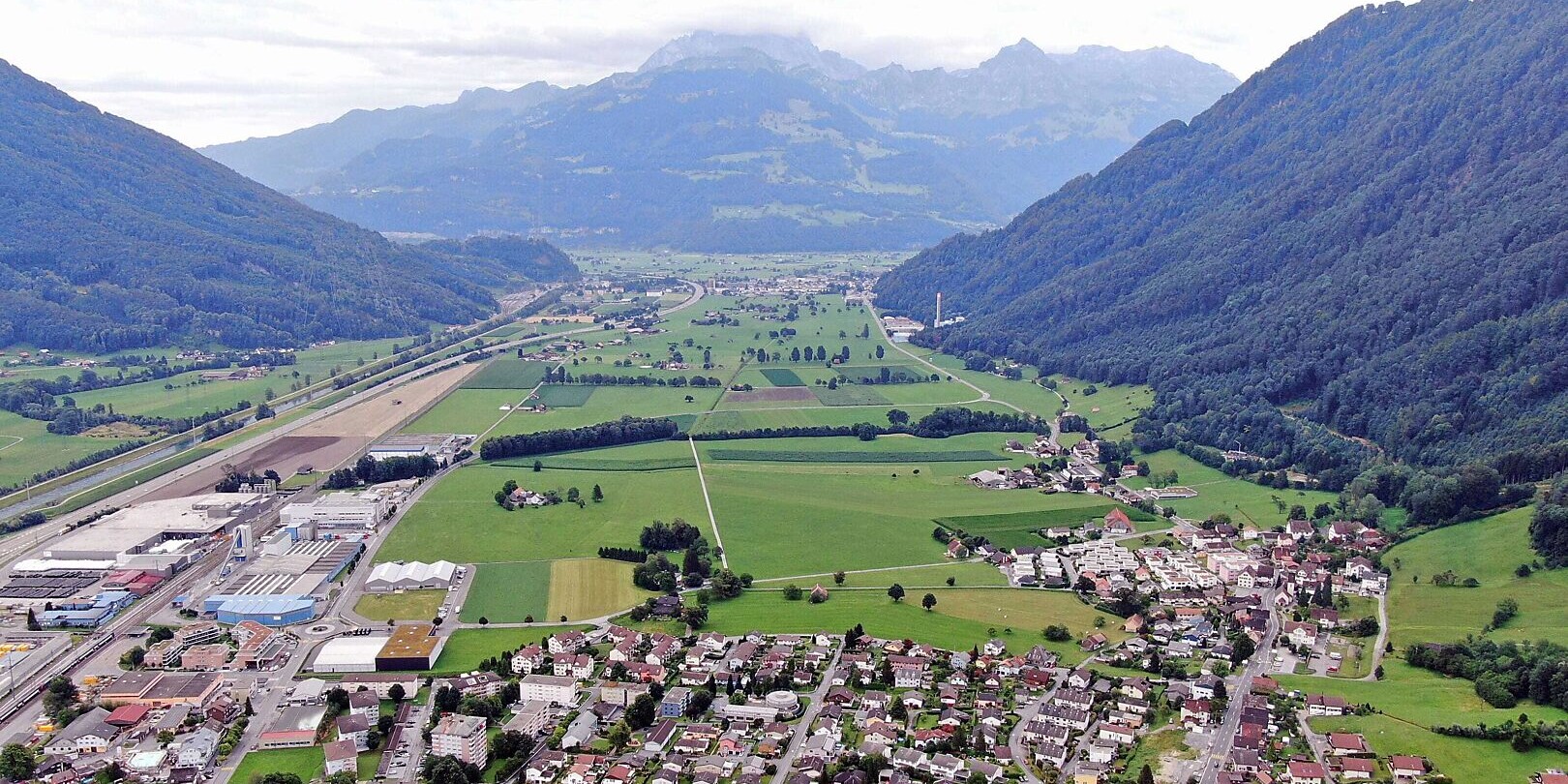
    Glarus has exceptionally large reserves of building land as a result of the municipal structural reform. Thanks to its geographical proximity to Zurich, St. Gallen, Graubünden and Liechtenstein, companies have access to the expertise of universities, dynamic economic areas and skilled workers.

    The implemented land use plans in Glarus and Glarus North enable the targeted development of key areas and an unbureaucratic response to the needs of the population and companies. The areas around the Glarus, Näfels and Ziegelbrücke railroad stations offer enormous development potential – in the immediate vicinity of the town center and with excellent transport links. There are 170,000 square meters of land reserves available in the employment zones. At the same time, over 2,000 new apartments are planned in the canton of Glarus – state-of-the-art living space for around 6,000 people. This corresponds to around 15 percent of the current population.

    The contact point for the economy supports investors in their search for suitable sites and land reserves. This is based on work zone management, which provides information on building maturity, development and possible natural hazards. In the case of strategically important sites, the canton can become active itself – either by investing directly in their development or by acting as a partner.

    Skilled workers for success
    If you want to attract companies, you need space – including space for skilled workers. This is exactly what Glarus offers. Here, people have the opportunity to live where they work: to enjoy lunch with the family, to experience nature after work – and all this with a low cost of living, a relaxed real estate market and in a safe, socially intact environment. Glarnerland thus combines the economic strength of the “Greater Zurich Area” with a quality of life close to nature.

    The canton of Glarus is also committed to education and training. With the Work 4.0 pilot project, it is specifically strengthening the employability of skilled workers by co-financing training and further education. This commitment is complemented by three cantonal vocational schools, two technical colleges in Ziegelbrücke and the proximity to the universities and colleges in Zurich, Rapperswil, St. Gallen and Chur. Together with offers in adult education, vocational and career counseling, people in Glarnerland have access to almost every training and further education path. The smartglarus.com platform offers a compact overview of educational opportunities, support programs and services – a digital showcase for anyone who wants to learn, work or develop in Glarus.

    Innovation for the future
    It is often said that innovation mainly originates at universities and colleges. This is only partly true. Start-ups need more than just good ideas: They are dependent on partners from industry and business who can drive product development forward with their experience and know-how. This is exactly what the Glarus economy offers. When it comes to growth, practical factors count: affordable space, qualified specialists and continued access to universities. The canton of Glarus combines all of this. And is therefore an ideal location for start-ups with ambitions.

    Innovation promotion is broadly based in the canton of Glarus – thanks in part to cooperation with strong partners such as InnoSuisse and the Innovation Network Eastern Switzerland (INOS). Start-ups and companies benefit from coaching, expertise and financial support for the development of their products and services. One example: the fast-growing drone manufacturer ANAVIA made a conscious decision to locate in Näfels – a clear sign of how innovation-friendly the Glarus region is.

    Circular economy in the food and packaging industry

    In Glarnerland, the circular economy is a way of life – from the development of energy-efficient machines and innovative packaging solutions to food production and recycling: the economic area combines industrial strength with ecological responsibility. The result is a regional ecosystem that not only thinks about sustainability, but also puts it into practice.

    It all started with Netstal Maschinen AG, which develops high-performance injection molding machines. These are used at Resilux Schweiz AG in Bilten – together with high-precision molds from Glaroform AG. Resilux uses them to produce preforms, i.e. PET preforms, as well as finished bottles. These in turn are filled at the mineral springs in Elm.

    After use, the cycle starts all over again: the empty bottles end up at the Resilux recycling plant, where they are processed back into high-quality recyclate – ready for the next round of production. This creates a regional ecosystem based on innovation, efficiency and resource conservation. The companies benefit from each other’s expertise and thus drive the circular economy forward.

    Rethinking plastics
    Kunststoff Schwanden AG is also part of this sustainable network: it develops and manufactures sophisticated plastic parts using multi-component injection molding – with a focus on recyclates and energy-efficient processes.

    Where ideas take shape in corrugated cardboard and paper runs in circles
    Müller Kartonagen AG supplies customized solutions. Its corrugated cardboard packaging made from renewable raw materials is manufactured regionally – efficiently, in a resource-saving manner and tailored to customer requirements, such as those of Läderach. The raw material comes from the Netstal paper mill, which produces around 50,000 tons of recycled paper every year – from waste paper, most of which comes from Switzerland, and is processed using closed material and water cycles.

    Packaging is just the beginning. In Glarus, the contents are also produced responsibly: In the food industry, regional ingredients meet modern processing – sustainably and efficiently.

    Traditionally, Glarner Schabziger stands for local food production. Today, the spectrum is broader. Foodstuffs from chocolate to salmon are taking the lead. The entire region benefits from the growing potential of the food industry.

    Chocolate art with global success
    Since the invention of the Truffes hollow ball in 1970, Läderach has expanded steadily – and is now present in Europe, Asia and North America. The new factory in Bilten makes it possible to control the entire value chain – from the cocoa bean to the end product.

    Also from Bilten, GUMA AG distributes the traditional Stalden cream – a Swiss dessert classic in four varieties with over 120 years of history.

    Mexican bite with Glarus roots
    MiAdelita has been producing fresh corn tortillas and potato chips since 1995 – and is now the largest supplier of its kind in Switzerland. Now in its second generation of management, the company consistently focuses on regionality: the corn comes from the Landolt mill in nearby Näfels. Together with the delicatessen supplier IMEX, a new production site with around 40 jobs is being built in Bilten.

    North Atlantic salmon from land-based farming
    Swiss Blue Salmon AG is planning the largest land-based fish farm in Switzerland in Mollis. With a market share of seven percent, it will make an important contribution to climate-friendly food supplies. The recirculation system will be supplied with water from Lake Walen and passively cooled – ideal conditions for sustainable salmon farming. The location in the “Biäsche” industrial area also offers first-class transport links to Zurich and Chur.

    High-flyer – the aviation industry in Glarus

    Flying has a long tradition in the canton of Glarus. in 1939, the first flight day attracted thousands of onlookers to watch the daredevils in their flying boxes. Today, aviation is one of the main areas of development in the canton of Glarus. With the zoning of additional building land, the Mollis airfield offers new space for aviation companies.

    The municipality of Glarus North is drawing up a master plan for the structural development of the site by summer 2025. Also in summer, athletes take to the skies at Mollis airfield – and land unerringly in the sawdust: 150,000 visitors are expected every day at the Swiss Wrestling and Alpine Festival (ESAF).

    Flying high – with a firm footing on Glarus soil
    Everything around the Mollis airfield revolves around precision and high-altitude flights. What the companies based here have in common: They use the synergies of a specialized cluster. First and foremost the Kopter Group. The helicopter manufacturer wants to establish itself internationally with the single-engine AW09. The location offers space for test flights, short assembly routes and a technology-friendly environment.

    Anavia is one of the youngest aviation companies in Glarus. The start-up develops unmanned helicopters – such as the HT-100, which flies for up to six hours, carries 60 kilograms and is ideal for border surveillance, infrastructure inspections or rescue missions. Founder and Co-CEO Jon Andri Jörg says: “Glarus is ideally suited to our needs. We have access to highly qualified specialists. And the proximity to Mollis airfield offers an ideal location for both production and testing.”

    Another start-up has made a conscious decision to locate in Glarus in 2025: Marenco Aviation is working on a new generation of lightweight helicopters with a focus on alternative propulsion systems.
    A proven player is Rega, which has been operating its own base in Mollis since 2010. The strategically favorable location allows for quick missions in the Alps. The expansion into a permanent station shows how central the location has become for air rescue.

    Heli-Linth AG has been operating here since 1972. It flies tourists over glaciers, supplies alpine huts, transports materials – and occasionally rescues cows from rough terrain. Comprehensive aircraft management is provided by the internationally active Linth Air Service AG, which has been anchored at the site for over 20 years. The Ecoflight flight school also takes off from here.

    Only Sauter, Bachmann AG remains on the ground, and with good reason: the Netstal-based specialist for gears and drive systems also supplies the aviation industry and benefits from direct contact with partners at the airfield, the technical expertise in the region and the industrial tradition of the Glarus region.

    Together, these companies focus on quality, proximity and a clear commitment to the Glarus region. They take off and yet remain grounded.

  • The future of location promotion in the canton of Zurich

    The future of location promotion in the canton of Zurich

    Together with Markus Müller, you have been co-heading the location promotion of the Canton of Zurich for over 15 months.
    What insights have you gained?
    Zurich stands out within Switzerland due to its economic size. This also means that we are not only heavily involved in cantonal issues, but are also active on the national and, in some cases, international stage. For example, we promote Switzerland as an AI location or share our findings on AI applications in the economy with international partners.

    At the same time, I find the close cooperation between business, science and administration as well as politics to be expedient when it comes to creating sustainably attractive framework conditions.

    Could you give us a brief overview of the current priorities of location promotion in the Canton of Zurich?
    The central focal points are:

    As just mentioned, the development of attractive, long-term location factors. Through close dialog with business and science, we identify trends at an early stage and provide targeted impetus for location development.

    Promoting innovation and strengthening our key sectors of finance, ICT, life science, food, clean and high-tech.

    Maintaining and strengthening the diversity of the industry structure. In this context, we also support companies that want to locate here – from the search for a location to obtaining permits.

    Our projects, programs and initiatives are based on these three pillars.

    What are the long-term visions of the cantonal location promotion department with regard to location development?
    The attractiveness of a business location depends on a number of different location factors. These range from target group-friendly regulations and digital government services to strong innovative power and the sustainable design of economic areas.we are pursuing the goal of being an attractive, leading and future-oriented innovation and business location with international appeal for companies and the population.

    Zurich is one of the most expensive places to live in the world. The high real estate prices and rents are also becoming an increasing burden for companies. What can location promotion do about this?
    We are committed at various levels not only to the attractiveness and prosperity of the economic area, but also to a high-quality and excellent quality of life. In this respect, the availability of living space also plays a role. One concrete application can be found, for example, in our Innovation Sandbox for artificial intelligence. In the current phase, we are supporting the use of AI in planning applications. We hope that the results will help us to find ways of reducing the building backlog and streamlining the building permit process.

    Housing subsidies are also located at official level. It promotes the provision of affordable rental apartments with attractive loans.

    The ageing population is affecting the real estate sector and the labor market. What significance does this fact have for the canton of Zurich and how can you respond to it?
    The topic of demographic shifts and the widening labor market gap has been on our minds for some time at various levels. Over the next few years, many experienced workers will retire – this will increase the competition for talent.

    On the one hand, we are working on various projects in the area of recruiting and retaining skilled workers and labor market participation. At the same time, we are currently developing new overarching approaches to demographics that will have a longer-term impact. One thing is clear: tackling the challenge of demography must be approached from a systemic perspective, meaning that many parties and stakeholders need to be brought to the table.

    How do you see the role of the canton in the Greater Zurich Area economic region?
    The Greater Zurich Area is one of the most innovative business locations in Europe – and the canton of Zurich plays a central role in this. As a leading innovation location, we create the framework conditions that companies need to develop successfully. Ultimately, the other cantons within the Greater Zurich Area also benefit from our strong position.

    As the economic engine of Switzerland, the Canton of Zurich is also the largest provider of funds for the Greater Zurich Area as a business location. At the same time, our Chief Executive Officer, Government Councillor Walker Späh, is President of the Board of Trustees of the Greater Zurich Area Business Location. The Canton of Zurich is also actively represented in the Greater Zurich Area economic region by the two cities of Winterthur and Zurich. This allows us to optimally represent our interests and coordinate the activities of the Greater Zurich Area as a business location with our own.

    How does the cooperation with other cantons within the Greater Zurich Area business location work?
    What joint projects are currently underway?
    Cooperation within the organization of the Greater Zurich Area business location focuses primarily on issues relating to relocation. We work very closely with other cantons in various other constellations and committees. For example, in the Zurich metropolitan area, but also on a smaller spatial level, such as in the Limmat Valley. However, not all cantons are always members of the Greater Zurich Area business location.

    Current cooperation projects include the 2nd phase of the Innovation Sandbox for Artificial Intelligence, which also includes the aforementioned building permit project, and the repositioning of the Limmatstadt regional location promotion program, in which we are thinking beyond the cantonal borders in functional areas and looking for solutions.

  • Optimism among Swiss estate agents for 2025

    Optimism among Swiss estate agents for 2025

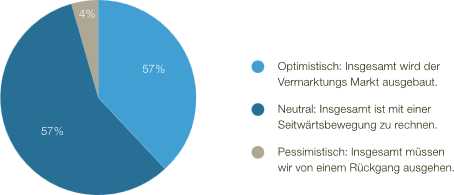
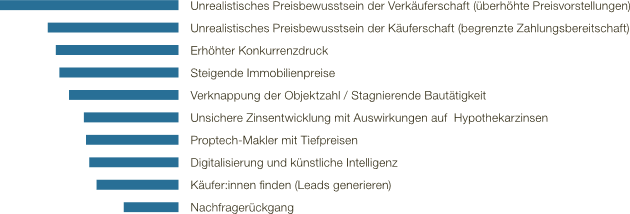
    The abrupt end to the low interest rate phase of recent years and stricter lending regulations have had a lasting effect on market dynamics. While buyers have become more cautious as a result of higher financing costs, many sellers are still holding on to their inflated asking prices. This discrepancy makes property marketing considerably more difficult and often leads to misunderstandings between the parties. SMK members see this as one of the biggest challenges for the coming year.

    Trust and expertise as the key to success
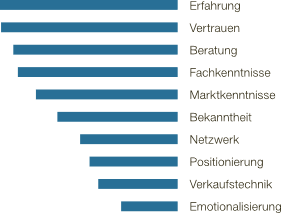
    Property marketing is and remains a “people business”. Successful estate agents rely on experience, trust and advice based on sound market knowledge. A strong awareness of quality and a high-profile positioning create the necessary trust among buyers and sellers. With their certified expertise, SMK members offer comprehensive, individually tailored advice and guarantee the best possible sales price.

    Focus on sustainability and shortage of skilled labour
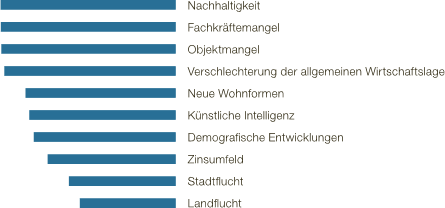
    In addition to the price issue, topics such as sustainability and ESG requirements are increasingly coming to the fore. The shortage of skilled labour is also an increasing challenge, as the demands on estate agents are constantly rising. Residential construction activity is also falling short of expectations, which is further exacerbating the supply deficit. Other important topics for 2025 include new forms of housing, the use of artificial intelligence and demographic trends.

    Further information can be found at www.maklerkammer.ch

  • ZHAW awards 77 Bachelor’s and 10 Master’s degrees

    ZHAW awards 77 Bachelor’s and 10 Master’s degrees

    On Friday, 30 August 2024, the graduates of the ZHAW Bachelor’s degree programme in Facility Management and the Master’s degree programme in Real Estate & Facility Management were presented with their diplomas at the Technopark Zurich. A total of 47 women and 40 men received their long-awaited diplomas, marking the end of an intensive and successful period of study.

    Prof Dr Urs Hilber, Director of the ZHAW Department of Life Sciences and Facility Management, gave the opening speech at the ceremony. He congratulated the graduates on their degrees and emphasised the importance of their future contributions in a rapidly changing world. Katrin Leuenberger, Head of the Real Estate Office of the Canton of Zurich and member of the Advisory Board of the Institute of Facility Management, gave the ceremonial address. She emphasised how essential well-trained specialists in the field of real estate and facility management are for overcoming major social challenges.

    Awards and special achievements
    Irene Arnold and Anja Fuchs-Barbana, head of the Bachelor’s degree programme, presented the 77 successful Bachelor’s graduates with their diplomas. Till Plüss, who was honoured as the best student in his year, was particularly outstanding. Together with Sara Lehmann, he also received the prize for the best thesis, which was presented by Rainer Artho, Managing Director of the Swiss Association for Facility Management and Maintenance. Both theses were awarded the top grade of 6.00.

    In the Master’s programme, Prof. Dr Isabelle Wrase and Zifei Wang-Speiser were able to award 10 Master’s diplomas to five women and five men. Particularly outstanding were Tania Kornsteiner and Severin Keller, who were both honoured for their excellent performance. Severin Keller also received the prize for the best master’s thesis for his master’s thesis entitled “Asset Returns and Liquidity: Empirical Insights from Publicly Traded Real Estate Assets”, presented by Nora Dainton, board member of the IFMA Switzerland Chapter.

    A look back at an eventful period of study
    Anja Balsiger and Oliver Horner for the Bachelor’s students and Elsa Jeanfavre for the Master’s graduates brought the graduation ceremony to a festive close with an entertaining look back at their time at university. They reviewed the highlights of their years of study and recalled the challenges and successes they had overcome together on their way to this important milestone.

    The graduates can now look forward to a promising future in an industry that demands well-trained specialists and managers and in which they will contribute their skills and knowledge for the benefit of society.

  • Career prospects in Swiss timber construction

    Career prospects in Swiss timber construction

    The importance of the timber construction industry
    The timber construction industry plays a key role in Switzerland, particularly in the area of sustainable construction and energy-efficient building refurbishment. Building with wood is an environmentally friendly and climate-neutral method that ensures minimal energy consumption both during the construction phase (grey energy) and during the subsequent operation of the building. The timber construction industry makes a significant contribution to shaping Switzerland’s future.

    Career prospects and further training options
    Once they have completed their basic training, trained carpenters have numerous options open to them: They can work as highly qualified specialists in the company, gain experience on the mill or abroad or continue their education to become a foreman, foreman, technician or engineer, all the way up to master craftsman. If the vocational baccalaureate has not already been completed during the basic training programme, it can be completed as a full-time course of study within a year of completing the basic training programme. This enables a seamless transition to a higher technical college or university of applied sciences without examinations. The career plan for timber construction in Switzerland offers the opportunity for lifelong learning, individual further training and specialisation as well as various advanced training courses. Training as an energy consultant, project manager for solar systems or craftsman in monument preservation are just a few examples. A career in timber construction thus offers the opportunity to develop and orientate yourself individually according to your own wishes and needs.

    Carpenter EFZ
    Carpenters at EFZ level mainly work with wood and are proficient in timber construction activities. They work as generalists in operations as well as in shell construction and finishing. They are familiar with the requirements of the building trade and work with other tradespeople involved in construction.

    WoodworkerEBA
    Your career start with good prospects. The profession of woodworker EBA (Federal Vocational Certificate) is an independent, two-year basic training programme in the wood industry. It covers a wide range of activities in the woodworking industry as well as in timber construction.

    Certified technician
    HF Holztechnik

    HF timber construction technicians plan timber constructions independently on the basis of project plans and manage their realisation. They take on management tasks within the company or manage a department. As a team leader on the construction site, they coordinate the work with the other tradespeople.

    Vocationalbaccalaureate and business administration/entrepreneurship degree programme
    The vocational baccalaureate and the business administration degree programme NDS are industry-independent training courses. While the vocational baccalaureate primarily deepens general knowledge, the business administration programme imparts knowledge for entrepreneurial activities in higher management positions.

    Master timber construction technician with a federal diploma
    Master timber construction technicians manage a timber construction company or a larger department. They have overall responsibility for the technical, economic and personnel management, organisation and further development of the company. They liaise closely with customers, suppliers and architects.

    Dipl. Techniker/in
    HF Baufführung Holzbau

    Graduates work as a designer or operations manager in a timber company. Thanks to their extensive skills, they are “generalists for modern timber construction”: from preparing quotations, planning and realisation to execution control and invoicing.

    Master of Science in Wood Technology
    This degree programme, which is unique in Europe, combines practical relevance with research and development. The programme enables students to work in timber construction and in all processing stages of the timber industry from a technical, business and ecological perspective.

    Bachelor of Science in Wood Technology
    The training concept covers a broad spectrum – from raw materials and semi-finished products to supporting structures, furniture and energy-efficient buildings. The focus is on intelligent and innovative solutions for modern timber construction as well as sustainable products and processes using wood.

  • FE Agentur AG takes over management of Work Life Aargau

    FE Agentur AG takes over management of Work Life Aargau

    According to a press release, the canton of Aargau wants to give Work Life Aargau(WLA) a new impetus with a service agreement between the canton and the WLA association and the handover of management to an external company. On 1 July, the cantonal location promotion agency will hand over management to FE Agentur AG in Baden.

    The canton of Aargau launched Work Life Aargau in 2019 to support companies in attracting skilled labour and to position Aargau as an attractive place to work beyond the canton’s borders, according to the press release. Around 60 Aargau companies are members of the association. WLA is also supported by the Aargau Chamber of Industry and Commerce(AIHK) and the Aargau Trade Association(AGV). During the development and establishment of WLA, the cantonal location promotion organisation was in charge and managed the office.

    “Work Life Aargau is an important measure by the canton to support companies in attracting skilled labour,” says Dieter Egli, State Governor and Head of the Department of Economic Affairs and Home Affairs. The commitment of the business community and of the AIHK and AGV confirms the need for and benefits of WLA for the business location, Egli continued. The canton will continue to co-operate with the association within the framework of a service agreement. Over a period of 4.5 years, WLA will be supported by the canton with almost CHF 1 million. The aim is for Work Life Aargau to be privately financed from 2029.

    WLA’s offering has developed steadily since 2019. In addition to the online platform, the offering has been supplemented with workshops to support member companies at various levels in the marketing of skilled labour.

  • SVIT five Real Estate Symposium 2024: Innovative ways of recruiting skilled labour

    SVIT five Real Estate Symposium 2024: Innovative ways of recruiting skilled labour

    The shortage of skilled workers is one of the biggest challenges in the property industry. To counteract this, the SVIT five Real Estate Symposium 2024 will bring together leading experts to discuss new approaches to recruitment. Jan-Egbert Sturm, renowned professor of applied economic research, will share his predictions for the future of the industry. Markus Steckeisen, experienced entrepreneur and head of studies at the HWZ, and Yannick Blättler, entrepreneur and expert on Generation Z, will contribute their perspectives. The symposium serves as an essential information and networking platform for the property sector to develop and implement innovative solutions to the shortage of skilled workers. With this focus, the annual Real Estate Symposium is establishing itself as a must for professionals in the property industry.

  • Urban Manufacturing!

    Urban Manufacturing!

    More than ten years ago, we prepared an internal study on user-centred location development for an economic region. The core focus was on high-tech companies whose needs were to be taken into account in settlement processes. By high-tech companies we did not just mean the “Googles” and “Facebooks” of today’s economy, but companies in general that operate with the most modern means, i.e. also manufacturing industry. Larger companies looking for a new location were interested in having a university close to them geographically. This was in order to ensure an exchange with science and teaching and to be able to attract graduates with attractive offers in relative proximity. Google leads the way: in 2004, the American company started in Zurich with two employees. Today, the high-tech company offers around 5,000 jobs in Zurich. This is not only because Zurich is a beautiful city, but above all because the renowned “Eidgenössische Technische Hochschule” (ETH) is at home in Zurich. The study also showed that employees of such companies look for a wide range of local leisure and cultural activities, i.e. short distances. Even if land prices are higher in the city than in the countryside: many companies attach importance to “exciting” buildings for their corporate base (see exemplary article picture). The city often offers interesting brownfield sites where industrial companies used to be located. As a PR effect and from the perspective of good employer branding, this should not be underestimated.

    So why should urban locations consider creating more offers for manufacturing industry again in the future? The answer: underused areas are functionally mixed and thus upgraded. The municipality contributes to shorter distances, relieves the sometimes overburdened local transport system, the commuter volume is reduced, which leads to an increased sustainability of a location. By creating jobs in the municipality, purchasing power is increased, which in turn increases business tax revenues. Urban manufacturing is a megatrend that distinguishes between “urban industry”, “urban manufactures” (handicrafts) and “urban agriculture” (urban farming). A future topic that is very interesting for every city and urban region and should be kept in mind as a topic in location development. Why not create a picture of the future that shows what a sustainable location could look like in the future with a healthy mix of manufacturing, leisure and housing?


    Swiss Association for Location Management SVSM – the umbrella organisation for location and business development
    The SVSM is a practice-oriented and independent contact point for questions on the topic of location management and business development. As an umbrella association, it has around 80 members from the fields of location management, regional marketing, business development and real estate. The association promotes the interdisciplinary exchange of experience and networking and is committed to professionalism in location management. With the event series “SVSM Dialog”, the SVSM organises a semi-annual hybrid specialist conference with a changing focus on location management or economic development. Since 2007, the organisation has presented the SVSM Awards for innovative projects in location and business development and elected a deserving personality as location manager of the year.

    www.svsm-standortmanagement.ch
    info@svsm-standortmanagement.ch

  • Zug is the most attractive canton for companies

    Zug is the most attractive canton for companies

    The major bank Credit Suisse has published its location quality indicator for this year. This measures the attractiveness of the cantons from the point of view of companies. The canton of Zug moved up to first place this year and was able to overtake the canton of Basel-Stadt. Credit Suisse explains this with the reduction in corporate income taxes that came into effect at the beginning of 2020. The effective maximum corporate income tax rate in Zug is now 11.91 percent – in the previous year it was 14.35 percent.

    Behind Zug and Basel-Stadt, the canton of Zurich follows in the ranking, followed by the canton of Geneva, which has moved up ten places. The fifth place is occupied by the canton of Aargau, the sixth by the canton of Schwyz.

    In addition to the tax policy of the cantons, Credit Suisse also includes the availability of highly qualified and skilled workers in its analysis. According to the economists of the big bank, the level of education of the Swiss workforce has risen sharply in recent decades. However, there is a gap between urban and rural areas when it comes to the availability of highly qualified workers. In urban regions as well as in the closer agglomeration areas, over 40 percent of potential employees have a higher education. In the city of Zurich this proportion is even 57 percent.

    Credit Suisse not only scrutinized the cantons, but also economic regions. This is because she is of the opinion that consideration at the canton level falls short of the mark, especially in larger, heterogeneous cantons. According to the results, metropolitan areas such as Zurich, Zug, Basel, Baden and Geneva and their agglomerations are among the most attractive regions for companies.