Tag: Fernwärme

  • District heating from wastewater to decarbonise the municipality

    District heating from wastewater to decarbonise the municipality

    The energy company CKW, part of the Axpo Group, has been awarded the contract for the prequalification of the planned district heating network in Richterswil. With the district heating network, which is central to the municipality’s energy and climate concept, the energy company wants to launch a long-term partnership for decarbonisation, according to a press release.

    The energy network will mainly be operated using waste heat from the Richterswil wastewater treatment plant (WWTP). Additional heat production for peak load and security coverage will be evaluated in the future. The aim is for commercial enterprises and residents to benefit from an economically attractive offer. “We are delighted to have been awarded the contract and are convinced that we can plan an economical and sustainable heat supply in Richterswil,” Angela Krainer, Head of Energy at CKW, is quoted as saying in the press release.

    In future, CKW will be responsible for the entire project planning of the heat network. The collaboration between the municipality and the company is to be concretised in the summer and the next project steps are to be taken in autumn 2025.

  • Schlieren remains an Energy City Gold

    Schlieren remains an Energy City Gold

    Schlieren has been recognised as a Gold Energy City for the second time since 2021, as detailed in a press release from the city. The award is valid for four years. Schlieren has been recognised as an Energy City since 2008. “Being awarded the Energy City Gold label once again is a great honour and shows us that we are on the right path as a city,” said Beat Kilchenmann, City Councillor and Head of the Works, Utilities and Facilities Department, in the press release.

    The Energy City Gold label serves to recognise particularly ambitious energy and climate protection goals. The city cites the specific measures that were defined in various fields of action as part of the net-zero strategy adopted in 2023 with the target year 2040. These measures served as a programme of activities for recertification as an Energy City Gold. They include the expansion of the district heating network, the use of renewable energy in municipal properties and strengthening the circular economy.

  • Climate-friendly heat supply for Zofingen and Oftringen

    Climate-friendly heat supply for Zofingen and Oftringen

    StWZ Energie AG and Primeo Energie want to jointly create a sustainable district heating supply in the lower Wiggertal valley. To this end, the energy service providers have founded the joint company Fernwärme Unteres Wiggertal AG (FUWI) as of 19 September 2025. The aim is to combine “infrastructure, customer proximity and energy expertise” in order to further develop the heat supply in a climate-friendly way.

    The new network is to be operated using waste heat from the erzo-KVA waste incineration plant and from existing decentralised StWZ energy centres. Existing heating networks from StWZ in Zofingen and Primeo Energie in Oftringen are to be integrated.

    The first households are to be supplied with low-CO2 heat energy from the new network from summer 2027. Two phases are planned for the expansion. Phase one is to begin in 2026 from the erzo-KVA waste incineration plant and run towards Oftringen Süd and Zofingen. The second phase will follow in 2030 at the earliest and will depend on the planned new construction of the waste incineration plant. This will require the consent of the people of Oftringen for the zoning of a required piece of land. If both construction phases go into operation, 10,000 households could be supplied with heat and 30,000 tonnes of CO2 could be saved.

    Michael Schneider, Managing Director of Primeo Wärme AG, sees the energy revolution as a heating revolution. This step lays a “foundation stone for a long-term sustainable heat supply in the lower Wiggertal”. “By combining regional energy sources with modern technology, we are reducing CO2 emissions in a targeted manner and expanding the supply of reliable, decarbonised heat,” Paul Marbach, Managing Director of StWZ Energie AG, is quoted as saying.

  • Helicopter deployment for climate-friendly energy supply

    Helicopter deployment for climate-friendly energy supply

    The Clinique Valmont in Montreux has been equipped with a climate-friendly heat supply system by BRUGG Pipes. It consists of a Siemens air heat pump, which is connected to the clinic via a district heating pipe, BRUGG Pipes explains in a press release. The heating capacity of the system is estimated at 321 kilowatts. With the new sustainable heat supply, the clinic, which is part of the Swiss Medical Network, will be able to avoid around 263 tonnes of CO2 emissions every year.

    BRUGG Pipes took an unusual approach to the delivery of the district heating pipe. “As space was limited and an incline had to be negotiated between the unloading and installation sites, we used a helicopter to transport the four sections, each weighing around 700 kilograms,” said René Hilty, Project Manager Specialist Construction Planning at the company, which is part of BRUUG GROUP AG in Brugg, in the press release. The Siemens heat pump even weighs 2.8 tonnes. It will be transported by a Super Puma helicopter on 30 September.

  • Dielsdorf data centres to supply district heating for the region

    Dielsdorf data centres to supply district heating for the region

    Green Datacenter AG(Green) from Lupfig AG and BRUGG Pipes from Kleindöttingen have agreed to work together to supply several municipalities in the canton of Zurich with district heating. According to a press release, the waste heat from the new Green Metro-Campus Zurich will supply 11,500 households in Dielsdorf and five neighbouring municipalities as well as industrial and commercial companies with district heating.

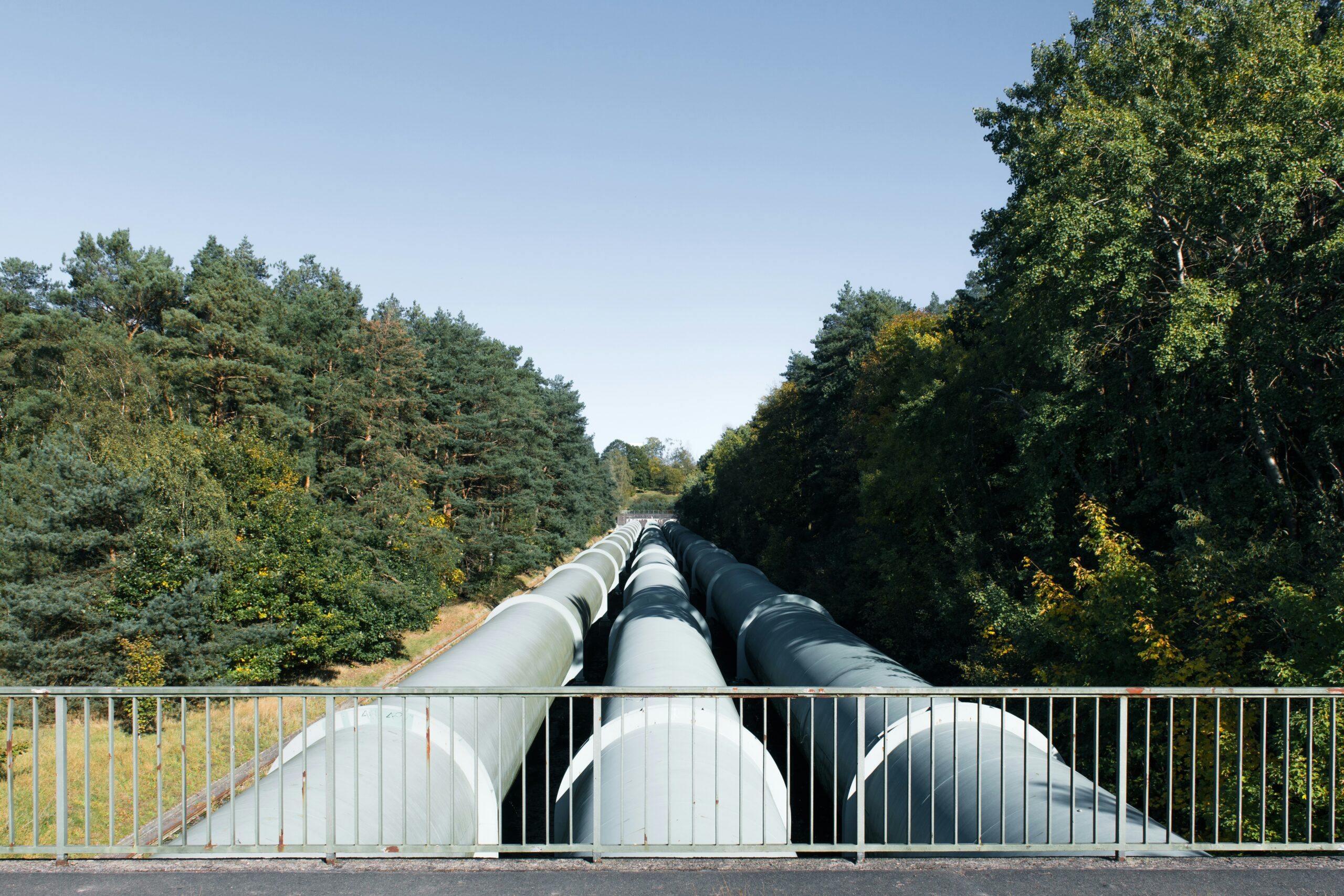
    In collaboration with the energy supplier Energie 360°, CO2-free heating is to be generated from the waste heat of the new data centre. An energy centre is being built right next to the Green Metro campus. The companies involved are relying on pipes from BRUGG Pipes to build the district heating network. The Aargau-based company has already supplied 126 pipes, each 12 metres long and with an external diameter of 70 centimetres. The pipe system is laid underground and is no longer visible after construction. The system is equipped with a smart monitoring system for maintenance purposes.

    “The data centres in Dielsdorf are a good example of how waste heat can be used sensibly and CO2 can be saved,” said Martin Rigaud, CEO of BRUGG Pipes, in the press release.

    Energie 360° aims to supply the first district heating in 2026. Green is already using the waste heat from the data centre to heat its own office buildings and a nearby industrial complex.

  • Large-scale decarbonisation through district heating expansion in Zurich

    Large-scale decarbonisation through district heating expansion in Zurich

    The city of Zurich wants to reduce CO2 emissions to net zero by 2040. In order to achieve this goal, thermal networks and a district heating network are to be significantly expanded. According to a press release, the city council is proposing a new framework credit of CHF 2.26 billion to voters. This credit includes the funds from the credits of CHF 330 million and CHF 573 million already approved in 2021 and 2022.

    The new loaned funds are intended to take into account both the increased financial requirements for the expansion of thermal grids and their degree of greening. Currently, 70 per cent of the energy generated by existing networks is fossil-free; the target is 100 per cent.

    “We want to double the proportion of the city supplied with district heating to around 60 per cent of the residential area by 2040. This is a generational project and requires a major expansion of the infrastructure. This will require major investments,” said City Councillor Michael Baumer, Head of the Department of Industrial Operations, in the press release.

    The entire project to reorganise the city’s heating supply, including the consolidation of all thermal networks in the city, is to be carried out under the umbrella of Elektrizitätswerk der Stadt Zürich(ewz).

  • Study shows potential for renewable energy in Frauenfeld

    Study shows potential for renewable energy in Frauenfeld

    The municipal utility company of Frauenfeld, Thurplus, and researchers from the Swiss Federal Laboratories for Materials Science and Technology (Empa) have presented the results of a two-year study entitled “Energy Perspectives 2050”. As detailed in a press release, the study developed scenarios that show which technologies, energy requirements and infrastructures could be used to achieve net-zero emissions in the specified period.

    According to the study, 80 percent of buildings in Frauenfeld are still heated with oil or natural gas. However, decarbonization could be achieved with the technologies already available today, such as district heating, heat pumps, photovoltaics and battery storage. However, to replace the existing fossil heating systems by 2040, 250 buildings a year would have to be equipped with renewable heating technologies. District heating plays a central role here, but solar systems also have great potential. Solar energy, which currently covers 18 percent of Frauenfeld’s electricity requirements, could be increased almost fivefold by 2040, according to the press release.

    The study was carried out in collaboration with Urban Sympheny AG, a spin-off of Empa. The project was supported by the Swiss Federal Office of Energy (SFOE), the Office for Energy of the Canton of Thurgau and the Office for Building Construction and Urban Planning of the City of Frauenfeld.

  • District heating reaches castle on the rock

    District heating reaches castle on the rock

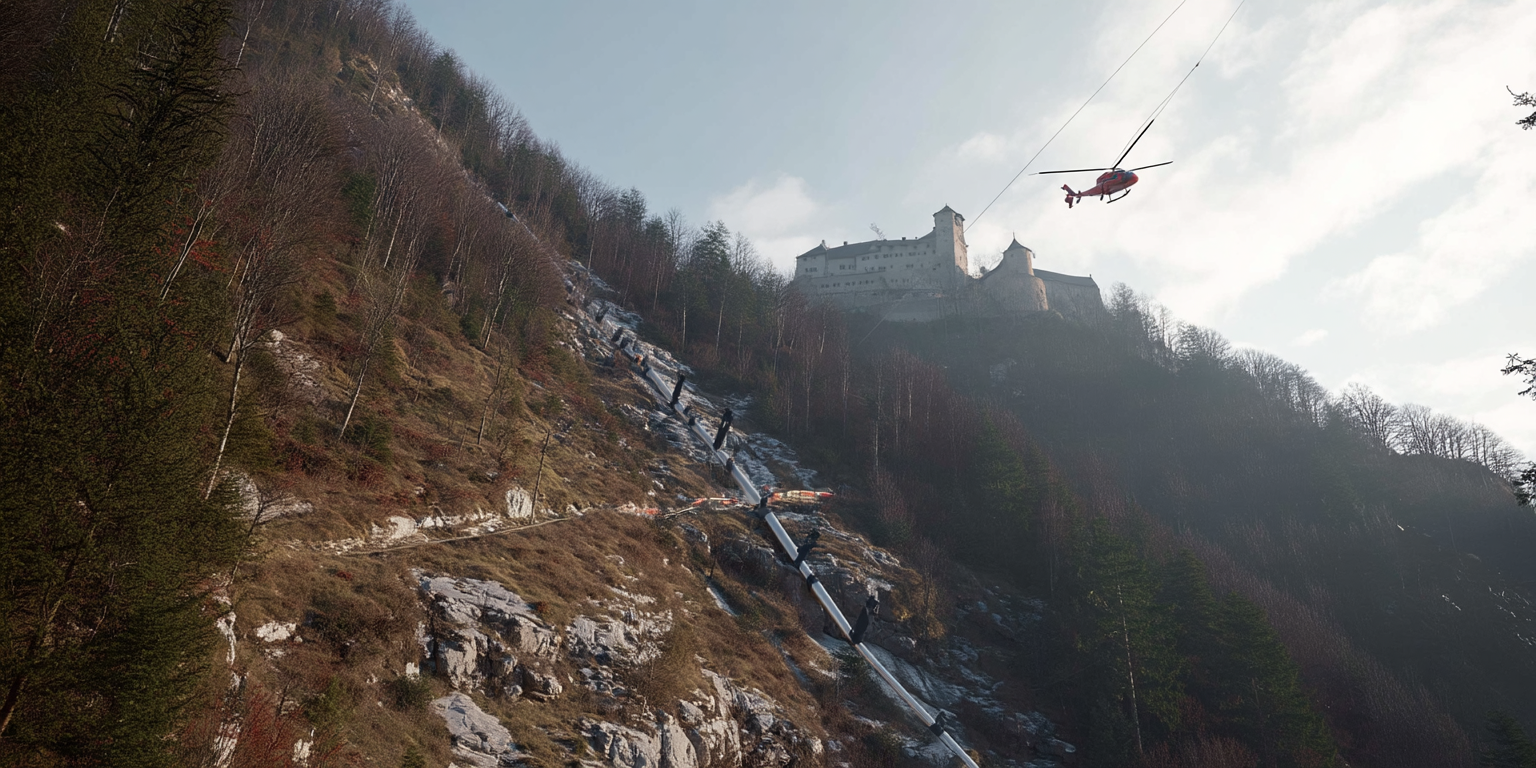
    BRUGG Pipes, based in Kleindöttingen, connected Vaduz Castle in Liechtenstein to a district heating network via its flexible pipe system in spring 2025. According to a press release, the logistical challenge was overcoming the steep slopes from the base station to the castle.

    When laying the 300-metre-long pipeline, a height difference of 120 meters had to be overcome to reach the castle, which is located on a rocky terrace. The installation was carried out using helicopters. The FLEXWELL-FHK pipes used were fixed to holding points previously anchored to the rock. “This innovative method made it possible to overcome the challenges of the terrain safely, quickly and efficiently,” said Daniel Schneider, Sales Manager District Heating Switzerland at BRUGG Pipes, in the press release.

    The castle grounds and the adjacent buildings will be supplied with district heating from VfA Buchs in future. The district heating will be supplied by the waste incineration plant of the Verein für Abfallentsorgung (VfA) in Buchs SG. in 2023, around 200,000 megawatt hours of district heating energy were generated and supplied here, which corresponds to the amount of energy from burning 12.5 million liters of heating oil, according to the press release.

  • Online tool to simplify district heating expansion

    Online tool to simplify district heating expansion

    The cooperative Elektra Baselland(EBL) wants to accelerate the expansion of district heating with a new service, according to a press release. Wärmecheck.ch is a service that provides homeowners and companies with a quick answer to the question of whether their property can be connected to an EBL district heating network.

    wärmecheck.ch can be operated intuitively via the browser and is fully interactive. According to the information, users can navigate to all addresses located in EBL’s heat supply areas on a digital map on their desktop or smartphone. This means that the relevant information from publicly accessible data is available for each property. Registration is not necessary.

    If a connection is possible, wärmecheck.ch quickly and easily creates a non-binding model calculation or puts you in touch with an EBL contact person for personal clarification. If a connection is not possible at the time of the inquiry, interested parties are shown alternatives and given an overview of relevant information platforms.

    The background to this measure is EBL’s goal of creating more district heating networks. As EBL writes, information on connecting to district heating or on alternative heating options must be easily accessible to interested parties.

    The response to wärmecheck.ch should enable the energy supplier to respond specifically to demand from the population and businesses, to consolidate existing heating networks and to examine the development of further areas.

  • Rhine water and waste heat as an energy source for the heating network

    Rhine water and waste heat as an energy source for the heating network

    The electricity supplier AEW Energie AG, based in Aarau, is investing over 8 million Swiss francs in the new Augst BL heating network, according to a press release. This will replace the existing AEW contracting plant in Pratteln BL, which is fuelled by wood pellets and oil. The planning application for the heating network, which will run on 100 per cent renewable energy, has been submitted. The first heat supply is scheduled for the 2025/26 heating period.

    The heating centre will be built in the machine hall of the Augst power plant and will use the waste heat from the power plant generators and Rhine water as heat sources. The waste heat from the generators is currently discharged unutilised into the Rhine. With this combination, a reliable and sustainable heat supply can be guaranteed, according to AEW. Three heat storage tanks, each with a capacity of 16,000 litres, serve to compensate for fluctuations and ensure a constant supply.

    The heat is distributed to the connected buildings via a district heating network that is around 1.3 kilometres long. According to the press release, a total thermal output of 2 megawatts will be provided, with a planned annual heat output of 4,400 megawatt hours in the final stage of expansion. Compared to fossil heating systems, this corresponds to a reduction of around 1200 tonnes of CO2 per year.

    According to the press release, AEW began developing heat supply systems in the early 1990s. The first heating network was put into operation 30 years ago in the municipality of Möhlin. Today, AEW operates 75 heating networks and contracting plants for heating and cooling in the canton of Aargau and neighbouring cantons. The current production capacity is over 230 gigawatt hours per year and avoids the emission of around 55,000 tonnes of CO2 per year.

  • Municipality of Thalwil relies on district heating with new heat supply

    Municipality of Thalwil relies on district heating with new heat supply

    Wärme Thalwil AG was founded in February 2025 to provide the population with a climate-friendly district heating supply. According to a press release, the company is the result of a collaboration between the municipality of Thalwil and Elektrizitätswerke des Kantons Zürich(EKZ). Thalwil holds a 49 per cent stake in the new company and EKZ holds 51 per cent. The foundation was preceded by a referendum in September 2024, in which 79.8 per cent of voters voted in favour of the new company.

    “By founding Wärme Thalwil AG, we are sending a clear signal in favour of a resource-conserving and climate-friendly heat supply in our municipality,” said Andy Fellmann, municipal engineer of Thalwil, in the press release. “In addition, the collaboration between the municipality and EKZ allows synergies to be utilised and the existing infrastructure to be developed efficiently.”

    Martin Nicklas, Chairman of the Board of Directors of Wärme Thalwil AG and Head of Energy Solutions and Energy Contracting at EKZ, states that the aim of the new company is to supply 3,000 residents with sustainable heat. The next step is to create an additional heating network, a decision on which is to be made in 2026.

  • Sustainable energy supply for Frick

    Sustainable energy supply for Frick

    The Basel-based energy supplier IWB has announced the commissioning of the Frick heating network. In addition to the new heating centre with two wood-fired boilers and two heat storage tanks, a 2.1-kilometre-long heating network has also been put into operation, according to a press release. The expansion of the final sections in the first construction phase is to begin on 4 March.

    This will supply private households and businesses in some neighbourhoods of Frick with renewable district heating. The wood-fired boilers will be fuelled with regional wood chips from the Thiersteinberg forestry operation.

    Due to the high demand, IWB is already examining the expansion of the supply area in the Ob em Dorf and Chilmet districts. Both the current and future constructions are associated with a number of traffic restrictions, which will be adapted by the municipality and canton as required. IWB invites you to an open day on the site of the heating centre on 5 April 2025.

  • District heating network in the lower Wiggertal is getting closer

    District heating network in the lower Wiggertal is getting closer

    The energy companies Primeo Energie from Münchenstein and StWZ Energie AG are in the planning stages for the district heating network Fernwärme Unteres Wiggertal (FUWI). According to a press release, their solution envisages the integration of existing networks.

    “The project is an important contribution to the decarbonisation of the heat supply. StWZ and Primeo are convinced that the district heating network in the lower Wiggertal can be realised most effectively if we join forces in a joint company,” Michael Schneider, Managing Director of Primeo Wärme AG, is quoted as saying. The first step will be to expand the district heating network in Oftringen and Zofingen and to integrate the existing district heating networks of both municipalities. Wood combustion in the StWZ energy centres and waste heat from the waste incineration plant (KVA) of Erzo (Entsorgung Region Zofingen) are to be used as climate-neutral heat energy substitutes.

    In addition to StWZ Energie AG Zofingen, EW Oftringen AG and EW Rothrist AG were initially involved in the project. Contrary to the plans, the two regional energy suppliers have withdrawn their commitment to join the company for the time being for various reasons. However, according to the press release, both companies are behind the project for CO2-neutral district heating. Participation at a later date has not been ruled out.

    The question of a future increase in heat consumption from summer 2027 is also still open. The Oftringen electorate will be asked to vote on the construction of a new waste incineration plant and the additional land required for this in November 2025.

  • New data centre in Geneva feeds waste heat into the district heating network

    New data centre in Geneva feeds waste heat into the district heating network

    INFOMANIAK, a pan-European cloud provider and developer of web technologies, has inaugurated a new data centre at the company’s Geneva site in the presence of representatives of the authorities and project partners. According to a press release, the electricity consumed by the 10,000 servers installed underground at the centre can be reused as heating energy via the district heating network. Although it is an energy-intensive facility, the data centre is therefore considered an “active player in energy recovery”.

    In November 2024, a start was made on converting 100% of the electricity consumed in this data centre into heat and feeding it into the cantonal district heating network. The server park is currently using 25 per cent of its capacity, and the system should be running at full capacity by 2028. An output of 1.7 megawatts is then expected for the district heating network. “This amount of energy can be used to heat 6,000 Minergie-A households or give 20,000 people a five-minute shower every day,” the press release states.

    The new data centre is intended to change the previous loss of waste heat with a new functional principle. It transfers the heat generated from electricity at a temperature of 40 to 45 degrees to an air-water heat exchanger, which heats a hot water circuit. Heat pumps then allow the water temperature to be increased in order to channel the waste heat into the district heating network.

    The location below a residential area also contributes to the positive climate effect. As a result, there would be no impact on the cityscape. This will solve several major challenges in the cloud industry and take steps towards greater technological independence in Europe, according to the statement.

  • District heating project in Bern utilises the River Aare as an energy source

    District heating project in Bern utilises the River Aare as an energy source

    Energie Wasser Bern wants to supply the north-east of Bern with climate-friendly heat. To this end, the Bernese energy supplier is planning to build a corresponding heat production infrastructure, ewb announced in a press release. One of the sources of heat will be the water from the River Aare.

    Specifically, ewb wants to draw water from the Aare on the western bank at Engehalde and channel it into an existing cavern. Heat is to be extracted from the water here, which will then be transported to a new Aare Wyler energy centre to be built on the eastern side of the river. Properties in neighbourhoods adjacent to the energy centre could then be heated with district heating from the energy centre’s heat pumps. Ewb is also considering setting up a second, smaller Aare Engehalde energy centre on the west side of the river. It could supply the Tiefenau area with district heating.

    The company has already submitted a licence application to the Office for Water and Waste of the Canton of Bern for the construction of a catchment structure and the extraction and return of water from the Aare, explains ewb. The company expects a decision in spring 2026. In the meantime, a precise location for the planned Aare Wyler energy centre is to be found.

  • Kerzers inaugurates district heating

    Kerzers inaugurates district heating

    Groupe E inaugurated its new district heating plant in Kerzers with open days on 15 and 16 November. According to a press release, the plant will have a capacity of 31 megawatts when completed and can therefore generate 61,000 megawatt hours of heat per year. The heat will be supplied to over 90 households, vegetable growers, the Papiliorama and public buildings.

    The plant will be heated to 90 per cent with wood chips from the region. This will save around 9000 tonnes of CO2.

    It is the third-largest district heating plant of the Fribourg energy supplier after the one in Fribourg and in the Entre-deux-Lacs region.

  • District heating network in Lachen successfully expanded

    District heating network in Lachen successfully expanded

    Energie Ausserschwyz AG has completed work on the core renewal and expansion of the district heating network in the center of Lachen. “We are very happy and proud to have reached this milestone,” said Philipp Züger, Head of District Heating Construction at Energie Ausserschwyz AG, in a press release issued by the company. The district heating network of Energie Ausserschwyz AG has currently reached an extension of over 26 kilometers.

    From the fall, around 40 customers in Lachen will receive district heating from the wood-fired power plant in Galgenen. Energie Ausserschwyz has invested around CHF 15 million this year in the expansion of the network, which will be in place from 2021. Further areas in Lachen are to be connected in the coming year. Specifically, the press release mentions Neuheimerstrasse, Zürcherstrasse and Säntisweg. “Interested parties are welcome to contact us,” explains Züger. “We will then be happy to clarify when a connection is possible.”

    Energie Ausserschwyz AG was founded in 2020 and its main shareholder is EW Höfe AG from Freienbach SZ. The company sells heat and electricity from a wood-fired combined heat and power plant and a biogas plant at the energy center in Galgenen.

  • Expansion of district heating in Münchenbuchsee

    Expansion of district heating in Münchenbuchsee

    The Schlieren-based construction company STRABAG is creating a modern energy supply for the municipality of Münchenbuchsee with district heating pipes. According to a press release, STRABAG is laying around three kilometres of new district heating pipes to expand the district heating network in the municipality in Bern-Mittelland. Work began on 9 September and the first of around 15 stages has already been completed, according to STRABAG. Two further stages will follow by the end of the year, according to the company press release.

    Regarding the progress of the work, the company says that as residents still need access to their homes and garages, the road cannot be completely closed for the construction work. To install the district heating pipes, just under a quarter of the road will be opened up and the pipes laid. After each construction phase, the trenches will be temporarily backfilled with earth and a temporary surface will be laid. Over the next few months, the earth will settle. Therefore, once all 15 stages have been completed, the temporary surface will be milled off again and a new asphalt layer will be applied.

    According to STRABAG, the construction work is expected to be completed by December 2025 by the STRABAG Traffic Route Construction (VWB) team in Bern. “We are well on schedule so far and should complete the project on time,” says Lena Wagner, construction manager at VWB Bern.

  • Expansion of the district heating network in Kaiseraugst for a better heat supply

    Expansion of the district heating network in Kaiseraugst for a better heat supply

    AEW Energie AG is opening up its heating network in Kaiseraugst to new customers. According to a press release, it will begin construction work on two branch lines of the “Ast Dorf” project on 4 November.

    These two branch lines are located at Lindenweg 11 and 13 and between Dorfstrasse, at property no. 36 and Heidemurweg. According to a press release, the work is expected to be completed by Christmas.

    Work on the main district heating line and the other sections along Dorfstrasse and Lindenweg will begin in January 2025. After deducting the municipality’s contribution to the costs, AEW is investing a total of around 3.2 million in the expansion of the Kaiseraugst district heating network.

    The Kaiseraugst heating network has been in operation since October 2021. It is one of the largest in the canton of Aargau. in 2023, additional customers were connected in the industrial area, in the south-east and with the branch to the Rinau retirement home. The large-scale project, which took over four years to build, currently supplies over 1,500 households and numerous industrial and commercial customers with heat from at least 80 per cent renewable energy.

  • District heating and sustainability for the Metro Shop

    District heating and sustainability for the Metro Shop

    According to a press release, the Metro Shop in Baden has been connected to the district heating and cooling network. With its high energy requirements and annual consumption of around 300,000 kilowatt hours, it is one of the largest consumers of Baden’s energy network. The connection will make it possible to reduce CO2 emissions by 50 tons per year, according to the city’s press release.

    The city of Baden is pursuing the goal of reducing its energy-related greenhouse gas emissions to net zero by 2050 at the latest. To this end, a consistent switch to renewable energies is planned. In cooperation with Regionalwerke AG Baden, the city is driving forward the rapid expansion of renewable district heating and cooling, the report continues. The expansion is progressing rapidly. Five properties in the administrative assets with an annual consumption of around 1,235,000 kilowatt hours and five properties in the financial assets with an annual consumption of around 320,000 kilowatt hours (kWh) are already connected.

    Sandro Valsecchi, project manager for heating systems at Regionalwerke AG Baden, is quoted as saying that the many interfaces were one of the biggest challenges in the Metro Shop project. “Laying the pipes on both floors of the train station parking garage was particularly challenging – and that during ongoing operations,” says Valsecchi.

    The connection of the Metro Shop marks the completion of a key sub-project in the expansion of the district heating and cooling network. In future, the project will reach further areas of the city in cooperation with Regionalwerke AG Baden.

  • Winterthur approves the renewal of the waste incineration plant

    Winterthur approves the renewal of the waste incineration plant

    The voters of Winterthur have clearly approved the renewal of the municipal waste incineration plant with 87.0% and a yes majority in all city districts. This means that incineration line 2 of the waste incineration plant can be renewed. Investments of CHF 293 million are planned for a new incinerator, an electrostatic precipitator, a new flue gas cleaning system and a new waste water treatment system.

    The new plant will be able to incinerate 190,000 tons of waste per year while maintaining the same capacity. In future, however, it will be possible to use the waste heat from flue gas cleaning for district heating. This will increase its heat output by 30 percent. In addition, the flue gas cleaning system will in future be 40 percent below the limit value for nitrogen oxide emissions and save 12.6 cubic meters of water by condensing the flue gases. In future, the new wastewater treatment system will recover up to 7.5 tons of gypsum per day. An additional hot water storage tank and a photovoltaic system are also planned.

    The project will be financed via the fees budget.

  • Energy contract signed for sustainable neighbourhood in Romont

    Energy contract signed for sustainable neighbourhood in Romont

    Granges-Paccot-based energy supplier Groupe E and KAAB have signed an energy contract for the La Maillarde neighbourhood in Romont. According to a press release, the 40-year contract covers the supply and utilisation of internal waste heat, the provision of a microgrid infrastructure and the installation of solar modules. Groupe E will supply energy to the site on behalf of KAAB, which will ensure the operation, maintenance and financing of the systems.

    Heat is supplied via the district heating network of the municipality of Romont. The network managed by Groupe E is mainly fuelled by wood chips from local forestry and waste heat from the roasting systems at the Nespresso plant. A gas-fuelled auxiliary heating system is provided for long periods of cold weather.

    The electrical system is controlled by the neighbourhood’s own microgrid. This is fed by a photovoltaic system with an output of one megawatt. It generates around one gigawatt hour of electricity per year.

    The La Maillarde neighbourhood, which is owned by KAAB, was used by the multinational company Tetra Pak until 2016. From 2025, watch manufacturer Rolex will set up shop there, creating around 250 new jobs in the region. The final La Maillarde project envisages an area of 40,000 square metres. Currently, 19,000 square metres are in use.

  • District heating pipeline between Perlen and Cham to be extended

    District heating pipeline between Perlen and Cham to be extended

    The energy supplier WWZ from Zug is further expanding the Ennetsee heating network. According to its press release, the Ennetsee region is to be supplied with waste heat from the waste incineration plant in Perlen via a district heating pipeline. This requires an extension of the district heating pipeline from Rotkreuz to Cham.

    In a further construction phase, the pipeline will be laid in the municipality of Risch in the Holzhäuser Strasse area from October 7. Sewerage work will begin there on September 7. This became necessary, among other things, due to repeated flooding caused by heavy rainfall in the region.

    The district heating pipeline will be pre-stressed during construction. This means that the pipe is installed and welded in a preheated state. This prevents uncontrolled expansion of the pipeline under operating load.

    During the construction work, traffic obstructions such as road closures and detour are to be expected in the area. WWZ expects the district heating pipeline to Cham to be completed and put into operation by fall 2026.

  • District heating network in the canton of Aargau is growing

    District heating network in the canton of Aargau is growing

    Regionalwerke AG Baden(RWB) has acquired the shares of AEW Energie AG in Aarau in Fernwärme Siggenthal AG(FWS), according to an ad hoc announcement. In doing so, RWB intends to expand its commitment to sustainable energy supply in the region. AEW Energie specialises in solar power in the canton of Aargau. The sale price was not disclosed.

    RWB has reportedly been working successfully with FWS for many years. The acquisition of the 27.3 per cent stake in FWS is intended to deepen the partnership. FWS, which is based in Nussbaumen, is stable and financially independent and has developed very positively over the last few years since it was founded. It therefore describes RWB as an ideal partner.

    “The investment in Fernwärme Siggenthal AG fits in perfectly with RWB’s activities in the area of district heating,” Managing Director Michael Sarbach is quoted as saying. “Both companies attach great importance to the further expansion of district heating in the region.” Adrian Hitz, Chairman of the FWS Board of Directors, refers to the good cooperation with RWB to date: “Now that AEW has decided to sell its shares, we are relieved that we already know the future shareholder well, as we have already developed and realised a very good project together with the SIBANO connecting pipeline.” SIBANO is a 3.3 kilometre long district heating transport pipeline from the Turgi waste incineration plant to the Baden Nord heating centre.

  • New energy supplier for Uettligen

    New energy supplier for Uettligen

    CKW has taken over the Uettligen heating network with effect from 27 August 2024. According to a press release, the energy supplier from Central Switzerland, which is part of the Axpo Group, intends to expand its decarbonisation strategy. The plants of the heating network north of Bern will continue to be maintained on behalf of CKW by the previous operator and main shareholder a energie AG from Schüpfen BE. Due to an adjustment in a energie’s strategy and the pending further expansion of the heating network, a buyer for the heating network was reportedly being actively sought.

    The acquisition of the Uettligen heating network joins the existing CKW portfolio of district heating networks such as Schüpfheim LU and Meggen LU. According to the press release, CKW will focus on modernising the plants and expanding the district heating network.

    “CKW is looking forward to the collaboration and is proud to be able to continue and further develop the well-functioning Uettligen district heating network,” said Rafael Mesey, Head of New Energies at CKW. “With CKW AG, we will have a reliable and strong partner for our customers in the heating network in the future,” adds Christian Cappis, the outgoing Chairman of the Board of Directors of the Uettligen heating network.

  • Basel-Stadt wants to expand district heating and greening

    Basel-Stadt wants to expand district heating and greening

    The government council of the canton of Basel-Stadt has developed a comprehensive concept for the expansion of the district heating network and submitted it as a proposal. According to a press release, roads, pipelines and streetcar tracks are to be extensively renovated as part of this plan. At the same time, many inner-city public areas are to be unsealed.

    This extensive redesign also offers a unique opportunity to green large areas, according to the press release. In order to implement the plans, the canton is examining the possibility of planting new trees for each upcoming redevelopment in accordance with the urban climate concept. In addition to the planting to be carried out now, the project provides for district heating and other pipes to be laid during the renovations in such a way that greenery can still be planted later. Planning and implementation must also ensure that the flow of traffic in the city is optimized and that any access by security forces such as the fire department or emergency medical services is guaranteed.

    For the implementation of the overall project, the Government Council has requested a budget of CHF 4.1 million per year over 13 years, i.e. a total of CHF 51 million, from the Grand Council.

  • City Council approves CHF 300 million for CoolCity

    City Council approves CHF 300 million for CoolCity

    On 10 July 2024, the Zurich City Council approved expenditure of CHF 303.7 million from the “Thermal grids” framework credit for the realisation of the CoolCity energy network. This will heat and cool Zurich’s city centre with renewable energy from Lake Zurich and thus represents a significant step towards reducing the city’s CO2 emissions to net zero by 2040.

    Expansion of thermal grids
    The expansion of thermal grids is one of the greatest levers that the city of Zurich has to reduce CO2 emissions. Fossil-fuelled heating systems can be replaced by connecting to district heating and the local gas distribution network can be replaced in stages. The CoolCity energy network, which runs on 100 per cent renewable energy, should make a major contribution to this.

    Network area and utilisation of lake water
    The network area extends from the main railway station to Bürkliplatz, bordered by the Limmat, Sihl and Schanzengraben rivers. It includes the City, Fraumünster Energy Network and Old Town perimeters. In future, the properties there are to be heated and cooled with Zurich lake water, which will enable the greenhouse gas emissions of the connected properties to be reduced to net zero.

    Lake water and energy centres at the heart of the network
    The construction of a lake water and energy centre is necessary to realise the network. Lake water will be collected at a depth of 28 metres at the Zürichhorn and transported to the lake water centre in the Kurt Guggenheim complex via a two-kilometre-long pipeline. There, energy is extracted from the lake water using heat exchangers, which is then channelled to the ewz Selnau substation. The cooled lake water is then returned to the Limmat.

    The heart of the energy network will be the energy centre in the former ewz Selnau substation. Here, the heat and cold obtained from the lake water will be brought to the required temperature using heat pumps and chillers. Following extensive investigations, the ewz Selnau substation has proven to be the ideal location to fulfil the technical and economic requirements.

    Staged construction between 2025 and 2039
    The energy network will be realised in stages between 2025 and 2039 and will be implemented in coordination with the civil engineering department’s road and utility projects. The first energy supply is planned for 2031, whereby the continuous expansion will have largely covered the supply area (excluding the perimeter of the old town) by 2035. The connection of the old town is planned for 2035 to 2039.

    The city council already approved CHF 8.5 million for preliminary investments from the framework credit in 2023. Ewz has started the initial construction work and is building a connecting structure between the CoolCity and Fraumünster energy networks, which will be completed in spring 2025.

    An important step towards climate neutrality
    The CoolCity energy network is a key building block on the path to climate neutrality in the city of Zurich. By using 100 per cent renewable energy from Lake Zurich, the city centre is supplied with sustainable and environmentally friendly heating and cooling, making a significant contribution to reducing greenhouse gas emissions.

  • New pipeline cadastre portal creates transparency and added value in the construction industry

    New pipeline cadastre portal creates transparency and added value in the construction industry

    Zurich has introduced a new, advanced system for visualising infrastructure networks. The canton of Zurich’s pipeline register provides a complete visualisation of all above-ground and underground pipelines responsible for water, wastewater, electricity, district heating, gas and communications. Centralising this data in a single information system makes it much easier to access relevant information for planning, construction and maintenance work.

    Simplified access to information
    Previously, interested parties had to obtain information on pipelines individually from the respective owners or operators – a time-consuming process. With the new pipeline cadastre portal, the canton of Zurich now offers a central point of contact that enables users to access this important data quickly and easily. Over 500 works operating in the canton regularly update their data in this system, ensuring the accuracy and reliability of the information.

    Wide range of applications
    The portal serves a wide range of users, including public administrations, construction companies, rescue and security services and private individuals. The precise information on the type and location of pipelines improves planning reliability for construction projects and facilitates the maintenance and expansion of existing infrastructure. Although the portal is not intended to be used for the direct planning of excavation work, it helps to significantly reduce the risk of damage by providing clear documentation of pipe routes.

    Simple operation and access to data
    The pipe cadastre portal is designed to be user-friendly. Users can search by municipality, parcel or street and select the medium of interest. The corresponding pipes are then displayed on the digital map. The data is easily accessible and available in standard formats. Additional information such as ownership and contact details of the relevant works are also provided.

    The portal can be accessed at: https://leitungskataster.zh.ch. Prior registration is required to use the portal.

  • WWZ begins construction of heat pipeline to Cham

    WWZ begins construction of heat pipeline to Cham

    The Ennetsee heating network will supply Rotkreuz, Bösch, Hünenberg See, Cham, Städtler Allmend, Äussere Lorzenallmend, Zug and Steinhausen with CO2-neutral heat energy from the Renergia waste incineration plant in Perlen LU. To this end, WWZ AG is now extending the district heating pipeline from Rotkreuz to Cham, according to a press release.

    In spring 2024, the installation areas for the pipelines will first be created for the Rotkreuz to Cham section. Construction will take place in stages. The pipes must be pre-stressed to prevent uncontrolled expansion. “We expect to complete the Rotkreuz-Cham stage in autumn 2026 and supply as many properties as possible with sustainable district heating,” Marcel Fähndrich, Head of Energy at WWZ, is quoted as saying in the press release.

    WWZ already commissioned the transport pipeline from Perlen to Rotkreuz in summer 2023. Some lines are already in operation in Rotkreuz. From spring 2024, the swimming pool and some private buildings and municipal properties can be heated with heat from the waste incineration plant.

    The Ennetsee heating network project aims to save 12,000 tonnes of CO2 per year in the future.

  • Neues Rechenzentrum auf dem Metro Campus Zürich

    Neues Rechenzentrum auf dem Metro Campus Zürich

    Die Green Datacenter AG setzt die Expansion auf dem Metro-Campus Zürich fort. Nach der Fertigstellung des ersten Datacenters im Jahr 2022 wird der Bau der Datacenter N und O früher als ursprünglich geplant umgesetzt. Dieser Schritt erfolgt aufgrund einer steigenden Nachfrage nach Datenzentren, die sowohl sicher als auch leistungsfähig sind.

    Roger Süess, CEO des Unternehmens, kommentiert das Wachstum mit den Worten: «Unsere Expansion spiegelt den rapiden technologischen Fortschritt und die Digitalisierung wider. Moderne Datacenter sind eine Voraussetzung dafür, dass diese Transformation in der Schweiz schnell, sicher und nachhaltig realisiert werden kann.» Die beiden neuen Datenzentren sollen Platz für bis zu 160’000 IT-Systeme bieten.

    Die erzeugte Abwärme aus den Datenzentren soll in bestehende Fernwärmenetze eingespeist werden, wodurch Haushalte und Betriebe in den umliegenden Gemeinden davon profitieren können. Green Datacenter investiert erhebliche Mittel in die Abwärmenutzung und kooperiert dabei mit Energie 360°, einem Zürcher Energieversorger, der in der Region verschiedene Fernwärmeprojekte realisiert. Roger Süess betont: «Durch die Nutzung der Abwärme und weitere Maßnahmen tragen wir zur Kreislaufwirtschaft bei und unterstützen die Energiewende. Für uns ist klar, dass nachhaltige Datacenter eine wesentliche Voraussetzung für eine zukunftsorientierte Digitalisierung darstellen.»