Tag: flexibel

  • ETH Zurich and EPFL launch green energy coalition

    ETH Zurich and EPFL launch green energy coalition

    Switzerland is facing a combined energy and climate crisis. In order to achieve the set net-zero target by 2050 and at the same time avoid an energy gap, the country is dependent on renewable energy sources, seasonal storage options and an efficient connection to the European electricity market. In addition to pumped storage power plants, batteries or heat storage, synthetic fuels and gases such as hydrogen in particular offer an interesting way to store, transport and trade cheap electricity from photovoltaic plants in the summer for the winter. There are numerous promising technologies that are currently under development but not yet fully operational. This is where the “Coalition for Green Energy and Storage” comes in, which was publicly presented on 8 June at the Swiss Economic Forum in Interlaken.

    “With the coalition, we want to quickly bring existing technologies for CO2 capture and for the production and storage of carbon neutral gases and fuels to market maturity and raise them to an industrial level,” ETH President Joël Mesot explains the plan. The goal is to enable a scalable, climate-neutral and flexible energy system within a reasonable period of time.

    Wanted: partners from politics, industry and science
    Achieving this goal will require a joint effort by science, politics and industry. “The two Federal Institutes of Technology alone have 150 research groups in the field of energy, as well as around 460 researchers and four successful spin-offs in the field of CO2 capture and energy storage. Together with other research groups from PSI and Empa, the ETH Domain has both the know-how and the size to respond to current challenges together with companies,” says EPFL President Martin Vetterli. Now the two universities are looking for technology and implementation partners, as well as donors and supporters from politics and society.

    Around 20 companies and organisations have already expressed their interest in working together: Alpiq, AMAG, BKW Energie, SBB / CFF, Carvolution AG, Cemsuisse, Emil Frey Group, Edelweiss, FIR Group AG, Gaznat, Genève aéroport, GE Vernova, Gruyère Hydrogen Power SA, Implenia, MAN Energy Systems, Migros Industry, Romande Energie, Rolex, Swissmem, SWISS International Air Lines, VBSA, Viteos SA, Verband der Schweizerischen Gasindustrie / Association Suisse de l’Industrie Gazière.

    With the airline Swiss International Air Lines (SWISS) and the energy service provider Alpiq – who were present at the SEF alongside the two presidents – two heavyweights of the Swiss economy have been on board from the start. “We are proud to be part of this energy coalition. Together, we are driving forward the production of synthetic fuels, which are one of the biggest levers for us to fly ever more sustainably in the future. At the same time, new possibilities for energy storage are being created, which increases Switzerland’s security of supply and serves society as a whole,” says Swiss CEO Dieter Vranckx. The airline needs economic solutions quickly in order to achieve its own climate goals. Synthetic fuels play an important role in this. Alpiq, for its part, has a broad portfolio of hydropower and storage plants in Switzerland and is one of the pioneers in Switzerland with the production of green hydrogen in Gösgen. With numerous projects for the addition and expansion of renewable energies and various storage technologies in Switzerland and neighbouring countries, Alpiq can make a significant contribution: “With a broad coalition of business, science and society, we can achieve the set net-zero target and a sustainable energy supply at the same time. In this way we can strengthen Switzerland as a business and science location,” says Alpiq CEO Antje Kanngiesser, explaining her company’s clear commitment. The well-known philanthropist Hansjörg Wyss has also already pledged his support to the coalition.

    Planned: Research platforms in the megawatt range
    With new technical solutions, the coalition wants to create additional opportunities to exploit the seasonal differences in electricity production by means of energy storage in Switzerland and Europe. This will improve Switzerland’s security of supply and diversify energy trade with European and international partners, creating new business areas and opportunities for technology start-ups and Swiss industry. The technical options will be analysed systemically in order to find and implement the best possible solutions in terms of supply security and costs.

    The coalition will be formally established by the end of 2023 in order to launch the first projects in early 2024. Demonstrators in the megawatt range will be built on the basis of existing technologies, which should be productive from 2028 and will serve as research platforms. A budget of around CHF 100 million is needed for this project in the first phase.

  • Neuer Campus Horw schafft Synergien

    Neuer Campus Horw schafft Synergien

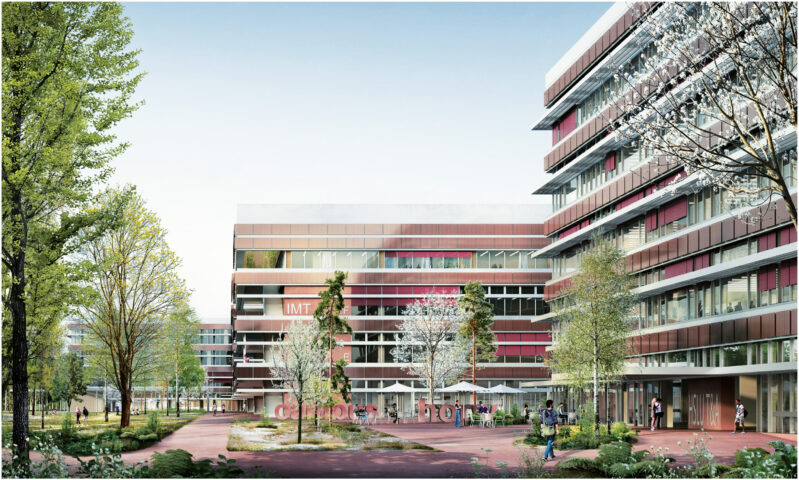
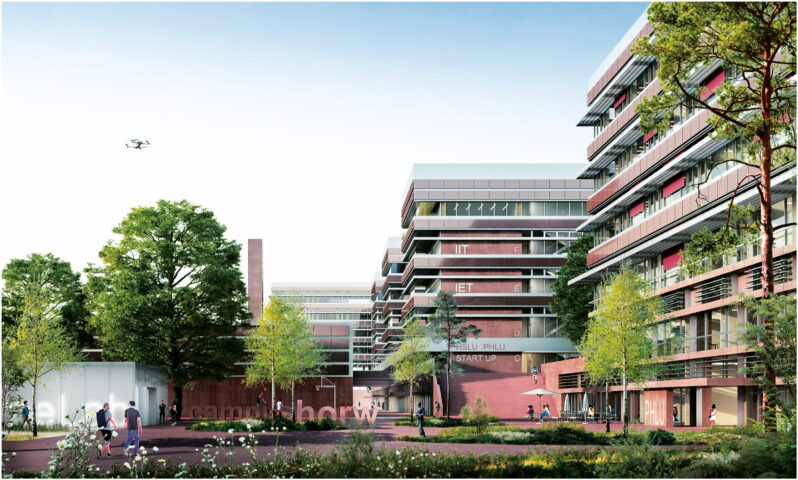
    Der Kanton Luzern zählt immer mehr Studierende – die bestehende Infrastruktur auf dem jetzigen Campus Horw hat ihre Kapazitätsgrenzen aber bereits erreicht und einige Gebäudeteile sind zudem veraltet. Dank den Erneuerungen und Erweiterungen des Hochschulcampus in Horw sollen nach Fertigstellung ab dem Jahr 2029 rund 4000 Studierende und 1000 Mitarbeitende des HSLU-Departements Technik und Architektur sowie der Pädagogischen Hochschule Luzern Platz finden.

    Die beiden Institutionen bleiben dabei eigenständige Organisationen mit einer je eigenen Identität und mit unterschiedlichen Kulturen. Der Campus lässt diese Diversität zu und ermöglicht eigenständige Auftritte. Trotzdem prägt ihn Gemeinsamkeit nach innen und aussen. Die gemeinsame Nutzung von Räumen und Einrichtungen, überschneidende und komplementäre Lehr-, Forschungs- und Dienstleistungsangebote sowie die zentrale Bewirtschaftung der Campusanlage basieren auf gemeinsamen Abmachungen und bewirken Synergien. Dadurch entsteht für die Pädagogische Hochschule wie auch Technik & Architektur ein qualitativer und ökonomischer Mehrwert.Geplant sind zwei neue Baukörper: Im Norden ein sechsgeschossiges Hauptgebäude der PH Luzern und im Süden ein siebengeschossiger Bau des Departements Technik & Architektur der Hochschule Luzern. Die bestehenden Trakte II, III und IV werden saniert und um ein Geschoss erweitert. Die leicht versetzte Anordnung der neuen Bauvolumen sorgt für eine spannungsvolle Gesamtkomposition auf dem Areal. Den Zuschlag für das Projekt erhielt das Architekturbüro Penzel Valier AG aus Zürich.

    Die neuen Bauvolumen werden leicht versetzt angeordnet.

    Die Architekten haben sich für eine Hybridbauweise aus Beton und Holz entschieden. Für die Erweiterung der Bestandesbauten sowie für die aussenliegenden Raumschichten der Neubauten soll unter anderem heimisches Holz zur Verarbeitung kommen. Dieses verleiht den Unterrichtsräumen eine angenehme und warme Atmosphäre. Die innenliegenden grossen Raumbereiche werden aus Recyclingbeton konstruiert.

    Die Unterrichts- und Büroräume der beiden Neubauten entstehen rund um zentrale Atriumfiguren. Die Räumlichkeiten werden flexibel und an sich verändernde Bedürfnisse anpassbar gebaut. Die Atrien vernetzen die Institute der jeweiligen Schulen untereinander sowie mit den übergeordnet genutzten Sockelgeschossen. Diese sehen gemeinsame Nutzungen für den Gesamtcampus wie Bibliothek, Mensa, Audimax oder Campusaula vor.

    Die rötliche Farbgebung der verschiedenen Fassaden-Elemente setzt die bestehende Tradition und Identität des Campus Horw fort.

    Für die Realisierung des rund 365 Millionen kostenden Projekts sowie für den späteren Betrieb des Campus ist eine eigens dafür gegründete Aktiengesellschaft, die Immobilien Campus Luzern-Horw AG, verantwortlich. Die Realisierung ist ab 2026 vorgesehen. Die etappierte Inbetriebnahme ab 2029.

    Der neue Campus Horw entsteht in Hybridbauweise aus Beton und Holz.
  • CBRE STRENGTHENS POSITION IN WESTERN SWITZERLAND

    CBRE STRENGTHENS POSITION IN WESTERN SWITZERLAND

    Real estate consultancy CBRE today announced the opening of its new office in Lausanne. The new office is located in the heart of Lausanne on Rue Saint-Martin and will be a strategic location to strengthen CBRE's proven presence in the real estate market in French-speaking Switzerland.

    In autumn 2019, CBRE announced the acquisition of i Consulting SA, a renowned provider of valuations, market analyzes and consulting services for real estate. Around 20 employees will now work together in the new office in Lausanne. This physical merger of the two teams is an important step in the already successful integration. The new office in Lausanne relies on a modern room concept 'New Ways of Working', which enables flexible working.

    Headed by Vincent Leroux, the Lausanne office advises investors, property users and developers on all property issues. In connection with the close proximity to the market and detailed knowledge of the structures within the region, ideal on-site consulting services can be offered. CBRE currently employs more than 120 people in Switzerland with headquarters in Zurich, Geneva, Basel and Lausanne.

    The managing director of CBRE Switzerland, Florian Kuprecht, comments on the opening: "Understanding the market and customer needs is crucial for our business. The opening of the new office in Lausanne enables us to advise customers in this important market area with even greater local expertise . The continued expansion and diversification of CBRE in Switzerland reflects our claim to tailor our range of services more and more to the needs of our customers. "