Tag: Forschung und Entwicklung

  • Six Innovation Awards for construction and tool solutions

    Six Innovation Awards for construction and tool solutions

    Hilti has received six awards for recently launched products at the Pro Tool Innovation Awards(PTIA) 2025 in the USA, according to a press release. The internationally active manufacturer and supplier in the construction and tool sector is headquartered in Schaan, Liechtenstein, and is active in over 120 countries. Hilti took part in the annual PTIA competition through its North American headquarters in Plano, Texas. In total, more than 400 product solutions from over one hundred manufacturers were submitted, according to the report. A jury of experts assessed the degree of innovation, performance and safety and ergonomic aspects, among other things. “We are delighted with the high level of innovation this year,” said Clint DeBoer, General Manager of the PTIA, in the press release.

    Hilti was honoured for products in various categories. The new DD 150-U-22 diamond core drill came out on top in the concrete and masonry core drill category. It works cordlessly and is equipped with an oscillating function that makes it easy to remove a core from the drill bit. The VC 5 construction hoover, the PR 400-22 rotating laser, the DSH 700-X petrol grinder, the new KCCM Kwik Cast Connect anchor system and a filter system for vacuum cleaners (VC-CB 20/40/150-X) also came out on top in other categories.

    At the Swiss innovation conference Open-i in November, the CEO of the Hilti Group, Jahangir Doongaji, talks about how research and development (R&D) is prioritised and embedded in his company. “At Hilti, we drive innovation in a targeted manner so that our customers can build more productively, safely and sustainably,” said Doongaji in the run-up to the conference. In Hilti’s R&D and test centres, experts are working on solutions for selected areas such as occupational safety, productivity and technology integration.

    Open-i sees itself as a Swiss innovation community and dialogue platform for business and science. It brings together academic and business experts and aims to pave the way for collaborations that will secure Switzerland’s leading role as an innovative and successful market. Open-i is organised by NZZConnect, a branch of the NZZ based in Bern. The conference will take place on 27 November and tickets are available now.
  • Shaping the innovation location of the future

    Shaping the innovation location of the future

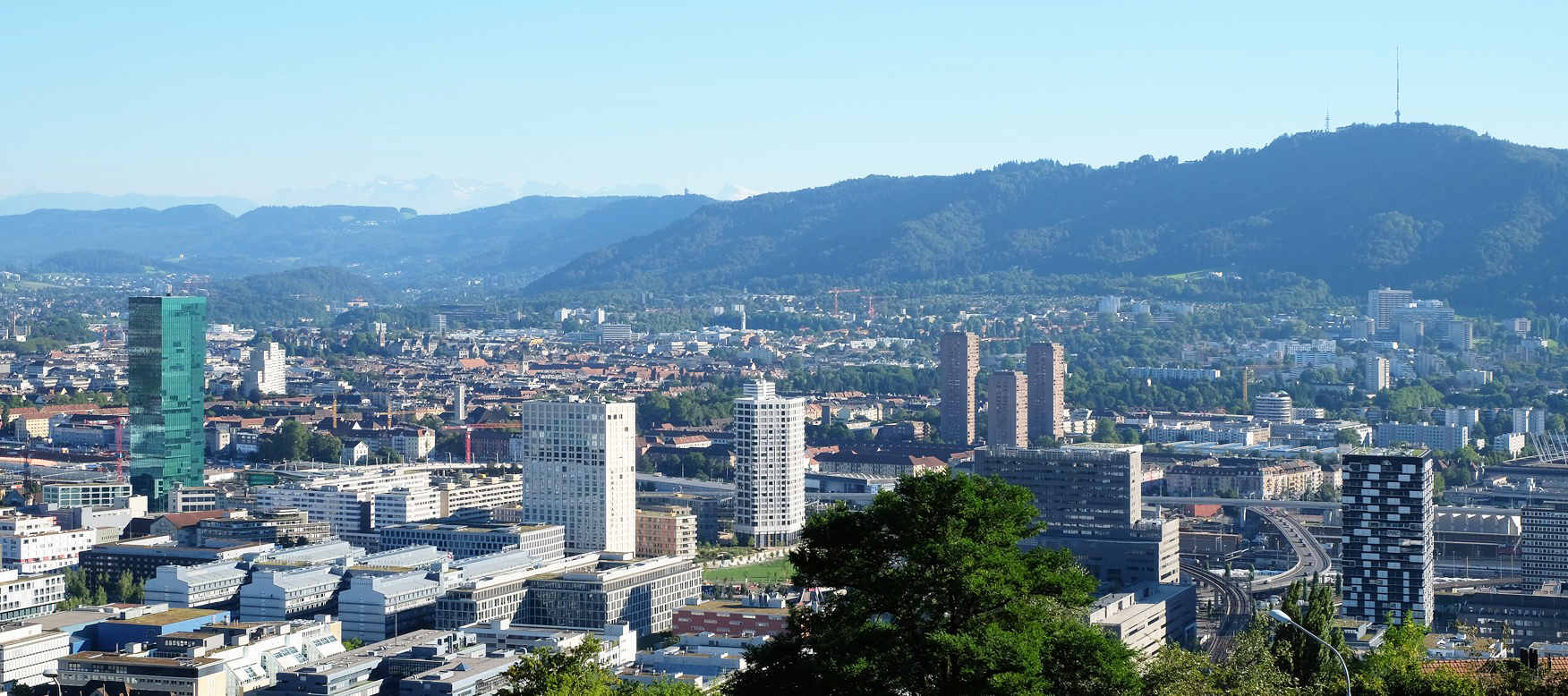
    The Swiss government creates an environment that encourages innovation through targeted funding programs, tax breaks and investments in research. Initiatives such as the innovation promotion program support companies with research and development projects, while start-ups can grow through advice and financing.

    Close cooperation between research and industry also plays a decisive role. Universities such as ETH Zurich, the University of Zurich and the Paul Scherrer Institute work closely with companies to translate technological advances into marketable products. These synergies are a key to success.

    Corporate culture and start-up ecosystem
    Switzerland fosters a creative and entrepreneurial culture where risk-taking is rewarded and failure is seen as a learning process. This mindset has led to a large number of successful start-ups. MindMaze is revolutionizing rehabilitation through neurotechnology, while Ava is shaping the medical industry with innovative fertility trackers.

    Technology centers such as Technopark Zurich offer young companies ideal conditions for driving innovation. Google operates one of its largest research centers outside the USA here. Proof of the region’s attractive environment.

    Infrastructure and global networking
    Switzerland is continuously investing in its infrastructure and research landscape. Modern high-tech laboratories, technology parks and specialized innovation centers enable researchers and entrepreneurs to implement new ideas quickly.

    Switzerland also relies on international cooperation. Programs such as Horizon Europe and participation in the European Research Area strengthen links with international partners and ensure the transfer of knowledge. The multilingualism of the Swiss population favors global exchange.

    Between climate targets and economic growth
    Switzerland sees itself as a pioneer for sustainable technologies. Investments in renewable energies, the circular economy and CO² reduction should ensure an environmentally friendly economy in the long term.

    Innovation engine with warning signals
    The Greater Zurich Area has established itself as Europe’s leading technology hub. According to experts, the region attracted over 1,280 companies between 2009 and 2021, which created 9,400 jobs and generated CHF 647 million in tax revenue. Balz Hösly, President of Greater Zurich Area: “We are probably the only location that keeps questioning its own most attractive framework conditions without need.”

    Although Switzerland has been at the top of the Global Innovation Index for years, developments such as stricter regulations or rising corporate taxes are a risk for the location. The business-friendly framework conditions that have contributed significantly to our success must not be put at risk lightly.

    Maintaining innovative strength, but how?
    Switzerland is at a crossroads. Will it remain a global innovation leader or will it jeopardize its own attractiveness through over-regulation?

    With excellent educational and research institutes, an entrepreneur-friendly culture, global networking and a powerful start-up ecosystem, its successes are undisputed. However, regulatory intervention, rising costs and uncertain economic policy conditions could slow down progress.

  • Listen to how quantum atoms talk to each other

    Listen to how quantum atoms talk to each other

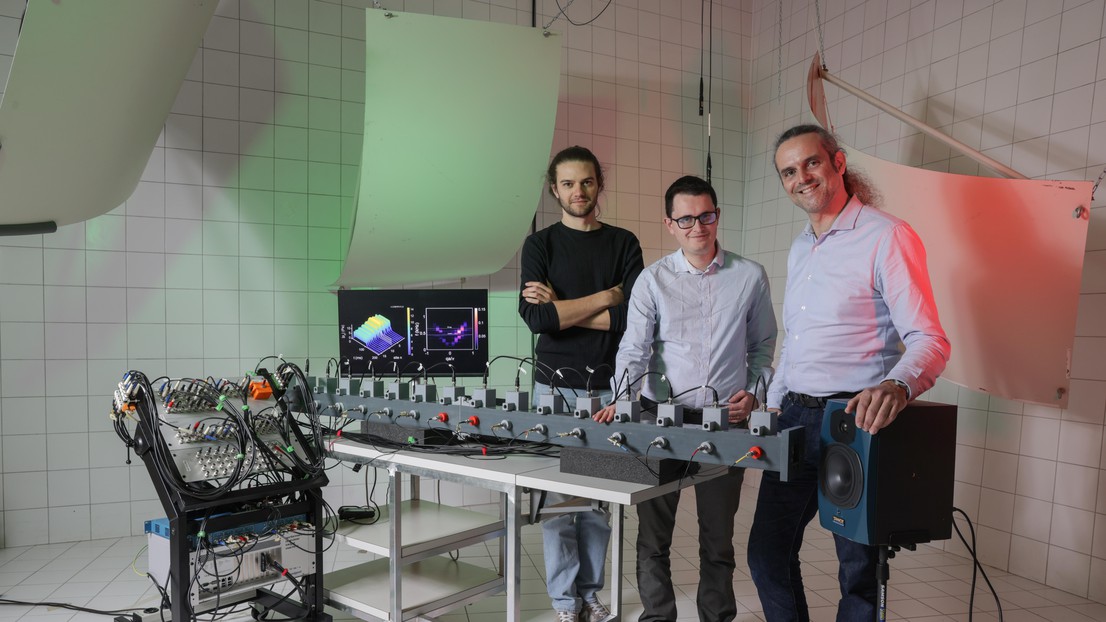
    A scientific milestone is currently being created in the laboratories of the EPFL in Lausanne. An acoustic system that makes it possible to simulate quantum phenomena on an audible, macroscopic level. It was developed by PhD student Mathieu Padlewski together with researchers Hervé Lissek and Romain Fleury. The aim is to make the highly complex states of condensed matter accessible, not via electrons, but via sound waves.

    Metamaterial as a research platform
    The system is based on a so-called acoustic metamaterial, an artificial structure made up of 16 interconnected cubes. The researchers use integrated loudspeakers and microphones to generate and measure specific sound waves. These “acoustic atoms” can be flexibly configured to model a wide variety of physical phenomena, including those that lie beyond the realm of classical solid-state physics.

    Schrödinger’s cat becomes audible
    In contrast to real quantum waves, which are destroyed by every measurement, acoustic waves can be observed and analyzed directly. This allows the quantum concept of superposition, symbolized by Schrödinger’s cat, to be experienced in sound. Just as a voice consists simultaneously of fundamental frequency and harmonics, the EPFL system can make many “acoustic states” audible and measurable at the same time.

    From physics to application
    The potential fields of application range from the development of new types of energy control systems to medical diagnostics. The metamaterial could be tuned to specific frequencies, similar to the human inner ear. A possible way to research hearing disorders such as tinnitus. Even more ambitious is the long-term goal of an “acoustic analog computer”, which, inspired by quantum computing, could process information in superimposed states without risking its decay.

    Switzerland as a location for innovation
    This research highlights Switzerland’s role as a leading location for disruptive science. The combination of basic physics, technology and application visions impressively demonstrates the potential of interdisciplinary research. For investors, developers and innovation promoters, there are new opportunities to establish acoustic technologies as scalable alternatives in the fields of computing, sensor technology and materials technology.

  • Piston machine to generate more electricity from waste heat

    Piston machine to generate more electricity from waste heat

    The Swiss Federal Laboratories for Materials Science and Technology(Empa) has awarded its former doctoral student Andyn Omanovic an Entrepreneur Fellowship. It is intended to contribute to the development of a new type of reciprocating machine that can be used to increase the generation of electricity from waste heat, Empa explained in a press release. The project will be realised by etavalve GmbH from Zurich, which was founded by Omanovic and hydraulics expert Wolfgang Schneider as a spin-off from Empa and the Swiss Federal Institute of Technology in Zurich(ETH).

    Currently, the conversion of waste heat into electricity is mainly carried out using turbines. However, turbines are “particularly effective for high temperatures and for power requirements of several hundred megawatts”, explains Omanovic in the press release. “But for temperature ranges of around 500 to 900 degrees, where waste heat is generated irregularly, and up to the power range of several megawatts, our reciprocating engine is better suited.”

    The start-up has already found a partner for an initial practical test in the form of energy supplier IWB in Basel. By the beginning of 2025, etavalve aims to have developed a pilot machine that IWB will use in the process of converting biomass into biochar. The lean gas produced during pyrolysis contains methane and gaseous pollutants and must be incinerated as required by law. An initial small series of piston machines for the combustion of lean gases is to follow shortly afterwards.