Tag: Führungskräfte

  • Empathy as a leadership competence

    Empathy as a leadership competence

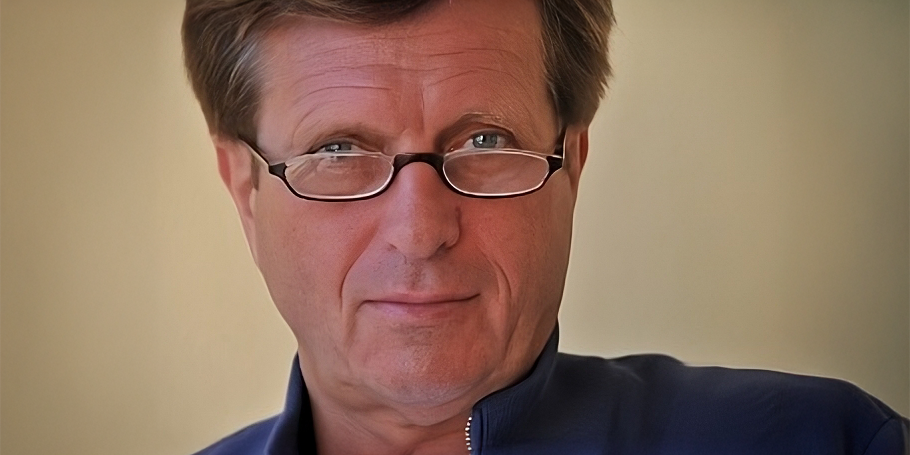
    The construction and property industry and other sectors of the economy are facing increasingly complex challenges. Managers who not only manage functional processes but also take social and ethical aspects into account are more in demand than ever. In the two-day practical seminar at the FHNW, Prof Peter Gruber teaches proven techniques for using empathy in a targeted manner in day-to-day management.

    Empathy can be learnt
    According to Prof. Gruber, there are two forms of empathy: emotional, intuitive and rational-professional empathy. The latter is crucial for managers in order to understand employees without overburdening themselves emotionally. In management positions in particular, it is essential to consciously develop this skill in order to promote sustainable relationships and a healthy corporate culture.

    Leadership versus management: a fundamental difference
    While management primarily focuses on figures, data and facts, successful leadership also encompasses psychological, social and ethical dimensions. Gruber emphasises: “The main tool of a manager is the conversation, not the Excel sheet.” Leadership means not only demanding performance, but also recognising and supporting employees as people.

    Appreciative leadership as a success factor
    Modern leadership is both performance-orientated and people-oriented. Companies that focus on a respectful and meaningful work culture benefit in the long term from motivated employees and a positive working atmosphere. Enjoyment of work increases when employees recognise the meaning of their work, work in a climate of honesty and are encouraged.

    A seminar with practical added value
    The practical seminar “Leading with empathy” will take place on 17 and 18 September 2025 at the FHNW in Brugg. It is aimed at managers who want to develop their social skills in a targeted manner and implement sustainable, successful leadership.

  • Historic election at the Swiss Association of Engineers and Architects

    Historic election at the Swiss Association of Engineers and Architects

    Susanne Zenker has been elected as the new President of the Swiss Society of Engineers and Architects(SIA) by the Assembly of Delegates. According to a press release, this is the first time in the approximately 190-year history of the professional association that a woman has been elected to the top position. The Swedish-born architect, who trained at the Swiss Federal Institute of Technology in Lausanne(EPFL), brings many years of experience in the construction sector and in the design of sustainable living spaces to the post, the press release explains. Susanne Zenker is currently Head of Development and a member of the Executive Board of SBB Real Estate. She is also a trustee of the Swiss Building Culture Foundation.

    “With its members, the SIA brings together an enormous amount of knowledge and commitment under one roof,” Zenker is quoted as saying in her speech in the press release. “The sustainable design of living space is a challenging and diverse task. In the SIA, we therefore need to network our knowledge even more in order to remain effective. This is what I would like to do as President”. Susanne Zenker will take office on 1 July 2024 and will leave SBB Real Estate at the end of June.

    “The election of a woman to head the association is a historic moment. In Susanne Zenker, the SIA is gaining an experienced bridge builder. I am convinced that she will be able to align the diverse interests in the association towards common goals,” explains Alain Ouveley, one of the interim Co-Presidents.

    The delegates also elected Sarah Kristin Schalles to the Board.

  • Low data literacy and low data maturity as barriers to digital progress in the real estate industry

    Low data literacy and low data maturity as barriers to digital progress in the real estate industry

    The Digital Real Estate Survey 2023 shows that the digitalisation maturity of real estate companies in Germany and Switzerland is moderately increasing. The index measures the extent to which market participants are addressing digitalisation and how far they have already taken and implemented measures. The Digital Real Estate Index across the entire market is 4.7, an increase of 0.2 points compared to the previous year. While the Swiss index rose slightly, the German index fell by 0.1 points to 4.8.

    The assessment of digital technologies has been stagnating for years and is thus developing only slowly. Although all technologies are being used more frequently, the increase and expectations of benefits are rather moderate. With the exception of “Decentralised Energy Technologies”, which have experienced a boost due to the looming energy shortage.

    Expensiveness inhibits digital investments
    The development of digital maturity of the different roles in the industry also continues to be even. FM service providers have a higher level of maturity in terms of digital transformation than other market participants, but rising inflation is apparently putting them under such pressure that investments have had to be drastically reduced. Planners and contractors, on the other hand, are investing more in innovation and digitalisation, especially due to the increased use of BIM in project planning. Two thirds of the companies spend more than 1 percent of their annual turnover on innovation and digitalisation, with small companies with up to 49 employees investing proportionately more than medium-sized and large companies. Large companies with 250 or more employees have a higher digital maturity than SMEs.

    “If you compare the investments as a percentage of annual turnover across all company sizes with the turnover of the construction and real estate industry in the narrower sense, this results in a considerable sum in the billions which is spent in the industry on innovation and digitalisation,” explains Rebekka Ruppel, CEO of pom+Germany. “It makes you wonder why the digital maturity level is not increasing faster.”

    Immature data skills as the biggest challenge
    One possible explanation is low data maturity combined with low data literacy. The survey shows that data analytics is used by only a quarter of respondents and that most are engaged in pilot projects or knowledge building (38% of respondents). Only 4 percent are already using the technology in their day-to-day business. The results show that data analytics has a positive impact on more areas of a company than expected – especially in investment, portfolio and asset management. Improved reporting is seen as the biggest benefit, while the lack of quality of the database and the lack of know-how in handling data are seen as the biggest challenges.

    “The awareness of data as an asset has not yet taken hold in the construction and real estate industry. At the same time, the requirements for data architectures are very complex in the extremely heterogeneous environment with highly fragmented processes and different participation groups. Clear and transparent communication in conjunction with structured data governance is necessary here to create a better understanding of data,” explains Rebekka Ruppel.

    The maturity of digitisation in the industry depends not only on technical possibilities, but also on experience, competences and know-how. Companies should focus on expanding and maintaining partner networks as well as overarching business models in order to move from individual performance to joint development. The exchange of data across company and industry boundaries is expected to increase rapidly, so companies should raise awareness of data.

  • 11th Immo-Boat Event on Lake Zurich

    11th Immo-Boat Event on Lake Zurich

    As a guest speaker, André Krause, CEO of Sunrise, gave an insight into the complexity of telecommunications and the challenges for the future. The event was again moderated by Monika Schärer.