Tag: gebaeudeautomation

  • Smart building becomes a location factor

    Smart building becomes a location factor

    Smart buildings become a location factor when they first make ESG performance visible and controllable. Energy and resource consumption, CO² emissions, indoor climate and space efficiency can be measurably optimised through sensor technology, automation and data-based operation, and these key figures can be verified for green finance, ratings and regulatory purposes. Lighthouse projects such as The Edge in Amsterdam, Taipei 101, Roche Basel and The Crystal in London show how smart building technology can be linked to clear sustainability indicators and certifications and thus have an impact beyond the individual property.

    Smart building as a talent magnet
    Smart buildings are changing the working and innovation environment. User-centred buildings with high air quality, plenty of daylight, flexible spaces, apps and services are becoming a magnetic factor for talent and for companies that demand modern, healthy working environments. In such smart buildings, technology merges with workplace quality. From personalisable comfort parameters to intelligent space management, they directly strengthen employer branding and the attractiveness of a location for knowledge- and technology-intensive companies.

    From individual buildings to networked campuses
    Location and campus strategies are characterised by intelligent buildings. Data from many smart buildings is aggregated in neighbourhoods and campus structures. This creates controllable networks of energy, mobility and utilisation that position a city or region as an efficient, sustainable location, far beyond the individual building. This shifts the discussion. Smart buildings are no longer just a technical upgrade, but a strategic lever to make locations future-proof, regulation-proof and internationally competitive.
    edge

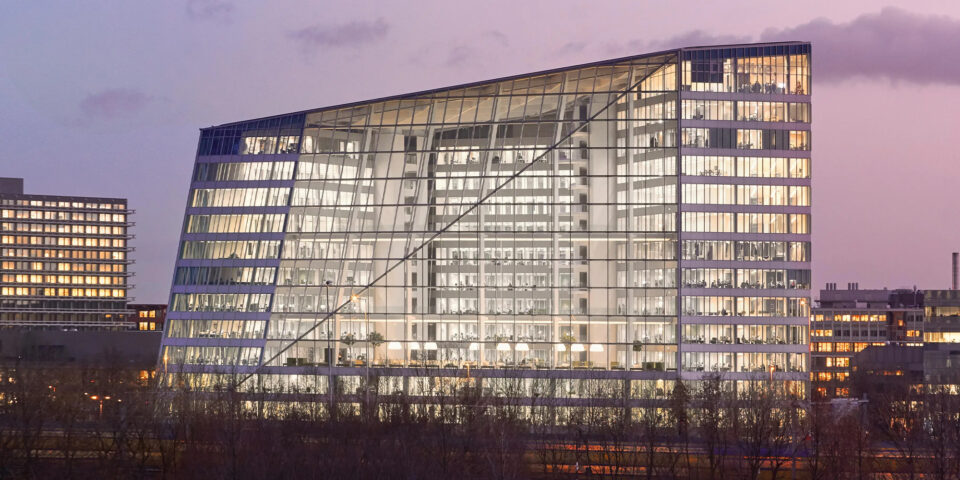
    The Edge in Amsterdam is regarded as a prototype of an intelligent office building in which architecture, technology and data were conceived as a digital system from the outset. Covering around 40,000 square metres, an extremely dense IoT infrastructure with around 28,000 inputs and outputs networks sensors, LED lights with their own IP address, building automation and a workplace app. Employees book their workstations based on activity in the 3D model, receive personalised lighting and comfort profiles and work in highly flexible, daylight-oriented spaces. Thanks to its efficient shell, geothermal energy, large photovoltaic surfaces, rainwater utilisation and e-mobility, The Edge achieves an energy-positive balance and reduces CO² emissions in the double-digit million kilogram range over ten years. The permanently collected usage, comfort and energy data forms the basis for predictive maintenance, cleaning and space optimisation and makes ESG performance in operation measurable and controllable instead of just being reported. As a BREEAM Outstanding property with international benchmark status, The Edge shows how a single smart building can characterise both the working environment and the location profile of Amsterdam as an innovative, sustainable economic area.
    Learn more

    Taipei 101 in Taipei shows how an iconic supertall can be transformed into a green and “healthy” skyscraper using smart building technology. An integrated building and energy management system monitors and controls lighting, HVAC, pumps and lifts, supplemented by cloud-based analytics to increase efficiency. Double façades, LED retrofits, optimised air treatment, water-efficient fittings, rainwater harvesting and an improved cooling water system significantly reduce energy and water consumption. The green retrofit made Taipei 101 a LEED Platinum pioneer for existing buildings. in 2025, the tower again achieved LEED v5 O M Platinum with the highest score and WELL v2 Core Platinum. Over several years, around 160 million kWh of electricity were saved and at the same time the air quality, comfort and health of the users were significantly improved. A global ESG lighthouse project for existing buildings.
    Learn more
    f. Hoffmann-La Roche AG

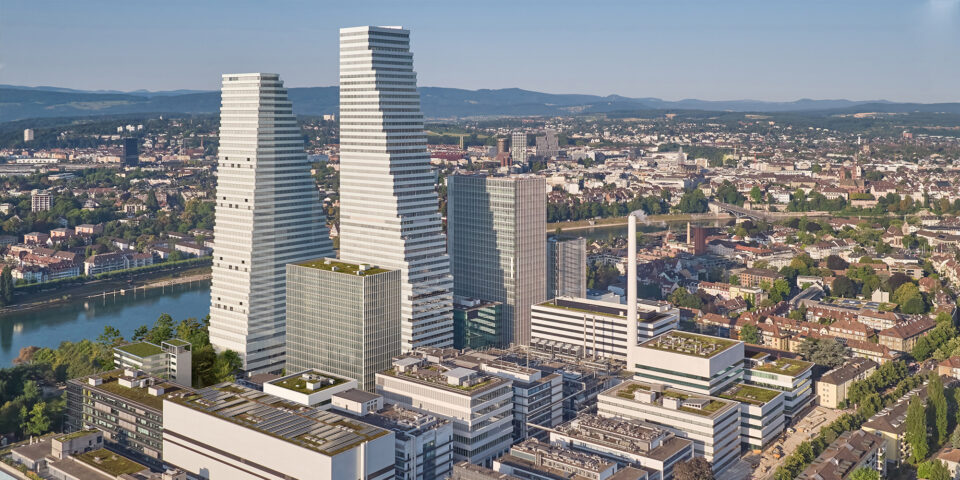
    Roche Campus Basel/Kaiseraugst is pursuing a smart building and smart campus strategy on the Basel/Kaiseraugst campus, in which a continuous IoT backbone connects existing and new buildings. Sensor technology, building automation and data platforms are used in such a way that energy efficiency, user experience and operational optimisation converge in a scalable digital infrastructure. Specific use cases include occupancy and presence measurement, indoor navigation, geo-referenced floor plans and smart logistics and material flows. Large new buildings such as Building 2, BSN8/11 and the pRED Centre will serve as supports in which sensor technology, automation and data architecture will be integrated from the outset. This makes the campus a strategic ESG lever. Energy monitoring, space and operational optimisation support decarbonisation, while user-centric working environments improve orientation and service quality. Consistent data and life cycle management creates transparency for FM and governance. At the same time, Roche is strengthening Basel as a life sciences location with internationally visible reference buildings and a clear systemic sustainability logic.
    Learn more
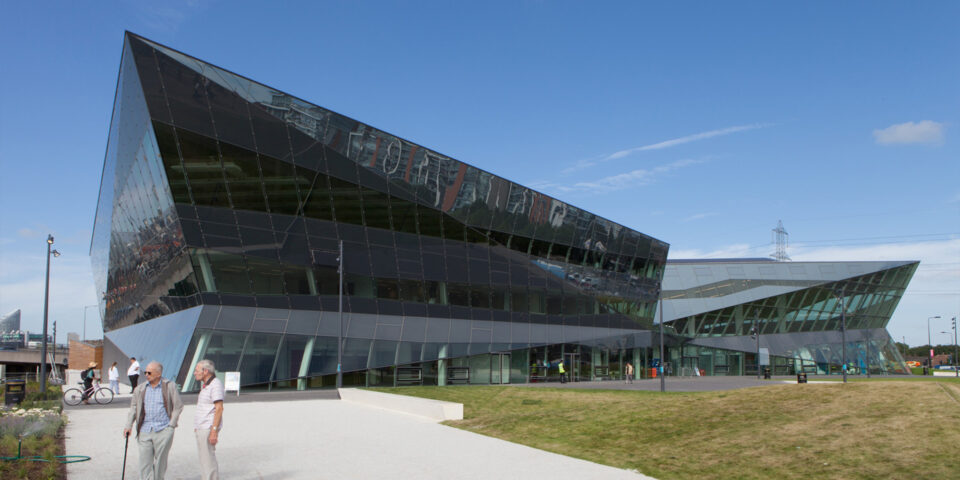
    archDaily

    The Crystal in London is a compact but consistently developed smart building lighthouse project with a clear ESG link. It was built in 2012 in the Royal Docks for Siemens as an exhibition and conference centre, covers around 6,300 square metres and is considered one of the most sustainable buildings in the world with LEED Platinum and BREEAM Outstanding. The fully glazed, two-storey building combines an all-electric concept without fossil fuels with a finely tuned glass façade and an integrated building management system. Photovoltaics on the roof, geothermal probes with heat pumps, LED lighting, rainwater and black water treatment and water-efficient fittings significantly reduce energy and water consumption. The BMS networks heating, cooling, ventilation, lighting and security, adapts operation to occupancy and weather in real time and makes all systems measurable, benchmarkable and finely adjustable. The result is a virtually self-optimising building that also serves as a publicly accessible learning space for urban sustainability and has become an international reference case for smart, ESG-oriented architecture with its transparent performance display.
    Learn more

  • Generational change strengthens the direction of an established electrical supplier

    Generational change strengthens the direction of an established electrical supplier

    Elektro Meier AG has completed a change in management and a change of name. According to a statement from Eglin Holding AG in Baden, the Würenlingen-based company will be operating under the new management of Marc Wey and under the new name Eglin Elektro AG Würenlingen as of 1 December.

    According to the press release, Marc Wey is a “management personality from the company’s own ranks”. Marc Wey has been with the company since his apprenticeship as an electrician (2009 to 2013 at the former Ing. W. Eglin AG). After years as a service fitter, Wey took over responsibility as Junior Project Manager at Elektro Meier AG Würenlingen in 2018. Most recently, he had been Project Manager in E-Service since 2020. The move marks the completion of the integration into the Eglin Group, which began in 2002. “This makes the affiliation with the Eglin Group transparent to the outside world and creates a clear, future-oriented identity,” the press release explains.

    The family-run company Elektro Meier AG can look back on almost 100 years of company history. Originating from the Eglin electrician company founded in 1931 in Ennetbaden AG, the company is now active in the planning, manufacture and sale of electrical systems and equipment. It specialises in solutions and services in the fields of electrical installation, ICT and building automation.

  • Swiss premiere in building automation

    Swiss premiere in building automation

    Today’s modern buildings are highly complex systems. They combine heating, cooling, ventilation, lighting, security, photovoltaics and storage solutions to form an integrated whole. Building automation ensures that these components work together optimally, with less energy consumption, more stable operation and greater comfort. In the context of the Energy Strategy 2050 and the decarbonization of the building stock, the need for specialists who understand both technology and data and system logic is growing rapidly. The state recognition of the Building Automation HF course takes this need into account and creates a clearly defined, quality-assured career path

    First state-recognized Building Automation HF in Switzerland
    sfb in Dietikon is the first university of applied sciences in Switzerland to successfully pass the recognition procedure of the State Secretariat for Education, Research and Innovation for its Building Automation HF course. The degree is thus federally recognized and embedded in the formal education system. According to the school management, this guarantees training that is geared towards the current requirements of the industry, standards and regulation and remains compatible in the long term. At the same time, the recognition strengthens the visibility of the profession vis-à-vis building owners, planning offices, energy suppliers and the real estate industry

    Practical profile from energy efficiency to building informatics
    In terms of content, the course has a clear practical focus. It teaches specialist skills in energy efficiency, building IT, networked systems and modern automation solutions. From sensor and control technology to data analysis and optimization in operation. The aim is to train specialists who can support the entire life cycle of smart buildings, from planning and design, project management, commissioning, operation, maintenance and ongoing optimization. This broad qualification creates the basis for sustainable, economical building solutions and enables companies to reduce operating costs, emissions and failure risks

    Specialists for the digital transformation in the building sector
    Building automation specialists HF work at the interface between technology, IT and operations. They understand building technology systems as well as data rooms, interfaces and security requirements. For companies in the fields of building technology, energy, facility management and real estate development, this means a tangible competitive advantage. They gain access to specialists who are proficient in the latest technologies and can also actively drive forward the digital transformation of buildings. According to sfb, it is precisely this profile that is in demand when it comes to putting smart building and net zero strategies into practice

    Course structure and target groups
    The recognized course is aimed at specialists with relevant basic vocational training in the electrical, HVAC, building or IT professions. In six semesters, the course leads to the final thesis and the protected title of “Certified Building Automation Technician HF”.

  • Training offensive for networked building technology

    Training offensive for networked building technology

    The sfb is the first university of applied sciences in Switzerland whose Building Automation HF course has successfully completed the recognition procedure of the State Secretariat for Education, Research and Innovation (SERI). “This guarantees the highest quality, state-recognized qualifications and training that meets the current requirements of the industry,” said sfb Director Dorothea Tiefenauer in a press release. The demands placed on modern buildings are constantly increasing, it continues. The sfb – College of Technology and Management can now respond even better to the great demand for qualified specialists thanks to the recognition of the course.

    According to the description, the course content is consistently geared towards practice. Knowledge of energy efficiency, building IT, networked systems and modern automation solutions is taught. The aim is to qualify students for the planning and implementation, but also the operation and maintenance of complex, smart networked buildings. According to sfb, this range creates the basis for sustainable and long-term economical building solutions. For companies, this development of expertise means a decisive competitive advantage, it says. Graduates are specialists who are not only proficient in current technologies, but can also actively shape the digital transformation.

    The course takes students who have completed relevant vocational training to complete their thesis in six semesters. Graduates are ultimately awarded the title of qualified building automation technician HF. The sfb organizes information events to provide an insight into the content and structure of the course. Both individuals and companies are invited to attend.

  • Advantages of intelligent building systems

    Advantages of intelligent building systems

    Porter, telephone operator and elevator operator – three examples of professions that used to be essential for the operation of buildings, but are now largely extinct. Access control, telecommunications, lifts and many other areas have long been automated. With digitalization, real estate is increasingly developing in the direction of “smart buildings”. A look at building automation shows what benefits this can bring and to what extent it also poses challenges.

    Networking trades
    Digitalization enables building automation to combine previously largely autonomous trades into a networked system. Continuous data exchange and optimized processes increase convenience for users as well as energy efficiency. In practice, however, this integrated approach is still associated with certain challenges, says Turan Babuscu, Head of Automation at Siemens Switzerland. “The coordination between the trades often takes place too late in a construction project.” This concerns, for example, the definition of interfaces and the clarification of responsibilities – topics that should be discussed as early as possible in the planning phase. “Only if integral collaboration is clearly defined from the outset can digitalization develop its full potential,” emphasizes Babuscu.

    Greater efficiency, more comfort
    The benefits of successful integrated building automation can be seen in operational efficiency, for example. If data is systematically recorded and evaluated, energy consumption can be reduced, faults detected at an early stage and needs-based maintenance cycles developed. The technical building systems thus require less energy and have a longer service life – two aspects that are of interest to owners and operators for both ecological and economic reasons.

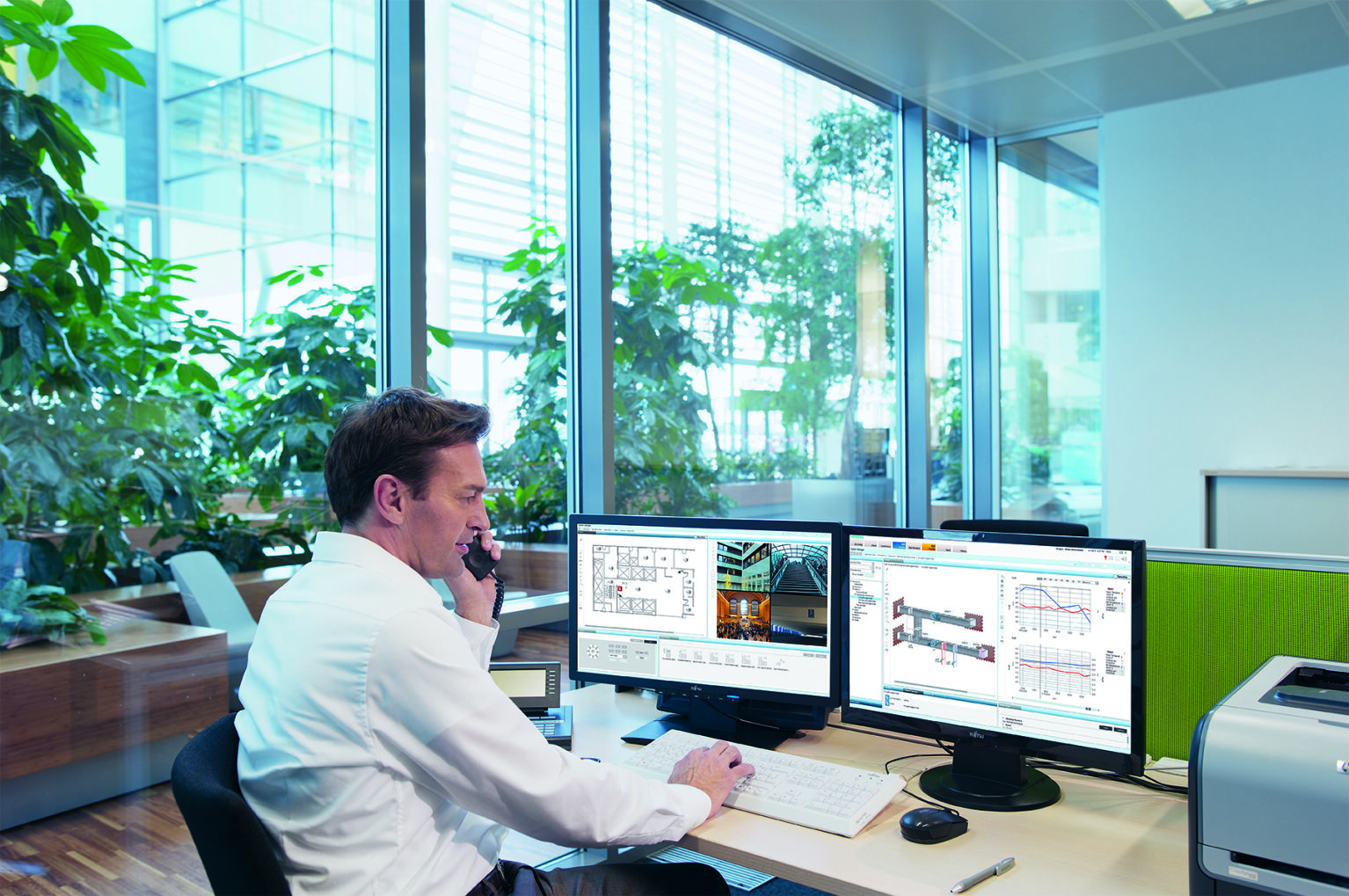
    To ensure that all building services are networked and coordinated in a building automation system, the topic must be included at an early planning stage. (Photo: Siemens Switzerland)

    For users, on the other hand, the focus is primarily on the greater convenience that integrated building automation allows. One example of this is the adjustment of room temperature, lighting and air quality according to use, time of day and occupancy, resulting in a healthier and more productive indoor climate.

    AI provides support
    Babuscu predicts that the networking of different systems within a building will continue to increase in the coming years. “This requires open, secure protocols such as BACnet/SC or KNX Secure, which enable obstacle-free, encrypted communication between the trades and the cloud services.” And what about artificial intelligence (AI)? “It already has a firm place in building automation,” says Babuscu. “Many systems use learning algorithms to understand the building’s behaviour and optimize it automatically.” This development is set to continue. In future, AI is likely to increasingly make decisions itself, for example by determining the best operating strategy or the optimum time for maintenance. It is important that the use of AI is transparent, comprehensible and safe in order to gain the acceptance of those involved.

    Further information:
    https://www.swissbau.ch/de/c/vorteile-von-intelligenten-gebaeudesystemen.74100