Grey energy in context
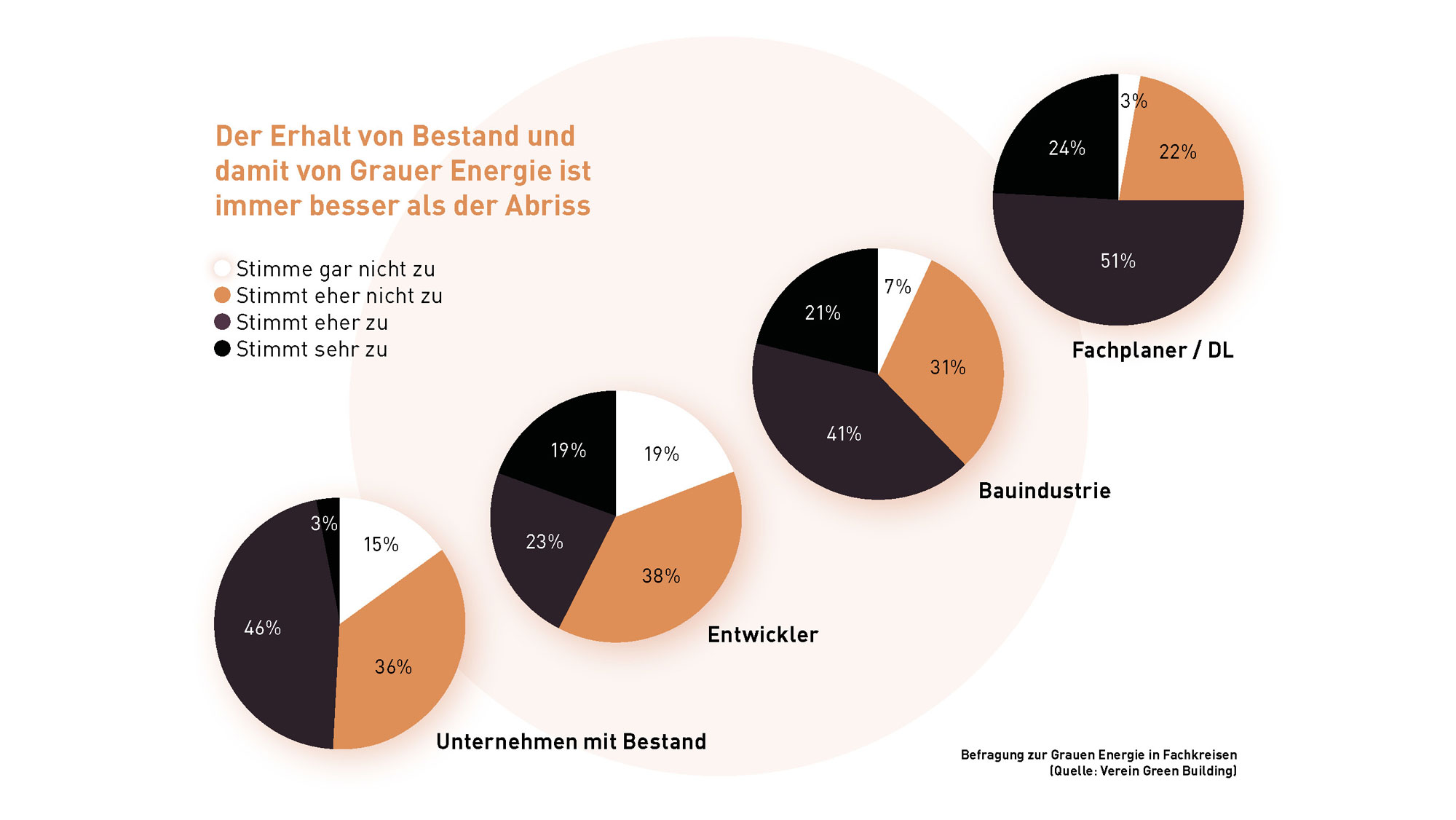
The strength of the argument comes from the absolute statement that “the preservation of existing buildings and thus grey energy is always better than demolition”. According to a survey of experts, the vast majority of specialist planners, architects and service providers in the property sector agree with this stance. However, just under half of property owners also share this view, albeit with reservations.
When asked in more detail, the respondents differentiated their attitude. Poor building fabric or poor energy efficiency, an outdated usage structure, utilisation that cannot be activated for the realisation of more living space or economic viability could be arguments against preservation. The sector rightly emphasises that there is no absolute truth and that the treatment of each property must be weighed up between ecological, economic and social aspects.
One regulation for two different concerns
Parallel to the intensification of the debate on the conservation of grey energy, the tone on tenant protection has become more heated. Various initiatives at cantonal and federal level want to prevent tenants from having to leave their homes due to extensive renovations or building replacements. These initiatives also take the uncompromising position that no eviction is always better than eviction. The canton of Basel-Stadt shows how quickly regulations can take effect. Barely three years after the introduction of the housing protection initiative, fewer properties are already being demolished and therefore fewer properties are being let out. The protection of residential property has a predominantly economic effect, with the regulated prices for new flats making replacements and renovations less financially attractive for property developers. As a result, fewer projects are being realised.
Cautious discussion about social and societal costs
As little as the absolute statement on the preservation of grey energy is correct, the blanket statement that not renting out is always better than renting out does not apply. The statement may be true for the individual tenant concerned, but not when it comes to providing housing for the entire population. Extensions and replacements can create more living space for more people, often in locations that are already well developed and supplied. Structural deficits in housing cannot be remedied without interventions in the building structure.
What is needed is a more objective discussion on how the conflict of objectives between the protection of the individual and the interests of society can be resolved in the best possible way. In some cases, delaying a replacement or upgrading the existing housing stock for a further life cycle may make sense; in other cases, the social benefit of more living space outweighs this. The focus should be on the discussion of how to best cushion the social impact of rent reductions. Regulations should be focussed on finding solutions for cases of hardship.
A balanced discourse is needed
Absolute considerations ignore the fact that decisions are often complex and require diverging concerns to be weighed up. Sustainable solutions are usually caught between different arguments.
Representatives of the industry should be aware that generalised statements reduce the scope for context-specific discussions. If the sector unthinkingly backs the preservation of grey energy or opposes rent reductions, the door for the discussion of moderate regulations closes.