The Zurich cantonal government wants to create the planning basis for increased utilisation of wind power in the canton. According to a press release, it has now submitted 20 highly suitable and 15 well-suited areas for consultation. The highly suitable areas are mainly located in the north-east of the canton between Cholfirst, Stammerberg, Zünikon and Bergbuck. Other areas in the south of the Knonauer Amts, on the Pfannenstiel and in the Oberland are considered to be well suited. The canton looked at a total of 52 potential areas.
The consultation will last until 31 October. The cantonal government will then prepare the corresponding proposal for the cantonal council. Wind turbines can only be erected in areas that are listed as suitable in the structure plan.
The cantonal government is also proposing measures to involve the municipalities and the population in the construction of the turbines. For example, municipalities and private individuals should be able to participate voluntarily in the investments. Conversely, plant operators should voluntarily allow municipalities to share in the profits.
In contrast, the cantonal government sees little potential for the expansion of hydropower in the canton. Only at the Rhine Falls could 20 per cent of the water be used for an underground power plant. It proposes a corresponding entry in the structure plan.
From the start of the 2025 autumn semester, the School of Architecture, Civil and Environmental Engineering(ENAC) at the Swiss Federal Institute of Technology Lausanne(EPFL) will be offering a Master’s degree in the challenges of urban change. A Master’s degree in Urban Systems will enable ENAC students to become specialists in adapting cities and surrounding areas to climate change, according to a press release from EPFL.
In view of climate change, Switzerland needs to equip itself with experts in urban management in the broadest sense, according to the EPFL. The new Master’s degree programme has been developed in collaboration with practitioners. It offers graduates of the ENAC Bachelor’s degree programmes in Civil Engineering and Environmental Engineering the opportunity to specialise in the sustainable transformation of cities and surrounding areas. The Master’s programme is also open to other related disciplines, including architecture, provided they submit an application.
The programme has three specialisations: Mobility and Transport in a Changing Climate, Sustainable Transitions in Urban Systems and Health and Wellbeing in the Urban Environment.
At the end of the programme, students receive an EPFL Master of Science MSc in Urban Systems. This diploma entitles them to use the title EPF qualified engineer.
The National Council’s Committee for the Environment, Spatial Planning and Energy has drafted a proposal to restrict the right of environmental organisations to lodge complaints about smaller residential buildings within the building zone. This initiative aims to simplify the bureaucratic process of planning permission, particularly for small-scale construction projects.
The Federal Council issued its opinion on this proposal on 27 March 2024 and supports the proposals of the UREK-N. It is in favour of restricting the right of appeal for residential buildings with a floor area of up to 400 m2 within building zones. This step should help to make the construction process more efficient for private developers and at the same time ensure the protection of important environmental and cultural heritage sites.
In addition, the Federal Council agrees with the exceptions proposed by the UREK-N. In particular, the right of appeal by associations should remain in place for construction projects that affect important sites, historical sites and cultural monuments, as well as for buildings in sensitive areas such as biotopes or water areas.
The bill is expected to be discussed by the National Council in the special session in April. This development illustrates the ongoing efforts to ensure a balanced approach between economic development and environmental protection in the construction industry.
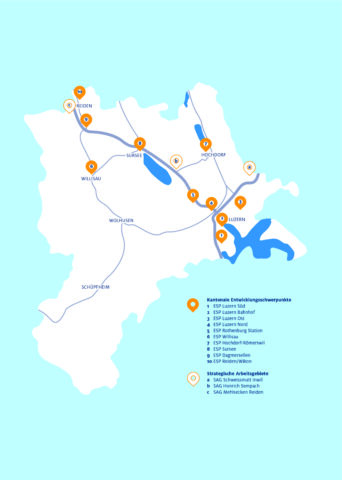
The cantonal development priorities were already defined in the 2009 cantonal structure plan. Even before the Swiss population approved the Spatial Planning Act, the cantonal planners had already focused on an increased spatial concentration of future economic development along the most attractive transport locations. Further planning instruments are available for the more decentralised locations, so that adequate business development is also possible there .
Integral spatial and economic development The coordination of settlement and transport is a central element in the further development of the cantonal development focal points (ESP). Only when infrastructures and growth are in good symbiosis will functioning areas be created in the long term. The optimisation of transport access is often the basis for ESP development. In addition to planning roads and railways, the Canton of Lucerne focuses in particular on promoting sustainable mobility, not least with regard to climate policy goals. The companies, for their part, are called upon to introduce a company mobility management system and to do their part to ensure that traffic can flow optimally.
Instrument for coordinated location promotion Thanks to its central geographical location and constant work on the most important location factors for companies, the Canton of Lucerne is particularly attractive as a business location today. Due to the close cooperation of the canton with the regions and municipalities in location and business promotion, the cantonal ESPs are the most important link to spatial planning. All development focal points should be provided with available, attractive land offers, combined with a promising marketing profile. The basis is laid in the jointly supported area management of the ESPs in cooperation with the landowners and investors.
Strategic working areas as a special offer Strategic working areas (SAG) are coherent larger areas that are defined in the structure plan. There are currently three such areas in the canton of Lucerne. They are between 10 and 30 hectares in size. This is a lot of space to realise big ideas and projects. According to the criteria formulated, their use is reserved for particularly high-value-added companies and real estate developments. The development of the sites is carried out in close coordination with the Canton of Lucerne and the respective local communities. The Lucerne Economic Development Agency acts as the first point of contact for potentially interested parties.
Lucerne city region
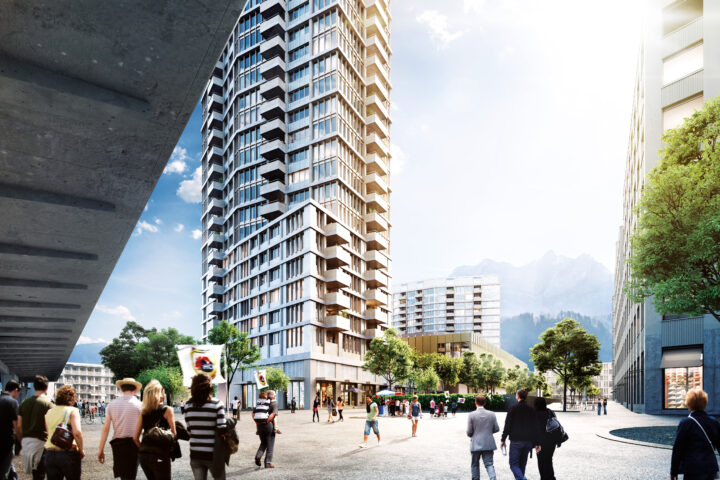
ESP Lucerne South Nestled between Lucerne, Horw and Kriens is a diverse settlement area with an urban character and directly adjacent recreational area. The ongoing transformation into an urban, creative and sustainable living and working area is in full swing. Lucerne South has excellent regional and national transport connections. The “Freigleis” bicycle highway is particularly popular as a work and leisure connection. www.luzernsued.ch
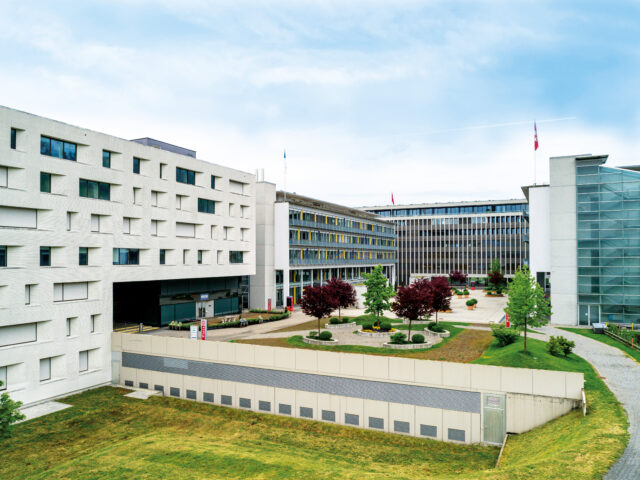
ESP Lucerne North The Smart City Lucerne North is where Emmen and Lucerne, the two most populous municipalities in the canton, meet. The urban heart of the ESP perimeter, which stretches from Littau railway station to Waldibrücke railway station, is currently being built around Seetalplatz, which is ideally accessible and picturesquely situated on the Reuss and Kleine Emme rivers. The largest ESP in terms of area offers a wide range of services for businesses and the population. www.luzernnord.ch
ESP Lucerne East The Lucerne East area comprises six Rontal municipalities. Directly connected to the A14 motorway and accessible by all means of transport, Lucerne East lies directly on the axis of the economic areas of Lucerne, Zug and Zurich. In addition to large industrial firms, internationally oriented companies in particular are located here. At the same time, the green hills of the region and the nearby water space of the Reuss River offer local recreation on the doorstep. www.luzernost.ch
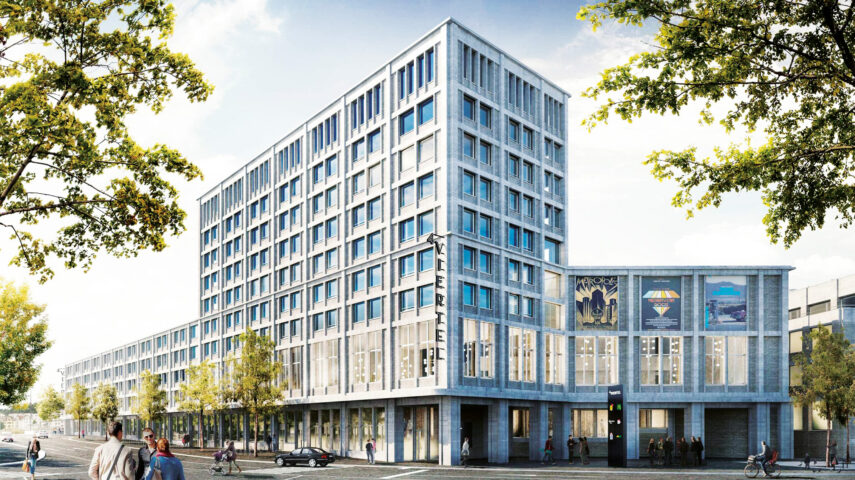
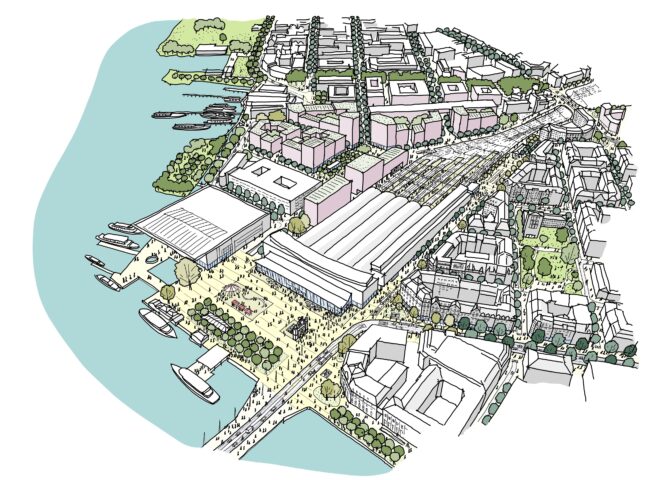
ESP Lucerne railway station The world-famous postcardLucerne is the cultural and economic metropolis of Central Switzerland. The project of the century, the through station, will ensure Lucerne’s national and international accessibility in the long term and enable the expansion towards sustainable mobility in the entire metropolitan region. The city centre on the lake will take on a new character as new, unique urban development opportunities are created in the immediate vicinity of the station.
ESP Rothenburg Station This ESP, located in the north of the city region, is characterised by a high location quality and development dynamics and has great potential for further development. An overall settlement and transport concept is currently being developed in a cooperative process, which will form the basis for the future structural, transport-friendly and economic development of the area.
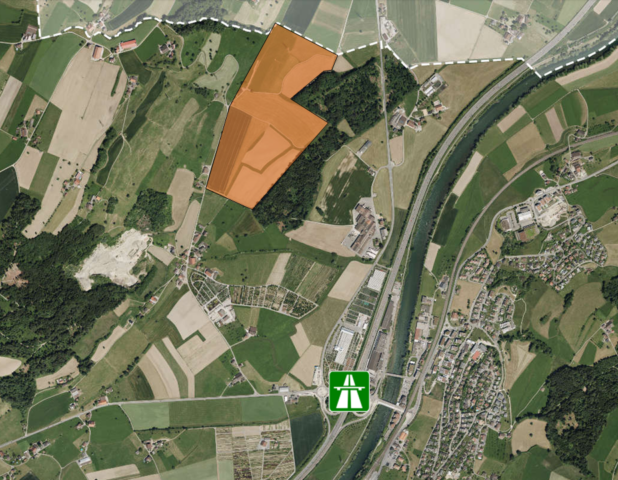
SAG Schweissmatt Inwil The largest of the three strategic working areas in the canton of Lucerne is located in the municipality of Inwil. The almost 30-hectare site is located in the immediate vicinity of the A14 motorway (main transport axis Lucerne-Zug-Zurich) and is in the process of being prepared under planning law for the settlement of a large-scale enterprise with high added value.
Sursee, Seetal, Willisau and Wiggertal regions
ESP Sursee The development of the city and region of Sursee into a modern small-town centre on Lake Sempach has been in the offing for decades. The town is also interesting as a business location. Over the years, numerous companies have settled here, benefiting from the perfect rail and road connections. With its inclusion in the agglomeration programme, the town of Sursee is about to take the next step in its development. From the working area in the north of the town, companies can reach their customers throughout Switzerland within a short time.
ESP Hochdorf-Römerswil Hochdorf is the regional centre of the Lucerne Lake Valley. The high quality of the landscape meets exciting companies here. Industry in particular has settled in the Seetal over the course of time. This has left its mark. Even today, the Seetal is still the region with the highest proportion of second sector companies. The large reserves of building land are a major advantage of the ESP and, in particular, its potential. A utilisation and development concept is currently being drawn up.
ESP Reiden / Wikon The municipalities of Wikon and Reiden are located on the border with Canton Aargau and have excellent transport connections with their own motorway exit to the A2. In addition to the north-south connection, the east-west connection A1 is also in the immediate vicinity. This location and also the industry- and fabric-friendly environment (the ESP borders residential areas at only a few points) make the ESP a highly sought-after location for companies.
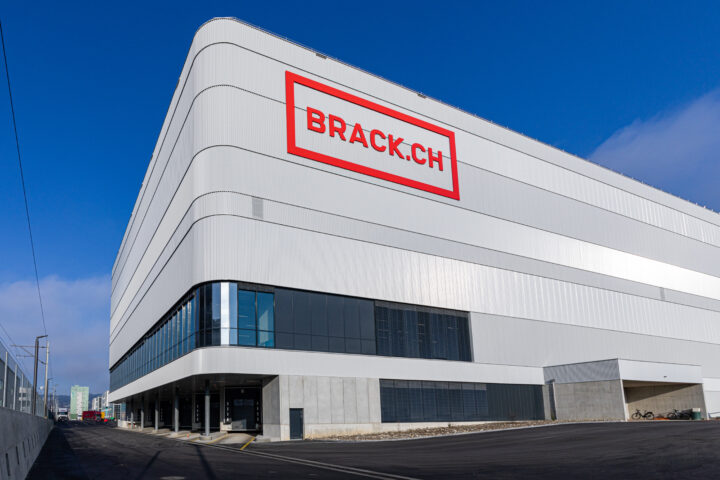
ESP Willisau The pretty little town of Willisau is the regional centre of the Lucerne hinterland. Small and medium-sized commercial and industrial enterprises from various sectors have settled here. Competec Logistik (Brack) is a major newcomer to the area, and the company continues to expand in Willisau. There are still building land reserves, and urban development is underway on the former Wellis site. The spatial and utilisation vision for the Willisau ESP is currently being drawn up for its further development.
ESP Dagmersellen The Dagmersellen development focus has excellent transport connections. It is located in the immediate vicinity of the A2 motorway junction, the railway station is within walking distance, and there is also an industrial railway siding. The ESP is characterised by large industrial companies such as Pan Gas, Misapor, Emmi and Hiestand, and has a large range of warehousing and logistics facilities, especially through Galliker AG. The ESP still has potential for expansion.
SAG Honrich Sempach The strategic working area is located directly on the motorway. Nearby, the old Swiss fought for their independence in the famous Battle of Sempach. The profile is also independent. Where else can companies find 10 hectares of land with a lake view for development today? The Städtli, which was awarded the Wakker Prize, convinces with its high quality. There is one condition: the land is reserved for value-added companies and uses.
SAG Mehlsecken Reiden The location of SAG Reiden could not be more central. Situated between the cities of Basel, Bern, Lucerne and Zurich, it lies at the crossroads of the A2 and A1 motorways that cross the country. The Reiden motorway junction is right next to the site. The approximately 20 hectares of land offer strategic development opportunities for a high-value-added company that would like to take advantage of the favourable location and the high potential for the next big step.
Wir verwenden Cookies zur Unterstützung und Verbesserung unserer Dienste. Mit der Nutzung dieser Website erklären Sie sich mit der Verwendung von Cookies einverstanden. Weitere Informationen finden Sie in unserer Datenschutzerklärung.