Tag: GZA

  • LG site becomes an urban neighbourhood

    LG site becomes an urban neighbourhood

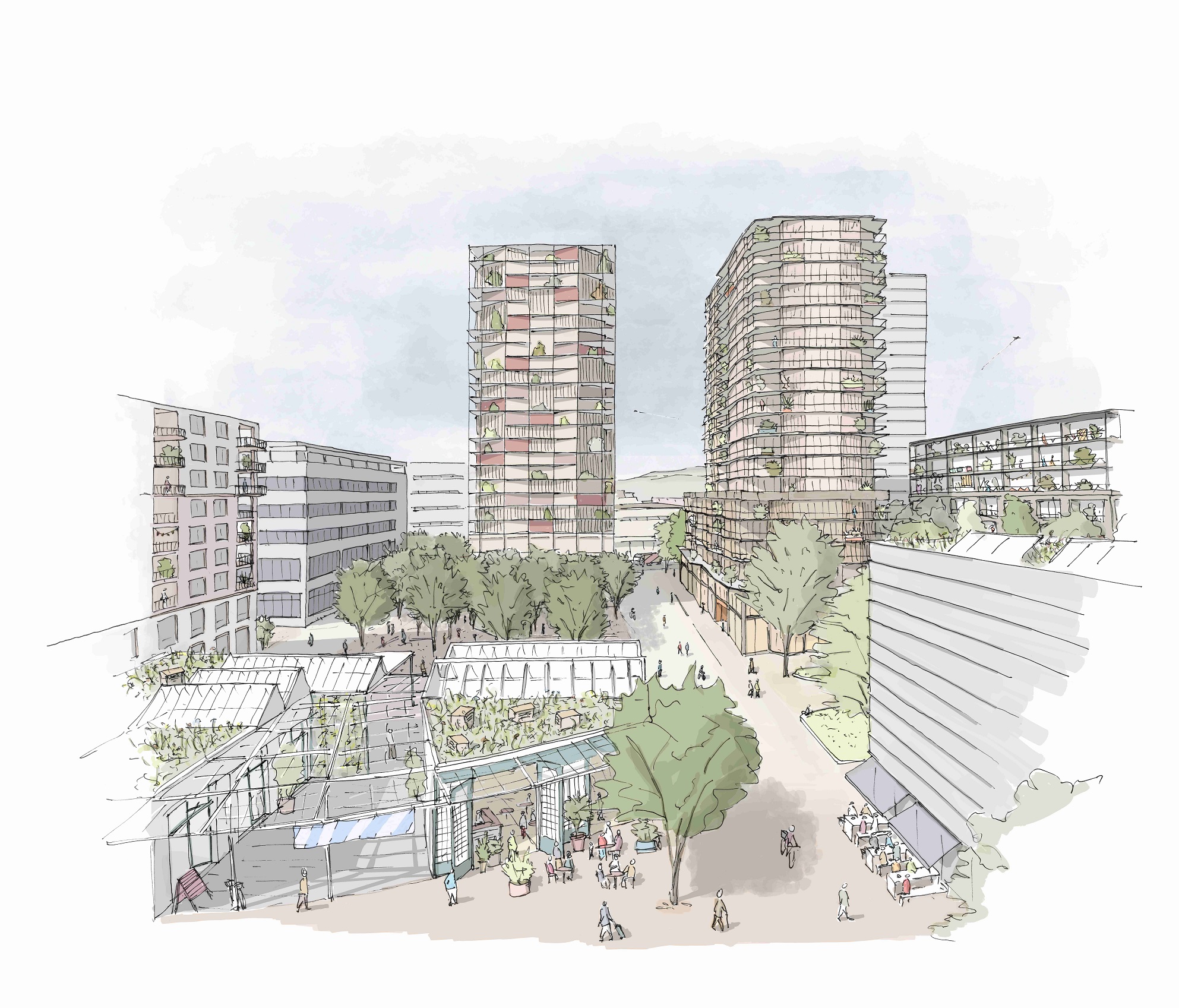
    The transformation of the LG site aims to create a lively, open district characterised by architectural quality and urban flair. The project is based on a development plan that ensures that urban development and architectural standards as well as social and ecological aspects are incorporated into the planning. In a study process, the team Salewski Nater Kretz, pool Architekten, Studio Vulkan Landschaftsarchitektur and mrs partner were selected as the winners, whose concept forms the basis for the neighbourhood development.

    Purchase of land by the city of Zug
    In order to influence the urban use and price development on the LG site in the long term, the city of Zug is planning to purchase a central plot of land on Theilerplatz. The cost of the plot amounts to CHF 65 million. This transaction will soon be dealt with by the Grand Municipal Council. This acquisition will enable the city of Zug to influence the design of the neighbourhood and ensure that affordable living space is created in the heart of Zug in the near future, as demanded by the people of Zug in June 2023 when they approved the 2000-apartment initiative.

    Remodelling work on the LG site
    While the long-term development plans for the upgrading of the LG site are in the political planning process, two existing buildings on the UBS Fund Management (Switzerland) AG site are currently being renovated. These are Gartenstadt 2a and the brick building at Zählerweg 3-9, both of which are adjacent to the Shedhalle with the “Freiruum”. This renovation is being carried out by property developer and total contractor Losinger Marazzi AG outside of the ordinary development plan procedure on the LGAreal and is being implemented in stages.

    Occupation by 2027
    The building at Gartenstadt 2a should be completed by mid-2026 and provide space for new commercial tenants. The 60 or so flats at Zählerweg 3-9, on the other hand, are expected to be ready for occupation in early 2027. If everything goes according to plan, the “Freiruum” will move into the ground floor of the 200-metre-long building at this time. Once the LG-Areal development plan comes into force, the Shedhalle can be renovated in a further stage in order to offer the “Freiruum” its long-term premises from 2029.
    New urban neighbourhood
    By 2032, the once “forbidden city” will become an open and mixed neighbourhood with an industrial character and urban flair. Around 1,200 flats and 2,300 jobs will one day be on offer. Theilerplatz, the heart of the new urban quarter, will be transformed into a central meeting place for neighbourhood residents and the city’s population with inviting places to spend time and green open spaces.

  • Aargau reapplies for membership of the GZA

    Aargau reapplies for membership of the GZA

    The canton of Aargau has applied for renewed membership of the GZA. According to the cantonal state chancellery in a press release, rejoining the regional marketing organisation would offer the best effect in terms of presenting Aargau as a business location abroad at the lowest risk. The alternatives considered were the establishment of an own presence abroad and the expansion of existing marketing activities.

    The canton of Aargau was already a member of the GZA from 2007 to 2010 as part of a trial membership. However, the membership was not extended as the regional location promotion “focused on tax-optimising companies at the time”, “for which the canton of Aargau was of no interest”, according to the press release. However, the GZA is now “focussing on innovative sectors that are already strongly represented in the canton of Aargau”. The canton of Aargau hopes to attract new companies from sectors such as life sciences, energy technology, mechanical engineering and digital technologies by rejoining the GZA.

    “We don’t want growth at any price, but rather to attract companies with high added value, good jobs and innovative products,” said Dieter Egli, Mayor of the Canton of Aargau, in the press release. “For this to succeed, we must be able to address companies directly in the foreign target markets.” To this end, the GZA aims to publicise Aargau as a business location abroad and find companies interested in setting up in Switzerland. The Canton of Aargau’s location promotion organisation will then suggest specific potential locations and clarify further questions.

  • GZA presents itself as part of Choose Europe in North America

    GZA presents itself as part of Choose Europe in North America

    The association of location organisations from 14 European cities and regions called Choose Europe is presenting itself for the first time at one of the most important technology conferences in the world, the Collision Conference. It will take place from 26 to 29 June in Toronto in the Canadian province of Ontario. As a location marketing agency representing nine cantons as well as the city of Zurich and the Winterthur region, the Greater Zurich Area is also a member of this new initiative. In addition, Amsterdam, Barcelona-Catalonia, Berlin, Frankfurt, Copenhagen, Helsinki, Lyon, Oslo, Paris, Riga, Stockholm, Vienna and Warsaw are also members.

    According to a media release, the aim of “this unprecedented collaboration” is to “showcase the benefits of working, living and investing in Europe” to a global audience. This cooperation aims to facilitate access to the European market for potential investors and talent. It aims to expand Europe’s market potential and create an environment that promotes investment opportunities and facilitates growth.

    “Europe is the frontrunner in sustainability and green change,” Helsinki Partners Managing Director Clarisse Berggårdh is quoted as saying. “However, no one can solve the big global challenges alone. That’s why we, the European investment promotion agencies, are pooling our efforts.” Global competition for foreign direct investment is intense, says GZA Managing Director Sonja Wollkopf Walt “We are ready to tackle future challenges together with our Choose Europa partners. Our shared vision is to establish Europe as a hub for sustainable investment.”

  • GZA draws a positive conclusion for 2022

    GZA draws a positive conclusion for 2022

    The number of new companies from abroad settling in the Zurich economic region has stabilised at a high level in 2022, according to GZA. Together with its location promotion partners, the location marketing organisation supported 108 companies in establishing new branches in the nine associated cantons, the city of Zurich and the Winterthur region, according to the 2022 annual report presented on 30 March. In the previous year, there had been 129 companies, in 2020 only 89, and in 2019 a total of 109.

    The 108 companies newly established last year created 516 jobs, 19 per cent fewer than in the previous year. This downward trend reflects the use of new technologies, the increasing automation of production processes and the cross-border division of labour among international companies, according to the media release accompanying the annual report. However, the companies that have settled in the region are planning to create a further 1292 jobs in the next five years.

    The front-runner among the new settlements in 2022 was the life sciences with 22 companies, followed by 20 companies from fintech and blockchain, 16 from information technologies and 12 from artificial intelligence and computer vision.

    The majority of the newly established companies come from the USA (33), Germany (14) and Italy (9). According to GZA, their internationality increases the networking of the business location and contributes to its resilience. “We want to attract attractive companies to the Zurich economic region that can create something new for a sustainable future here and throughout Switzerland,” says Balz Hösly, Chairman of the Board of Directors, as quoted in the media release.

    The focus of the 2022 Annual Report is the circular economy. GZA AG is a founding member of the recently launched Workshop for the Circular Economy CE123, an initiative from the business community that aims to pave the way for circularity, especially for SMEs. “Alongside digitalisation, the circular economy is becoming a big business prospect,” says Managing Director Sonja Wollkopf. It will “lead to more innovation and prosperity”.

  • Settlements reach pre-corona level

    Settlements reach pre-corona level

    Company settlements are increasing again after the Corona dip. The Greater Zurich Area AG (GZA), as the location marketing organization for nine cantons, was able to settle a total of 125 companies in 2021, an increase of 36 companies compared to the first Corona year 2020. According to a statement by the GZA, 42 companies came from the USA (+20 ), 19 from Germany (+4), ten from Italy (+5) and five each from China (-6), Great Britain and Singapore.

    Overall, the companies created 582 jobs in the economic area, an increase of 11 percent compared to the previous year. In the next five years there should be a total of 1843 jobs.

    The ICT sectors are most strongly represented with 42 companies, followed by the life sciences with 25 companies and the machine industry with 18 and financial services with 13 companies. The life sciences companies created 235 jobs, followed by the ICT companies with 154 jobs.

    However, the importance of the companies for the location goes beyond the number of new jobs. “We specifically address those companies that achieve high added value and strengthen the existing ecosystem,” said GZA Managing Director Sonja Wollkopf Walt at a digital media conference.

    One of the newly settled companies is Benchling . The American provider of cloud solutions for life sciences wants to create up to 150 jobs in the Circle at Zurich Airport. The Chinese pharmaceutical company Hengrui already has its European headquarters in Basel and is now setting up a research and development site in Zurich.

    The German RegTech company targens will sell its software for compliance solutions to banks in Switzerland and Liechtenstein from Schwanden GL. Ruedi Becker, the Swiss head of the Landesbank Baden-Württemberg subsidiary, was able to convince his superiors of the advantages of Glarus together with the GZA.

    That pleases the Glarner location promoter Christian Zehnder. So far, Glarus has been strong in manufacturing and food production. “We want to get away from our traditional image,” he said. “When companies settle here, however, we depend on the strong partner GZA, who markets the location internationally.”

    Sonja Wollkopf Walt sees it similarly: the settlement of targens strengthens the ecosystem as a whole and sends the signal that the economic area extends beyond Zurich and Zug. “In the Greater Zurich Area there is the ideal location for every company.”

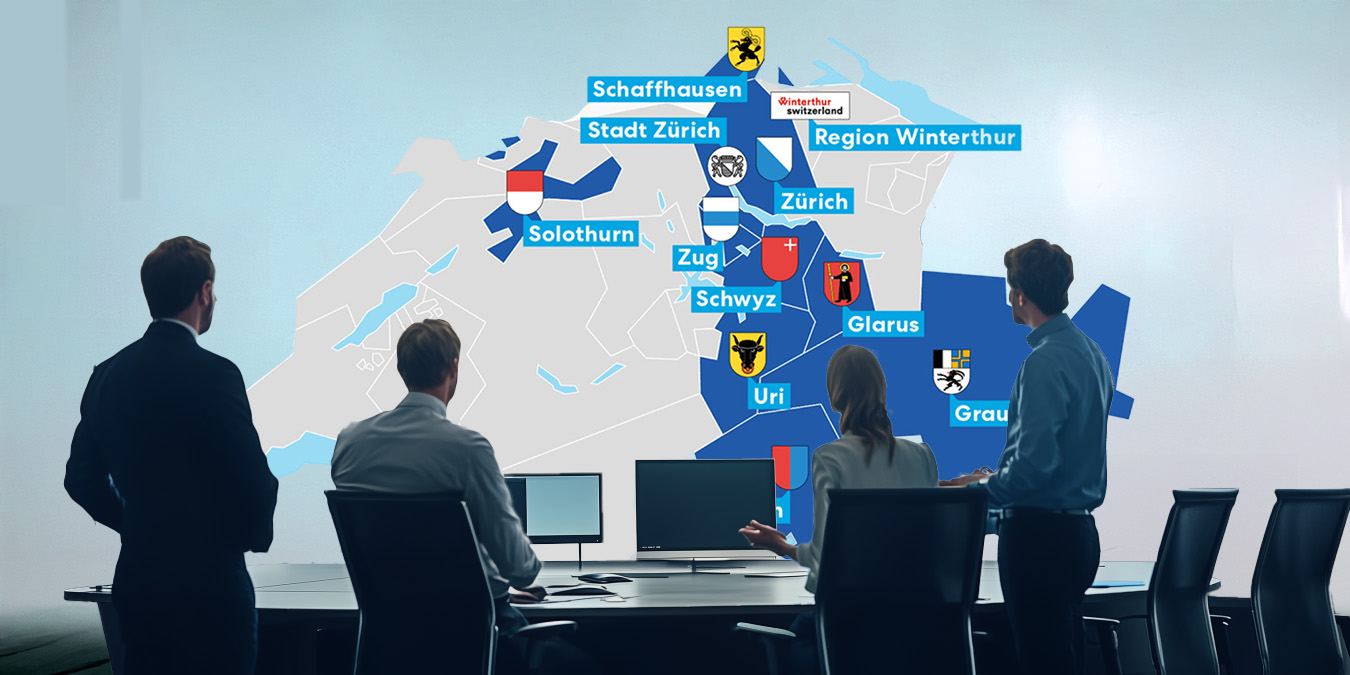
    The Greater Zurich Area includes the cantons of Glarus, Graubünden, Schaffhausen, Schwyz, Solothurn, Ticino, Uri, Zug and Zurich.

  • Aargau wants to attract more companies

    Aargau wants to attract more companies

    The Aargau government council has presented the task and financial plan for the years 2022 to 2025. It also provides for measures to increase the attractiveness of the business location, including the settlement of new companies. According to the government's embassy, Aargau and its advantages should be made better known to companies abroad. "That is why additional measures should be examined and implemented in this area in order to increase the density of companies in Aargau in the long term."

    When it comes to settling in, the canton wants to concentrate primarily on the sectors in which it is already strong today, namely the life sciences and the energy industry. The focus is on industrial companies and industry-related service providers who rely on a highly qualified workforce. The aim is to locate between twelve and 14 companies each year, including six to eight in the two focus industries. In the past year five companies were relocated, three of them in the focus industries. The acquisition strategy is to be developed next year and applied in a selected market from 2023.

    According to the embassy, it will be checked as early as 2022 whether the canton should join an existing cross-cantonal organization of location marketing. The canton was one of the founders of the Greater Zurich Area (GZA) in 1999, but later left it. Today, GZA is the largest location marketing organization with nine German and Italian-speaking member cantons, including the three neighboring cantons of Aargau: Solothurn, Zug and Zurich. Aargau also borders the Basel Area Business & Innovation , to which the two Basel cantons and the Jura belong.

    With Lucerne, Nidwalden and Obwalden, the Aargau is only one of four cantons that do not belong to any cross-cantonal organization of location marketing. Western Switzerland is organized in the Greater Geneva Bern area , the four cantons of Eastern Switzerland in the St.GallenBodenseeArea .

  • A superlative future project

    A superlative future project

    Where the SBB's repair center (Depot G) is located today, a new piece of the city is to be built in the middle of the city in the future. This is done on an area larger than four football fields. Those responsible for the project envision that different offers for living and working as well as spacious public spaces should be created on the Neugasse area for the neighborhood and for the entire city. Also for people who should help shape the space and life there with their ideas. Speaking of co-design: how the Neugasse area will be designed for the future in detail, the SBB will design together with the population, politics and administration.

    75 percent of the area is planned for living – a total of 375 apartments. The following distribution is planned:
    1/3 non-profit housing construction (building rights to cooperatives)
    1/3 limited-price living
    (created by SBB)
    1/3 living for market rent
    (created by SBB)

    25 percent of the area is planned for trade, culture and communal or public uses.
    10 percent school
    (Building rights to the City of Zurich)
    15 percent commercial, cultural and communal uses (1/3 of it in building rights for cooperatives). ■

  • Another skyscraper characterizes Zurich Oerlikon

    Another skyscraper characterizes Zurich Oerlikon

    The foundation stone for the project was laid in 2014 with a multi-stage general planning competition. Armon Semadeni Architects, Zurich emerged as the winner. SBB is investing around 96 million francs in the Franklinturm at Zurich Oerlikon station. The almost eighty meter high new building will have 14,800 square meters of office space on 21 floors and shops and restaurants on the ground floor on 200 square meters. In addition, a bicycle ramp will be integrated into the Franklinturm, which will connect Hofwiesenstrasse with the Velostation Passage Oerlikon. The sales and catering areas on the ground floor will be marketed in 2021. With the project, SBB wants to further improve the quality of work and life in Zurich Oerlikon. The building, together with the Andreasturm, will have a significant impact on the cityscape in north Zurich, emphasize those responsible for the project. As with previous SBB buildings, the Franklinturm will also be realized according to the "DGNB / SGNI Platinum" standard of the Swiss Society for Sustainable Real Estate Management. The system evaluates the ecological, economic, socio-cultural and functional qualities of a building. ■

  • Competence center for social professions

    Competence center for social professions

    The vocational school in Winterthur is a competence center for social professions. In addition, the professions of retail trade and dental assistant are taught, writes the building construction department of the canton of Zurich in a message. With the new building, the construction project includes around forty classrooms, a triple gymnasium as well as rooms for student residence and administration. As a result, various rental areas in Winterthur will be eliminated and the number of school locations will be reduced.

    Optimal use of school and sports
    The project captivates with its compact form and the associated location within the plot. This would create space for two spacious forecourt, emphasize the project managers. The floor plans also ensure optimal school and sports use, and the light-flooded atrium enables inviting, interior access and attractive usable areas on the ground floor and on the upper floors. With the seven-storey wood / concrete structure, the building management's high sustainability requirements would be met. The statically load-bearing timber framework remains visible on the upper floors. The aim is to submit a building project that is eligible for approval to the government council and the cantonal council in 2021. If you agree to the project and no appeals are made, construction work is expected to start in autumn 2022. ■

  • So stellen sich die Standortförderer der Kantone auf

    So stellen sich die Standortförderer der Kantone auf

    Kanton Solothurn, Sarah Koch

    Weshalb sollte sich ein ausländisches Unternehmen in Ihrem Kanton niederlassen?
    Sarah Koch: Weil wir Fachkräfte, Know-how, Innovationspartner und die notwendige Infrastruktur vor Ort haben, um zukunftsträchtige Entwicklungsprojekte voranzutreiben. Und weil der Kanton Solothurn als Wohn- und Lebensstandort besondere Qualitäten aufweist. Attraktive Jobs und Freizeitmöglichkeiten gehen bei uns Hand in Hand.

    Welche Art von Unternehmen interessiert sich für Ihren Kanton?
    Der Kanton Solothurn ist etabliert als Produktions- und Innovationsstandort, insbesondere im Bereich der Medizinaltechnik bzw. Life Sciences. Aus diesem Grund ist das Interesse der Unternehmen aus diesen Technologien besonders gross. Wir verfügen aber auch über ein spannendes Ökosystem im Bereich der erneuerbaren Energien – innovative Start-ups und Spin-offs zieht es in unsere Zentren.

    Was hat sich in den letzten fünf Jahren in Ihrem Kanton bezüglich Standortqualität konkret verändert?
    Unser Standort ist steuerlich attraktiver geworden. Die Steuerbelastung ist im Zuge der Steuerreform und AHV-Finanzierung per 2020 auf 16,8 Prozent gesunken und wird bis 2022 bis auf 15,3 Prozent gesenkt. Zudem hat der Kanton seine E-Government-Strategie stetig vorangetrieben. In diesem Jahr geht das Behördenportal online – eine administrative Erleichterung für Unternehmen und Privatpersonen.

    Welche Entwicklungen erwarten Sie in den nächsten fünf Jahren?
    Die Digitalisierung hat durch die Coronakrise enormen Rückenwind erhalten. Wir gehen davon aus, dass sowohl die Unternehmen wie auch die öffentliche Hand diese Entwicklung in den nächsten Jahren weiterverfolgen. Dateninfrastruktur und Download-Geschwindigkeit spielen in diesem Zusammenhang eine wichtige Rolle – der Kanton Solothurn ist diesbezüglich sehr gut aufgestellt. Auch im Bereich der Arbeitszonenbewirtschaftung hat der Kanton wesentliche Schritte initiiert, um die künftige Entwicklung der Wirtschaft zu stärken.

    Wie wirkt sich die Coronakrise auf die Wirtschaft Ihres Kantons aus?
    Der Kanton Solothurn befindet sich bezüglich der Arbeitslosenzahlen und Kurzarbeitsentschädigungen im Schweizer Durchschnitt. Noch sind die Folgen der Coronakrise nur sehr schwer abzuschätzen. Wir bleiben zuversichtlich und erhoffen uns, dass der Trend zur Renationalisierung von Wertschöpfungsketten und damit auch die Standortverbundenheit unserer KMU zunehmen wird. Das ist eine Chance für unseren Kanton.

    Was unternehmen Sie diesbezüglich?
    Wir stehen im engen Austausch mit den Unternehmen und unterstützen beispielsweise in der Vermittlung von Innovations- oder Finanzierungspartnern. Zudem werden wir unsere Standortstrategie 2030 für den Kanton Solothurn an die aktuellen Herausforderungen anpassen – dabei wollen wir natürlich auf die Bedürfnisse der Unternehmen eingehen.■

    Wirtschaftsförderung Kanton Solothurn
    Sarah Koch
    Leiterin Wirtschaftsförderung
    Telefon: +41 32 627 95 27
    www.standortsolothurn.ch
    wifoe@awa.so.ch

    Kanton Graubünden, Eugen Arpagaus

    Weshalb sollte sich ein ausländisches Unternehmen in Ihrem Kanton niederlassen?
    Eugen Arpagaus: Nebst der ausgezeichneten Verkehrslage an der Nord-Süd-Achse und der Nähe zum Wirtschaftsraum Zürich sowie der guten Anbindung an den Flughafen Zürich bieten wir eine attraktive Steuerbelas-
    tung, die Möglichkeit der Steuererleichterungen, eine sehr unternehmensfreundliche Abschreibungspraxis, die Fördermöglichkeit von innovativen Vorhaben sowie günstigere Kostenstrukturen gegenüber der Agglomeration. Immer mehr an Bedeutung gewinnen eine hohe Lebensqualität und eine gute Work-
    Life-Balance. Die Erfahrungen einzelner exportorientierter Unternehmen zeigt, dass neue Mitarbeitende wegen der hohen Lebensqualität sehr wohl gewillt sind, nach Graubünden umzuziehen.

    Für welche Unternehmen ist der Kanton Graubünden interessant?
    Wir sind überzeugt, dass der Kanton für produzierende High-Tech-Unternehmen in den Branchen Life Science, Medtech, MEM, Sensorik und Chemie/Kunststoffe sowie für Informations- und Kommunikationstech-
    nologie-Unternehmen von besonderem Interesse ist. Dies lässt sich durch das verfügbare Know-how im Sinne des Mitarbeiterpotenzials in der Region belegen. Auch zeigen die Daten der bestehenden Unternehmen, dass sie hier auf die Stückkosten bezogen ein attraktives Umfeld finden.

    Was hat sich in den letzten fünf Jahren in Ihrem Kanton bezüglich Standortqualität konkret verändert?
    In den letzten Jahren haben wir uns intensiv mit der Möglichkeit zur Erhöhung der Verfügbarkeit von attraktiven Industrieflächen beschäftigt. So konnten wir im Industriepark Vial in Domat/Ems eine Fläche von ca. 22 Hektaren umstrukturieren und den export- und technologieorientierten Unternehmen zur Verfügung stellen. Die ersten zwei Unternehmen mit einem Potenzial von rund 1000 Mitarbeitenden konnten wir bereits ansiedeln. Die sofortige Verfügbarkeit von Bauland ist gegeben, und dies zu einem attraktiven Bodenpreis. Des Weiteren hat Graubünden stark im Bereich Forschung investiert. So konnte dieses Jahr mit der ETH Zürich das Forschungszentrum «Climate Change and Extremes Research Center CERC» gegründet werden.

    Welche Entwicklungen stehen für Sie in den nächsten fünf Jahren an?
    Im Fokus steht die Umsetzung der Innovationsstrategie des Kantons Graubünden mit dem Schwerpunkt, die Voraussetzungen für Innovationskraft in Unternehmen zu steigern. Insbesondere die Verknüpfung der Exzellenz der Forschungsinstitutionen in Davos, den Universitäten sowie der Fachhochschule Graubünden in Chur zur Optimierung des Wissen- und Technologietransfers kann die Innovationskraft von Unternehmen erheblich steigern. Der Promotion des Wirtschafs-, Wohn- und Lebensraums Graubünden kommt im Regierungsprogramm 2021–2024 eine zentrale Rolle zu.

    Wie wirkt sich die Coronakrise auf die Wirtschaft Ihres Kantons aus?
    Derzeit ist es sehr schwierig abzuschätzen, was auf die Wirtschaft des Kantons Graubünden zukommt. Grundsätzlich teilen wir die Haltung, was das SECO bezüglich der BIP-Entwicklung und der Arbeitslosenzahlen prognostiziert. Wir stehen im engen Austausch mit den Wirtschaftsverbänden.

    Was unternehmen Sie diesbezüglich?
    In Zusammenarbeit mit der Dachorganisation der Bündner Wirtschaft und der Interessengemeinschaft Tourismus Graubünden (ITG) diskutieren wir, inwieweit mit Impulsprogrammen der Coronakrise entgegengewirkt werden kann. Wie diese ausgestaltet werden, wird noch diskutiert. ■

    AWT (Amt für Wirtschaft und Tourismus Graubünden)
    Eugen Arpagaus, Amtsleiter
    Telefon +41 81 257 23 77
    www.awt.gr.ch
    eugen.arpagaus@awt.gr.ch

    Kanton Glarus, Stefan Elmer

    Weshalb sollte sich ein ausländisches Unternehmen in Ihrem Kanton niederlassen?
    Stefan Elmer: Nach wie vor ist Glarus der am stärksten industrialisierte Kanton der Schweiz. Hier kommen heute verschiedenste Spitzentechnologien zum Einsatz. Die industrielle Tradition wirkt nach: Hohe Einsatzbereitschaft, Arbeitsmoral und Produktivität sind typische Eigenschaften der Glarnerinnen und Glarner. Dazu bietet der Kanton Glarus einen sehr attraktiven Wohnstandort in einer intakten Landschaft mit vielfältigen Freizeitmöglichkeiten und in nächster Nähe zu Zürich.

    Welche Art von Unternehmen interessiert sich für Ihren Kanton?
    Vielfach suchen KMU und Familienunternehmen einen Standort, wo sie sich zu noch bezahlbaren Kosten entwickeln können, motivierte und loyale Mitarbeiter finden sowie kurze Wege zu den Behörden. Unser Standort bietet vergleichsweise tiefe Preise für Land und Immobilien. Tiefe Strom-, Lohn- und Lebenshaltungskosten, eine gute Verkehrserschliessung, ein günstiges Steuerklima sowie ein innovationfreundliches Umfeld sprechen eigentlich alle Branchen an, sowohl aus der traditionellen Industrie, dem Gewerbe wie auch dem wissensbasierten Sektor.

    Was hat sich in den letzten fünf Jahren in Ihrem Kanton bezüglich Standortqualität konkret verändert, welche Entwicklungen erwarten Sie in den nächsten fünf Jahren?
    Das Glarnerland ist ein selbstbewusster Teil des Grossraums Zürich, brachliegende Industrieareale werden umgenutzt und von der Kreativwirtschaft, von Firmen aus der Information- und Kommuniukations-Technologie wie auch durch neuartige Wohn- und Lebensformen genutzt. Ein Beispiel ist die autarke Energieversorgung aus Wasserkraft. Ausserdem treiben innovative Jungunternehmer den Strukturwandel hin zur Wissensgesellschaft voran. Und zu guter Letzt: Das entschleunigte Bergtal ist eine attraktive Wohnalternative zur hektischen Metropole Zürich.

    Wie wirkt sich die Coronakrise auf die Wirtschaft Ihres Kantons aus?
    Wie überall sind die einzelnen Branchen sehr unterschiedlich betroffen. Währendem vor allem die im Kanton traditionell starke Bauwirtschaft fast ohne Einschränkungen weiterproduzieren konnte, leidet die Exportindustrie aus dem Maschinen-, Metall- und Kunststoffbereich noch massiv unter der eingebrochenen Nachfrage. Die Tourismusbranche scheint mit einem blauen Auge davon gekommen zu sein, da die Wintersaison im Kanton Glarus jeweils Ende März beendet wird. Die Ferienregionen ziehen traditionell Schweizer Gäste an. So ist in den Sommermonaten mit einer guten Aus-
    lastung zu rechnen.

    Was unternehmen Sie diesbezüglich?
    Als Soforthilfe kamen auch im Kanton Glarus die klassischen Instrumente wie Kurzarbeit, Covid-19-Kredite und finanzielle Härtefallnetze zum Einsatz, die der Kanton mit eigenen Instrumenten zusätzlich zu den Bundesmassnahmen verstärkt hat. Die sehr solide finanzielle Lage des Kantons erlaubte es, die Wirtschaft in dieser Krise schnell und unbürokratisch zu unterstützen und eigene Investitions-
    projekte vorzuziehen. Mittelfristig unterstützt der Kanton unabhängig davon den Wandel zur Digitalisierung. Er hat dazu ein ambitiöses Massnahmenpaket verabschiedet, das der gesamten Wirtschaft und den Arbeitnehmern helfen soll, sich den zukünftigen Herausforderungen der digitalisierten Welt stellen zu können. ■

    Glarus
    Stefan Elmer,
    Leiter Standortentwicklung
    Telefon +41 55 646 66 13
    www.gl.c
    stefan.elmer@gl.ch

    Kanton Schaffhausen, Christoph Schärrer

    Weshalb sollte sich ein ausländisches Unternehmen in Ihrem Kanton niederlassen?
    Christoph Schärrer: Weil Schaffhausen vor allem die Grundlage für eine tolle Zukunft bietet. Dafür gibt es mehrere Gründe: Über 600 internationale Unternehmen haben Schaffhausen als Headquarter- und Produktionsstandort gewählt. Innovative und kreative Ideen und Vorhaben werden offen aufgenommen und aktiv unterstützt. Der Zugang zu Top-Fachkräften umfasst Süddeutschland und den Grossraum Zürich. Dank attraktivem Kosten- und Steuerniveau bleibt mehr zum (Re-)Investieren. Wir bieten beste Verbindungen zum Flughafen Zürich sowie lokal kurze Wege und unbürokra-
    tischen Entscheiden. Ausserdem profitieren Mitarbeitende von viel Lebensqualität.

    Welche Art von Unternehmen interessiert sich für Ihren Kanton?
    Firmen und Unternehmer/Innen, welche die Zukunft an der Schnittstelle Industrie und Digitalisierung mit neuen Technologien und Geschäftsmodellen aktiv gestalten. Dazu gehören internationale Grosskonzerne mit Headquarter-Funktionen und agile Produktions- und Entwicklungsunternehmen. Wenig bekannt ist, dass die Schaffhauser Pharma- und Medizinaltechnik-Branche sehr bedeutend ist. Unternehmen aus diesen Bereichen finden bei uns optimale Rahmenbedingungen.

    Was hat sich in den letzten fünf Jahren in Ihrem Kanton bezüglich Standortqualität konkret verändert?
    Dem Kanton Schaffhausen ist die Transformation vom Industrie- zum Hightech-Standort gelungen. Zahlreiche internationale Unternehmen wählen Schaffhausen heute für Hauptsitz-Funktionen. Die Geschwindigkeit der Veränderungen nimmt weiter zu. Als Antwort wurde der Strategiefokus auf Innovation und Technologie erweitert. Der Kanton Schaffhausen will sich zur führenden Region in der Anwendung zukunftsweisender Technologien entwickeln. Der Fokus unserer Ausrichtung liegt deshalb in den Bereichen Smart Mobility und Drohnen, Future Farming und Advanced Materials.

    Welche Entwicklungen erwarten Sie in den nächsten fünf Jahren?
    Die industrielle Tradition und Pionierrolle liegen in unserer DNA. Dazu gehört, die Zukunft zu gestalten, anzupacken – ohne das Engagement für die Umwelt und Gesellschaft zu vernachlässigen. Diese Charaktereigenschaften teilen innovative Firmen und unternehmerische Personen. Sie suchen ein Umfeld, wo Politik und Behörden aktiv Hand bieten, um ihre Vorhaben und ihre zukunftsweisenden Entwicklungen umzusetzen. Dies ist bei uns der Fall. Schaffhausen ist Vorreiter bei der digitalen Identität, hat weltweit als erster Standort einen selbstfahrenden Bus im Leitsystem des öffentlichen Verkehrs integriert oder spannt mit Drohnen- und Agrarunternehmen bei Feldversuchen zusammen.

    Wie wirkt sich die Coronakrise auf die Wirtschaft Ihres Kantons aus?
    Schaffhausen führt gemäss einer UBS-Studie beim Indikator «Wirtschaftsstruktur» die Rangliste aller Kantone an. Dies unterstreichen die hohe Wachstumsdynamik und die gute Wettbewerbspositionierung der kantonalen Unternehmenslandschaft. Es zeigt, dass sich die Schaffhauser Wirtschaft in den letzten Jahren gut aufgestellt hat, um diese schwierige Phase bewältigen zu können.

    Was unternehmen Sie diesbezüglich?
    Seit jeher ist die persönliche Bestandespflege ansässiger Unternehmen ein Hauptbestandteil der Schaffhauser Wirtschaftsförderungstätigkeit. Die Rolle der Wirtschaftsförderung als direkte Ansprechstelle für Unternehmen und Selbständige bewährt sich nun. Der Kanton Schaffhausen hat innert Tagen gezielt und konsequent mit einem umfassenden Sofortmassnahmenpaket reagiert. Dank kurzer Wege werden Lösungen für individuelle Bedürfnisse und Problemsituationen mit den einzelnen Firmen entwickelt. ■

    Wirtschaftsförderung Kanton Schaffhausen
    Christoph Schärrer, Delegierter
    für Wirtschaftsförderung
    Telefon +41 52 674 03
    info@standort.sh.ch

    Kanton Tessin, Stefano Rizzi

    Weshalb sollte sich ein ausländisches Unternehmen in Ihrem Kanton niederlassen?
    Stefano Rizzi: Abgesehen von der strategischen Lage zwischen zwei der wichtigsten Wirtschaftsregionen Europas – Zürich und Mailand – bietet das Tessin ein exzellentes akademisches Umfeld mit Forschungsinstituten von Weltrang. Wir haben eine gute Verfügbarkeit von qualitativ hochstehenden Berufsprofilen auf dem Arbeitsmarkt sowie ein regionales Innovationsystem, das alle Akteure auf einfache Weise miteinander vernetzt und optimale Bedingungen für die Realisierung von Forschungs- und Entwicklungsprojekten bietet. Das Tessin rangiert gemäss dem «Innovation Scoreboard 2019» der europäischen Kommission hinter Zürich auf dem zweiten Rang von 234 berücksichtigten Regionen Europas.

    Welche Art von Unternehmen interessiert sich für Ihren Kanton?
    Es handelt sich dabei vor allem um internationale Firmen, welche im Tessin eine Niederlassung zur Produktion, Forschung und Entwicklung suchen. Dazu kommen Hightech-Firmen und/oder solche, die hochqualifiziertes Personal benötigen. Die Unternehmen stammen vorwiegend aus den Sektoren Life Sciences, Lifestyletech, Mechatronik, Blockchain und generell Informations- und Kommunikationstechnologie.

    Was hat sich in den letzten fünf Jahren in Ihrem Kanton bezüglich Standortqualität konkret verändert?
    In den letzten Jahren haben wir das umfassende regionale Innovationssystem und eine Förderstrategie für innovative Start-ups ent-
    wickelt sowie positive Synergien zwischen Behörden, Instituten und Partnern auf dem ganzen Kantonsgebiet geschaffen. Zudem haben wir unsere Innovationsförderungsstiftung AGIRE stark ausgebaut. Ein weiterer Meilenstein ist unsere Mitgliedschaft in der Greater Zurich Area (GZA). Parallel dazu können wir eine stetig wachsende Zusammenarbeit zwischen Unternehmen und Forschungsinstituten und eine sehr erfreuliche Zunahme von Forschungsprojekten verzeichnen, welche auch dank der Unterstützungsbeiträge aufgrund unseres Gesetzes über wirtschaftliche Innovation möglich gemacht werden.

    Welche Entwicklungen erwarten Sie in den nächsten fünf Jahren?
    Wir schauen zuversichtlich auf unsere Kandidatur für den Anschluss an das Netzwerk Switzerland Innovation Park sowie die Schaffung von Kompetenzzentren in den Sektoren Life Sciences, Mechatronik, Drohnen sowie Blockchain und künstlicher Intelligenz. Grosse Hoffnungen hegen wir in die bereits laufende Entwicklung des neuen Arbeits-, Bildungs- und Wohnquartiers und zukünftigen Stand-
    orts des Innovationsparks auf dem Areal des jetzigen SBB-Industriewerks beim Bahnhof Bellinzona, das ab 2026 realisiert werden soll.

    Wie wirkt sich die Coronakrise auf die Wirtschaft Ihres Kantons aus?
    Das Tessin war einer der am stärksten betroffenen Kantone zu Beginn der Coronakrise. Dank der prompten Reaktion aller Beteiligten konnte Schlimmeres abgewendet werden. Auch die Unternehmen haben gut auf die schwierigen Zeiten reagiert und ihre Aktivitäten bereits wieder aufgenommen. Dieses gelungene Zusammenspiel hat gleichzeitig zur Stärkung des Images des Kantons Tessin als solider und sicherer Kanton beigetragen.

    Was unternehmen Sie diesbezüglich?
    Beim Ausbruch der Coronakrise haben wir unverzüglich Runde Tische mit Vertretern aus der Wirtschaft, Politik und Forschung einberufen, um gemeinsam kurz-, mittel und langfristigwirkende Massnahmen zur Wiederbelebung der Wirtschaft zu erarbeiten. Dazu kommt die vermehrte Unterstützung der Unternehmen im Bereich der wirtschaftlichen Innovation. Das vom Finanz- und Wirtschaftsdepartement initiierte Projekt «Vivi il tuo Ticino – Lebe dein Tessin» soll die Tessiner dazu anregen, den eigenen Kanton als Ferienort zu entdecken. ■

    Dipartimento delle finanze e dell’economia
    Divisione dell’economia
    Stefano Rizzi, Direktor
    www.ti.ch/economia

    Kanton Zug, Beat Bachmann

    Weshalb sollte sich ein ausländisches Unternehmen in Ihrem Kanton niederlassen?
    Beat Bachmann: Der Zuger Wirtschaftsraum bietet ein Gesamtpaket an herausragenden Standortfaktoren: Die ausgeprägte Wirtschaftsfreundlichkeit, politische und finanzielle Stabilität, attraktive Steuern für Firmen und Privatpersonen, Internationalität sowie der Pool an verfügbaren Fachkräften, der wiederum eine Magnetwirkung ausübt. Dazu kommen Investitionen in Bildung, die gute Erreichbarkeit, die hervorragende Lebensqualität sowie ein effektives Geschäftsumfeld. Der Kanton Zug ist Teil der Greater Zurich Area (GZA) und des Metropolitanraums Zürich, einer der weltweit attraktivsten Wirtschaftsräume.

    Welche Art von Unternehmen interessiert sich für Ihren Kanton?
    Unternehmen aus breit diversifizierten Branchengruppen: Life Science (Pharma / Biotech / Medtech), Grosshandel, High Tech Industrie, Finanzwirtschaft, Informations- und Kommunikationstechnologie (inkl. Fintech und Blockchain) sowie internationale Headquarters.

    Was hat sich in den letzten fünf Jahren in Ihrem Kanton bezüglich Standortqualität konkret verändert?
    Mit der Umsetzung der Steuerreform per 1. Januar 2020 bleibt der Wirtschaftsstandort Zug im internationalen Wettbewerb für Unternehmen und Privatpersonen langfristig weiterhin sehr attraktiv. Die führenden Branchen haben sich positiv entwickelt und sind noch stärker geworden, insbesondere Life Science mit Pharma und Medtech, Handel/Trading sowie Blockchain, Tech und IT. In diesen Bereichen sind auch viele Start-ups entstanden. Mit der Inbetriebnahme des Departements Informatik der HSLU in Rotkreuz und dem bevorstehenden Start der Höheren Fachschule für Informatik und Elektronik am Gewerblich-industriellen Bildungszentrum Zug investiert der Kanton in Talente und künftige Fachkräfte.

    Welche Entwicklungen erwarten Sie in den nächsten fünf Jahren?
    Wir hoffen, dass sich die – vor der Krise prosperierende – Wirtschaft gut erholt und erwarten, dass sich die Branchencluster erfolgreich weiterentwickeln und dass der Kanton weiterhin zu den attraktivsten Standorten zählt.

    Wie wirkt sich die Coronakrise auf die Wirtschaft Ihres Kantons aus?
    Der Zuger Wirtschaftsraum ist international stark vernetzt, globale Ereignisse haben eine grosse Auswirkung. Einen wesentlichen Einfluss hat die Entwicklung des Weltmarkts. Im dritten Quartal werden wir über klarere Informationen verfügen. Der Zuger Regierungsrat plant die kommenden Monate mit verschiedenen Szenarien; er verfolgt mit einem Monitoring ausgewählter Indikatoren die Erholung der Wirtschaft genau.

    Was unternehmen Sie diesbezüglich?
    Die Vertreterinnen und Vertreter des Kantons stehen im stetigen Austausch mit den ansässigen Unternehmen, Wirtschaftsverbänden und Organisationen. Dieses Netzwerk hat in den letzten Monaten seine Tragfähigkeit bewiesen. Die Nähe zur Zuger Wirtschaft und daraus folgend die Kenntnisse der Situation, auch die der Kleinst- und Kleinfirmen, hat geholfen, die Stützungsmassnahmen des Kantons, die die Massnahmen des Bundes ergänzen, so zu gestalten, dass zumindest die grundlegendsten Bedürfnisse gedeckt werden können. ■

    Volkswirtschaftsdirektion Kanton Zug
    Beat Bachmann,
    Leiter Kontaktstelle Wirtschaft Zug
    Telefon +41 41 728 55 04
    www.zg.ch/economy
    economy@zg.ch

    Kanton Zürich, Matthias Inhauen

    Weshalb sollte sich ein ausländisches Unternehmen in Ihrem Kanton niederlassen?
    Matthias Inauen: Das Wirtschafts- und Technologiezentrum Zürich bietet Unternehmen ein attraktives Ökosystem mit Weltruf. Dazu gehören die hohe Verfügbarkeit von Fachkräften, Spitzen-Hochschulen, höchste Lebensqualität, erstklassige Verkehrsin-
    frastruktur und ein dynamisches Netzwerk aus internationalen Grosskonzernen, innovativen mittelständischen Unternehmen und hochspezialisierten Kleinbetrieben. Die gut diversifizierte Zürcher Wirtschaft und eine nachhaltige Finanzpolitik des Kantons gewährleisten stabile Aussichten.

    Welche Art von Unternehmen interessiert sich für Ihren Kanton?
    Es sind Unternehmen, die ihre Innovationsstärke ausbauen möchten, Fachkräfte suchen, ihren internationalen Marktzugang aufbauen und dafür einen zentralen sowie langfristig stabilen Standort suchen. Wir begleiten vor allem wissens- und wertschöpfungsintensive Unternehmen aus den Branchen Informations- und Kommunikationstechnologie, Life Sciences, Finance sowie Business and corporate services.

    Was hat sich in den letzten fünf Jahren in Ihrem Kanton bezüglich Standortqualität konkret verändert?
    Verkehrsinfrastrukturprojekte wie die Limmattalbahn haben die Erreichbarkeit für Wirtschaft und Gesellschaft weiter verbessert. Für die Zürcher Unternehmen war es in den letzten eineinhalb Jahren zudem einfacher, qualifizierte Arbeitskräfte zu finden als noch im Jahr 2018. Der Steuersatz für juristische Personen wurde massvoll gesenkt und der Spielraum bei den neuen Steuerinstrumenten für forschungsintensive Unternehmen wird voll ausgenutzt.

    Welche Entwicklungen erwarten Sie in den nächsten fünf Jahren?
    Die Entwicklung des Standorts Zürich steht ganz unter dem Zeichen von Innovation und neue Technologien. Eines unserer grossen Projekte ist der Innovationspark Dübendorf, der auch ein Testlabor ist, um die Wettbewerbsfähigkeit noch weiter zu steigern. Weiter steht die Mobilität im Zentrum, ob auf der Strasse, auf der Schiene, auf dem Velo oder zu Fuss. Dabei sind wir auch offen für die Digitalisierung und Nutzung neuer Technologien wie Drohnen oder Hyperloop.

    Wie wirkt sich die Coronakrise auf die Wirtschaft Ihres Kantons aus?
    Die Mehrheit der Unternehmen im Kanton Zürich leidet unter der Coronakrise. Als höchst internationaler und vom Ausland abhängiger Standort bergen die protektionistischen Entwicklungen ein erhöhtes Risiko, Exporte und Wertschöpfungsketten werden unterbrochen, der Konsum sinkt, und auch der internationale Flughafenstandort Zürich leidet. Aber wir sehen auch positive Entwicklungen: Zum Beispiel im Bereich Life Sciences und Informations- und Kommunikationstechnologie mit einem Sprung im Bereich der Digitalisierung, Home-Office und flexiblen Arbeitszeitregelungen.

    Was unternehmen Sie diesbezüglich?
    Mit einer enormen Geschwindigkeit hat neben dem Bund komplementär auch der Kanton Zürich ein Notstandmassnahmen-Paket im Umfang von einer halben Milliarde Franken zur Unterstützung der Wirtschaft beschlossen. Wir stehen dabei in engem Austausch mit der Wirtschaft. Ziel ist es, Arbeitsplätze und Einkommen im Kanton Zürich möglichst weitgehend zu sichern. Auch die Städte und Gemeinden unterstützen in Koordination mit dem Kanton mit bedürfnisnahen Lösungen, beispielsweise für Selbstständige und die Kreativitätsbranche. ■

    Amt für Wirtschaft und Arbeit Kt. Zürich
    Matthias Inauen,
    Leiter Firmenansiedlungen
    Telefon +41 43 259 26 78
    www.standort.zh.ch
    matthias.inauen@vd.zh.ch

    Kanton Uri, Stefan Büeler

    Weshalb sollte sich ein ausländisches Unternehmen in Ihrem Kanton niederlassen?
    Stefan Büeler: Der Kanton Uri liegt direkt an der zentralen europäischen Nord-Süd-Achse und besitzt sowohl auf der Strasse als auch auf der Schiene schnelle Verbindungen Richtung Norden und Süden. Wir bieten ein optimales Kostenumfeld, wo ein Unternehmen seine Pläne preiswerter umsetzen kann und den Arbeitnehmenden dank tiefen Steuern und Abgaben am meisten Geld zum Leben übrigbleibt. Arbeitskräfte schätzen es, im Naturparadies leben und arbeiten zu können.

    Welche Art von Unternehmen interessiert sich für Ihren Kanton?
    Es sind Unternehmen aus allen möglichen Branchen, welche hier noch gut erschlossenes Bauland oder Gewerberäumlichkeiten zu vernünftigen Preisen finden. Branchenbezogen sind es oftmals Unternehmen aus dem tourismusnahen Umfeld, aus der Metallverarbeitung, aus der Wintersporttechnologie (z. B. Seilbahnen) oder aus dem Bereich Verkehr/Mobilität. Jüngst lassen sich auch immer mehr digitale Nomaden nieder, die ortsunabhängig arbeiten.

    Was hat sich in den letzten fünf Jahren in Ihrem Kanton bezüglich Standortqualität konkret verändert?
    Im Kanton Uri wurden in den letzten fünf Jahren enorm viele Infrastruktur-Investitionen getätigt. Der Gotthard-Basistunnel wurde eröffnet, und in Altdorf ist der neue Kantonsbahnhof im Bau. Gleich daneben entwickeln wir mit der Werkmatt Uri ein grosses Industrie- und Gewerbegebiet. Andermatt wurde der wohl aufstrebendste Tourismusort der Alpen mit entsprechenden zeitgemässen Inf-
    rastrukturen. Zudem hat der Kanton Uri die Unternehmenssteuern deutlich gesenkt.

    Welche Entwicklungen erwarten Sie in den nächsten fünf Jahren?
    Der Kantonsbahnhof Altdorf wird zu einer neuen ÖV-Drehscheibe auf der Nord-Süd-Achse. Dabei entwickelt sich ein neues urbanes Zentrum mit vielen privaten Immobilienprojekten. Dazu trägt auch das Areal Werkmatt Uri in unmittelbarer Umgebung bei, das einen eigenen Autobahnanschluss erhält. Ende 2022 wird das neue Kantonsspital eröffnet. Der Bau des zweiten Gotthard-Strassentunnels wird zusätzliche Wertschöpfung in den Kanton bringen, und die touristische Entwicklung in Andermatt wird weiterhin für positive Schlagzeilen sorgen.

    Wie wirkt sich die Coronakrise auf die Wirtschaft Ihres Kantons aus?
    Natürlich ist es für die meisten Unternehmen keine einfache Zeit. Bisher haben die Urner Betriebe die Krise jedoch mit viel Eigeninitiative im Grossen und Ganzen gut gemeistert. In verschiedenen Bereichen gibt es denn auch bereits wieder positive Signale, insbesondere auch aus dem Tourismus. Dennoch stehen die meisten Unternehmen in den nächsten Monaten weiterhin vor sehr grossen Herausforderungen, um die Folgen der Krise bewältigen zu können.

    Was unternehmen Sie diesbezüglich?
    Wir stehen im regelmässigen Austausch mit unseren Unternehmen und den Wirtschaftsverbänden und suchen nach massgeschneiderten Lösungen. Für Härtefälle stellen wir Mittel aus dem Wirtschaftsförderungs-Fonds zur Verfügung. Wir unterstützen verschiedene Initiativen zur Schaffung von neuen Angeboten, insbesondere im Tourismus. Mit dem neuen Umsetzungsprogramm der Neuen Regionalpolitik steht uns hierzu ein wirksames Impulsprogramm zur Verfügung. ■

    Volkswirtschaftsdirektion
    Stefan Büeler, Leiter Abt. Wirtschaft
    und Tourismus
    Telefon +41 41 875 24 08
    www.standort-uri.ch
    stefan.bueeler@ur.ch

    Kanton Schwyz, Roman Morger

    Weshalb sollte sich ein ausländisches Unternehmen in Ihrem Kanton niederlassen?
    Roman Morger: Der Kanton Schwyz bietet eine ideale Lage im dynamischen Wirtschaftsraum Zürich, ein grosses Angebot an hoch qualifizierten Arbeitskräften und dazu eine der tiefsten Steuerbelastungen für Unternehmen und Privatpersonen in der Schweiz. Ausserdem finden sich hier zahlreiche europäische und weltweite
    Headquarters sowie internationale Schulen.

    Welche Art von Unternehmen interessiert sich für Ihren Kanton?
    Nationale und internationale Headquarters sowie Unternehmen der Finanzindustrie aus den Bereichen Vermögensverwaltung, Private Equity, Hedge Funds und Family Offices. Dazu kommen Unternehmen des Gesundheitswesens wie Medizintechnik, Pharma, Biotechnologie, Diagnostik und Dienstleistungsfirmen allgemeiner Art sowie Hersteller von hochwertigen Produkten.

    Was hat sich in den letzten fünf Jahren in Ihrem Kanton bezüglich Standortqualität konkret verändert?
    Der Baustart des Bauprojekts «Hertipark» in Brunnen ist erfolgt. Der Baustart der Etappe 1 des Bauprojekts «Nova Brunnen» in Brunnen ist auf anfangs 2021 geplant. Abgeschlossen ist der Studien-
    auftrag für die Umnutzung Zeughausareal Seewen-Schwyz und die Schnellzugsverbindung Mailand –Zürich mit Halt in Arth-Gold-
    au wurde eröffnet. Die Neugestaltung des Bahnhofplatzes Arth-Goldau sowie die Umnutzung des Areals Bahnhof Süd für Arbeiten und Wohnen ist im Gange.

    Welche Entwicklungen erwarten Sie in den nächsten fünf Jahren?
    Wir erwarten eine Zunahme von Home-Office und Co-Working Arbeitsplätzen sowie eine internationale Steuerharmonisierung in Bereichen wie Umsatzbesteuerung und Mindestbesteuerung (BEPS). Firmenansiedlungen erfolgen dort, wo entsprechend hoch qualifizierte Arbeitskräfte vorhanden sind. Unternehmen evaluieren ihre Wertschöpfungsketten – das internationale Interesse, um wertschöpfungsstarke Arbeitsplätze in der Schweiz aufzubauen, wird zunehmen.

    Wie wirkt sich die Coronakrise auf die Wirtschaft Ihres Kantons aus?
    Zahlreiche Unternehmen haben Kurzarbeit eingeführt. Stand 17. Juli 2020 haben rund 3000 Unternehmen Kurzarbeitsentschädi-
    gung erhalten, insgesamt wurden 85 Millionen Franken ausbezahlt.

    Viele Firmen werden 2020 wirtschaftlich ein schlechtes Jahr verzeichnen – der Kanton Schwyz erwartet deshalb einen Rückgang der Steuereinnahmen bei Unternehmen und Privatpersonen. Die Arbeitslosenzahlen dürften sich in den kommenden Monaten erhöhen.

    Was unternehmen Sie diesbezüglich?
    Wie bezahlen Kurzarbeitsentschädigungen aus sowie Erwerbsersatz-Entschädigungen durch die Ausgleichskasse Schwyz. Unternehmen erhalten Überbrückungskredite durch den Bund und den Start-Ups wird ebenfalls mit Überbrückungskrediten durch den Bund und den Kanton Schwyz unter die Arme gegriffen. Ausserdem haben wir das Impulsprogramm «Hopp Schwyz» lanciert. ■

    Amt für Wirtschaft Kanton Schwyz
    Roman Morger, Projektleiter
    Wirtschaftsförderung
    Telefon +41 41 819 16 48
    www.schwyz-wirtschaft.ch
    roman.morger@sz.ch
  • «Together we can achieve more»

    «Together we can achieve more»

    The Greater Zurich Area (GZA) initially comprised the cantons of Glarus, Graubünden, Schaffhausen, Schwyz, Solothurn and Zug bordering Zurich. Uri and Ticino are new. Why did you decide to take this step?
    In the beginning it was Zurich, Schaffhausen and Graubünden, then over the years other cantons were added. Zug joined them in 2007, Uri in 2015. Ticino has been a member of the GZA since 2019. In order to become a member, an application must be submitted, which will be examined by our Board of Trustees. Cooperation should make sense for both sides. With the accession of Ticino, the Board of Trustees wanted to strengthen our technology skills in the Zurich economic area and expand the network. The technologies that are important to us, such as life sciences and mechatronics, are of particular interest. Ticino has a lot to offer here: For example, the Dalle Molle Research Institute, which deals with artificial intelligence.

    Is the name Greater Zurich Area still appropriate when it includes so many areas further away from Zurich?
    The name has long since become a brand – like «Switzerland» or «Geneva». We invented the name “Greater Zurich Area”, but it is not only used by us for a long time. The Ceneri Base Tunnel has brought Ticino closer to Zurich. Important research projects in Ticino work well beyond the Gotthard. Cantonal borders are completely irrelevant – but a functioning economic area is relevant for companies.

    So it is conceivable that other cantons will join the GZA?
    It is not planned. But if someone knocked, the same considerations would be made as with Ticino. In Switzerland a lot is voluntary. In other countries it is different: in Finland, for example, there are no regions or cantons, everything is decided in Helsinki. Of course, one can also be happy with a centralized organization. But we are organized on a federal basis, so the cantons can decide for themselves: Do you want to do location marketing in your own region? Or do you want to join forces and work with someone else? Our Chairman of the Board of Directors always emphasizes that our doors are open.

    The number of resident companies from abroad in the GZA fell to 103 in 2019. What are the reasons for that?
    Seen globally, there are developments that are anything but business-friendly. This includes the trade dispute between China and the USA or Brexit. In the last few years the uncertainty in the global economic area has increased. This worsens the investment environment. In Switzerland, we have been registering declining numbers of settlements since 2016. This development arrived with a slight delay in the Zurich economic area: the number of settlements only declined in 2019. Interestingly, the number of jobs in the GZA has risen anyway: The companies located there generated 40 percent more jobs than in the previous year. Projected over the next five years, a quarter more new jobs are planned than at the companies that settled in 2018. The quality of the projects has increased.

    "Switzerland offers stability and reliability."

    Then do you expect the numbers to continue to decline?
    Definitive. We expect the corona pandemic to further intensify this global downward trend. The Organization for Economic Cooperation and Development (OECD) estimates that the global market will collapse by 30 percent this year. There are certainly industries that are even more successful than in the past. For example, those that specialize in digital tools. For video conferencing tools like Teams or Zoom, the share price has risen tremendously during the pandemic. In general, however, Corona is of course a damper for the global economy.

    Why should a company choose its location in the GZA or in Switzerland?
    Switzerland is chosen so that European business can be carried out from here. This requires the right specialists. These can be found in Switzerland or can easily be recruited from other European countries via the Free Movement of Persons. We are already very internationally positioned: We are not the center of Europe, but we are very central, especially in Western Europe. Switzerland also has good bilateral agreements with the EU and is innovative. We can also offer stability and reliability. Corporate taxes are cheap in this country. You don't come to Switzerland to pay high wages. You come to Switzerland because there are people here who earn high wages.

    Does the GZA approach companies more or vice versa?
    We have a double function: We market the economic area, but we are also the point of contact. However, customer inquiries only make up around 11 percent of all settlements in the cantons. We are open and check everything. But of course we invest our time and resources primarily in worthwhile projects. We actively acquire around 60 percent of all settlements and around 15 percent are recommendations from the strategically maintained network, which includes partner organizations, consulting firms and business lawyers.

    Foreign companies are important as employers. How many jobs are you currently generating in the GZA?
    The pure number of jobs for the settlements from 2019 was 651. These companies will create 1676 new jobs in the next five years. That is then 24 percent more than those of companies that settled in 2018. This is the second time we have commissioned a consulting firm to prepare a comprehensive analysis in this regard: between 2009 and 2018, at least 8,618 jobs were created through location marketing.

    What other added value does the GZA create for the cantons it belongs to?
    We contribute to the fact that the innovative strength is strengthened and that we remain networked above all with the growing markets in Asia. There are also certain cantonal added value effects within the cantons. Maybe someone works in Zug, but lives in Zurich. The nine cantons come together in the GZA to jointly pursue location marketing. Together you can achieve more. A single Swiss canton is too small to survive in international competition. We bring important interfaces together and see ourselves in the role of mediator.

    How has the quality of the GZA location changed specifically in the last five years?
    The uncertainties have increased. We see reasons for this in Brexit and the EU crisis, among other things. Italian banks are still a big question mark. The trade dispute between the USA and China and the unresolved relationship between Switzerland and the EU are also causing problems. In an international comparison, however, Switzerland certainly offers very stable conditions. The laws don't change overnight, taxes are neither suddenly increased nor unreasonably decreased. The tax reform is now through, and certain areas of technology have advanced extremely. In terms of robotics and drones, Zurich does not need to shy away from comparison with Silicon Valley at the moment. In Switzerland we score with qualified specialists: We have very good graduates from our universities and at the same time offer an attractive environment for the brightest minds from all over the world.

    "The competition has increased."

    How does the corona crisis affect the GZA?
    It also triggered a surge in digitization in us. We travel less and work more virtually. This is likely to continue, or perhaps even become standard business practice. As before, we conducted webinars, but supplemented them with a question-and-answer session with experts in Korea, for example. This new format has been very well received. In general, we are doing video broadcasts at the moment instead of traveling to another country ourselves.

    What consequences do you expect in the long term?
    In the near future, more events are likely to be held in hybrid form. A two-day conference is planned in Zurich in September. This will take place virtually on the first day, and you can meet in person on the second day. The organizers don't just want to create something special for this year, they want to create something that gives you flexibility. Especially with regard to future similar scenarios.

    What other challenges does the GZA have to contend with?
    The competition has increased. When we started a good 20 years ago, there weren't that many efficient location development organizations. Today even the smallest countries and even cities have some. Another challenge: There are many foreign organizations that offer benefits. For example, grants for employment so that the recruiting process is less expensive for the company. Something like that is inconceivable in Switzerland, because tax money would have to be used for it. We also do a lot of persuasion – not everything is more expensive in Switzerland. And if someone earns $ 200,000 in the USA, he also earns it in London, Madrid or Amsterdam. In Zurich you may even have to pay less wages, because taxes here are cheaper for the individual than elsewhere.

    How does the GZA counteract the restrictions and probably also the further decline in settlements caused by the corona crisis?
    In the future, we will not only use social media channels for communication, but also for acquisition. We try to win new customers using a data-based approach.

    The most important markets for GZA are the USA, Germany, China and Italy. Which other countries / cities is the GZA still concentrating on and why?
    We have been active in Korea since 2014. In Israel we are just starting. As soon as the crisis is over, we can start with activities – everything is in place. We regularly check where we could still be active. For example, India was a focus market from 2006 to 2008. In the absence of results, however, we gave up on this again. If Russia or Brazil didn't have a recession, these markets would definitely be an option. Within the markets we serve, we select the regions according to the technology hotspots. ■

  • Thalwil: development with rail connection

    Thalwil: development with rail connection

    The “Talevo” project is to create sales and office space in the existing goods shed on the eastern part of Thalwil train station. In addition, attic apartments or offices are planned to be added. In addition to the goods shed, an architecturally and energetically high-quality residential complex is planned, which – according to the project managers – should be optimally networked with the quarters. Sales and office space are planned on the ground floor. There are also plans to plant around thirty trees on Bahnhofstrasse, creating an avenue-like character. The Thalwil voters will vote on it at one of the next community meetings. ■

  • "Stellwerk 2": In tune with the times

    "Stellwerk 2": In tune with the times

    The first stage, the “Stellwerk 1” office building, was completed in 2010 right next to the historic station building. In addition, the elongated property between the tracks and the station square remained in an exposed location, next to the Wülflingerstrasse underpass. The new "Stellwerk 2" building will be built on this centrally located open space, on which the SBB staff restaurant was formerly located and which houses an underground signal box that is to be preserved. The area forms the north-eastern end of a high-quality urban space that has undergone significant changes in recent years, emphasizes the team of architects. A new building in this exposed location will be very easy to see from many sides, which underlines its importance as an important building block in Winterthur's urban structure, according to the architects. "Stellwerk 2" is a mixed-use building with seventy apartments, two office floors, retail and catering areas on the ground floor and 500 bicycle parking spaces in the basement. ■

  • The Zurich economic area impresses with its access to talent

    The Zurich economic area impresses with its access to talent

    The Greater Zurich Area offers companies access to a large pool of first-class talent. Sonja Wollkopf Walt, CEO of the location marketing organization Greater Zurich Area ( GZA ), describes this as one of the most important attractions of the location in an interview with The Place Brand Observer ( TPBO ). Switzerland is listed as the world champion for innovation in several rankings. This has also been recognized by companies such as Google, IBM, Disney or Biogen, which have set up their research locations in the greater Zurich area.

    First-class technology, Swiss reliability and stability meet in the Greater Zurich Area, emphasizes Wollkopf Walt in an interview. Especially against the background of global trade conflicts or the corona pandemic, this is an important added value for companies.

    Despite the negative effects of the corona pandemic as a whole, it has also brought about new developments at some companies or accelerated research activities. Wollkopf Walt highlights, for example, HeiQ . The spin-off from the Swiss Federal Institute of Technology Zurich ( ETH ) is developing a technology that can protect textiles against viruses. Fabrics treated with the technology can block the corona virus by 99.9 percent.

    The costs in Switzerland are higher than in many European countries. At the same time, however, it is fair to say that the price-performance ratio in the Zurich economic area is good, according to Wollkopf Walt. Workers in Switzerland have one of the highest productivity levels in the world, she adds.

    When it comes to start-ups, the three most important factors that are necessary for a flourishing start-up ecosystem are present in the Greater Zurich Area: talent, capital and customers. Wollkopf Walt also points out that 2019 was a record year for start-up investments. In addition, four start-ups from the Greater Zurich Area have achieved unicorn status – that is, they are valued at more than 1 billion dollars.