Tag: hANDWERK

  • Swissbau 2026 creates new synergies

    Swissbau 2026 creates new synergies

    Collaboration has always been the defining theme of Swissbau: meeting in person, acting together, helping each other move forward. For the next edition in January 2026, the trade fair organizer is increasingly focusing on positive synergies. Joint development is not only practiced in the Swissbau Focus & Lab collaboration platforms, the exhibition areas of the trade fair have also moved closer together both spatially and thematically. This is particularly evident in the newly staged Hall 1.2, which provides an atmospheric stage for the entire interior design sector.

    Trend world interior design for design enthusiasts
    Newly positioned in Hall 1.2, the Swissbau public will encounter a world of bathroom innovations, trendy surfaces, atmospheric lighting and high-quality contract furnishings. The shared level for interior design offers space for discoveries and an in-depth exchange with renowned manufacturers and new brands. The highlight: the new Trend World in Hall 1.2 is also open on Saturday. Thanks to the Swissbau Focus with partner lounges, info points and events, the weekend visit leads directly to the Trend World via escalators.

    Experience the trade up close
    Swissbau’s eye-catchers in Hall 1.0 on the first floor are undoubtedly two real construction projects that are being built and developed in parallel by various trade businesses. In a steel hall, metalworkers, electricians, gate and door builders demonstrate their skills. In the two-storey residential building, woodworkers, plasterers and tilers can be seen at work. Both buildings will be completed on the construction site after Swissbau. The “Treffpunkt Handwerk” has even more to offer: In addition to playful activity areas and a forum with practical topics, craft businesses and topic-specific exhibitors will be presenting themselves in the surrounding area. A spacious BauBeiz invites you to talk shop.

    Benefit from the exchange with experts
    Swissbau Focus in Hall 1.0 and Swissbau Lab in Hall 1.1 are the best examples of an interdisciplinary dialog on current challenges and future trends in the industry.
    Leading associations, institutions and universities will contribute their positions to the Swissbau Focus event platform. Trade visitors can discover and try out suitable products and market-ready solutions in the Swissbau Lab. Visitors will also benefit from an enlarged Swissbau Workshop, where they can scrutinize innovative applications in practice. Participation in the extensive program in the Swissbau Focus and Lab is included in the admission ticket. Event registrations are easy to complete on the Swissbau website and should not be missed in any trade fair preparation for an optimal gain in know-how.

    A colorful marketplace for plaster and paint
    A new-born cooperation with the Swiss Painting and Plastering Contractors’ Association SMGV offers insights into innovative techniques, high-quality materials and sustainable solutions in the creative sector in Hall 1.1. With its presence at the multi-industry trade fair, the association aims to position itself more strongly with architects, planners and other construction professionals. Highlights of the themed area include the “Swiss Prize for Plaster and Paint” exhibition and award ceremony on January 22 in the Swissbau Focus, live training sessions by two newly crowned Swiss champions for the WorldSkills in Shanghai, the “SMGV-Marktblitz Spezial” industry get-together on January 21 and 23 and a “Maler-Gipser-Stübli” for personal discussions. The SMGV training centers will present practical examples of their diverse industry sectors. In the painter-plasterer workshop, experienced craftsmen will show how facades are designed with decorative plaster structures.

    Valuable partnerships
    Before exhibitors and partners take command of the halls on Tuesday morning and unveil their innovations, Swissbau will be opened by Bauenschweiz, the umbrella organization of the Swiss construction industry. In discussions with people from politics and business, the core group of the finishing trade and building envelope, as the industry with the highest turnover, will focus on its importance, needs and further development at the opening ceremony. The continued relevance of Swissbau in 2026 is also demonstrated by renowned partnerships. The Swiss Society of Engineers and Architects (SIA), the Swiss brand LAUFEN and the new partner Abacus Business Solutions are making a major commitment and contributing their specialist expertise to the trade fair’s offering.

    Swissbau under new management
    Rudolf Pfander has been at the helm of Swissbau for 25 years and has successfully led it into the modern era. In order to take on new tasks for MCH Exhibitions & Events after the 2026 edition, he handed over the reins to his deputy Tobias Hofmeier in September. The 36-year-old from Lörrach has been in charge of Swissbau project management and the successful development of the Swissbau Focus and Lab collaboration platforms since 2020. Rudolf Pfander emphasizes: “Tobias is the perfect successor for Swissbau. He knows the needs of exhibitors, partners and visitors inside out and is also aware of the future development opportunities for the trade fair.”

    Swissbau 2026 – the leading platform for the construction and real estate industry in Switzerland

    Exhibition duration, opening hours
    20.- January 23/24, 2026
    Tuesday to Friday, 9 a.m. to 6 p.m
    Saturday additional day Interior Construction and Swissbau Focus, Hall 1.2 and Hall 1.0 South, 9 a.m. to 4 p.m

    Buy a ticket or redeem a voucher
    swissbau.ch/ticket

    Register for events
    swissbau.ch/events

    All information
    swissbau.ch

    Organizer
    MCH Exhibitions & Events GmbH, Swissbau, CH-4005 Basel

  • Wooden giant and landmark of the ESAF 2025

    Wooden giant and landmark of the ESAF 2025

    The idea was born in 2021 in the “Säntis Innovation Cluster Wood”. The “Holzvision Max” became a major project involving over 220 companies and institutions, supported by a patronage committee with representatives from business, politics, tourism and sport. Around 1000 specialists from forestry, the timber industry, timber construction and carpentry worked on the project, including many apprentices who produced individual elements in inter-company courses. The wood, mainly spruce and fir, comes from Swiss forests as part of regular forestry operations.

    Technology and construction
    Supports and trusses in the body and legs ensure stability. The frame is partially covered with board shingles, while the wall elements are open. A total of 18,727 screws were used. The supporting structure consists of 40 cubic meters of glulam, supplemented by round timber from Toggenburg. The project is designed for a service life of up to 25 years.

    Financing and cooperation
    The total costs are around CHF 4 million. Thanks to the broad support from the industry in the form of material donations, work and financial participation, the project is secure. A buyer is being sought for the subsequent use. The residual value is around 1.3 million francs, plus costs for storage and reconstruction.

    Tourism prospects
    After the ESAF, Muni Max could be set up in tourist destinations such as Elm, Braunwald or Herisau. The plan is to make it accessible with stairs, an elevator, exhibition areas and a viewing platform. In this way, it will not only serve as a symbol of Swiss wood and craftsmanship, but also as a sustainable visitor magnet.

    Symbol for the industry
    Muni Max is more than just an eye-catcher. It shows how the Swiss timber industry combines tradition and innovation, strengthens the regional value chain and involves young specialists in an ambitious project. At the ESAF in Mollis, it will visually tower over the actual stadium, the largest temporary stadium in the world with 56,500 seats.

    With Muni Max, the Swiss wood industry has created a project that radiates far beyond the event, a strong symbol of craftsmanship, cooperation and the future viability of a traditional raw material.

  • Think circularly, build together

    Think circularly, build together

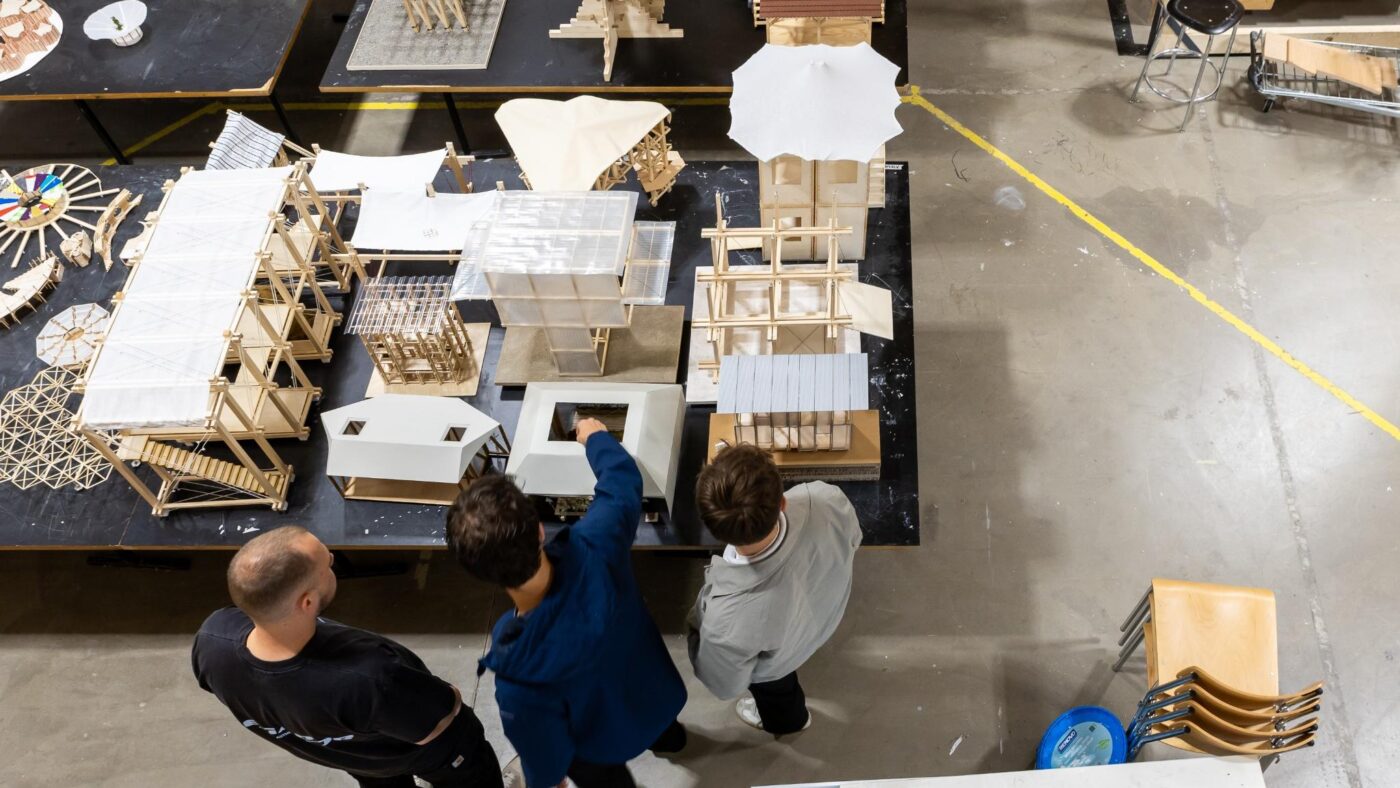
    The Circular Time Lab at Lucerne University of Applied Sciences and Arts brings together theory and practice, design and craftsmanship, teaching and urban development. It is an interdisciplinary project of the Competence Centre Typology & Planning in Architecture and the architecture degree programme at HSLU. Together with students from timber construction companies in the region, the students develop structures that are not only architecturally appealing but also fully reusable.

    The focus is on learning and designing together. The students gain an insight into manual processes and technical possibilities, while the trainees participate in design processes. The result is a deep understanding of resource-conserving construction that closes cycles and preserves material value.

    Experience architecture – in the centre of Lucerne
    Since June 2025, the results of this collaboration can be experienced at two central locations in the canton of Lucerne, on the Inseli near the railway station and at the Viscosi site in Emmenbrücke. There, airy wooden structures with colourful fabrics invite you to linger, observe and pause. They offer protection from the sun and rain and at the same time inspire reflection.

    The structures are more than just aesthetic interventions in the urban space. They are built statements in favour of a building culture that takes responsibility. Their open design invites people to engage in dialogue and makes sustainability visible and tangible. The “Lucerne Summer” thus becomes a field of experimentation for an architecture that aims for impact rather than permanence.

    Circularity instead of deconstruction
    Reuse is at the centre of the Circular Time Lab. The wooden pavilions are not designed as one-off buildings, but as temporary structures with a future. Existing timber components were used for the initial construction. All connections are detachable and all dimensions are retained. The pavilion will be dismantled in autumn 2025 and a new pavilion with a new function will be built from the same elements in 2026.

    This iterative approach not only conserves resources, but also trains planning thinking. After all, circular construction requires creativity and precision. How does an old beam fit into a new design? How do you create beauty without waste? These questions accompany the participants of the Circular Time Lab throughout the entire process and strengthen their skills for the sustainable construction of tomorrow.

    Part of an international network
    The Lucerne project is embedded in the European research programme BAUHALPS, Building Circular in the Alps. in this programme, 13 partner institutions from six countries are jointly developing new strategies for circular construction in the Alpine region. The Circular Time Lab serves as a living real-world laboratory. A place for experimentation, exchange and applied research.

    The cooperation not only opens up new perspectives for students and trainees, but also international networks. In this way, a local timber construction project becomes a building block for transnational change, an impulse that radiates far beyond Lucerne.

    The future begins on a small scale
    The timber structures of the Lucerne Summer may seem small at first glance. But they harbour big ideas: collaboration, circular economy, education and responsibility. The Circular Time Lab shows how sustainable construction can be anchored in education and made visible in public spaces. Because if you want to reuse materials, you first have to rethink ideas.

  • Interior fit-out specialist looks back on 130 years of company history

    Interior fit-out specialist looks back on 130 years of company history

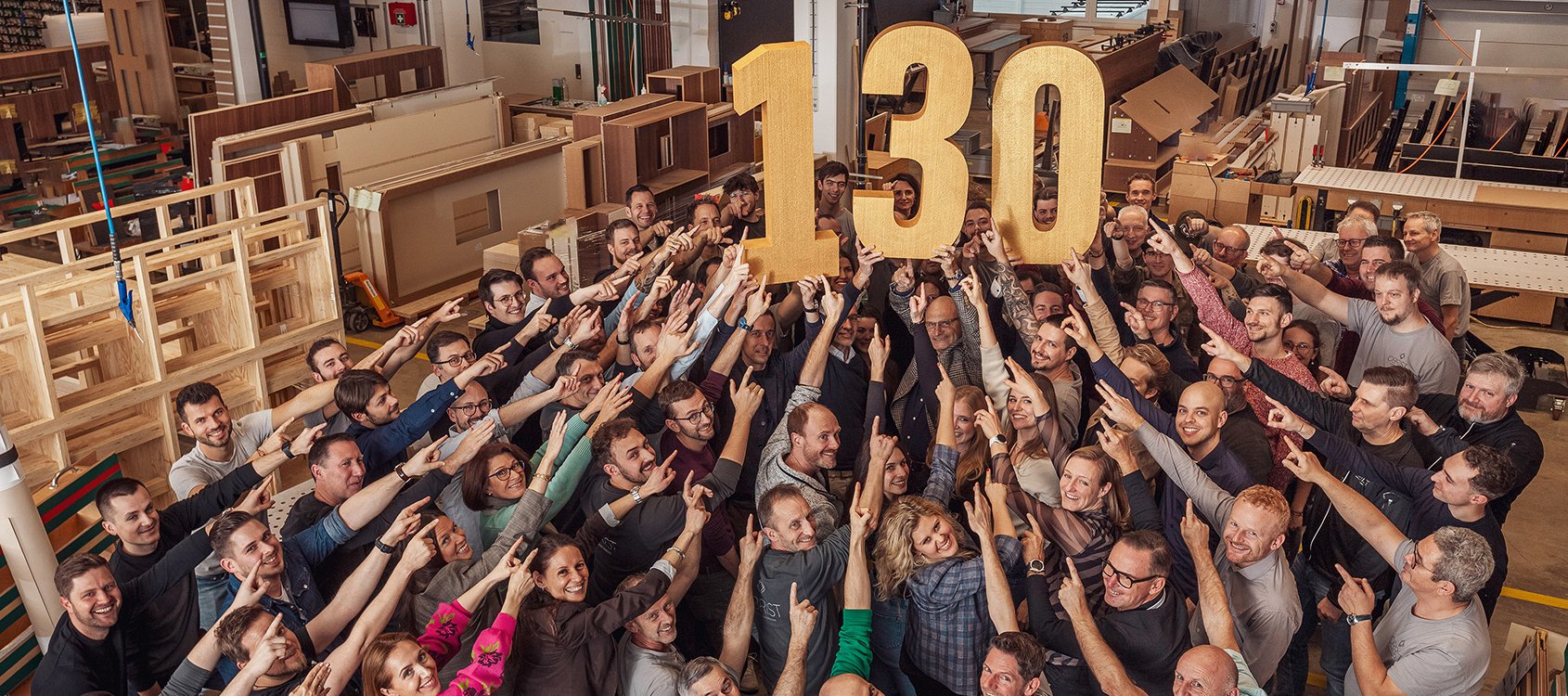
    Obrist interior AG is celebrating its 130th anniversary this year. Founded in 1885 as a small joinery, the company has “developed into a global industry leader” during this time, writes Obrist interior in a press release. With the celebrations in its anniversary year, the specialist for high-quality interiors in shopfitting and interior design wants to honour its employees in particular. “We would not be where we are today without their skills, commitment and endeavours to achieve the highest level of customer satisfaction,” CEO and owner Stefan Slamanig is quoted as saying in the press release.

    Obrist interior’s recipe for success is based on entrepreneurial agility, the company writes. The company based in Inwil, for example, relied on innovative technologies such as CNC machines, 3D printing, virtual reality and lean management long before these became standard in the industry. “We also work exclusively with the best in the industry when it comes to transport logistics and on-site assembly and always have our own experts on site for quality assurance purposes,” explains Chief Sales Officer Corrado Tona.

    In the press release, CEO Slamanig also refers to the plans announced last year for an extension in Inwil. A modular concept is to be implemented here to create space for more employees, additional production capacity, research and co-working. Obrist interior is currently in the final of the Swiss Venture Club‘s Prix Zentralschweiz 2025 together with four other companies.

  • More innovation, more craftsmanship, more opportunities Swissbau 2026

    More innovation, more craftsmanship, more opportunities Swissbau 2026

    Swissbau has been one of the most important platforms for the construction and property industry for over 50 years. in 2026, it will present itself with new focal points and strategic partnerships. The specialist areas of plaster, paint, dry construction, solar technology and energy storage have been officially included in the programme for the first time. The cooperation with the Swiss Association of Painting and Plastering Contractors (SMGV) is particularly noteworthy, as it provides for an additional expansion of the exhibitor and visitor segment.

    The co-operation with the SMGV is reflected in various areas of the trade fair. In addition to new live demos and specialist events, the renowned “Swiss Prize for Plaster and Paint” will also be awarded at the trade fair. These additional formats will ensure stronger industry networking and enable exhibitors to make targeted contact with specialists.

    Meeting point for trade: more interaction and Swissness
    A new, interactive area for the building trade will be created in Hall 1.0 under the motto “Swissness”. Here, the trade fair organiser wants to place a stronger focus on the skilled trades as a central component of the construction industry and, in particular, inspire young talent for the sector.

    A special highlight is the interactive house construction area, where various trades work in parallel and demonstrate their skills. Leading tradesmen will also be presenting their materials, tools and technologies. The neighbouring BauBeiz will be a lively meeting place for professionals, manufacturers and interested parties to exchange ideas. The combination of specialist knowledge, practical demonstrations and networking makes this area an important part of Swissbau 2026.

    Creative staging for more experience
    The trend world for interior design will be staged for the first time in Hall 1.2 and offers a modern, high-quality ambience for exhibitors from the bathroom, kitchen, floor/wall/ceiling, lighting and contract furnishing sectors. The redesign will enable stronger content-related networking between the exhibitors and ensure a holistic trade fair experience.

    This reorganisation also sees the return of Saturday as a trade fair day – but exclusively for Hall 1.2 and the Swissbau Focus. The extended opening hours will give both trade visitors with a strong professional commitment and private builders another opportunity to visit the trade fair.

    Knowledge transfer and practical solutions
    With the established Swissbau Focus and Swissbau Lab, the trade fair continues to focus on interdisciplinary exchange and practical solutions. While Swissbau Focus serves as a platform for political, economic and social discussions, Swissbau Lab offers a place where visitors can discover innovative products and sustainable technologies and try them out for themselves.

    Exhibitors also benefit from the new workshop programme, which gives them the opportunity to demonstrate their applications live in a practical environment. This further increases the added value for visitors, as they not only receive information, but can also experience the solutions directly.

  • Historic spa centres in the canton of Vaud sustainably renovated

    Historic spa centres in the canton of Vaud sustainably renovated

    The renovated buildings in Bière, Dommartin, Romainmôtier, Rougemont and Vufflens-le-Château date from the 17th to 19th centuries. The restoration was carried out with the utmost care in order to preserve the historical substance. At the same time, facades, roofs, windows, insulation and technical installations were modernised to increase energy efficiency without changing the original character of the buildings.

    “Every restored stone, every renovated roof conveys a message to future generations, that of a canton that takes care to preserve its heritage. By modernising these five cures, we are combining heritage conservation with sustainable development,” emphasised Isabelle Moret, Head of the Cultural Heritage Department, during her visit to the site.

    Strengthening the local economy through traditional crafts
    The renovations were carried out in close collaboration with regional craftsmen. This not only strengthens the local economy, but also provides the canton with valuable craftsmanship expertise. The project shows that monument protection and sustainability are not opposites, but together form a forward-looking strategy for building culture.