Tag: Heizsysteme

  • Bern-Wabern heating network promotes energy transition and CO2 reduction

    Bern-Wabern heating network promotes energy transition and CO2 reduction

    The energy company Energie Wasser Bern(ewb) and the municipality of Köniz want to make a contribution to reducing CO2 emissions and achieving the climate policy goals of Köniz and Bern with the Bern-Wabern energy network, according to a press release.

    The ewb Board of Directors decided to build the Bern-Wabern heating network on March 7, 2025, based on the “great interest” of the population as determined by a survey. Construction of the production facilities is scheduled to start in 2027. The first heat supply is expected from 2028.

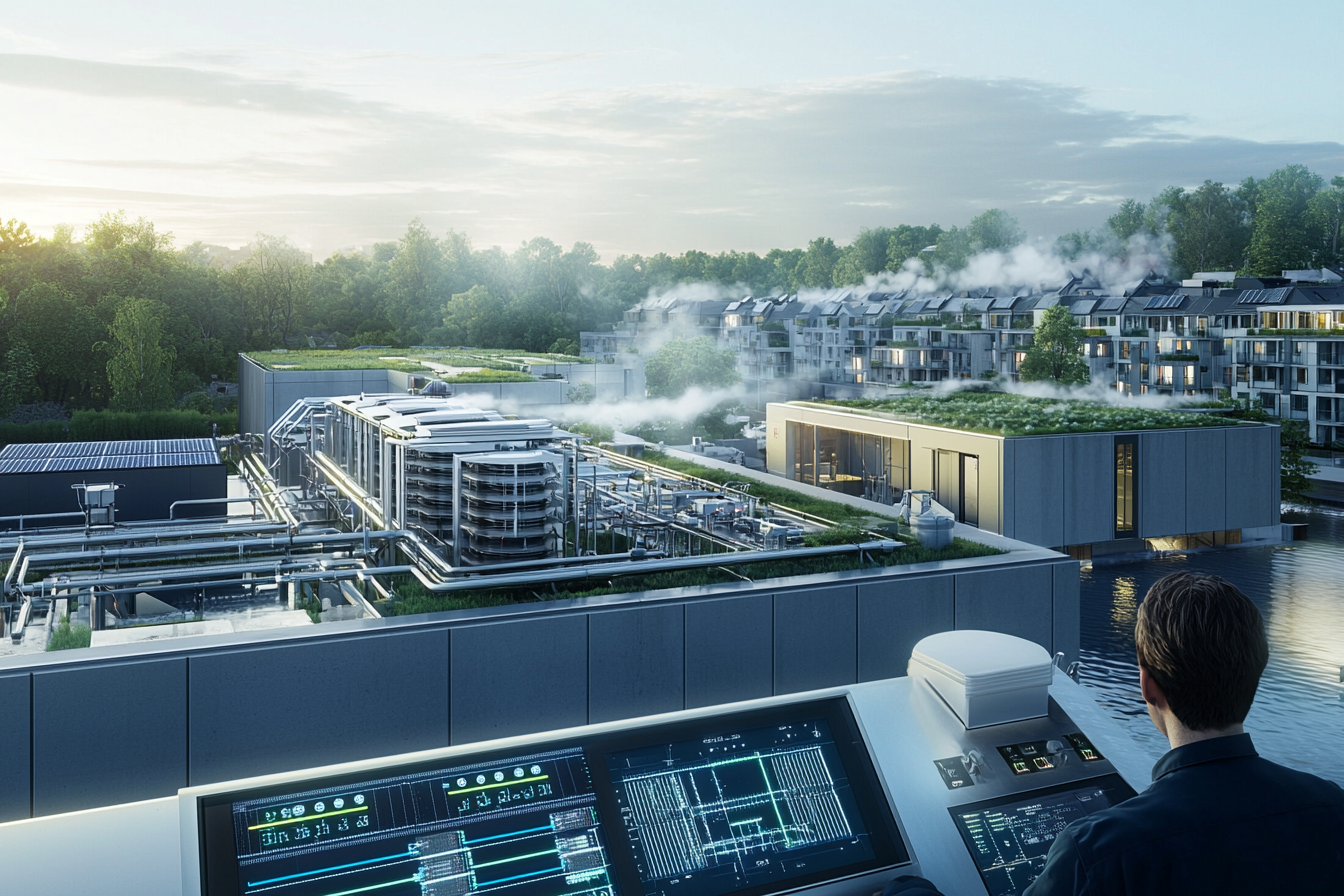
    Specifically, the heat production concept envisages using the energy from surplus water from the Schönau pumping station for thermal use. The production facilities will be installed in the existing heating center of the Morillon residential complex on Bondelistrasse.

    With the cooperation agreement that has now been signed, the heating and cooling supply in Wabern will be the responsibility of ewb, which is also responsible for the operational and financial responsibility for the construction.

    The heating network could help to promote the energy transition and climate protection. The sustainable energy project will create a replacement for many oil and gas heating systems in Wabern and the neighboring districts of Bern. “In densely built-up areas, a heating network is often the only solution for heating buildings with renewable energy in a CO2-free and economical way,” says Hansueli Pestalozzi, a local councillor in Köniz.

  • Continuation of the Basel region’s energy package planned until 2025

    Continuation of the Basel region’s energy package planned until 2025

    In order to ensure the continuity of the Basel-Landschaft energy package, the cantonal government has proposed an increase in the expenditure authorisation and a supplementary credit for 2024 to the cantonal parliament. This procedure is intended to ensure that the programme to promote energy-efficient building renovations and the use of renewable energies in the building sector can continue seamlessly. A supplementary credit of CHF 2.28 million has been requested for 2024, and the total expenditure authorisation until the end of 2025 is to be increased to CHF 42.16 million.

    The energy package has proven to be particularly effective thanks to the high willingness of building owners to invest. Despite demand stabilising at a high level after a record year in 2022, the subsidy programme remains very effective in an intercantonal comparison. These results were presented in detail in the latest interim report from the cantonal government to the cantonal council.

    Due to the current financial bottlenecks, the cantonal government is planning a moderate reduction in contribution rates from 1 January 2025. This adjustment reflects the above-average rates compared to other Swiss cantons and will be cushioned by the recently introduced energy premium, which offers income- and asset-based support. At the same time, the new national impulse programme, which will be launched at the beginning of 2025, will offer further financial support for the conversion of heating systems and comprehensive renovation of building envelopes.

    For the next planning periods from 2026 to 2030, the Government Council is preparing a separate bill based on the findings of the 2022 energy planning report and other parliamentary mandates. This initiative is intended to further strengthen the focus and effectiveness of the funding programme and adapt it to the dynamic needs of the energy market.

    Finally, based on the Cantonal Energy Act, the interim report emphasises the importance of regularly reviewing and adapting the support measures in order to effectively support CO2 reduction and meet legislative requirements. The cantonal government remains committed to a sustainable and energy-efficient future for Basel-Landschaft.

  • Efficient utilisation of building heat – EMPA’s HEATWISE project

    Efficient utilisation of building heat – EMPA’s HEATWISE project

    At a time when sustainable energy management is becoming increasingly important, the unused waste heat from IT systems in buildings represents a considerable waste. Hospitals, universities and office complexes have extensive IT infrastructures that not only consume energy but also produce a significant amount of heat that remains largely unutilised. The Horizon Europe project HEATWISE addresses this challenge and brings together twelve research and industry partners from eight countries to develop innovative solutions for utilising this waste heat.

    The project, which was launched in early 2024 and will run for three years, is funded by the European Union under Horizon Europe and by the Swiss State Secretariat for Education, Research and Innovation. A key element of HEATWISE is the development of predictive control algorithms that not only link the IT infrastructure and building technology, but are also designed to enable energy-efficient, low-carbon and cost-effective operation.

    One example of the practical realisation of these goals is Empa’s “NEST” research building in Dübendorf, which serves as a real pilot plant. Here, the waste heat from a microcomputing centre is already being successfully used for heating, supported by innovative cooling technologies such as the “on-chip liquid cooling” system from Israeli project partner ZutaCore. This enables optimum heat recovery and the utilisation of the recovered heat for high-temperature-intensive applications, such as hot water supply.

    For specialists from the property and location development sector, HEATWISE not only offers insights into pioneering heat recovery and energy efficiency technologies, but also concrete application examples that show how IT infrastructures and building technology can be used synergistically for more sustainable energy management.