Tag: Hitzeminderung

  • Choice of materials to combat the urban heat

    Choice of materials to combat the urban heat

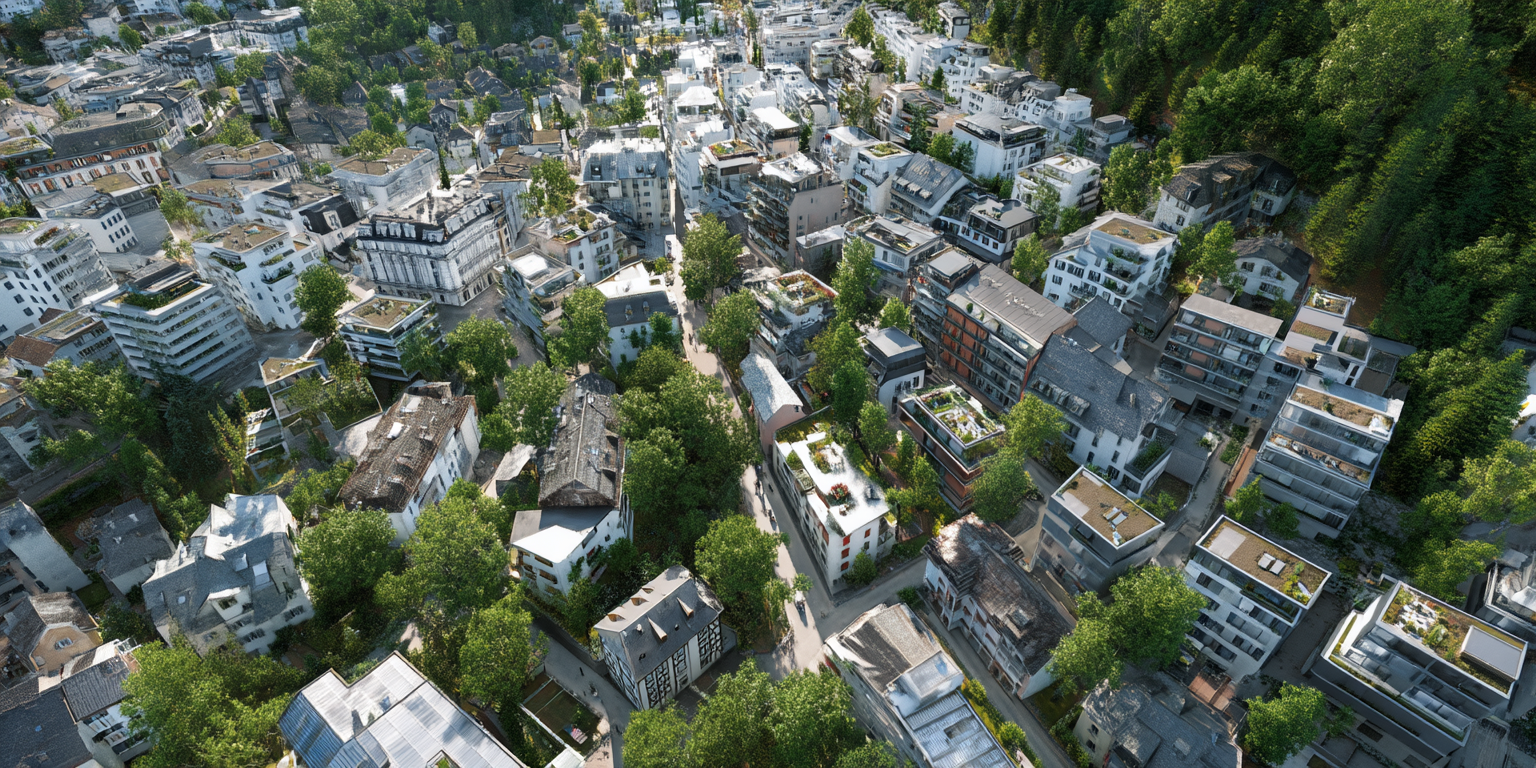
    Switzerland is heading for hotter summers, more hot days and more frequent extreme weather events. Cities and densely populated areas in particular heat up more than their surrounding areas and cool down more slowly at night – the well-known heat island effect. It is directly related to the way buildings are constructed; dense sealing, dark surfaces and solid structures store heat and only release it again with a delay.

    Because buildings and infrastructures stand for decades, the materials used today shape the microclimate of tomorrow. This makes the choice of materials a strategic decision. It influences not only energy requirements and comfort in the building, but also health and quality of stay in public spaces.

    What the new edition does
    This is where the second, expanded edition of the materials catalog comes in. The reference work from the Federal Office for Housing shows how different building materials influence the outside temperature and what contribution they make to a heat-resilient urban climate.

    The catalog compares common outdoor materials such as floor coverings, facades and now also roofs and greenery in dry and wet conditions. In addition to the effect on the ambient temperature, it takes into account additional properties such as reflection of solar radiation, durability and, in the case of coverings, infiltration capacity. This creates an overall picture that combines thermal, functional and water management aspects.

    Updated method, comparable results
    The new edition is based on simulations carried out by the University of Applied Sciences Northwestern Switzerland on behalf of the Swiss Federal Office of Energy and the BWO. The materials already included in the first edition were also recalculated using improved simulation software.

    As a result, all results are based on a uniform methodological standard and can be directly compared with each other. For planners, this means that they can compare variants qualitatively and quantitatively and better justify their decisions to clients and authorities.

    Tool for planning and implementation
    The material catalog is designed as a practice-oriented reference work for new buildings and renovations in densely built-up areas. It supports specialist planners and property developers in integrating the effect of material selection on heat development into their processes at an early stage, from the project idea to detailed planning.

    In combination with other instruments for climate-adapted urban development, the catalog becomes a building block for heat-resilient districts. It helps to brighten surfaces in a targeted manner, utilize evaporation capacity, improve infiltration and thus gradually make the urban climate more robust in the face of climate change.

  • Energy City Gold for Zurich

    Energy City Gold for Zurich

    The city of Zurich has been awarded the Energy City Gold label for the sixth time in 2024, the city administration announced in a press release. Every four years, the Energy City Association awards the label to cities and municipalities that are committed to ambitious energy and climate protection goals. In the current evaluation, the city of Zurich achieved its best result to date.

    Across Switzerland, 109 cities and municipalities have been awarded the Energy City Gold label. “As the largest city in Switzerland, the city of Zurich serves as a role model for other energy cities that also want to consistently achieve their ambitious energy and climate policy goals,” Katrin Bernath, President of the Energy City Association, is quoted in the press release from her speech at the award ceremony. The award was accepted by City Councillor Michael Baumer. “The top score for the city of Zurich shows that we are on the right path to net zero,” said the head of the City of Zurich’s industrial operations.

    In the current re-audit, the City of Zurich’s energy and climate targets also included the area of climate adaptation for the first time. Zurich scored highly here with its specialised planning for heat reduction and urban trees. The city has also launched a programme for urban greening. This programme supports and financially promotes the ecologically valuable upgrading of outdoor spaces, green roofs and vertical greening by providing advice.

  • Mobiliar invests in heat reduction in Bern neighbourhood

    Mobiliar invests in heat reduction in Bern neighbourhood

    Mobiliar is contributing CHF 450,000 to a climate adaptation and upgrading project in the Breitenrain district of Bern. According to climate measurements by the University of Bern, this neighbourhood is hotter than average. According to a statement by the insurance company, the municipal council has approved a loan of 1.3 million francs for a corresponding redesign of Optingenstrasse. “With Mobiliar’s financial contribution, we can do more on Optingenstrasse than if the city had to finance the project alone,” municipal councillor Marieke Kruit is quoted as saying.

    The plan is to plant 20 trees to combat heat accumulation and to unseal street and parking areas so that rainwater can seep away and cool the air through evaporation. To further enhance the neighbourhood, green or marl areas are to be created with bicycle stands or seating. The city is carrying out these climate adaptations as part of the renovation work of the energy supplier Energie Wasser Bern, which is planned for 2024 anyway.

    “Our approach to natural hazards is not limited to paying for damage – we are also increasingly involved in prevention,” Thomas Trachsler of Mobiliar is quoted as saying. Belinda Walther Weger, Head of Public Affairs & Sustainability at the insurance company, emphasises that sponge city projects go beyond mere hazard prevention: “They help to ensure that the quality of life in densely populated areas remains high.” For this reason, Mobiliar from the cooperative will participate in further sponge city projects in Swiss cities as part of its support for climate protection projects. “With our commitment, we want to make an important contribution to a sustainable and positive future.”

  • Zurich is testing colored road surfaces for their cooling effect

    Zurich is testing colored road surfaces for their cooling effect

    Since the summer of 2020, the civil engineering office in Zurich has been running a pilot project to reduce heat. According to a press release from the city of Zurich , differently colored road surfaces were applied to Roggenstrasse in Zurich-West in order to measure the effect on the temperature. The results show that the light-colored coverings – in contrast to shadows from trees and houses – only have a minor influence on the temperature.

    For these measurements, new surfaces were installed on Roggenstrasse and the road was divided into three areas: a reference area made of conventional, street-gray asphalt and two areas with a beige and a reddish surface, according to the city’s statement. Cameras and embedded probes recorded the surface temperature and heat storage of the pads.

    The results now available show a minor effect of the light-colored deposits on the surface temperature. The reference surface in conventional gray was even about 2 degrees cooler on average than the two bright surfaces. This result can be explained by the shadow that trees and a high building temporarily cast on the reference area, it is said. It therefore heated up less.

    The differences between the two light surfaces were small. The beige covering stayed a little cooler than the reddish one. Calculations showed that if all surfaces had been exposed to the same amount of sunlight, the light surfaces would have been 2 degrees cooler than the reference area.

    The results of the pilot project clearly show how important shade and trees are for reducing heat in cities, according to the civil engineering office.