Tag: Hitzeschutz

  • Plane trees cool cities even in extreme heat

    Plane trees cool cities even in extreme heat

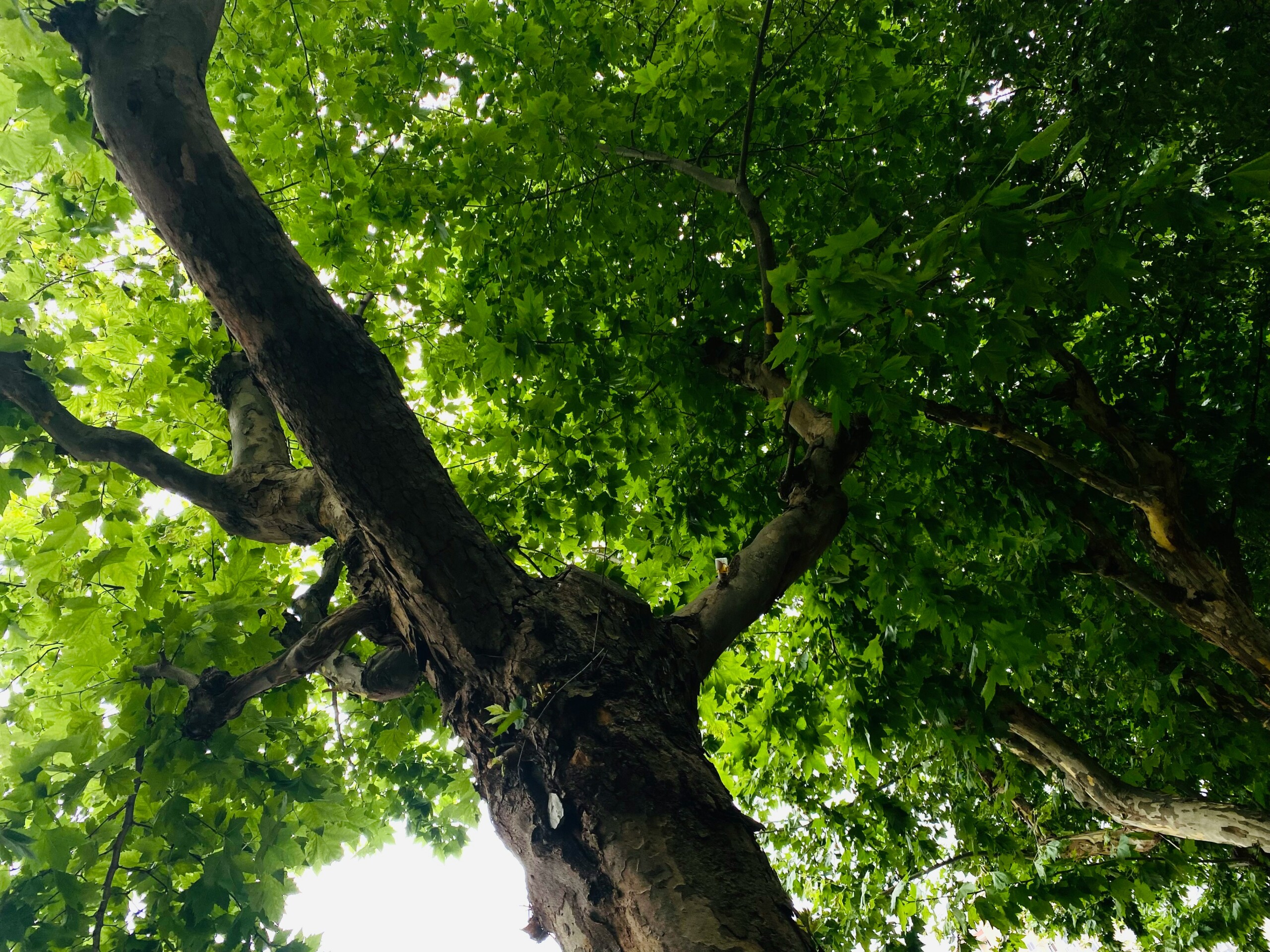
    Even in extreme heat of over 39 degrees, plane trees evaporate water and cool their surroundings. These are the findings of a study conducted by the Swiss Federal Institute for Forest, Snow and Landscape Research(WSL) based in Birmensdorf and the Swiss Federal Institute of Technology Lausanne(EPFL). According to a press release, the study was conducted in spring and summer 2023 in Lancy in the canton of Geneva. This experienced two heatwaves of up to almost 40 degrees during the measurement period.

    The researchers measured the sap flow on eight sycamore tree trunks. This allows conclusions to be drawn about the amount of water evaporated and thus the cooling capacity of the trees. The water flow increased despite increasing heat and dry air. The researchers assume that deep-lying water reserves in the soil enabled the increasing water flow.

    The study disproves the assumption that trees close their leaf pores from a temperature of 30 to 35 degrees in order to prevent water loss, meaning that the cooling effect is lost. Previous models used to determine the future distribution of heat in cities would therefore be inaccurate, according to the press release.

    The persistent cooling effect of the plane trees is good news for the urban climate. “Days with temperatures above 30 degrees Celsius are becoming more frequent,” explains study leader Dr Christoph Bachofen.

    “Obviously, we have not yet fully understood how trees react to extreme conditions,” says Bachofen. In future, the researchers want to measure the transpiration behaviour of other urban trees in extreme heat. In this way, they hope to find out which tree species are able to cope with heat and best fulfil their cooling function in cities.

  • Heat protection on construction sites becomes a joint task

    Heat protection on construction sites becomes a joint task

    Switzerland is topographically diverse, from inner-city construction sites to alpine locations and large-scale infrastructure projects. Standardized measures therefore fall short. While earlier working hours are made possible in certain municipalities, other projects rely on mobile shading systems or adapted break regulations. The decisive factor is the adaptation to the respective region, the environment and the project type.

    Shared responsibility of the building owner
    Walz emphasizes that it is not only the task of construction companies to provide heat protection. Building owners and project authors can also implement effective measures through forward-looking planning and tendering. In doing so, they take responsibility for occupational safety and prevent discussions about additional costs. “If you address the issue at an early stage, you create clarity and commitment for everyone involved,” says Walz.

    Cooperation at all levels
    Close coordination between site management, foremen and employees is a key factor. Although employers have a legal duty to ensure health and safety, employees also have a role to play. They must actively use protective measures, seek out shady areas and use the aids provided. The Ordinance on Accident Prevention (VUV, Art. 11) obliges all parties to implement these measures.

    Legal framework and challenges
    Employers are already legally obliged to implement protective measures. Support is provided by Suva and SBV guidelines. Nevertheless, there are structural problems. If the work rhythm is adjusted due to a heatwave, delays occur that are not always covered by work contracts. The provisions of SIA standard 118, which provide for deadline extensions in the event of weather-related interruptions, are often waived. As a result, the risks end up with the construction companies and their employees. A practice that the SBC clearly criticizes.

    Round table sends out signals
    In order to develop viable solutions, the SBC joined forces with trade unions, client representatives such as KBOB, SBB, Astra and IPB as well as authorities and Suva at the “Heat Round Table”. In mid-May 2025, a consultative decision was taken to enshrine heat protection in the Construction Site Ordinance (BauAV), in KBOB and IPB recommendations and in the SIA 118 contract standard. This means that building owners and social partners are committed to taking health protection into account on a binding basis. It is now up to politicians to send a clear signal in the same direction.

    Heat protection on construction sites is not just a matter for the boss; it requires the shared responsibility of all those involved, from the client, companies, site managers and employees. Only if everyone pulls together can the growing risks posed by rising temperatures be managed effectively. In times of climate change, heat protection is thus becoming an integral part of modern building culture and a decisive factor for occupational safety and fair framework conditions.

  • Strüby Unternehmungen receives first certificate for realised Minergie site

    Strüby Unternehmungen receives first certificate for realised Minergie site

    Energy efficiency, energy self-sufficiency and heat protection are currently major issues and will become even more important in the future. Since 2023, not just a single house, but an entire site can be certified by Minergie, meaning that the surrounding area can also be increasingly included in the planning of residential construction projects. On 2 September 2024, the “Fischermätteli” in Burgdorf BE received the first definitive site certificate from Minergie in Switzerland and thus reached a new level in sustainable construction.

    Label with high requirements
    The new, comprehensive Minergie site standard is supported by the Minergie Association, the cantons, the business community and the Swiss Federal Office of Energy. The Minergie site is characterised by very low energy consumption, minimised greenhouse gas emissions during construction and operation and maximum self-sufficiency with renewable energies. The buildings have above-average heat insulation and controlled air exchange. The design of the outdoor space increases climate resilience and the quality of stay, for example through suitable planting and shading. The Minergie site also incentivises climate-friendly mobility.

    Over 6600m3 of Swiss wood
    The Fischermätteli residential construction project was successfully completed by Strüby Unternehmungen in autumn 2023 after a construction period of around three and a half years. The ten apartment blocks with a total of 168 condominiums were built on a former commercial site in Burgdorf BE. Over 6600m3 of Swiss timber was used in the construction, making “Fischermätteli” the largest project in Switzerland to combine the Minergie-A-ECO standard and Swiss timber.

    Climate-friendly environmental design
    One hundred per cent of the energy for the entire site comes from renewable sources: the electricity from the photovoltaic systems on the building roofs, the heat for heating and hot water from a heating centre supplied with Swiss pellets. The finely meshed mobility concept focuses on electromobility, car sharing, bicycles and public transport. A co-working space promotes working from home and thus indirectly relieves traffic congestion. In addition, the climate-friendly environmental design based on the sponge city principle ensures natural and efficient cooling in summer and makes the “Fischermätteli” a hotspot of biodiversity thanks to the countless native plants.

    Success thanks to a climate-friendly overall concept
    Pius Kneubühler, Managing Director Real Estate Development & Construction at Strüby Unternehmungen, can confirm that the climate-friendly overall concept in line with the Minergie site standard pays off not only for the residents, but also for the investor. “The success has already manifested itself in the marketing of the condominiums. Demand was so pleasing that all flats were sold by the time construction was completed.”