Tag: Hochwasserschutz

  • Railroad modernization in the sensitive Alpine region

    Railroad modernization in the sensitive Alpine region

    STRABAG AG is carrying out the outstanding renovation work on the Zentralbahn line between Meiringen and Brienzwiler in the Bernese Oberland. The narrow-gauge line runs on a single track along the Hasliaare, which is part of the Aare flood plain. Out of consideration for several nature conservation areas, “maximum precision for logistics and coordination” is required for the new construction, according to a press release. Preparatory work began in March 2025 and the ten-week intensive phase has been underway since October 2025.

    Heavy rainfall events had repeatedly occurred in the area, causing the railroad embankment and superstructure to flood, resulting in damage to the railroad infrastructure and adjacent cultivated land. STRABAG already carried out track construction work there in 2022 and 2023 (lots 1 and 3). The modernization project will now be completed with a total reconstruction of the challenging middle section of lot 2 over a length of 2600 meters and in the middle of the Sytenwald nature reserve. This involves raising the railroad embankment. To allow surface and slope water to drain away, a continuous planned drainage system will be installed along the route. The area along the Hasliaare will receive a new flood protection wall.

    According to the press release, the “tight space conditions and local lack of redundant construction slopes in certain sections between the Hasliaare, the railroad line and several nature conservation areas” are a special construction feature, which requires special precautions for ecology and landscape protection. On the one hand, STRABAG is building 30 new foundations for the catenary masts on the side facing away from the river, and on the other, 37 crossings are to ensure the ecological continuity of the terrain. This means protection for wildlife and small animals when crossing the section.

    A particularly challenging component is the new construction of the Hüsenbach bridge made of ultra-high-strength and durable fiber-reinforced concrete (UHPC). During bridge construction, special consideration was given to the trout population present there at spawning time.

  • Construction industry at the center of future flood protection

    Construction industry at the center of future flood protection

    The intensity of heavy precipitation increases as temperatures rise. Warmer air stores more moisture, which can be discharged in a short time. Local thunderstorms in particular trigger massive surface runoff that cannot seep away or be absorbed by the sewage system. Cellars, underground garages and streets are thus regularly flooded, even far away from rivers or lakes.

    According to analyses by the Mobiliar Lab, 62% of all buildings in Switzerland are already potentially affected. Two thirds of all flood damage in the last ten years is due to surface runoff and the trend is continuing upwards, especially in urban areas.

    Structural measures with major benefits
    The key lies in prevention. Property protection measures such as raised light wells, sloping ramps at underground garage entrances, water-resistant building materials or targeted terrain adjustments prevent damage and offer an exceptionally good cost-benefit ratio. Many cantons provide financial support for such investments.

    Building technology also holds considerable potential. In future, intelligent systems could use environmental data and precise weather forecasts to automatically activate mobile protective elements. A flexible addition where permanent structural solutions cannot be implemented.

    Construction industry as a key player
    The construction industry is involved in every construction project in Switzerland and is therefore indispensable for the widespread implementation of such protective measures. Only through close cooperation between planners, architects, construction companies and building technicians can decentralized solutions be implemented on a large scale.

    The Mobiliar Lab for Natural Risks therefore calls on the construction industry to play an active role. Not just as an implementer of contracts, but as a strategic partner in the fight against the consequences of climate change. With innovative strength, practical experience and responsibility for the built environment, the industry can make a significant contribution to ensuring that flood damage remains insurable in the future.

  • Construction site safety and flood protection for major Winterthur project

    Construction site safety and flood protection for major Winterthur project

    Outsec AG has won the tender to provide security support for the construction of the new Campus T of the Zurich University of Applied Sciences in Winterthur, the security company from Dietikon announced in a press release. According to the statement, outsec will be responsible for construction site security and flood protection over the next four years. The security company was already involved in the interface coordination of the project during the planning phase.

    “The complexity of this project lies not only in the size or the construction phases, but also in the proximity to existing infrastructure and the crossing of a flowing body of water,” said Robin Hüttenmoser, operational manager at outsec, in the press release. “Flood protection must be guaranteed at all times, especially during the construction period – this is where we make an important contribution with targeted monitoring and early alerts.”

    Outsec’s tasks include access control, coordination of deliveries and area control along the changing construction site zones. For flood protection, the company monitors the water-bearing systems and is also responsible for triggering the alarm in the event of flooding. “With this campus, the ZHAW not only offers students and researchers new perspectives, but also gives us as a security provider the opportunity to demonstrate our digital and networked expertise,” says outsec Managing Director René Leuenberger. In addition to its headquarters in Dietikon, the company has locations in Winterthur, Baden AG and Wallisellen ZH.

  • Historical technology meets modern research

    Historical technology meets modern research

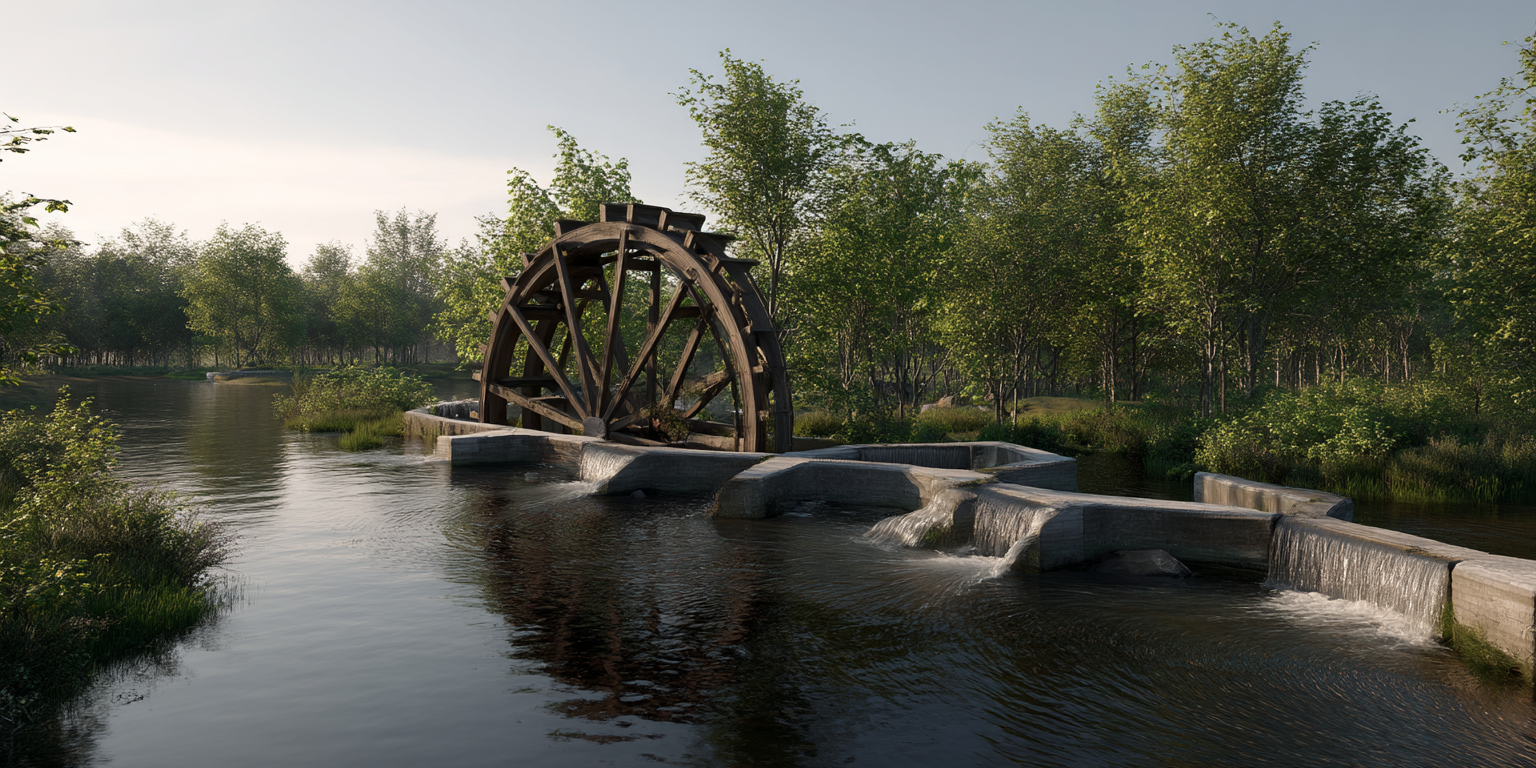
    Researchers from the Mechanical Systems Engineering department of the Swiss Federal Laboratories for Materials Science and Technology (Empa) in Dübendorf have been involved in the construction of a water pumping wheel in Steffisburg. According to a press release, the construction became necessary after the Zulg was lowered by two meters to protect the village from flooding. The Mühlebach stream, which had supplied Steffisburg’s businesses with water energy for centuries, was in danger of drying up, as was the surrounding ecosystem.

    The challenge was to adapt the plant to the requirements near Steffisburg. “With a minimum Zulg outflow of one cubic meter per second, it must feed at least 125 liters of water into the Mühlebach,” Silvain Michel, project manager at Empa, is quoted as saying in the press release, “and even with lower inflows, at least 100 liters per second must still be pumped in order to preserve the biotopes.”

    The model for the water pumping system was the pumping wheel developed by Walter Zuppinger in 1849. The water wheel, whose efficiency was scientifically confirmed in extensive tests in 2016, has already been used in the Glattfelden project installed by Empa.

    In the current project in Steffisburg, the water wheel was modified again and fitted with a separate drive wheel. In addition to Empa, the EKZ design office in Thun and CFD-Schuck GmbH were involved in the technical implementation.

  • Renovation of Grütstrasse in Gossau for greater safety and noise protection

    Renovation of Grütstrasse in Gossau for greater safety and noise protection

    The Schlieren-based construction company STRABAG is renovating Grütstrasse in Gossau, according to a press release. The road, which is described as an important transport link, shows signs of damage to the carriageway. The road is now being renovated in order to modernise the infrastructure and improve road safety. “A central component of the measures is the structural redesign to increase safety for cyclists and pedestrians,” it continues. In addition, traffic noise is to be reduced with new 30 km/h zones. Completion is planned for the end of 2026.

    In addition to the renovation of the road surface, the project also includes other extensive work. The Gossauerbach stream, which runs under the greenway, will be upgraded to make it flood-proof. STRABAG is also renewing combined water pipes and drinking water pipes. Energy and shaft systems are being modernised and the infrastructure required for telecommunications is being expanded.

    “The renovation will provide the people of Gossau and all road users with greater road safety, modern infrastructure and improved flood protection,” says Remo Hürlimann, head of the construction department of the municipality of Gossau.

  • Progress and outlook for the cantonal climate strategy

    Progress and outlook for the cantonal climate strategy

    Successes include the introduction of a procurement guideline for CO2-free vehicles in the cantonal administration and the creation of a legal basis for financial support for flood protection measures. Two measures that have been finalised, while a further 47 are currently being implemented. New administration vehicles must now have a CO2-free drive system, which represents an important step towards a more climate-friendly administration. In addition, the Water Management Act has created the basis for promoting flood protection projects, which are essential for adapting to climate change.

    Public relations work as the key to raising awareness
    Another key aspect of the climate strategy is raising public awareness. Every year, a “climate walk” is organised on a climate-related topic to present projects to citizens. This year’s focus was on the energy-efficient refurbishment of an apartment block, which was upgraded from efficiency class G to class B. This shows how effective refurbishment measures can help to reduce energy consumption and CO2 emissions.

    Challenges in the area of fossil fuels and renewable energies
    The latest climate figures show that the proportion of oil heating systems in residential and service buildings has fallen by 5 per cent, while the proportion of heat pumps has risen by the same amount over the same period. Nevertheless, the proportion of natural gas heating systems remains unchanged, which contradicts the climate policy goals. In order to achieve the goal of a climate-friendly energy supply, the transition from fossil fuels to renewable energies must be accelerated.
    On a positive note, electricity production from photovoltaic systems in the canton has more than doubled since 2015. This shows that the use of renewable energies is progressing, even if considerable efforts are still required to achieve the climate targets that have been set.

    Potential for improvement in the cantonal administration
    The cantonal administration has set itself the goal of acting as a role model in climate protection. Despite initial progress, it is clear that energy consumption for heating and hot water in cantonal buildings has only been reduced by 2 per cent. More than half of the heating energy is still obtained from fossil fuels. CO2 emissions from the combustion of these fuels have remained virtually unchanged since 2016, indicating a need for additional action.

    Adjustments to energy requirements and future steps
    The Government Council has submitted measures that can be implemented quickly for consultation in order to increase the use of renewable energies. Among other things, these relate to the replacement of heating systems and the generation of self-generated electricity in new buildings. One example is the requirement that a renewable energy system should always be used in future when replacing heating systems in canton-owned buildings.
    Overall, it is clear that the canton of Schaffhausen is on the right track, but that targeted measures are still required to accelerate the transition to a climate-neutral future.

  • Construction work on the extension of the ZHAW has begun

    Construction work on the extension of the ZHAW has begun

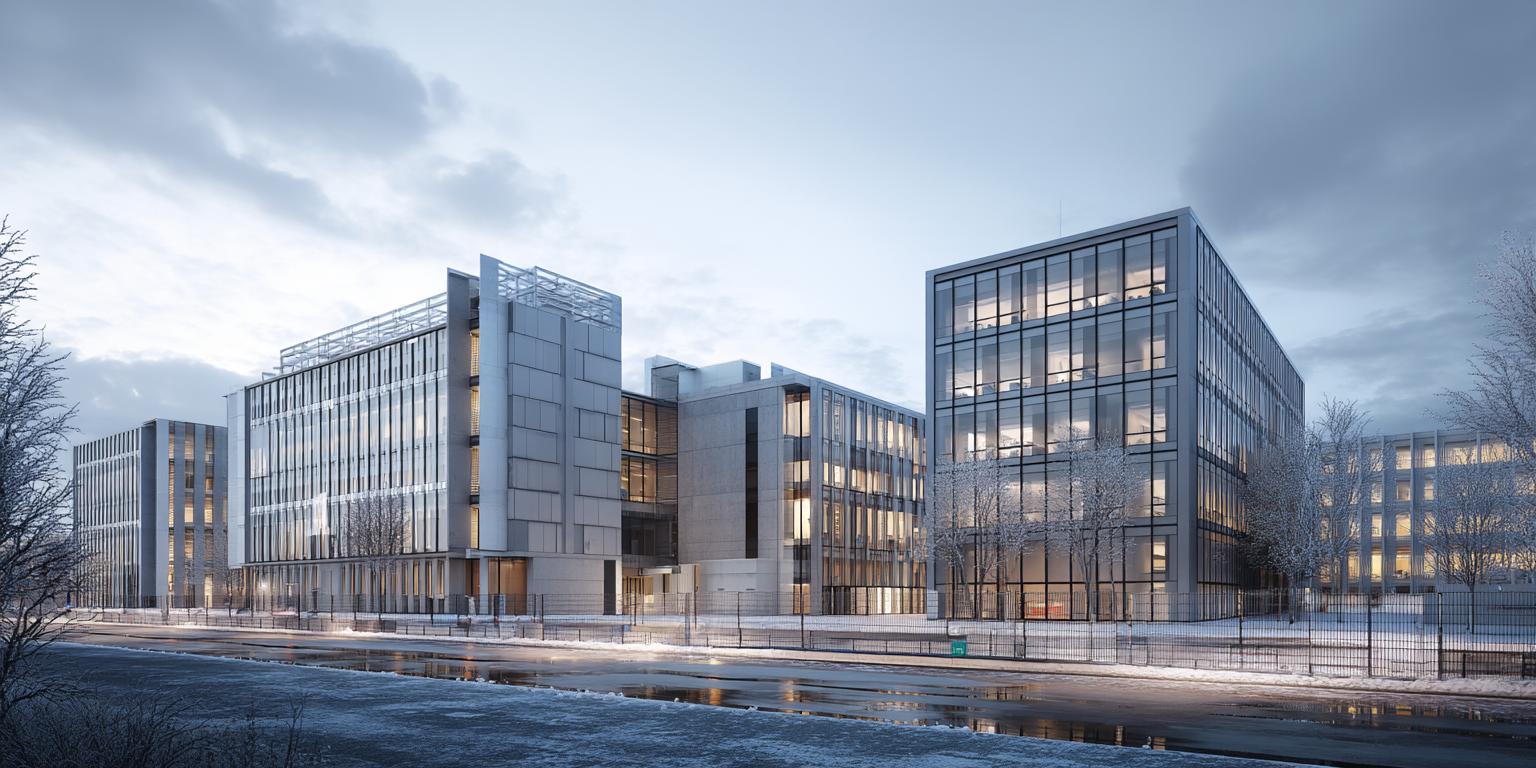
    Building Director Martin Neukom, Education Director Silvia Steiner and ZHAW Rector Jean-Marc Piveteau gave the go-ahead for the construction work to expand and modernise the School of Engineering at the ZHAW on 13 September. The ZHAW is one of the leading universities in Switzerland with over 14,000 students, according to a press release. However, some of the existing buildings on the site of the former technical centre in Winterthur no longer meet today’s requirements. In addition, the number of students continues to grow. Campus T will therefore be modernised and expanded in several stages over the next few years.

    In the first construction phase, two new five-storey laboratory buildings will be built behind the historic technical centre. They will provide urgently needed space for teaching, research and development. Various test rooms as well as a publicly accessible canteen and cafeteria will be created there. The new buildings will be connected to the district heating network of the city of Winterthur and equipped with photovoltaic systems.

    As part of the first construction phase, the Eulach will also be ecologically upgraded with a public, near-natural park and flood protection will be expanded, according to the press release. Two new bridges will connect the old town and Campus T with the Büelrain cantonal school and the surrounding residential neighbourhood.

    The existing TB building will be dismantled by November. At the same time, the excavation pit for the smaller TT laboratory building will be dug. Work will then begin on the shell of the first new building, which is scheduled for completion in 2027. The second new building should be ready for occupancy in 2029.

  • Strabag completes renaturalisation of the Reuss

    Strabag completes renaturalisation of the Reuss

    According to a press release, the Schlieren-based construction company Strabag is carrying out a project on behalf of the canton of Uri to renaturalise areas that were separated from access to the river Reuss by dams in the past. A former alluvial forest near Erstfeld is to be revitalised and reconnected with the Reuss through various construction measures. The revitalisation project started in September 2023 and is expected to be completed by the end of April 2024, according to Strabag AG. Up to five specialists will carry out the renaturalisation work with the help of two or three excavators.

    The canton of Uri wants to use the project to improve the diversity and structure of the Reuss and its floodplain habitats. The aim is to include both alternating wet and damp areas as well as drier locations in order to promote a wide range of flora and fauna that is suited to the local conditions. The project also serves to protect against flooding near Erstfeld.

    According to Strabag, the existing dam on the left bank will be moved back and a side channel created behind the floodplain forest in order to allow the remaining floodplain to flood better and thus return it to the natural dynamics of the Reuss. In order to promote targeted flooding areas during flood events within the floodplain area, breakthroughs will be made in the existing dam and targeted ecological bank stabilisation measures will be installed in the side arm as well as flow-directing elements such as a guiding island and sandbanks in the main stream.

    To ensure that the guiding island is not washed away, wooden logs with root plates were installed in the stream bed and covered with boulders and bed load material, according to Strabag.