Tag: Holzbau

  • Canton of Bern plans major construction in the Bernese Seeland

    Canton of Bern plans major construction in the Bernese Seeland

    The Road Traffic and Navigation Office has had its headquarters on Schermenweg in Bern for decades. The buildings there have structural defects and are in a condition that makes it impossible to completely renovate them without interrupting operations. In addition, there is a second location in Ostermundigen, where the canton pays over one million francs a year in rent.

    Move three times or build once
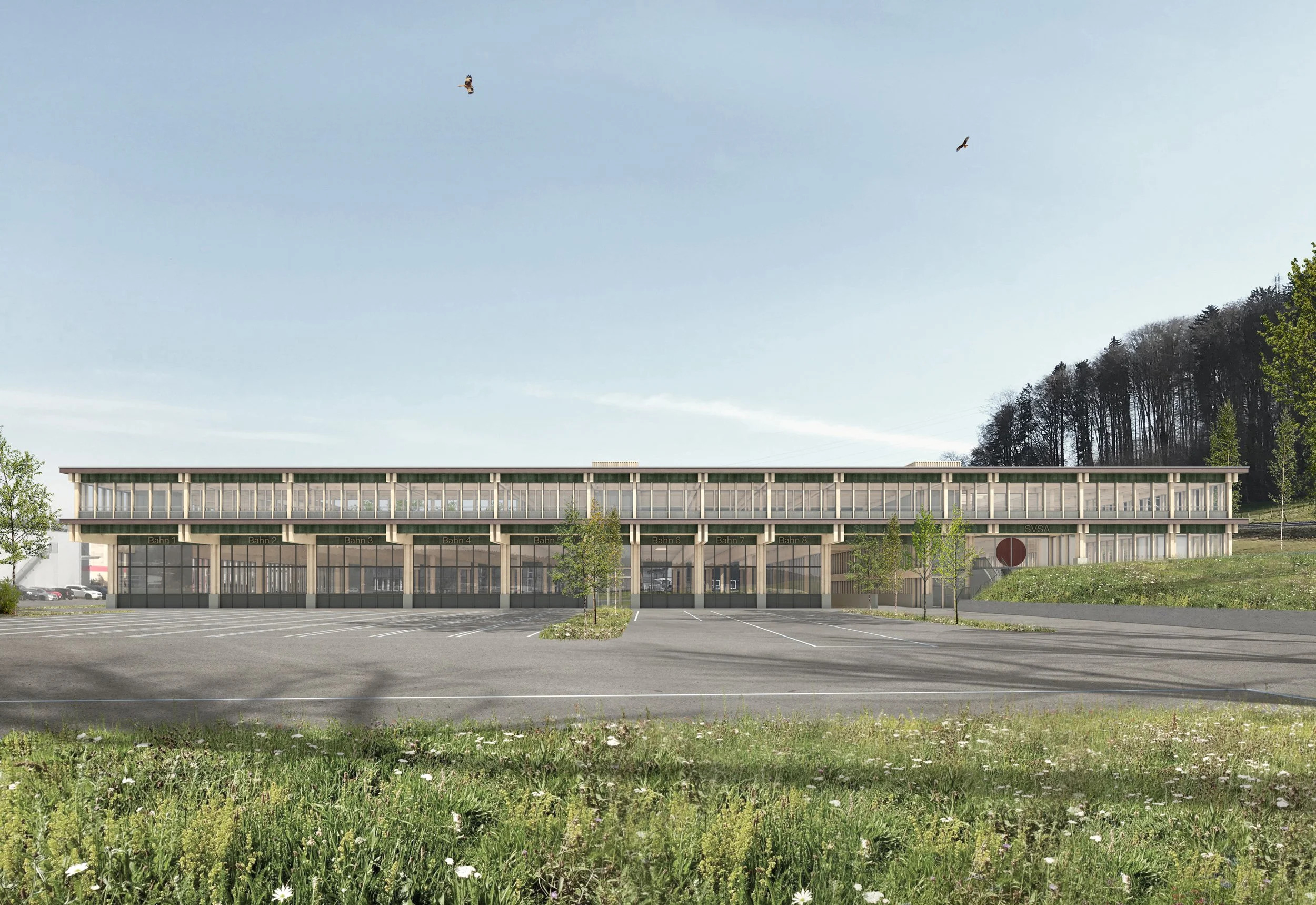
    The decision was made in favor of a new building. All three locations will be closed and the approximately 400 employees brought together in a single location. The new building on the Buechlimatt in Münchenbuchsee offers space for offices, test centers and the entire customer operations on one site. Vehicle registrations, driving tests, administrative processes: everything under one roof for the first time in decades.

    One competition, one winner, one timber construction
    in 2021, the canton announced an open project competition. Thirty teams submitted designs, and the Zurich planning team from Studiomori Architektur and KNTXT Architekten won over the jury. Their project bears the programmatic name “One for all”. It is based on a low-maintenance timber construction that blends organically into the rural outskirts of Münchenbuchsee. Not a statement made of concrete and glass, but a building that makes the Canton of Bern’s climate strategy visible. Wood as a building material reduces the CO2 balance over the entire life cycle.

    The politicians decide
    In April 2026, the Bernese government applied to the Grand Council for a commitment credit of 132.9 million francs. The latter is expected to make its decision in autumn 2026. The fact that the amount has risen from around CHF 104 million at the time to CHF 132.9 million since the 2021 competition phase is likely to raise questions in parliament. Construction costs and increased planning requirements are the main reasons. If you offset the rental costs and the renovation backlog, the business case for the new building is clear.

    Move in 2031 at the earliest
    If the parliamentary deliberations go according to plan, the building application will be submitted in mid-2026 and construction will begin in 2028, with commissioning planned for 2030 to 2031. For Münchenbuchsee, this means a new workplace center with several hundred employees on the edge of the village. For the canton of Bern, it means the end of a long period of administrative restructuring. And for the Swiss construction industry, the project exemplifies a trend that will gain momentum in 2026. Public buildings made of wood, built for the next generation.
  • Swiss wood to become mandatory

    Swiss wood to become mandatory

    Swiss forests produce 10.4 million cubic meters of wood every year, of which just 5 million is consumed. However, a total of 10 million cubic meters of wood ends up on Swiss construction sites. The rest comes from abroad because it is much cheaper. A resource potential that is lying idle, although the demand is there.

    What the National Council is calling for
    National Councillor Daniel Ruch (FDP/VD), a forestry contractor from Vaud by profession, has submitted a motion to amend the Forest Act. In future, Swiss wood should be used in buildings that are subsidized with federal funds, without incurring additional costs for the building owners. The National Council has accepted the motion, now the ball is in the Council of States’ court.

    The Federal Council puts the brakes on
    Federal Councillor Martin Pfister, who represented the convalescing Environment Minister Albert Rösti in the debate, opposed direct subsidies. The federal government already promotes sustainable wood in its own buildings and facilities. There has been a legal basis for this since the 2017 revision of the Forest Act, and there is no scope for new subsidies in view of the tight federal finances, and distortions of competition should be avoided.

    Not a new topic, but new pressure
    Back in 2021, the National Council adopted a similar motion on the complete value chain of the timber industry by 151 votes to 29, also against the will of the Federal Council. Individual cantons such as Thurgau and Zug have already integrated wood promotion into their legislation at cantonal level. The pressure to act is growing.

    What is at stake
    Wood is the only completely renewable building material in Switzerland. Those who use it consistently strengthen regional value creation, reduce transport emissions and protect the forest from ageing. Whether the Council of States supports the motion or puts the brakes on it will determine whether this logic is finally enshrined in law.

  • Where others park, you soon live

    Where others park, you soon live

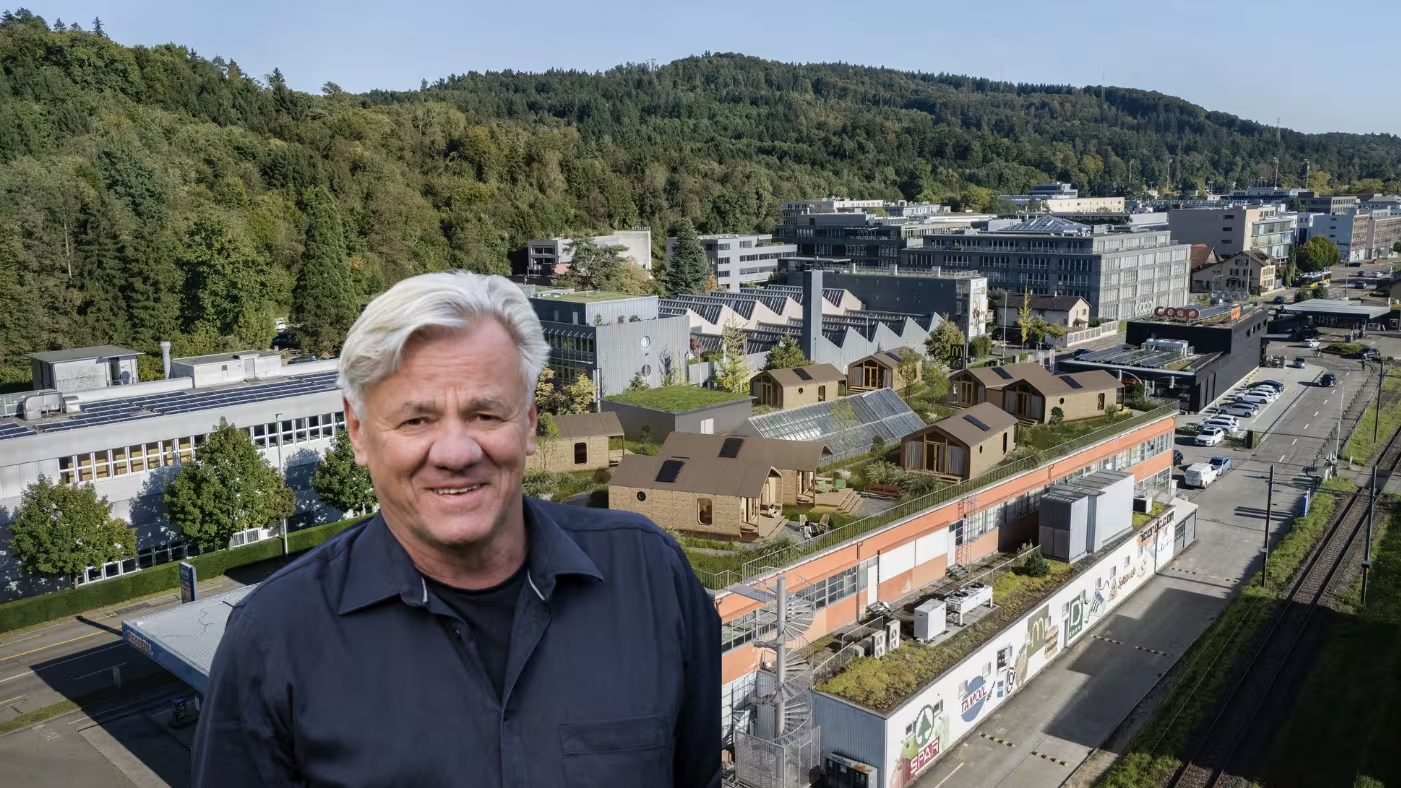
    Christoph Schoop didn’t have to look far. The real estate investor from Baden looked out of his office window at the Dättwil industrial estate and recognized the obvious: huge flat roofs, completely unused. On the roof of the factory arcade at Mellingerstrasse 208, where McDonald’s, Spar and a bakery now provide for everyday life, eight so-called Wikkelhäuser are to be built from spring 2027.

    A new world on the roof
    The Wikkelhouse concept originated in Amsterdam and is now coming to Switzerland. Compact wooden housing units that are delivered ready-made by truck and erected with minimal effort. Each unit offers 30 to 35 square meters, its own terrace and ceiling heights of up to 3.5 meters. Architect Andreas Zehnder, who designed the project for Baden, clearly formulates the added value. Instead of adding another storey, an independent living space has been created on the roof.

    Swiss wood, Uri factory
    The houses are not produced on the building site, but in the company’s own factory in Flüelen UR on the shores of Lake Lucerne. The raw material is Swiss wood from sustainable forestry. Schoop is a co-founder and supporter of Wikkelhouse Switzerland and promotes the concept as a circular economy model. A unit costs from CHF 200,000 ex works; transportation and assembly are additional costs.

    Inexpensive, sunny, connected
    By Baden standards, rents should remain low. There is already a waiting list and, according to Schoop, inquiries have come from “a wide range of people”, including those of AHV age. And although the industrial area is not considered a residential location, the roof offers all-day sunshine and a direct public transport connection. The building itself provides noise protection.

    Pilot with scaling potential
    The project in Dättwil is explicitly designed as a pilot project. Schoop sees space for 50 to 70 Wikkel houses in the industrial area alone. The city of Baden is currently reviewing the suitability for planning permission. If everything goes according to plan, the first residents will move in in spring 2027. What sounds like a curiosity today could set a precedent tomorrow.

  • Major contracts are boosting the building construction business both at home and abroad

    Major contracts are boosting the building construction business both at home and abroad

    In a press release, the property and construction services provider Implenia has announced that it has secured numerous building contracts in Switzerland and Germany. These contracts have a total value of 310 million Swiss francs and will be carried out between 2026 and 2028.

    In Vevey, Vaud, on the shores of Lake Geneva, Implenia is acting as the main contractor for the new Jardins en Ville district, building 182 owner-occupied flats. The project is complemented by commercial space, a two-storey car park and a central green space. The PEFC/FSC-certified timber structure is set to meet the Minergie-Eco and CECB A/B standards. Also in Switzerland, Implenia is building eight Minergie-certified apartment blocks in Payerne (VD) comprising 107 climate-friendly homes. The project was previously developed by Implenia and subsequently sold to investors.

    Implenia is also creating sustainable housing in Germany: in Frankfurt, twelve energy-efficient residential buildings with around 160 passive house units are being built in the city’s “first climate protection district”. In Munich, following a successful pre-construction phase, the company is building a multi-family residential building with 186 flats and complementary commercial uses as part of a joint venture. In Nuremberg, three buildings featuring 76 rental flats, as well as space for a nursery, commercial premises and an underground car park, are being constructed using a timber-hybrid construction method. In Jena, a further residential quarter is also being built using timber construction. In Mannheim, Implenia is constructing a turnkey residential complex using a timber-hybrid construction method at BUGA Park, comprising a total of 225 residential units.

    Further contracts relate to the justice sector as well as education, research and pharmaceuticals: Implenia is constructing operational and production buildings for the prison in Siegburg. In addition, the extended shell of an administration building using timber construction is being built for Flensburg University of Applied Sciences. In German-speaking Switzerland, Implenia is undertaking additional construction work, including the redevelopment of a former industrial site and projects for the pharmaceutical industry.

  • Timber construction as an investment

    Timber construction as an investment

    Timber and hybrid buildings have established themselves as a serious alternative to energy-efficient solid construction. Studies conducted by Wüest Partner and Durable on behalf of Lignum and FOEN show that timber buildings can compete with solid construction in terms of construction costs and performance, although they are slightly more expensive on average. For investors, timber construction thus becomes a building block for achieving sustainability goals without sacrificing economic solidity.

    Costs, life cycle and risk profile
    In a cost comparison, the median construction costs of timber buildings are around 10 per cent higher than those of solid construction. In the lower price segment, however, the values are very similar. Energy standards such as Minergie-P have a greater influence on costs than the choice of load-bearing structure. In the short to medium term, timber buildings benefit from high cost security, lower operating and maintenance costs and a better deconstruction and reuse profile. Over very long periods of 80 years, the greater durability of mineral construction methods has a positive impact on costs, meaning that their life cycle costs are lower.

    Ecological advantage and Green Premium
    Ecological evaluations show that timber constructions reduce grey greenhouse gas emissions by an average of around 20 percent compared to a mineral twin, and significantly more for individual components. The effect is particularly large in the case of extensions, where timber construction enables significant CO₂ savings compared to replacement new builds and creates additional space at the same time. International meta-studies on certified green buildings also point to price and rental premiums as well as lower capitalisation rates, an indication that the market rewards sustainability as a risk buffer.

    Time as a yield driver
    The green premium in timber construction is primarily created by process advantages. A high degree of prefabrication, modular systems and digital planning significantly shorten the construction time. For investors, this means earlier returns and a reduction in construction and project costs due to the time factor. Model calculations estimate savings of around CHF 200 per square metre for a six-month time saving. At the same time, scheduling, coordination and weather risks are reduced, resulting in more stable budgets and more predictable cash flows.

    Strategic role in the portfolio
    Institutional investors such as specialised sustainability funds see the main added value of timber and hybrid construction less in rents than in ecological benefits, the reduction of stranded asset risks and robust ESG positioning. In existing buildings, timber construction scores particularly well in the case of extensions and redensification, where its lightness and prefabrication lead to superior overall economics. For yield-oriented investors, timber construction is therefore particularly worthwhile where process advantages, ESG strategy and location quality interact.

  • Innovative materials in construction

    Innovative materials in construction

    Lightweight concrete in a single pour
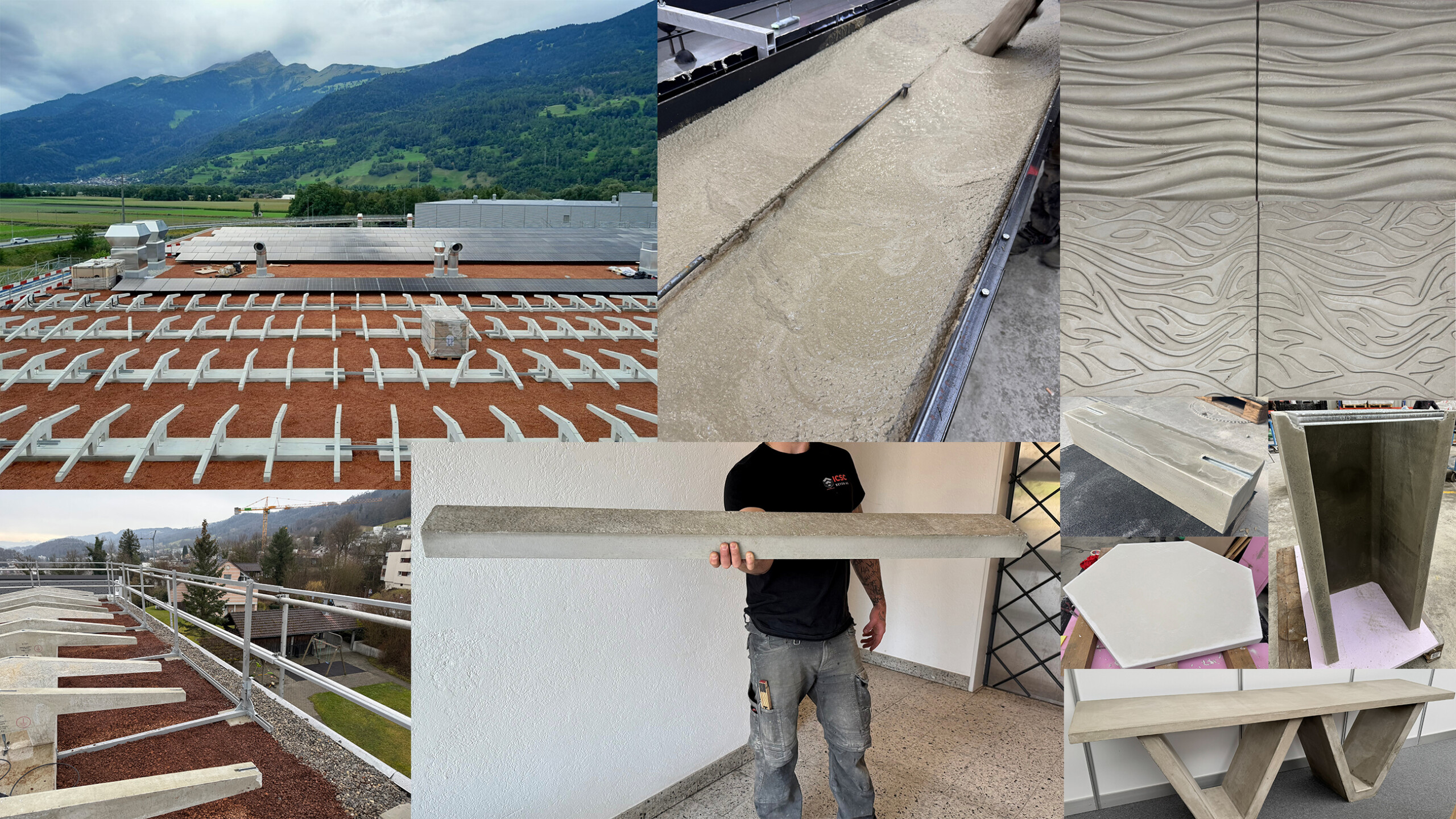
    ICSC Beton AG presented prefabricated parts made from its own lightweight concrete based on expanded glass, which are significantly lighter than normal concrete. At the same time, they have good insulation values, frost resistance and fire protection. This material is used to produce prefabricated elements that speed up construction processes and increase quality on the construction site. One focus is on lightweight concrete elements that combine static function, integrated ballasting and simple installation of solar modules, thus enabling roof renovation and solar installation in a single step. For experts in the audience, it became clear how prefabrication, lightweight concrete and photovoltaics can be combined to create sophisticated system solutions. With less weight, fewer interventions in the roof and more energy yield per square metre.

    Climate-neutral concrete on the construction site
    KLARK demonstrated how CO₂-saving concrete is already being used in building construction today. Without additional work for the construction site and with an externally tested climate impact. The concrete is based on the addition of biochar from waste wood, which permanently binds the carbon and stores hundreds of kilograms of CO₂ per cubic metre in the structure of the concrete. Technically, it largely behaves like conventional concrete. It can be pumped or processed by crane and remains fully recyclable. The stored CO₂ is not released again during demolition. In the Speakers Corner, it became clear that this opens up the opportunity for clients and planners to make measurable contributions to net zero strategies using familiar construction methods without having to reinvent processes and roles on the construction site.

    Climate additives for plaster and co.
    KohlenKraft presented a climate-positive building material that permanently binds CO₂ in the building and at the same time offers advantages in terms of building physics. The centrepiece is a climate additive based on biochar, which can be mixed into mineral building materials such as plasters and coatings, turning building components into long-term carbon stores. In addition to CO₂ storage, the systems aim to improve the indoor climate and regulate humidity. This is an argument that has met with great interest, particularly in refurbishments and high-quality interior fittings. The message to manufacturers, planners and construction companies is that climate effects can be integrated directly into existing products without having to fundamentally change processing and detailed planning.thinking in concrete, building with wood
    In the Speakers Corner, the TS3 technology used real projects to demonstrate how familiar design logic and a new timber construction technique come together. An important step in turning large-volume timber buildings from a pioneering project into an established option. Today, large-scale, biaxial load-bearing timber ceilings with column grids of up to 8 x 8 metres can be realised with a special end-face bonding of cross-laminated timber. Load-bearing structures that were long reserved for reinforced concrete. The panels are rigidly joined on site by grouting the joints with cast resin, resulting in beam-free, point-supported flat timber ceilings that can be treated like flat concrete ceilings in the design. For architects and engineers, this opens up great freedom in terms of floor plans and subsequent conversions, as non-load-bearing walls can be moved flexibly, while weight, construction time and carbon footprint are significantly reduced compared to concrete ceilings.

  • Three decades of engineering excellence in the field of wood and recycling

    Three decades of engineering excellence in the field of wood and recycling

    PIRMIN JUNG Schweiz AG is celebrating its 30th anniversary. It was founded in 1996 by trained carpenter Pirmin Jung as an engineering and planning office for timber construction. According to a statement issued to mark the company’s anniversary, the one-man business has now become an “SME with comprehensive knowledge management, modern workplaces and an agile organisational structure”.

    In order to retain proven employees, new locations have been established over time – “not in city centres,” as the company emphasises, “but in locations that are easily accessible by transport, liveable for employees and close to home”. Today, more than 150 people at seven locations in Switzerland and Germany are involved in structural design, fire protection, building physics, sustainability planning and circular construction.

    According to the information provided, PIRMIN JUNG’s projects have repeatedly included those “that have shaped timber construction and are still considered flagship projects today. New solutions were developed that are now considered standard in timber construction.” The company cites the Aquabasilea water park in Pratteln BL, the seven-storey C13 building in Berlin, the 60-metre BF1 high-rise in Rotkreuz ZG and the Knies Zauberhut event centre in Rapperswil-Jona SG as examples.

    More recently, the new company headquarters in Sursee, the House of Wood, has been added as a development and showcase project for digital, climate-friendly and recyclable planning and construction, as well as the latest plans for the new Dock A at Zurich Airport, which will be built from 2030. The jury of the Prix SVC Central Switzerland 2023, which PIRMIN JUNG won, said it was “particularly impressed by the pioneering Haus des Holzes construction project, which embodies the company’s vision for the future of timber construction”.

    Conscious use of resources has always been deeply rooted in the company’s values, Pirmin Jung is quoted as saying. “The demand for climate-friendly and recyclable construction will increase, and we want to play a key role in shaping this development.”

  • Timber construction sets new standard for cantonal buildings

    Timber construction sets new standard for cantonal buildings

    Architect Markus Schietsch has received a silver Hase Architecture Prize from “Hochparterre” for his new construction of the cantonal AVS building in Unterentfelden. The prize was awarded on December 2 at the Zurich Museum of Design. It recognizes the architectural quality of the building and the consistent implementation of sustainable construction methods.

    The new building with its laboratory and office workstations for currently 80 employees was officially opened on October 25, 2024 after two and a half years of construction. The construction work was planned and carried out by Immobilien Aargau.

    “The award confirms the path we have taken,” said Cantonal Councillor Dr. Markus Dieth in a press release. “The canton of Aargau invests in sustainable, economical and high-quality buildings that also take cost-efficient construction into account. I would like to congratulate Markus Schietsch and the Aargau Real Estate Department on this success.”

    According to Schietsch, this award shows “that careful planning, a clear architectural approach and the courage to use sustainable materials such as wood are more in demand today than ever before”. Head of office and cantonal chemist Dr. Alda Breitenmoser emphasizes that the new building offers “optimal working conditions” for consumer protection: “The architecture supports our work processes, creates a pleasant indoor climate and shows that modern administration can be ecological and functional at the same time.”

    At the beginning of November 2025, the new AVS headquarters received an award from the Pro Holz Aargau wood network for its timber construction.

  • Strong wood presence at the ‘Swiss Arc Award’ 2025

    Strong wood presence at the ‘Swiss Arc Award’ 2025

    On October 30, the jury honored the best buildings of the year from over 400 submissions. The award, presented at Trafo Baden in front of over 500 guests from architecture and the construction industry, underlines the creative diversity and technical maturity of Swiss planning culture. The Lifetime Achievement Award was presented to Kaschka Knapkiewicz and Axel Fickert, whose work has had a decisive influence on local architecture for decades.

    Sustainability and functionality
    The Hortus office building in Allschwil by Herzog & de Meuron won in the “Work, Production & Infrastructure” category thanks to its systematic climate protection and material intelligence. The new University Children’s Hospital Zurich, the winning project in the “Education & Health” category, was also designed by Herzog & de Meuron. Its horizontal structure creates bright, open pathways and a new typology of hospital building that combines functionality with humanity.

    Wood as a design leitmotif
    The Guggach residential and commercial development in Zurich by Donet Schäfer Reimer Architekten won in the “Residential” category. Climate-optimized concrete and timber construction elements demonstrate how sustainable building materials can interact constructively and aesthetically. Andreas Fuhrimann and Gabrielle Hächler were awarded the first prize for interior design for their sensitive conversion of a terraced house in Gockhausen. Wood permeates surfaces, furniture and construction as a connecting element and emotional carrier of spatial quality.

    Audience award for multi-purpose building in Lavaux
    The multi-purpose building in Forel by Samir Alaoui Architectes won the audience award. The stacking of industrial and residential use creates an architectural unit with a high degree of spatial intelligence. Here too, the timber construction underlines the fact that sustainable construction and architectural expressiveness are not mutually exclusive.

    The Swiss Arc Award 2025 confirms that wood is not just a building material, but an expression of a new culture of responsibility in the Swiss construction industry.

  • Stronger than steel, lighter than wood

    Stronger than steel, lighter than wood

    The idea is based on a targeted modification of the microstructure of wood. The natural main components remain the starting point. Cellulose, which provides tensile strength as a fibrous support structure, and lignin, which holds the fibers together as a natural adhesive. During the manufacturing process, some of the lignin is chemically removed, allowing the cellulose to be pressed tightly together. The result is an extremely compact, fiber-oriented material with a high density and comparatively low weight.

    Tests show that Superwood is around twelve times stronger than untreated wood and can even achieve a higher tensile strength than steel in certain combinations. At the same time, the material remains biodegradable and is based on a renewable raw material. A rare balancing act between performance and sustainability.

    Applications in the construction industry
    Superwood could become a game changer for the construction sector. Its combination of lightness, load-bearing capacity and environmentally friendly origin makes it interesting for load-bearing structures, façade systems or modular lightweight construction elements. The material can be processed like wood, but is more resistant to moisture and deformation.

    Inventwood is working with construction and architecture partners on pilot projects, for example for prefabricated wall systems or hybrid wood-concrete constructions. Researchers also see great potential in the infrastructure sector, for example for bridges, roofs or transportable buildings.

    On the road to industrial use
    The path from laboratory to mass production was a long one. The subsequent spin-off Inventwood turned it into a marketable product. The decisive factor was the scalability of the process, which can now be applied to large wooden elements.

    The company sees Superwood as a sustainable alternative to emission-intensive materials such as steel, aluminum or concrete. Production requires less energy and the bound CO₂ remains stored in the material. Superwood could therefore contribute to the decarbonization of the construction industry.

    Wood as a high-tech material
    The industrialization of Superwood closes the circle between traditional building materials and modern material science. Ordinary wood becomes a high-performance material that redefines itself in terms of stability and sustainability.

    If the material becomes available on a larger scale, it could fundamentally change international timber construction – from urban high-rise buildings to modular infrastructures. The future of construction, it seems, will remain made of wood – only smarter.

  • Tradition meets innovation in façade renovation in Davos

    Tradition meets innovation in façade renovation in Davos

    The Hotel Schatzalp in Davos, which opened in 1900 as a luxury sanatorium, has been given a new façade with the support of architecture researchers from ETH Zurich. The building was constructed using digital aids. According to a statement from ETH, the contract for implementation was awarded to local timber construction company Künzli Davos AG and Instructive Construction AG(Incon.ai), which specialises in augmented reality technology. Incon.ai is a spin-off of the ETH and is based at Technopark Zurich.

    The designs for the reinterpretation were developed by a team led by Silke Langenberg, Professor of Construction Heritage and Monument Preservation at ETH Zurich, and architecture professors Fabio Gramazio and Matthias Kohler at the ETH Department of Architecture. The task for the architectural researchers was to preserve the appearance and integrate digital technologies into traditional craftsmanship and operational processes. “Based on the design logic of the old building, we reinterpreted the balustrades,” Fabio Gramazio is quoted as saying.

    Matthias Kohler sees this as a “fundamental change in the way we build”. The digital model replaces the double metre in traditional construction methods. The digital model created using augmented reality simplifies planning for tradespeople and allows people to use their dexterity and intuition. As Kohler emphasises, people retain control over the process.

    The wooden balustrades on the building had become outdated and no longer met today’s safety standards, he explains. In addition, the typical appearance of the Schatzalp with the loggias attached to the south façade had been impaired by numerous changes.

  • Statics gap in timber construction is closed

    Statics gap in timber construction is closed

    Researchers from the Swiss Federal Laboratories for Materials Science and Technology(Empa), the Bern University of Applied Sciences and the Swiss Federal Institute of Technology in Zurich(ETH) have carried out a comprehensive series of tests in collaboration with the Federal Office for the Environment(FOEN). According to a press release, the aim of these investigations was to close a structural analysis gap in timber construction. Multiple tests and mathematical models were used to gain insights into the horizontal load of timber frame constructions.

    “We are investigating the horizontal bracing of buildings with timber frame walls that contain window openings,” said Nadja Manser, project manager at Empa, in the press release. “Neither in Switzerland nor in other European countries is there currently a regulation on how much horizontal load a timber frame wall can bear if it contains a window opening.”

    In order to obtain this data, the researchers carried out numerous experiments in Empa’s construction hall with two-storey and single-storey walls, each containing two window openings. The horizontal beams were subjected to a load of over 100 kilonewtons.

    The next step is to use the large amount of data obtained to create a computer model that is easy for structural engineers to calculate and that can be used to realise structural calculations for timber frame buildings. Throughout the project, the researchers are working with industry partners such as Swiss Timber Engineers, Holzbau Schweiz and Ancotech AG. One of the aims is to eliminate the need for expensive and labour-intensive steel anchors and the concrete cores that were previously required.

  • Efficiency in timber construction thanks to statics

    Efficiency in timber construction thanks to statics

    Timber frame construction scores highly as a sustainable alternative to concrete. However, there is a problem with structural planning. Walls with windows were previously considered “statistically invisible” due to a lack of reliable data on load-bearing behavior. Planning, use of materials and costs suffered as a result.

    Large-scale tests for greater material and cost efficiency
    In order to close this knowledge gap, Empa, the Bern University of Applied Sciences and ETH Zurich launched a joint research project, supported by the FOEN and industrial partners. In Empa’s construction hall, wooden walls are deliberately subjected to extreme horizontal loads, generating valuable data on the load-bearing capacity of walls with window openings. The aim is to use the horizontal bracing values of such elements reliably in everyday engineering in the future.

    Less concrete, more wood
    The findings are being incorporated into a new, simple computer model. The initial results show that walls with windows also make a significant contribution to bracing. This reduces the need for steel anchors and concrete cores and cuts the amount of material, time and costs involved in timber construction. In the long term, this results in more economical and ecological buildings.

    Cooperation between research and industry
    The focus is on the practical suitability of the new model. In close dialog with industry partners, the complex research model is translated into an applicable solution for planning practice. This benefits planners, investors and residents alike.

    With new test procedures and calculation models for window walls, the research project is taking timber construction a step further towards greater efficiency, resource conservation and innovation.

  • Timber trading company opens modern site in Obernau

    Timber trading company opens modern site in Obernau

    Herzog-Elmiger AG has officially opened its new site in Obernau near Kriens. Previously, the wood-based materials trading company had been based on Langsägestrasse in Kriens for 65 years. The search for a new company site had become necessary because the family had been expropriated by the Federal Roads Office for the Lucerne bypass motorway project, according to a press release.

    The family business also celebrated its 120th anniversary on 23 and 24 August 2025 at the same time as the reopening. Siblings Melanie and Michael Herzog took over the business from their father André Herzog in 2022 and are now the fifth generation to run it.

    Customers, partners, neighbours and members of the public were given guided tours of the company’s new 10,190 square metre timber building and its business – from the fully automated storage area to the veneer warehouse with special woods and the new exhibition to the photovoltaic system on the roof, which saves around 336 tonnes of CO2 per year.

    The twelve-metre-high hall, its supporting structure made of Swiss wood and the view of the logistics department, where up to 200 tonnes of goods are moved every day, were particularly impressive. The rooms created for the employees also aroused great interest: an activity room, a room furnished with local Swiss stone pine wood for relaxation, a terrace with a large barbecue and a coffee bar.

    “With this new building, we have taken the opportunity to further develop our company in a future-oriented and sustainable way,” Michael Herzog is quoted as saying. “Here we have room for innovation and at the same time a strong connection to our tradition.”

  • Wooden giant and landmark of the ESAF 2025

    Wooden giant and landmark of the ESAF 2025

    The idea was born in 2021 in the “Säntis Innovation Cluster Wood”. The “Holzvision Max” became a major project involving over 220 companies and institutions, supported by a patronage committee with representatives from business, politics, tourism and sport. Around 1000 specialists from forestry, the timber industry, timber construction and carpentry worked on the project, including many apprentices who produced individual elements in inter-company courses. The wood, mainly spruce and fir, comes from Swiss forests as part of regular forestry operations.

    Technology and construction
    Supports and trusses in the body and legs ensure stability. The frame is partially covered with board shingles, while the wall elements are open. A total of 18,727 screws were used. The supporting structure consists of 40 cubic meters of glulam, supplemented by round timber from Toggenburg. The project is designed for a service life of up to 25 years.

    Financing and cooperation
    The total costs are around CHF 4 million. Thanks to the broad support from the industry in the form of material donations, work and financial participation, the project is secure. A buyer is being sought for the subsequent use. The residual value is around 1.3 million francs, plus costs for storage and reconstruction.

    Tourism prospects
    After the ESAF, Muni Max could be set up in tourist destinations such as Elm, Braunwald or Herisau. The plan is to make it accessible with stairs, an elevator, exhibition areas and a viewing platform. In this way, it will not only serve as a symbol of Swiss wood and craftsmanship, but also as a sustainable visitor magnet.

    Symbol for the industry
    Muni Max is more than just an eye-catcher. It shows how the Swiss timber industry combines tradition and innovation, strengthens the regional value chain and involves young specialists in an ambitious project. At the ESAF in Mollis, it will visually tower over the actual stadium, the largest temporary stadium in the world with 56,500 seats.

    With Muni Max, the Swiss wood industry has created a project that radiates far beyond the event, a strong symbol of craftsmanship, cooperation and the future viability of a traditional raw material.

  • Think circularly, build together

    Think circularly, build together

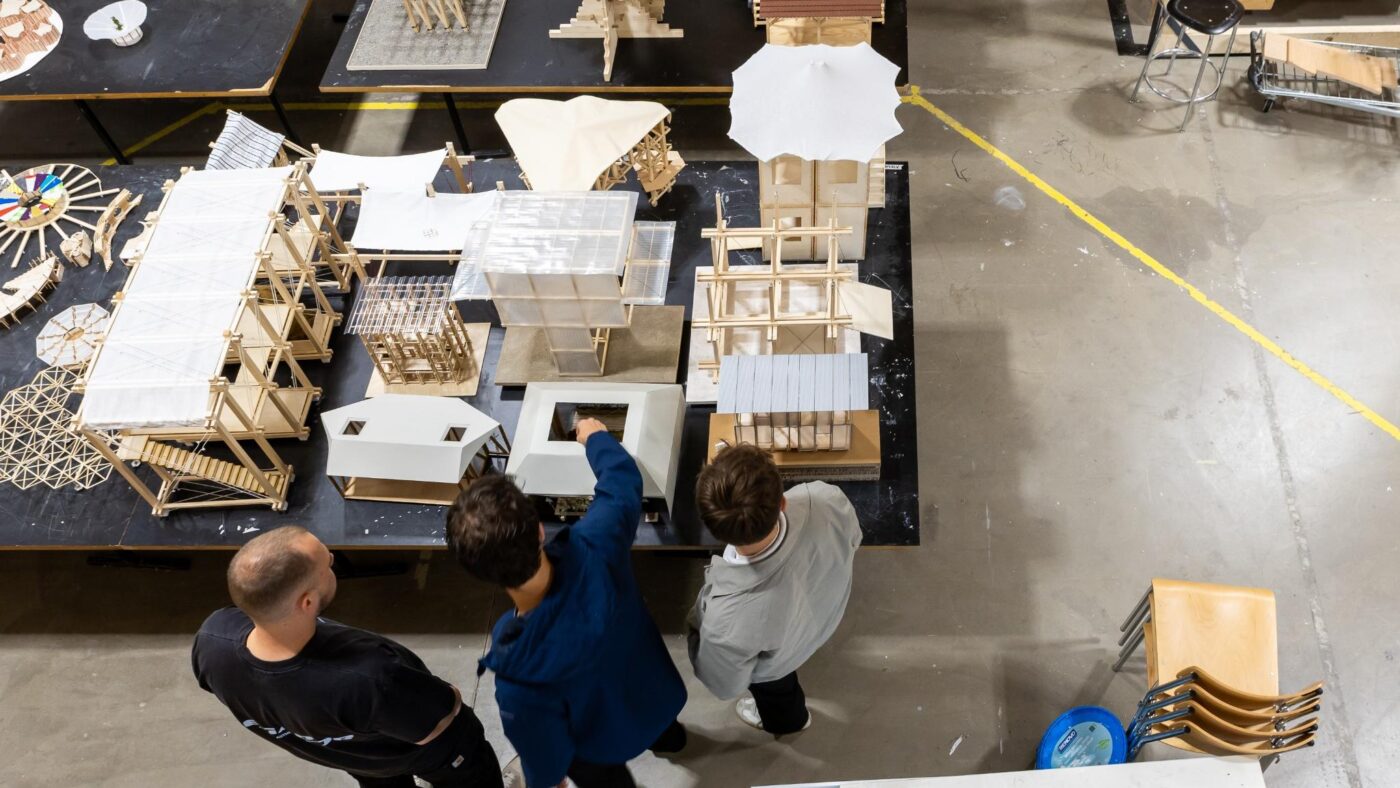
    The Circular Time Lab at Lucerne University of Applied Sciences and Arts brings together theory and practice, design and craftsmanship, teaching and urban development. It is an interdisciplinary project of the Competence Centre Typology & Planning in Architecture and the architecture degree programme at HSLU. Together with students from timber construction companies in the region, the students develop structures that are not only architecturally appealing but also fully reusable.

    The focus is on learning and designing together. The students gain an insight into manual processes and technical possibilities, while the trainees participate in design processes. The result is a deep understanding of resource-conserving construction that closes cycles and preserves material value.

    Experience architecture – in the centre of Lucerne
    Since June 2025, the results of this collaboration can be experienced at two central locations in the canton of Lucerne, on the Inseli near the railway station and at the Viscosi site in Emmenbrücke. There, airy wooden structures with colourful fabrics invite you to linger, observe and pause. They offer protection from the sun and rain and at the same time inspire reflection.

    The structures are more than just aesthetic interventions in the urban space. They are built statements in favour of a building culture that takes responsibility. Their open design invites people to engage in dialogue and makes sustainability visible and tangible. The “Lucerne Summer” thus becomes a field of experimentation for an architecture that aims for impact rather than permanence.

    Circularity instead of deconstruction
    Reuse is at the centre of the Circular Time Lab. The wooden pavilions are not designed as one-off buildings, but as temporary structures with a future. Existing timber components were used for the initial construction. All connections are detachable and all dimensions are retained. The pavilion will be dismantled in autumn 2025 and a new pavilion with a new function will be built from the same elements in 2026.

    This iterative approach not only conserves resources, but also trains planning thinking. After all, circular construction requires creativity and precision. How does an old beam fit into a new design? How do you create beauty without waste? These questions accompany the participants of the Circular Time Lab throughout the entire process and strengthen their skills for the sustainable construction of tomorrow.

    Part of an international network
    The Lucerne project is embedded in the European research programme BAUHALPS, Building Circular in the Alps. in this programme, 13 partner institutions from six countries are jointly developing new strategies for circular construction in the Alpine region. The Circular Time Lab serves as a living real-world laboratory. A place for experimentation, exchange and applied research.

    The cooperation not only opens up new perspectives for students and trainees, but also international networks. In this way, a local timber construction project becomes a building block for transnational change, an impulse that radiates far beyond Lucerne.

    The future begins on a small scale
    The timber structures of the Lucerne Summer may seem small at first glance. But they harbour big ideas: collaboration, circular economy, education and responsibility. The Circular Time Lab shows how sustainable construction can be anchored in education and made visible in public spaces. Because if you want to reuse materials, you first have to rethink ideas.

  • New brochures promote the use of Bernese wood

    New brochures promote the use of Bernese wood

    The cantonal platform of the Bernese forestry and timber industry, Lignum Holzwirtschaft Bern, aims to promote awareness of the forest and encourage demand for local timber. To enable authorities and administrations to use forests sustainably, the association of Bernese forest owners, the Bernese Sawmill Association, the Swiss Timber Construction Section Bern and Bernese Oberland, the Master Carpenters’ Association Bern and Bernese Oberland and Holzenergie Canton Bern has published a series of brochures entitled “Forest and Wood Compass”. The practical documents were compiled with the support of the Wyss Academy for Nature, Lignum Holzwirtschaft Bern explains in a press release.

    The “Forest and Wood Compass” series is divided into an overview brochure and three topic-specific brochures. The overview brochure is entitled “Forest and Wood Compass for Bernese Regions”. The three topic-specific brochures deal with regional wood in public buildings, efficient forestry structures and financial incentives to secure certain forest services. All brochures can be downloaded at lignumbern.ch/wald-holz-kompass/.

    The mandate for Lignum Holzwirtschaft Bern is managed by Volkswirtschaft Berner Oberland.

  • High-tech timber construction meets craftsmanship

    High-tech timber construction meets craftsmanship

    For centuries, wood was regarded as a traditional craft material. Today, however, it is driving an ecological and technological revolution in the construction sector. Automation, artificial intelligence and digital planning are transforming the timber construction industry. The mix of proven carpentry skills and modern technology makes it possible to implement projects faster, more economically and more sustainably.

    Hybrid systems
    Hybrid timber construction makes targeted use of the respective advantages of timber and concrete. Load-bearing structures made of glulam are combined with reinforced concrete layers. Such composite ceilings enable large spans, reduce the weight and improve the physical properties of the building. Prefabrication increases efficiency on the construction site. Examples such as the Timber Peak in Mainz demonstrate the economic and urban development potential of this technology.

    The potential of transparent wood
    Researchers are working on a material that replaces glass: transparent wood. By removing the lignin and filling the cell structure with polymer resin, a material is created that lets light through, is robust and offers excellent thermal insulation. Applications range from windows and light-flooded façades to building-integrated solar panels. Ideal for energy-efficient architecture with high design quality.

    3D printing with wood
    Wood filaments enable the additive production of smaller objects with the feel and look of real wood. Although this technology is not yet suitable for structural timber construction, new areas of business are opening up in the fields of interior design, model making and individual components. Large-format printing with wood composites in combination with robotics and generative design is already under development.

    Wood foam the next generation of insulation
    Wood foam is a completely bio-based insulating material made from waste wood. Manufactured without synthetic binders, it offers good insulation values, is dimensionally stable and can be recycled. The first industrial applications are about to enter the market. Wood foam is a promising alternative to traditional foams, especially for projects with a focus on sustainability.

    Augmented reality on the construction site
    AR technologies bring digital construction plans directly to the construction site. Using tablets or AR glasses, fitters can view component positions and pipe systems with millimetre precision. This speeds up assembly processes, avoids errors and improves communication between the planning office and the execution team. Initial pilot projects show clear time and cost benefits.

    Artificial intelligence as a planning assistant
    From automated floor plan development to quality assurance on timber surfaces. AI is increasingly being used throughout the entire construction process. Particularly exciting are systems for material optimization that minimize waste and maximize the use of residual materials. Ageing simulations and adaptive machine control systems are also becoming a reality.

    Robotics is revolutionizing manufacturing
    Robotic arms that mill, screw and assemble are no longer a dream of the future. Today, collaborative robots work side by side with skilled workers. They take on heavy or monotonous tasks and increase precision. Research projects in Zurich, Biberach and Austria show that robots can be used economically in timber construction. The combination of AI, sensor technology and robotics will enable virtually autonomous production in the future.

    Timber construction is becoming an investment in the future
    The timber construction of tomorrow stands for efficiency, sustainability and design diversity. For investors and project developers, it offers opportunities to realize properties economically and future-proof. Especially where ESG criteria, construction time and location quality are decisive for market success. Intelligent timber construction is more than just a trend, it is a strategic advantage for Switzerland as a business location.

  • House of wood in Sursee shows the future

    House of wood in Sursee shows the future

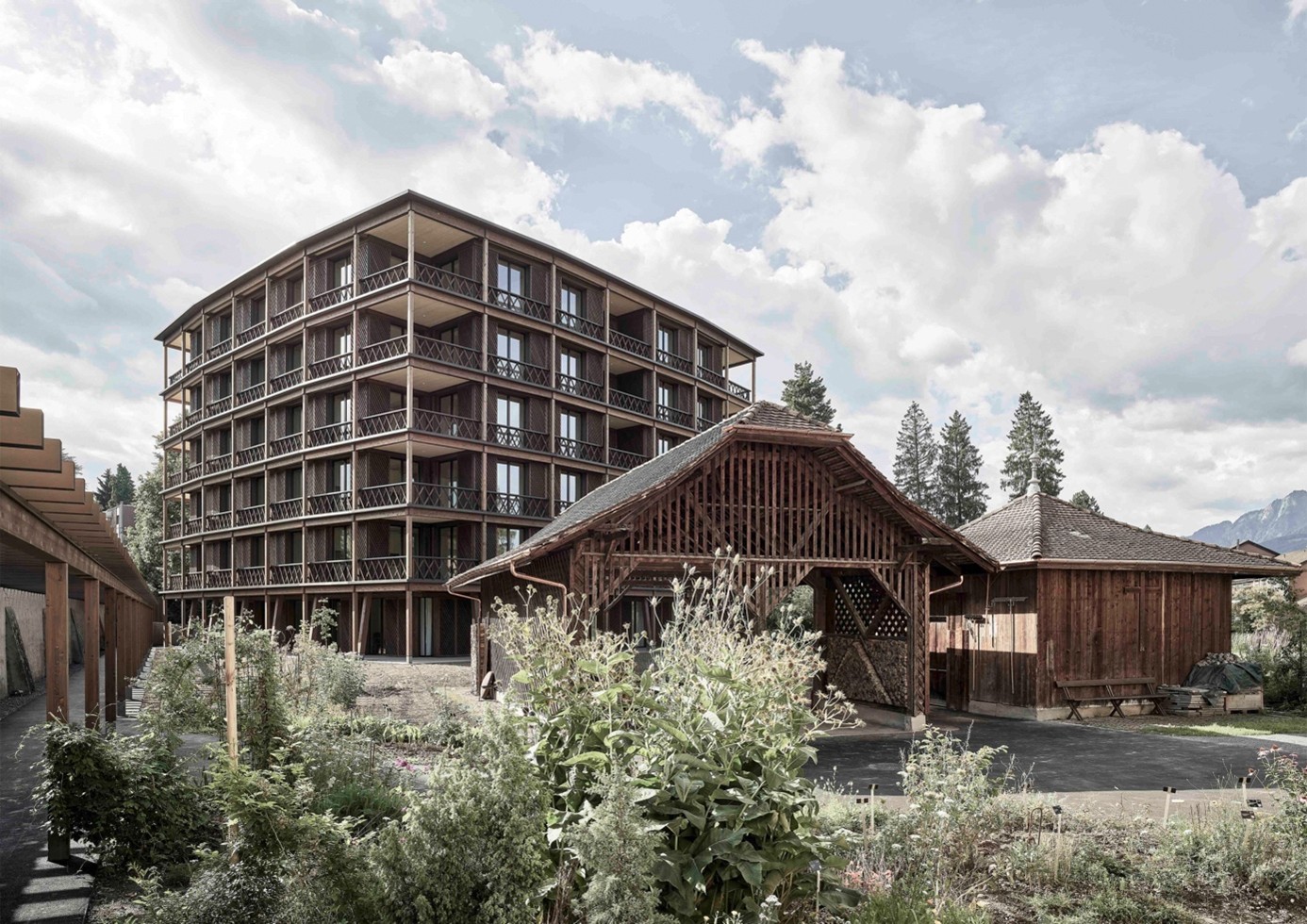
    With six storeys made of wood, complemented by a variety of uses including offices, flats and communal areas, the Haus des Holzes impressively demonstrates the potential of modern timber construction. The entire construction, apart from the basement, is made of Swiss timber, 94 per cent of which comes from local forests. The building material grows back within just 80 minutes, a strong testament to the ecological sustainability of regional resources.

    Circular thinking consistently implemented
    The building is designed in such a way that future generations can dismantle it and reuse the building elements used. This recyclability is a key innovation driver for companies in the timber and construction industry, making sustainability tangible in practice and increasingly asserting itself as a sales argument to a climate-conscious clientele.

    Digital methods as a driver for efficiency
    A special feature of the project is the consistent use of digital planning methods. The entire building was modelled, planned and implemented using building information modelling. Tradesmen worked directly with digital models on mobile devices, an approach that raises the use of materials, construction coordination and efficiency to a new level.

    Regulatory freedom as an innovation advantage
    Switzerland offers an ideal environment for progress in timber construction with practical training, material-independent fire protection standards and flexible SIA guidelines. These framework conditions enable engineers to develop creative solutions that would be held back by rigid standards elsewhere.

    Global pioneering role in view
    The project sees itself as a driving force for the international future of timber construction. With expertise, innovative spirit and the intelligent use of digital tools, Switzerland is positioning itself as a global trendsetter. This is also evident in the largest ongoing project, the planned Dock A at Zurich Airport, where Pirmin Jung Switzerland is playing a key role in the timber-based planning.

  • Resource-efficient building with wood

    Resource-efficient building with wood

    The manual production of wooden shingles in the Alpine region has inspired researchers at Empa and ETH Zurich to develop a new approach. They developed a process in which wooden sticks made from split wood are processed into material panels. In contrast to conventional processing, low-quality hardwood can also be used. The aim is to produce panels with mechanical properties that come close to those of solid wood.

    Energy and material efficiency through chipless processing
    In traditional shingle production, logs are split along the fibre. A process with minimal energy consumption and virtually no waste. This principle is now being transferred to industrial applications. Thanks to a two-stage splitting process and a newly developed device with a multi-bladed splitting head, several wooden sticks can be produced simultaneously, even from hardwood species that were previously mainly burnt.

    Artificial intelligence for wood sorting
    A central element of the new process is the use of artificial intelligence to evaluate the wood sticks. A line camera captures high-resolution images of each stick, which are analysed by a neural network. This allows important properties such as stiffness to be determined independently of the type of wood, shape or size. In future, this data-based selection should enable a targeted arrangement of the rods in order to further optimise the mechanical properties of the panels.

    Boards for load-bearing components with potential
    Even without sorting, the first demonstrators show high resource efficiency and good mechanical properties. The researchers see great potential in the process for load-bearing components in the construction industry. Challenges still exist in terms of bonding, scaling and the predictability of material properties. Nevertheless, the process offers promising prospects for the use of wood in a changing construction industry.

    Research is strategically bundled
    The project is part of the “Mainstreaming Wood Construction” initiative, which promotes the increased use of wood in construction. A new research centre is planned as part of this initiative. The “Center for Wood Materials and Structures” is intended to combine the expertise of Empa and ETH Zurich and provide new impetus for wood processing along the entire value chain.

  • 75 years of Swiss sustainability

    75 years of Swiss sustainability

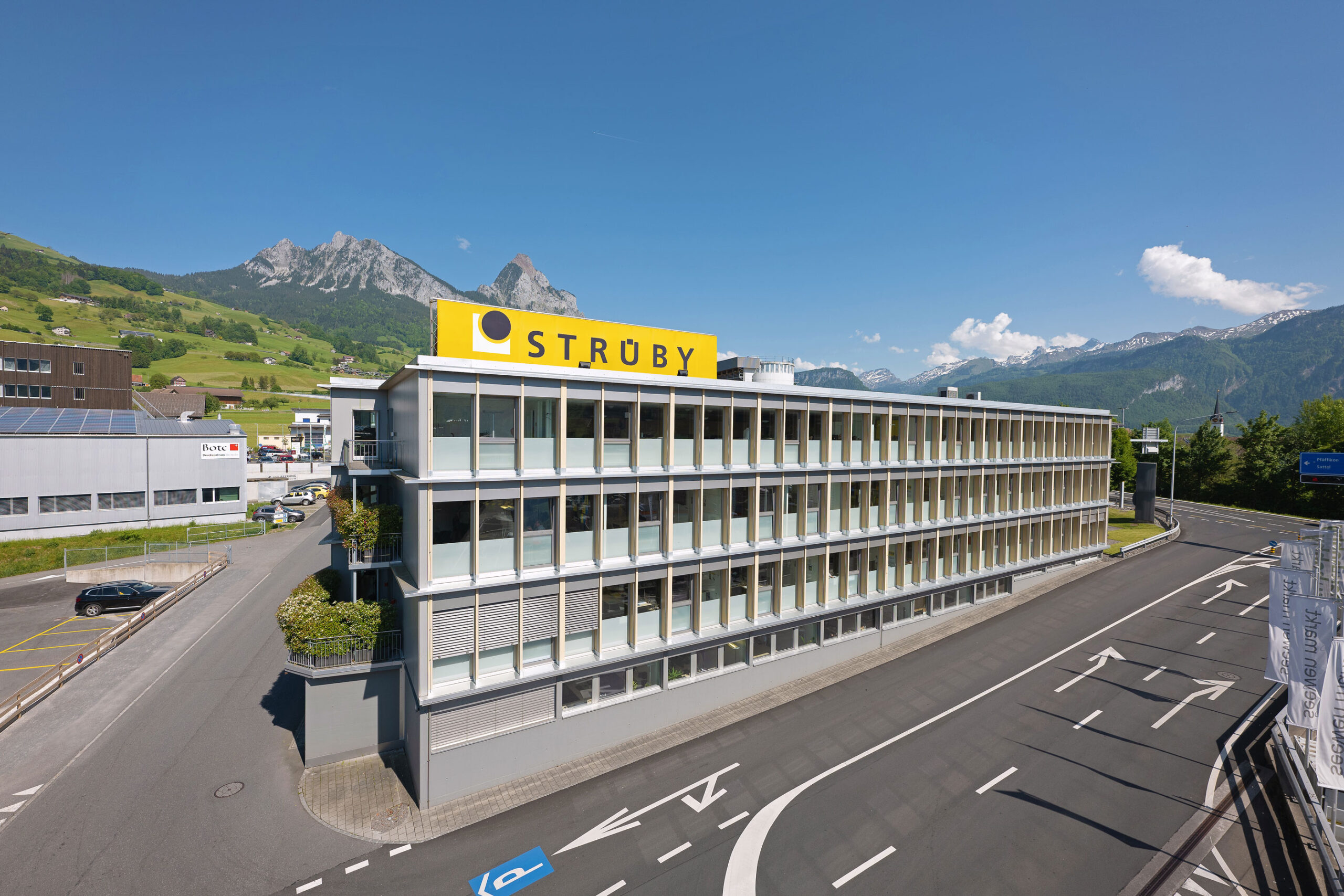
    The event is organised in close cooperation with Strüby Unternehmungen, which is the main sponsor of this event. The focus will be on sustainable development in Switzerland, an area in which Strüby Unternehmungen excels as they work with Swiss wood, one of the most sustainable building materials available. FIABCI-SUISSE and the Strüby companies are delighted to be celebrating their 75th anniversary together!

    The FIABCI-SUISSE association acts as a hub and information service provider for the Swiss property industry in predominantly international matters. FIABCI-SUISSE is an umbrella for all Swiss organisations with an international real estate focus. The international association is thematically unbound and economically independent

    As a full-service provider specialising in timber, Strüby Unternehmungen combines development, planning and timber construction under one roof. This is an important prerequisite for the efficient and precise realisation of multi-storey buildings and large-scale projects. Strüby is Switzerland’s leading full-service provider specialising in Swiss timber.

    PROGRAMME OF THE DAY

    10:15 a.m Meeting point in front of the KKL in Lucerne and welcome by FIABCI-SUISSE
    Bus transfer to Zug with delivery of “Strüby’s small snack”
    11:00 a.mArrival in Zug
    Tour of Zephyr V-Zug and Herti retirement centre
    11:30 a.m Bus transfer to Seewen SZ to the headquarters of Strüby Unternehmungen
    12:00 pm Lunch on the premises of the Urmiberg business centre (GZU)
    13:30 hrsGuided tour of the Urmiberg Business Centre (GZU), a Strüby construction
    14:00 hrs Specialist conference:
    The Strüby companies – Pius Kneubühler
    Modern timber construction architecture – Didier Pichonnaz
    Timber input with a view to NetZero – Andreas Binkert
    Panel, questions and answers – All
    15:00 hrsBus transfer to Root LU
    15:30 hrsGuided tour of the Strüby Holzbau AG production centre in Root LU
    16:00 hrsAperitif
    16:30 hrsReturn journey by bus to Lucerne

    For further information : www.fiabci.ch

  • House of the Future secures further tenants in Winterthur

    House of the Future secures further tenants in Winterthur

    The Green Spin project aims to change the world of work in a sustainable way. To this end, the House of the Future is being built in Winterthur with 100 per cent sustainability and 100 per cent work quality, according to the Green Spin website. The project has now found its second anchor tenant in the form of the Foundation for Speech Therapy Schools in the Canton of Zurich, Green Spin explains in a press release.

    “Green Spin offers the perfect setting for innovative educational approaches,” Peter Felix from Felix Partner Architektur Design, which initiated and developed the project, is quoted as saying. “With the Stiftung Sprachheilschulen im Kanton Zürich, we have gained another tenant that ideally complements our concept of openness, networking and forward-looking development.” The foundation currently operates at four locations in Zurich, Winterthur, Fahrweid in the Limmat Valley and Stäfa.

    Green Spin received its building permit last year and construction is due to start this year. The centre is expected to be ready for occupation in 2027. In addition to the foundation, the leisure sports provider Padelta has already reserved premises in Green Spin.

    Green Spin is intended to offer young and established companies an ideal environment. The building is designed as a modular timber construction and will have a photovoltaic façade and wind power for its own energy supply. In addition to bright working environments, the project envisages meeting places such as a roof garden, a courtyard forest and market alleyways.

  • Open day at timber construction company in Uetendorf

    Open day at timber construction company in Uetendorf

    Holzbau Graber is holding an open day at its new building at Gewerbestrasse 7 in Uetendorf on Saturday, 15 March 2025, according to a press release. From 10 am to 4 pm, the public will have the opportunity to visit the new company headquarters. Visitors can find out about all facets of the timber construction company. The range of services offered by Graber Holzbau GmbH includes carpentry, roofing, solar technology and interior fittings. The company specialises in the construction of timber houses.

    The owner-managed company employs 20 people. The SME intends to continue to grow at the new site and create additional jobs. According to the press release, the previous locations in Heimberg BE and Horrenbach BE had become too small for this.

    The move to Uetendorf means that the work and processes are now on the same company premises. According to owner and managing director Johann Graber, the merger will enable further growth. The production hall offers sufficient space for efficient working, and travelling distances for suppliers will be shorter. Numerous organisational advances also speak in favour of a central location.

    The open day will provide an opportunity for professional discussions and a cosy get-together. According to the company, a tour of the plant and a performance by musician Roberto Brigante are also planned.

  • Graubünden supports digital innovation in timber construction

    Graubünden supports digital innovation in timber construction

    The canton of Graubünden is promoting the digital transformation of the construction process in prefabricated timber construction. Specifically, the cantonal government is providing up to CHF 666,131 for the SmartFlow System project from QUADRIN AG. The QUADRIN timber construction system, which belongs to Uffer in Surses, enables the construction of customised timber buildings from modular components.

    Uffer wants to digitalise QUADRIN in order to “meet the growing demand for increasingly large-volume temporary buildings”, explains the cantonal government in a press release on its funding decision. The total investment costs for SmartFlow System are estimated at around CHF 1.61 million.

    In the SmartFlow System project, Uffer wants to combine existing digitalised elements of its modular system, such as the planning of components and the control of production machines, and add further digital elements. To this end, the company plans to introduce digital tools for process control, quality assurance and increased efficiency. The use of mixed reality, which combines natural and artificial perception, is also planned to minimise errors in the construction process.

    According to the government of the canton of Graubünden, the project “brings an innovative, sustainable approach to the construction industry”, which could serve as a model for future process developments and motivate other members of the industry to “launch similar initiatives”. The funds for QUADRIN AG are being provided in accordance with the law to promote digital transformation in Graubünden.

  • Into the future with wood and clay

    Into the future with wood and clay

    Wood and clay, two proven building materials, are at the centre of the “Think Earth – Regenerative Building” project. Under the leadership of ETH Zurich and in collaboration with Empa and other universities and industrial partners, modern construction techniques are being developed to reduce the environmental impact of the building industry. While wood provides load-bearing capacity and rigidity, clay provides additional mass that contributes to thermal regulation, fire safety and vibration damping.

    Reusable wood connections strengthen the circular economy
    In order to use wood sustainably, its reusability must be increased. Currently, it is only 10 per cent. The project aims to increase this figure to 90 per cent by developing efficient, flexible wood joints. Researchers at Empa and ETH Zurich are working on methods for the simple dismantling of timber structures and developing digital tools that promote the reuse of timber components.

    Crack-free clay construction methods using green additives
    Clay is available in almost unlimited quantities and has an excellent carbon footprint. However, shrinkage during drying is a common problem, resulting in cracks. Researchers at Empa and ETH Zurich are investigating bio-based and biodegradable additives that prevent shrinkage without impairing recyclability. These innovative additives are being tested on a large scale in collaboration with BASF Schweiz AG and Eberhard Bau AG to enable the use of clay in building construction.

  • Timber construction as the key to CO2 reduction in the construction sector

    Timber construction as the key to CO2 reduction in the construction sector

    The European research project TIMBERHAUS was launched in Copenhagen at the beginning of November, Empa announced in a press release. It is one of 19 partners from a total of ten countries participating in the project, which is funded by the EU and the State Secretariat for Education, Research and Innovation to promote timber construction in Europe. Within four years, innovative timber construction technologies and structures are to be developed with which CO2 emissions in the construction sector can be significantly reduced.

    According to Empa, the construction sector is responsible for 40 percent of global CO2 emissions. The use of wood could help here. Currently, however, European forest resources, half of which consist of hardwood, are only used “very inefficiently” and limited to a few types of softwood for construction, explains project coordinator Anders Kjellow from the Danish Technological Institute. “With TIMBERHAUS, we are trying to overcome this challenge in order to increase the sustainable use of wood in construction.”

    Empa is contributing to the project with innovative prototypes created using digital tools such as machine learning and artificial intelligence. “The prototypes will serve as practical examples of how we can effectively utilize a wider range of wood resources,” Empa researcher Mark Schubert is quoted as saying in the press release. “Our goal is to provide the construction sector with viable and efficient products that meet current building standards while promoting the principles of the circular economy and supporting European climate goals.”

  • Launch of the EU research project TIMBERHAUS to promote timber construction

    Launch of the EU research project TIMBERHAUS to promote timber construction

    The European research project TIMBERHAUS was launched in Copenhagen at the beginning of November, Empa announced in a press release. It is one of 19 partners from a total of ten countries taking part in the project, which is funded by the EU and the State Secretariat for Education, Research and Innovation and aims to promote timber construction in Europe. Within four years, innovative timber construction technologies and structures are to be developed with which CO2 emissions in the construction sector can be significantly reduced.

    According to Empa, the construction sector is responsible for 40 per cent of global CO2 emissions. The use of wood could help here. Currently, however, European forest resources, half of which consist of hardwood, are only utilised “very inefficiently” and limited to a few types of softwood for construction, explains project coordinator Anders Kjellow from the Danish Technological Institute. “With TIMBERHAUS, we are trying to overcome this challenge in order to increase the sustainable use of wood in construction.”

    Empa is contributing to the project with innovative prototypes created using digital tools such as machine learning and artificial intelligence. “The prototypes will serve as practical examples of how we can effectively utilise a wider range of wood resources,” Empa researcher Mark Schubert is quoted as saying in the press release. “Our goal is to provide the construction sector with viable and efficient products that meet current building standards while promoting the principles of the circular economy and supporting European climate goals.”

  • A double kindergarten that sets standards

    A double kindergarten that sets standards

    The concept of the new kindergarten is impressive. In addition to a kitchen and a therapy room, the basement houses all the necessary areas for building services, storage, cleaning and outdoor equipment. Thanks to the recessed design, the plinth level is discreet and creates outdoor areas that can be used in a variety of ways and are protected from the weather. Barrier-free access is ensured by a new route from the main entrance on Charlottenweg.

    The kindergarten floor rises from this solid base and is divided into three “houses” with tent roofs. Each of these “houses” serves specific purposes and offers the children individual main and group rooms. The architectural design with the tent roofs, which are also visible in the interior, creates a special atmosphere that allows for a multi-layered spatial experience thanks to the combination of floor and “ceiling sky” as an additional room boundary. A gallery in the main rooms complements the space and offers the children places to retreat and observe.

    The new building will cost almost CHF 3 million, with the building itself costing around CHF 2.2 million. Additional costs will be incurred for furniture, landscaping, the connection to district heating and unforeseen expenses.

    A project with vision
    The architectural firms Berger Hammann Architekten AG and BRH-Architekten AG impressed the jury with their design. The timber construction and well thought-out room layout were decisive factors in the decision. The project, which is reminiscent of a “forest hut ensemble”, blends in perfectly with the natural surroundings of Charlottenfels.

    Completion of the new double kindergarten is planned for late summer 2025.

    Neuhausen invests in the future
    The population of Neuhausen is constantly growing due to the construction of new residential complexes. In addition to the Charlottenfels double kindergarten, which will open in autumn 2025, further school space expansions are planned.

    These investments in education and infrastructure are clear signals for the future of Neuhausen. The municipality is focussing on qualitative growth and sustainability in order to meet the requirements of dynamic population development.

  • Customised processes support bridge renovation in Chur

    Customised processes support bridge renovation in Chur

    The AS Chur Süd consortium, consisting of METTLER PRADER AG and Cellere Bau AG, has commissioned STRABAG to replace the bridge edge beams as part of the renovation of the Sommerau subway in Chur. The timber construction department of the Schlieren-based construction company was tasked with developing a customised method for the formwork, explained STRABAG in a press release. “With our experience, we found the right solution,” Dominic Graf, timber construction foreman at STRABAG AG, is quoted as saying.

    Specifically, the work was made more difficult by the limited space available, which, among other things, did not allow for a conventional substructure for the formwork. The STRABAG timber construction team solved this problem by reinforcing the formwork panels with flat steel. Fire hoses were inserted into the gaps. The hoses, filled with compressed air, hold the panels in a stable position during concreting.

    According to the press release, the first bridge edges have now been completed to the complete satisfaction of the master builders on site. According to STRABAG, the other construction phases are currently being realised according to plan with the help of this technically demanding but ideally suited solution.

  • Climate-friendly residential project in Burgdorf sets new standards

    Climate-friendly residential project in Burgdorf sets new standards

    The Fischermätteli residential construction project in Burgdorf has been awarded Minergiesite certification. This is the first time that an entire site has been certified in accordance with the requirements of the Swiss building standard, according to a statement from StrübyUnternehmungen, the company responsible for the project. The residential construction project with ten apartment buildings, which will be completed in fall 2023 after three and a half years, will reach “a new level” in sustainable residential construction, according to Strüby.

    According to the information provided, the site is characterized by the use of 6,600 cubic meters of renewable Swiss wood, as well as by its very low energy consumption and maximum self-sufficiency with renewable energies. Greenhouse gas emissions during construction and operation have been minimized. The buildings also have above-average heat insulation and controlled air exchange. The design of the outdoor space increases climate resilience and the quality of stay, for example through suitable planting and shading. The overall concept also includes an environmentally friendly mobility concept.

    The fact that the climate-friendly overall concept was well received was already evident during the completion of the quarter: “Demand was so pleasing that all apartments were sold by the time construction was completed,” Didier Pichonnaz, Head of Architecture at Strüby Unternehmungen, is quoted as saying.

    New rules for certification will apply from 2023. Unlike before, not only a single building but also an entire site can be certified.