Energie Ausserschwyz AG has completed work on the core renewal and expansion of the district heating network in the center of Lachen. “We are very happy and proud to have reached this milestone,” said Philipp Züger, Head of District Heating Construction at Energie Ausserschwyz AG, in a press release issued by the company. The district heating network of Energie Ausserschwyz AG has currently reached an extension of over 26 kilometers.
From the fall, around 40 customers in Lachen will receive district heating from the wood-fired power plant in Galgenen. Energie Ausserschwyz has invested around CHF 15 million this year in the expansion of the network, which will be in place from 2021. Further areas in Lachen are to be connected in the coming year. Specifically, the press release mentions Neuheimerstrasse, Zürcherstrasse and Säntisweg. “Interested parties are welcome to contact us,” explains Züger. “We will then be happy to clarify when a connection is possible.”
Energie Ausserschwyz AG was founded in 2020 and its main shareholder is EW Höfe AG from Freienbach SZ. The company sells heat and electricity from a wood-fired combined heat and power plant and a biogas plant at the energy center in Galgenen.
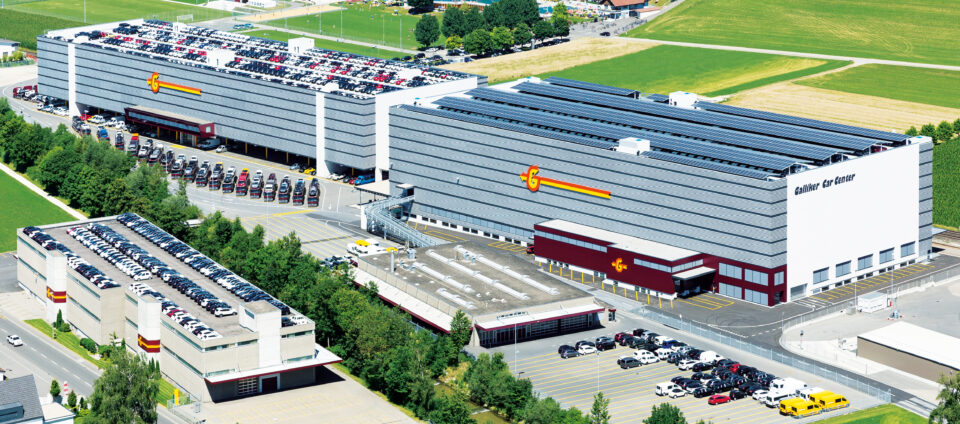
An energy ecosystem unique in Switzerland is to be created in Dagmersellen over the next few years. The transport company Galliker, the milk processor Emmi, the producer of biogas PanGas and the energy supplier CKW have signed a joint declaration of intent at the end of 2022.
For the partners, the project is an important step towards achieving the energy strategy goals of the companies involved and of Switzerland. “Together we want to drive forward the energy transition and make a significant contribution to the decarbonisation and diversification of the energy supply with the planned energy ecosystem,” explains Martin Schwab, CEO of CKW.
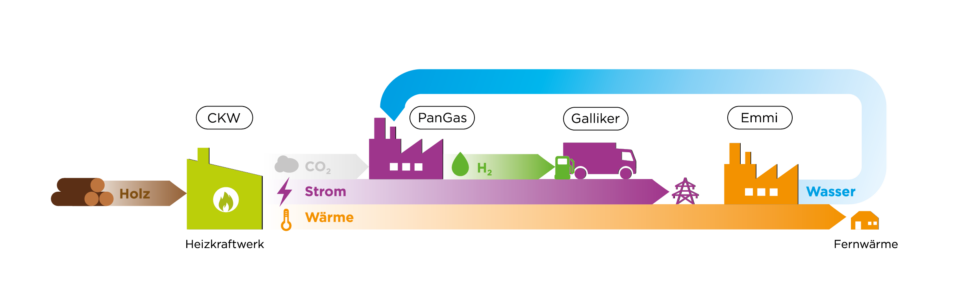
The energy ecosystem will start with a wood-fired power plant operated by CKW to produce heat and electricity. PanGas will use part of the electricity to produce hydrogen to supply Galliker’s fleet of trucks. In addition, PanGas will extract green CO2 from the combustion process; for use in the food industry, for example.
“At PanGas, we have always been involved with hydrogen. We are very pleased that we can make a significant contribution to CO2 reduction with this project and come a big step closer to the Swiss decarbonisation target”, says Roger Britschgi, Managing Director PanGas.
With the renewable energy from the wood-fired power plant, Emmi covers part of the thermal energy required at the Dagmersellen production site for the production of fresh cheese specialities such as mozzarella or ricotta as well as milk powder. With a view to closing the loop, Emmi also supplies demineralised water from the production of dairy products for hydrogen production.
The energy ecosystem is intended to function as a closed loop.
“This unique energy ecosystem, designed in conjunction with three regionally based national partners, enables more sustainable production of our dairy products and reduces our dependence on fossil fuels,” says Marc Heim, Head of Emmi Switzerland.
The wood-fired power plant will produce electricity and heat when fully operational. Emmi will use a good third of the heat. Other possible heat consumers are local industry and heating networks in the surrounding villages. As far as possible, the wood-fired power plant will be operated with regional forest chips and waste wood. This will require up to 200,000 tonnes of wood per year.
The four companies plan to invest a total of about 200 million Swiss francs in the production, distribution and use of renewable energy. Before the energy ecosystem can be built, further planning and approval steps are needed. In the detailed planning, the entire value chain is to be organised. Before building applications can be submitted, the zoning plan of the municipality of Dagmersellen must also be adapted.
The population will be regularly informed about the project status. The current planning anticipates commissioning in 2027 at the earliest.
IWB continues to grow with renewable energies. According to its own information, it joins the heating network of Agro Energie Schwyz AG ( AES ). Since 2006, it has built a modern network of over 100 kilometers in the Schwyz valley basin with state-of-the-art production facilities. A wood-fired thermal power station , an ORC system and a biogas system supply around 1,500 customers. The aim of AES is to build and operate a regional, independent and CO2-neutral energy supply in the region. The operator also attaches great importance to local added value.
IWB takes over shares from the largest shareholder, the Profond pension fund. Profond was looking for an investor with proven expertise in heat supply and a credible ecological focus. With this investment, IWB is following its strategy of decarbonising the heat supply, also outside the canton of Basel-Stadt.
"Agro Energie Schwyz is an innovative, rapidly growing company with a clear focus on renewable energy supply," explains IWB CEO Dr. Claus Schmidt choosing his company. "As the operator of the largest Swiss district heating network, IWB can contribute its vast experience in the heating network and at the same time expand its leading position in renewable heating."
Wir verwenden Cookies zur Unterstützung und Verbesserung unserer Dienste. Mit der Nutzung dieser Website erklären Sie sich mit der Verwendung von Cookies einverstanden. Weitere Informationen finden Sie in unserer Datenschutzerklärung.