Tag: Immobilienentwicklung

  • Building the future means taking responsibility

    Building the future means taking responsibility

    Mr Binkert, you have been working in property development for decades. What drives you personally and what is your vision for the future of architecture and property development?property development is also spatial development. With every building, we change our environment, the space around us. This change should be an improvement, not a deterioration. I am concerned with the question of the rules that we must observe to ensure that our built environment remains sustainable, liveable and fit for the future. I see the future of property development in creative, holistic planning that combines social needs with technological possibilities and puts people and the environment at the centre.

    Which project has had a particular impact on you?
    Every project broadens the horizon of experience – but Greencity Zurich was a turning point for me. It was the first time we developed concrete rules for Losinger Marazzi on how a neighbourhood has to be planned, built and operated in order to be considered truly sustainable. This project showed me how profound an impact sustainability can have when it is systematically thought through and implemented. The fact that Losinger Marazzi emerged as Switzerland’s first “green general contractor” was a strong sign that sustainability can also be a model for economic success.

    As President of the 2000-Watt Smart Cities Association, you are committed to sustainable and energy-efficient cities. How do you specifically integrate sustainability aspects into your projects?
    In Greencity Zurich, we developed comprehensive rules for the planning, construction and operation of a sustainable urban district for the first time. This resulted in the “2000-Watt-Areal” label, which has certified over 50 urban neighbourhoods throughout Switzerland. Today, we are developing it further under the authorisation of the Swiss Federal Office of Energy – with a view to the smart city. We were recently able to certify the first project in India.

    The biggest challenge remains the balance between ecological, social and economic sustainability – especially internationally. In China, social demands are difficult to realise, in Brazil there is often a lack of environmental understanding, in the Emirates economic efficiency is not an issue. In Switzerland, too, it takes empathy, understanding and perseverance to implement viable, sustainable solutions.

    You have international experience, including in the USA and India. What differences and similarities do you see in urban development between Switzerland and these countries?
    The main difference lies in the pace of growth: emerging countries with rapidly growing populations need a lot of new space quickly and cheaply – often at the expense of quality. There, sustainability is a promise for the future that is often met with scepticism. Sustainability costs a lot in the short term, but only yields returns in the long term, but then, according to our assumptions, it covers the costs many times over.

    In the western world – where growth is stagnating or declining – other values take centre stage: social justice, the circular economy, biodiversity. Here, sustainable development is increasingly seen as a prerequisite for quality of life. However, the demand that the West must also pay for sustainable development in emerging countries is also pushing wealthy countries like Switzerland to their limits.

    What trends do you see in future urban and area development and how do you envisage the forms of housing of the future, particularly with regard to demographic change, increasing urbanisation and densification?
    We are at a turning point. The construction industry urgently needs to catch up in areas such as digitalisation, automation and artificial intelligence. We are still building “brick and mortar” – as in Roman times. While basic human needs have hardly changed, the technical possibilities certainly have. The megatrends – demographic change, health, the future of work, the climate crisis – require new answers to the question of how we live. We must have the courage to question the status quo, break new ground and try out solutions that did not exist in the past.

    The “housingisation of Switzerland” cannot continue. What used to work in a Switzerland with 6 million inhabitants and limited mobility is now leading to collapse. We need to see ourselves more as part of the universe again, in which we are just one of many species – not as dominators. Every day we see the consequences of our short-sighted use of finite resources, diminishing biodiversity and the waste of energy.

    In future, we will move closer together, make space for others, live more efficiently and with greater sufficiency. To ensure that this does not diminish our quality of life, we need to make better use of the technological opportunities that are already available to us today and those that we will develop in the future. We will live more urbanised lives than we do today, we will meet our daily needs within walking distance and we will be better connected.

    We have now reached 9 million inhabitants in Switzerland. The property industry has been talking about a Switzerland of 10 million for some time now. In your opinion, are we sufficiently prepared for this and where do you still see a need to catch up?
    The idea of a Switzerland of 10 million is already outdated. If we want to enable our ageing society to live comfortably, we need an additional young and well-educated workforce – we need a 12-million-strong Switzerland! We must offer sustainable solutions to the expected migration flows of climate refugees and war refugees without jeopardising our culture and history. The faster and better we prepare for this, the more we will be able to benefit from it.

    We are ill-prepared for the exogenous paradigm shifts. Although we are aware of the pull of the big cities, we do not offer any alternatives. We still work with zoning plans, even though these are no longer able to reflect our production and our way of life. We stare spellbound at the successful crowd-pullers of Zurich, Basel and Geneva instead of recognising and exploiting the dormant qualities of small towns such as Lenzburg, Brugg, Wetzikon or Glarus. There is an urgent need to catch up here.

    Our vision of Smart City Switzerland is not a megacity with a sprawling agglomeration – quite the opposite: we are proposing to become more compartmentalised again. It is not the large Swiss cities that should grow, but the medium-sized and well-connected smaller cities that should become denser and more urbanised – with plenty of green space in between. Urbanisation includes the improvement of amenities, cultural enhancement and, in particular, the creation of new jobs. And where research on settlement development identifies gaps in the urban network, we must also have the courage to build new cities.

    What roles and long-term vision do you see for the Glarus economic region and which key projects will characterise the coming years?
    Glarus North is the economic backbone of the canton – with its location, infrastructure and proximity to the Zurich economic area, it offers enormous potential for production and services. Glarus South, on the other hand, scores highly in terms of nature, recreational value and quality of life. These two areas should be considered much more in terms of a functional symbiosis. The Glarus 2030 vision shows clear prospects for this, but it needs to be supported more broadly. Key projects in Näfels-Mollis and Niederurnen-Oberurnen would be ideal catalysts, but have so far been underutilised – not even in the recently adopted municipal structure planning. Narrow cantonal and federal regulations on building zone dimensions are slowing down development – there needs to be room for manoeuvre for future-oriented solutions.

    One of your students’ Master’s theses analyses Glarus North as a potential sub-centre in the Zurich economic region. How do you assess the development potential of this region, particularly with regard to infrastructure, industries, jobs
    and housing?

    The potential of Glarus North is impressive. Our studies on Smart City Switzerland show that there is space for a medium-sized city on both sides of Lake Walen – but whether this is created in Glarus North, Ausserschwyz or Sarganserland ultimately depends on the political will of the residents.
    The aforementioned HSLU master’s thesis examines the relationship between the large city of Zurich and the surrounding sub-centres (nodes of second centrality). The current situation of the brain drain and the salary mercenaries who commute back and forth between rural Glarus and urban Zurich is contrasted with the vision of the 15-minute town of Glarus Nord. The master’s thesis confirms the interdependence of spatial planning and economic development, of densification and diversity of use, of jobs and living space.

    What needs to happen from a planning and political perspective so that Glarus not only grows, but also helps to shape the future?
    From the perspective of Smart City Switzerland, the Federal Office for Spatial Development ARE must revise spatial planning throughout Switzerland and create new open spaces for densified settlement development. On this basis, existing cities can be densified or even new regional cities (nodes of second centrality) and small towns (nodes of third centrality) can be developed.

    For Glarus, this specifically means active lobbying in Bern to position Glarus North as a business location. This is the only way for the canton to free itself from the role of passive follower in financial equalisation. A clear decision needs to be made between a wait-and-see approach and active participation. If you want to help shape the future, you have to invest – in planning and development, infrastructure, location marketing and political persuasion.

    What role does the cantonal structure plan play in this and what influence can be exerted at communal level?
    The cantonal structure plan reflects the current situation and takes a linear approach. It does not reflect the paradigm shifts that we will be facing in the coming years. The structure plan also offers insufficient flexibility to be able to react to the new exogenous and endogenous challenges.

    The scope for influencing the overarching structure plan is limited. The municipality is dependent on the canton, and the canton in turn is dependent on the federal government. In addition, the requirement for planning consistency makes any innovation difficult. The reaction times are too long. Nevertheless, there are levers: pilot projects and development centres (ESP) make it possible to test innovative ideas and try out new urban models.

    Today’s 105th immoTable in Glarus makes an important contribution to the urgently needed discussion on whether Glarus wants to become a location for the future.
  • The Glarus South residential park sets new standards

    The Glarus South residential park sets new standards

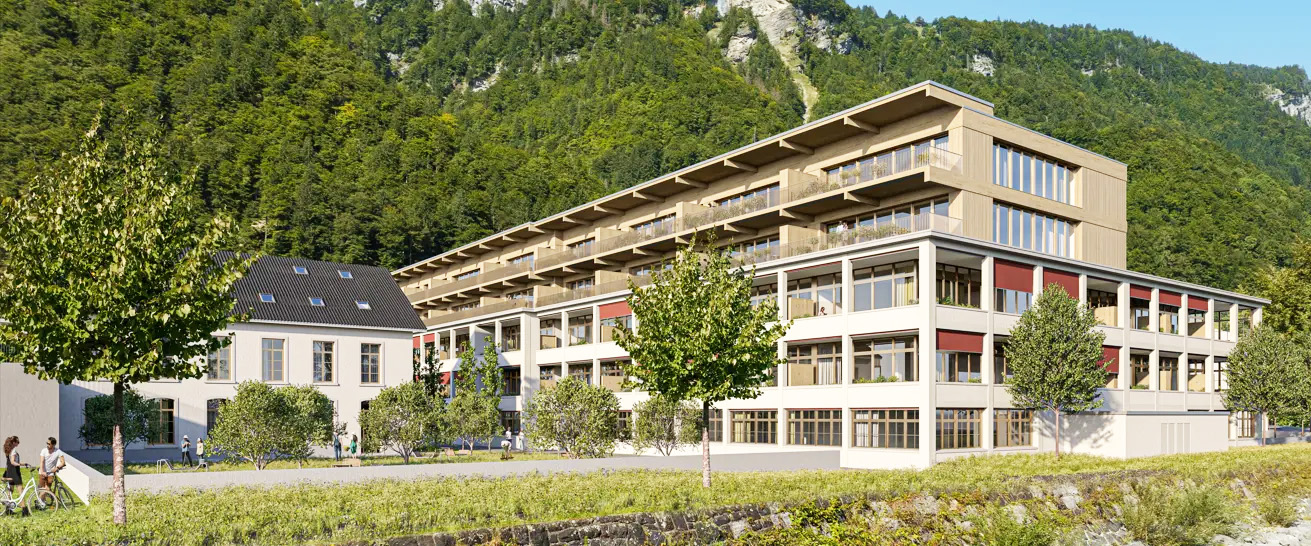
    In the centre of Glarnerland, nestled in the alpine landscape and with a direct S-Bahn connection to Zurich, a pioneering project is taking shape. The Glarus Süd residential park is ready for realisation. The building permit has been granted, the concept has been finalised and the surrounding area is ideally developed. The site is already home to an established health and prevention centre, a café, a hairdressing and beauty salon and versatile event spaces. Schools, shopping facilities, Spitex services and the railway to Braunwald are all within walking distance. The location combines living close to nature with urban connections.

    A pioneering project for new ways of living
    The project focuses on multi-generational living, supplemented by co-living and co-working facilities. The 51 flats are part of a holistic concept that is geared towards social mixing, encounters and shared use. The residential park is operated CO2-neutrally. The energy comes from its own production. The concept addresses key challenges such as demographic change, climate protection and the increasing need for flexible ways of living and working, while at the same time offering attractive prospects for investors who focus on valuable, socially relevant projects.

    Experience meets vision
    Hacontex AG from Zollikon is behind the project. The company, which has its roots in the textile industry, has consistently transformed itself over the last few decades. Today, Hacontex is active in sustainable energy production and property development. Managing Director Hans-Peter Keller and his team rely on entrepreneurial courage, regional roots and economic foresight. With projects in the Zurich agglomeration, in the canton of Schwyz and in Glarnerland, the company addresses future-oriented topics, always in the area of conflict between nature, technology and society.

    A project with a signalling effect
    The Glarus Süd residential park is more than just a property project. It is a stimulus for the region and a model for the sustainable transformation of rural areas. A place for all generations, for work, health, community and innovation is being created in the middle of the mountains. The combination of modern infrastructure, local roots and ecological responsibility makes the project an investment target with long-term added value.

    Now that construction is ready, the go-ahead is imminent. An investor is now being sought who shares the vision and has the courage to back a project that not only promises the future, but also builds it.

  • New court building for St.Gallen district court

    New court building for St.Gallen district court

    Since 1996, the district court of St. Gallen has been split between two locations. A solution that was never intended to last. While the offices are housed in the Bohl 1 property, the court sessions are held at Neugasse 3/5. This division not only makes work processes more difficult, but also no longer meets today’s requirements in terms of security and functionality. With the planned move to the Schützengasse 1 property, the court will finally have a modern and coherent home.

    A building for the future
    Schützengasse 1 is owned by the Canton of St. Gallen and will be extensively renovated and modernised for its new purpose. The feasibility study has confirmed that the building is ideally suited to the needs of modern court operations. By bringing all services together at one location, not only can work processes be simplified, but security requirements can also be implemented in line with the times. The current rental solution at Neugasse 3/5 will therefore become obsolete, which will bring long-term financial benefits for the canton.

    Financing and costs at a glance
    The total costs for the project amount to around CHF 27 million. This amount includes CHF 8.5 million for the transfer of the property from financial to administrative assets. The actual costs for the renovation and conversion of the building amount to CHF 19.5 million according to a rough cost estimate. This investment is supplemented by a one-off compensation payment of CHF 780,000 from the City of St. Gallen. The elimination of the rental costs for Neugasse 3/5 will also provide long-term relief for the canton’s finances.

    Start of construction and schedule
    The construction project is scheduled to start in 2027. Completion and occupation are planned for the end of 2028. In the foreseeable future, the District Court of St. Gallen will therefore have a building that not only meets current requirements, but also takes future developments in the justice sector into account.

    The largest district court in the canton
    With around 3,300 court cases a year, the district court of St. Gallen is the most important of the canton’s seven district courts. It deals with cases in the areas of civil and criminal law and has a well-established team of currently 43 permanent employees. These include district court judges, court clerks, clerical staff and auditors. In addition, 14 part-time district judges are involved in handling the cases. These extensive tasks require an infrastructure that fulfils today’s requirements for efficiency, security and flexibility.

    Security as an integral part
    In addition to merging the locations, the security system is a central element of the project. Court operations today must meet high standards in order to ensure the integrity of proceedings and the protection of all parties involved. The new property will be remodelled in such a way that these requirements are met and all security-relevant aspects can be taken into account.

    A win-win situation for everyone involved
    The planned relocation of the St. Gallen district court not only represents an upgrade for the judicial centre, but also a sustainable investment in the quality and future viability of the cantonal court system. The optimisation of processes, the modernisation of the infrastructure and the energy-efficient refurbishment are steps towards efficient and resource-saving operations. At the same time, the parties to the proceedings benefit from a modern environment that facilitates negotiations and processes within an appropriate framework.

  • Property developer reduces profits to strengthen future investments

    Property developer reduces profits to strengthen future investments

    SitEX Properties Holding AG generated gross sales of CHF 10.86 million in the first half of the year, the Schwyz-based property development company announced in a press release. In the same period last year, gross sales totalled 32.70 million Swiss francs. Net profit after tax fell from CHF 7.34 million to CHF 1.51 million in the same period.

    “Over the past ten years, sitEX has been fortunate enough to achieve profitable half-year and annual results without exception,” CEO Beat Kähli is quoted as saying in the press release. However, the company, which specialises in real estate in Switzerland and the USA, is currently “in an investment phase, which is why only small profits could be achieved compared to previous years”. According to Kähli, sitEX currently has a development pipeline totalling more than CHF 5 billion. This “secures the basis for future sustainable profits”, according to the company boss.

    In recent years, sitEX has distributed around CHF 60 million of its profits to shareholders. This year and next, however, the company intends to concentrate on repaying liabilities and investments, explains Christoph Stutz, Chairman of the Board of Directors of sitEX.

  • Losinger Marazzi implements climate strategy in its projects

    Losinger Marazzi implements climate strategy in its projects

    What climate strategy is Losinger Marazzi pursuing?
    Lennart Rogenhofer: With our climate strategy, we are pursuing the goal of reducing our CO² emissions by 30 per cent by 2030 compared to 2021. We will achieve this by focussing more on timber construction and renovation projects and by treating sustainability as a key issue in all projects. We are pursuing a scientific approach in accordance with the Science Based Targets Initiative, which also audits our target achievement, among other things.

    How is the strategy being implemented in practice?
    We have been fully integrating sustainability into our corporate strategy for years. Examples of this include the major projects Greencity in Zurich (Switzerland’s first 2000-watt site under development in 2012), Erlenmatt West in Basel (Switzerland’s first 2000-watt site in operation in 2013) and the sustainable Églantine neighbourhood in Morges in 2019.

    Following further in-depth steps in recent years, we are systematically implementing our climate strategy. Since 2019, we have been consistently preparing a carbon footprint for the construction and operation of buildings for each project – i.e. over the entire life cycle of a project and regardless of the environmental labels we are aiming for. This has enabled us to build up a database of experience that makes it possible to estimate and reduce the emissions of future projects.

    What goals is Losinger Marazzi pursuing with regard to timber construction?
    Timber construction is a focal point of Losinger Marazzi’s climate strategy. This involves focussing more on building materials with low CO2 emissions, such as wood. Our climate strategy aims to minimise the life cycle emissions of a building during its construction and operation from the design stage onwards. The increased use of wood is naturally an important element here, always according to the principle of “the right material in the right place”. This means focussing on local, lightweight, bio-based materials where they are best suited in terms of their technical properties and have the greatest impact on sustainability. In addition to a reduction in CO2 emissions, this can also mean better deconstructability or a contribution to a pleasant indoor climate, for example. We are already implementing this strategy in projects such as the Greencity construction site B6 (Vergé), the administrative building of the Canton of Lucerne and the BERN 131 service building.

    Current projects:
    Greencity Baufeld B6 (Vergé)
    In Zurich with an optimised energy concept (100 % renewable) and a materialisation fully geared towards sustainability (timber façade, lightweight interior walls, slim supporting structure, etc.)

    Administrative building of the Canton of Lucerne
    For around 1500 employees at Seetalplatz in Emmenbrücke (LU), including a timber atrium, SNBS Gold and Minergie-P-ECO certification

    Service building BERN 131
    In Wankdorf Bern with photovoltaic modules on the roof and façades, timber construction and SNBS Gold certification

    Côté Parc
    urban regeneration projects in Geneva and Spenglerpark in Münchenstein (BL), in which the focus was actively on utilising and upgrading the existing buildings instead of demolishing new ones

  • New Head of Property Development at Swiss Life: Fabian Linke

    New Head of Property Development at Swiss Life: Fabian Linke

    Fabian Linke is moving from Swiss Prime Site Solutions to Swiss Life Asset Managers, where he has worked as Head of Business Development since 2021. Previously, he worked as an expert for property investment products and business development at Global Real Estate at Credit Suisse Asset Management from 2006 to 2015 and from 2018 to 2021. He began his career at Credit Suisse Asset Management in Institutional Sales Switzerland. He holds a degree in Banking and Finance from the Zurich University of Applied Sciences (ZHAW) and a Master’s degree in Real Estate from the University of Zurich. He is also a member of the Royal Institution of Chartered Surveyors (RICS).

    “I am delighted that in Fabian Linke we have been able to recruit a proven and experienced expert to expand our property activities for the third-party investment business in Switzerland. With his profound expertise in property, finance and markets, he will develop convincing investment solutions for our customers”, says Paolo Di Stefano.

    Swiss Life is one of the largest property owners in Switzerland. Assets under management totalled CHF 43.7 billion as at 31 December 2023, of which CHF 12 billion was for third-party clients in Switzerland.

    Fabian Linke reports directly to Paolo Di Stefano, Head Real Estate Switzerland, and will be based in Zurich.

  • “Thun should develop without losing the city’s identity”

    “Thun should develop without losing the city’s identity”

    Mr Lanz, you have been Mayor of Thun since 2011. What have been your greatest successes and failures during this time?
    During my term of office as Mayor of Thun since 2011, we have achieved many successes. Thun has generally developed very well, which is reflected in rising tax revenues, above-average income growth and record overnight stays, for example. Our town is characterised by a very high quality of life. However, it is difficult to name specific high and low points, as politics is the result of many joint endeavours. The well-being of the citizens is at the centre of my concerns and I believe that they enjoy living in Thun.

    How is the town of Thun doing economically?
    Thun’s economic situation has changed over the years; we were once heavily dependent on military operations and the army. Today, we have a diversified SME economy, with 96% of businesses employing fewer than 50 people. This ensures a robust, constant and stable economy without major fluctuations. In terms of tourism, we are at an all-time record, which shows that Thun is very popular with tourists.

    What are the city’s economic drivers and how dependent is the city on them?
    In Thun, we are fortunately no longer dependent on individual economic drivers. Large employers such as Thun Hospital or construction companies such as Frutiger AG are important, but their performance does not influence the entire economic area. Our strength lies in our broad diversification, with a particular focus on mechanical engineering. Even if individual prominent companies relocate, the impact on our economy is moderate and we are well able to compensate for such changes.

    How has the city of Thun developed in recent years?
    Thun has developed very positively in recent years, which is also reflected in its growing tax capacity. We have one of the lowest vacancy rates in Switzerland, which on the one hand emphasises our attractiveness, but on the other hand also poses challenges, especially for young families looking for living space. To counteract this, we are focussing on various area developments. We also emphasise the recreational qualities of our city on the water and in the mountains, for example through the Lake Thun Games or the Thun Water Magic.

    What are Thun’s advantages as a business location?
    One of Thun’s key advantages for companies is its attractiveness for skilled workers, as they are drawn by the outstanding leisure facilities and its location on the water. This attractive environment makes it easier for companies to attract and retain qualified employees. We endeavour to create optimal framework conditions, including short distances to politics and effective business development. This creates a business environment that contributes to prosperity.

    How does the city administration co-operate with local, regional and cantonal business associations to promote the location?
    We maintain close relationships both in the local and regional economic area as well as with the cantonal economic development organisation. Constant dialogue with the business associations is very important to us. If concerns arise, we can contribute our expertise or request support. Overall, this co-operation works extremely well.

    What have been the most important urban development projects in recent years?
    A central project in Thun’s urban development is the recently approved revision of the entire local planning, which includes the basic building regulations and has spanned several legislative periods. In addition to local planning, we are placing particular emphasis on site developments, with the railway station and the former military site in Thun North considered to be premium development priorities. A new S-Bahn station is also planned in the Thun North area. The Thun development area is responsible for regional planning, whereby the cantonal structure plan is broken down to the individual municipalities. This regional planning organisation coordinates settlement and transport planning to ensure that everything is developed in a coordinated and not contradictory manner.

    What are the city’s long-term goals in terms of economic growth and location promotion?
    We certainly need a certain amount of economic growth. I am convinced that this growth will materialise if we succeed in offering the local economy good framework conditions. The greatest opportunity for us are the companies that are already here. We want to support them with development opportunities, which will also ensure that growth is sustainable. I realise that growth must always be compatible with the population, otherwise there will be resistance, which can sometimes turn into blockades.

    Have you experienced such resistance from the population in the last 15 years?
    In the last 15 years, there has of course been resistance from the population to certain projects. As politicians, it is our job to anticipate such resistance and convince the population. By providing transparent information and taking concerns into account, we have been able to successfully overcome every vote on development projects to date.

    Let’s move on to property. What are currently the city’s most important property projects
    ?

    Thun is currently focussing on several real estate projects. One of these projects is “Hoffmatte”, which has been held up by legal delays despite a favourable referendum. Another key project is “Freistatt”, a new housing development by a housing cooperative, for which a referendum is planned soon. In addition, the “Siegenthalergut” will close a gap in the housing estate and transform it into a new neighbourhood. The city attaches great importance to informing the population transparently about such projects and convincing them of the added value.

    Do you still have sites available for the future?
    The city of Thun only has a few sites available for future development. On the one hand, there is potential at the “Siegenthalergut” and opposite the football arena in Thun Süd, where a work zone is planned. I see the greatest development potential in the “Thun North” area, which offers good transport links, a planned railway station and open spaces. However, these areas are army conversion sites, which means that their civilian use harbours a certain degree of complexity.

    How do you see the development of the property market in Thun?
    The property market in Thun has been characterised by rising prices in the past, although a phase of consolidation is currently being observed. Thun is particularly sought after due to its attractiveness, which leads to an illiquid property market with few available and affordable properties. To counteract this, the city is endeavouring to provide adequate living space for all sections of the population, including young families and older people, through various site developments.

    Is there currently a housing shortage in Thun? If so, how are you dealing with it?
    There are currently housing challenges in Thun. Two main approaches to tackling this problem are site development and building regulations. The local planning revision will enable increased internal development so that more can be built than before. This should incentivise landowners to make better use of their property and thus reduce the housing shortage.

    There is a shortage of skilled labour throughout Switzerland. What is the situation in Thun?
    The shortage of skilled labour is just as prevalent in Thun as it is throughout the country. The city is focussing on creating an attractive environment for potential skilled workers and their families, as this increases the likelihood that they will decide to work in Thun. We know from feedback from companies that an attractive residential and living environment is very important for attracting skilled labour.

    What is your vision for the future development of the city?
    Thun has developed very positively, which is why we don’t want to make any fundamental changes. My main aim is to ensure that residents enjoy living in Thun. We are paying particular attention to the development of Thun North, inner city development, various site developments and the associated creation of open and green spaces. Despite growth, we are endeavouring to preserve Thun’s characteristic qualities and not expand at all costs. For example, we have built a ring of multi-storey car parks around the city centre to reduce traffic in the city centre and improve the quality of life. We always try to create win-win situations and not play individual measures off against each other.

  • Holder companies increasingly act as a group

    Holder companies increasingly act as a group

    Schlierem-based real estate developer Halter AG is reorganising its management structure. According to a statement, an ecosystem of sister companies with different construction and real estate services has grown up around the company over the past ten years. This has resulted in the need for further development at the top. Halter Holding has so far hardly appeared in public as a “silent” holding company.

    In future, they will position themselves more strongly in the market. The construction and real estate industry’s path to a circular economy can only be successfully implemented with integrated value-added processes and models of cooperation in planning, execution and operation. This is linked to the use of digitalisation and digital technologies.

    In the course of the organisational development, there will be personnel changes from 1 January 2024, according to the company’s statement. Maik Neuhaus will take over from Markus Mettler as CEO of Halter AG. Mettler will now become Chairman of the Board of Directors of Halter AG and Delegate of the Board of Directors of Halter Group. Balz Halter remains Chairman of the Board of Directors of Halter Group. Alexandra Stamou joins the Board of Directors of Halter AG and becomes Head of Innovation and Products of Halter Group.

    The business unit Total Services of Halter AG, which is the largest unit with more than 200 employees, will be split up. From January 2024, there will be Halter Total Services German-speaking Switzerland and Halter Total Services French-speaking Switzerland. The new managing directors will be Diego Frey for German-speaking Switzerland and Fréderic Boy for French-speaking Switzerland. Both will then be part of the Halter AG Executive Board.

  • HRS strengthens regional development competence

    HRS strengthens regional development competence

    In line with the new organisational structure, the HRS Executive Board will be expanded. Four Executive Board members are now responsible for the area of site and real estate development in the top operational management body: Michael Breitenmoser for Eastern Switzerland and Ticino; Yves Diacon for Central Eastern and Northwestern Switzerland; Herbert Zaugg, who has just joined HRS, for Central Western Switzerland; and Thierry Müller, as before, for Western Switzerland.

    The rest of the Executive Board remains unchanged. As before, the strategic management of the company is carried out by CEO/owner Martin Kull and COO/owner Rebecca Kull. Peter Keller will continue to be responsible for the finances as CFO.

    Separate Managing Director for IPZ Property AG
    The Generation Project Innovation Park Zurich on the site of the former military airfield in Dübendorf, which is being driven forward by IPZ Property AG and in which HRS is a shareholder, will now be managed as a separate unit by Andrea C. Thöny as Managing Director. He was already responsible for the project as development manager for HRS.

    “We are convinced that this strategically conscious harmonisation will enable us to significantly strengthen our already extensive development competencies in all regions of Switzerland. This offers great advantages for the building owners. It generates synergies in development and construction projects at an early stage and creates more security and speed in the increasingly complex planning and approval processes,” CEO and owner Martin Kull is convinced.

    Michael Breitenmoser, born in 1980, is an architect FH and holds a Master’s degree in Real Estate Management. After working in two architecture firms, he joined HRS in 2011 as project manager for real estate development and, from 2015, head of the real estate development department. In addition to competition management, he is responsible for the development of the Saurer WerkZwei site in Arbon, the “Chez Fritz” high-rise in Buchs, Wankdorfcity 3 in Bern, Bundesplatz in Lucerne, the Stadler Rail Competence Centre in St. Margrethen and centre development on the Gschwend site in Steffisburg.

    Yves Diacon, born in 1986, is a construction economist FH and holds a Master’s degree in Real Estate Management. After three years with another real estate development company, he joined HRS in 2011 as a project manager for real estate development and became head of department for real estate development in 2015, where he was responsible for all investor and overall performance competitions in the Central-East region. His portfolio includes the Ensemble project on the Hardturm site in Zurich, the Rosentalturm in Basel, the Nova Brunnen site development in Ingenbohl, Aere in Aesch and Reinach, the C+D building sites in Regensdorf and Am Schänzli in Muttenz.

    Andrea Claudio Thöny, born 1985, is an architect ETH. After working as an architect and in real estate consulting, he joined HRS in 2018 and has been Head of Real Estate Development since 2020. His focus is on the development of special projects in the field of research and development, commercial and special uses, as well as business development, M&A and restructuring. Since 2019, he has been responsible for the Zurich Innovation Park as overall project manager. Other important projects at HRS were the New Festival Hall at BERNEXPO and the Baden East high-rise.

    Herbert Zaugg, born in 1972, is an HF architecture technician and has completed further training in real estate trusteeship and business administration. He has many years of experience in project development, realisation, refurbishment and the acquisition of development projects up to total service contracts. In his last function of many years, he developed visions and strategies and was responsible with his team on a conceptual and structural level for many acquisitions, real estate and business developments in the Bern Mittelland region. He has been heavily involved in the area of non-profit housing, but also in site development, and is particularly interested in forward-looking forms of living and working.

    Source: www.hrs.ch

  • The balance between realistic analyses and visionary creations

    The balance between realistic analyses and visionary creations

    On behalf of the client, real estate developers look for suitable sites for a real estate project or ideas for the use of an existing property. At the beginning of a project, they investigate the potential of a site and prepare feasibility studies for various use options. They initiate contact with the municipal spatial planning and building authorities for clarification.

    Real estate developers lead interdisciplinary teams of experts, including architects, authorities, real estate marketers, cost planners, lawyers and client representatives. They work on financing solutions, assess valuations as well as land purchase and work contracts. They plan the construction project, analyse the planning basis and ensure compliance with legal regulations and standards. At the end of a project, they ensure that the property goes smoothly into operation and that the relevant documentation is handed over to the client.

    For professional handling, real estate developers have knowledge of market research and real estate marketing, investment appraisal, planning and construction processes as well as planning and construction law.

    Requirements for training
    A 3-year basic vocational training, school-leaving certificate, degree from a higher technical college, university or equivalent qualification is required for the federal certificate. Analytical skills, good business and construction knowledge as well as customer and service orientation are essential for the training.

    The training lasts 1 1/2 years and can be completed part-time.

    Gérard Lerner, how would you describe your day-to-day work in five sentences or less?
    The day-to-day work of a project developer is many-sided and varied. In the search for new development opportunities, one is constantly in conversation with brokers, private and institutional property owners and project sellers. An essential part of the daily acquisition routine is the clarification of building regulations based on the applicable planning and building laws as well as discussions with the authorities and architects. Furthermore, profitability calculations and general market analyses play a central role in the evaluation of project opportunities.

    What basic training is suitable for later work as a real estate developer?
    In my opinion, you have good prerequisites with interdisciplinary courses of study such as architecture and urban planning.

    There are various training programmes. Which course do you recommend to future professionals?
    You certainly can’t go wrong with an architectural education in combination with construction economics and construction law.

    What talents and qualities are important?
    In this profession you benefit from conceptual, creative and networked thinking. A flair for numbers as well as curiosity, openness and flexibility are also important.

    What do you particularly like about your job?
    I especially like the variety and the interdisciplinary processes – you are in constant exchange with the most diverse actors such as owners, authorities, user groups, investors, banks and sellers. Every day you balance between realistic analyses and visionary creations, which I find very exciting.

    How do you become a good real estate developer?
    To develop real estate, you need, above all, broad and well-founded experience in the fields of architecture, construction economics and building law. Proactive behaviour, networked thinking, decisiveness and sociability are indispensable social skills that you should have.

    What advice would you give to young professionals in order to successfully gain a foothold in the profession?
    You have to have stamina and be far-sighted. A passion for creativity, curiosity and openness also pave the way to success.

    What milestones and highlights have you achieved and experienced in your professional life so far?
    After my studies, I gained various experiences as a design architect in different architecture firms in Germany and abroad. In the process, I was able to gain fundamental knowledge in construction project planning. Afterwards, I had the opportunity to work as a construction trustee on major construction projects such as Europaallee Zurich. During this time, I was able to gain valuable experience in the areas of technical tenders, contracting and construction processes. In recent years, I have been increasingly active as a client representative and construction manager for private companies such as Visionapartments. In the role as Head of Real Estate, I was able to apply my entire knowledge of acquisition, development, planning, contracting and realisation. I reached a milestone in my professional life a year ago when I started working for Schmid Immobilien AG. A company rich in tradition with highly concentrated competence, experience and quality standards.

  • Halter AG wins tender for ewb site

    Halter AG wins tender for ewb site

    The real estate developer Halter from Schlieren has won the tender for the development of the ewb site in Bern’s Ausserholligen district. A “sustainable, lively and diversely mixed working and living environment” is to be created there, according to a media release.

    According to the statement, the Halter team’s plans call for three high-rise buildings on the site, which was previously used primarily for industrial purposes, between the Weyermannshaus sports and leisure facility and Europaplatz. One high-rise is to become the new ewb headquarters. In the other two buildings, the newly founded Viadukt cooperative plans to house 220 flats.

    Public transport as well as pedestrian and bicycle traffic will be given priority over private motorised transport. This will be ensured, among other things, by three S-Bahn stops as well as trams and buses.

    The electricity for the neighbourhood will come from photovoltaic systems on roofs and facades. Foundation piles, groundwater and waste heat sources are to be used for local heat and cold production and storage.

    “The concept of the winning project gives us the opportunity to realise our new headquarters in a newly created environment that meets the high sustainability standards of the city of Bern and ewb,” said Cornelia Mellenberger, CEO of ewb, according to a media release at the presentation of the winning project on 3 April in the presence of Mayor Alec von Graffenried and other stakeholders.

    All the competition projects can be viewed at the Forsthaus energy centre from 22 to 26 May.

  • Steiner Group: Pleasing annual result for 2021/2022

    Steiner Group: Pleasing annual result for 2021/2022

    At the beginning of 2020, Steiner AG announced the transformation of the business model with a focus on real estate development. The company was able to complete the first year of transformation on March 31, 2022 with very good results. In the year under review, the Steiner Group achieved consolidated sales according to Swiss GAAP FER of CHF 763.6 million. The business activities resulted in an extraordinary operating result of CHF 49.7 million before taxes and interest.

    In the fiscal year from April 1, 2021 to March 31, 2022, Steiner AG was able to record solid growth in all key areas of its core business. In addition to the strong real estate development business, the high level of construction activity at the TU/GU in western Switzerland also delivered a robust result. Profits from the sale of condominiums and developed projects to investors with a total market value on completion of CHF 880 million also contributed to the pleasing result. At the same time, new development projects with a projected market value upon completion of around CHF 1.5 billion were acquired. The development portfolio of ongoing real estate developments at Steiner AG has thus continued to grow and now amounts to CHF 6.4 billion.

  • Innovative Swiss platform for space and real estate development

    Innovative Swiss platform for space and real estate development

    Luucy AG, based in Lucerne, was founded in 2019 by the architect and entrepreneur Mark Imhof. He describes himself as a visionary who has been dealing with the complex issues of the internal development of villages and cities for a long time. It struck him that he was repeatedly reaching limits with the usual methods and procedures. Imhof decided to develop a solution that strengthens and simplifies communication and cooperation between all parties involved: “Luucy combines the relevant data for the spatial and real estate development of all Swiss municipalities in one central location. The planning platform also provides intelligent tools for development and supports the exchange with all stakeholders through the understandable 3D visualization, ”explains Mark Imhof, CEO of Luucy AG.

    Data and information from all stakeholders could be easily found, further developed and made available via the comprehensive platform. To make this possible, Luucy was constructed as a digital twin of built Switzerland. Imhof: “The topography of the Swiss landscape with all existing buildings is available in 3D as a basis. Thanks to the web solution, no software needs to be installed to use it. Initial building volumes and variant studies can be modeled directly in Luucy and compared with one another. Additional apps from third-party providers, for example for calculating investment costs, provide valuable additional information for decision-making. “

    The official survey data, maps and access to the building laws can also be called up directly on the platform. “Luucy enables all interested third-party providers to connect additional solutions and thus offers space for new business models and value chains,” says Imhof. The solution met with great interest in the real estate industry: “Having all the relevant data and tools for room and real estate development available online in one place increases efficiency considerably,” explains Imhof.

    Make feasibility studies much easier
    Luucy isn’t the only platform that makes data accessible in a digital twin. «The specialty of our solution is the platform concept. We don’t work out everything ourselves – we integrate and work with the best. As a result, the platform is growing steadily, ”says Imhof, explaining the advantages. The interactive platform also differs from other solutions, because it acts as an intermediary builder of bridges between the authorities, which often do not know enough about the needs of the private sector, and the private sector, which the overarching goals of spatial development in the sense of a sustainable and holistically functioning organism Too little consideration of “living space”.

    “Today, for example, many steps in different systems are necessary to create a feasibility study. The analysis of the legal basis in the building laws of the 2172 municipalities in Switzerland and their interpretation is often a challenge. A lot of time is lost here, ”says Imhof. Luucy has all of these basics ready in a single system. The platform would primarily be used by specialists from architecture or site development. In this way, they can check meaningful development scenarios in just a few hours. “Authorities and spatial planning offices can also use our solution to display local planning revisions and potential spatial developments over a large area. Investors can easily make their own initial potential assessments of properties and areas,” explains Imhof.

    The modeling of own building volumes and the quick calculation of the corresponding rough costs are currently most in demand. “Here, the entire settlement context is taken into account, and the influence on neighboring buildings in terms of shadows and views can be quickly checked. In addition, Luucy is often used for digital competitions in which the different project ideas are simply evaluated and compared with one another, ”says Imhof.

    In 10 years the most used planning and coordination platform for the space and real estate industry
    The main focus of Luucy AG is initially on Switzerland. “But it is quite conceivable that the solution will also be offered in the DACH region and Europe in the next few years,” says Imhof. The basic costs for the platform are CHF 3,000 per year. This means that three administrators can create any number of projects, and unlimited users can work in these projects.

    In the coming months, the start-up plans to continuously expand its offerings: “In five years, Luucy will be so extensive that all room-relevant data and functions can be accessed via the platform. Simulations, for example on noise, mobility and climate, can be displayed »,
    says Imhof. And he is convinced: “In ten years, our solution will be the planning and coordination platform for the space and real estate industry. And with Luucy, cooperation with the private sector will also be greatly simplified for the authorities. Planning applications can then be published in 3D format. “

    In addition to a further developed geometer system, Luucy will one day ensure that an up-to-date digital twin is available to all planners on a daily basis. The spatial strategies and the associated development of the infrastructure of the cities and municipalities should be available. The solution is disruptive and is likely to play a key role in replacing complicated and less dynamic processes in the construction industry, as Imhof explains.

    Mark Imhof, CEO Luucy.
  • JED wins design award

    JED wins design award

    The real estate development JED in Schlieren was able to convince in an international architecture competition. She received the Silver Award at theA 'Design Award and Comeptition . As part of the global competition, 2094 winners from 108 countries and in 104 design disciplines were chosen.

    JED was honored for its interior design, according to a message from real estate developer Swiss Prime Site on LinkedIn. In addition to Swiss Prime Site, the Zurich architecture firm Evolution Design is behind the design.

    JED was created on the former printing center of the “Neue Zürcher Zeitung” in Schlieren. The development offers space for workplaces and events. JED sees itself as a “center for knowledge transfer, innovation and entrepreneurship”.

    "The project shows how industrial premises can be transformed into attractive destinations that revitalize local (economic) activities and create a platform for entrepreneurship," said the jury of the A 'Design Award and Competition. The architectural concept emphasizes the special features of the individual halls and gives the original structure a contemporary profile. The jury also praised the rooms in such a way that they enable knowledge transfer, creativity and innovation.

    The aim of the A 'Design Award and Competition is to make special architectural projects from all over the world known. This is intended to inspire new projects.