Tag: Immobilienwirtschaft

  • From data to AI in the real estate world

    From data to AI in the real estate world

    This is precisely why it is worth looking back. Because the way in which real estate is planned, operated and managed has changed fundamentally over the last 30 years.

    Thirty years ago, many processes were still surprisingly analog. Data was stored in folders and paper documents, decisions were based heavily on experience and less on systematic analysis. A phase soon began in which the industry developed step by step: processes became more digital, data more important, buildings and companies increasingly networked.

    It was in this environment that pom was founded in the mid-1990s as a spin-off from ETH Zurich – with the idea of integrating tasks, data and processes in the construction and real estate sector more closely. Thirty years later, pom is celebrating its anniversary and the basic question is still very topical: How can real estate, organization and technology be meaningfully combined?

    In terms of technology, we are now at a new turning point. The digitalization of real estate continues to advance: cloud technologies, IoT and digital models are enabling ever more precise mapping of buildings. The so-called digital twin is increasingly becoming a reality and creating new opportunities for automating processes.

    At the same time, the way companies work is changing. Artificial intelligence will change many processes in the coming years – especially where large amounts of information have to be processed and decisions still have to be made manually. Different data can be analyzed more easily, finished results can be generated automatically and decisions can be massively accelerated, even with the involvement of humans. Assistance systems, known as agents, are becoming part of everyday working life.

    At the same time, a look at the industry reveals an interesting area of tension: technological development is progressing rapidly, while implementation in companies is much slower.

    Every year since 2016, pom Consulting AG has measured the digital maturity of the construction and real estate industry as part of the Digital Real Estate & Construction Study. The Digital Real Estate Index currently stands at 4.3 out of 10 points – a slight recovery compared to the previous year, but definitely not a quantum leap.

    Unsurprisingly, artificial intelligence is increasingly coming into focus. According to the latest study, Artificial Intelligence & Machine Learning is once again one of the most frequently used technologies, alongside Platforms & Portals and Data Analytics. However, the assessment of AI is much more differentiated than in previous years: Around two thirds of respondents see a high benefit in it. In last year’s survey, the figure was 75%. With more frequent use of AI, the possibilities of the technology, but also its limitations, are becoming much more visible, making expectations more realistic.

    Technology alone therefore does not determine success. The decisive factor remains the organization: data quality, implementation strength, clear responsibilities – and the willingness to question existing ways of working.

    Perhaps this is the real parallel to the last 30 years.

    Back then, too, it wasn’t just about new technologies, but about new ways of thinking. Artificial intelligence could therefore become the next big development step in the industry – not because it changes everything, but because it helps to better manage the growing complexity of real estate and organizations.

  • Networked teams as the key to success

    Networked teams as the key to success

    The eleventh ImmoSummit organised by the FRZ Zurich Airport Region(FRZ) attracted a record attendance of almost 700 construction and real estate industry professionals, the FRZ announced in a press release. The event on 18 June at THE HALL in Dübendorf was held under the motto “From silo to team sport”. The tenor was that climate change, regulation and economic uncertainties cannot be tackled single-handedly, but only with networked, agile and interdisciplinary teams.

    A whole series of speakers shed light on individual aspects of this core message. FRZ Managing Director Rahel Kindermann Leuthard outlined the willingness to cooperate, the ability to make quick decisions and digital expertise as essential skills for the industry in the future. President of the cantonal government Martin Neukom explained that “climate protection, a circular economy and a secure energy supply” can only be achieved “if the canton, municipalities and the private sector consistently act as a learning system”.

    Fredy Hasenmaile announced the end of lone wolves in the property market. “Without systematic, strategic partnerships between investors, authorities and operators, the sector will not be able to solve its structural bottlenecks,” said the chief economist of Raiffeisen Switzerland. Thomas Sevcik put forward the thesis that the airport region is “condemned to excellence”. “Airport regions are the railway corridors of metropolitan regions worldwide,” said the co-founder of the think tank Arthesia. Andrea Claudio Thöny, Managing Director of IPZ Operation AG, explained the economic power of the emerging Zurich Innovation Park.

  • 75 years of Swiss sustainability

    75 years of Swiss sustainability

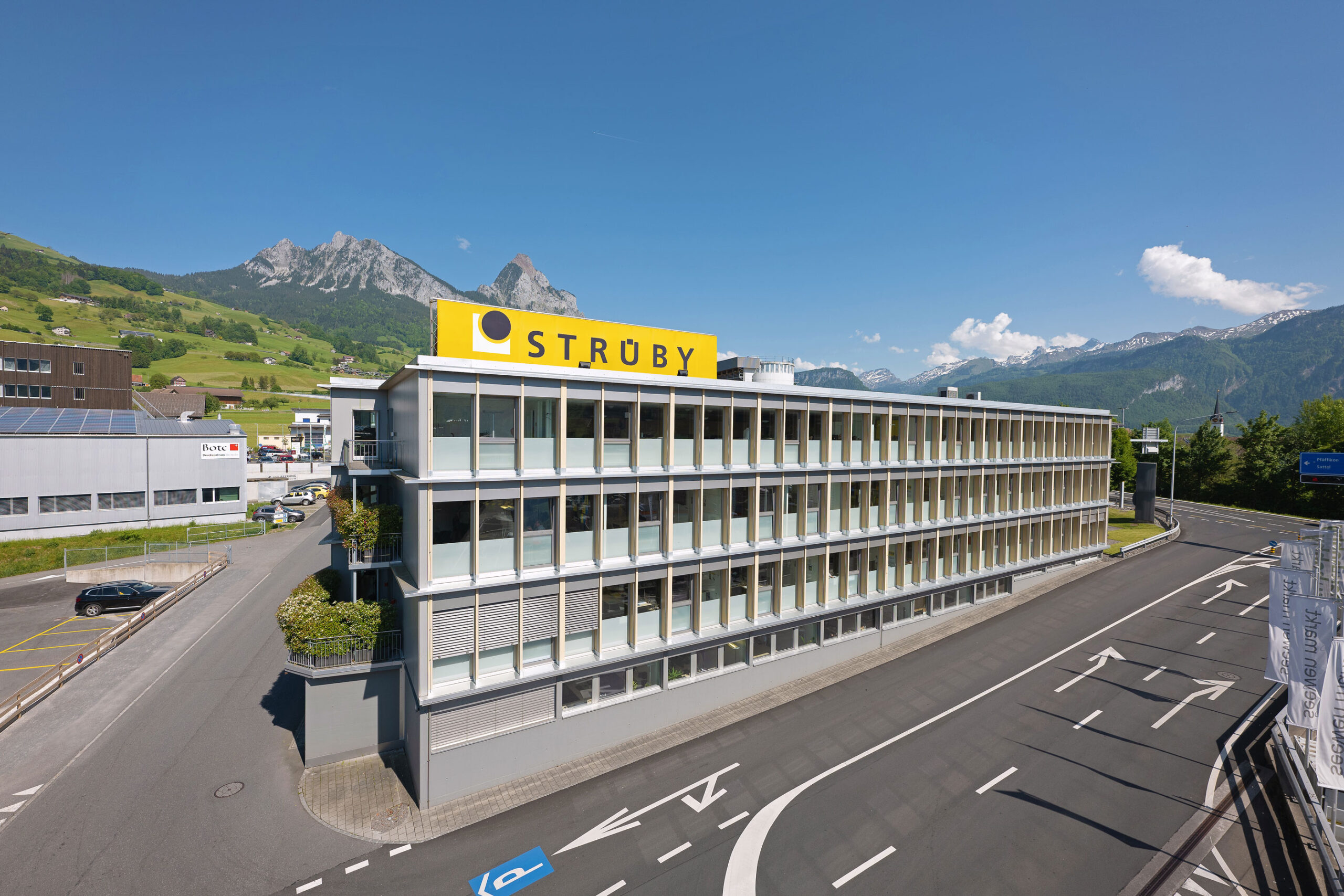
    The event is organised in close cooperation with Strüby Unternehmungen, which is the main sponsor of this event. The focus will be on sustainable development in Switzerland, an area in which Strüby Unternehmungen excels as they work with Swiss wood, one of the most sustainable building materials available. FIABCI-SUISSE and the Strüby companies are delighted to be celebrating their 75th anniversary together!

    The FIABCI-SUISSE association acts as a hub and information service provider for the Swiss property industry in predominantly international matters. FIABCI-SUISSE is an umbrella for all Swiss organisations with an international real estate focus. The international association is thematically unbound and economically independent

    As a full-service provider specialising in timber, Strüby Unternehmungen combines development, planning and timber construction under one roof. This is an important prerequisite for the efficient and precise realisation of multi-storey buildings and large-scale projects. Strüby is Switzerland’s leading full-service provider specialising in Swiss timber.

    PROGRAMME OF THE DAY

    10:15 a.m Meeting point in front of the KKL in Lucerne and welcome by FIABCI-SUISSE
    Bus transfer to Zug with delivery of “Strüby’s small snack”
    11:00 a.mArrival in Zug
    Tour of Zephyr V-Zug and Herti retirement centre
    11:30 a.m Bus transfer to Seewen SZ to the headquarters of Strüby Unternehmungen
    12:00 pm Lunch on the premises of the Urmiberg business centre (GZU)
    13:30 hrsGuided tour of the Urmiberg Business Centre (GZU), a Strüby construction
    14:00 hrs Specialist conference:
    The Strüby companies – Pius Kneubühler
    Modern timber construction architecture – Didier Pichonnaz
    Timber input with a view to NetZero – Andreas Binkert
    Panel, questions and answers – All
    15:00 hrsBus transfer to Root LU
    15:30 hrsGuided tour of the Strüby Holzbau AG production centre in Root LU
    16:00 hrsAperitif
    16:30 hrsReturn journey by bus to Lucerne

    For further information : www.fiabci.ch

  • Digital Real Estate Summit: Innovation trifft Immobilien

    Digital Real Estate Summit: Innovation trifft Immobilien

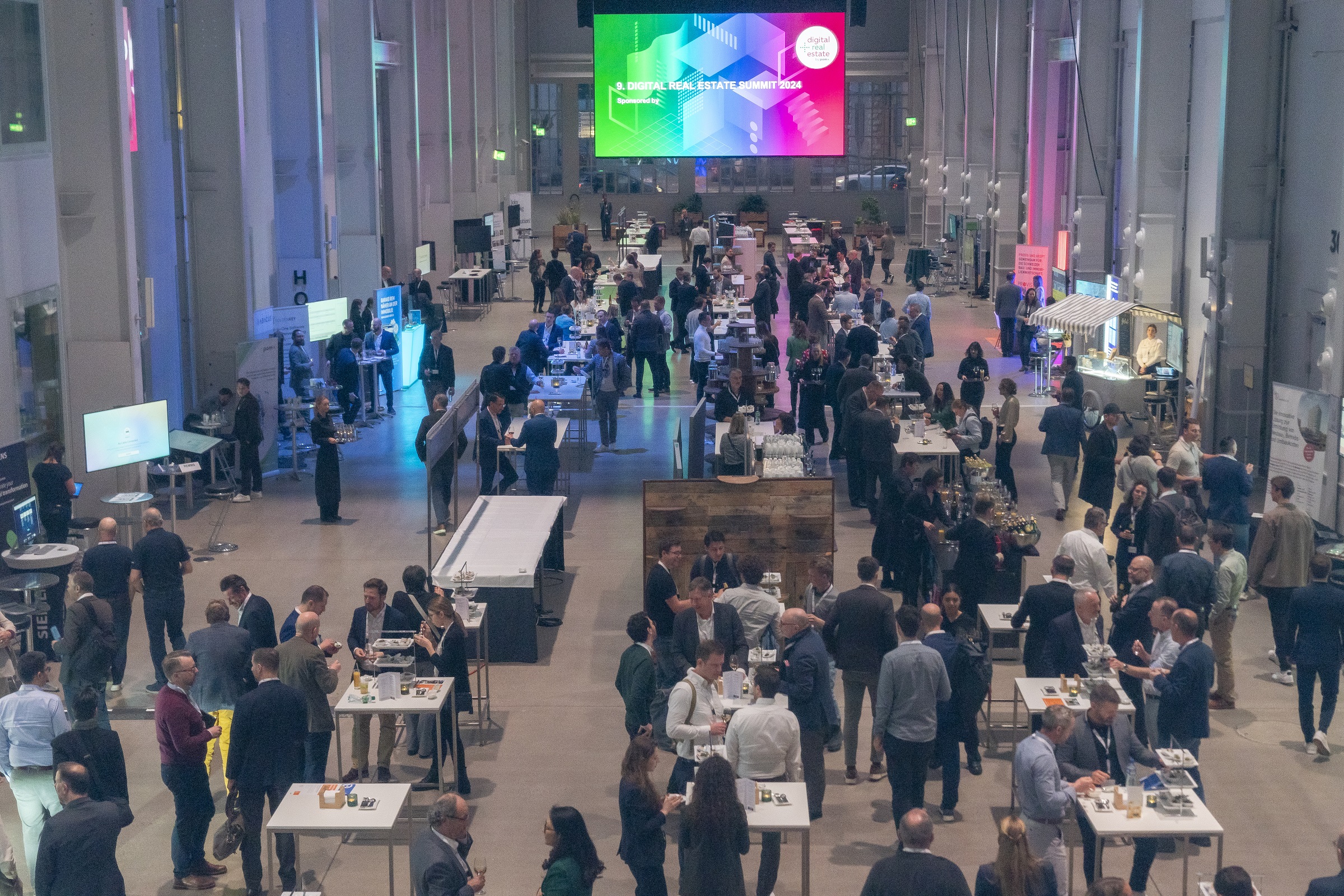
    The Digital Real Estate Summit is the platform for all players in the property industry who see the digital world as an opportunity and want to tap into new business opportunities or further develop existing ones. An exhibition of digital products and systems that anticipate the future of the property industry will show what is already in practice today. Because many things are possible if you have the right information!

    Become part of the network and join us in Baden on 6 March 2025.

    The varied programme offers something for everyone who wants to play an active role in shaping the digitalisation of the real estate industry. Be impressed by inspiring keynotes in which renowned personalities share their visions and experiences. Gain new perspectives through practice-orientated workshops that will give you insights into current topics and best practices.

    The exciting exhibition will present the latest trends and developments in the industry. Whether smart buildings, digital platforms or AI-supported solutions – here you will find the innovations that will shape the market tomorrow.

    Of course, there will also be plenty of networking opportunities. Exchange ideas with other experts and visionaries at the 10th Digital Real Estate Summit 2025 and make valuable contacts. Culinary highlights will ensure that you can enjoy the day in a relaxed atmosphere.

    The Digital Real Estate Summit has been the leading platform for discussing the transformation of the property industry for years. Take the opportunity to network with other pioneers and expand your knowledge. Register now and become part of the most important industry event

    Be there when visionaries and industry leaders develop forward-looking solutions. Be inspired, actively shape the digital property world and celebrate the 10th anniversary of the Digital Real Estate Summit with us!

    Further information: https://www.digitalrealestate.ch

  • Record figures and creative impetus for the property sector

    Record figures and creative impetus for the property sector

    The 13th edition of the Swiss real estate trade fair for investors, which took place on 15 and 16 January 2025 in Hall 622 in Zurich Oerlikon, exceeded all expectations. With a record attendance of 5,167 trade visitors and 154 exhibitors, IMMO25 confirmed its leading role as the most important trade fair for the property and finance sector in Switzerland.

    Focus on forward-looking topics
    The trade fair offered a wide range of specialist topics along the entire value chain of the property industry. The focus was on current challenges and trends such as

    • The future of construction: innovative building concepts and sustainable architecture
    • The tenant of tomorrow: New demands and changing living concepts
    • Falling interest rates: effects on the property market and investment strategies
    • Sustainability: energy-efficient buildings and climate-friendly developments

    The motto “Growth through creativity” was reflected in the numerous innovative solutions that were presented and discussed at the trade fair.

    First-hand expert knowledge
    A highlight of the event was the IMMO Forum, which offered expertise and inspiration over two days with 35 panel discussions and 150 renowned experts. The debates were not only followed by trade fair visitors, but also by over 1,900 online viewers who followed the forum live.

    Review and outlook
    The organisers MV Invest and Swiss Circle were delighted with the great success of the trade fair and thanked all exhibitors, visitors, speakers and partners for their support. IMMO25 has once again proven that it is a leading platform for the property industry, providing impetus and promoting exchange between investors, developers and experts.

    The next edition of IMMO26 will take place for the first time on 14 and 15 January 2026 in Hall 550 in Zurich Oerlikon.

  • Working together for attractive management

    Working together for attractive management

    Malicious tongues (and long-standing market observers) claim that the property business in Switzerland runs smoothly, in good times and bad, and without much help from the property sector. However, the example of property management shows that not everything always goes well. The favourite scapegoat of tenants and the media has to take the rap when the reference interest rate rises and interest-related rent reductions are reversed. Or when service charges rise because energy costs explode. Or when arguments between neighbours escalate because the barbecue season has started. Or when rents rise because supply cannot keep up with demand.

    Property managers – or more precisely, the majority of them – have an exciting and demanding task: they have to satisfy two very different categories of customers: their clients, usually private owners and asset managers, for whom they are responsible for maintaining property portfolios and optimising property income, and their tenants, who expect their concerns to be met unbureaucratically, defects and damage to be rectified quickly, annoying neighbours to be dealt with and service charges to be minimised.

    This challenging task becomes a burden when clients demand more and more services for less and less money in order to support their returns, and when tenants make ever higher demands because they assume that rising housing costs go hand in hand with a higher level of service and that “no” is not an answer.

    The burden has consequences. On behalf of SVIT Zurich, we conducted an online survey of active and former property managers between October 2023 and January 2024 to find out how active managers view the profession, where former managers have moved to and under what conditions they would return to property management.

    The answers are sobering. Although 80% of active farmers identify with their work, a majority are considering changing jobs (Figure 1). It is particularly worrying that two thirds of the “seniors” are considering whether they should turn their backs on farming, and that one in nine team leaders has applied for a job outside of farming in the past six months. The sector risks losing its most experienced top performers.

    We do not believe that the property industry can afford to lose experienced managers. Owners and asset managers are already complaining that knowledge is lost with every turnover and tasks are left undone. The attempt to ensure continuity in property management with asset managers who have previously worked in property management themselves is understandable – but counterproductive. A blurred division of roles and responsibilities almost always leads to friction, and micromanagement contributes to managers looking for other areas of responsibility.

    Tenants also have a lot to lose. It is already being criticised that it is becoming increasingly difficult to find personal contacts behind apps and web forms, and that staff changes are causing concerns to fizzle out. Even the tenants’ association, which likes to portray landlords as “rip-off artists” and urges tenants to challenge rent increases and service charge bills “rather once too often”, should actually know that Switzerland as a tenant country cannot function without knowledgeable landlords.

    As difficult as it may sometimes seem, it is possible to make property management more attractive again. We believe that property management companies, clients and industry associations can achieve a great deal with a concerted effort.

    Property management companies can do more to relieve the burden on property managers in their day-to-day business and in dealing with large portfolios. In many administrations, work processes could be formalised, simplified, standardised and properly digitalised. Digitalisation zombies could be disposed of more quickly and management deficits could be addressed more actively. Services offered could often be defined more clearly in order to manage expectations and avoid conflicts; if conflicts escalate, managers could often be better protected from hostility.

    Clients could become more aware that quality has a price and that property management companies do not have a patent remedy for reducing operating costs with the often elusive – and sometimes deceptive – digitalisation dividends. The fact is that property management has become more demanding and complex, and that maintaining and renewing the building stock requires more people and expertise. Control is undoubtedly necessary in this context, but constructive cooperation is also required. Investing in asset micro-managers is of little use if it creates additional work for the management and takes away necessary resources.

    Finally, service providers and industry associations can expand the training and further education programmes on offer to better prepare managers for changing tasks and working methods.

    The traditional training path from clerk to property manager assumes that property managers can do everything that could contribute to maintaining the value and optimising the income of the building stock, from handing over rental properties and property accounting to developing maintenance strategies and supporting tenant improvements and renovations, and that three years of professional experience and a specialist certificate are enough to lead a management team.

    In addition to traditional all-rounders, the real estate industry also needs specialists who know how the energy and emission intensity of existing properties can be reduced at a reasonable cost, how redensification projects can be implemented without a lot of background noise or how shopping centres can be revitalised. This requires training and further education paths that give lateral entrants and newcomers the opportunity to play to their strengths without having to internalise all of their management knowledge. And there needs to be an awareness that value creation in the portfolio increasingly requires a team effort, in which other experts make a significant contribution alongside traditional property managers.

    It is up to the players in the property industry to reward this contribution appropriately.

  • New owner drives expansion and innovation in the area of room systems

    New owner drives expansion and innovation in the area of room systems

    Swiss Life Asset Managers has reached a binding agreement with Condecta AG on a full takeover of the Winterthur-based specialist for modular construction, Swiss Life Asset Managers announced in a press release. The asset manager of the Swiss Life Group, which specialises in real estate and infrastructure, intends to expand Condecta’s presence and offering. The Winterthur-based company is currently represented in Switzerland, Germany and Italy. The two partner companies have agreed not to disclose the purchase price.

    “The Swiss market for rental solutions in the modular space sector has potential, particularly in the public sector, industry, construction, architecture and the private sector, which require high-quality modular building solutions,” said Gianfranco Saladino, Head of Value-Add Infrastructure at Swiss Life Asset Managers, in the press release. “Condecta, known for its high Swiss quality, is well positioned to meet the growing demand.”

    According to Condecta CEO Olivier Annaheim, the company has found “the perfect new owner in Swiss Life Asset Managers to drive forward our growth and innovation plans and further expand our market leadership in the area of room systems in Switzerland”. For Matthew Dooley, Investment Director at Swiss Life Asset Managers, Condecta is “complementary to Swiss Life Asset Managers’ extensive property and infrastructure business in Switzerland”.

  • Expansion of the range of services through strategic acquisition

    Expansion of the range of services through strategic acquisition

    Pforzheim-based ease GmbH has acquired the Munich-based subsidiary of Helvengo AG. With the takeover of Helvengo GmbH, the insurance company specialising in the property industry intends to expand its range of services, ease announced in a press release. The purchase price was not disclosed.

    Helvengo, which was founded in 2020, specialises in the development of innovative insurance products. The two companies had already jointly developed a building insurance solution based on the Internet of Things (IoT) in 2022. “The IoT-based tariff set a milestone last year,” said Marcel Hanselmann, Managing Director of ease, in the press release. “We are delighted to be actively shaping the future in this area with Helvengo GmbH and to be able to offer our customers an even more attractive portfolio of services.”

    Zurich-based Helvengo AG has been in liquidation since the beginning of August. With ease, the German subsidiary “has had a strong partner at our side from the very beginning, who has played a key role in shaping our vision of data-driven insurance products”, explains Helvengo co-founder Felix Huemer in the press release. “We are convinced that Helvengo GmbH will be able to utilise synergies within the corporate group with ease and continue to expand successfully on the market.”

  • New career opportunities for career changers in the property industry

    New career opportunities for career changers in the property industry

    A career change opens up exciting opportunities for many career changers. Claudio Kuhn, an experienced business administrator with a Master of Science in Business Administration from HSLU, sees the property industry as his new challenge. Motivated by the prospect of intensive customer contact and diverse marketing activities, he is focusing on a career in property sales, particularly in the Zurich economic area and the Lucerne region.

    Targeted further training for entry
    Despite his extensive specialist knowledge, Kuhn realised that specific basic knowledge was essential for property sales. He therefore decided to enrol on the intensive course for career changers at SVIT Zurich, which he successfully completed. The course provides essential knowledge and skills to gain a foothold in the dynamic property sector.

    Support from SVIT Zurich
    In addition to specialist training, SVIT Zurich offers comprehensive support for professional integration into the property industry. Pascal Stutz, CEO of SVIT Zurich, supports course participants in developing successful job search strategies. As a result, graduates not only acquire in-depth knowledge, but also valuable skills for a successful job application.

    Networking and practical experience
    Kuhn and other course graduates also have the opportunity to present themselves to potential employers via dossiers and personal references such as skills. These documents, which can also be requested by non-SVIT members, enable companies to access qualified candidates directly (mail to: pascal.stutz@svit.ch).

    Outlook for interested lateral entrants
    SVIT Zurich’s current range of courses for lateral entrants in the fields of property management or property sales can be viewed on the svit-bildung.ch website. With targeted programmes and supportive guidance, the SVIT offers ambitious career changers like Claudio Kuhn a solid basis for a successful career start in the real estate sector.

    The intensive training and close support provided by SVIT Zurich offer a promising opportunity to increase the attractiveness of the property industry for career changers and pave the way for a successful career.

  • PropTech start-up secures three prizes in June 2024

    PropTech start-up secures three prizes in June 2024

    Optiml has won three prestigious awards just over two months after launching its NetZero investment and renovation planning solution for the property industry in June 2024, according to its press release. The company, based in Technopark Zurich, was honoured in Berlin with the ZIA PropTech of the Year Award from the German Property Federation (ZIA), under the patronage of CBRE, the world’s largest real estate services and investment company based in Dallas, Texas. Optiml also received a W.A. De Vigier Award from the Solothurn foundation of the same name. And it came second in the ICT category of the Venture Startup Competition.

    “With its NetZero investment and renovation planning, Optiml offers a digital solution for one of the most pressing pains of our real estate decade,” said ZIA Awards jury chairwoman Prof. Dr Verena Rock at the award ceremony, according to a statement from the ZIA. “With this solution, budgets, cash flows and returns can finally be digitally mapped at asset and portfolio level during energy-efficient refurbishment.”

    The refurbishment and decarbonisation software from the spin-off of the Swiss Federal Institute of Technology in Zurich, founded in 2022, is based on years of research in the ETH Sustainability and Technology Group(SusTec). It uses science-based optimisation algorithms and artificial intelligence.

    According to Evan Petkov, CEO and co-founder of Optiml, the awards confirm “that the industry has never seen anything comparable for renovation or decarbonisation plans”. Optiml now wants to convince the DACH region and then Europe of its software.

  • Independent and self-determined: The initiative for a sovereign Swiss property industry

    Independent and self-determined: The initiative for a sovereign Swiss property industry

    Reaktion auf die digitale Revolution
    Die Initialzündung für die Initiative kam durch die Erschütterung anderer Branchen, die von der digitalen Revolution überrollt wurden, wie etwa die Hotellerie durch Booking.com. Hoteliers sind mittlerweile gezwungen, auf dieser Plattform zu diktierten Konditionen zu inserieren. Dieses Beispiel zeigt: Wenn Akteure die Kontrolle über ihre Kundenschnittstellen und Daten verlieren, werden sie leicht zum Spielball der Marktführer.

    Am Beispiel der Hotellerie wissen wir, dass selbst grosse international tätige Unternehmen zu klein sind, um im Wettbewerb um Daten und Kundenschnittstellen eine dominante Rolle einzunehmen. Daher braucht es strategische Zusammenschlüsse, damit Rahmenbedingungen geschaffen werden können, die die Existenz aller Akteure nachhaltig sichern. Mit der Next Property AG ist ein solcher Zusammenschluss für die Immobilienwirtschaft entstanden. Die Initiative umfasst, seit der Lancierung im 2016, über 500 Aktionäre, welche die aktuellen Marktentwicklungen als bedrohlich einstufen und die Vision der Brancheninitiative unterstützen.

    Selbstbestimmung durch Datenhoheit
    «Daten sind Schlüsselressourcen. Wer die Daten kontrolliert, kontrolliert die Zukunft.», sagt Mario Facchinetti, mandatierter Geschäftsführer der Next Property AG. Der Ansatz ist klar: Die Kontrolle über Daten und Kundenschnittstellen in der Branche zu behalten, damit diese auch in Zukunft unabhängig und selbstbestimmt bleibt. Im Rahmen dieser Vision hat die Next Property AG im 2017 die Gelegenheit genutzt, um sich an der Immobilienplattform newhome.ch zu beteiligen. Durch dieses strategische Investment kann die Branche den Wettbewerb fördern und die Bedingungen sowie Ausrichtung des branchenfreundlichen Immobilienmarktplatzes aktiv mitgestalten.

    Bestätigung der Initiative
    Im 2021 fusionierten die führenden Schweizer Immobilienmarktplätze, was die Befürchtungen der Initianten bestätigte und die Bedeutung der Next Property AG, die sich für einen Markt mit gesunden Alternativen einsetzt, unterstrich. Somit wurde es wichtiger denn je, Immobilieninserate vorzeitig oder exklusiv auf newhome.ch zu publizieren. Damit liegt das Insertions- und Suchverhalten in der Kontrolle der Aktionäre. Sie haben es selbst in der Hand, ihre Objekte mit Vorlauf oder exklusiv auf der branchenfreundlichen Immobilienplattform zu inserieren und somit das Suchverhalten für professionell vermarktet Immobilien zu ihren Gunsten zu steuern.

    Digitalisierung: Fair statt zentralisiert
    Die Digitalisierung ist zentral für die Organisation von Prozessen und ein wesentlicher Faktor für die Zukunftsfähigkeit von Unternehmen. Sie darf jedoch nicht auf Kosten etablierter Wirtschaftsstrukturen und regionaler Arbeitsplätze gehen. Branchenakteure müssen sich gemeinsam dafür einsetzen, dass die digitale Wertschöpfung nicht zu stark zentralisierte Strukturen entwickelt. Stattdessen sollten sie sicherstellen, dass Marktteilnehmer ihre Existenzgrundlage sichern können, damit eine nachhaltige Entwicklung möglich ist. Für die Branche ist es wichtig, die Digitalisierung mit langfristiger Perspektive voranzutreiben, um deren Chancen zu nutzen und Risiken zu minimieren.

    Dank der Aktionäre der Next Property AG und ihrem Investment in die newhome.ch AG haben Schweizer Immobilienakteure eine erfolgsversprechende Chance die Kontrolle über ihre Daten und die digitale Kundenschnittstelle zu behalten und die Marktbedingungen mitzubestimmen.

  • Application deadline extended until the end of June

    Application deadline extended until the end of June

    Mara Schlumpf, Managing Director of Real Estate Award AG: “There have been many innovations at the Real Estate Award this year – a new category, the French version of the homepage – so we want to give potential applicants a little more time to submit their projects.” To apply, simply fill out the form on the homepage and attach a PDF with a maximum of 4 pages. “We are happy to accept applications in all national languages and also in English,” says Mara Schlumpf

    Companies from all over Switzerland have until 30 June to submit their projects for this year’s Real Estate Award. The award ceremony will take place on 24 October at the Trafo in Baden.

  • Importance of the property sector for the Swiss economy

    Importance of the property sector for the Swiss economy

    The Federal Office for Housing emphasises the great importance of the real estate sector as an economic force for Switzerland, as detailed in a press release. It puts the real estate industry’s share of gross domestic product (GDP) at 11 per cent. Including rental income and owner-occupied rents from private households, the figure is 16 per cent. A total of 592,000 people, or 14 per cent of all employees, work in the real estate sector.

    In addition, real estate-related gross value added grew by 23 per cent between 2011 and 2021, with overall economic growth of 17 per cent.

    The property stock increased from 2.66 to 2.82 million buildings. Of these, 1 million are single-family homes, which would have increased the share by 6.1 per cent. Multi-family houses increased by 15.5 per cent. The cantons of Bern, Zurich and Aargau saw the largest increase in property. There were also regional differences in terms of value creation. The share of property-related gross value added in cantonal GDP varied between 8 per cent in the canton of Basel-Stadt and 22 per cent in the canton of Glarus.

    The report also provides information on the property sector’s share of total tax revenue. According to the report, around CHF 17.4 billion in tax revenue is generated in the property sector. This corresponds to 11 per cent of the national fiscal revenue.

    The report is based on figures from a survey conducted by pom+ on behalf of the Federal Office for Housing (BWO) and the Swiss Homeowners’ Association(HEV).

  • Why Next Property AG?

    Why Next Property AG?

    Why does the property industry need Next Property AG?
    To create favourable framework conditions that enable industry players to operate as independently and self-determinedly as possible in a digital world without becoming a pawn in the hands of dominant companies.

    What is Next Property AG’s vision and how do you achieve it?
    We are committed to fair competition in the Swiss property industry on behalf of our shareholders. This includes the monitoring and risk assessment of technological developments and co-determination in the design of customer interfaces as well as the processing and monetisation of data generated by our shareholders in their day-to-day business.

    To realise this vision, we primarily need industry players who are willing to invest in their entrepreneurial future and share the idea that effective alliances are needed to have a say in a digital world. This is not about short-term success, but about ensuring that the provision of professional real estate services as we know them today remains attractive in the future.

    Doreal estate agents and managers have to fear for their business model?
    If we look at developments outside the real estate industry, digitalisation is undoubtedly leading to radical changes to long-established business models. In other words, digitalisation offers new opportunities to meet the current needs of employees, employers and customers. This realisation is not new, but we are finding that the maturity of the development is now such that the changes are increasingly being felt by companies in the property industry. Companies that adapt to the dynamics of the digital world need not worry about their business model.

    How can the property industry prepare for the challenges of the digital future?
    It has become clear that even large established industry players are too small to play a significant role in the digital developments of an industry. We therefore recommend that property companies join forces in a powerful interest group such as Next Property AG in order to work together for favourable framework conditions.

    Is there an example of this?
    A current example of this is the promotion of the property marketplace newhome, which adheres to agreed industry principles and in which the more than 500 Next Property AG shareholders are indirectly involved. Together, early or exclusive advertisements and targeted marketing campaigns are used to ensure that newhome becomes a regionally competitive marketplace alternative for professionally marketed properties. We recommend “newhome first”.

  • Digital standstill in the property industry

    Digital standstill in the property industry

    The sixth edition of the “Digital Real Estate Index” shows a slight decline in the digital maturity of the industry for the first time since 2020, with a rating of 4.6 on a scale of 1 to 10. Despite progress made by planners and construction companies through Building Information Modelling (BIM), the development among owners and investors is lagging behind expectations.

    Although two thirds of the companies surveyed invest more than one percent of their turnover in digitalisation, there is a downward trend among larger companies. External factors such as interest rate changes and supply chain problems appear to be hampering digital transformation, while regulatory requirements in the area of sustainability are acting as a catalyst for digitalisation efforts.

    While AI and machine learning are still lagging behind expectations in terms of their applicability and integration into the industry, BIM is consolidating itself as an important technology for the entire life cycle of buildings. The use of smart building technologies is increasing, with the focus on resource conservation and other benefits such as user experience and comfort initially taking a back seat.

    The study shows that the property industry is at a critical point in its digital evolution. Despite the obvious potential of digital technologies and the need for greater integration to increase efficiency and sustainability, concrete measures and investments are needed to drive the digital transformation forward. The study provides important insights and serves as a guideline for future developments in the digital landscape of the property industry.

  • SVIT five Real Estate Symposium 2024: Innovative ways of recruiting skilled labour

    SVIT five Real Estate Symposium 2024: Innovative ways of recruiting skilled labour

    The shortage of skilled workers is one of the biggest challenges in the property industry. To counteract this, the SVIT five Real Estate Symposium 2024 will bring together leading experts to discuss new approaches to recruitment. Jan-Egbert Sturm, renowned professor of applied economic research, will share his predictions for the future of the industry. Markus Steckeisen, experienced entrepreneur and head of studies at the HWZ, and Yannick Blättler, entrepreneur and expert on Generation Z, will contribute their perspectives. The symposium serves as an essential information and networking platform for the property sector to develop and implement innovative solutions to the shortage of skilled workers. With this focus, the annual Real Estate Symposium is establishing itself as a must for professionals in the property industry.

  • Dr. Tanja Pohle tritt als neue Partnerin in die Geschäftsleitung von pom+Consulting AG ein

    Dr. Tanja Pohle tritt als neue Partnerin in die Geschäftsleitung von pom+Consulting AG ein

    Die Berufung von Dr. Tanja Pohle in die Geschäftsleitung, repräsentiert einen wichtigen strategischen Schritt. Dr. Pohle, die bereits seit 2013 im Unternehmen tätig ist, hat sich durch ihre Arbeit im Bereich der Organisationsentwicklung und Prozessgestaltung, insbesondere in der Immobilienwirtschaft, einen Namen gemacht.

    Ihre Rolle als Head of Service Unit Organisation & Processes ermöglichte es ihr, signifikante Fortschritte im Bereich der Workplace Solutions zu erzielen. Dies beinhaltete die Einführung neuer Beratungsansätze, die sich an den sich verändernden Bedürfnissen einer modernen Arbeitswelt orientieren. Besonders hervorzuheben ist dabei ihr Engagement für Smart Office- und New-Work-Konzepte, die durch die Corona-Pandemie an Bedeutung gewonnen haben.

    Der akademische Hintergrund, mit einem Diplom in Bauingenieurwesen von der Technischen Universität Berlin, einem Doktorat in Baubetriebswissenschaften von der ETH Zürich und einem MBA im Business Engineering von der Universität St. Gallen, bildet die Grundlage für ihre umfassende Expertise. Ihre Fähigkeiten in der Organisationsentwicklung, verbunden mit ihrem Verständnis für technische und betriebswirtschaftliche Aspekte, haben maßgeblich zur Entwicklung des Unternehmens beigetragen.

    Mit Dr. Pohles Ernennung zur Partnerin soll ihre Expertise und Erfahrung nun auch in strategische Entscheidungen einfließen. Ihre bisherige Laufbahn, die durch vielseitige Kompetenzen und innovative Ansätze gekennzeichnet ist, passt hervorragend zur Unternehmensphilosophie Sie wird in ihrer neuen Rolle in der Geschäftsleitung maßgeblich dazu beitragen, die zukünftige Richtung mit zu gestalten und die Prinzipien des New Work in der Immobilienwirtschaft weiter zu verankern.

  • Digital building starts in the mind

    Digital building starts in the mind

    L’edilizia digitale – soprattutto con l’aiuto del Building Information Modelling (BIM) – sta sfidando molti processi collaudati nel settore edile. La costruzione digitale avviene innanzitutto nella mente e sul computer, dove viene creato un modello virtuale del progetto.

    Sulla base di questa immagine 3D molto dettagliata del futuro edificio, si possono già prendere molte decisioni ed eliminare potenziali problemi. I sostenitori di questo nuovo tipo di costruzione, supportato digitalmente, promettono guadagni di efficienza e di qualità, una riduzione degli errori di costruzione e una logistica di costruzione molto semplificata.

    Edilizia digitale: un piano in 6 punti semplifica il ripensamento

    Tuttavia, il passaggio dall’edilizia analogica a quella digitale è tutt’altro che semplice. Il docente di BFH Adrian Wildenauer lo sa per esperienza personale. Come ingegnere civile, conosce tutti gli aspetti dell’industria edile, dall’acciaio per armature alla modellazione BIM.

    Per le FFS, ha sviluppato un piano in 6 punti per tutto il settore, che intende servire come base per ripensare le operazioni di costruzione da analogiche a digitali. A suo avviso, è fondamentale che tutti gli attori coinvolti nell’edilizia siano coinvolti e facciano progredire il settore insieme.

    Chiarire l’obiettivo e la tabella di marcia

    Nell’edilizia digitale, le basi, le tabelle di marcia, i modelli e l’immagine target sono disponibili a tutti i partecipanti fin dall’inizio. Ciò consente alle imprese di costruzione, ai fornitori, agli architetti e ai clienti di coordinarsi molto prima della cerimonia di posa del terreno e di eliminare i possibili conflitti e le fonti di errore in una fase iniziale. “Dobbiamo coinvolgere tutti i partecipanti alla catena del valore il più presto possibile”, sottolinea Adrian Wildenauer.

    Comunicare con il linguaggio

    I progetti di costruzione digitale richiedono che tutti parlino la stessa lingua. L’industria ottiene questo risultato lavorando ancora di più con standard validi. A partire dai termini rilevanti dell’edilizia digitale e del Building Information Modelling, agli standard della Società Svizzera degli Ingegneri e degli Architetti (sia) o del Centro di Competenza per gli Standard nell’Industria Edile e Immobiliare (crb), fino allo scambio con le associazioni e le società del settore: soprattutto all’inizio, è importante che tutti i soggetti coinvolti si capiscano. Il Glossario nazionale sviluppato congiuntamente, in cui i termini sono stati definiti congiuntamente, aiuta anche in questo caso.

    Comunicare con il modello di dati

    Non solo le persone coinvolte dipendono da una comunicazione funzionante, ma anche i sistemi coinvolti. Poiché un modello virtuale del progetto edilizio è centrale per l’edilizia digitale, non c’è modo di evitare lo sviluppo congiunto di un modello di dati consolidato per gli edifici. In questo modo è possibile scambiare facilmente informazioni dal progettista al capomastro. “Trattare i dati è il nostro nuovo linguaggio comune”, spiega Adrian Wildenauer, “dobbiamo impararlo”

    Riutilizzare i componenti

    Un vantaggio dell’edilizia digitale è che non si deve necessariamente reinventare la ruota – o addirittura il progetto edilizio – per ogni progetto. Dopo tutto, molti elementi di una costruzione tornano in uso con ogni progetto. Invece di progettarli, dimensionarli e testarli da zero con ogni progetto, come in precedenza, è sufficiente utilizzare oggetti edili standardizzati. Ad esempio, prima di progettare una porta, ne costruisce un’immagine digitale standardizzata. Questa contiene tutti gli attributi necessari, dalla scelta del materiale alle dimensioni del cilindro, dalle larghezze e altezze delle ante alle strisce di tenuta. Grazie agli oggetti di costruzione standardizzati, le aziende risparmiano tempo nella progettazione di tali oggetti ed evitano errori. Affinché questo funzioni, le aziende devono avere un facile accesso a una raccolta di tali componenti digitali.

    Raccogliere l’esperienza

    La conoscenza nel settore edile è spesso ancora trasmessa in modo molto tradizionale, dal maestro artigiano esperto direttamente agli apprendisti sul cantiere. Nell’edilizia digitale, questa conoscenza, che oggi non è tangibile o documentata, può essere raccolta sistematicamente in cantiere e utilizzata per la formazione. Ma anche le esperienze con l’edilizia digitale stessa possono essere registrate e gli strumenti e i processi digitali possono essere testati per la loro idoneità. Se la gestione digitale dell’edilizia porta a un migliore trasferimento delle conoscenze, il settore è sulla strada giusta, ne è convinto Adrian Wildenauer: “Solo se condividiamo le conoscenze possiamo avere successo insieme”

    Comunicare le basi dell’ordine

    Molti processi nell’edilizia digitale culminano in un ordine, che si tratti della prenotazione di un servizio o dell’acquisto di materiali. Un grande vantaggio della costruzione digitale è che i dati necessari per gli ordini vengono registrati il prima possibile nel modello virtuale del progetto. Tuttavia, affinché qualcosa accada in cantiere, tutti coloro che sono coinvolti nel progetto devono sapere come ottenere e utilizzare i dati degli ordini dal sistema. La formazione e la documentazione adeguate per i dipendenti sono quindi obbligatorie.

    In pratica, diventa chiaro che l’edilizia digitale richiede una cooperazione digitale comune. I sistemi e l’infrastruttura IT sono importanti, ma solo se gli architetti, gli ingegneri civili e le aziende partner sono disposti a lavorare insieme in tutte le aree di competenza. La costruzione digitale non inizia sullo schermo, ma nella mente degli esperti.

  • Lack of understanding of project data

    Lack of understanding of project data

    The CDE is the starting point for consistent data management. It is in the interest of the property owner to have access to the current project information at all times, to avoid incompatibilities and to be able to change access rights. It is all the more surprising that the value of data is still not fully understood. Too often, they are viewed solely from an IT perspective and reduced to their function as measuring instruments.

    Themarket is changing rapidly
    The market for CDE solutions is fast-moving and diverse. Overall, there is a trend towards specialisation, which requires a high level of integration. Independent tools are often bought up by large technology providers or built into existing solutions. This leads to problems when taking over projects that have already been completed. To ensure a smooth exchange of data, it is recommended to use a platform as consistently as possible.

    Rapid innovation unsettles users
    Competition among providers is fierce. New tools are constantly entering the market and functionalities are constantly being developed. The result is a great deal of uncertainty among many building owners and operators, both in terms of selection and application. The rather slow construction and real estate industry meets the short innovation cycles of the technology sector here. Use cases, process flows and responsibilities must therefore be clearly defined before the system is selected in order to avoid disappointment.

    And who owns the data?
    The question of data sovereignty is central: Who owns the data in the CDE and who is entitled to it when the construction project is finished and the building is handed over for operation? Current practice shows that this question is often neglected. It is therefore essential that the building owner specifies the set-up, orders the CDE according to his own ideas and regulates the ownership of the data at an early stage.

    User-friendliness leaves a lot to be desired
    The project CDE solutions examined by pom+ can be roughly divided into two groups: Either they are expert tools with extensive functions or simple applications with limited possibilities. Common to both groups is a lack of usability. Almost 45 per cent of the tools examined were rated three or less on the five-point scale. The problem here is that CDEs are not only used by technology-savvy people – they have to address the whole team. Manufacturers should pay more attention to this in their further development. Joachim Baldegger, head of the study and Head of Service Unit Future Lab, summarises: “Modern construction means thinking about operations already in the construction project and ordering the right data. Common Data Environments play a central role in this. However, there is still a long way to go, because many tools have gaps in their functional scope and can only deal with data to a limited extent or record it in a structured way. Only when this is ensured can data from the project be efficiently transferred to the target systems of the property owners and added value generated.”

  • Preventing heat islands in the planning stage

    Preventing heat islands in the planning stage

    Climate change is causing problems for cities, especially in summer. “Heat island” has become a ubiquitous topic. However, those who plan larger neighbourhoods can avoid heat accumulation. The decisive factors here are the setting of the buildings in line with their surroundings, the choice of materials for façades and outdoor areas, green spaces and clever shading. The effects of these factors should actually be taken into account at an early planning stage. For this, however, architects would have to consult computer models that can calculate the impact of the decisive factors for a specific location. The problem with the existing models is that the calculation is time-consuming and costly. For this reason, they are usually not used at an early stage. The Lucerne University of Applied Sciences and Arts (HSLU) has now developed a new interactive neighbourhood climate modelling (QKM), which is limited to phase-specific information and delivers results in seconds. The project was financed by the Infinite Elements Foundation and the HSLU.

    Things have to move fast in the planning phase
    For large-scale construction projects, architectural firms usually apply in an elaborate competition procedure under high time pressure. “They have to consider a multitude of requirements in their design, one of which is the microclimate,” explains simulation expert Prof. Markus Koschenz from the Lucerne University of Applied Sciences and Arts. High costs and two-day waiting times would be out of the question for the architects in this creative work phase. But this is exactly what they would have had to accept up to now if they wanted to include the complex calculations. So what happens if you win a competition project and only then realise that the building placement was chosen in an unfortunate way? After all, the jury has decided in favour of the proposed solution; fundamental adjustments are no longer envisaged in the phase after the jury’s decision – even if the subsequent calculation of the microclimate would suggest this. In short, the dilemma cannot be solved this way. Now, warmer summer temperatures are already causing problems for people today. Warming in the coming years and decades will increase, which can be life-threatening, especially for older people. And buildings that are being planned now will still be standing in fifty years. Ignoring all this in the planning process seems negligent.

    Results in seconds
    “What is needed is an instrument for calculating the microclimate that is cheaper and, above all, can deliver results very quickly,” says Koschenz. His core team with Andrii Zakovorotnyi, Reto Marek and an external Revit specialist developed this instrument at the Lucerne University of Applied Sciences and Arts. He explains: “Existing methods use generally applicable computational fluid dynamics (CFD) instruments. These instruments can be used by specialists to develop machines, investigate flows on aircraft or determine the microclimate in neighbourhoods. They are powerful but also correspondingly complex. Our model concentrates on the aspect of the neighbourhood climate and we work with algorithms that calculate quickly,” says Koschenz, explaining the striking difference in calculation speed. It takes seconds or at most a few minutes to calculate the effects of a change. The tool can be used by the planners themselves from the first step in the planning process. With little effort, for example, one can compare two variants of façade design or the planting of trees in an inner courtyard. And not just for one summer day, but for an entire summer period.

    Checking the model with measurements
    The information on the planned buildings, their position, the materials used or the type and position of green spaces and trees is obtained by the interactive neighbourhood climate modelling from the planning tool Revit, which is already used in architecture and landscape planning offices. From this, the physical model calculates the effect of radiation, shade, heat storage properties of materials, air flow, vegetation and time of day on the neighbourhood climate. Images with colour scales show the results in an intuitively understandable way.

    Koschenz’s team proved that the model works correctly with measurements in the Suurstoffi district in Rotkreuz and also compared the results with those of existing commercial software. Koschenz is extremely satisfied with the results: “We can say that the agreement with both the measurements and the results of other software was high. This means that our tool is much faster with the same accuracy.

  • Relevance of social sustainability in institutional real estate portfolios

    Relevance of social sustainability in institutional real estate portfolios

    Ms Zimmerli, you are developing criteria for assessing the social sustainability of institutional real estate portfolios. What are your motives?
    In recent years, many institutional owners have set climate targets that go beyond the legal requirements as part of their ESG strategies. After the “E”, the “S” is now slowly coming into focus. The problem is that nobody really knows what constitutes social sustainability. We observe that a lot is projected into the “S”, and the big social contexts are often pushed into the background. We have therefore decided to test with partners from academia, real estate associations and institutional investors on the basis of various portfolios what an operationalisation of social sustainability might look like. Our goal is to define a few clear, easily interpretable and comparable key figures for social performance, to create short checklists to complement them, and thus to give more room to competition for good ideas.

    Many portfolio and asset managers are currently busy preparing reliable energy and emissions data. What prompts you to develop key figures for social sustainability right now?
    It is true that the focus of the real estate industry is still on the collection of climate key figures at the moment. Thanks to the REIDA CO2 benchmark and the environmentally relevant AMAS key figures, there is now a clear orientation framework and good instruments. We want to take both the momentum and the focus on the essentials of these instruments with us, because we are convinced that the real estate industry simply cannot afford to reduce sustainability to environmental issues. The heated debates on the reference interest rate, housing protection and major development projects show that the public and politicians also expect sustainable real estate portfolios to provide answers to social questions.

    In the industry, there is currently no consensus on what is meant by the “S” or how societal-social sustainability should be measured. How do you see it?
    Against the background of the current political discussions, the “S” is not complicated: At the societal level, it is about providing housing to broad segments of the population, about socially mixed living environments and about well-functioning neighbourhoods and districts. For institutional owners, it is about how property portfolios are structured and how the available living space is distributed. For new construction and renewal projects, the question is what happens to existing tenants, for which target groups additional living space is created and how neighbourhoods and districts can be strengthened. Of course, there are countless other needs. However, we believe that key figures should refer to the major social levers and that the market should play a role in individual needs.

    How can and should the “social performance” of a real estate portfolio be effectively measured or assessed?
    We are guided by the philosophy of the environmentally relevant key figures of AMAS and REIDA: “Keep it simple”. In essence, social performance can be measured simply with hard-testable key figures: We are currently testing how data on the portfolio structure and on first-time lettings and re-letting can be collected and evaluated as simply as possible. In addition, we are developing questionnaires that owners can use in their tenant surveys to obtain reliable findings on satisfaction with the neighbourhood, flat or property management. Finally, we use classic key figures on fluctuations and vacancies, which are usually already collected and evaluated.

    The optimisation of ecological criteria often requires high investments. This creates incentives to sell properties with a poor ecological balance. Do properties with poor social ratings face the same fate?

    No, from our point of view there is no danger of stranded assets in terms of social sustainability. We are convinced that basically every property can be transformed in a socially sustainable way with reasonable effort. The most important levers here are renewal planning and management. Renewal planning determines when which properties are to be adapted to current needs and market prices. In management, decisions are made as to who will receive affordable or barrier-free living space. We have selected key figures that can be directly influenced by portfolio and asset managers. We understand social sustainability as the result of far-sighted portfolio and asset management and consistent marketing and management, and not as a property or location attribute. We are also convinced that properties with strong social qualities can compensate for environmental weaknesses.

    Many owners find it difficult that innovative ideas and approaches with which they want to stand out from competitors disappear in extensive checklists and indicator sets of sustainability labels. How can this be prevented?
    By separating obligation from freestyle. We pursue the same goal with social sustainability as REIDA does with ecological aspects: A few uniform key figures should make it visible and comparable how well a portfolio fulfils the mandatory programme. In addition, there are topics for which there are no standardised specifications. Fund management companies and asset managers should be free to decide and communicate how they want to ensure, for example, good neighbourhood care, good cohabitation or good tenant management. We see the “how” as a freestyle; this is where competition, creativity and innovation should play a role. In other words, we want more goal orientation and less micromanagement. In a highly regulated world, ESG should not be a tighter corset, but a springboard with which the real estate industry can prove what it can achieve with yield-oriented portfolios.

    Where do you stand with the key performance indicator set?
    We are currently working on concretising and validating our approach on the basis of four funds of our partners. We will present the findings and a first consolidated draft on 28 September 2023 at the symposium “Measuring social sustainability in ESG – what is it all about?” and discuss it with owners, managers and experts. Interested readers can register here . I would be pleased if we could welcome you at the HWZ in Zurich.

    Source: ssrei.ch

  • 5. Global Real Estate Run- act locally, act globally

    5. Global Real Estate Run- act locally, act globally

    On 30 and 31 March 2023, the 5th Global Real Estate Run will take place, an event dedicated to promoting innovation, sustainability and energy efficiency in the real estate and construction industry. Participants can jog or walk a freely selectable distance of 6 km within a 48-hour time window. The organiser will plant a tree for every kilometre completed.

    The event format is ideal as a fun team event and is aimed at tenants, owners and real estate professionals who want to get moving for a more generation-friendly real estate and construction industry.

    “We believe that every individual has a contribution to make towards a more generationally friendly future. The Global Real Estate Run is an opportunity for the real estate and construction industry to come together and make a mark together,” says Mario Facchinetti, initiator of the event.

    The participation fee for individuals is free, for teams it is CHF 37 per person. In return, the team receives a tree planting certificate for each tree that is walked in the team. The event now has over 4000 participants from around 57 countries and is supported by various companies that are committed to a more sustainable real estate and construction industry.

    The event is an example of how tenants, owners and real estate professionals can play a part in reducing environmental impact and creating a more generation-friendly future.

    Interested parties can register now at www.globalrealestaterun.com and look forward to a sporty and fun activity.

  • The future of the construction and real estate industry is called the circular economy

    The future of the construction and real estate industry is called the circular economy

    The construction industry produces the most waste in Switzerland with a share of 84 percent. This makes it all the more important to establish the so-called circular economy: the materials and products used in construction should be returned to the cycle after the life cycle of a building. The three “R’s” are decisive: reduce, reuse and recycle. In a functioning circular economy, as little waste as possible is produced. However, according to a study by the economic researchers at the Swiss Federal Institute of Technology (KOF) and the Bern University of Applied Sciences (BFH), only 8 to 12 per cent of Swiss companies are involved in the circular economy.

    One company that has dedicated itself to precisely this endeavour is Madaster. in 2017, the company was founded in the Netherlands and expanded to Switzerland a year later as its first international location. Madaster sees itself as a cloud platform that enables users to transparently present the data of their construction projects. Users can create a material passport based on a BIM (IFC) or Excel document. This is possible for new buildings as well as for existing properties. Components and materials used are recorded – the system automatically supplements the data with information on recyclability, separability, sustainability as well as financial value, thus creating a valuable data source. Madaster thus enables the planning and use of buildings as raw material storage facilities. In the long term, this should drastically reduce the amount of waste and CO2 emissions during construction.

    The industry recognised the added value of this service early on: “More and more builders and their service providers are using the material passport, creating best-practice examples from which the industry can learn. Because those who build circularly build for the future,” explains Marloes Fischer, CEO Madaster Services Switzerland. The company distinguishes between strategic partners, so-called Kennedys, who have supported the development, launch and implementation of the online platform financially and conceptually, and partners that include developers, architects, contractors, consultants, engineers or banks. “11 Kennedys have supported the launch of Madaster in Switzerland. Currently, Madaster has over 30 partners,” Fischer elaborates. In addition to the Federal Office for Energy and the Environment (Bafu), other well-known names such as Eberhard, Mobimo, Pirmin Jung, Integral Baumanagement AG and Swiss Prime Site are listed among Madaster’s partners and Kennedys.

    Enormous potential of the circular economy
    Holcim Switzerland is also one of Madaster’s well-known partners. By 2050, the company wants to produce exclusively climate-neutral and fully recyclable building materials. To achieve this transformation, Holcim is working with various levers and clearly defined interim targets for 2030. The company sees enormous potential in the circular economy to effectively address challenges such as climate change or resource scarcity. With innovative solutions, Holcim returns waste to the material cycle and reuses concrete again and again.

    For example, Holcim produces the world’s first resource-efficient cement called Susteno 4. Industrially processed mixed granulate is used as a grinding material. In addition, a large part of the fossil fuels is replaced by alternative materials, such as waste or sewage sludge. Since its launch in 2018, cement has become the second-largest product in the Holcim portfolio with a share of 10 percent. The sustainable concrete Evopact is also based on Susteno cement and saves 10 percent CO2 compared to standard concrete. Holcim aims to generate a quarter of ready-mixed concrete sales with this by 2025. Bettina Kallenbach, Marketing Manager Holcim Central Europe West, is convinced: “Concrete will be difficult to replace in the near future. But concrete is a building material that makes sustainable construction possible on a wide variety of levels – as long as you face up to the challenges.”

    Holcim has been dealing with topics such as the circular economy, decarbonisation and renewable energy for a long time. Kallenbach is convinced: “For net zero, Carbon Capture and Use and Storage (CCUS) will be an important lever. Holcim is working on scalable measures and solutions in this regard.” In addition, Holcim already operates several recycling processing plants throughout Switzerland. Together with partners, the company is thus pursuing the goal of processing high-quality new building materials for the respective local market from regional excavated material, concrete and mixed demolition waste. At the same time, this increases the use of alternative raw materials and fuels in cement production and saves primary resources and landfill space throughout Switzerland.

    Holcim cites the renovation of the Aroser tunnel as an example: the large quantity of contaminated excavated material is processed at the Untervaz cement plant and made into cement, which is then used in the 300-metre-long tunnel. This closes the building material cycle. With its subsidiary “Geocycle”, the company also significantly reduces CO2. With “co-processing” in the plants, the company ensures the thermal utilisation of combustible waste and recycles mineral waste into new clinker and cement. This enabled the group to save around 150,000 tonnes of CO2 in 2021 by recycling 160,000 tonnes of combustible industrial waste in cement production.

    Thanks to Madaster, building materials in existing buildings are given an identity and a value
    The fact that the circular economy has great potential is also shown by the study mentioned above. According to this study, innovative Switzerland has advantages in creating the transformation and generating sustainable competitive advantages. At present, however, the possibilities and knowledge to adapt existing products and services to a circular economy are often still lacking. The parliamentary initiative “Strengthening the Swiss circular economy” aims to create new framework conditions for a modern and environmentally friendly circular economy. The consultation in October 2022 showed that a large majority welcomes the anchoring of resource conservation and the circular economy in the Environmental Protection Act.

    In the construction industry, the focus is currently on recycling, one of several possible entries into circular construction. Fischer says: “The business activities of companies are likely to move increasingly in the direction of manufacturing recyclable products, circular tenders and competitions, and documenting materials and components used in buildings.” Madaster offers a sophisticated tool for the latter in particular. Bettina Kallenbach agrees: “A cadastre of installed materials is an important building block with regard to closing cycles. Future generations must have access to data that shows which building materials are used where and in what quality. This gives building materials in the inventory an identity and a value. Madaster provides the central digital platform for this.”

    Considering that Switzerland aims to halve greenhouse gas emissions by 2030 and that emissions from transport, buildings and industry must be reduced by up to 90 per cent to achieve climate neutrality in 2050, sustainable and circular working becomes all the more important. The first companies like Holcim are setting a good example. But here the entire real estate and construction industry has the chance to take a pioneering role.

    CO2-enriched recycled concrete EvopactRECARB, which Holcim supplied to V-Zug for the new “Zephyr Ost” building.
  • Figures on the Swiss economic area

    Figures on the Swiss economic area

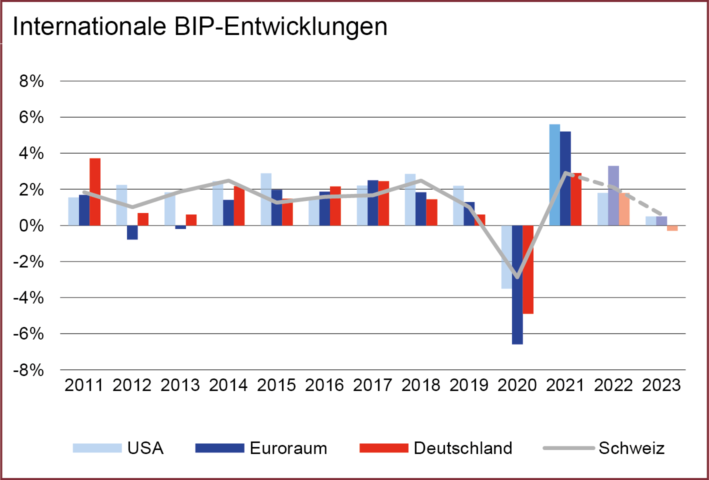
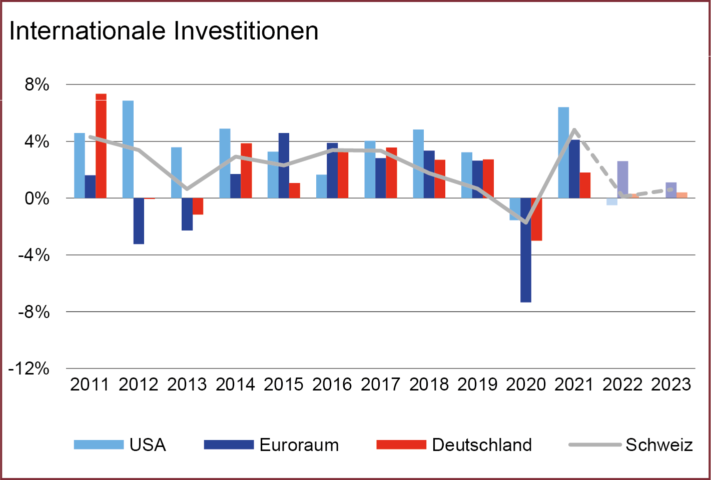
    International GDP development as well as investments have recovered excellently in 2021. However, the latest developments
    show that investment volumes are currently subdued and GDP development is cooling down worldwide. Economic analysts’ forecasts predict a slowdown in 2024 and a possible downward trend.

    The pandemic hardly plays a role in the media any more, but its consequences continue to be felt. In addition, rising energy and food prices as a result of the war in Ukraine, Corona measures by major economic players and supply chain problems have led to uncertainty, which is reflected in rising inflation rates. With the interest rate hike, the SNB was able to calm things down and is slightly above target. The forecasts of a slowdown in economic growth are reflected in a restrained development.

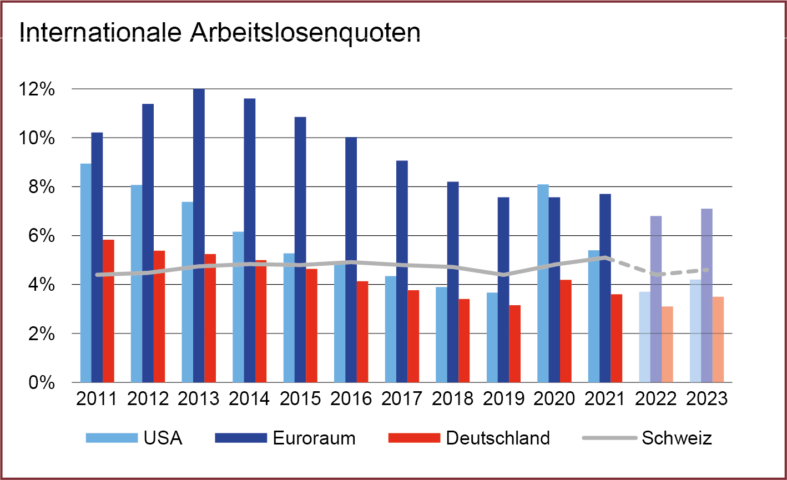
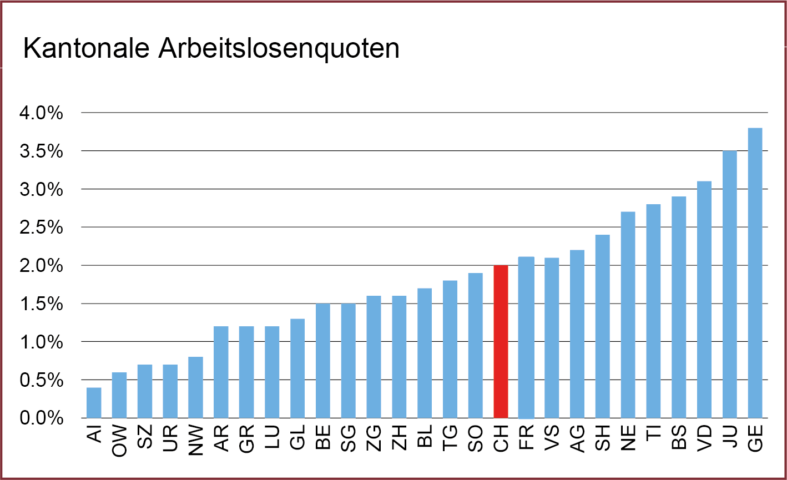
    Real incomes in Switzerland have fallen slightly, which, together with the pandemic-related pent-up demand in the consumer sector, is having a positive effect on the economy. The outlook for the labour market is good and an upswing is possible by 2024.

    The residential real estate market is robust and could not be affected by the financial crisis, the Corona pandemic or the war in Ukraine. The Swiss office market is unimpressed by the negative news from the global economy.

    Further interest rate steps by the SNB are expected and yields could rise slightly. However, due to immigration, vacancies in the periphery are falling and demand for space in the centres remains high, leading to rising market rents.

    In the area of commercial real estate, yields are not expected to rise in the near future, as interest rates could rise. There is a tendency for market values to fall, which could be cushioned by investors’ investment pressure.

  • MoneyPark forecasts falling mortgage interest rates

    MoneyPark forecasts falling mortgage interest rates

    The war in Ukraine will bring the economic recovery to a standstill, predicts MoneyPark in the latest economic and interest rate update from the fintech from Pfäffikon, which specializes in mortgages and real estate. According to him, capital market rates have already fallen significantly as a result of the outbreak of war. This development has also reached mortgage interest rates with a slight delay, writes MoneyPark.

    Specifically, between Feb. 24 and March 8, the company observed a 6 to 8 basis point cut in fixed-rate mortgage rates. By contrast, mortgages based on the SARON reference interest rate (Swiss Average Rate Overnight) remained unchanged. MoneyPark expects further slight reductions in mortgage interest rates over the next few weeks.

    “It is currently particularly important to follow the development of the capital and mortgage markets promptly,” says the update. In particular, MoneyPark anticipates that mortgage providers will launch temporary special offers “due to the intense competitive environment”.

  • PSP Swiss Property grows profitably

    PSP Swiss Property grows profitably

    According to a statement by PSP Swiss Property , the Zug-based real estate company generated property income totaling CHF 309.64 million in the 2021 financial year. Compared to the previous year, this corresponds to growth of 4.5 percent. The operating result (EBITDA) excluding property gains such as valuation differences amounted to CHF 278.76 million in 2021, which is 2.8 percent more than in 2020. PSP Swiss Property attributes the growth primarily to increased rental income year-on-year and higher profits on the sale of development projects and condominium back.

    A net profit of CHF 595.02 million was reported in the year under review, compared to CHF 292.09 million in the previous year. In addition to the factors relevant to the operating result, the appreciation of the portfolio by CHF 464.9 million played a decisive role here. As of the end of 2021, the real estate portfolio of PSP Swiss Property was valued at CHF 9.13 billion.

    In the course of the financial year, the real estate company completed a number of projects and added them to the investment portfolio. The announcement mentions, among other things, the new ATMOS building in Zurich-West with an area of 24,000 square meters. Four investment properties have been reclassified as development projects and a number of properties have been successfully sold, explains PSP Swiss Property. No new investment properties, areas or projects were acquired in 2021.

    For the current financial year, the company anticipates an EBITDA excluding real estate gains of CHF 285 million. The focus will remain unchanged on the modernization of selected properties, our own development projects and leasing. PSP Swiss Property intends to resell non-strategic real estate, while purchases are made dependent on the added value that is expected in the long term.

  • A whole ship for the real estate industry

    A whole ship for the real estate industry

    [smartslider3 slider = "3"]

    Where does this saxophone come from? –Mr. G-Sax, one of the most renowned saxophonists in Switzerland, shortens the waiting time at the entrance control. “This is my 10th time here,” he says during a break in play. «The Immo-Boat was a hit right from the start. The whole real estate scene meets here in an almost familiar setting. You know each other, talk about the respective business situation and look forward to seeing you again. ” It is also clever that the Immo-Boat has always taken place on a Monday, which Marnie Baldessari from SVIT Zurich confirms: “We always plan the Immo-Boat on the last Monday of August. Because of Corona, it was September this year. But on Monday, unlike other days of the week, people have time. “

    After previous speakers such as Thomas Borer (2011), Valentin NJ Landmann (2013), Jean-Claude Biver (2016), Bertrand Piccard (2017) or Ottmar Hitzfeld (2018), this year Mario Gyr, Olympic champion, rowing world champion and European champion in the lightweight foursome without a helmsman as well as Olympic diploma holder from London 2012, the honor. In his presentation, he chatted freshly and freely from the sewing box of a top athlete and repeatedly drew parallels to today’s working life, and not only in the real estate industry. With his thoroughly sympathetic manner, he conquered the audience in no time and thanked him by handing around his gold medal, which feels much heavier than expected in terms of weight.

    Once again, the Lake Zurich tour on the MS Panta Rhei felt like a vacation: an idyllic ambience and wonderful landscapes, entertaining conversation partners and a cheerful after-work atmosphere among all guests are essential success factors. At the end of the evening there was not only fine wines and a generous aperitif, but also a cigar lounge on the sun deck. “Even people who normally don’t indulge in cigars come here to a Stump”, said one guest, almost cynically. Even the lighting glitch did not detract from the leisurely philosophizing. But on the contrary. Many a lady bobbed to the cool Mr. G-Sax beat almost like in the disco.

    True to the motto “Never Change a Winning Team”, along with SVIT CEO Pascal Stutz, Marnie Baldessari and Christoph M. Steiner, SRF presenter Monika Schärer was also present for the tenth time. No question: Both the Swiss Real Estate Association (SVIT) Zurich and the hosts ImmoScout24, Quooker, Raifeisen, Siemens Hausgeräte, Sunrise UPC and immo! Nvest can be satisfied. The tenth edition of the networking event for executives from the real estate industry will also be fondly remembered by all those involved. For Marnie Baldessari, every issue of Immo-Boat is a highlight: “We have many returning guests and we even have a waiting list. But because of Corona this has become shorter than it was before. ” Ship ahoy: See you again in 2022!

  • PropTech: The 3 most important Success Drivers

    PropTech: The 3 most important Success Drivers

    According to the Gartner Hype Cycle, every new technology is initially subject to high or exaggerated expectations. After a “cycle of disappointment” follows a “phase of enlightenment”, from which solutions then arise at a realistically increasing level of productivity. Data science, robots and drones, virtual and augmented reality or artificial intelligence are just a few of these basic technologies. The blockchain is one of the last technological hype triggers. We will see promising developments and use cases in these areas over the next few years.

    The challenge for a PropTech company is to develop a successful business model or product or service with the corresponding problem-solving potential and scalability from one of these basic technologies. In this context one often hears terms like SaaS or DSaaS. “Software as a Service” (SaaS) is a cloud service model in which applications and data are located in the cloud and thus on the PropTech provider's servers. With “Data Science as a Service” (DSaaS), the data supplied to the cloud is processed by the provider, analyzed using an algorithm and fed back to the customer as findings.

    But this is only one side of the coin. The established companies in the real estate industry must also recognize the added value of these products and services and be prepared to pay for them. The driver for real estate entrepreneurs will certainly be the cost and efficiency side, but also or above all the needs of their customers. Anyone who aligns their business model to a megatrend – such as sustainability, big data or future work – is fundamentally not wrong here.

    You can find out more about successful business models here:
    https://proptechmarket.net/loesungen

  • This is how blockchain is conquering the real estate industry

    This is how blockchain is conquering the real estate industry

    The term blockchain should be familiar by now. Most associate it with cryptocurrencies like Bitcoin. That's right, where blockchain is just the technology and Bitcoin is a resulting application. Even if the technology may seem complicated, the Swiss blockchain expert Michael Trübestein is certain: “Blockchain technology is comparable to the beginning of the Internet. It won't go away anymore. At the moment it is just uncertain how it will develop. "

    First you have to understand how a blockchain works: It consists of individual blocks – each of which stores data such as transactions. A blockchain works decentrally. In other words, anyone around the world can join a blockchain – virtually via a computer, of course. Every single computer stores all and exactly the same blocks that form a chain. Each block has its own «DNA». A new computer will only be admitted if it has been checked and verified by all other computers. Once programmed on a blockchain, it cannot be changed retrospectively by a single computer. For this, all computers would have to be involved – and that is exactly what makes the blockchain so secure. If a single computer tries to change the blockchain, the chain is immediately interrupted and the culprit is excluded.

    "Hello World" in Baar is the first property in the world to be tokenized
    The possibilities of blockchain technology are enormous for the real estate industry, as Michael Trübestein says. He is professor for real estate management at the Lucerne University of Applied Sciences, with a focus on real estate investment and real estate asset management. Numerous companies are currently researching possible areas of application. “Currently there are only a few applications, such as in the land register or in the investment / financing area. The world's first tokenization of a property, the “Hello World” property in Baar, ”says Trübestein, is an outstanding example. 20 percent of “Hello World” (CHF 3 million) of the property value was tokenized by the Zug-based company “Blockimmo” and sold to four investors.

    The company “Crowdlitoken” has also specialized in real estate: the start-up founded in 2018 sees itself as a digital real estate bond. «Investors can participate in selected Swiss real estate from 100 francs / euro. After the investment, our users can put together their own real estate portfolio by placing their purchased bonds (Crowdlitokens “CRTs”) individually on the various Crowdlitoken properties, ”says Domenic Kurt, CEO of Crowdlitoken, explaining the concept. By participating in the real estate, the investors generate returns of up to 7 percent per year. You can either have this paid out monthly to your bank account or receive it in CRTs.

    Access to the financial market is being liberalized
    A bank does not have to be interposed for a digital bond, which is cheaper for the investor. Crowd
    litoken already has 630 investors with a volume of 18 million CRTs. The real estate portfolio is constantly being expanded. The Swiss professional footballer Diego Benaglio is one of the prominent users of Crowdlitoken. Kurt defines what distinguishes Crowdlitoken from other companies that also rely on blockchain technology: “There is no comparable competitor who enables investors to invest such a low amount as an entry point for a stake in several properties. Investors can access the portal from their smartphone, where they can manage their entire investment. "

    It is clear to both Trübestein and Kurt that blockchain has disruptive potential. The CEO of Crowdlitoken says: “Banks are becoming obsolete for investment products like ours. New sales channels are emerging and access to the financial market is being liberalized. " On the one hand, the digitization of the capital market is inherently completely disruptive, as this leads to an opening of the market. «There are no entry barriers; Entry sums are reduced. " On the other hand, the digitization of securities is inherently disruptive: “This means that values are no longer transferred via third parties. With blockchain-based securities, it is possible to send values without duplicating them, ”explains Kurt.

    Trübestein adds: “Some applications such as crypto currencies have already influenced the world and the way market participants think. Nobody knows how the applications will develop in the future, but the advantages are already clearly visible. " The prerequisites are also in place in Switzerland: "We have target-oriented framework conditions and innovative companies here," says Trübestein. Cooperation between companies is important when implementing innovations. This is what happened, for example, with the “Hello World” property – the transaction results from a collaboration between Block-immo, Elea Labs and Swiss Crypto Tokens.

    Michael Trübestein
    Domenic Kurt

    What is a token
    Domenic Kurt, Crowdlitoken: A digital asset (token) based on the blockchain. It is a digital representation of a security. It contains property rights to the bond as well as the right to returns and represents a repayment obligation.

    What is blockchain?
    Michael Trübestein, Expert: A sequence (= chain) of information (= block). These are "time stamped" and are stored on several computers. This guarantees a high level of protection against forgery. There are also public and non-public systems. It can be used around the clock, seven days a week.

    What can blockchain technology do better than a bank?
    Domenic Kurt, Crowdlitoken: With blockchain-based securities it is possible to send values without duplicating them. It replaces the book of creditors and ensures that processes are designed and implemented in a leaner, more cost-effective and efficient manner.