The SVSM was founded in 1998 as an umbrella organization for location and business promoters in Switzerland.
While the focus was initially on city marketing, the fields of activity have expanded significantly since then: According to the approach of integrated location promotion, the SVSM is one of their around 90
Today, members not only include location and economic development agencies, but also tourism regions, real estate specialists, event agencies and educational institutions. To this changed framework
To take this into account, the board of the SVSM met for a closed conference. The focus was on sharpening the association's profile, the services offered and the benefits for the members. In intensive discussions, focal points emerged and new tasks emerged. The main goals of the SVSM – enable the interdisciplinary exchange of experiences, promote professionalization and link teaching and practice – remain the same. However, members will be able to benefit from more services and improved networking opportunities in the future. The board members will now tackle the challenges of the association with a lot of motivation and commitment
to develop further; Because everyone agreed: The SVSM is an important point of contact for all questions about location management.
Tag: Immoinvest
-

Closed meeting of the SVSM board
-

SVIT-Digital Day shows software for management of management
The Swiss Association of the Real Estate Industry (SVIT) is holding Digital Day 2020 on Monday, September 21 in the Kosmos in Zurich. From 11 a.m. to 6 p.m., visitors can collect information on the subject of digitization in the real estate world with free admission. On the digital day of the real estate industry, the organizing commission “SVIT Digital” is also launching a “Meet and Greet” for all visitors to the event on this day. They can discuss their digital concerns directly with proven professionals and other visitors at the big table and work out possible solutions, according to the announcement for the digital day.
According to the organizer Pape Werbe AG from Weiningen ZH, more than 40 exhibitors will be present in the Kosmos and many lectures will be held on specialist topics such as "Digital Signature" or "The 3 Levels of Digitization in Property Management". During the entire event, it will be ensured that the current protection concepts due to the corona pandemic are adhered to.
-

Swiss electricity from the socket is 75 percent green
In 2019, around 75 percent of the electricity from Swiss sockets came from renewable energies. This is evident from the data collected annually by the Federal Office of Energy ( SFOE ).
According to a media release , the data published on Monday show that 66 percent of the electricity consumed comes from large-scale hydropower. 8.4 percent is generated by solar and wind energy as well as from small hydropower and biomass. In 2019, their share rose from 7.85 percent in the previous year to 8.4 percent. Around 95 percent of this was produced in Switzerland and a good three quarters were funded by the feed-in tariff system ( ESV ).
Compared to the electricity actually supplied, the shares of renewable sources in Swiss electricity production are lower: 56 percent of the electricity produced in Switzerland comes from hydropower and 6 percent from new renewable energies. In this context, the SFOE points out that the Swiss Sockets not only supply electricity from Swiss production.
19.1 percent of the delivery mix comes from nuclear energy (2018: 17.3 percent). The share in Switzerland's production mix is significantly higher at 35 percent, some of which is exported. Almost 2 percent in the Swiss delivery mix is obtained from waste and fossil fuels.
The origin and composition of 4 percent of the electricity supplied cannot be verified. Since this so-called gray electricity is only permitted in exceptional cases from delivery year 2020, according to the SFOE, large consumers are apparently increasingly switching to domestic nuclear energy. Since most of the neighboring countries do not issue any guarantees of origin for electricity from conventional power plants, Switzerland has introduced replacement certificates. Coal electricity from abroad can be declared as such and no longer has to be summarized under gray electricity. This share of coal-fired electricity halved to half a percent between 2018 and 2019. However, electricity-intensive companies recently obtained replacement certificates for electricity from fossil and nuclear sources from European power plants.
-

Rents rose in August
In August, asking rents in Switzerland rose by 0.26 percent. The upward trend is particularly confirmed in the annual analysis with a plus of 0.88 percent. This is shown by the current rental price index figures from homegate.ch and Zürcher Kantonalbank ( ZKB ). It measures the monthly, quality-adjusted change in rental prices based on current market offers.
The rental price development in the canton of Thurgau is striking, according to a media release from the real estate marketplace homegate.ch. The rent there rose by 0.71 percent, almost three times the Swiss average. The canton of Valais also shows a noticeably higher value with a plus of 0.62 percent. In the cantons of Zurich, Glarus, Appenzell Ausserrhoden and Appenzell Innerrhoden, apartment hunters are confronted with rents that have risen by 0.50 percent, in Schaffhausen it is plus 0.49 percent. On the other hand, Geneva recorded the steepest decline with a minus of 1.48 percent. The rent index is only stagnating in the cantons of Basel-Stadt and Schwyz.
The cities of Geneva (-2.43 percent) and Lugano (-1.41 percent) recorded a large decline. In contrast, asking prices in the city of Zurich rose (+1.31 percent). Only in the city of Basel does the rent index remain unchanged.
-

Properties are facing a round of financing
Almost a year ago, Levent Künzi, former COO of Betterhomes , and his brother Adrian Künzi founded the company properti . The two brothers want to change the real estate industry with the digital real estate broker, explains properti in a press release. The target group of the young company from the Zurich economic area are private owners of rental apartments. According to the announcement, they currently make up around half of all owners of around 4.5 million apartments across Switzerland.
Propertyi works according to the motto manage centrally, mediate decentrally, is further explained in the communication. "We focus on the niche market of private owners and offer a comprehensive service for everything to do with the sale and rental of real estate," Levent Künzi is quoted there. At the same time, properti's processes are completely digitalized.
After only ten months on the market, properti has already grown to 40 employees. You are currently looking after "over 300 active properties in German-speaking Switzerland and by then have already managed over 230 brokerages with a sales volume of around 40 million – despite Corona," says Levent Künzi. The two brothers want to carry out a first round of financing shortly. McMakler is named as a role model in the communication. The German company managed to collect 50 million euros and increase the company's value to 230 million euros.
-

PriceHubble is taking in fresh money
PriceHubble has completed a successful financing round and raised several million Swiss francs, according to a message from startupticker.ch. The round was led by the Helvetia Venture Fund and Swiss Life. The investors also include the Austrian real estate company Soravia and Frank Strauss, former CEO of Deutsche Postbank.
PriceHubble makes it possible to gain useful knowledge for the valuation of real estate from large amounts of data. With the company's solution, for example, data on the location, the neighborhood or noise pollution can be evaluated and clearly presented with the help of big data analytics and artificial intelligence. PriceHubble is aimed at all parties in the real estate value chain, such as real estate portals, banks, asset managers, insurance companies, real estate investors and private individuals.
According to the announcement, the company is already successful in German-speaking countries, France and Japan. In the past twelve months, PriceHubble has quintupled the number of its customers to several hundred and doubled the number of employees to 72.
With the fresh money, the international growth is to be further promoted. "With the newly acquired financial resources, we are ideally equipped for further expansion and can further expand our top European position as proptech for data-driven real estate valuations and location analyzes", PriceHubble founder Stefan Heitmann was quoted as saying.
-

Lake Zurich education center inaugurates new building
Patrick Heeb, Rector of the Education Center Lake Zurich ( BZZ ), inaugurated a new building at the BZZ in Horgen on Tuesday, together with District President and Education Director Silvia Steiner (ZH / CVP) as well as Government Council and Construction Director Martin Neukom (ZH / GPS). BZZ learners have already moved into the new school building.
The new building, which has now been inaugurated, is intended to cover the school's increasing space requirements, as stated in a media release . With it, the school has new classrooms as well as a new triple gymnasium. The sports hall is made available to the sports department of the municipality of Horgen outside of school hours.
After the completion of the new building, the renovation of the existing building will begin. After the construction work is completed, the BZZ will be able to benefit from its location on Lake Zurich. It will use the lake water to generate cold and heat.
-

Holcim supplies sustainable concrete for HSG Learning Center
The HSG Foundation is currently building the new HSG Learning Center on the premises of the University of St.Gallen ( HSG ). The general contractor HRS Real Estate AG has commissioned the Swiss Holcim AG with the delivery of the concretes. A new, more sustainable Holcim product, EvopactPLUS, is used in around half of the total of 6,000 cubic meters of concrete used.
"With EvopactPLUS we close the building material cycle, conserve natural resources and save CO2," said Roger Dällenbach, Regional Manager for German-speaking Switzerland and Ticino, in a press release from Holcim. The new type of concrete replaces natural gravel with a reclaimed aggregate from the region. It also includes Susteno, which, according to the company, is the "first and only resource-saving cement in Europe that uses mixed granulate from demolitions as an additive". This fine material is not used in conventional concrete production and must therefore be dumped.
"Compared to an already optimized mass cement, the use of Susteno saves 10 percent CO2," the press release said. Regionality also plays a role: the building material is delivered from the Holcim concrete plant in St.Gallen, just three kilometers from the construction site. "It was an experiment for us because we were working with the product for the first time," Holcim foreman Marcel Kunz is quoted as saying. He is very satisfied with it, "it's a wonderful concrete."
In the future, the modern building should focus less on technical learning than on learning the necessary skills such as critical thinking and self-reflection, according to the client, the HSG Foundation . It finances this project largely from donations from HSG alumni .
-

EBL is investing up to 1.4 billion in the energy transition
EBL wants to drive the energy transition in Switzerland and Europe with large investments. As the Basel-based energy supplier announced , it wants to create EBL X Invest, a new investment vehicle for professional investors, in 2021. This is to be equipped with equity of 250 to 500 million euros. This should trigger investments of 700 million to 1.4 billion euros in wind, solar and water power in Switzerland and Europe.
The new investment vehicle builds on EBL Wind Invest AG, which was founded in 2016 by EBL, institutional investors and pension funds. EBL Invest is said to have invested a total of 370 million euros in wind power plants in Germany by the end of 2020 with equity of 120 million euros. The plants are expected to generate 370 gigawatt hours of electricity per year.
EBL also relies on renewable energies in its own company. 97 percent of the company's own vehicle fleet is to be converted to electric drives by 2030. 95 percent of the headquarters in Liestal are managed with renewable energies.
-

Real estate market defies the pandemic
300 players in the real estate market took part in this year's summer survey, CSL Immobilien informs in a press release . The record high participation shows "how strongly real estate companies, funds and investors are currently interested in exchanging current market information," it said. According to the results of the survey, the economic downturn associated with the coronavirus pandemic had little impact on the real estate market.
"The turning point in the real estate market caused by the pandemic is significantly less than expected," said Patricia Reichelt, Head of Research & Market Analysis at CSL Immobilien, quoted in the press release. According to the results of the survey, the differences in the housing market compared to the previous year are “so minimal in all five regions in both the property segment and the rental housing market that no general trend is discernible,” the press release said. When it comes to the development of purchase prices, the market players anticipate that the prices for single-family houses will rise more significantly than the prices for condominiums.
But the demand for office space is "still there despite the corona shock," writes CSL Immobilien. Here, growing or newly founded companies generated additional demand “despite overall falling overall demand”, explains the company. “In the Greater Zurich Area, demand in these two categories fell by a third compared to the previous year. But still 16% of the survey participants stated that growth or start-ups were the main motivation for the demand ”, it says in the communication. In Basel this would be the case for a third of those surveyed, in Bern for 16 percent. In Geneva and Lausanne, however, growth or start-ups were not mentioned as a reason for demand. In the opinion of CSL Immobilien, however, the additional demand could mean that the demand for office space will fall significantly less sharply in the coming years than after the financial crisis in 2008.
-

Corona-influenced half-year results of the Zug Estates Group
- The property income increased by 5.4% compared to the same period of the previous year
- CHF 28.2 million
- Doctorate profit before taxes of CHF 9.5 million in the Aglaya project
- The group result amounts to CHF 8.3 million (previous year period: CHF 26.1 million). Without
- Revaluation and special effects reduced the group result from CHF 15.4 million.
- to CHF 11.9 million
- Solid capital base with an equity ratio of 55.7% (54.7% as of December 31, 2019)
At Zug Estates, too, the first half of 2020 was dominated by the challenges we were faced with by the COVID-19 pandemic.
In the real estate sector, many of our tenants had to close their shops during the officially ordered lockdown. This mainly affected our retail tenants and thus the Metalli shopping mall. In the Hotel & Gastronomy segment, the almost complete standstill of international business travel led to a considerable drop in sales.
Fortunately, despite Corona, we were able to hand over all of the remaining 49 condominium units of the Aglaya doctoral project to their new owners on time. In addition, we have already been able to find a partnership-based and conclusive solution for a one-off rent waiver with over 90% of the tenants directly affected by the lockdown.
In the first half of 2020, the group result was CHF 8.3 million, 68.3% below the previous year's period (CHF 26.1 million). Adjusted for revaluation and special effects, the declining figures in the Hotel & Gastronomy segment in particular lead to a reduction in consolidated earnings by 22.7% from CHF 15.4 million to CHF 11.9 million.Increase in property income with significantly lower hotel and catering sales
The full period of validity of rental contracts, the majority of which were concluded in the previous year, increases property income in the first half of 2020 compared to the same period in the previous year by 5.4% to CHF 28.2 million. Due to the COVID-19 pandemic, rent payments of CHF 0.7 million were granted.
Income in the Hotel & Gastronomy segment fell from CHF 8.2 million to CHF 3.6 million. The occupancy of our hotels was temporarily reduced to less than 10% during the lockdown. Since then we have been able to record growth again, but are still well below the corresponding prior-year figures. The gross operating profit (GOP) is only 7.8% compared to 39.3% in the first half of 2019.
The sale of the last 49 condominiums in the Aglaya project resulted in income of CHF 72.5 million and a pre-tax promotion profit of CHF 9.5 million
In the Aglaya doctoral project, we were able to generate a return on the investment volume of 17.3%. Since no sales revenue was posted in the same period of the previous year, there was an overall significant increase in operating income from CHF 36.7 million to CHF 105.4 million.
The real estate portfolio was valued a total of CHF 13.6 million lower, which corresponds to around 0.9% of the portfolio value of all investment properties as of June 30, 2020 and is due to a slightly more conservative assessment of the market rents for retail space in general and individual specific office spaces. In the same period of the previous year there was a revaluation gain of CHF 11.5 million.
The average interest rate of the interest-bearing debt capital could be further reduced from 1.4% to 1.3%. As expected, the significantly lower construction activity led to a decrease in capitalizable interest and a corresponding increase in financial expenses from CHF 2.5 million to CHF 3.5 million.Stable portfolio with a higher vacancy rate
At CHF 1.63 billion, the market value of the portfolio is at the same level as on December 31, 2019. In the first half of 2020, the last building in construction site 1 in Rotkreuz was put into operation. As expected, this increased the vacancy rate from 3.3% as of December 31, 2019 to 5.3% as of June 30, 2020. We invested a total of CHF 16.2 million in our portfolio in the reporting period. The weighted average remaining lease term (WAULT) is 6.7 years (6.8 years as of December 31, 2019), a very high level compared to the industry.
While our residential products are enjoying very good demand in the current market environment, we are currently noticing a certain reluctance due to the COVID-19 pandemic, especially among those who are interested in office space. However, we are confident that the centrally located, high-quality and sustainably operated office space at Zug Estates will continue to be in high demand in the future. Fortunately, the number of inquiries for retail space in Metalli remained stable. We currently have no evidence of a decline.Solid capital base
With the repayment of funds from the sale of the last apartments in the Aglaya and despite the distribution of a special dividend, the interest-bearing debt capital was reduced from CHF 597.4 million to CHF 587.1 million in the first half of 2020. The average remaining term of this financing is 4.8 years (previous year: 5.2 years). With an equity ratio of 55.7% higher by one percentage point, Zug Estates has a very solid equity base.
Project development with a focus on the Metalli habitat
After the city of Zug and Zug Estates presented the first result of the joint planning process for the “Metalli living space” in March 2020, a feasibility study was carried out with the specialist planners. The alignment project and the application for adapting the two development plans concerned are currently being drawn up with all the relevant documents. The guideline project is to be submitted to the city of Zug in the third quarter of 2020. The legally amended development plans are expected in 2022/23.
After receiving the building permit, the Board of Directors approved the planning phase for the last two buildings (S43 / 45) on the Suurstoffi site in Rotkreuz. The start of construction will be triggered as needed, taking into account the market recovery in connection with COVID-19.Step-by-step implementation of the sustainability strategy
The connection of the Metalli-Gevierts to the lake water network Circulago could take place according to plan in April 2020. The corresponding contracts for the connection of the remaining 16 properties were signed in December 2019. Commissioning is to take place in stages in 2021, 2023 and 2025. From this point in time, Zug Estates will be able to operate its entire portfolio almost CO2-free.
Public electric charging stations have been available to customers on the Metalli shopping street since the beginning of June. Two of the six stations are high-performance fast charging stations, the first in the city of Zug.
The installation of the CO2-neutral cooling in the rooms of the Parkhotel Zug was completed on schedule in April 2020, which means a significant increase in comfort for the guests from now on.Outlook 2020
Due to the temporary effect of the rent reductions in connection with COVID-19, we continue to expect increasing rental income for the year as a whole. As a result of increased renovation and maintenance work or lower capitalizable financing costs, real estate expenses and financial expenses will be higher.
In the Hotel & Gastronomy segment, we are assuming that sales and GOP will be well below the previous year's level due to the considerable drop in sales due to the stoppage of international business transactions by our regular customers, although the developments in the second half of the year are difficult to forecast.
Therefore, both an operating result before depreciation and revaluation and a consolidated result without revaluation and special effects are expected to be significantly below the previous year. -

CBRE STRENGTHENS POSITION IN WESTERN SWITZERLAND
Real estate consultancy CBRE today announced the opening of its new office in Lausanne. The new office is located in the heart of Lausanne on Rue Saint-Martin and will be a strategic location to strengthen CBRE's proven presence in the real estate market in French-speaking Switzerland.
In autumn 2019, CBRE announced the acquisition of i Consulting SA, a renowned provider of valuations, market analyzes and consulting services for real estate. Around 20 employees will now work together in the new office in Lausanne. This physical merger of the two teams is an important step in the already successful integration. The new office in Lausanne relies on a modern room concept 'New Ways of Working', which enables flexible working.
Headed by Vincent Leroux, the Lausanne office advises investors, property users and developers on all property issues. In connection with the close proximity to the market and detailed knowledge of the structures within the region, ideal on-site consulting services can be offered. CBRE currently employs more than 120 people in Switzerland with headquarters in Zurich, Geneva, Basel and Lausanne.
The managing director of CBRE Switzerland, Florian Kuprecht, comments on the opening: "Understanding the market and customer needs is crucial for our business. The opening of the new office in Lausanne enables us to advise customers in this important market area with even greater local expertise . The continued expansion and diversification of CBRE in Switzerland reflects our claim to tailor our range of services more and more to the needs of our customers. "
-

Intershop starts building an assembly hall for Stadler
Intershop creates a new assembly hall for Stadler Winterthur . According to a press release , the building permit is now available. The investment volume amounts to around 16 million francs. The start of construction is planned for the current week, the completion of construction for the end of 2021. As Stadler announced after the agreement with Intershop Holding was concluded, the Zugbauer will lease the plant from the Intershop subsidiary SGI City Immobilien AG on a long-term basis. The lease has a minimum term of 15 years, according to Intershop.
With the new building, Stadler Winterthur is expanding its competence center for bogies. On around 13,250 square meters of land, additional storage and assembly areas are being built for the construction of bogies for standard and broad gauge trains as well as for trams. The commissioning of the new hall is planned for 2022. In February, Stadler announced its intention to create up to 50 new jobs with the expansion of the production facility at the Winterthur location.
-

ETH spin-off binds CO2 in broken concrete
If the concrete industry were a country, it would be the third largest emitter in the world. It produces around four times as much CO2 as all global air traffic. The start-up Neustark , a spin-off from the Swiss Federal Institute of Technology in Zurich ( ETH ), is countering this with its concept: the mineralization of carbon dioxide from the air to obtain limestone.
Neustark binds CO2 in the pores and on the surface of concrete granulate. This upgraded granulate can then be mixed in fresh concrete as a substitute for sand and gravel. Thanks to these granules, less cement is required while the properties remain the same. This emerges from a communication from the ETH.
“What appealed to me was that the solution would not be available for five or ten years, but already now,” says business economist Valentin Gutknecht, who is responsible for the operational aspects of the business in the ever-growing Neustark team. Together with Johannes Tiefenthaler, he wants to turn this climate-positive business idea into reality. Tiefenthaler is doing his doctorate at the Department of Mechanical and Process Engineering ( MAVT ) on the next generation of technology for the mineralization of carbon dioxide.
There is a lot of research going on in the construction sector, but so far the industry has only achieved small reductions in emissions, so Tiefenthaler. The advantage of the concrete granulate is that it is highly reactive and the broken concrete forms a very stable chemical compound even without climate-damaging pre-treatment with carbon dioxide.
Your pilot plant for recycling concrete is funded by the Federal Office for the Environment ( FOEN ) and the Swiss Climate Foundation. The project is now intended to demonstrate the added value along the entire value chain. Neustark's goal: negative emissions for which there are only "very few technical approaches". The start-up wants to show "that negative emissions can not only bring costs but even economic benefits".
-

Mont-sur-Lausanne relies on Siemens to save energy
By increasing the energy efficiency of the sports center, the municipal administration of Mont-sur-Lausanne wants to reduce the loan required for the renovation of the complex, Siemens Switzerland explains in a press release . The company won the tender for a corresponding energy saving contract. In the contract, Siemens guarantees the municipality savings of 60,000 francs annually.
"For Siemens Switzerland this is a remarkable success and a project that we would like to implement in other municipalities as well," Stéphane Bovey, regional sales manager at Siemens Switzerland, is quoted in the press release. “We focused on the right concepts and suggested the most effective measures.” The communication cites the renovation of the ventilation and lighting systems and the installation of solar modules on the roof of the complex as examples.
Siemens is working with local companies to implement the project, the press release explains. The contract has a term of 15 years and comprises an investment volume of 809,000 francs. The work should be completed this summer.
"We are pleased to have found an experienced partner in Siemens who works with us to save energy," said Christian Menétrey, councilor responsible for construction and sustainability. According to her, Siemens has already received further orders after the energy saving contract. The communication specifically mentions the replacement of the water treatment system and the optimization of electrical systems.
-
Climeworks removes CO2 from the air in Iceland
Climeworks , the Reykjavik energy supplier ON Power and the Icelandic company Carbfix have agreed to combine their technologies for capturing CO2 from the air and for its permanent storage. Climeworks and Carbfix describe these agreements in their respective media releases as “groundbreaking” as well as a “milestone in the fight against climate change” and “turning point in climate protection”: “For the first time, the technologies for a project of this magnitude to remove carbon dioxide from the air combined with each other ”, it says there. The new facility will permanently remove 4,000 tons of carbon dioxide from the air every year.
At the site of the third largest geothermal power plant in the world, the Icelandic Hellisheiði, Climeworks is building systems for the separation of CO2 from the air. The Direct Air Capture Technology (DAC) from Climeworks is used for this. The geothermal energy and heat provided by ON Power ensures that DAC technology has a constant supply of renewable energy.
The Climeworks agreement with Carbfix ensures the safe and permanent storage of carbon dioxide through natural underground mineralization. According to Carbfix , the underground basalt rock formations in Iceland offer ideal conditions for this process.
"This collaboration with ON and Carbfix is a big step forward," said Jan Wurzbacher, co-founder and co-CEO of Climeworks, in a press release from Climeworks. "We can reach net zero."
ON Power is “immensely proud of this collaboration” between ON, Carbfix and Climeworks. It shows "how innovative projects can come together to create and expand one of the solutions to global warming". The company is pleased to "support the work of Climework in the future".
-
CKW relies on intelligent electricity meters
According to a media release , CKW has already used intelligent measuring systems in the past “in selected regions and specifically in larger new buildings”. Now all conventional electricity meters in the supply area are being replaced by smart meters. Accordingly, CKW will now replace 180,000 meters.
The intelligent measuring systems have several advantages for consumers, as CKW informs. In future, customers will be able to track their electricity consumption online and thus “identify potential energy savings more easily”. In addition, the meter reading no longer has to be read on site, which makes things easier when moving, for example. "Furthermore, the CKW customer service can answer questions about energy consumption or the electricity bill faster and more competently with the current measurement data," says the message.
CKW will benefit from the experience it has already gained with intelligent measuring systems. The company tested various communication technologies. "The radio technology used has proven itself particularly in the predominantly rural areas of Central Switzerland compared to other technologies in terms of stability," said CKW. This stability is "of central importance" for the operating costs.
-

Alpiq benefits from long-term contracts
According to the key figures of the Alpiq Group , the Lausanne-based energy group generated net sales of 1.83 billion francs in the first half of 2020. Compared to the previous semester, this corresponds to a decrease of 18.3 percent. The operating result (EBIT) reported a loss of 70 million francs, compared to a loss of 206 million francs in the first half of 2019. The net result improved from a loss of 206 million to a loss of 84 million francs.
The operating result at the EBITDA level before special items increased from 55 million to 116 million francs year-on-year, said Alpiq in a statement on the half-year results. All three Alpiq divisions contributed to the positive operational development.
Specifically, a result of 37 million francs was achieved in Swiss electricity production, compared to a loss of 56 million francs in the previous semester. International energy trading increased its result year-on-year from CHF 53 million to CHF 58 million. In international electricity production, after 60 million francs in the previous year, a positive result of 24 million francs was achieved “despite the coal phase-out”, writes Alpiq.
The coronavirus pandemic caused electricity prices to fall sharply, especially in April and May, Alpiq said in the press release. The Lausanne group was well protected against this development due to the safeguarding of electricity production for two to three years.
-

Tenant platform shows data on electricity consumption
The Basel company Allthings offers a digital platform for tenants, via which they can communicate with property management and roommates, for example. Allthings is now teaming up with the Bern-based company Blockstrom , according to a press release . A solution from Blockstrom for measuring energy consumption in real time will be integrated into the Allthings platform. This means that tenants can also use the platform to track their electricity consumption.
"The interface between the two systems enables an overview of the consumption data in real time," explains David Gundlach, Product Manager at Allthings. “The cooperation with Blockstrom not only creates added value for the tenants, but also allows us to make a contribution to the very relevant topic of sustainability,” he adds.
The joint solution of the two companies is initially being tested as part of a pilot project on the Schöngrün residential area in the canton of Solothurn. There, AXA has converted a former penal institution into a housing estate. The new building with 160 apartments places a high value on sustainability. District heating from the waste incineration plant is used for heating. A solar system on the roof also provides 200,000 kilowatt hours of electricity per year. The apartments and shops on the site are supplied with solar power as part of an association for self-consumption (ZEV).
-
The first multi-energy systems from Soleco are in use
A ready-to-use multi-energy management system has evolved from an award-winning product idea from Soleco . It has already been put into operation in two single-family houses in Maur in the canton of Zurich. It will soon also be used in an apartment building there. According to a message from startupticker.ch, talks are currently underway about equipping a district under construction in Zurich.
In the year it was founded, Soleco, together with its partners Geminise and Vela Solaris , won the CSEM Digital Journey Award in the amount of 100,000 francs in 2018. The private and non-profit Swiss Electronics and Microtechnology Research Center ( CSEM ) claims to promote "added value for a sustainable world". CSEM provided Soleco with technological expertise in order to realize their "groundbreaking digital idea".
Together they developed an intelligent and predictive control system. The software intended for laypeople is based on weather forecasts, the available infrastructure, consumption habits of the residents and energy costs on the market. "The platform then functions like a conductor who manages the resources autonomously and reduces costs," the message says.
"All decisions that the control system makes are associated with an optimal cost," explains Tomasz Gorecki, one of the CSEM engineers. "If, for example, the photovoltaic system is in operation, the controller can determine whether it is better to charge your electric vehicle, store the energy or sell it to the grid." The platform works for individual households, but is above all suitable for self-consumption communities that jointly use different renewable energy sources for several apartments.
-

Energie Zukunft Schweiz launches climate bonus for wood heating
Energie Zukunft Schweiz and Holzfeuerungen Schweiz ( SFIH ) are promoting wood heating systems with a new climate bonus. This is intended to reward those who replace the fossil fuels oil or gas with local wood. Because, according to a press release , previous funding programs are aimed primarily at small residential buildings and not at industrial and commercial buildings, this premium is aimed at medium-sized and large heating systems.
“Thanks to the generous climate bonus from the funding program and the simple handling of Energy Future Switzerland, this gap has now been closed. And that is the same for the whole of Switzerland, ”says the announcement. This would mean that medium-sized and large wood heating systems would be “not only the most climate-friendly, but also the most economical variant”. Heating with wood protects the climate, promotes local added value and contributes to a healthy forest. This program is regulated by the Federal Office for the Environment ( FOEN ).
The subsidy amounts to 18 cents per kilowatt hour or 1.80 francs per liter of oil or cubic meter of natural gas saved. Energie Zukunft Schweiz calculates that “with correctly dimensioned heating” this corresponds to 360 francs per kilowatt of power. For example, for a block of flats with ten apartments, the investment costs could be reduced by 70 percent. According to Energie Zukunft Schweiz, the savings for large heating systems with an output of more than 200 kilowatts, for example for community buildings, industrial companies and large office buildings, are particularly interesting.
-

From commercial building to design hotel
On Beatenplatz, not far from Zurich's main train station, a budget design hotel of the Munich hotel group Ruby with 208 rooms and a restaurant operated by Candrian Catering is being built in the listed former “Haus Du Pont” commercial building. For more than 100 years, the building housed the ABC cinema from 1913. Historically, the “Haus Du Pont” by Zurich architects Jakob Haller and Karl Schindler has been referred to as a palace-like building. Indeed: the comparison is appropriate.
Simple and representative appearance
Now a look into the future: In the course of the conversion, the largely listed building will be completely renovated. This includes its supporting structure, stairwells, facade and roof structures. In order to achieve an elegant, simple and at the same time representative appearance, classic means are used, emphasize the project managers. These include, for example, a surrounding wall frieze. That means a linear, horizontal style element. This narrow strip, delimits, divides and decorates parts of the building. There are also structured wall surfaces, a terrazzo floor and seating niches in the lobby. The philosophy of the hotel group is "Lean Luxury – luxury in a small area".The Zurich architects Monoplan are responsible for the architecture, the interior design, the overall planning and the construction management. The owner and builder of the historic building is PSP Swiss Property, which is investing 45 million francs in the total renovation. If everything goes according to plan, the two-year construction work will be completed by the end of 2021. ■
-

Nancy's Art Nouveau landmark

View into the dining room, in the background the fireplace by Alexandre Bigot and stained glass by Jacques
Gruber. Image: S. Levaillant.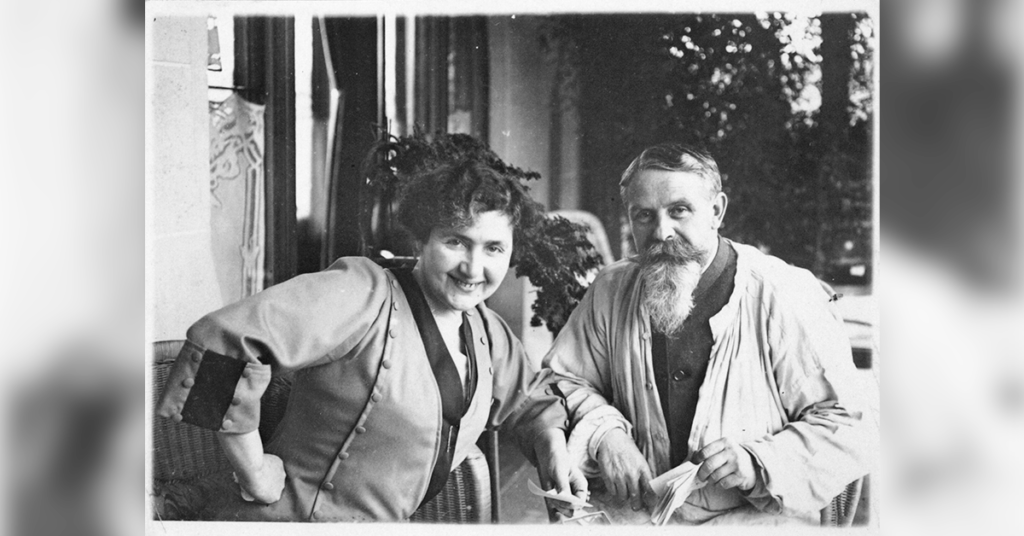
Jika and Louis Majorelle sitting on the terrace of the villa, photo from the
Family album. Image: Musée de l'Ecole de Nancy.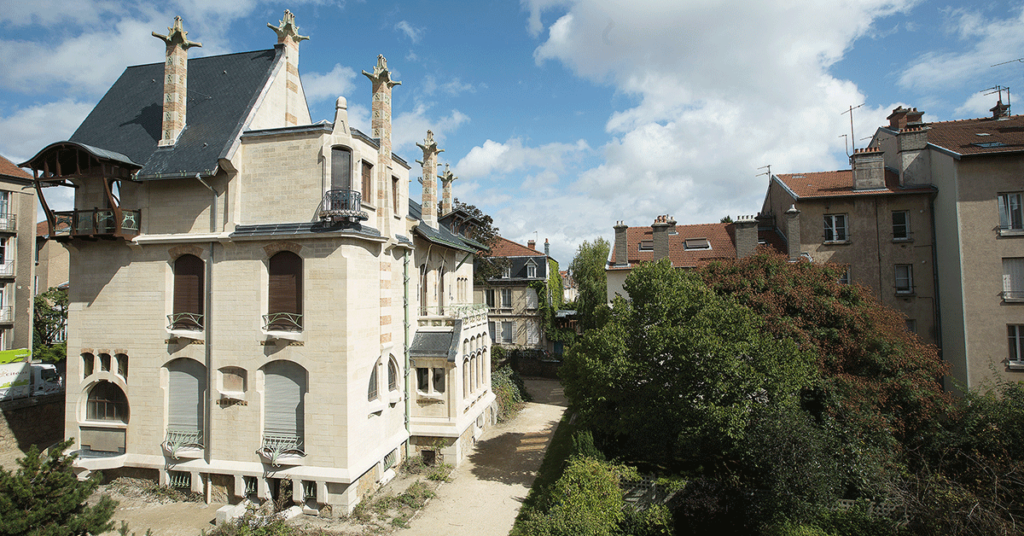
The Villa Majorelle in
Nancy after the renovation. Image: P. Caron.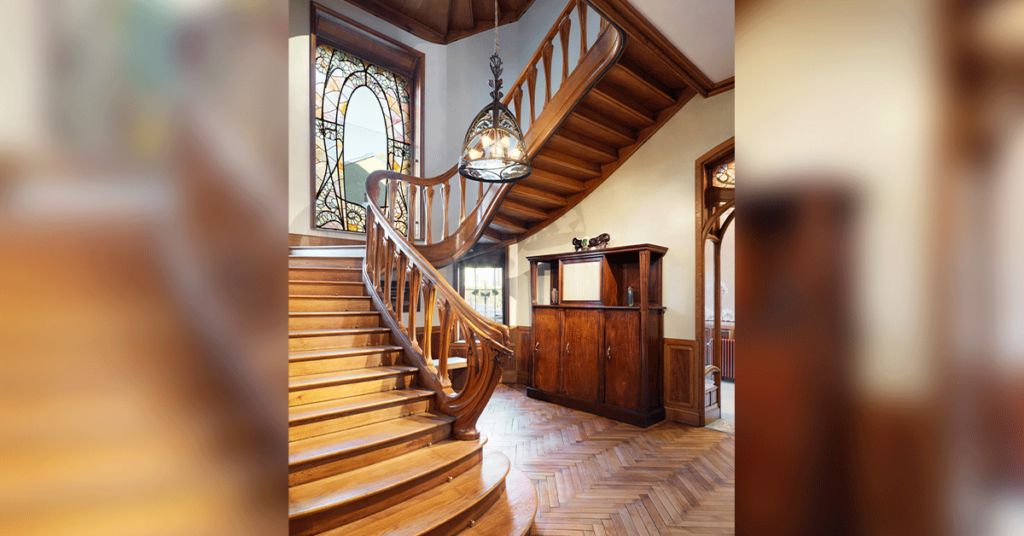
View from the ground floor
on the stairwell.
Image: S. Levaillant.
Under leadership, the company flourished and opened branches in Paris, London and Berlin, among others.
The Frenchman, born in 1859, was only 39 years old and was able to commission the construction of a magnificent villa. He relied on the then 26-year-old architect Henri Sauvage (1873–1932). The two gentlemen met in the house of their mutual friend – the sculptor Alexandra Charpentier. Sauvage had never worked on a project like this before. The only experience Sauvage could boast was working for a few months with the Brussels architect Paul Saintenoy. Majorelle liked the youthfulness and boldness of the architect as well as his good network in the art world. He preferred Sauvage to the experienced Nancy-based architect Lucien Weissenburger. Weissenburger was allowed to carry out the project on site.
The Majorelle family's photo album provided important information
In the years 1901–1902 the villa was built according to Sauvage's plans. It was the first completely Art Nouveau house in Nancy and is considered a prime example. Sauvage did not build the villa single-handedly: he called on other renowned artists. For example his Paris friends, the ceramic artist Alexandre Bigot and the painter Francis Jourdain. Bigot carried out the ceramics, Jourdain designed the decorative paintings in the dining room. The furniture comes from Majorelle's own production. The landlord also took care of the ironwork and the railings. The stained glass windows in the main rooms (staircase, dining room, living room and bedroom) were designed by the master glazier Jacques Gruber. The majority of these artists belonged to the Ecole de Nancy, which Emile Gallé co-founded in 1901.For four years, the Villa Majorelle was repaired internally and externally through extensive restoration work. The building, completely in Art Nouveau style, was commissioned in 1898 by Louis Majorelle, himself a cabinet maker, designer and blacksmith. Majorelle actually wanted to be a painter and studied at a young age at the School of Fine Arts in Paris. After the death of his father, he had to return to his hometown Nancy (F) early to take over the family business. He had modern furniture made and was inspired by nature and Emile Gallé. Gallé specialized in the material glass and did pioneering work in this area. He is one of the founders of Art Nouveau. Louis Majorelle's floral elements run from the facade to the interior of the house: they can be found in ornaments, carvings, mosaics and enamel work. Architect Sauvage arranged the windows and exterior doors to match the logic of the interior layout, breaking with the tradition of the horizontally symmetrical building. Flowing forms and decorative motifs run through the entire architecture. Sauvage played with the opposites: the bare Euville stone contrasts with the polychromy of bricks, stoneware, wood and ironwork. The constant presence of wood runs like a red thread through the interior design and creates a connection with the exterior of the villa.
The Villa Majorelle is considered a unique experimental work. Henri Sauvage later said: “I worked there for two years and I am deeply grateful to my first client for the incredible freedom he has given me. Despite my young age, he never imposed any budget restrictions on me or his personal ideas. " After completion, Louis Majorelle lived there with his wife Jane Kratz and their son Jacques. The building is also known under the name «Villa Jika» – after the initials of Jane Kratz.
Louis Majorelle died in 1926, the villa was inherited by his son, who sold the house to the state. He initially had offices built there. The gradual rediscovery of Art Nouveau led to the villa being classified as a historic monument in 1975 and finally a listed building in 1996. The city of Nancy has owned the villa since 2003. In the last few years the villa has been repeatedly renovated. In the most recent and most extensive renovation, the villa was returned to its 1926 state. The renovation work was carried out by the Atelier Grégoire André. Articles and publications from the time the villa was built provided important information about the original appearance of the house. The Majorelle family's photo album also served as a valuable source of information.
Some changes made afterwards were removed this time: For example, a bay window on the north facade was removed and the chimney hoods that were removed a few years ago for safety reasons were reinstalled on the roof. The facade was cleaned and damaged masonry replaced. The work on the outer facade and the roof only took two years.
Original Gruber window destroyed in bombing
But the interior of the building was also completely restored in close collaboration with the Musée de l'Ecole de Nancy and a committee made up of Art Nouveau specialists and art historians. In order to create adequate reception areas for visitors, the cash register, cloakroom and souvenir shop are located in the kitchen and pantry area. A new elevator was installed, otherwise the wooden and mosaic floors as well as the glass work were completely redesigned.The living room has an elaborate stucco decor with a pine cone motif, which can also be found on the furniture and the fireplace. The same motif was also used on Jacques Gruber's stained glass window. However, the Gruber window was destroyed in the bombing of Nancy in 1916 and replaced by another oriental-style window that can still be seen today.
Almost 100 pieces of furniture, paintings and art objects then found their way from the Musée de l'Ecole to the villa. Most of the furniture is original. Works were selected that were designed by Louis Majorelle and / or by companies with whom he had worked (Manufacture Daum, Manufacture Keller et Guérin, the ceramic workshops de Rambervillers and Frères Mougin). The choice depended mainly on the similarity to the objects visible in the old photos. In the same way, the museum has also selected from its collection paintings made by Louis Majorelle or his son Jacques.
Between 2021 and 2022, minor renovations will be carried out inside the villa, but these will not require the house to be closed. The works include recreating the bathrooms, creating teaching and educational areas on the first floor, and renovating Louis Majorelle's studio on the second floor. The costs so far amount to 2.5 million euros. ■
-

From a listed school building to a private hotel

In the attic
became a junior
Suite built in.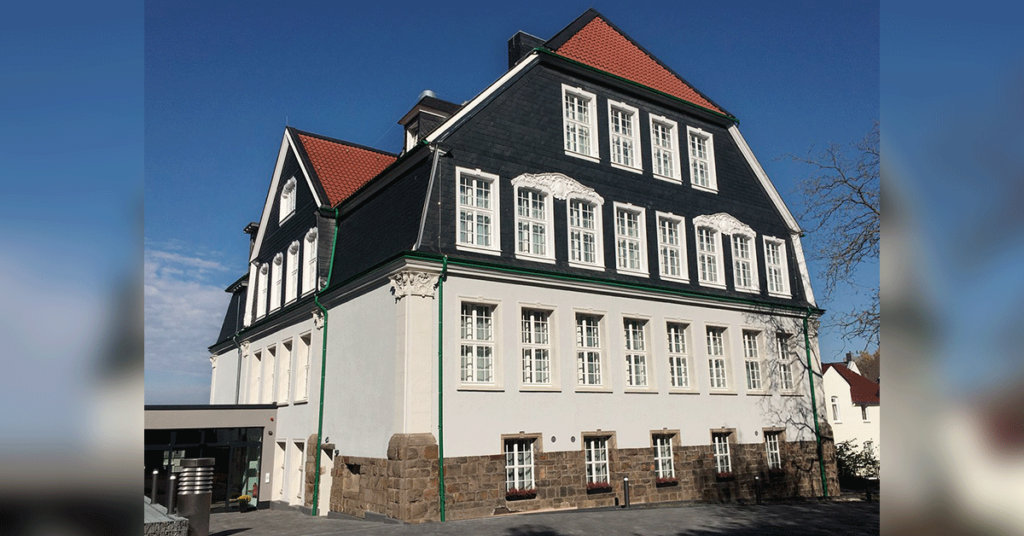
The original school house from the year
1915 shines as a hotel
in new splendor.
The vision: A hotel is to be converted from a former school building, in which the original character of use and the original substance are to be retained. The Berlin hotelier Kurt Hermandung and his partner Marc Konopatzki have realized their dream of their own small private hotel. This is close to Düsseldorf, Cologne and the Ruhr metropolises. "We wanted a small, fine house with character that we can make something very special," say the owners. "After a long search, we came across this former elementary school – and an investor who could imagine turning it into a hotel and the former gymnasium into a restaurant." In terms of design and concept, the former schoolhouse from 1915 and the gymnasium added in 1980 were based on the original use of the building.
Classrooms became elegant hotel rooms
The local architecture firm Wilde and Wehnau implemented this ambitious conversion concept, from the design to the implementation planning and construction management. Their services also included the concept of the monument protection concept, the planning of the interior design and the lighting design. The exterior facade with its typical slate shingles, the representative bay window and the green rain gutters were restored and preserved under the watchful eye of the listed building. The former classrooms of the primary school have been transformed into elegantly furnished single and double rooms with oak parquet and spacious bathrooms. A junior suite was installed in the attic. The minibars that used to be in the rooms are a thing of the past. The alternative is much more original and ecologically more sensible: A central “school kiosk” on the ground floor offers a variety of drinks.A special feature in the house is the restored historical fountain with fresh drinking water, which extends over two floors, emphasize the hotel owners. Old certificates and photos are reminiscent of the earlier school days. You can find yourself in the whole building. Gym boxes serve as luggage racks in the rooms. The gym's old rung climbing wall was also given a new function. It serves as a partition to the stairs in the restaurant.
Former gym as a restaurant
The rather unadorned gymnasium was completely dismantled in the course of the renovation work. The result is a modern building which now houses the “Die Turnhalle” restaurant, the lounge and the bar. In the historic school building, a lift provides barrier-free access to all floors and connects the hotel rooms with the restaurant. The latter is also open to the public. A newly installed ceiling divides the former gymnasium into two floors. This enabled the area to be doubled to 800 square meters. This made space for four conference rooms and a small bar for catering in the conference area. The extension with its large glass surfaces is a successful contrast to the old and lovingly restored school building and complements it in an ideal way. ■ -

The hotel in the shopping center When construction and use match thanks to drywall construction systems from Rigips.

The 350 m2 acoustic
Perforated ceiling on the first floor extends from
the reception / lobby
via the bar until
Breakfast area.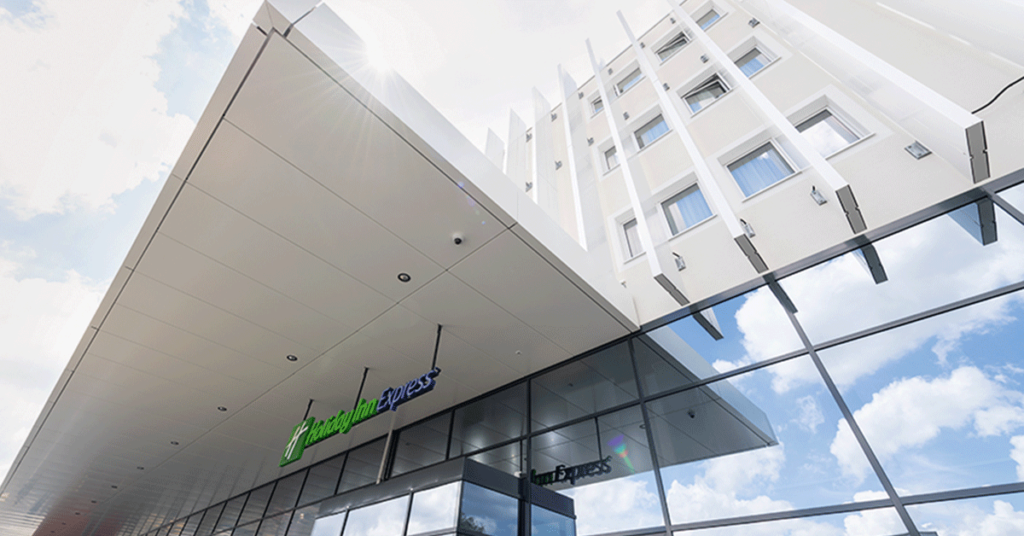
As part of the expansion
of the Perry Center in Aarburg-Oftringen
opened the Holiday Inn Express in early 2020
its sixth location in Switzerland.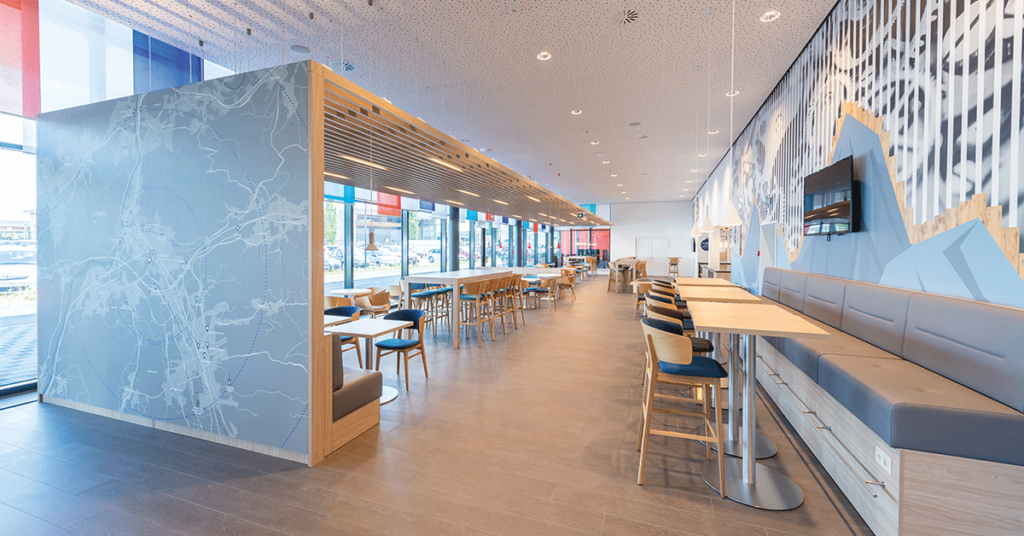
The wooden grate ceiling above the dining tables is suspended from the special substructure of the acoustic ceiling, the Megastil® profiles, with threaded rods. 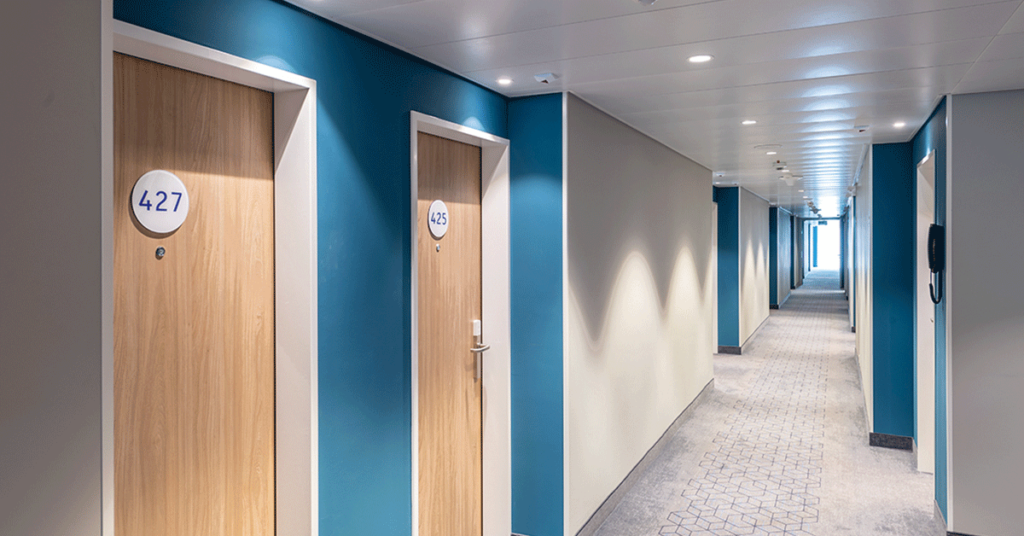
The corridor walls
consist of conventional
functional masonry
with cladding
made of plasterboard as fire protection.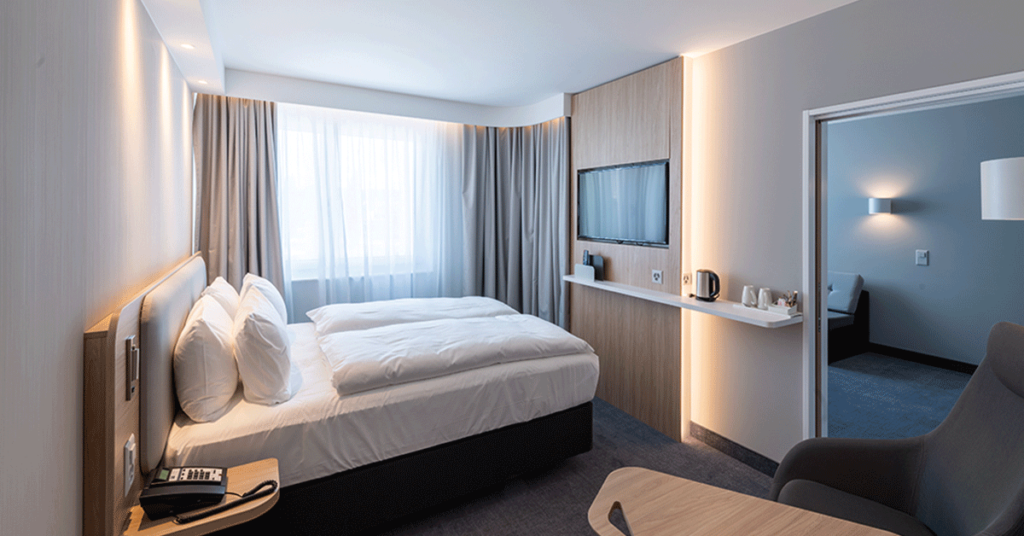
The 80 guest rooms are separated by 205 mm thick plasterboard walls, which provide a sound insulation value of 65 dB and thus ensure peace and quiet.
The 3-star hotel offers 80 rooms. It has a breakfast room, a bar and a lounge. Guests can go straight to the Perry Center via a passageway, where they can shop and use the other range of restaurants and meeting rooms. It is primarily aimed at business people who are busy in the region and are looking for accommodation for one or more nights in this central location in terms of transport.
The physical possibilities of dry gypsum construction
A hotel must above all meet two requirements: peace and security for its guests. The peace and quiet is made possible not least by the good construction quality, whereby dry gypsum construction systems are in no way inferior to conventional construction methods, on the contrary. In the Holiday Inn Express, among other things, a 350 m2 Rigiton® Ambiance acoustic perforated ceiling by Rigips spans a good five meters over the entire ground floor with reception, lobby, bar as well as breakfast and self-service area. The holes of different sizes (Ø 8, 15 and 20 mm) absorb the sound and provide a pleasant acoustic feeling of space. An elongated wooden slat ceiling that appears to float is built in over the tables in the breakfast room. It is mounted using threaded rods on the Megastil® special profiles from Rigips, which were used to reinforce the ceiling substructure in this section.Sleep in peace and security
The partition walls between the individual rooms consist of double-clad Rigips® double stud walls made of 12.5 mm plasterboard with a wall thickness of 205 mm and a sound insulation value of 65 dB. These constructions are of higher quality and yet more efficient to create than concrete or brick walls. And above all, they can be easily relocated should the spatial requirements change. The corridor walls are optimized in terms of sound and fire protection with cladding made of plasterboard, especially in the area of the shaft walls in which the building services are installed.Standardized systems with tested performance values
Rigips now has a catalog of hundreds of tested standard constructions for walls, ceilings and cladding. Their sound and fire protection, but also static and climatic properties vary depending on the height, structure and possibly the combination of systems with one another. It is therefore advisable to speak to drywall specialists from the earliest planning phase. In the case of larger projects in particular, Rigips' key project management, the consultant for planners and investors, can provide information on energy efficiency, life cycle assessment and moisture protection in addition to the relevant planning parameters for wall, ceiling and floor constructions. All construction variants can be called up in a clear system finder at www.rigips.ch. The systems are without exception in accordance with the applicable standards (EN, SIA) resp. Institutions (EMPA, VKF) tested and certified.When space requirements change
In our fast-paced society, space requirements are constantly changing. This can also be the case in a hotel. In order to remain attractive in the long term, a property must be able to react to changing needs and spatial dimensions. If you invest in a flexible construction method with as few load-bearing elements as possible, a wide variety of needs in the construction of the property, but also changes within the existing building envelope, can be implemented with little cost and time. Rigips® and Alba® drywall systems offer maximum freedom of planning and use. ■ -

From the former rectory to the gently renovated holiday apartment
Bringing building culture to life is the maxim of the Foundation for Monument Holidays. From 2021, for example, the renovation work on a former rectory in Valais, which is being converted into a holiday apartment, is to begin. The former rectory – called "Kaplanei" – is located in the Valais village of 400 people, Ernen. It was built in 1776 and used as a rectory until 1952. Since then, the property has been largely empty and is becoming increasingly dilapidated. That will now change because the Foundation Holidays in Monument was able to take over the building under construction law at the end of 2018.
The chaplaincy suffered from the long vacancy, says Nancy Wolf, who is responsible for marketing and communication at the foundation. Although the owners, in cooperation with the preservation of monuments, restored the outer facade, including the windows and the roof, there are neither modern kitchen facilities nor up-to-date sanitary and heating installations.
Building with its own house chapel
The plan is to concentrate on the maintenance of the existing substance during the extensive renovation work – this mainly includes the repair of the interior. Only the fixtures in the kitchen and bathroom should be implemented cautiously in a contemporary design language. The well-proportioned pre-protection house is particularly impressive due to the alternation of wood and stone on its eaves and the doors and windows framed with red tuff stone. Those responsible for the project emphasize that they radiate wealth and dignity. Characteristic of this type of building, the rear part of the house with the kitchen was made of stone. Inside there is also its own house chapel. When entering the reception room, the benefice's parlor, one notices the neatly worked, strongly curved paneling with the deep bevelled edges, of which there are not many today, can be read in the project description. The cube-shaped stove shows Saint George on a horse, the patron saint of the church and the parish, as well as Saint Catherine with the wheel.H out with a manorial character
On the first and second floors you can find religious inscriptions in Latin, with which the residents probably wanted to give practical instructions on how to live, the preservationists suspect. One room on the upper floor has a vaulted plaster ceiling. In the middle is a painting. Painted, tulip-shaped flowers on the consoles and the arched portals to the cellar give the house its stately character. Future vacation home owners will soon be able to marvel at these treasures. ■ -

Renovation and extension: Hospiz Zentralschweiz Luzern
Building worthy of protection: medical practice with residential building in Littau
The original building – a residential building with an integrated doctor’s practice – was built by the Lucerne architect Josef Gasser in 1959. He was inspired by the well-known American architect Frank Lloyd Wright: In particular, by the prairie style influenced by Wright, which refers to the broad, flat landscape in the American Midwest. Accordingly, the architecture is characterized by an open room design, a horizontal, two-dimensional orientation and the use of natural materials. In cooperation with the Monument Preservation of the Canton of Lucerne, a prudent way of dealing with the building worthy of protection was found.Clinker brick building inspired by Frank Lloyd Wright is being gently renovated
Little was changed during the renovation of the external appearance of the existing clinker building. Interventions in the external appearance of the house were only carried out in the direction of the garden, in which the foundation had the extension built. The room layout and use was adapted for the necessary communal, administration, practice and care rooms. Work rooms, guest rooms and a “room of silence” were created on the existing upper floor. The whole house is now accessible with a lift.Pavilion-like wooden structure for inpatient hospice
A single-storey wooden pavilion with 12 rooms was created in the inner courtyard. Each room has its own wet room and a view of the garden. The two buildings are connected by a corridor that surrounds the new inner courtyard. The pavilion has a basement and is connected to the existing building underground. For a harmonious appearance, the new building was realized with a clinker brick and wooden facade and a roof edge made of pre-patinated copper.Renggli AG supported the Central Switzerland Hospice Foundation as general planner. As part of the planning team, she helped design the architecture and coordinated the demanding specialist areas and partners involved. Renggli AG also acted as general contractor in the project. ■
-

Fabian Streiff becomes the top Zurich location promoter
There is a change at the top of the business location promotion department at the Zurich Office for Economics and Labor. Markus Assfalg is retiring after eleven years as head of location promotion, as announced by the office. He will be replaced by Fabian Streiff . The 35-year-old has been with the Basel Area Business & Innovation since the beginning of 2019 and heads the DayOne healthcare initiative. Prior to that, he was co-head of Basel-Stadt's economic development department.
Streiff holds a doctorate in economic geography from the University of Bern and a Master of Science from the University of Zurich .
One of the first to congratulate the cantonal location promotion and to Fabian Streiff is the location promoter of the city of Schlieren , Albert Schweizer. "We are very pleased with the choice of Fabian Streiff," he says. "We have known Fabian Streiff for a long time and have followed his work in the canton of Basel-Stadt very carefully."
-

Basel zero energy house exceeds planning values
The first apartment building in the canton of Basel to be certified according to the highest Swiss Minergie-A-Eco standard was moved into in 2015. As an investor, Immobilien Basel-Stadt commissioned the University of Applied Sciences Northwestern Switzerland ( FHNW ) to carry out a study three years ago. This long-term monitoring should clarify whether the demanding energy goals are being achieved and how the house is being accepted by the residents.
The new building at Basel Aescherstrasse 12 includes seven age-appropriate apartments with two and a half and three and a half rooms. According to a media release from Immobilien Basel-Stadt, the team of experts from the FHNW Institute for Energy in Buildings compared the calculated demand values from the planning with the actual consumption values in operation. The survey of the residents showed that the room temperature in most apartments is higher than the standard value from the planning.
Since the house should generate at least as much energy for the Minergie-A certification as is used all year round for heating, cooling and ventilation, it was then examined how the increased room temperatures affect heating energy consumption. The measurement results showed that, on the one hand, the heat pump was “much more efficient than assumed”. "On the other hand, the yield from the photovoltaic system on the roof was significantly higher than planned."
The energy production in the house today also exceeds the total electricity demand on an annual basis. There is potential for optimization through a partial waiver of building automation. This could improve the solar input in winter and night cooling in summer.
"The building concept has proven itself in operation", summarizes Immobilien Basel-Stadt. "The ambitious goals of sustainable building could also be achieved in practice without having to accept compromises in terms of comfort."
-

Primeo Energie is planning two wind turbines in Muttenz
Primeo Energie intends to build two wind turbines by 2023 in one of the six wind farm areas that the district administrator identified in the Basel structure plan in 2015. The location is in the Muttenzer Hard between the A2 motorway and the tracks of the Swiss Federal Railways ( SBB ). According to a press release , the electricity provider will be working with the municipality of Muttenz and the canton of Basel-Landschaft .
With an annual output of 4.5 million kilowatt hours of electricity, the new wind turbine could supply an average of 1200 households with ecological energy. Primeo Energie is thus following the guidelines of the federal government's energy strategy and that of the canton of Basel-Landschaft.
"All necessary preliminary investigations" have already been carried out for the construction. "The location of the two turbines is ideal," says the message. The area is not in a landscape protection area. In addition, consumers in industrial and residential areas are close. Therefore, a network connection can be implemented with little effort.
In the trinational region of Basel there are not yet any wind farms except in the Black Forest. Primeo Energie cites the good ecological balance of wind turbines as a further plus point. In addition, they only had a minor impact on flora and fauna.