Tag: Immoinvest

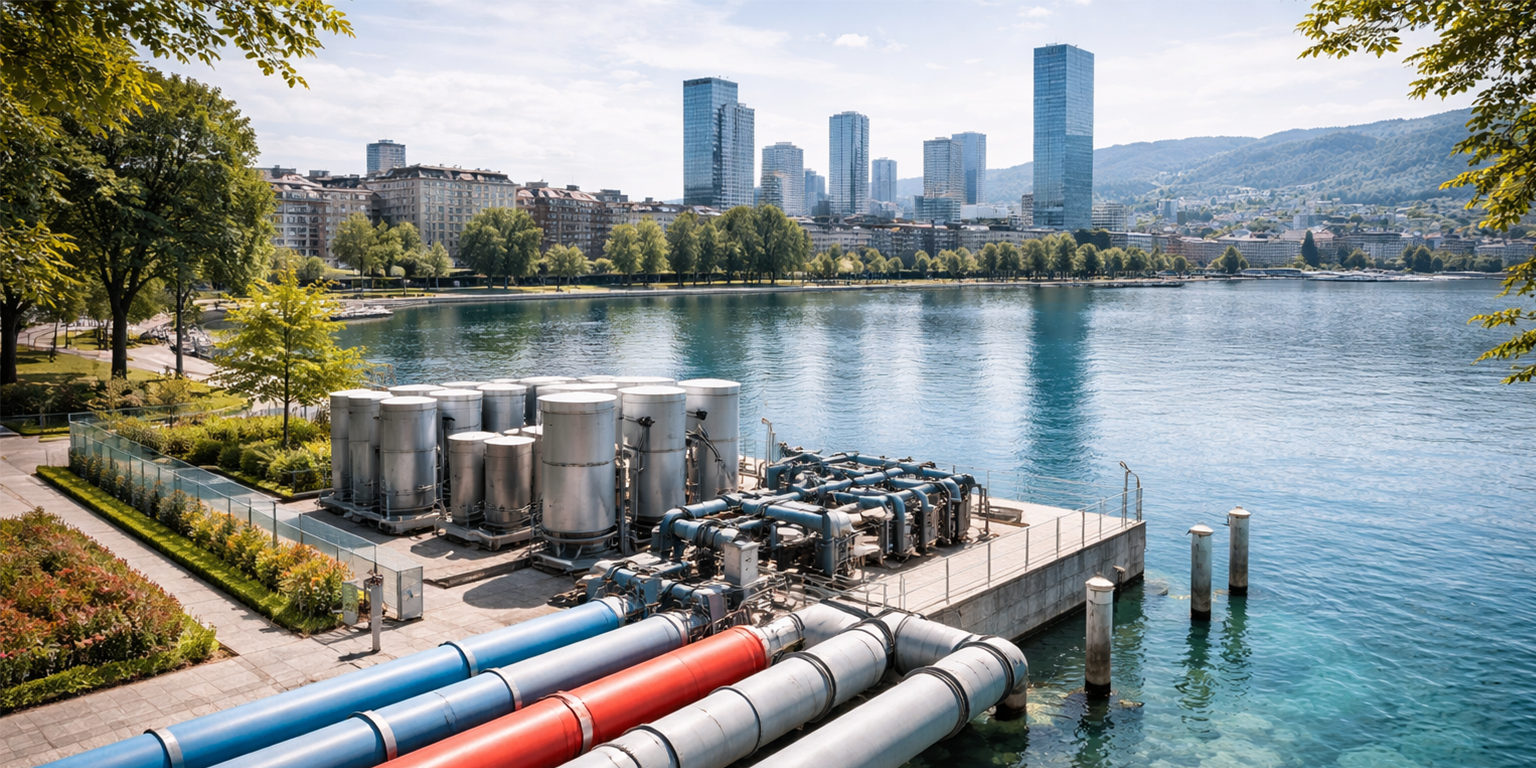
  • Lake Zurich to heat university campus

    Lake Zurich to heat university campus

    Energie 360° will implement the University Campus Energy Network. From 2037, the University Hospital of Zurich, the University of Zurich, the Swiss Federal Institute of Technology Zurich and Zurich Stadelhofen railway station are to be heated and cooled using energy from Lake Zurich, according to a statement from the Zurich-based energy supplier. According to the statement, Energie 360° is investing around 40 million Swiss francs in the energy network.

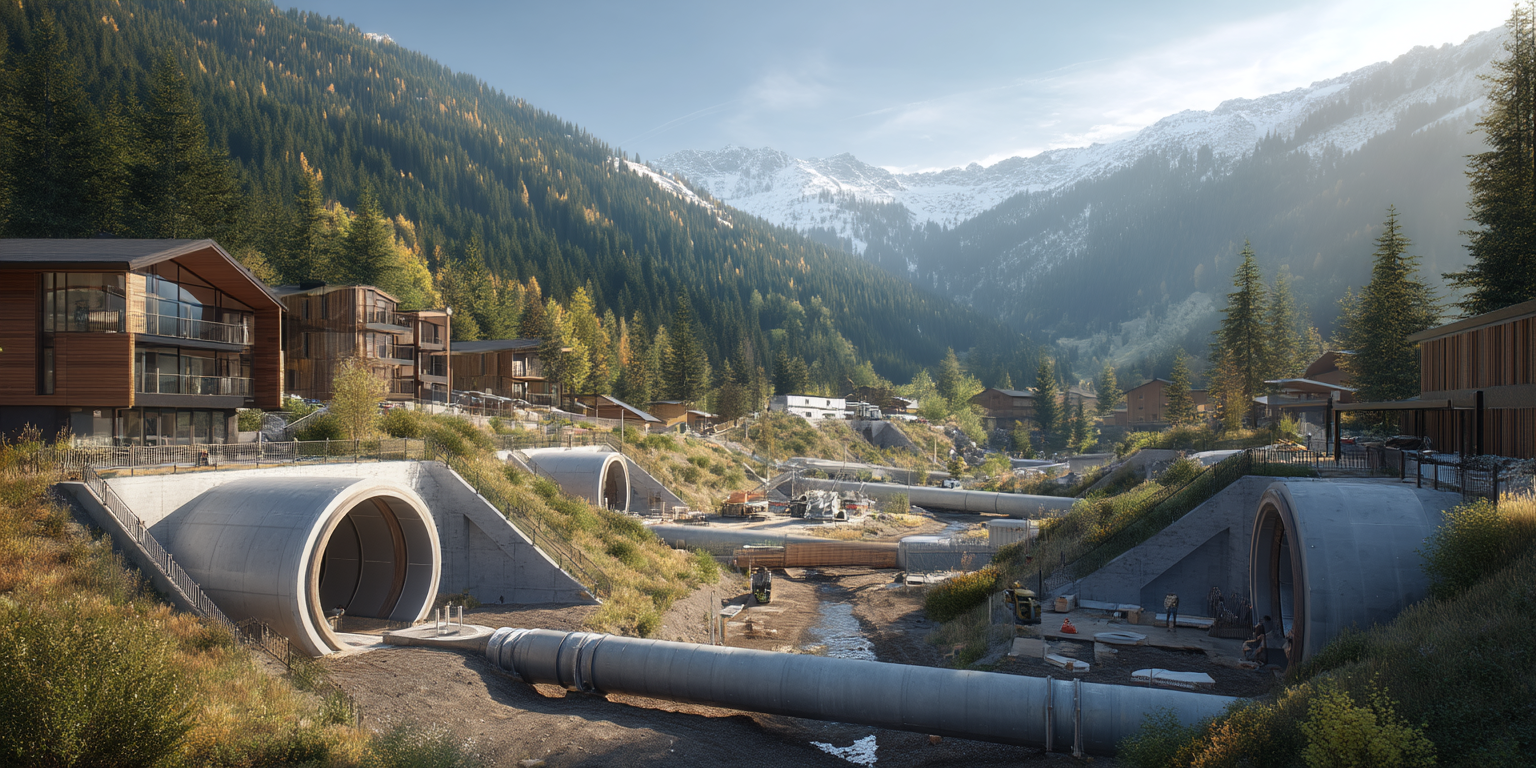
    The project involves the construction of a lake water plant in the Tiefenbrunnen area. Construction of the plant is scheduled to begin in summer 2034. From there, the lake water will be channelled via the planned second Riesbach tunnel of the SBB to Zurich Stadelhofen station and the university campus. The water will then flow into the Limmat.

    “The lake serves as an energy source for climate-friendly air conditioning and heating in the university district,” Energie 360° CEO Romeo Deplazes is quoted as saying in the press release. “In this way, we are making an important contribution to the transformation of the city of Zurich from fossil fuels to renewables.”

  • Expansion of the district heating network strengthens the energy supply in Baden and Ennetbaden

    Expansion of the district heating network strengthens the energy supply in Baden and Ennetbaden

    According to a press release, Regionalwerke AG Baden is set to expand its district heating network. Construction work is set to begin in the coming months. With targeted development between Sonnenbergstrasse, Postplatz and Schlösslistrasse, a further step towards a climate-friendly heating supply will be taken. The energy supplier and the local council aim to gradually replace fossil fuels and sustainably increase energy efficiency, thereby strengthening the local infrastructure and making Ennetbaden a more attractive, forward-looking place to live.

    The connection of the municipality is to take place in two construction phases. The first phase is scheduled from 20 April to 7 June and concerns the Schiefe Brücke and the bridgeheads in Baden and Ennetbaden. The second phase of development, expected to run from 8 June to 31 October, will take place along Sonnenbergstrasse. During the construction period, there may be temporary changes to traffic routing and diversions for bus services.

    The municipality of Ennetbaden, Regionalwerke AG Baden, Regionalen Verkehrsbetriebe Baden-Wettingen, and specialist departments of the City of Baden and the Canton of Aargau have collaborated on the planning of the construction works and the traffic management plan. The heat supply is scheduled to commence this coming winter.

  • The outlet in Landquart is set to be significantly expanded

    The outlet in Landquart is set to be significantly expanded

    Walo Bertschinger AG, based in Dietikon, is involved in the expansion of the Landquart Fashion Outlet. According to a press release, the shopping centre, which has a village-like atmosphere, is being expanded by 5,000 square metres to accommodate 14 new shops, a new restaurant and a four-storey car park. Walo is responsible for the various paving and surfacing works. The new section of the Fashion Outlet is scheduled to open in April 2026.

    According to Walo, a total of 12,900 square metres of base course and 2,600 tonnes of surfacing will be used in the underground car park and outdoor areas. In the outdoor area, 900 metres of kerbs will also be laid and 67 manhole covers installed. The bus stop will also be paved with heavy-duty paving stones over an area of 630 square metres.

    The central design element is the “high-quality paving of the pedestrian zone in the mall area, which characterises the centre’s alpine village design”, according to Walo’s press release. There, the company is laying 150 square metres of row paving, 200 square metres of edging slabs made of Onsernone granite, and 1,500 square metres of porphyry slabs.

  • New housing concept combines independence with support services

    New housing concept combines independence with support services

    bonacasa AG is implementing one of its residential building management solutions for the first time in French-speaking Switzerland, in collaboration with the Vaud-based pension fund vitems and the Bern-based turnkey contractor Losinger Marazzi. The three partners have developed the Arbora estate in Crissier, comprising 63 accessible flats for older people, which is currently under construction and will be ready for occupancy in September 2026.

    According to a statement from bonacasa, no residential complex was originally planned for this site. However, thanks to the bonacasa living concept, “a satisfactory contractual solution was found in collaboration with the authorities and the owner”. Bonacasa living is one of five operational solutions offered by the Oensingen-based company. Each of these includes a basic package featuring a 24-hour emergency call system, access to a service centre and an app.

    Building on this, offers and services from the other four modules – such as an on-site social concierge available every weekday, weekly entertainment and activities, sports and health programmes, and à la carte services – can be added, as can structural adaptations in line with bonacasa’s so-called Smart Building Standards.

    According to the information provided, the new bonacasa living concept is already being implemented at other locations in Switzerland and demonstrates that age-appropriate living does not necessarily mean a care home, but can also work within the standard housing market. “Many people want to continue living independently in their own homes as they get older,” says Ivo Bracher, Chairman of the Board of Directors. “Our approach combines modern living with flexibly bookable services, thereby creating a solution that works for residents as well as for property partners and local authorities.”

    Bonacasa is one of five finalists in the Prix SVC Aargau Solothurn, which is being held for the first time this year. This means that Switzerland’s ninth most important economic region now has its own awards ceremony. The award will be presented by the SME network Swiss Venture Club (SVC) from Stettlen, Bern, on 6 April 2026 at the Emil Frey Classic Center in Safenwil, Aargau, to outstanding and forward-looking companies.

  • District heating project boosts energy supply in Adligenswil

    District heating project boosts energy supply in Adligenswil

    On 17 March, EBL Energie Rigi broke ground on the first phase of the expanded district heating network. A new main pipeline will in future connect the Halti-kon energy centre with the existing district heating network in Adligenswil, Lucerne. This will enable the outdated heating plant in Adligenswil to be replaced. According to a press release, EBL Energie Rigi is thus laying the foundations for a long-term, reliable and renewable heat supply in the region. At the same time, this is intended to meet the growing demand for new district heating connections in Adligenswil and ensure long-term security of supply for all customers. According to current plans, the construction period will be around two years.

    Those attending the ground-breaking ceremony included the Vice-Chair of the Municipal Council, Felicitas Marbach, and members of the Board of Directors of EBL Fernwärme Rigi AG. “Today’s ground-breaking ceremony is far more than the start of a construction project – it is a visible sign of a shared energy future. With the new main pipeline between Haltikon and Adligenswil, we are laying the foundations for a reliable, renewable and regionally anchored heat supply,” said Philipp Zgraggen, Managing Director of EBL Energie Rigi, according to the press release.

    EBL Energie Rigi brings together the expertise of three subsidiaries of EBL (Genossenschaft Elektra Baselland), based in Liestal: EBL Fernwärme Rigi AG supplies Küssnacht am Rigi, Greppen and Adligenswil with CO2-neutral district heating. EBL Energiezentrum Rigi AG produces electricity and heat from regional waste wood and wood residues. EBL Pellets Rigi AG manufactures wood pellets from regional wood residues.

  • Change at the helm of a major business network

    Change at the helm of a major business network

    According to a statement, Hansjörg Brunner is stepping down as president of WirtschaftsPortalOst (WPO). The owner and CEO of Fairdruck AG, based in Sirnach, Thurgau, has chaired the Wil Greater Area Business and Economic Association since its foundation in May 2019. Brunner had previously chaired both the Hinterthurgau SME Trade Association and the Thurgau Trade Association. He served as a member of the Thurgau Cantonal Council and the National Council for the FDP.

    The Executive Board is proposing Marc Flückiger as the new president to the delegates’ meeting on 23 April. The 44-year-old grew up in Thurgau and lives in Wil. A trained cheesemaker, he worked at Züger Frischkäse AG, most recently as a member of the extended management team. Since 2014, he has been co-owner and managing director of SYGMA AG Liegenschaftenbetreuung in Wil, which employs around 170 people. He served as a member of the Wil City Council for the FDP and has been a member of the St. Gallen Cantonal Council since 2024.

    “As WPO President, I would be delighted to contribute my experience and my network in business, politics and association work, and to devote my full energy to our region,” Flückiger is quoted as saying in the press release.

  • The Swiss market for battery storage is growing rapidly

    The Swiss market for battery storage is growing rapidly

    The roll-out of battery storage systems is accelerating. This is according to Swissolar’s Battery Monitor 2026. According to the report, 896 storage systems were installed in Switzerland by the end of 2024. The Swiss Solar Energy Association expects a further 555 storage systems to have been connected to the grid in 2025. This means that by the end of 2025, there are likely to have been 1,451 storage systems connected to the grid.

    For the current year, Swissolar even expects the number of new installations to double to 1,010. This would bring the total number of installed storage systems to 2,461.

    Currently, storage capacity is increasing particularly behind the grid connection point, i.e. in households and in agricultural and commercial enterprises. This is expected to rise to 2.5 gigawatt-hours by the end of 2026. At the end of 2025, the figure stood at just 1.5 gigawatt-hours.

    The expansion of battery storage within the electricity grid is also increasing. Companies have already announced an expansion of over 4 gigawatt-hours by 2030.

    Matthias Egli highlights the significance of this for the energy transition. “Battery storage makes an important contribution to an electricity system with a high proportion of renewable energy,” the Managing Director of Swissolar is quoted as saying in the press release on the Battery Monitor. “It helps to use solar power efficiently, relieve the strain on the electricity grids and reduce overall costs.”

  • The energy sector remains stable despite structural change

    The energy sector remains stable despite structural change

    According to a press release, Primeo Energie AG achieved a generally positive result in 2025. The Basel-Landschaft-based energy supplier, headquartered in Münchenstein, generated turnover of 1.8 billion Swiss francs. This is 392 million less than in the previous year. Profit rose from 91 million to 109 million Swiss francs.

    The Energy Solutions division made a significant contribution to this profit growth. In France, Primeo Energie acquired 120,000 new private customers. The Swiss electricity business returned to a slight profit for the first time in years.

    In the Grid and Services division, Primeo Energie is feeling the impact of the decline in electricity consumption in industry and private households, as well as the rise in decentralised self-generation. Consequently, less electricity was transmitted.

    The Heating and Industrial Solutions division was expanded with new and extended district heating networks, for example in the Lower Wiggertal, Muttenz, Aesch and the Birstal. However, the mild weather put pressure on sales.

    The Production division remained stable thanks to diversification into hydro, solar and wind power and its presence across six countries.

    In 2025, Primeo Energie divested itself of activities lacking critical mass or with low profitability. These included wind farms in Norway and the electric mobility division in Switzerland.

    In the current year, the company intends to expand its electricity business in Switzerland and its activities abroad.

  • Major contracts are boosting the building construction business both at home and abroad

    Major contracts are boosting the building construction business both at home and abroad

    In a press release, the property and construction services provider Implenia has announced that it has secured numerous building contracts in Switzerland and Germany. These contracts have a total value of 310 million Swiss francs and will be carried out between 2026 and 2028.

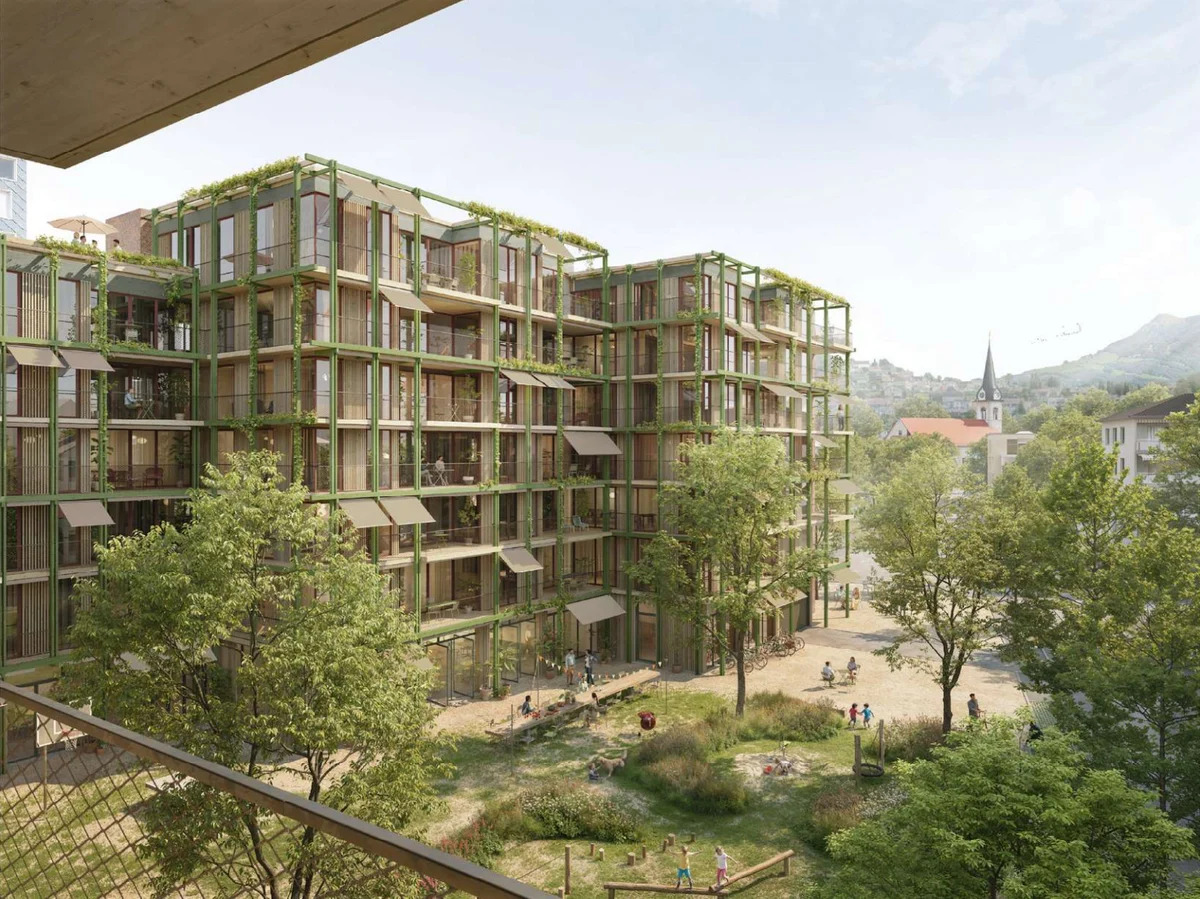
    In Vevey, Vaud, on the shores of Lake Geneva, Implenia is acting as the main contractor for the new Jardins en Ville district, building 182 owner-occupied flats. The project is complemented by commercial space, a two-storey car park and a central green space. The PEFC/FSC-certified timber structure is set to meet the Minergie-Eco and CECB A/B standards. Also in Switzerland, Implenia is building eight Minergie-certified apartment blocks in Payerne (VD) comprising 107 climate-friendly homes. The project was previously developed by Implenia and subsequently sold to investors.

    Implenia is also creating sustainable housing in Germany: in Frankfurt, twelve energy-efficient residential buildings with around 160 passive house units are being built in the city’s “first climate protection district”. In Munich, following a successful pre-construction phase, the company is building a multi-family residential building with 186 flats and complementary commercial uses as part of a joint venture. In Nuremberg, three buildings featuring 76 rental flats, as well as space for a nursery, commercial premises and an underground car park, are being constructed using a timber-hybrid construction method. In Jena, a further residential quarter is also being built using timber construction. In Mannheim, Implenia is constructing a turnkey residential complex using a timber-hybrid construction method at BUGA Park, comprising a total of 225 residential units.

    Further contracts relate to the justice sector as well as education, research and pharmaceuticals: Implenia is constructing operational and production buildings for the prison in Siegburg. In addition, the extended shell of an administration building using timber construction is being built for Flensburg University of Applied Sciences. In German-speaking Switzerland, Implenia is undertaking additional construction work, including the redevelopment of a former industrial site and projects for the pharmaceutical industry.

  • Sawdust is said to keep the fire at bay

    Sawdust is said to keep the fire at bay

    Researchers at the Swiss Federal Institute of Technology Zurich (ETH) and the Swiss Federal Laboratories for Materials Science and Technology (Empa) have developed an insulation material made from sawdust that can be used for fire-resistant interior fittings, according to a press release.

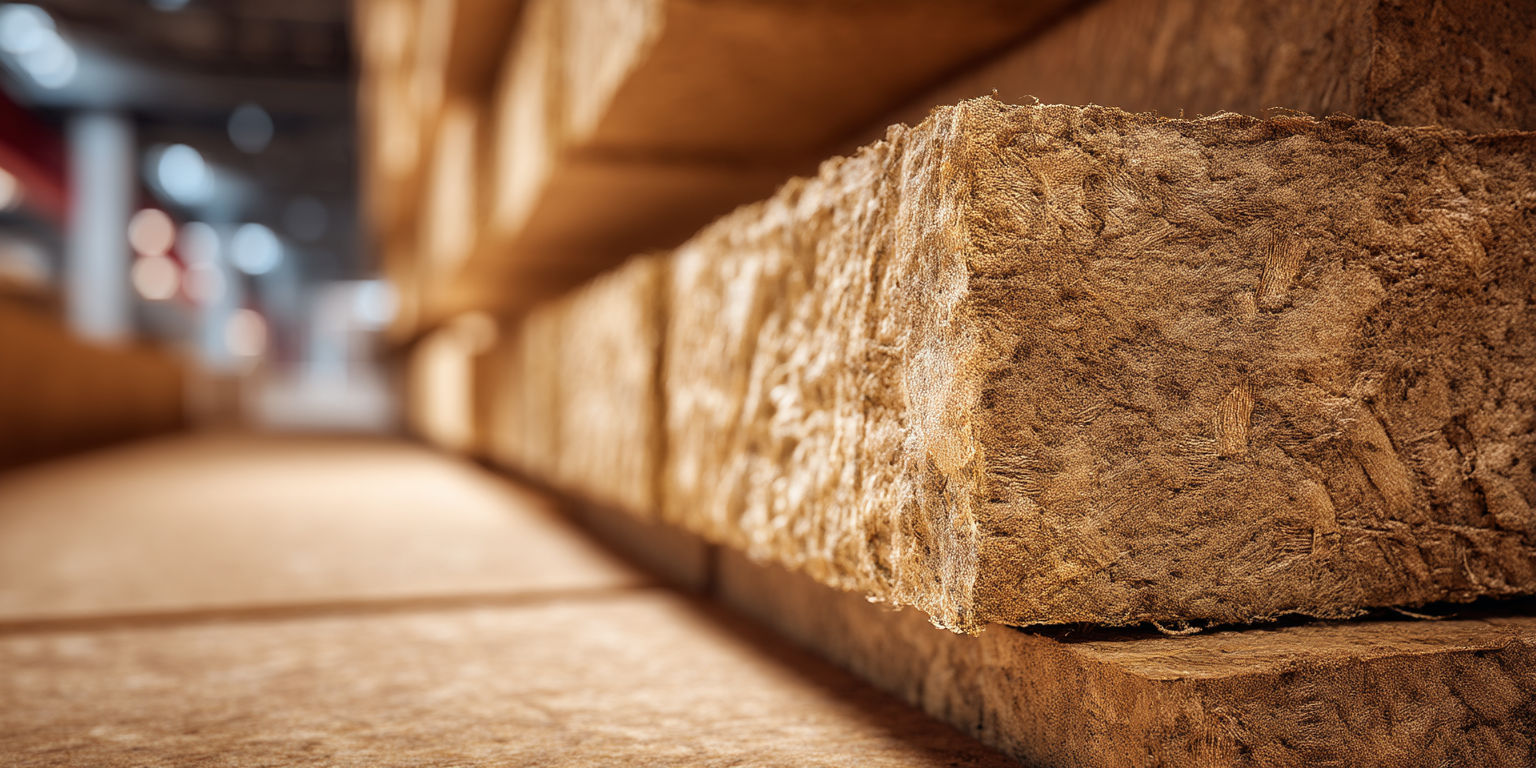
    The composite consists of sawdust and the mineral struvite, a crystalline, colourless ammonium magnesium phosphate. During their work, the researchers had to overcome the difficulty of binding the materials to the sawdust particles during the struvite crystallisation process. They succeeded in doing so using an enzyme extracted from watermelon seeds. The crystallised mineral fills the voids in the sawdust. The resulting material is pressed into boards and dried at room temperature.

    Initial tests show that the composition has similar fire-retardant properties to conventional cement-bonded chipboard. Tests carried out in collaboration with the Polytechnic University of Turin revealed that the struvite-sawdust boards take three times longer to catch fire than spruce wood. However, during the process, inorganic material forms which inhibits the spread of flames.

    To scale up the process and put the new material into use, it is important to reduce production costs. Currently, producing the binder from the mineral is more expensive than polymer binders or cement. This could change with the development of a further recycling loop: struvite accumulates in large quantities in sewage treatment plants. “We could use these deposits as a raw material for our building material,” says Ronny Kürsteiner, a researcher in the Wood-Based Materials group at ETH, in the press release.

    The study has been published in the journal Chem Circularity.

  • Network Switzerland elects new members to the board

    Network Switzerland elects new members to the board

    According to a press release, the Netzwerk Standort Schweiz has renewed its board. Christina Doll and Andreas Zettel were elected to the board on 18 March. Christina Doll has been the business development officer for the town of Schlieren since 2025. Prior to this, she spent around ten years helping to develop the Zurich Airport region, amongst other roles. Andreas Zettel has been Head of Business Development since 2015 and Deputy Head of Lucerne Economic Development since 2020.

    The two new members replace Albert Schweizer and Jasmina Ritz. Schweizer was Schlieren’s first location promoter and co-founded Netzwerk Standort Schweiz – then known as the Swiss Association for Location Management – in 1998. He has also been a member of its board since 2007. Jasmina Ritz was the first Managing Director of Limmatstadt AG, the cross-cantonal location promotion agency in the Limmat Valley. She has also been a member of the board of Netzwerk Standort Schweiz since 2022. Since the beginning of March, she has been Managing Director of SwissFoundations, the association of Swiss grant-making foundations.

    The spring event organised by Netzwerk Standort Schweiz also addressed the changing landscape of location competition. “Whilst major economic blocs are putting pressure on one another through tariffs, massive support programmes and technological races, and military conflicts are creating new uncertainties, location competition is also entering a new phase,” Remo Daguati, President of Netzwerk Standort Schweiz, is quoted as saying in the press release.

    Vassiliki Riesen, Head of Economic and Location Promotion in Köniz, highlighted the consequences for Switzerland’s largest agglomeration municipality. She demonstrated how location promotion initiatives can respond to different stakeholder groups whilst also collaborating with numerous partners within the municipality and the canton.

    André Guedel, Director of International Business Development at KPMG, highlighted how the new competition is affecting Switzerland as a business location through both taxation and subsidies, and how companies are responding to this.

    Netzwerk Standort Schweiz is the umbrella organisation for location and business promotion agencies. Its current membership of around 110 comprises organisations active in location promotion, regional marketing, business development, site development, spatial planning and the property sector.

  • Renovation project focuses on the circular economy and reducing CO2 emissions

    Renovation project focuses on the circular economy and reducing CO2 emissions

    According to its press release, Sika is participating as a funding partner in the three project phases – Exploration (2026), Synthesis (2027) and Transfer (2028) – of ETH’s Living Lab HIL. These phases will lay the groundwork for the refurbishment, energy-efficiency upgrade and extension of the teaching and research building for architecture and civil engineering (HIL) on the Hönggerberg campus. The major project is scheduled for completion by 2035.

    According to ETH, the need for renovation and the changed spatial requirements clearly called for a complete refurbishment involving demolition down to the load-bearing structure. Instead, the university intends to treat the existing building with greater care and focus on CO2 reduction, digitalisation and the circular economy. It is developing the construction project internally, drawing on knowledge and insights from its own teaching and research and working with industry partners.

    In this “globally unique flagship project”, as Sika describes it, the Baar-based specialty chemicals company for construction and industry is contributing more than just financial support. The project’s funding also encompasses an active and close technical exchange between Sika and the ETH project teams. This is facilitated through the ETH Foundation.

    Sika aims to help “drive the transformation towards sustainable construction methods”, says Patricia Heidtman, Head of Innovation and Sustainability. “The Living Lab HIL offers a unique platform that actively links research and practice and tangibly accelerates innovation.”

    Industry and science must act together to achieve climate targets, says Mathias Kohler, ETH Professor of Architecture and Digital Fabrication. “In cooperation with Sika, we are testing new solutions in the Living Lab HIL that will be implemented during the renovation phase of the ETH building from 2030 onwards.”

  • Insurance group strategically expands its property business

    Insurance group strategically expands its property business

    According to a press release, the Vaudoise Insurance Group, based in Lausanne, has acquired a majority stake in Procimmo Group AG of Renens and now holds 92.27 per cent of the voting rights. Vaudoise Insurance has held a 20 per cent stake in the Procimmo Group since 2021 through its subsidiary Vaudoise Asset Management AG.

    With the acquisition of Procimmo and that of Berninvest AG in 2017, Vaudoise has been able to further expand its real estate activities and, in the words of Jean-Daniel Laffely, CEO of the Vaudoise Group, become one of the key players in investment solutions. “This allows us to further expand an already strong growth area: real estate asset management for third parties,” Jean-Daniel Laffely is quoted as saying.

    Procimmo sees potential for the group’s further development in the “support of an institutional investor that shares its values”; in particular, the subsidiary Procimmo SA stands to benefit from Vaudoise’s “solidity and long-term vision”. According to Arno Kneubühler, CEO of Procimmo SA, Vaudoise is regarded as “the best owner after almost five years of partnership”. Vaudoise’s community roots and values guarantee stability and a sustainable vision. At the same time, Procimmo has the freedom to develop further “as an external platform with its own philosophy and leadership”.

    The closing of the sale is scheduled for early July 2026, subject to prior approval from the relevant authorities.

  • A panorama of the digital property industry

    A panorama of the digital property industry

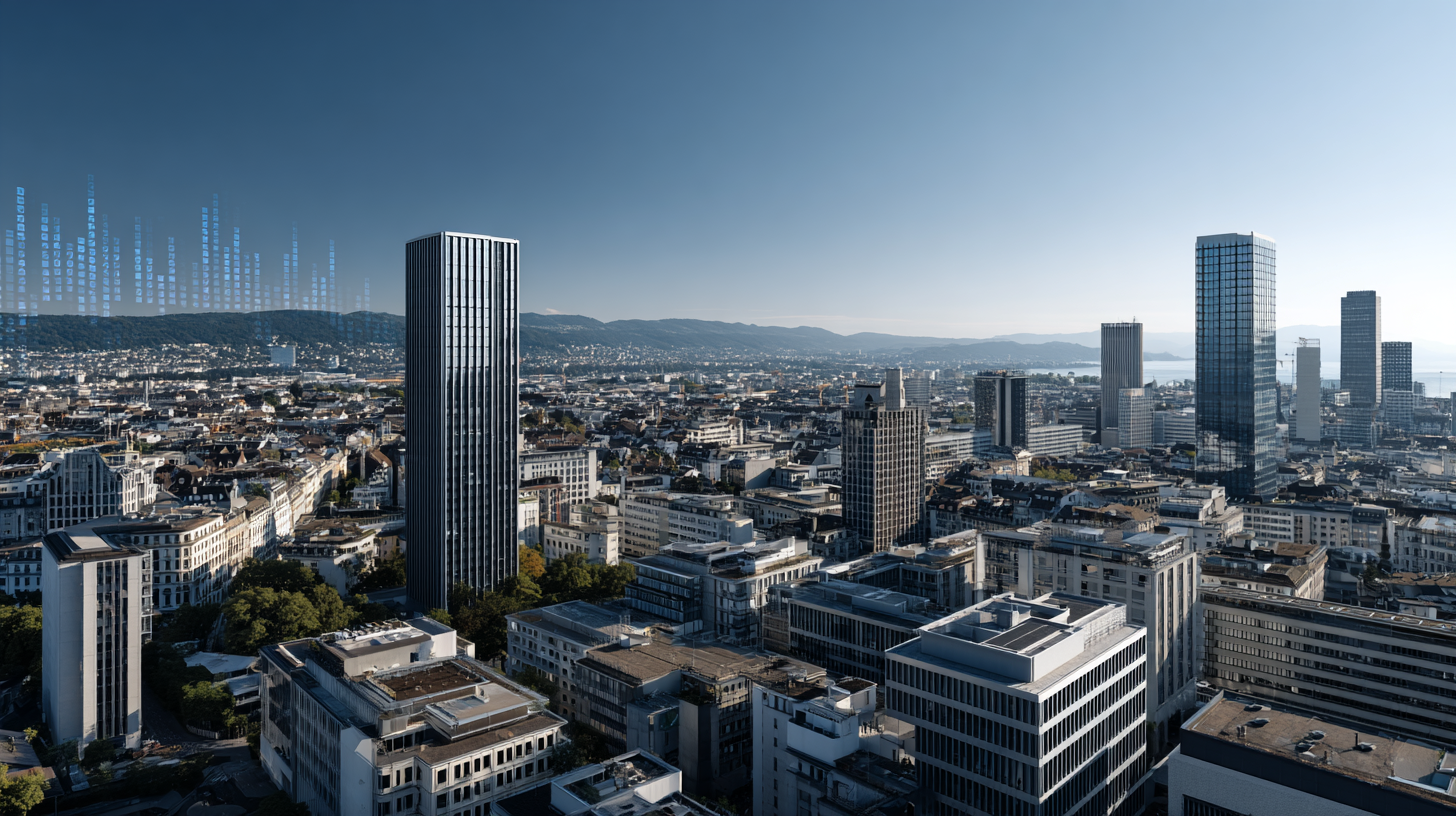
    PropTech stands for digital, technological and data-based solutions that improve, automate or transform processes, products or business models in the property sector. These include software platforms, AI analyses, smart building systems, digital transaction models, data-based refurbishment and valuation tools, energy optimisation solutions and immersive technologies such as 3D visualisations, augmented reality and digital twins. PropTech thus spans the entire life cycle of a property. From planning and development to management, refurbishment and transaction.

    Blurred boundaries of the term
    With the growing awareness of PropTech, the desire of many start-ups to be part of this field is also growing. Companies from neighbouring areas such as FinTech, GreenTech, Bau-Tech, InsurTech or generic software providers are increasingly positioning themselves as PropTech, even if real estate is only a peripheral topic. As a result, tools are subsequently framed as property solutions and the sector appears larger in maps, reports and rankings than it actually is in the narrower sense. The PropTech Map Switzerland thus not only shows the strength of the ecosystem, but also its conceptual vagueness.

    Clusters, categories and regional hotspots
    The map reveals a clear geographical concentration. PropTech companies are particularly densely represented in the regions of Zurich, Zug, Lausanne and Basel. These are all locations with universities, technology parks and a high economic density. Many companies are spin-offs from ETH and EPFL, which emphasises the strong research and technology focus of the Swiss scene. In terms of content, the map spans a broad spectrum from asset management, construction and development to digital marketplaces, rental and sales platforms, 3D and smart building technologies, energy and climate tools, blockchain applications, financial platforms and specialised software services.

    Growth, internationalisation and more professionalism
    The continuously increasing number of entries shows that dozens of new companies are added every year, along with established market players that are digitally expanding their business model and international providers that are tapping into the Swiss market. Many PropTechs have long been operating beyond national borders and are scaling their solutions into European and global markets. At the same time, the ecosystem is professionalising. The PropTech Map not only depicts logos, but also the thematic orientation and positioning of the companies. The map thus becomes a central point of orientation for investors, property companies, administrations and universities.

    You can find the PropTech Map Switzerland here
  • Proptech in the life cycle

    Proptech in the life cycle

    Planning, development and financing
    In this phase, land and building ideas are analysed, evaluated and financed. Proptechs provide market and location data, automated valuations and ESG analyses so that investors and owners can make faster and more informed decisions. Digital platforms connect project developers, financiers and consultants, reduce media disruptions and make risks, returns and carbon effects visible at an early stage.

    Construction and creation
    This is about the efficient realisation of the project. Proptech solutions provide support with BIM models, digital construction planning, schedule and cost controlling and construction site monitoring. This reduces planning errors, makes supplements more transparent and optimises the use of materials. Digital collaboration tools connect architects, contractors and clients in real time and create a clean database for subsequent operation.

    Operations and services
    Operations determine how economical and attractive a property really is. Proptechs provide platforms for letting, management, facility management and user services. Sensor technology and IoT make consumption visible and enable predictive maintenance. New services are emerging for owners, managers and users, from digital tenant portals and booking systems to smart building functions that increase convenience and efficiency.

    Refurbishment and conversion
    The greatest leverage lies in existing buildings. Proptech tools provide support in analysing the condition, calculating scenarios and prioritising refurbishments. They show which measures offer the greatest energy, financial and regulatory benefits. Data-based refurbishment roadmaps help owners to plan investments over the years and optimise the use of subsidies. At the same time, digital models enable better planning of conversions and densification.

    Decarbonisation and demolition
    Decarbonisation runs through all phases, but requires its own instruments. Proptech solutions record CO² emissions over the entire life cycle, simulate net zero paths, compare building portfolios and provide reports for taxonomy, climate and ESG reporting. When dismantling, digital material passports and cycle data help to preserve materials instead of disposing of them. This increasingly turns the life cycle into a material cycle.

    Proptech is shifting the focus over the entire life cycle of a property. Away from individual decisions and towards end-to-end, data-based management. Digital solutions connect separate phases and players. They make costs, risks and emissions visible at an early stage. This makes it easier to plan and prioritise investments. Life cycle thinking becomes an ongoing optimisation process for economic efficiency, user experience and climate targets. The construction and property industry has been thinking in terms of life cycles for years. Proptech is now making these concepts data-based and scalable.

  • Horw is growing upwards, 14 storeys at the railway station

    Horw is growing upwards, 14 storeys at the railway station

    Three striking new buildings with inner courtyards are being built between the railway station and Ebenaustrasse. The municipality is planning an eight-storey building at the roundabout, a 14-storey high-rise to the south of it as a vertical accent and an eight-storey longitudinal building facing Ebenaustrasse. The new bus station will be located in between, closer to the railway line than today and much more convenient for all those who change buses every day.

    “Janus” favours greenery and glass
    Further east, along Ebenaustrasse and Ringstrasse, the municipality has held an architectural competition. The winning project is called “Janus” and envisages five largely glazed, six- to seven-storey apartment blocks, surrounded by trees and connected by a shared forecourt. The buildings appear bright and open, the ensemble creates urban quality without anonymity.

    Commercial yes, but how much?
    At least 20 per cent of the space in the new buildings is to be used for commercial purposes. This is envisaged by the municipality, and not just on the ground floor, but up to the third or fourth floor. The property owners take a critical view of this. They point to a lack of demand and draw on their experience with the previous “Horw centre” open space concept. The municipal council is willing to talk, but reserves the right to add further storeys if necessary.

    Part of a big picture
    The railway station project is embedded in the overall “Horw Mitte” project, which covers around 12 hectares and plans 1,000 new flats and 800 new jobs in the long term. A large part has already been realised to the west of the tracks, while the eastern part is now catching up. Over two decades, the municipality is thus developing a former peripheral area into a compact, well-developed centre.

    Residents’ Council has the floor
    The bus station was already approved by the Residents’ Council on 27 March 2026, with construction not due to start until 2028 at the earliest. The vote is still pending for the Part East development plan. This requires the approval of the cantonal government of Lucerne and a referendum-free conclusion. It is also still unclear who will bear the planning costs. So there is still a lot to be clarified before the construction cranes move in.

  • Zurich is still going strong, but for how much longer?

    Zurich is still going strong, but for how much longer?

    The Zurich financial centre employs over 102,000 full-time positions at the end of 2024, 44,000 of which are in the banks alone. With a gross value added of CHF 32.8 billion, the sector generates more than one sixth of Zurich’s total economic output. The banks also cover around 30 per cent of the financing requirements of companies and households throughout Switzerland. These are not just abstract figures, they are the economic basis of an entire metropolitan region.

    Half the city’s coffers from one sector
    The study conducted by management consultants Oliver Wyman on behalf of the Zurich Banking Association makes one figure particularly clear. Around half of corporate taxes in the city of Zurich come from banks and insurance companies. With 10 per cent of jobs, they generate 16 per cent of value added, which is far above average productivity. Zürcher Kantonalbank also distributed a record amount to the canton and municipalities for 2025.

    Fewer banks, more jobs
    The number of banks operating in the Zurich region has fallen from 94 to 78 since 2015. Despite this, employment has risen steadily, with above-average growth since 2017. Bank-related service providers such as fintechs, asset managers and consulting firms have created jobs where traditional institutional structures have been dismantled. The sector is consolidating, but not shrinking.

    Regulation as a sticking point
    CBA Managing Director Christian Bretscher poses the crucial question. What happens if the framework conditions gradually deteriorate? He calls the planned increased capital requirements for UBS “incomprehensible”. The association is calling for targeted banking regulation with a sense of proportion, not blanket tightening that could force internationally active institutions out of Zurich. Swiss banks already contribute 5 per cent to national GDP and directly employ around 158,000 people.

    What is at stake
    The Zurich financial centre is in direct competition with London, Singapore and Frankfurt. Special regulatory burdens or tax deteriorations affect not only the banks, but the entire city economy. Anyone who draws 50 per cent of corporate taxes from a single sector has an interest in ensuring that this sector remains, grows and invests. This is not a lobby statement, this is arithmetic.

  • UBS halts payouts, investors wait up to three years

    UBS halts payouts, investors wait up to three years

    Since 25 March 2026, UBS Real Estate has suspended the redemption and issue of units of the UBS Euroinvest Immobilien fund. The liquid assets are no longer sufficient to fulfil investors’ redemption requests. The fund manages net assets of around 400 million euros, invests primarily in European office properties and already had several properties in the process of being sold. According to the German Investment Code, the suspension applies for up to 36 months.

    Three closures in three months
    The UBS fund is the first commercial property fund to close between 2008 and 2012 since the major fund crisis. Previously, two funds specialising in residential property had already closed. Wertgrund WohnSelect D in January and Fokus Wohnen Deutschland in February 2026 due to high redemption requests, faltering property sales and a lack of liquidity.

    Ten billion withdrawn
    Since January 2025, investors have withdrawn a net total of around ten billion euros from open-ended German property funds. Rising interest rates, weak transaction markets and ongoing property devaluations have eroded confidence. Property sales often take longer than six months due to restrictive bank financing, which puts a structural strain on liquidity. The rating agency Scope expects further cash outflows in 2026.

    Bafin doubts the risk class
    Bafin boss Mark Branson issued a public warning in March 2026. Small funds in particular could not rule out further closures. The supervisory authority also fundamentally doubts the previous risk classification of these products. What was sold to investors for years as a conservative, liquid investment turned out to be much more cumbersome than expected during the crisis.

    What investors need to check now
    Anyone invested in such funds should closely monitor liquidity reports and sales processes for the properties held. A redemption stop particularly affects those who are dependent on their capital in the short term. Anyone wishing to make a new investment should carefully check the fund size, property quality and holding periods. The crisis clearly shows that openness is not a sign of quality if the market for the properties behind it remains closed.

  • Control centre of the electrical industry

    Control centre of the electrical industry

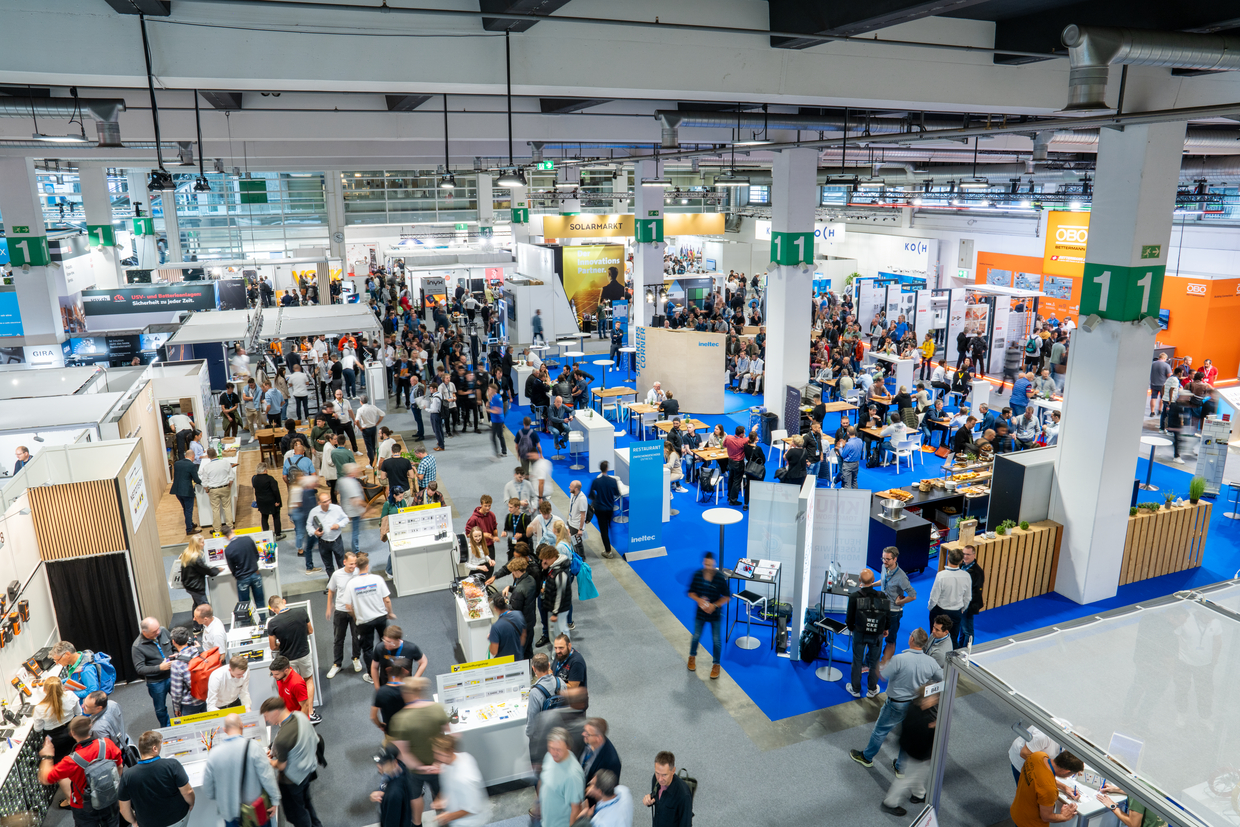
    Due to strong demand, Ineltec 2026 will now occupy Halls 3 to 6, with new brands, an expanded specialist lighting area with its own themed marketplace and presentations in the Speakers Corner on Level 1. Level 2 is roughly the same size and layout as 2024 and offers space for personal dialogue and networking. Exhibition Director Noëlle Marti puts it in a nutshell: companies that were still hesitant in 2024 will be there in 2026.

    EIT.swiss as national backing
    A newly concluded partnership agreement with the umbrella organisation EIT.swiss deepens the interaction between industry knowledge and trade fair expertise. Director Simon Hämmerli and Exhibition Director Noëlle Marti are jointly responsible for specialist topics, visitor communication and sustainable industry development. Young talent tours, further training programmes and knowledge transfer ensure a depth of content beyond the traditional exhibition area.

    Focus instead of wastage
    By focussing on two exhibition days, Ineltec is deliberately focusing on efficiency. An economically relevant location and a national trade audience without wastage. The seven specialist areas range from electrical engineering and building automation to e-mobility, infrastructure, IT solutions and tools. For managers and specialists from the building and installation sector, the trade fair is the densest industry meeting point in Switzerland in 2026.

    Secure your stand location now
    The trade fair team is currently working intensively on stand locations. Interested companies can register and reserve their stand at ineltec.ch. Anyone who was there in 2024 knows that two days are enough to make contacts, see innovations and prepare decisions. Anyone still hesitating risks watching from the sidelines in autumn.

  • The dirtiest business on the Swiss property market

    The dirtiest business on the Swiss property market

    In the Swiss Mittelland region, one owner initially turned down the offer. The offer was far above the market price and he was suspicious of the buyer. A day later, the same man turned up at the door with cash, a mid-six-figure sum as a “deposit”. The owner became weak. The trail of this deal led directly into the milieu of a suspected Lucerne money laundering travel agency and to people with close links to an Albanian cocaine boss who has been in custody in Albania since autumn 2024.

    The pattern is always the same
    CH Media recently documented dubious property transactions from several cantons. The pattern repeats itself. Owners are approached directly, the purchase offers are massively inflated and the time pressure is enormous. Those who agree often find that the new owners immediately leave the property empty or sell it on at a much higher price. One flat in central Switzerland stands empty for over a year after such a deal, redeemed to an anonymous property company, the owner apparently in a position to leave an investment of over a million francs lying idle.

    Illicit labour as a second money channel
    It is not only drug money that flows into properties. Illicit money from the construction sector also ends up there. The pattern is ingenious. A criminal entrepreneur receives one million francs for a new building through the bank in the normal way. Thanks to illegal labour, the project only costs him 700,000 francs. He “hides” the remaining 300,000 francs with false invoices from bogus companies that issue fictitious receipts in return for a commission of around five per cent. These companies do not keep any accounts and are usually already bankrupt by the time the authorities enquire. The result is a profit of CHF 300,000 at the expense of the general public and construction workers.

    The market remains silent, the price rises
    It is estimated that over a third of all money laundering cases worldwide are related to property transactions. Switzerland is considered particularly attractive internationally because the market is stable and regulation has long been patchy. Lawyer Fabian Teichmann, a money laundering expert, puts it in a nutshell: “If you’re smart, you’d rather buy four properties for five million each than one for 20 million. It’s less conspicuous.” The direct side effect is overpriced purchases that drive up prices for everyone.

    The law is following suit, slowly
    On 26 September 2025, the Swiss parliament passed a revision of the Anti-Money Laundering Act. Real estate agents are now also subject to due diligence obligations and must join a recognised self-regulatory organisation. The catch with this law is that transactions of less than five million francs remain outside the scope of the obligation. Entry into force is planned for the second half of 2026. Anyone who buys four properties worth four million each today will remain under the radar for the time being.

  • The Learning Factory is forging new links between industry, research and education

    The Learning Factory is forging new links between industry, research and education

    The Swiss Federal Institute of Technology Zurich (ETH) is planning to establish the ETH Learning Factory Zug within the Tech Cluster Zug – an industrial and innovation hub operated by Metall Zug AG. According to a press release, the Learning Factory will enable students, vocational trainees and experts from research and industry to work together on real-world challenges facing industry and society.

    The project is supported by ETH, the Canton and City of Zug, and a total of nine Zug-based companies. The Learning Factory will focus on topics such as industrial automation and digitalisation, sustainable systems and digital learning. Around 20 full-time positions are planned on-site for operations, teaching and research. The new learning and working environment is set to include modern workshops, digital learning spaces and meeting areas for interdisciplinary collaboration.

    The first phase is scheduled to last ten years and will cost a total of around 110 million Swiss francs. The Canton of Zug intends to contribute 55 million Swiss francs to the funding, and the City of Zug 27.5 million Swiss francs. Further contributions will come from business partners and from services provided by ETH.

    Political decisions still need to be made before implementation can begin. In addition to resolutions by the Cantonal Council and the Grand Municipal Council, a referendum is planned in the city of Zug. If approved, the refurbishment could begin in 2027, with commissioning planned for 2029.

  • 3D-printed concrete stores CO2 and reduces resource consumption

    3D-printed concrete stores CO2 and reduces resource consumption

    Researchers at the Structural Engineering Laboratory of the Swiss Federal Laboratories for Materials Science and Technology (Empa) are working on the development of concrete elements produced using a 3D printer. According to a press release, the building elements are stable without traditional steel reinforcement and are virtually cement-free. The material is designed to store carbon dioxide as it cures.

    The research is being carried out as part of the European CARBCOMN project (Carbon-negative compression dominant structures for decarbonised and de-constructable concrete buildings). Alongside Empa, researchers from the Swiss Federal Institute of Technology Zurich (ETH) and the Empa spin-off re-fer in Seewen, as well as other European partners, are involved in the development.

    The material for 3D printing is derived from recycled industrial waste, such as steel slag. Geometrically optimised shapes are produced using a special process. Iron-based shape memory alloys (Fe-SMA) from re-fer are used as reinforcement. To cure this concrete, carbon dioxide is injected into a combustion chamber, where it chemically bonds with the concrete mixture. “We are combining unique expertise here – 3D printing, structural performance and our speciality: iron-based shape memory alloys,” Empa researcher Moslem Shahverdi is quoted as saying in the press release. “On the one hand, we use digital manufacturing methods to build in a resource-efficient manner. On the other hand, we are replacing conventional cement with binders that have a lower carbon footprint.” The concrete components are also designed so that they can be dismantled after use and reused elsewhere.

    Launched in 2024, the four-year project is funded under Horizon Europe and brings together eleven leading research institutions and architectural firms from across Europe. According to the press release, these include Ghent University, Darmstadt Technical University, the University of Patras in Greece, as well as Zaha Hadid Architects from London, Mario Cucinella Architects from Bologna, and the companies Tesis from Penta di Fisciano in Italy, orbix from Genk, and incremental 3D from Innsbruck.

  • 47 million for a new heart in the Bernese Oberland

    47 million for a new heart in the Bernese Oberland

    The overall project will cost 47 million francs. Financing is being provided by a newly established site development company in which four partners are participating. The city of Thun is granting a mortgage-backed, interest-free loan of 16 million francs and is also guaranteeing a cantonal loan of 10 million francs as part of the new regional policy. Empa itself is investing CHF 16 million in laboratories and a technical center, while Halter AG is contributing CHF 5 million as a development partner. Once the project is completed, the company will be transferred to investors.

    Building permit is available
    The way was not clear. Objections delayed the process by around a year. The building permit for construction site B5 in Thun North has now been granted, with construction set to begin in spring 2027 and completion scheduled for the end of 2029. The city parliament will decide on the loan on 30 April 2026. A clear yes is needed to keep to the schedule.

    Empa in Thun since 1994
    The Swiss Federal Laboratories for Materials Science and Technology has been conducting research in the field of high technology and materials in Thun since 1994. The new building is not a relocation, but an expansion. Mayor Raphael Lanz puts it in a nutshell. Empa secures highly qualified jobs in research and development in the long term, generates regional added value and strengthens Thun as a location for technology and innovation in the Canton of Bern.

    From barracks site to urban quarter
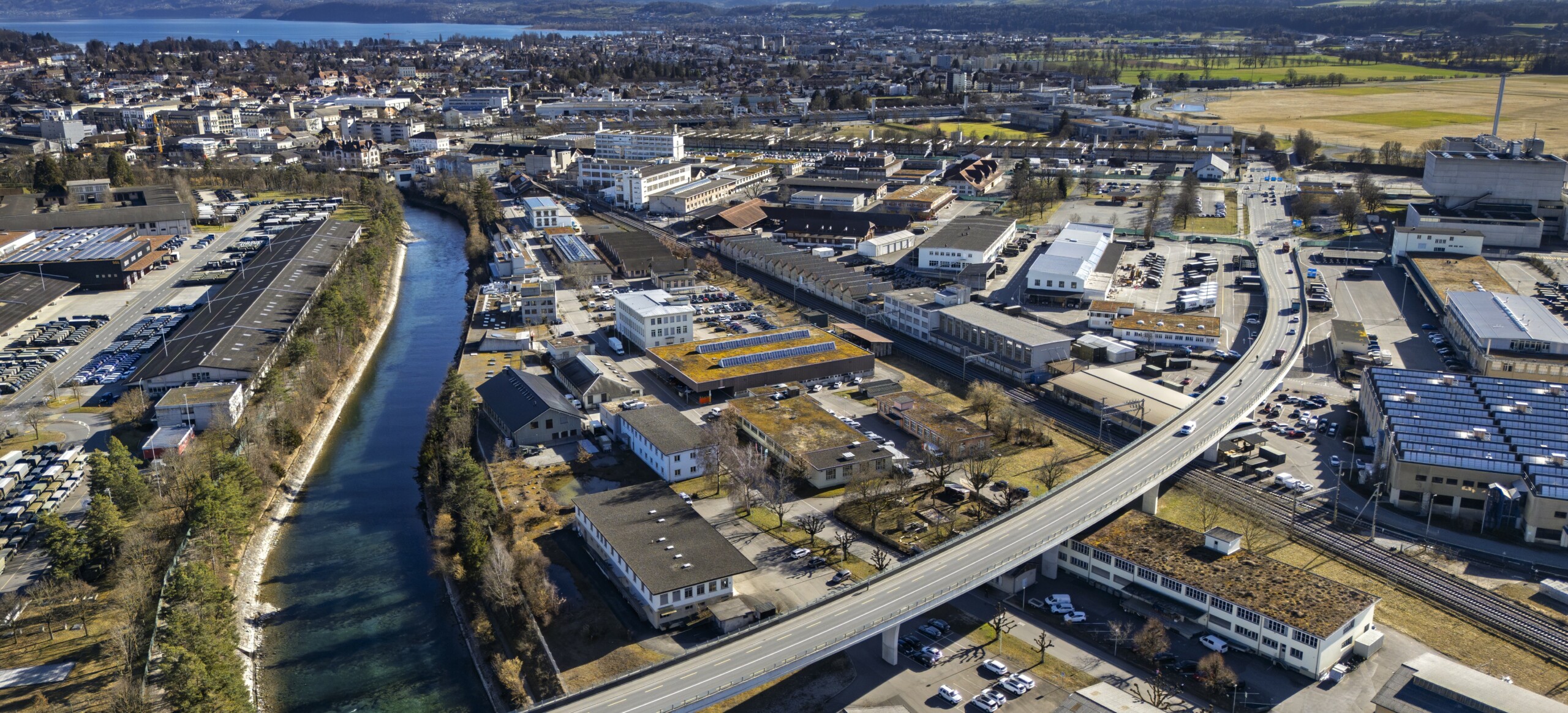
    Thun North is the largest urban development project in the Bernese Oberland. On the 60-hectare site, research companies, businesses and housing are replacing military use. in the long term, 6,500 jobs are to be created; around 2,300 are already located there today. A new Thun Nord S-Bahn stop is included in the federal parliament’s 2035 expansion plan and will connect the district directly to long-distance transport.

    Halter as a lever
    It is no coincidence that Halter AG is contributing CHF 5 million to the project as a development partner for construction site B5. The company won the project competition in 2022 together with Bauart Architekten and Balliana Schubert Landschaftsarchitekten. The composition shows the concept. Private capital and the public sector are pulling together, and the location is sharing the risk because it is thinking about the return.

    What counts now
    April 30 is the date that decides everything. If the city parliament approves the loan, planning gets underway. If the loan fails, the entire timetable is thrown into disarray. This would be a setback for Thun North and a location issue for Empa. The city has already paid its share of the bill. Now it’s up to parliament.

  • Major project to boost rail capacity in the Zurich area in the long term

    Major project to boost rail capacity in the Zurich area in the long term

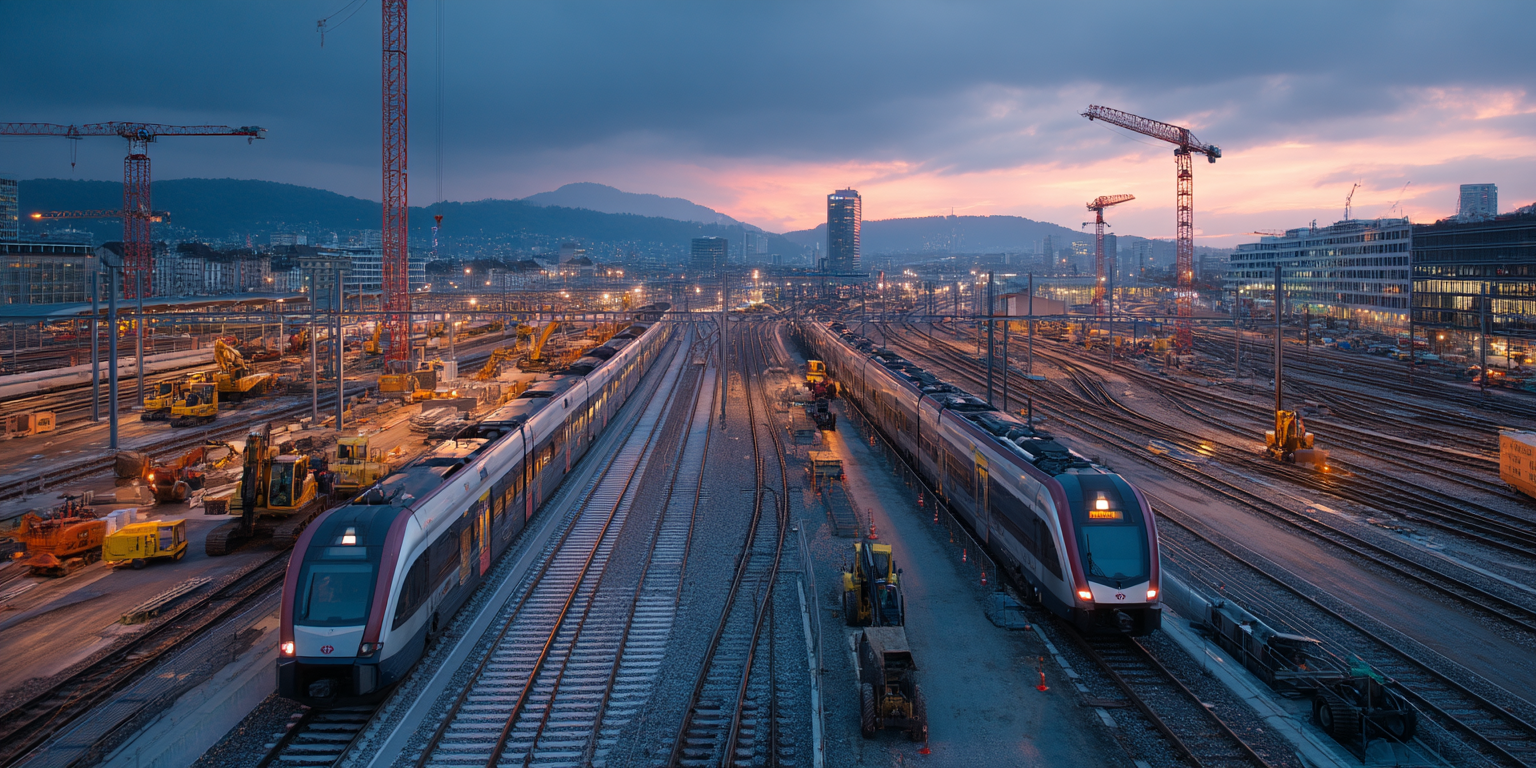
    According to a press release, SBB has begun work on upgrading the line between Zurich and Winterthur to four tracks throughout. As part of the ‘MehrSpur Zurich-Winterthur’ project, SBB is constructing a new tunnel, upgrading several stations and carrying out further improvements.

    SBB and the construction firms involved have now started work on upgrading the stations at Wallisellen, Dietlikon, Bassersdorf and Winterthur Töss. This includes widening platforms, constructing new and modified underpasses, and building footbridges and bridges. Work in Bassersdorf is due to be completed by 2030, in Wallisellen and Dietlikon by 2031, and in Töss by 2034.

    The Brütten Tunnel is set to be 9 kilometres long. Tunnel boring is scheduled to begin in 2029, with the tunnel due to open in 2037.

    The expansion is expected to cost a total of 3.3 billion Swiss francs. This major project, together with other initiatives such as the expansion of Zurich Stadelhofen station, is set to significantly improve rail services in the Greater Zurich area.

  • New district heating network makes efficient use of waste heat and water from the Rhine

    New district heating network makes efficient use of waste heat and water from the Rhine

    According to a press release, energy supplier AEW Energie AG is investing 8 million Swiss francs in the construction of a district heating network in Augst, in the canton of Basel-Landschaft. According to the company, this sends “a clear signal regarding the implementation of the energy strategy and the consistent expansion of renewable heating solutions”.

    Waste heat from the generators at the existing Augst hydroelectric power station and water from the Rhine are to be used for district heating. It is stated that, via a 1.3-kilometre-long district heating network, the connected buildings will receive CO2-free energy from the start of the 2026/2027 heating season.

    Three heat storage tanks, each with a capacity of 15,000 litres, will ensure a secure supply and reliable, stable operation even during peak loads. According to the press release, the plant’s thermal output is 2 megawatts and is expected to deliver a heat output of 4,400 megawatt-hours once fully operational. This is expected to save 1,200 tonnes of CO2 annually.

    At the start of the construction project with the ground-breaking ceremony on 16 March 2026, the company announced that it was creating a replacement for the AEW Contracting plant in Pratteln, which had been operated using wood pellets and oil. “With the Augst heating network, we are making optimal use of existing energy sources from our own infrastructure and making an important contribution to the decarbonisation of the region’s heat supply,” said Dr Raffael Schubiger, Chairman of the Board of Directors of AEW Energie AG and Kraftwerk Augst AG.

    According to David Gautschi, Head of Production at AEW, the Augst heating network exemplifies how existing energy infrastructure and natural resources can be efficiently combined.

  • District heating networks are becoming increasingly important for urban energy supply

    District heating networks are becoming increasingly important for urban energy supply

    Researchers at Lucerne University of Applied Sciences and Arts (HSLU) are working on the development of seasonal thermal energy storage systems. In an era of global warming, thermal networks are becoming increasingly important for cooling densely built-up cities. This involves circulating water from lakes or rivers through pipe systems to cool buildings; these same systems are then used for district heating in winter. To drive the development of such systems forward, the university organised an event to share experiences. According to a press release, the 22nd IGE Seminar of the Institute for Building Technology and Energy (IGE) took place on 11 March 2026. Representatives from Thermische Netze Schweiz,WWZ Energie AG (Zug), Wien Energie GmbH and the City of Zurich, with their CoolCity Zurich project, also took part in the presentations and discussions.

    At HSLU, flexible heat storage systems are being developed that adapt to changing conditions. Researchers led by Timotheus Zehnder demonstrated how firewood can be used more efficiently in wood-fired systems thanks to flue gas cooling and condensation. Three speakers presented thermal networks for heating and cooling supply in Zug, Zurich and Vienna.

    Dieter Kissling from the ifa Institute for Occupational Medicine raised an interesting point: office temperatures were adjusted in the 1960s to suit the needs of men (21 to 22 degrees Celsius). However, it has been shown that women are more productive at 26 to 27 degrees Celsius. With a higher proportion of women in the workforce, it is worth considering whether room temperatures should be adjusted.

    The diversity of topics demonstrated that climate change poses further challenges. The 23rd IGE Seminar has already been scheduled for 10 March 2027.

  • Swiss construction project focuses on sustainable earthen architecture abroad

    Swiss construction project focuses on sustainable earthen architecture abroad

    The go-ahead has been given for the construction of the new Swiss Embassy in the Cameroonian capital, Yaoundé, and according to a press release, Dietikon-based Oxara AG is playing a key role in the project. The public building will be constructed using pressed clay bricks. Oxara is supplying its Oxabrick Loko stabiliser for the red raw material, which is available in abundance locally.

    The design for the embassy building is by the Basel-based architectural firms Caesar Zumthor Architekten and Nord Architekten and comprises an office block, a residence and a connecting building, all grouped around a courtyard. The buildings are to be constructed sustainably using local resources.

    On its website, Oxara – a company founded in 2019 – has launched a series reporting on the progress of the construction work. “In West Africa, clay is perceived as a sign of poverty and rurality, whilst concrete dominates in cities as a status symbol,” Oxara’s project manager Jonathan Ensslin is quoted as saying there. “It therefore sends a strong signal that the new Swiss embassy is being built with clay.”

    Oxara’s non-toxic mineral activator transforms clay into a stable and water-repellent building material. According to the company, this makes clay construction faster, less labour-intensive and scalable. At the same time, it is circular and low-carbon.

    Tests in the Oxara laboratory had shown that the material is well suited for use with Oxabrick Loko. However, the laboratory results could not initially be replicated on site. With the help of local materials researcher Berardin Beauderic Kenne Diffo, who had already got to know Oxara during his PhD at the Swiss Federal Institute of Technology Zurich, the mixing ratios were adjusted. A test wall comprising around 7,000 clay bricks is currently being completed. Construction work on the new embassy is then set to begin.

  • The circular economy is gaining in importance in the construction and civil engineering sectors

    The circular economy is gaining in importance in the construction and civil engineering sectors

    According to a press release, INDUNI & CIE AG has developed solutions to promote the reuse of reinforced concrete from existing buildings. The three-stage approach covers the demolition, transport and storage of materials before reconstruction begins.

    In the first stage, concrete elements are crushed during the demolition of buildings in such a way that they are already suitable for later reuse. The parts are then transported to various storage sites in the Lake Geneva region using the company’s own logistics. Finally, the concrete elements are integrated into new projects by the company’s structural and civil engineering teams.

    INDUNI is also supporting Matériuum’s 10th anniversary. The Geneva-based association for the protection of natural resources helps to “promote the reuse of building materials” and “support the transition to a circular economy”, writes INDUNI in a further statement. The company thus makes it clear that it intends to “continue its commitment to more responsible and circular construction”.

    Founded in 1917 and based in Lancy, INDUNI & CIE AG is active in building construction and civil engineering in French-speaking Switzerland.

  • Confidence in Swiss property is growing

    Confidence in Swiss property is growing

    According to a press release from EY Switzerland, 98 per cent of property investors continue to view the Swiss property market as attractive. The Zurich-based audit and advisory firm reports this in its latest “Property Investment Market Trend Barometer”. Last year, only 93 per cent expressed a positive interest.

    For the study, EY surveyed 96 experts and investors who have been actively involved in the Swiss property market in recent years. Of those surveyed, 35 per cent of investors rated the Swiss market as “very attractive” last year; in the new survey, this figure had risen to 46 per cent. Nine out of ten respondents believe that new-build activity can be significantly boosted by simplified, digitalised planning permissions. Three-quarters see digitalisation as a driving force, yet only 16 per cent already use artificial intelligence for their business operations.

    Residential property remains in vogue in the top nine centres (Basel, Bern, Geneva, Lausanne, Lugano, Lucerne, St Gallen, Zurich and Zug), whilst demand is lower in rural areas. Demand for office and logistics properties has risen in the centres. Office properties in particular are in greater demand, with a ratio of 58 per cent to 48 per cent (2025). In the logistics sector, the trend remained virtually unchanged: 51 per cent to 52 per cent (2025).

    “Geopolitical uncertainties – such as US tariffs, international trade conflicts, the war in Ukraine or global financial market risks – are having an increasing impact on the Swiss property market as exogenous disruptive factors, particularly in centres with a strong international focus,” says Daniel Zaugg, Sector Leader Real Estate, Construction & Building Materials at EY in Switzerland, quoted in the press release. “These effects are reinforcing existing trends towards regional polarisation by widening the gap between highly internationalised markets such as Geneva and Zurich and more domestically oriented regions. Nevertheless, Switzerland remains a politically and economically stable location overall – and in uncertain times even positions itself as a ‘safe haven’ for capital.”

  • Partnership drives smart urban development in the region

    Partnership drives smart urban development in the region

    The City of Thun and the Smart Regio Thunersee association have signed a cooperation agreement. According to a press release, the collaboration will be guided by the Smart City Thun vision.

    “The partnership aims to drive innovation in a targeted manner, use resources efficiently and further develop the city of Thun and the Thunersee region as an attractive place to live and do business,” said Councillor Andrea de Meuron, Head of the Finance, Resources and Environment Department, in the press release.

    The Smart City project, developed as early as 2021/22, aims to make Thun “liveable, progressive and resource-efficient”. Digitalisation is to be used to increase the efficiency of services. At the same time, there is also a desire to bring together the various forces within society.

    The agreement now concluded is intended to strengthen selected innovation and networking formats. As concrete projects, Thun-based SMEs are planning to use cargo bikes for inner-city transport; an information day on this will take place on 2 June 2026. In the autumn, the focus will be on the circular economy in construction. “We don’t just want to discuss smart projects, but actually initiate and implement them, working closely with the city and the local community,” says Markus van Wijk, President of the Smart Regio Thunersee association.