Tag: immoNews

  • NEST tests CO₂-reduced building materials

    NEST tests CO₂-reduced building materials

    The “Beyond.Zero” project brings together leading industry and research partners to test innovations in the construction industry under real-life conditions. The focus is on the development of new material technologies with significantly lower emissions and high innovation potential for the construction industry.

    A central element is the cement-reduced concrete developed by Empa and Omya. By replacing up to 70 percent of the clinker content with natural minerals, CO₂ emissions can be significantly reduced without compromising mechanical properties or durability.

    Practical test for new concrete technology
    The building material is being comprehensively validated in a real construction context for the first time in the NEST unit. From processing and volume stability to durability in operation. “Only by testing it in real buildings can we show that the new type of concrete is not only ecologically convincing, but can also withstand the demands of practical use,” explains Empa researcher Mateusz Wyrzykowski. This creates a basis for translating sustainable concretes into marketable solutions more quickly.

    Industry meets research
    As the world’s leading producer of industrial minerals, Omya is contributing its expertise and production capacities to the project. “The fact that we can test sustainable building materials directly in NEST under real conditions accelerates the transfer of innovations into climate-friendly construction methods,” emphasizes Empa Director Tanja Zimmermann.

    In addition to the cement-reduced concrete, further CO₂-reduced and CO₂-negative material solutions are to be developed and tested in the “Beyond.Zero” project. The aim is a construction system that significantly reduces the ecological footprint over the entire life cycle, from production to operation and dismantling.

    Signal for the construction industry
    With this project, Empa and its partners are creating a practical platform that will provide groundbreaking impetus for the transformation of the construction sector. In view of the high proportion of emissions from cement and concrete production worldwide, the project could become a milestone towards climate-neutral construction.

  • Fair, ecological procurement with Toolbox Sustainability

    Fair, ecological procurement with Toolbox Sustainability

    The development of the toolbox was triggered by the revision of the Federal Act on Public Procurement. The focus is no longer solely on costs, but increasingly on issues of sustainability, fair working conditions and resource and climate protection. As a result, the procurement procedure is shifting from a pure price competition to a quality competition. A paradigm shift with opportunities, but also challenges.

    The key question here is how sustainability criteria can be integrated into procurement processes in an objective, transparent and practicable manner

    Contents and functions of the toolbox
    The sustainability toolbox provides answers to precisely this question. It is web-based, trilingual and structured in such a way that it provides awarding authorities with concrete tools.

    • Catalogue of eleven award criteria covering topics such as materials management, climate targets and fair working conditions
    • Text modules, forms and evaluation tables for direct use in tenders
    • Legal and practical explanations for the safe application of the criteria
    • Practical examples that provide guidance in the tendering process

    More clarity and commitment
    The tool creates a common understanding between contracting authorities and subcontractors by formulating criteria in a measurable and verifiable way. This also makes participation in tenders more attractive for SMEs, as the framework conditions are clearer and fairer.

    The overarching goal is to further develop tendering practice in Switzerland in such a way that quality, sustainability and innovation are honoured. Instead of simply competing for the lowest price, as is the case today.

    Significance for the sector
    The sustainability toolbox makes it possible to standardise how sustainable criteria can be incorporated into construction projects. This not only strengthens the awarding authorities, but also creates trust among clients and companies. The project shows that sustainability is not an add-on, but an integral part of a sustainable construction industry.

  • On the way to the AI revolution

    On the way to the AI revolution

    The debate about the power consumption of AI systems is not just a political issue. Data centres and highly scaled hardware consume enormous amounts of energy and the constant increase in the size of models is further exacerbating this trend. “We can’t scale indefinitely,” explains Klimovic, “so research into more sustainable solutions is essential.”

    Economical model architectures
    One approach is the introduction of sparsity (density reduction) in neural networks. Models only activate relevant parts of their system, whereas classic approaches always utilise the entire network. “Mixture-of-experts models follow this logic. They distribute queries specifically to specialised modules. This saves energy without sacrificing quality.

    GPUs are valuable, but often unused
    Klimovic sees a central problem in the low utilisation of GPUs, even though they consume an enormous amount of power. Bottlenecks occur in particular during data pre-processing and communication between several GPUs. Computing utilisation is often below 50 percent. New software solutions are needed to prevent valuable resources from lying idle.

    Efficiency through intelligent frameworks
    Your research group develops systems that focus on automation and optimisation.

    Sailor is a platform that automatically parallelises training jobs via GPUs, thereby increasing GPU efficiency.

    Modyn and Mixtera are systems for smarter data selection that train models faster and with less data.

    DeltaZip is a platform that efficiently manages fine-tuned model variants. It compresses differences between models (“deltas”), which reduces loading times and makes inference faster and more resource-efficient.

    Sustainability in training and inference
    Efficiency gains play a key role not only in training, but also in the application, known as inference. In view of the billions of daily interactions with chatbots, the conservation of energy and hardware resources is becoming a globally urgent task.

    Academic freedom and open science
    Klimovic emphasises the importance of academic research. Less driven by economic constraints, it can pursue long-term innovations. She emphasises the role of the Swiss AI initiative, which was launched in 2023 and is based on the CSCS’s almost climate-neutral Alps supercomputer. With over 10 million GPU hours and CHF 20 million in funding, it is the world’s largest open science and open source initiative for basic AI models.

    The AI revolution will only be sustainable if efficiency becomes the guiding principle. In algorithms, hardware and system architectures. Projects such as Sailor, Modyn and DeltaZip show concrete ways in which enormous energy savings can be combined with technical excellence. For Klimovic, one thing is certain: “In the future, high-quality AI will not only mean intelligence, but also resource conservation.”

  • Sport, sustainability and community under one roof

    Sport, sustainability and community under one roof

    The cycling team Tudor Pro Cycling is planning to relocate its headquarters from Schenkon to Sursee. According to a press release, construction of the new facility has now begun. The 10,000 square metre building is to be sustainably designed and will open in 2027. It is intended to support the team’s growth and redefine the standards of professional cycling. The project is supported by the municipal council and the authorities of the canton of Lucerne.

    The CHF 17 million facility was designed in collaboration with Goldbeck Rhomberg. It is to be built on Zeughausstrasse in Sursee and will provide a five-storey space where drivers, mechanics, trainers and employees can come together to prepare for upcoming races. A public area will also offer fans and supporters exclusive behind-the-scenes insights and interactive experiences.

    “Together with Goldbeck Rhomberg, we have developed a ground-breaking concept that not only fulfils the needs of a professional sports team, but also takes into account the expectations of fans and the local community,” explains Raphael Meyer, CEO of Tudor Pro Cycling, in the press release. “It also sets new standards in terms of environmental sustainability and has been awarded DGNB Gold certification– one of the highest standards that buildings can achieve.”

    Sursee and the canton of Lucerne have reportedly supported the team from the outset and made the project possible. “We are delighted that this new building, which is dedicated to sport and a healthy lifestyle, is taking shape here in our municipality,” said Sabine Beck-Pflugshaupt, Mayor of Sursee. “It is a place that will help Sursee to shine in Switzerland and beyond our borders.”

  • Statics gap in timber construction is closed

    Statics gap in timber construction is closed

    Researchers from the Swiss Federal Laboratories for Materials Science and Technology(Empa), the Bern University of Applied Sciences and the Swiss Federal Institute of Technology in Zurich(ETH) have carried out a comprehensive series of tests in collaboration with the Federal Office for the Environment(FOEN). According to a press release, the aim of these investigations was to close a structural analysis gap in timber construction. Multiple tests and mathematical models were used to gain insights into the horizontal load of timber frame constructions.

    “We are investigating the horizontal bracing of buildings with timber frame walls that contain window openings,” said Nadja Manser, project manager at Empa, in the press release. “Neither in Switzerland nor in other European countries is there currently a regulation on how much horizontal load a timber frame wall can bear if it contains a window opening.”

    In order to obtain this data, the researchers carried out numerous experiments in Empa’s construction hall with two-storey and single-storey walls, each containing two window openings. The horizontal beams were subjected to a load of over 100 kilonewtons.

    The next step is to use the large amount of data obtained to create a computer model that is easy for structural engineers to calculate and that can be used to realise structural calculations for timber frame buildings. Throughout the project, the researchers are working with industry partners such as Swiss Timber Engineers, Holzbau Schweiz and Ancotech AG. One of the aims is to eliminate the need for expensive and labour-intensive steel anchors and the concrete cores that were previously required.

  • Switzerland signs agreement with Denmark on CO2 storage

    Switzerland signs agreement with Denmark on CO2 storage

    Switzerland signed two agreements with Denmark on 3 September that will enable the export and permanent storage of Swiss CO2 in Denmark. Future cooperation in the area of negative emissions technology (NET) and carbon capture and storage (CCS) is also planned, according to a press release. The Federal Council had already approved the two agreements on 27 August 2025.

    The partnership with Denmark joins the existing partnership with Norway, which was signed on 17 June 2025 and also enables CO2 storage and bilateral emissions trading. “CO2 storage will also be important for Switzerland on the way to the net-zero target,” said Federal Councillor Albert Rösti in the press release on the agreement with Norway. “This technology complements our existing instruments for decarbonisation.”

    The agreements with Denmark and Norway were signed against the backdrop of the Climate and Innovation Act (CIE), which commits Switzerland to reducing its greenhouse gas emissions to net zero by 2050. Net zero is to be achieved primarily by reducing emissions, while emissions that are difficult to avoid, such as those from the cement industry or agriculture, must be offset by CCS or NET technologies. The federal government has been promoting the use of such technologies since 1 January 2025 as part of the CIG.

  • Rebranding focuses on sustainable transformation

    Rebranding focuses on sustainable transformation

    After twelve years, INNOArchitects AG is opening a new chapter: since the beginning of September, the consulting firm from Wabern has been operating under the name Fuil, Pierre-Yves Caboussat, founding partner and strategy consultant, announced in a press release from Fuil AG. The name INNOArchitects was too closely associated with new products and ideas. The new name, on the other hand, is intended to symbolise the current focus of the consultancy offering on the sustainable transformation of companies.

    Fiul is based on the English term fuel. It means “energy, drive, speed, but also food, in other words something that nourishes and enables growth”, explains Cabussat. The new name thus stands for the company’s aspiration to shape change with impact.

    For Nora Blaesy, Lead Rebranding and Business Development Consultant, the new brand identity emphasises “who we really are”. According to her, Fuil wants to differentiate itself from other consultancies by the way it tackles things. “We don’t just want to advise organisations, we want to empower them to shape change with confidence and move into the future with energy,” Blaesy is quoted as saying.

    Fiul offers companies consulting services in the areas of strategy, business development, organisational development and collaboration, the development of people and teams and the use of artificial intelligence. Fiul also provides rooms for seminars and collaboration in the converted Gurtenbrauerei brewery in Wabern. According to a statement, the company has already completed over 3,000 contracts under the old INNOArchitects brand.

  • Dielsdorf data centres to supply district heating for the region

    Dielsdorf data centres to supply district heating for the region

    Green Datacenter AG(Green) from Lupfig AG and BRUGG Pipes from Kleindöttingen have agreed to work together to supply several municipalities in the canton of Zurich with district heating. According to a press release, the waste heat from the new Green Metro-Campus Zurich will supply 11,500 households in Dielsdorf and five neighbouring municipalities as well as industrial and commercial companies with district heating.

    In collaboration with the energy supplier Energie 360°, CO2-free heating is to be generated from the waste heat of the new data centre. An energy centre is being built right next to the Green Metro campus. The companies involved are relying on pipes from BRUGG Pipes to build the district heating network. The Aargau-based company has already supplied 126 pipes, each 12 metres long and with an external diameter of 70 centimetres. The pipe system is laid underground and is no longer visible after construction. The system is equipped with a smart monitoring system for maintenance purposes.

    “The data centres in Dielsdorf are a good example of how waste heat can be used sensibly and CO2 can be saved,” said Martin Rigaud, CEO of BRUGG Pipes, in the press release.

    Energie 360° aims to supply the first district heating in 2026. Green is already using the waste heat from the data centre to heat its own office buildings and a nearby industrial complex.

  • Exclusive destination on Lake Lucerne strengthens presence in India

    Exclusive destination on Lake Lucerne strengthens presence in India

    The traditional Bürgenstock Resort Lake Lucerne hotel is now being represented in India by the Mumbai-based agency Aumentar Hospitality, which specialises in the hotel industry. “We are looking forward to all the unique encounters, events and emotions that this connection will bring to the Bürgenstock”, says the operator in a press release. Bürgenstock Hotels AG goes on to explain that with Aumentar Hospitality, it has a partner at its side “who has an excellent network in India and knows the needs of tour operators, agencies and discerning guests inside out”.

    The Nidwalde-based company sees this partnership as part of its strategic endeavours to expand its presence on the Indian market in a targeted manner, “because India is a clear growth market for us”. Demand for exclusive European destinations has been rising steadily for years, particularly in connection with milestone celebrations, i.e. weddings, anniversaries and other special life events.

    The region is very well known in the Indian market, not least because of several Bollywood productions that were filmed in and around Lucerne: “The destination is considered the gateway to Switzerland and combines the city, lake and Alps in a very small area – an aspect that is highly valued by Indian guests.”

    The 60-hectare hotel and tourism complex above Lake Lucerne comprises a total of 30 buildings. They are located on the Bürgenberg in the municipalities of Stansstad and Ennetbürgen.

  • Growth in premiums and fees in the half-year under review

    Growth in premiums and fees in the half-year under review

    The Swiss Life Group reports an operating profit of CHF 903 million for the first half of the year. In a year-on-year comparison, this corresponds to growth of 3 per cent in local currency, the internationally active insurance group from Zurich reported in a press release. At CHF 602 million, however, net profit was CHF 30 million lower than in the first half of the previous year. Swiss Life cites a year-on-year increase in tax expenses of CHF 36 million as the reason for this.

    “We were able to further expand both our insurance and fee business and achieved a higher operating profit”, Group CEO Matthias Aellig is quoted as saying in the press release. Specifically, Swiss Life increased its own premium income by 5 per cent in local currency to CHF 12.1 billion. At the same time, fee income rose by 2 per cent in local currency to CHF 1.27 billion. “We also significantly increased net new money inflows in the investment business for third-party clients and our solvency remains strong,” explains Aellig. “With these results, we have made a successful start to our Swiss Life 2027 corporate programme and are on track.”

    In the Swiss Life 2027 programme, the Group has set itself the goal of increasing its result in fee-based business to over CHF 1 billion per year by 2027. A result of CHF 392 million was achieved in the half year under review. Swiss Life has set a target range of 17 to 19 per cent for the return on equity in 2027. In the half year under review, the return on equity was 17.6 per cent.

  • Furniture made from shuttering boards as an educational project

    Furniture made from shuttering boards as an educational project

    Industrial designer Björn Ischi has fully equipped the remodelled Building 1 at the Sursee campus with recycled furniture. Together with Designform GmbH, Ischi has equipped the seminar and training centre, which is specifically dedicated to the training of construction site cadres, with sustainable seating landscapes and study tables. The furniture was made from shuttering boards and other old materials to meet the needs of the students.

    Ischi points out in a press release that the circular furniture is economically competitive with products at standard market prices. Sustainability is therefore not a compromise, but a win-win situation.

    The project at the Sursee campus was initiated back in 2022. Ischi began cataloguing existing material on campus in 2024. On this basis, the industrial designer created the circular furniture. The project was technically coordinated by furniture manufacturer Girsberger from Thunstetten BE.

    Ischi emphasises the good cooperation with the management of the seminar and education centre. “Where others throw away the old, Campus Sursee has shown the courage to rethink,” says Ischi. Short distances and clever ideas have beaten long journeys and the production of new furniture. “The future is created when we value the old and reinterpret it.”

  • Acquisition of land in Meggen

    Acquisition of land in Meggen

    The acquired plot on Neueggweg is practically undeveloped and, according to the zoning plan, is in residential zone C. The location is quiet, yet well developed, an advantage for future residents. According to the current planning status, Mobimo will realise a condominium development with around 70 residential units on the site. The project volume amounts to around CHF 120 million. The start of construction is dependent on a mandatory design plan obligation. Completion of the development is scheduled for the end of 2032.

    Development pipeline and market environment
    With the purchase of the site, the company is substantially expanding its development pipeline for the coming years. Demand for residential property in good locations around Lucerne remains consistently high. The municipality of Meggen is one of the most sought-after residential locations in Central Switzerland and, in addition to its proximity to the city of Lucerne, scores highly for its attractive location and quality of life. Lake Lucerne, the local recreational area around Meggen and the municipal infrastructure further strengthen the location.

    Project objectives and outlook
    The new development not only offers new living space, but also provides urban development opportunities thanks to the design plan. The process gives architectural firms the opportunity to contribute innovative housing solutions and modern, needs-orientated spatial concepts. The planning takes into account both the desire for attractive green spaces and the requirements for residential density and sustainability.

    Several planning steps are still required before the planned completion at the end of 2032. The exact start of construction depends on the development and finalisation of the design plan. The occupancy date will be communicated promptly based on the official procedures and marketing.

    The project in Meggen will create new living space, further develop the location and expand the company’s commitment to attractive, sustainable living in Central Switzerland.

  • Biochar concrete opens up prospects for a climate-neutral construction industry

    Biochar concrete opens up prospects for a climate-neutral construction industry

    Four construction companies from Switzerland have joined forces to found KLARK AG, based in Landquart GR, on 25 August 2025: Ulrich Imboden AG from Visp VS, Logbau AG from Maienfeld GR, Novakies AG from Rapperswil BE and Toggenburger AG from Winterthur. Their common goal is to make KLARK concrete, which is CO2-neutral thanks to the addition of biochar, available throughout the country.

    In a press release, they describe the founding of KLARK AG as a milestone for the Swiss construction industry: “It shows that ecological responsibility, economic thinking and cooperative structures can go hand in hand – even and especially in an industry that has long been considered sluggish.” KLARK stands for a move towards a building materials market “that not only measures climate effects, but actively changes them”. This is “industry innovation instead of individual battles”.

    The KLARK climate clay is mixed with as much biochar from untreated waste wood from regional forestry until a CO2-neutral product is created. According to the information provided, it has the same properties as traditional concrete, which causes CO2 emissions of up to 250 kilograms per cubic metre.

    The CO2 reduction performance has been verified with a verified life cycle assessment in accordance with the accounting rules of the Coordination Conference of Building and Property Bodies of Public Building Owners(KBOB). The life cycle assessment results are published on the KBOB list. KLARK concrete can be produced with 50, 75 or 100 per cent sink rate and is fully recyclable.

    Eberhard Bau AG from Kloten ZH, Aarebeton Aarau AG and Arnold & Co. AG Sand- und Kieswerke from Flüelen UR are already on board as licence holders for the production of KLARK concrete. “This creates a central competence centre for CO2-saving construction with concrete, supported by regional pioneers with a national reach,” the press release states.

  • Online marketplace operator aims to be listed on the Swiss stock exchange

    Online marketplace operator aims to be listed on the Swiss stock exchange

    SMG Swiss Marketplace Group AG has announced an initial public offering on the SIX Swiss Exchange. According to a press release, the IPO is intended to provide shareholders with liquidity options and give SMG access to broader capital markets to support potential growth initiatives and increase financial flexibility. At the same time, this should further strengthen the Group’s market position and increase brand awareness. The exact timing of the IPO has not yet been finalised and will depend in particular on market conditions.

    The shares are to be sold by two of the Group’s current shareholders, Mobiliar and Ringier. The offering is expected to be conducted as a public offering in Switzerland and in other countries in the form of private placements to certain qualified investors. The shares of the Group are expected to be admitted to trading on SIX and fulfil the minimum free float requirement of 20 percent. Goldman Sachs, J.P. Morgan and UBS will act as global coordinators and joint lead managers for the IPO, according to the press release.

    “With a clear value proposition, a trusted brand portfolio and strong local expertise, we are well positioned to deliver even greater value to millions of users,” commented Christoph Tonini, CEO of SMG. “By investing in pioneering technologies, we want to set new standards for Swiss online marketplaces.”

    SMG was founded in 2021 as a joint venture between TX Group AG, Ringier AG, Schweizerische Mobiliar Versicherungsgesellschaft AG and General Atlantic SC B.V. and has since established itself as a leading online marketplace in Switzerland. In 2024, SMG generated revenue of CHF 290.9 million and earnings before interest, taxes, depreciation and amortisation of CHF 139.2 million.

  • Building project combines art, architecture and cultural development

    Building project combines art, architecture and cultural development

    Nüssli Schweiz AG from Hüttwilen has broken ground on the expansion of the Mack Pyramid in Monheim am Rhein, according to a press release. The Thurgau-based event construction company was awarded the general contract in spring 2025. Following the construction of an eight-court sports hall, this is the second contract from Monheim for Nüssli.

    The construction is an architectural and artistic challenge. A second mirrored pyramid will be placed on top of the existing Mack pyramid. Additional exhibition and storage rooms are to be created in the new double structure. The existing space will also be renovated and modernised.

    The deep foundations are due to be completed by the end of October 2025 and the shell of the stairwells by the end of the year. The supporting structure consists of a steel construction with stairwells made of reinforced concrete. Where possible, prefabricated components from the Nüssli armoury will be used.

    The topping-out ceremony is scheduled to take place in March 2026, just in time for the 95th birthday of German artist Heinz Mack. Full completion of the building is planned for summer 2027.

    “We are proud to be realising the vision of the city of Monheim am Rhein together with our partners,” said Udo Baader, Head of Project Management Special Projects at Nüssli, in the press release. “The extension of the Mack Pyramid is not only an architectural highlight, but also a cultural impulse for the entire region.”

  • Brokers of the future

    Brokers of the future

    The real estate world is facing an epochal upheaval. While traditional estate agents were once the undisputed mediators between supply and demand, the balance of power has shifted radically in recent years. Digital marketplaces dominate the initial contact, control visibility and are increasingly beginning to intervene in the transaction process itself.

    This is particularly evident in the example of large platforms such as SMG. With price increases, an aggressive data policy and the integration of their own tools, they are transforming themselves from a pure listing platform into an all-encompassing transaction platform. Brokers, who previously acted as independent consultants and market experts, are thus being forced into the role of pure suppliers, becoming dependent, restricted and interchangeable.

    The problem goes deeper than just rising costs or reduced margins. It is a system change, platforms are hoarding data, prioritizing content according to their own rules and shifting the customer relationship away from the broker and towards themselves. This threatens to turn the real estate industry into an “Uber model”. Agents are becoming service providers without direct access to customers, while platforms skim off the added value.

    Does this mean that the estate agent profession has had its day? No, but it does need to reinvent itself. The future of the estate agent no longer lies solely in access to buyers and sellers, but in building trust, advisory expertise and individual support. Particularly in an increasingly complex market, characterized by regulatory changes, tax issues and high investment volumes, clients are looking for personal expertise, reliability and discreet support.

    However, the sector must take active steps to avoid being marginalized. This includes:

    • Maintaining independence: Diversifying insertion strategies, promoting alternative platforms and not relying exclusively on monopolists.
    • Use technology instead of fearing it: Build your own digital tools, strengthen customer proximity instead of handing it over to third parties.
    • Networks and cooperation: Industry initiatives and collective action can reduce dependence on platforms.
    • Customer centricity: Clearly communicate the added value of personal advice – from valuation to emotional support in buying and selling processes.

    The broker of the future is not superfluous, but more necessary than ever as they evolve from pure intermediary to strategic advisor, data interpreter and trusted partner. Those who do not seize this opportunity run the risk of becoming irrelevant in the digital world.

    The decision lies with the industry itself, resignation or redesign.

  • The Top100 Swiss Startup Award 2025

    The Top100 Swiss Startup Award 2025

    What began as a simple ranking has long since become more than just a list. Today, the award is a meeting place for investors, entrepreneurs and industry experts, a place for mutual discovery and promotion. In addition to the ranking itself, a community has formed that strengthens founders, opens doors for them and gives ideas the attention they deserve.

    Every year, the award proves that innovation does not happen in secret. It is people who have the courage to try something new and find partners who believe in them.

    Successes that leave their mark
    638 start-ups have raised CHF 17.8 billion in venture capital and created 20,870 new jobs in the last decade and a half. Behind these figures are stories of teams that have turned a vision into an internationally sought-after company. Engineers who make machines quieter and more efficient. Scientists who are turning plastic back into its basic materials. Lawyers with a dream of a digital solution that makes knowledge more quickly accessible.

    The faces of 2025
    The current ranking reflects precisely this diversity. With Corintis, DePoly and DeepJudge, three start-ups that could hardly be more different top the list.

    Corintis cools high-performance processors in a revolutionary way and is therefore at the forefront of an industry that is driving the digital future.

    DePoly turns plastic waste back into valuable raw materials, contributing to a more sustainable global economy.

    DeepJudge uses artificial intelligence to analyse gigantic legal data sets quickly and accurately.

    Three examples, one common denominator, courage, vision and the unshakeable conviction that good ideas can change the world.

    An anniversary with a view to the future
    “The Ranking 2025 reflects the strength and innovative power of our start-up ecosystem,” says Programme Director Stefan Steiner. It’s not just about start-ups, but about a movement. A movement that is shaping the country, economically, socially and culturally.

    With its 15th anniversary, the Top100 Swiss Startup Award shows that Switzerland not only has ideas, but also the right conditions to turn ideas into success stories. And while some look back on 15 years of courage and innovation, the winners of 2025 are already writing the stories of tomorrow.

  • Between innovation and reality

    Between innovation and reality

    In the middle of the Zurich conurbation, the new H1 residential tower towers above the Zwhatt site. With a height of 75 meters and 24 storeys, the building is a visible marker for the Regensdorf skyline and for hybrid construction methods between concrete and wood. Despite its striking red hue and eye-catching façade, the interior is dominated by natural and neutral materials. The architecture remains restrained, the structure classic. Three solid base storeys and a central concrete core support the building, while timber columns, timber-concrete composite ribbed ceilings, lightweight façades and solar panels ensure resource efficiency.

    The HBV structure allows for a high degree of prefabrication and a significant reduction in gray energy. Compared to conventional solid buildings, 20% of emissions are saved, a total of around 670 tons of CO₂ over a life cycle of 60 years. The horizontally positioned photovoltaic modules serve as a brisesoleil and generate around 155,000 kWh of electricity per year, which covers around 36% of the apartments’ energy requirements.

    Quality of living, community and urban density
    At the base of the H1, three-sided arcades connect the building to the neighborhood and ensure an urban quality of living. Inside, a clear, modular structure ensures compact, flexible apartments. 156 units are organized around the central core and are reached via short, bundled access routes. There is space for community halfway up the building with a two-storey meeting room, a launderette and spectacular views. The wooden elements create a pleasant indoor climate, while exposed beams and clay surfaces ensure a cozy atmosphere.

    Sustainability and the ambivalence of the high-rise principle
    H1 is a project of transition. The high proportion of wood reduces the CO₂ profile, but does not make the use of concrete superfluous. The climate-friendly construction method, local raw materials such as beech wood from the Jura or clay and the focus on renewable energy make sustainable construction a reality. Nevertheless, the high-rise building remains an ambivalent concept. The densification saves space, but the statics and fire protection still force hybrid constructions.

    In terms of urban planning, the Zwhatt site represents a new development perspective for Regensdorf. The silhouette of H1 and other towers characterizes the skyline. The quarter combines living, working and open spaces and stands for an urban development that remains flexible and adaptable.

    The H1 residential tower exemplifies change in the construction industry. It combines advanced timber hybrid technology, a high degree of prefabrication and urban integration. H1 is thus a “building of transition”, a step towards net zero, but also a reflection of the challenges and potentials facing sustainable residential construction in urban centers today.

  • Windows as power stations

    Windows as power stations

    One solution relies on special films that direct visible light specifically to the edge of the glass pane. There, PV strips, often made of high-performance material such as GaAs, absorb the light and convert it into electricity. Solar cells are only needed at the edge, which saves material and resources. The view is retained and the window remains transparent.

    Using cholesteric liquid crystals, a research team at Nanjing University has developed a prototype that achieves an optical efficiency of over 18% and delivers stable values under real conditions. For a typical window with a height of two meters, there is a strong concentration of light at the edge zone. The coating can be produced industrially and is suitable for large façades.

    Transparent tandem cells
    The EU project CitySolar presents another innovation. Two combined PV layers (halide perovskite at the top, organic at the bottom) extract energy from different light spectra while allowing visible light to pass through. This means that the room brightness and view remain unchanged, the window “looks like a window” but produces electricity.

    With an efficiency of 12.3% and 30% transparency, a new record has been set for transparent PV modules. The structure is suitable for office and residential buildings as well as high-rise buildings with large glass fronts.

    Future and potential
    Researchers and industry partners are working on even higher efficiencies and better production methods. Challenges exist in balancing transparency and efficiency and in integrating them into existing construction processes. However, projects such as those from ZEISS or the international CitySolar consortium clearly show how great the market potential is.

    Transparent solar cells and intelligent glass surfaces are paving the way for buildings that partially cover their own electricity requirements. Windows as power plants are within reach and will play a decisive role in shaping the energy transition in urban areas.

  • Ground-breaking ceremony for SBB plant in Arbedo-Castione

    Ground-breaking ceremony for SBB plant in Arbedo-Castione

    The new SBB plant, officially called Nuovo stabilimento industriale ferroviario (NSIF), replaces the existing plant in Bellinzona, which no longer meets the maintenance requirements of modern multiple units. The new facility creates space for 360 full-time jobs and 80 apprenticeships and specializes in the future maintenance and repair of Giruno, ETR and FLIRT-TILO multiple units. The high degree of automation and the focus on electromechanical work make the facility the most modern SBB industrial plant in Europe.

    SBB CEO Vincent Ducrot was particularly proud at the ground-breaking ceremony. The canton of Ticino is an extremely important region for SBB, which is investing in jobs, expertise and technology with this project. The new site covers an area of 150,000 square meters, equivalent to more than 20 football pitches, and also sets an example for sustainability with a green roof and integrated solar panels.

    Sustainability and major construction progress
    Work began back in June 2025 with the establishment of the construction site, excavation and foundation work as well as initial measures for the future train washing facility. The expansion of the railroad infrastructure is running in parallel. New points, additional tracks and modern control technology will ensure an optimal connection to the network. SBB attaches great importance to ecological compensation; 8.4 hectares of high-quality crop rotation areas are being compensated for at alternative locations in Ticino.

    The new plant will go into operation in stages from mid-2028. The relocation of the existing Bellinzona plant to Arbedo-Castione will give the region and its employees a sustainable future. The new SBB plant stands for innovation, growth and sustainable development in a strategically important region for Switzerland.

  • Efficiency in timber construction thanks to statics

    Efficiency in timber construction thanks to statics

    Timber frame construction scores highly as a sustainable alternative to concrete. However, there is a problem with structural planning. Walls with windows were previously considered “statistically invisible” due to a lack of reliable data on load-bearing behavior. Planning, use of materials and costs suffered as a result.

    Large-scale tests for greater material and cost efficiency
    In order to close this knowledge gap, Empa, the Bern University of Applied Sciences and ETH Zurich launched a joint research project, supported by the FOEN and industrial partners. In Empa’s construction hall, wooden walls are deliberately subjected to extreme horizontal loads, generating valuable data on the load-bearing capacity of walls with window openings. The aim is to use the horizontal bracing values of such elements reliably in everyday engineering in the future.

    Less concrete, more wood
    The findings are being incorporated into a new, simple computer model. The initial results show that walls with windows also make a significant contribution to bracing. This reduces the need for steel anchors and concrete cores and cuts the amount of material, time and costs involved in timber construction. In the long term, this results in more economical and ecological buildings.

    Cooperation between research and industry
    The focus is on the practical suitability of the new model. In close dialog with industry partners, the complex research model is translated into an applicable solution for planning practice. This benefits planners, investors and residents alike.

    With new test procedures and calculation models for window walls, the research project is taking timber construction a step further towards greater efficiency, resource conservation and innovation.

  • New building strengthens Solothurn cantonal police force

    New building strengthens Solothurn cantonal police force

    The tasks of the police have become more diverse. Technology and society are changing rapidly. Legal requirements are becoming increasingly complex. KAPO Solothurn needs new structures to be able to react to this. Well-trained employees and ongoing training are more important than ever. Sufficient equipment is also a basic requirement for efficient work today.

    Lack of space, outdated infrastructure
    The existing infrastructure no longer meets current requirements. Many services work in cramped and unsuitable rented premises. There is a lack of special rooms for training and modern investigations. Forensics and the education and training service are particularly affected. Employees therefore have to move to external premises. This complicates processes and costs time.

    The new building as a solution
    A central unit for the police is being built at the Oensingen site. More than 150 employees from eleven different services will work under one roof in future. This will create better communication and shorter distances. Cooperation with the nearby heavy traffic control center will also be simplified. The new building offers enough space for current and future teams. Modern working and training conditions ensure greater efficiency and motivation.

    The focus is on training and quality
    A new on-site training center simplifies the training of police officers. Forensic technology will have modern laboratories and examination rooms. This increases the quality of work and improves conditions for everyone.

    More efficiency, lower costs

    The new structures will simplify processes and reduce costs. The internal synergies and proximity to the SVKZ lead to shorter deployment times. This makes the jobs for the police more attractive and increases their effectiveness.

    Facts, figures and outlook
    The building is planned to cost around 85 million francs. The floor space amounts to a good 10,400 m². The building offers rooms for all important police services. It has special training areas, laboratories and 204 parking spaces. Completion and occupation are scheduled for 2031. Luna Productions from Deitingen delivered the winning project in the competition. The costs are constantly being reviewed and optimized.

    The new building will position the Solothurn cantonal police for the future. Better working conditions, more efficient processes and modern technology will ensure that police work can continue to develop flexibly.

  • Fraunhofer ISE Testlab sets standard for inverters

    Fraunhofer ISE Testlab sets standard for inverters

    With the increasing expansion of renewable energies, the rotating masses of conventional power plants, which previously ensured a stable voltage and frequency, are no longer present in the grid. Grid-forming inverters must take over this task and reliably stabilize the grid even in critical situations such as frequency changes or short circuits. Until now, however, there has been a lack of a uniform definition and standardized verification procedures for these systems.

    GFM Benchmark test procedure
    In the GFM Benchmark project, Fraunhofer ISE invited leading manufacturers to test their devices in the laboratory. Seven companies provided inverters with different outputs and development statuses. The test procedure was developed together with German transmission grid operators and simulates various grid situations. In addition to normal operation, it also includes extreme situations such as phase jumps and short circuits in the grid.

    While many devices react similarly under clearly defined requirements, there are still clear differences under more complex conditions. The ISE team was therefore able to provide manufacturers with valuable tips for optimization and highlighted the need for further development.

    Paving the way for standardization and market integration
    The project results have been directly incorporated into European standardization work and the VDE FNN note “Grid-forming properties”. For the first time, the new test guideline provides a recognized framework for the practical testing and certification of grid-forming systems. This is particularly relevant as a new market for instantaneous reserve will be launched in Germany from 2026, in which battery storage systems with suitable certification, for example, will receive additional revenue opportunities.

    Market maturity, best practice and industry dialog
    The market analysis and test data provide a solid basis for decision-making for manufacturers, grid operators, investors and standards bodies. The certification measurements that are now possible will accelerate the market entry of new, stabilizing inverters. In addition, Fraunhofer ISE supports the transfer of European requirements into national regulations and supports the industry with best practice guidelines.

    Fraunhofer ISE has set a milestone with the test procedure for grid-forming inverters. This will not only make the energy transition in Europe safer, but also measurably faster.

  • Oil heating out, house value up?

    Oil heating out, house value up?

    Simon Lüthi from Wüest Partner recommends renovating the house as soon as possible. Any time is the right time for the environment. Economically, it is particularly attractive if subsidies, tax savings and lower ancillary costs additionally support the increased market value.

    Energy efficiency as a value factor
    The demand for energy-efficient properties is increasing. Investors, funds and pension funds are paying attention to sustainability, often for regulatory reasons. Investments in energy efficiency increase the value of real estate in the long term. This is particularly the case when renovation and modernization coincide.

    Tenancy law and urban regions
    Energy-efficient refurbishment is also worthwhile in cities. The market there is particularly responsive to sustainable improvements. Refurbishment also protects against future legal requirements. However, local tenancy law regulations can restrict the possibilities for apportionment.

    Replacing the heating system is a sensible step
    If you need to replace your heating system anyway, you should switch from an oil system to a heat pump or district heating. A heating system replacement is usually due every 25 years anyway and covers the repairs at the same time. For many homeowners, simply replacing the heating system is the most economically attractive option.

    Homeowners should start with a heating system replacement if the building envelope is intact. If the envelope is in need of renovation, it is worth combining the renovation of the roof, façade and windows with the replacement of the heating system.

    Regulations, subsidies and expert opinions
    Regulation is becoming stricter. The aim is to achieve a climate-neutral building stock by 2050. Subsidies and tax benefits make refurbishment profitable. If you are unsure, consult an expert for planning.

    Financing and grey energy
    Banks often offer more favorable mortgages for sustainable properties. In future, the focus will also shift to efficient cooling and the reuse of building components. Grey energy, i.e. the production energy contained in the building, is becoming increasingly important.

    Replacing oil heating is a real added value. It offers lower heating costs and a higher house value, for today and tomorrow.

  • Digital maintenance increases safety and efficiency in lift operations

    Digital maintenance increases safety and efficiency in lift operations

    In future, it will also be possible to release passengers from KONE lifts in this country digitally and remotely in less than 60 seconds. The global supplier of lifts and escalators, headquartered in Espoo, Finland, has announced that its remote service will now also be introduced in Switzerland, Germany and Austria.

    In addition to providing immediate passenger assistance in emergencies, the service will also enable remote repairs. Following a remote repair, all connected systems will reportedly remain under observation for 24 hours.

    KONE’s remote service is based on an intelligent, cloud-based platform that monitors connected lifts, escalators and automatic doors around the clock. With the help of data analysis based on artificial intelligence, the system recognises potential faults at an early stage and proactively informs technical personnel.

    “In this way, we combine customer proximity with technological excellence and at the same time make an important contribution to decarbonisation through fewer journeys and more efficient processes,” says Jochen Kramer, Director Service at KONE in the German-speaking countries. Remote Service has been nominated for the German Sustainability Award 2025 in the climate transformation field.

    KONE Remote Service is now available in Germany, Austria and Switzerland for more than 35,000 digitally connected systems with KONE DX and LCE controllers. Other controller types and third-party systems are to follow.

  • Swiss start-up supports the development of digital energy communities

    Swiss start-up supports the development of digital energy communities

    The Zurich-based start-up Exnaton is teaming up with the German software manufacturer SAP, based in Walldorf, to operate the SAP Energy Community in the SAP Energy Park. The SAP Energy Community allows buildings and employees to produce, store and trade renewable energy with each other. The initiative focuses on the S.MART Shop, a space equipped with solar panels, EV chargers and a battery system that enables renewable energy trading on the SAP campus.

    Exnaton supports the programme with its energy sharing software solutions, which simplify registration with a user-friendly interface and enable users to manage, consume and trade energy together. Real-time data from SAP dashboards, combined with Exnaton software, enables energy to be sold when market conditions are favourable and stored for future use. The energy community dashboard, which provides real-time insights into consumption, production and energy trading and serves as a communication channel for sustainability programmes, is also operated by Exnaton. The SAP Energy Community leads to cost savings through optimised energy use, reduced CO2 emissions and increased resilience thanks to decentralised energy production and storage.

    In view of stricter German energy legislation from 2026, the project in Walldorf can serve as a model for other energy sharing projects. “The SAP Energy Community is central to establishing a standard model for energy sharing in Germany,” said Anselma Wörner, co-founder and COO of exnaton, in the press release. “With our experience from international energy communities, we are proud to support SAP in turning this vision into a scalable, practical solution.”

    Founded in 2020, exnaton AG is a spin-off of the Swiss Federal Institute of Technology in Zurich.

  • After the FL tube ban: Why acting now is crucial for preserving the value of your property

    After the FL tube ban: Why acting now is crucial for preserving the value of your property

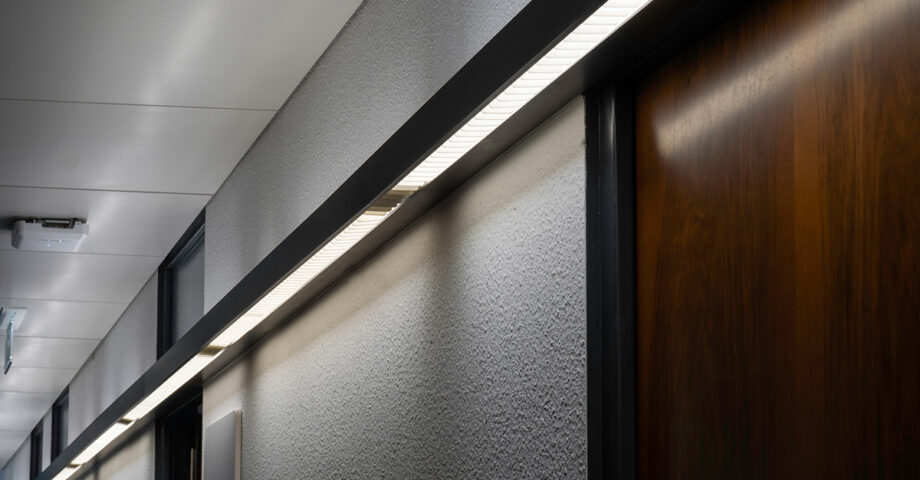
    Imagine you are investing in a promising property, be it a residential complex, an office building or a mixed-use site. Everything seems perfect: location, yield prospects, substance. But on first inspection, it is striking: The lighting is still based on classic fluorescent tubes. What at first glance seems unimportant turns out on closer inspection to be a factor with a major impact on safety and efficiency.

    Well thought-out lighting design not only enhances the atmosphere, but also energy efficiency.

    Since September 2023, classic fluorescent tubes may no longer be sold in Switzerland and the EU. Stocks are largely empty and replacements are virtually unavailable. For owners, this means that failures can no longer be rectified simply by replacing a tube, and improvised solutions harbour safety and liability risks. Those who wait risk unplanned costs and the loss of legal certainty.

    For property managers and investors, the focus is not on technical details, but on the economic impact. Outdated lighting causes higher electricity costs, which are directly reflected in the ancillary costs and reduce the attractiveness of the property. Tenants are also sensitive to rising operating costs, which has a long-term impact on rentability.

    LED lighting increases safety, reduces risks and fulfils legal requirements.

    There is also the sustainability aspect: energy efficiency is now a key criterion for ESG ratings. These ratings are playing an increasingly important role in financing, portfolio management and for institutional investors. Lighting that is no longer state of the art has a negative impact on a property’s sustainability rating and therefore its market position.

    Typical stumbling blocks and why they can be expensive

    • Unplanned outages: Without suitable replacement tubes, expensive temporary solutions have to be organised at short notice.
    • Improper conversions: Improvised installations are not only unsafe, they can also jeopardise insurance claims.
    • Lack of planning: If you ignore the issue, you risk higher maintenance costs and unnecessary tenant losses.
    Outdated lighting systems harbour risks – modernisation ensures operation and value retention.

    What does this mean for your investment?
    When buying or managing property, lighting is often only considered superficially. But it influences several parameters at once: Operating costs, safety, sustainability and legal compliance. If you check the condition at an early stage, you can avoid follow-up costs and integrate measures properly into your budget planning. This means that modernisations can be carried out without rushing, without affecting tenants or ongoing operations.

    What does this mean for your investment?
    When buying or managing property, lighting is often only considered superficially. But it influences several parameters at once: Operating costs, safety, sustainability and legal compliance. If you check the condition at an early stage, you can avoid follow-up costs and integrate measures properly into your budget planning. This means that modernisations can be implemented without rushing and without affecting tenants or ongoing operations.

    Conclusion: Those who act in good time secure the value
    The FL tube ban has changed the rules of the game. If you act now, you minimise risks, prevent unplanned downtime and protect the value of your property in the long term.

    If you would like to know more about how to plan the right steps for your property, there is a compact guide available. It summarises the most important points for property professionals in an easy-to-understand way and gives you the confidence to make the right decisions.

    Get informed before it gets expensive.
    The guide shows you the key facts and helps you to avoid risks and secure the value of your property – available to download free of charge.

  • New orders in Germany strengthen building construction business

    New orders in Germany strengthen building construction business

    Implenia has landed contracts for building construction in Germany with a volume of more than 200 million euros. According to a press release, the projects are “in line with the Group’s strategic focus on large and challenging property projects that require extensive expertise and many years of experience”.

    On behalf of project developer and asset manager Rock Capital Group, the construction group will act as general contractor in Munich-Neuhausen, transforming the approximately one-hectare Bruckmann Quartier on Nymphenburgerstrasse into a high-quality office quarter. A combination of new construction and modernisation will create 28,000 square metres of office floor space in a prime central location. Individual parts of the building will be newly constructed, historic components will be modernised, one building will be extended and another will have a listed façade. Construction is due to start in 2025.

    In Brandenburg, Implenia is constructing a new administration building as the technical leader in a joint venture with GP Papenburg, a comprehensive school in the Ruhr region and a six-court sports hall with functional buildings for two grammar schools in Frankfurt am Main. All three new buildings will be handed over on a turnkey basis.

    Implenia is once again active at the Mainz customs harbour. The Group is now realising the Rheinwiesen living project for the project company of BWL Wohnungsbaugesellschaft and Volksbank Darmstadt. It consists of five five-storey residential buildings with an unobstructed view of the Rhine. Implenia has also been commissioned to construct a senior citizens’ residential complex in Magdeburg and an exhibition and sales building for the Stark Group in Nuremberg.

  • Expansion of 8,000 fibre optic connections planned by 2026

    Expansion of 8,000 fibre optic connections planned by 2026

    According to a press release,Swiss Fibre Net and the local energy and water supplier StWZ Energie will provide the population of Zofingen with almost 5,000 fibre optic connections by the end of the year. This figure is set to rise to 8,000 by the end of 2026.

    The two companies also announced that the fibre optic network will be opened up to enable customers to be supplied with a wide range of telecoms services from various providers. “Thanks to the collaboration with Swiss Fibre Net, Zofingen residents with access to StWZ fibre optics can benefit from the additional telecoms offerings from Sunrise and Salt,” said StWZ Managing Director Paul Marbach in a press release. The offers from the two telecoms providers are available immediately.

    According to Andreas Waber, CEO of Swiss Fibre Net, the fact that customers can choose from various telecoms providers is a must nowadays: “Only open networks guarantee customer-oriented competition. That is why we are committed to the principle of an open fibre optic network in cooperation with energy providers, cable network operators and municipalities.”

    Swiss Fibre Net AG is a joint venture between local energy suppliers and cable network operators in Switzerland. It connects the local fibre optic networks of its network partners to form the large-scale, homogeneous and open Swiss Fibre Net and offers this to nationally active telecoms providers for use.

  • New agenda to strengthen cooperation in the Limmat Valley

    New agenda to strengthen cooperation in the Limmat Valley

    At its Annual General Meeting on 28 August 2025, Limmatstadt AG acknowledged its role as a driving force in regional development. According to a press release, the conclusion of the reorganisation process has sharpened the future mandate for regional location promotion.

    A clear vision has been defined in collaboration with the region’s stakeholders. It is crystallised in the formulation “Together we are shaping a strong Limmat Valley and creating space for more”. Through close cooperation and a consistent focus on the needs of all stakeholder groups, interests can be bundled and projects can be initiated and supported to sustainably promote the successful development of the Limmat Valley.

    Against this background, Limmatstadt AG is taking on a more active role. The development of a joint regional and digital agenda and the Limmat Valley communication channels project are now being launched. Both are intended to increase the visibility of regional offerings and further promote cooperation in the Limmat Valley.

    As part of this realignment, the revised brand identity “Limmattal. Room for more.” was also presented. It is intended to strengthen the region’s identity as a dynamic living and economic area.

    Jasmina Ritz and Josef Bütler have stepped down from the Board of Directors for professional reasons. Roger Bachmann, the mayor of Dietikon, was newly elected. Limmatstadt AG expects his expertise and regional ties to provide valuable impetus.