Tag: immoNews

  • Practical training programme prepares students for a career in real estate

    Practical training programme prepares students for a career in real estate

    The real estate company Naef Holding SA has launched its in-house training programme, the Naef Acedémie. As Naef reports in a LinkedIn post, the six-month programme aims to train the next generation of real estate professionals. The first year of the programme starts in autumn. Interested parties can apply now via Jobup.

    The Naef Académie programme combines practical work with theoretical modules under the guidance of Naef experts. The aims of the programme include introducing students to key professions in the real estate industry, supporting career transitions and initial work experience, and attracting talent from various institutes. The programme includes introductions to Naef’s services such as administration, condominium development and accounting, individual mentoring and personalised coaching.

    Naef is already established in the largest French-speaking cities in Switzerland and is active in all areas of the property sector. Through its subsidiaries, Naef also offers various services in the areas of property valuation, construction and architectural project management.

  • Lucerne is building a public network of charging stations

    Lucerne is building a public network of charging stations

    A public network of around 30 charging stations for electric cars is to be created in Lucerne by 2035. According to a press release, the focus will be on charging in neighbourhoods. To this end, the city will provide third-party providers with public land and the basic infrastructure, including network access, in return for a concession fee. It intends to refinance its investment of CHF 960,000 through the concession fees in line with the polluter-pays principle.

    By 2040, all vehicles registered in the city of Lucerne are to be electric or powered by renewable energy. In order to achieve this goal of the climate and energy strategy, the city of Lucerne and Energie Wasser Luzern(ewl) launched the Green Zones pilot project in April 2024. As part of this, the first public charging stations were installed on Bergstrasse and Eichmattstrasse. The city describes the experience of the five-year project as “consistently positive”.

    The measures are part of the overall concept for renewable drives in mobility. It was developed by the Zurich-based consulting and engineering company EBP Switzerland on behalf of the city of Lucerne. The scope of the concept also includes funding programmes for basic and charging infrastructure, which will be financed from the city of Lucerne’s energy fund, or that only emission-free taxis will be granted operating licences from 2033. In addition, parking permits for long-term parking on public land will only be issued for emission-free vehicles from 2040.

  • Upcycling project transforms leftover material into office furniture

    Upcycling project transforms leftover material into office furniture

    Restemöbel has completed a major interior fit-out project for the photovoltaic company Planeco, headquartered in Münchenstein BL, in the Alte Papieri Arlesheim. In collaboration with the Basel-based construction office in situ, restemöbel has, according to its press release, turned leftover material into high-quality furniture on a large scale for the first time.

    Among other things, restemöbel has planned and manufactured lockers that consist of 100 per cent residual material, apart from the fittings. The company utilises waste that is generated during production in joineries and various ancillary trades in the Lörrach area and is usually thrown away or incinerated.

    “To change this, we invented restemöbel in the summer of 2019: small, fine furniture that is made almost exclusively from leftover materials,” says the company in its self-presentation. “In this way, we are trying to do something about wasting resources and energy and at the same time make the world a little more beautiful.”

    Restemöbel is currently still a project by Florian Oeschger from Basel and Markus Schier, who is based on the German side of the Rhine in Rheinweiler. It is supported by Oe Moebel GmbH, based in Basel, as well as the Florian Oeschger furniture workshop and Markus Schier wood workshop in Rheinfelden, Germany. The two, who have been partners since 2022, have announced that they plan to rebrand restemöbel in Basel in the near future.

  • First tower crane with its own power generation in operation in Baden

    First tower crane with its own power generation in operation in Baden

    The Baden Cantonal Hospital(KSB) is working with the Greenpower crane from Obwalden-based company rollende Werkstatt Kran AG for the renovation of its decommissioned ward block. According to a press release, it is the first tower crane in the world that can generate its own electricity.

    Depending on the operating situation, the crane can reduce electricity consumption by up to 50 per cent. It can also be operated with a smaller mains connection, which means lower installation costs and allows the crane to be used in locations with limited power capacity.

    This is made possible by the design with an integrated energy recovery system and battery storage. “When lowering loads or braking the crane functions, electrical energy is generated, stored and reused for subsequent work steps,” it says.

    With Greenpower, the manufacturer is focussing on the sustainable further development of crane use. “The system is a response to increasing requirements in terms of energy efficiency and grid availability on construction sites,” says Hansheini Dillier, Managing Director of rollende Werkstatt Kran AG.

    According to the press release, the device is used to remove building materials. They contain asbestos, PCBs, PAHs and heavy metals and date back to the construction period in the 1970s. At that time, materials were used for work on tiles and floor coverings, among other things, that are now considered harmful to health or the environment, according to KSB. Strict precautionary measures therefore apply to construction sites on old buildings in accordance with the Swiss Accident Insurance Fund and the Federal Office of Public Health.

    Dismantling of the building can only begin once the pollutants and contaminated sites have been properly disposed of. According to KSB CEO Pascal Cotrotzo, the demolition application is not yet legally binding. The remediation work is running independently of this and should be completed in spring 2026. Until then, the company is hoping for the “green light” from the relevant authorities.

  • Modern shading solution replaces old awning in Solothurn

    Modern shading solution replaces old awning in Solothurn

    Bieri Tenta AG from Grosswangen has replaced the old awning at the outdoor pool on the River Aare in Solothurn with a new mechanically tensioned membrane roof. According to a press release, the original awning could no longer be repaired due to its age. The awning installed by Bieri was constructed using modern technology and is intended to provide a permanent and safe shade solution for the playground.

    According to Bieri, it was no longer possible to simply re-tension the structure due to the original technical design. The existing awning was a textile supporting structure without static documentation. As part of a preliminary project, Bieri developed a new solution, taking into account current standards and recalculating the statics. The new mechanically tensioned membrane roof is a reconstruction of the original shape with modern detailed solutions and fulfils all safety requirements. The temporary winter support is also still part of the concept and has been adapted to the new structure.

    The membrane roof is characterised by its textile construction and now provides sufficient shade for the outdoor pool playground. The outdoor pool is a popular meeting place, especially on hot summer days, and is still being modernised today.

  • Office and practice space at Winterthur railway station fully let

    Office and practice space at Winterthur railway station fully let

    Colliers Switzerland has found tenants for the development in the Wartstrasse 2 shopping street in Winterthur. As the commercial property service provider announced in a press release, the Augenarztpraxis am Bahnhof, an architecture firm and the Ecap language school will move into the office property directly next to the railway station.

    Christine Hürzeler and Hans-Georg Geiger offer a full range of diagnostic and preventive examinations for the early detection of eye diseases at the ophthalmological practice at the railway station.

    The Ecap language school has been in existence since 1970, initially focussing on courses in metal and mechanical engineering professions to qualify skilled workers for industrial companies. Today, the focus is on further training for migrants.

    The office property at Wartstrasse 2 was created as part of the redesign of Rudolfstrasse and the new subway at the rear of the railway station. The municipal project aims to revitalise the neighbourhood streets and strengthen the character of the centre. The rental properties were offered in shell form. They extend over an area of 1860 square metres and five storeys. The smallest unit measures 62 square metres, while the largest offers 366 square metres of office and practice space.

  • Billion-euro investment drives expansion of energy storage systems

    Billion-euro investment drives expansion of energy storage systems

    Energy Vault announces the foundation of its subsidiary Asset Vault. This is to be financed by a preferred equity investment of USD 300 million from an unnamed multi-billion dollar infrastructure fund. According to a press release, the Lugano and California-based developer of energy storage systems expects this to release more than 1 billion dollars in investment. The aim is to accelerate the deployment of energy storage projects with a newly installed capacity of 1.5 gigawatts in the USA, Europe and Australia.

    Asset Vault will reportedly be dedicated to developing, building, owning and operating energy storage assets in the world’s most attractive energy markets, either independently or in conjunction with generation assets. Crucially, Energy Vault will retain voting and operational control of Asset Vault. Energy Vault expects the transaction to close within the next 30 to 60 days. Asset Vault will then be established as a fully consolidated subsidiary. All energy storage facilities, which are secured by long-term purchase agreements and which guarantee the monetisation of the projects, are to be bundled in this subsidiary. Asset Vault is expected to generate recurring EBITDA of over 100 million dollars over the next three to four years, complementing Energy Vault’s existing energy storage business.

    This “unlocks the full potential of our own-and-operate strategy for storage IPP with immediate investment flexibility,” Robert Piconi, Chairman and CEO of Energy Vault, is quoted as saying. “By combining long-term contracted revenue with strategic capital and integrated, self-executed project delivery, we are well positioned to scale a resilient, mission-critical energy infrastructure to meet the current demands of renewable energy expansion and the massive increase in energy demand from data centre AI infrastructure.”

  • City of Zurich presents building culture

    City of Zurich presents building culture

    As part of the European Heritage Days 2025 on 11 and 13 September, the Zurich Monument Preservation Office and City Archaeology will be presenting Zurich’s architectural heritage. According to a press release from the city, Zurich’s heritage preservation authorities will open the Heritage Days on 11 September in the new Brunnenhof school building and music centre and celebrate the 50th anniversary of the 1975 Heritage Year with Katrin Gügler, Director of the Office for Urban Development, and Head of Building Andre Odermatt. The vernissage of the publication “erhalten&umnutzen” will follow in the evening, with a panel discussion and musical accompaniment from the Zurich Music Conservatory (MKZ).

    In addition, on 13 September, the Zurich Department for the Preservation of Historical Monuments and the City Archaeology Department are jointly organising numerous guided tours focusing on the stories of Zurich’s architectural monuments. Conversions, restorations, finds and findings will be discussed. Both events on 11 and 13 September are free of charge. Prior registration is required for participation in the guided tours on 13 September

    The European Heritage Days, which in 2025 will celebrate the 50th anniversary of the Year of Monuments and Sites 1975, will this year be dedicated to the topic of architectural history.

  • Zurich home prices remain on an upward trend

    Zurich home prices remain on an upward trend

    Favourable financing costs are continuing to drive demand for residential property in the canton of Zurich, Zürcher Kantonalbank reports in a press release. According to its surveys for the ZHK Real Estate Barometer in Q2 2025, prices for owner-occupied homes in the canton of Zurich were 4 per cent higher in the quarter under review than in the same quarter of the previous year. At the same time, prices in Zurich’s agglomeration municipalities and the city of Winterthur (Regio region) rose even more sharply by 4.3 per cent. The experts at ZKB expect the trend towards rising prices to continue over the next two years due to the ongoing excess demand.

    The cantonal bank’s experts have identified “signs of an easing” in asking rents in the first half of 2025. After growth rates of over 10 per cent in some cases in the last two years, they are currently observing an increase of less than 4 per cent. However, even with declining population growth, current construction activity is not sufficient to reduce the excess demand.

    However, tenants in the canton of Zurich could benefit more than average compared to the rest of Switzerland from the latest reduction in the base rate in June. Following a fall in the reference interest rate to 1.5 per cent in March, the experts at ZKB expect a further reduction to 1.25 per cent by the end of the year. This means that around 70 per cent of rental households in the canton of Zurich could request a rent reduction. Across Switzerland, this applies to 46 per cent of rental households.

  • Strong growth and portfolio expansion in the first half of the year

    Strong growth and portfolio expansion in the first half of the year

    Mobimo Holding AG can look back on a strong first half of 2025. Specifically, the Lucerne-based real estate company increased its operating result at EBIT level including revaluations from CHF 83.3 million to CHF 144.5 million year-on-year, Mobimo announced in a press release. At the same time, net profit including revaluations rose from CHF 65.6 million to CHF 109.7 million.

    The company cites success from developments and sales promotion as the drivers of this positive development. This increased to CHF 24.9 million compared to the same period of the previous year, almost doubling the figure. Revaluations resulted in a net appreciation of CHF 71.6 million in Mobimo’s property portfolio. At CHF 72.6 million, rental income remained at the previous year’s level.

    The value of the property portfolio totalled CHF 3.9 billion as at the end of June, compared with CHF 3.8 billion at the end of 2024. Mobimo’s total assets also exceeded the CHF 4 billion threshold for the first time. In June, the company was included in theSTOXX Europe 600 index of the 600 largest European companies.

    Mobimo intends to utilise its solid financing situation for “a substantial external growth step”: On 7 August, the real estate company signed the contract for the purchase of the portfolio of EMWE Immobilien AG from Zurich. It consists of five residential properties with an annual rental income of around CHF 3 million and three residential properties under construction.

  • Condominiums between city life and nature

    Condominiums between city life and nature

    “Urban living meets nature” is how Halter AG introduces a post on LinkedIn about one of the company’s new-build projects. Specifically, the Schlieren-based property developer is constructing a building with 43 condominiums and around 80 square metres of commercial space at Leimbachstrasse 28 to 32. According to the project’s website, the 2.5- to 4.5-room flats will be the ideal home for “nature-loving city dwellers”. Interested parties can sign up to a list there, which will be used to send out information about the project before the official marketing launch.

    The total of 43 condominiums, including penthouses and garden flats, are divided into 10 flats with 2.5 rooms each, 30 flats with 3.5 rooms and three flats with 4.5 rooms. The description of the project cites excellent transport links, diverse infrastructure and nearby recreational areas as plus points. Construction work is scheduled to begin in spring 2026 and be completed two years later.

  • Digital concrete technologies strengthen future strategy

    Digital concrete technologies strengthen future strategy

    Sika generated global sales totalling 5.68 billion Swiss francs in the first half of 2025. Year-on-year growth of 1.6 per cent in local currencies was thus achieved, the speciality chemicals group for construction and industry reported in a press release. Organic growth was reported at 0.6 per cent, while the remaining 1.0 per cent growth was generated through acquisitions. In Swiss francs, sales were 2.7 per cent lower than in the same period of the previous year, mainly due to the weaker dollar.

    The operating result at EBITDA level was also impacted by foreign currency effects. At CHF 1.07 billion, it was 2.1 per cent below the previous year’s figure. However, the EBITDA margin increased from 18.7 to 18.9 per cent.

    “In a challenging market environment, we once again succeeded in growing above the industry trend and gaining further market share,” said Sika CEO Thomas Halser in the press release. He believes the Group is particularly well positioned in the project and infrastructure sector. “With more than 1,000 data centres built with our technologies to date and a strong project pipeline”, Sika has also “established itself as a preferred partner for technology leaders”.

    In the semester under review, Sika acquired a total of four companies and inaugurated seven new plants. The targeted investments are intended to strengthen the Group’s future growth. In the press release, Sika cites the minority stake acquired in Giatec Scientific in June as a strategically important step. The company from Ottawa in the Canadian province of Ontario specialises in digital concrete technologies.

  • Property consultancy with vision: Expertise for the entire life cycle

    Property consultancy with vision: Expertise for the entire life cycle

    Anyone who owns or plans to own property is familiar with many of the challenges of the market, such as preventing vacancies and setting rents in line with the market without ignoring supply and demand. This is precisely where Migros Bank comes in with its unique advisory approach, which combines economic foresight, market data and individual solutions – for owners who want more than just mortgages, but customised advice tailored to their property. The advisory approach consists of various modules that can be worked on independently of each other with the customer, depending on the situation.

    Together with CSL Immobilien AG, a partner of Migros Bank, a comprehensive range of services is offered that covers the entire property life cycle. Customers benefit from property development services and professional property management. This offering is rounded off by in-depth research and market analyses of the Swiss property market, enabling owners to make informed decisions together with Migros Bank.

    Comprehensive analysis tools for customised and well-founded decisions
    The property dialogue allows market values, purchase prices, net rental income, yields and vacancy rates to be compared with CSL Immobilien AG’s market data. This makes it possible to assess the positioning of the customer portfolio. It is suitable for office, commercial and residential property. Analysing residential properties at the residential unit level helps to check and manage the performance of the property. The residential units are compared with the market data and analysed for size, price and opportunities. This means that the positioning of projects can be determined with customers at an early stage, existing properties can be checked for market requirements and standards and reasons for vacancies can be identified.

    Analysing interest rate trends: outlook for future mortgage costs
    Anyone buying a house or a condominium must also take a look into the future. Mortgage interest rates are comparatively favourable today – but what will they be in ten years’ time? Will the property still be affordable with the expected income? With the interest rate development analysis, the mortgage portfolio can be simulated 10 years into the future with various defined interest rate scenarios. These estimated interest costs can be used to directly compare possible hedging strategies, such as redeeming a mortgage or taking out a follow-up product. This enables owners to restructure their portfolio and adapt it to market expectations.

    Sustainability as the key to increasing property value
    For owners of older properties in particular, sustainability is an important issue that has a direct impact on the value of the property. The sustainability analysis shows the advantages of renovating properties on a sustainable basis. The CO2 emissions, energy costs and energy requirements of a property are determined and a modernisation plan is drawn up to show which refurbishment measures have a positive impact on these values. Correctly timed refurbishments are crucial to maintaining or even increasing the value of a property over its entire life cycle. It is advisable to seek expert advice before starting a refurbishment project in order to find the best and most cost-effective solutions. Refurbishment issues are challenging – especially when it comes to alternative energies. In the case of particularly old properties, it is also necessary to decide whether refurbishment is worthwhile or whether it would be better to build a new building. This decision depends on various factors, including the condition of the building, financial resources and personal preferences. In any case, it is important to have a long-term refurbishment strategy that helps to reduce costs and extend the life of the building.

    A strong partnership with synergies
    Migros Bank works closely with CSL-Immobilien. Both companies are operationally independent. Through this strategic partnership, CSL Real Estate benefits from nationwide expansion and access to new markets, while Migros Bank can expand its property offering in a targeted manner. Together, they cover the entire property life cycle with an extended range of services – from financing to client advice and marketing. The collaboration also creates significant synergies, particularly in the areas of consulting and financing. One concrete result is the joint development of the digital estate agent service Nextkey, which makes property sales efficient and customer-friendly. This creates a holistic offering that supports customers in all phases of the home ownership process.

    Comprehensive support for property owners
    Anyone who owns or is planning a property today needs more than just a financing solution. What is needed is a partner who has the entire life cycle of a property in mind. With its advisory approach, Migros Bank is positioning itself precisely in this field – as a holistic partner, not just a mortgage lender. In collaboration with CSL-Immobilien, it offers customised solutions for owners who want to develop their properties sustainably, profitably and with a view to the future. Whether market value analyses, sustainability, returns or interest rate trends: individual issues are addressed competently and with foresight using modular tools and sound market data from practice. This not only improves the quality of customers’ decisions, but also the value and future viability of their property. Migros Bank thus stands for a new kind of property advice – networked, collaborative and far-sighted.

    “Anyone who owns or is planning a property today needs more than just a financing solution. What you need is a partner who has the entire life cycle of a property in mind.”

    “Anyone buying a house or a condominium must also look to the future. Mortgage interest rates are comparatively favourable today – but what will they be in ten years’ time?”

    Further information at: migrosbank.ch/potential

  • Prices for residential property continue to rise

    Prices for residential property continue to rise

    According to surveys by Moneypark and Pricehubble, single-family homes increased in price by an average of 3.4 percent nationwide, while condominiums rose by 2.4 percent. Year-on-year, this corresponds to an increase of 7.4 percent for houses and 4.2 percent for apartments. The regional picture is varied. House prices rose by 3.6% in French-speaking Switzerland and by 3.2% in German-speaking Switzerland. Condominiums rose in price similarly in both parts of the country, with Western Switzerland slightly ahead in a year-on-year comparison.

    Medium-term mortgages in vogue
    When it comes to financing, buyers increasingly prefer medium-term mortgages with terms of five to nine years. At the same time, Saron mortgages are gaining in popularity. Particularly in German-speaking Switzerland, where they account for 19 percent of new contracts. In French-speaking Switzerland, this figure is 7 percent. For first mortgages, the Saron share is around 10 percent, for second mortgages over 20 percent. This financing solution offers buyers flexibility and allows them to benefit from the current low prime rate.

    Banks expand market share
    The rising demand for Saron mortgages is also having an impact on market distribution. Banks were able to increase their share to 67%, an increase of 12 percentage points compared to the first half of the previous year. Insurance companies, on the other hand, lost significant ground, with their market share falling to 19 percent. Pension funds increased and now hold a 14% market share, but are not benefiting from the Saron mortgage business, which is offered exclusively by banks.

    Outlook
    With persistently high demand, limited supply and a growing preference for flexible financing models, the upward trend in residential property prices is likely to continue in the coming quarters. At the same time, the development of interest rates will be decisive in determining whether Saron mortgages can continue their upward trend.

  • Visionary campus project takes shape

    Visionary campus project takes shape

    Construction work on the entrance to the InnHub La Punt began in March. A new chapter in the project for an innovation campus in La Punt was opened on 9 July, InnHub La Punt announced in a post on LinkedIn: “The start of construction of the InnHub marks the transition from vision to reality”.

    The InnHub La Punt is designed as a mixture of sports, health and educational facilities as well as a number of second homes. The innovation campus is intended to serve as a place of creation and exchange for locals, guests and companies. The internationally renowned British architect Norman Foster, who lives in the Engadin, is responsible for the design of the new coworking space, which covers a total area of 7,700 square metres. By using local wood, granite and lime mortar, he wants to set an example for sustainability and the circular economy.

    Construction work on the InnHub is due to be completed by the end of 2028. From then on, the innovation campus will offer companies a place of retreat and inspiration in the Engadin. If you don’t want to wait that long, you can already utilise the services of the InnHub PopUp in La Punt.

  • Infrastructure planning protects Magadino plain

    Infrastructure planning protects Magadino plain

    Located between Bellinzona and Locarno, the Magadino plain has been heavily influenced by infrastructure development for decades. Planned projects, from the modernization of the rail network to the reorganization of the power supply, require close coordination in order to minimize the impact on the valuable landscape. A working group headed by the ARE and involving federal offices, the canton of Ticino and Swissgrid has drawn up binding guidelines for this.

    Bundled infrastructure instead of individual projects
    One key result is the decision to relocate the All’Acqua-Vallemaggia-Magadino high-voltage overhead line underground in the moorland area. The Magadino substation will be reduced in size as part of a renovation project. For the double-track expansion of the railroad between Contone and Tenero, SBB is examining options for bundling with new power lines. The planned rail link for the direct connection of the Gotthard and Ceneri base tunnels, which crosses the Magadino plain, is also part of the overarching planning.

    Road project integrated into the overall strategy
    The federal government has been responsible for the heavily congested A13 between Bellinzona-Sud and Locarno since 2020. The new route will be integrated into the sectoral transport plan and closely coordinated with the other projects. At the same time, a strategic review is being carried out as part of the “Transport ’45” study.

    Model for sustainable spatial planning
    The approach in the Magadino Plain is considered a prime example of how national infrastructure goals and nature conservation can be reconciled. The close coordination of energy, rail and road construction projects is intended to minimize interventions, exploit synergies and protect the unique landscape in the long term.

  • The profession of location promoter requires explanation

    The profession of location promoter requires explanation

    It is not yet possible to learn the profession of location promoter. However, since the mid-1980s, there have been contact points for economic and commercial matters at local city and even municipal level – formerly known as economic development. In the 1990s, the Winterthur region was known as a pioneer, not least after the decline of industry there.

    So from 1998, as the first location promoter and head of building construction for the city of Schlieren – alongside the cities of Winterthur and Zurich – I was literally out there alone in the wind. However, the real estate backpack I had acquired since 1981 and my MAS Real Estate Management, which I was also one of the first to complete, enabled me to do the balancing act in the niche segment of location promotion. The classics in the job of a location promoter include company relocations, cluster and site development, “one-stop shopping” by the administration for building permits, portfolio management and startup promotion, as well as much more.

    In Switzerland today, primarily each of the 26 cantons has a location promotion program. Unfortunately, not all of the 172 cities and municipalities with more than 10,000 inhabitants have a location promotion office, let alone an economic strategy. There, an internally appointed person in the administration is responsible. In most cases, this is the town clerk or, at most, the president of the town or municipality, more or less voluntarily and not specifically trained for this purpose. However, this also means that I greatly appreciate these municipal management bodies, as well as those of the town of Schlieren, where I can now look back on 28 years of service. Schlieren’s key figures show a very successful picture that is recognized by many parties. The number of legal entities in the town has increased by 100% since 1998, from 650 to 1,388. This also means an increase in jobs from around 12,000 to 21,000. The number of inhabitants has risen by 70% from 12,000 to 20,100. Here I represent the 1:1 situation (inhabitants in relation to jobs) in contrast to other well-known large Swiss cities.

    I would be delighted if, after my retirement, more real estate experts chose the profession of location promoter and also became involved in associations, ERFAS and networks. What is needed is trust in the local location promoters.

  • TourismusRegion Baden AG takes over management of city com baden

    TourismusRegion Baden AG takes over management of city com baden

    City com baden is reorganising its management. As of the beginning of August, TourismusRegion Baden AG(TRB) will take over the operational management of the association of traders and retailers in the city of Baden, city com baden announced in a press release. The aim is to ensure “that the increasing intersections in the areas of city centre development, destination marketing and business promotion are optimally utilised”, it continues.

    Andrea Protmann from the TRB team will act as managing director of city com baden. She will be available to the members of city com baden as a central point of contact. By handing over the operational management, the board of city com baden will be able to concentrate on representing commercial and political interests in future. As part of the handover of management, Alfredo Biffi is stepping down as managing director and member of the board of city com baden.

    Through increased cooperation with TRB, city com baden intends to benefit from the structure, digital expertise and networking of the regional destination organisation. The association sees numerous useful synergies in the connection to the regional economy. In addition, city com baden hopes that the collaboration will result in professional support and strategic development of events, communication, member support and the City Card.

  • Wooden giant and landmark of the ESAF 2025

    Wooden giant and landmark of the ESAF 2025

    The idea was born in 2021 in the “Säntis Innovation Cluster Wood”. The “Holzvision Max” became a major project involving over 220 companies and institutions, supported by a patronage committee with representatives from business, politics, tourism and sport. Around 1000 specialists from forestry, the timber industry, timber construction and carpentry worked on the project, including many apprentices who produced individual elements in inter-company courses. The wood, mainly spruce and fir, comes from Swiss forests as part of regular forestry operations.

    Technology and construction
    Supports and trusses in the body and legs ensure stability. The frame is partially covered with board shingles, while the wall elements are open. A total of 18,727 screws were used. The supporting structure consists of 40 cubic meters of glulam, supplemented by round timber from Toggenburg. The project is designed for a service life of up to 25 years.

    Financing and cooperation
    The total costs are around CHF 4 million. Thanks to the broad support from the industry in the form of material donations, work and financial participation, the project is secure. A buyer is being sought for the subsequent use. The residual value is around 1.3 million francs, plus costs for storage and reconstruction.

    Tourism prospects
    After the ESAF, Muni Max could be set up in tourist destinations such as Elm, Braunwald or Herisau. The plan is to make it accessible with stairs, an elevator, exhibition areas and a viewing platform. In this way, it will not only serve as a symbol of Swiss wood and craftsmanship, but also as a sustainable visitor magnet.

    Symbol for the industry
    Muni Max is more than just an eye-catcher. It shows how the Swiss timber industry combines tradition and innovation, strengthens the regional value chain and involves young specialists in an ambitious project. At the ESAF in Mollis, it will visually tower over the actual stadium, the largest temporary stadium in the world with 56,500 seats.

    With Muni Max, the Swiss wood industry has created a project that radiates far beyond the event, a strong symbol of craftsmanship, cooperation and the future viability of a traditional raw material.

  • JuCoin opens European headquarters in Baar

    JuCoin opens European headquarters in Baar

    By the end of 2025, JuCoin plans to expand the current nine-strong team in Baar to 100 employees, with space for up to 400 employees in total. The focus is on recruiting local talent to ensure both cultural proximity and a deep understanding of the market. The location will be led by CEO Kenny Dan and COO Hugo Teo, who bring extensive experience in the fintech and cryptocurrency sector.

    Setting the regulatory course
    A key objective is to obtain the MiCA license, which ensures compliance with EU regulations and enables the legal acceptance of clients throughout the EU. In this way, the company aims to create a secure, compliant and trustworthy trading environment for the European market.

    Broad-based ecosystem
    With the new location, the company is bringing its extensive service and product portfolio to Europe. This includes the blockchain infrastructure JuChain, the social platform JuChat, the entertainment platform JuGame and the hardware solution JuOne. The company is already active in over 30 countries worldwide and serves more than 12 million users.

    Significance for Crypto Valley
    The move underscores Switzerland’s role as a global innovation hub in the field of blockchain and cryptocurrencies. Baar is thus not only gaining a new employer with international appeal, but also an impetus for the further development of Crypto Valley as a leading competence center for digital financial technologies.

  • Europe’s largest construction project takes shape

    Europe’s largest construction project takes shape

    The ambitious Ellinikon project is being built on the disused Hellinikon airport site south of Athens. Here, Greece is building a new city from the ground up that will serve as a model for sustainable and digitally networked urban development. In just a few years, this area is set to become a living space for over 10,000 people, a place of work for up to 80,000 employees and a destination for millions of tourists. The aim is to create a city that meets the ecological, technological and social requirements of the 21st century.

    From ghost airport to beacon of hope
    The site of the former Hellenikon International Airport, once the gateway to the world, was unused and dilapidated for decades. The debt crisis got the project moving. in 2014, Lamda Development was awarded the contract to lease and develop the site for 915 million euros over 99 years. The planning was in the hands of renowned architectural firms, including Foster Partners from London. The excavators have been rolling since 2020 and everything should be ready by 2036.

    A city of short distances
    Ellinikon is designed as a so-called “15-minute city”. Everything you need to live – school, doctor’s surgery, grocery store, sports field or café – should be within 15 minutes on foot or by bike. The planners want to significantly reduce motorized private transport. Local public transport, micromobility with e-scooters, bike sharing and a modern network of footpaths and cycle paths will replace the traditional car.

    Europe’s largest coastal park
    In the middle of the new urban area, a park is being created that will set new standards. 2.6 million square meters of green space, more than London’s Hyde Park. Ellinikon Park offers space for walks, sport, cultural events and nature observation. Around 80 % of the water used comes from natural sources already present on the site.

    Reusing instead of wasting
    Before the high-rise buildings could rise into the sky, the first step was to dig deep. More than 300 reinforced concrete pillars with a depth of up to 55 meters support the foundations of the new Riviera Tower landmark. The concrete from the former runways will be recycled on site and reused for roads and slope stabilization. A central goal of the project is net-zero emissions. Buildings are certified according to the LEED standard.

    The tallest residential building in Greece
    207 meters high, 53 floors, 169 apartments, the Riviera Tower will be the tallest building in the country. In addition to the Riviera Tower, another high-rise is being built, the Vouliagmenis Mixed Use Tower with a height of 150 meters. It offers office space, a hotel for business travelers and direct access to two subway stations.

    Smart City Ellinikon
    Ellinikon sees itself as a smart city. Data, sensors, networking and digital services play a central role. Intelligent street lighting, sensors for air quality and noise, apps for navigation, booking and payment as well as 5G and fiber optic networks for high connectivity are just a few examples. Intelligent power grids, energy-efficient architecture and microclimate analyses are intended to optimize energy consumption.

    Social commitment and tourism
    Ellinikon should not only be chic, but also social. The first completed building, a center for people with disabilities, was handed over in 2023. Further public facilities are being planned, such as kindergartens, schools, a clinic, cultural centers and sports facilities. Two large shopping centers, the Vouliagmenis Mall and the Riviera Galleria, are expected to attract an international audience. Even more spectacular, however, is the casino complex, which is being realized together with Hard Rock International.

    Economic boost for Greece
    The project is expected to contribute 2.4% to Greece’s gross domestic product in the long term. 70,000 to 80,000 direct and indirect new jobs are planned and tourism is expected to grow by over one million additional guests per year. The expected tax revenue amounts to 14 billion euros over the duration of the project.

    What happens next
    The first major construction phase should be completed by 2026/2027. Central infrastructure facilities such as transport routes, the first residential buildings, green spaces and educational facilities should then be in place. Full completion will follow by 2036. Ellinikon will not only be a new district of Athens, but a showcase for what urban development can look like in the future.

  • Restrictions on objections in projects

    Restrictions on objections in projects

    In view of the continuing tense economic situation, the Federal Council has once again extended the maximum period of entitlement to short-time working compensation to 18 months. This will allow companies to benefit from more flexibility and stability in a fluctuating order situation until July 31, 2026.

    New requirements for smart devices
    Stricter security requirements now apply to wireless, internet-enabled devices such as smartphones, smartwatches and baby monitors. The aim is to protect personal data and prevent cyber attacks. The devices must ensure that they cannot be misused for so-called DDoS attacks. This is based on the Federal Office of Communications’ new ordinance on telecommunications equipment.

    Fewer objections to smaller projects
    A key element of the legislative changes relates to residential construction. Nature conservation, heritage protection and monument preservation organizations may no longer lodge an objection to projects with a floor area of less than 400 m² within building zones, unless they involve protected sites or biotopes. The decision is intended to facilitate residential construction and speed up procedures.

    Indicative prices for Swiss timber permitted
    An amendment to the Forest Act will allow forest owners to publish regional or national indicative prices for Swiss raw timber together with the downstream industry. The regulation is intended to create greater market transparency and strengthen timber sales as a source of income for sustainable forest management.

    Focus on safety
    Several changes in the aviation sector are aimed at increasing operational safety and accident prevention, such as new requirements for crash-proof fuel systems for helicopters, extended information obligations on fire protection for air freight, Êintroduction of a new private pilot license for gyrocopters and stricter rules for air freight, air mail and security personnel at airports

    Switzerland intensifies cooperation with the EU
    As part of the Prüm cooperation, automated fingerprint data comparisons and access to vehicle and owner data are now also possible in Switzerland. The aim is to combat cross-border crime and terrorism more efficiently. Further regulations will follow in 2027.

    Ban on cell phones in schools in Aargau and Nidwalden
    The cantons of Aargau and Nidwalden are implementing new guidelines on the use of digital devices in schools. Cell phones may only be used for teaching purposes or in emergencies. This is the authorities’ response to increasing distraction and social conflicts caused by excessive cell phone use in everyday school life.

    Reforms with an impact on everyday life and the economy
    The new regulations reflect key social issues such as labour shortages, digitalization, housing requirements and security. Whether at school, at work or in private housing – the changes to the law from August 2025 mark a further step towards adapting to current challenges.

  • Capital increase planned for three property funds

    Capital increase planned for three property funds

    Procimmo SA is planning to increase the capital of its Real Estate SICAV. Specifically, three sub-funds of the investment company with variable capital are to be increased by a total of CHF 170 million. All three capital increases are to take place after the publication of Procimmo’s annual results on 30 September.

    The fund management of the Industrial sub-fund has planned a capital increase of around 100 million francs, Procimmo announced in a press release. The Procimmo Real Estate SICAV – Industrial fund focuses on industrial, commercial and logistics properties. It currently holds gross assets of CHF 2 billion.

    According to a separate press release, the fund management of the Residential sub-fund is planning to increase its assets by 30 million francs. The Procimmo Real Estate SICAV – Residential fund currently holds gross assets of around CHF 505 million, three quarters of which are invested in properties in Lausanne and Geneva.

    For the Residential PK sub-fund, the fund management company is planning a capital increase of CHF 40 million, Procimmo announced in a third press release. The Procimmo Real Estate SICAV – Residential PK fund currently has around CHF 520 million invested mainly in residential property in French-speaking Switzerland.

    Founded in 2007, Procimmo SA operates as a real estate asset manager at its headquarters in Renens as well as in Zurich and Geneva. The company has been part of Procimmo Group AG since 2017. The Zug-based group of companies, which is listed on the BX Swiss, offers investment and services in the property sector.

  • Intelligent mobility for public transport in Bogotá

    Intelligent mobility for public transport in Bogotá

    Schindler is the sole supplier of lifts and escalators for Line 1 of the new elevated railway system in Bogotá. The metro line will use fully automated, driverless railway systems to provide modern, reliable local transport in the Colombian capital. The Schindler systems will therefore be customised to meet the special requirements of public transport, the company announced in a press release. The lifts will be equipped with easily accessible control buttons to enable barrier-free access to the stations.

    The Schindler Technical Operations Centre (TOC) in Medellín will monitor each lift and escalator remotely around the clock. The Schindler ActionBoard will also provide real-time status reports of all lifts and escalators, helping to optimise uptime and ride quality for passengers.

    “We are incredibly proud to be part of this historic project with our lifts and escalators,” said Vikén Martarian, responsible for the Americas and Escalators region, in the press release. “Bogotá will become more accessible for the people who live, work and visit the capital. Thanks to our lifts and escalators, they will be able to move around the metro stations more easily and comfortably.”

    From 2028, Line 1 of the Bogotá Metro will be the first metro line in the Colombian capital to transport over 1 million passengers a day. The line comprises 16 stations over a length of 23.9 kilometres.

  • Prices for residential property remain stable

    Prices for residential property remain stable

    “Residential property prices go on holiday in July”, ImmoScout24 headlines a press release on the current ImmoScout24 Purchase Index. It is compiled monthly by the property marketplace belonging to SMG Swiss Marketplace Group AG in collaboration with IAZI, a consultancy specialising in real estate. According to the current index, prices for single-family homes in July remained at the previous month’s level. Prices for condominiums rose by just 0.1 per cent.

    According to the experts at ImmoScout24 and IAZI, prospective buyers are increasingly looking at energy efficiency as well as price and location when choosing a property. “Those who pay attention to sustainable construction methods or invest in energy-efficient modernisation and solar panels will benefit in the long term and even twice over,” explains Martin Waeber, Managing Director Real Estate at SMG Swiss Marketplace Group, in the press release. In addition to lower electricity and heating costs, Waeber cites a comparatively stable property value: “Market data shows that energy-efficient houses and flats are less susceptible to price fluctuations”.

    From a regional perspective, only the greater Zurich region and eastern Switzerland are clearly bucking the trend for single-family homes, with an increase of 1.2 per cent and a decrease of 0.9 per cent respectively. In the case of owner-occupied flats, Northwestern Switzerland is cited as the “upward outlier” with an increase of 2.3 per cent. The biggest drop in prices for condominiums was recorded in Central Switzerland with 1.1 per cent.

    ImmoScout24 is a division of SMG Swiss Marketplace Group AG. This combines the digital marketplaces of TX Group, Ringier and Mobiliar.

  • New major orders for building construction projects in Berne and Zurich

    New major orders for building construction projects in Berne and Zurich

    “Implenia has won further large and challenging building construction contracts,” the construction and property company from Opfikon announced in a press release. The order volume is estimated at over CHF 400 million in total. The two largest projects are a new building for the University of Bern and a residential development in the Zurich Oberland.

    The Canton of Bern has commissioned Implenia with the master builder work for a new medical research and training centre for the University of Bern. The university plans to unite five institutes of its medical faculty here. Construction work is due to start in May 2026 and be completed in July 2028.

    In Oetwil am See in the Zurich Oberland, Implenia will act as total contractor for the Seraina Investment Foundation to realise the new Schachenweid development. Eight flat blocks with 90 condominiums are planned here. Construction work is scheduled to start in September 2025 and the apartments should be ready for occupancy in October 2027.

    In the press release, Implenia also lists the modernisation and conversion of an inner-city building, the conversion of an old factory site in western Switzerland into an urban quarter and two new construction projects for school buildings in Switzerland and Germany as further new orders. The new projects “are in line with Implenia’s strategy of focusing on specialised real estate, which requires extensive expertise and many years of experience,” writes Implenia.

  • Construction site safety and flood protection for major Winterthur project

    Construction site safety and flood protection for major Winterthur project

    Outsec AG has won the tender to provide security support for the construction of the new Campus T of the Zurich University of Applied Sciences in Winterthur, the security company from Dietikon announced in a press release. According to the statement, outsec will be responsible for construction site security and flood protection over the next four years. The security company was already involved in the interface coordination of the project during the planning phase.

    “The complexity of this project lies not only in the size or the construction phases, but also in the proximity to existing infrastructure and the crossing of a flowing body of water,” said Robin Hüttenmoser, operational manager at outsec, in the press release. “Flood protection must be guaranteed at all times, especially during the construction period – this is where we make an important contribution with targeted monitoring and early alerts.”

    Outsec’s tasks include access control, coordination of deliveries and area control along the changing construction site zones. For flood protection, the company monitors the water-bearing systems and is also responsible for triggering the alarm in the event of flooding. “With this campus, the ZHAW not only offers students and researchers new perspectives, but also gives us as a security provider the opportunity to demonstrate our digital and networked expertise,” says outsec Managing Director René Leuenberger. In addition to its headquarters in Dietikon, the company has locations in Winterthur, Baden AG and Wallisellen ZH.

  • Alpine solar project launched over 2000 metres

    Alpine solar project launched over 2000 metres

    Axpo, based in Baden, has commissioned STRABAG to realise an alpine solar project next to the Lai da Nalps reservoir above the village of Serdun in Graubünden. Around 1,500 solar panels and a technology centre will be installed in the NalpSolar project at over 2,000 metres above sea level, the Schlieren-based construction company announced in a press release. The first 10 per cent of the plant is due to go into operation this December.

    “The construction work is technically demanding, logistically challenging and ecologically sensitive, but above all a milestone for the energy transition in Switzerland,” writes STRABAG. The individual solar tables and other components have to be transported along a narrow, single-lane mountain road. The road, which is normally closed, was built by Axpo in the 1960s as an access road for the reservoir.

    As there are no storage facilities on the construction site, only the material that is immediately needed is transported. “The logistics now run like clockwork,” explains construction foreman François Borner in the press release. “Instead of being stressful, it is now easy to plan.” In the press release, STRABAG cites the uneven ground and respect for the nature conservation zones in the construction area as further challenges in the project.

    Due to the altitude, NalpSolar will produce a lot of electricity, especially in the winter months, explains STRABAG. The construction company is aiming to complete the work in 2028. The electricity from NalpSolar is reserved for the SBB power grid for the next 20 years.

  • 90 years of innovation with Swiss parquet tradition

    90 years of innovation with Swiss parquet tradition

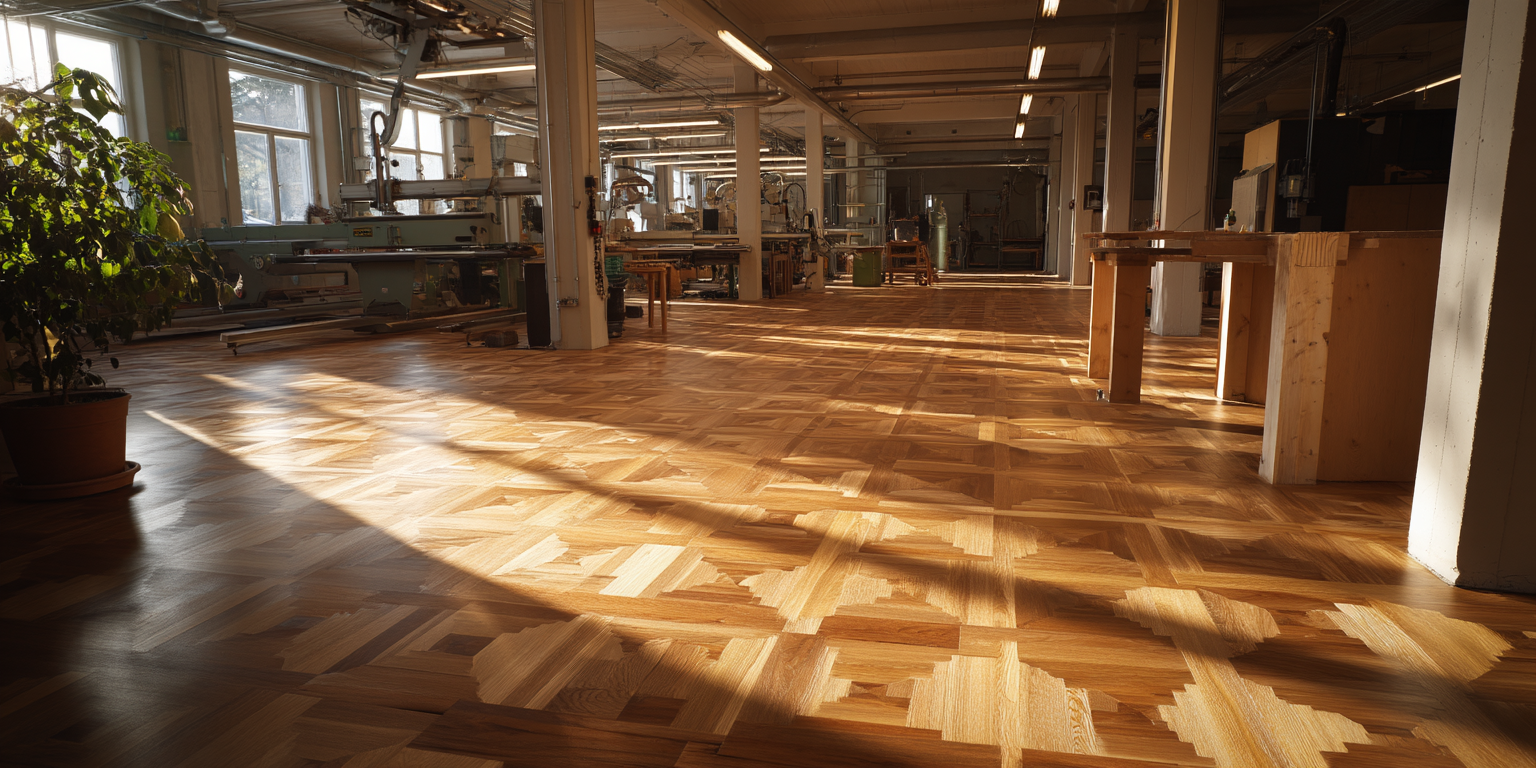
    The parquet manufacturer Bauwerk is looking back on its 90th anniversary this year. According to the company, it began with the introduction of the first dispersion adhesive to protect against harmful vapours from the bitumen adhesive used at the time. This was later followed by specialisation in parquet flooring. The impetus came from Ernst Göhner from Zurich, who in 1935 brought a “floor or wall covering composed of pieces of wood” to series production. This became the “industrially manufactured mosaic parquet or Klötzli parquet”, which is still available in the Bauwerk range today.

    Since the market launch of the first 2-layer prefinished parquet in 1976, the manufacturer has developed into a globally active company in the wood flooring industry with 1600 employees. In Switzerland alone, 2 million square metres of parquet from the Bauwerk Parkett, BOEN and Somerset Hardwood Flooring brands are laid every year.

    More than 60 per cent of the floor coverings are produced at the company headquarters in St. Margrethen. The research and development department has also been based there since the early 1950s. The manufacturer has been awarded cradle-to-cradle certification for its production processes, composition, use and recycling of all components, as well as for its handling of resources in line with the circular economy. Using parquet is environmentally friendly per se and stands for a positive ecological balance. “What’s more, every plank that leaves our factories is unique – the perfect combination of Swiss engineering and the power of nature,” says Patrick Hardy, CEO of the Bauwerk Group since 2022, in the press release.

    In addition to observing sustainable business practices, the company is also socially committed. The Parkettzauber campaign supported several charitable organisations with parquet flooring – including a children’s daycare centre and a socio-educational residential group.

  • From shopping centre to property platform

    From shopping centre to property platform

    Shoppi Tivoli Management AG has changed its name to Tivoli Real Estate Management AG. According to the company, the name change reflects a strategic expansion of its field of activity. In addition to managing the shopping centre in Spreitenbach, the company intends to manage other commercial and residential properties in the Limmat Valley.

    The first project under the new company name is the management of the Tivoli Garten residential park. According to the company, 445 rental flats have been created in the “new lively and colourful district in the heart of the Limmat Valley” with more shopping facilities in the adjacent Shoppi Tivoli as well as extended sports and leisure facilities. The advantages also include the connection to the city centre and short distances to the countryside.

    According to its own information, Shoppi T ivoli is the largest shopping centre in Switzerland in terms of floor space. “With Tivoli Real Estate Management AG, we are retaining our identity and origins in the name, while at the same time making it clear that we are broadening our positioning in order to continue to be there for customers and partners in a reliable, competent and future-oriented manner,” reads a press release.

    Tenants and suppliers will continue to have the same contact persons, and contracts and processes will remain the same. The offices will also remain at Shopping Centre 9 in Spreitenbach.