Tag: immo!nvest

  • Load-bearing capacity and usability of timber buildings

    Load-bearing capacity and usability of timber buildings

    Wooden buildings have already proven their load-bearing capacity in the past: The palace of Knossos on Crete, built around 1700 BC, was constructed with wooden pillars and cedar timbers built horizontally into the walls. It survived a severe earthquake around 1400 BC virtually undamaged. The columns and beams of Greek temples and the framework of the mud-brick walls were made of wood until 600 BC.

    Compliance with the SIA structural standards
    Modern timber constructions guarantee structural safety and serviceability by complying with the SIA structural standards. Specialist planners and timber construction companies vouch for this. Unusual events such as fire and earthquakes are also investigated through analyses in various design situations. The variety of construction timber, wood-based materials and fasteners in combination with modern planning and production tools enables the designer to design an optimised load-bearing structure for every new construction project.

    Research and predictability
    The flammability of wood is widespread, but its behaviour in the event of fire is well researched and predictable. The similar strength properties at high temperatures as well as the low thermal conductivity due to the insulating carbon layer and the escaping water vapour make this building material stand out. The efficient fire safety of timber constructions is confirmed by extensive fire tests. With appropriate dimensioning or in combination with other materials, fire resistances of up to 240 minutes can be easily achieved. In contrast to steel and reinforced concrete constructions, timber constructions remain stable even at extremely high temperatures.

    Fire protection standards for timber components in Switzerland
    Fire-resistant timber components that are protected with non-combustible panels are considered non-combustible according to Swiss fire protection regulations. This shows the recognition of the fire protection authorities for the results of extensive studies, which prove that the combustibility of a building material is not the decisive criterion, but rather that the correct fire protection design of a construction has a greater influence on the fire behaviour. Current regulations permit the use of wood in various construction applications without restrictions and even in high-rise buildings under certain conditions. Timber therefore has a wide range of applications in all building categories and uses.

    Safe timber surfaces in interior spaces
    The requirements for structures in safety-sensitive areas such as vertical escape routes are met by suitable timber components with non-combustible fire protection cladding. Visible wooden surfaces are permitted in interior rooms, with the exception of escape routes.

    Compliance with quality requirements
    Thanks to the “Fire safety and wood” research and development project, which has been running since 2001, comprehensive technical and methodological principles and safe designs for timber components have been developed. An industry-specific quality assurance system defines the fire safety-related quality standards for wood in construction. In Switzerland, high-quality timber buildings are erected in strict compliance with quality requirements. The Lignum documentation on fire protection serves as a guideline and shows the many different ways in which wood can be used to ensure the correct realisation of timber components in small, large or tall buildings. It corresponds to the current state of the art in fire protection in accordance with Swiss regulations.

  • Ein nachhaltiger Holz-Hybrid Bau mit einem «Herz aus Holz»

    Ein nachhaltiger Holz-Hybrid Bau mit einem «Herz aus Holz»

    «Ein Herz aus Holz»
    Das Projekt wird als fünfgeschossiger Sockelbau und einem Hochhaus mit einem Atrium – dem «Herz aus Holz» – realisiert. Auf den Dachflächen wie auch auf Teilbereichen der Fassade sind Photovoltaik-Module für die Stromproduktion vorgesehen. Die gesamte Wärme- und Kälteversorgung erfolgt mittels eines Anschlusses an die Fernwärme «Wärmeverbund Seetalplatz». Das Projekt strebt die Zertifizierung mit den Nachhaltigkeitslabeln SNBS Gold und Minergie-P-ECO an. Für den Holz-Hybridbau und die vorgefertigten Fassadenelemente werden ca. 1420 m3 Holz verarbeitet – v.a. Fichte und Tanne. Der Holzbau trägt dabei nicht nur zum angenehmen Innenklima bei, sondern reduziert auch die CO2-Bilanz der Erstellung des Gebäudes. Die fixfertige Vorfabrikation der Fassadenelemente aus Holz in geschützten Werkhallen stellt zudem die Qualität sicher und ermöglicht eine schnellere Fertigstellung der Gebäudehülle.

    Der Kanton Luzern verfolgt eine Vorreiterrolle bei der Umsetzung der Klimaziele, wie auch Losinger Marazzi. Die Immobilienentwicklerin und Totalunternehmung hat sich zum Ziel gesetzt, ihre CO2-Emmissionen bis ins Jahr 2030 um 30 % im Vergleich zu 2021 zu reduzieren. Dieses Ziel erreicht Losinger Marazzi indem neben einem verstärkten Fokus auf Holzbau- sowie Stadterneuerungsprojekte die Nachhaltigkeit in allen Projekten als zentrales Thema behandelt wird.

    Heute ist die kantonale Verwaltung auf über 30 verschiedenen Standorten verteilt. Durch den Neubau werden im Jahr 2026 rund 1500 Angestellte unter einem Dach zusammengeführt und somit eine zentrale Anlauf-, Auskunfts- und Beratungsstelle im neuen Stadtteil Luzern Nord erschaffen, die mit allen Verkehrsmitteln bestens erschlossen ist. Zudem werden sich in den unteren Geschossen des Gebäudekomplexes die öffentlichkeitswirksamen Dienststellen, ein Polizeiposten, Gastronomie und Läden verteilen. Eine Kita im 6. OG sowie Wohnungen in den obersten Geschossen werden zum belebenden Nutzungsmix beitragen.

  • Further development of the YOND Campus on the Albis site

    Further development of the YOND Campus on the Albis site

    The planned expansion of the YOND Campus to include the YOND.02/03 buildings with a total usable area of around 31,000 m2 takes up the concept of YOND.01 and adapts it more specifically to the requirements of manufacturing companies. The focus is on providing robust and efficient buildings, flexibility through large, divisible areas and optimised logistics. These adaptations include efficient delivery, loading ramps, a logistics-friendly basement and advanced vertical access to the building. In addition, mezzanine floors made of wood enable flexible use of space that can be adapted to the individual needs of the companies.

    At the same time, the historic laboratory and workshop building at 203 Albisriederstrasse is being converted into a centre for small and creative businesses. The planned renovation and extension of one floor are aimed at preserving the history of the site and creating a workspace for the creative industries. The transformation of the boiler house into a vertical garden and the establishment of a bistro on the ground floor emphasise the ambition to create a campus that harmoniously combines quality of life and the world of work.

    The publicly accessible catering facilities along Albisriederstrasse and in the adjacent park will establish the site as an attractive location for businesses and visitors. The use of the ground floor will position the YOND Campus as a place for socialising and contribute to the activation of the space. This extension will create a forward-looking space that supports both the dynamic requirements of modern companies and the need for social interaction and creativity.

  • Impulses for Zurich’s future: The first day of the location

    Impulses for Zurich’s future: The first day of the location

    The first “Location Day” in the canton of Zurich brought together leading figures from business, research and politics to shed light on the attractiveness and future viability of the location. The focus was on discussing current challenges and developing strategies to strengthen the business and innovation location. Panels and workshops on topics such as technology, skilled workers, entrepreneurship, mobility and sustainability provided important impetus to further improve Zurich’s position in international comparison.

    A prior study on the attractiveness of the location provided the basis for in-depth discussions and highlighted Zurich’s strengths in the areas of education, economic power and quality of life, as well as areas with potential for improvement such as the labour market, innovation and infrastructure. In particular, the relevance of artificial intelligence for the technology location and the need for a stronger digital focus in the healthcare sector were emphasised. In addition, the importance of promoting start-ups and integrating digital processes in the healthcare sector was emphasised in order to increase both the attractiveness for specialists and the efficiency of medical care.

    The “Location Day” underlined the urgency of utilising domestic potential and continuously improving the framework conditions for a digital and sustainable transformation. The results of the workshops and panels will now be followed up in order to develop and implement concrete measures. Due to the high level of interest and productive contributions, a repeat of the event is planned in order to evaluate progress and new approaches in the coming year.

  • What will be built in the university area over the next few years

    What will be built in the university area over the next few years

    The ambitious project envisages the construction of new buildings for medical care, education and research as well as an overall upgrading of the university area. The redevelopment includes the former underground drinking water reservoir on Rämistrasse at the heart of the area, which will be converted into a café with indoor and outdoor seating. This project, overseen by SQUADRAT Architekten, integrates parts of the historic water halls and creates an inviting public space.

    Another highlight is the redesign of Rämi and Gloriastrasse, which will offer more space for pedestrians in future and reduce noise levels through traffic calming measures. The aim of redesigning these axes is to improve mobility and at the same time increase the quality of life.

    The FORUM UZH, a new university building opposite the main UZH building, will house teaching and research on nine floors and will also include a canteen and shops. The building is due to be completed by the end of 2029 and will provide a modern workplace for around 6,000 students and staff.

    Preliminary work has already begun on the construction of the University Hospital’s new MITTE campus. This renewal of the medical infrastructure will revolutionise patient care and set the course for the medicine of the future.

    These and other projects in the HGZZ underline Zurich’s commitment to education, research and healthcare. They not only contribute to urban development, but also promote scientific excellence and strengthen Zurich’s position as a leading centre for innovation and knowledge.

  • Forward-looking integration of the Luchswiese housing estate and school extension

    Forward-looking integration of the Luchswiese housing estate and school extension

    In the midst of the dynamic development of the north of Zurich, a showcase project is being created that meets the demands of a growing city. The existing Luchswiese housing estate, characterised by its green garden city atmosphere and three four-storey apartment blocks, will be replaced by a variety of living space and educational facilities. The winning project “Pergola” by Blättler Heinzer Architektur and KOLLEKTIV NORDOST Landschaftsarchitekten is characterised by a careful densification that preserves the garden city character while creating modern living and learning space.

    The use of prefabricated timber construction systems will create 76 flats that will appeal to families in particular thanks to their diversity. The integration of four kindergartens with childcare infrastructure and a multi-purpose hall for the day school in the western building block directly adjacent to the school grounds emphasises the innovative concept of the development. This organic combination of housing and education creates a harmonious ensemble that is complemented by flowing green spaces and green roof terraces.

    The winning project “LYNX” by Parameter Architekten and Rosenmayr Landschaftsarchitektur for the neighbouring Luchswiesen school complex is faced with a growing need for school space. The city is planning a significant extension here by 2028, which will provide new space for 750 children. Inspired by Max Kollbrunner’s original architecture, the extension combines old and new elements and integrates a triple sports hall as well as modern classrooms and childcare facilities. The resource-conserving construction method, including the use of photovoltaic elements and timber in skeleton construction, underlines the city’s commitment to sustainable development.

    This project is an impressive illustration of how creative urban planning and close collaboration between different stakeholders can find solutions to the challenges of urbanisation. The Luchswiese housing estate and the Luchswiesen school complex are a forward-looking model for living and learning together in Zurich.

  • Environment, costs and aesthetics: a comparison of concrete and wood

    Environment, costs and aesthetics: a comparison of concrete and wood

    Pro wood: the sustainability and warmth of wood
    Wood, a natural and regenerative material, has been used in construction for thousands of years and is currently experiencing a revival in modern architecture, particularly in the area of sustainability and environmental protection. As it grows, wood binds CO2, which can help to reduce carbon dioxide emissions and thus counteract climate change. In addition, wood offers a warm and inviting aesthetic that is appreciated in many design concepts.

    Pro concrete: robustness and durability
    Concrete, a mixture of cement, water, sand and rock, is characterized by its remarkable strength and durability. It is highly resistant to fire, water and pests, making it a popular building material for a wide variety of structures such as high-rise buildings and bridges. In addition, concrete has excellent sound-absorbing properties and can be shaped into any desired form, which underlines its versatility.

    Contra wood: Wood used in construction is more susceptible to fire, pests and moisture. Special measures are therefore required to protect and maintain it.

    Contra concrete : The production of concrete is very energy intensive and results in a significant amount of CO2 emissions, which raises concerns about its environmental impact.

    The decision between concrete and wood depends on several factors, including the specific requirements of the project, environmental impact, cost and desired aesthetics. Concrete is prized for its strength and durability, while timber offers benefits in terms of sustainability, carbon footprint and natural beauty. Careful consideration of these characteristics is critical to making an informed decision that meets both the short-term needs of the project and the long-term goals of sustainability and environmental protection.

  • Evolution of living space design

    Evolution of living space design

    Living space design through the ages
    The amount of space required per resident has increased from 25 m² in 1950 to around 46 m² today. As a result, room layouts have changed: What used to be a family flat is now a flat for singles and childless couples. Instead of two small WCs, a spacious bathroom is now preferred, and instead of a separate kitchen and dining room, an open-plan kitchen with a cooking island. In addition, personal demands and legal requirements in terms of building physics and ecology have increased. The question of basic services has evolved into the question of the appropriate quality of living space.

    Cost savings through denser construction
    In today’s housing estates of the economic upswing, there is an opportunity to achieve a more efficient use of building space through denser construction and taller buildings. Particularly in areas close to city centres with high building land values, refurbishment is often preferred to new builds. It is also important to consider the ecological significance of building decisions in view of Switzerland’s dwindling reserves of building land. The country’s settlement area has grown considerably in recent decades. Simple volumes, well thought-out spatial sequences and compact construction with high utilisation rates can save costs and counteract urban sprawl.

    Thermal insulation of buildings in need of renovation
    Energy-efficient modernisation of a building from the 1970s can reduce energy consumption by up to 90%. In order to optimise thermal insulation, external components such as exterior walls, roofs or the attic must be renovated. Sometimes heat is also lost undetected through an insufficiently insulated basement ceiling. The windows in particular represent weak points in the exterior walls in terms of heat and sound insulation. Building thermography with a thermal imaging camera can be carried out to assess the thermal insulation. In addition, the differential pressure measurement method (blower door test) can be used to test the airtightness of the building envelope.

    Efficientexterior wall renovation with wood
    Exterior walls are complex components that fulfil important building physics functions such as moisture protection, sound insulation and thermal insulation. When renovating façades, wood can be used as a substructure, formwork and thermal insulation. Insulation materials such as rock wool, glass wool, sheep’s wool or flax can also be used. The renovation of external walls is nowadays also carried out using prefabricated lightweight façades in frame construction. This concept of completely re-cladding a building and giving it a new appearance at the same time has proven to be extremely successful. As a result, new extensions and additions can also be architecturally combined with the existing building to form a new unit.

    Optimisation of rooms
    During interior renovations, rooms are redesigned to meet the new requirements. New partition walls, panelling and suspended ceilings are created. New sanitary and electrical installations are inserted into the wooden slats. The cavities are filled with insulating materials and then planked with gypsum, cement or wood-based panels to meet the requirements for fire protection, sound insulation and moisture resistance. Finally, the joints are filled by the plasterer and the surfaces are re-plastered. Perforated or slotted wooden materials are used as acoustic panels to improve room acoustics.

    Tips for old floors
    Unevenness in old floors can be levelled out using various measures. Fine filler or levelling screed are suitable for slight unevenness, while dry fills are usually used for larger unevenness. Flowing screeds made of anhydrite or cement are used for larger areas. Impact sound insulation is essential to reduce sound transmission to rooms below. In bathrooms and damp rooms, surfaces are provided with suitable sealing compounds and tapes to protect against water penetration. Designed outdoor areas such as wooden terraces and conservatories help to improve the quality of living. Balconies, terraces, loggias or conservatories can be added or extended as part of façade and interior renovations. Thanks to hard-wearing types of wood and treated timber, it is also possible to construct wooden structures that are subject to heavy use.

    Wooden structures for living space extensions
    The potential of a building can be fully utilised by taking local building regulations into account and selecting the appropriate building services. Additions or loft conversions offer the best opportunity to create more living space on the same floor area. Due to its low dead weight, construction engineers often opt for timber when adding storeys, as this usually means that the load-bearing structure and foundations do not have to be additionally reinforced. Prefabricated timber elements can be lifted to the top floor using a mobile crane. Choosing a construction method with a high degree of prefabrication reduces the workload on the construction site and the rooms can be occupied quickly. This means that residents and neighbours are hardly affected by noise and dust.

  • Implenia and Empa join forces for CO2-negative building materials

    Implenia and Empa join forces for CO2-negative building materials

    As Empa ‘s realisation partner,Implenia is building the Beyond Zero Unit in Empa’s NEST building in Dübendorf, the construction and real estate company based in the Glattpark district of Opfikon announced in a press release. The new unit will be used for research into CO2-reduced and CO2-neutral building materials. The Beyond Zero Unit will be integrated into the middle level of the NEST research and innovation platform.

    “We are delighted that Implenia is able to enrich the great research and innovation platform NEST with a new unit as a partner,” said Jens Vollmar, Head Division Buildings at Implenia, in the press release. “As a leading Swiss construction and real estate service provider, we are thus jointly providing important insights for the future, CO2-reducing construction and operation of buildings and infrastructure.” Implenia intends to use the knowledge gained from the Beyond Zero Unit for its own developments and planning.

    The new unit in the NEST building is not the company’s first collaboration with the research institute. “Implenia has realised pioneering sustainable buildings on the Empa Campus in Dübendorf, most recently a laboratory and office building and the first car park in hybrid timber construction in Switzerland,” explains Empa Director Tanja Zimmermann. “The fact that Empa and Implenia are also working together in research into innovative building materials with this new partnership and are investigating promising applications over a longer period of time on our NEST platform promotes the direct transfer of sustainable innovation into practice.”

  • Face to face: Construction industry in Switzerland

    Face to face: Construction industry in Switzerland

    Swissbau will take place from 16 to 19 January 2024 in the halls of Messe Basel, which will offer 85,000 square metres of exhibition space this year. In contrast to the special edition in 2022, which was restricted due to the pandemic, the 2024 trade fair will be presented in its entirety. With comprehensive subject areas such as shell construction, building envelopes, building technology and interior fittings, the extensive expertise of the Swiss planning, construction and property industry will be brought together in one place.

    The trade fair offers a unique platform for personal dialogue and experiencing products and solutions. Events such as Swissbau Focus, Swissbau Lab, Trendworld Bathroom and Swissbau Inside take centre stage and enable participants to obtain information efficiently and holistically. Swissbau 2024 emphasises the importance of personal exchange, with Rudolf Pfander, Brand Director Swissbau, highlighting the trade fair as a central location for gathering knowledge and exchanging ideas.

    The Swissbau City concept divides the trade fair into various neighbourhoods and central marketplaces that focus on the main thematic areas. The Bathroom Trend World, an integral part of the trade fair, presents the latest products and designs for bathrooms in Hall 2.2. Swissbau Inside provides a platform for interior design products, while the special show “Handwerk live” in Hall 1.0 offers insights into the everyday work of craftsmen and women.

    In addition, the Security Congress, which focuses on security endeavours in the professional environment, will take place in the Congress Center Basel at the same time as the trade fair. Overall, Swissbau 2024 promises to be a holistic trade fair experience and a central platform for professionals from the construction and real estate sectors to jointly tackle the current challenges facing the industry, such as the circular economy, digitalisation and climate change.

  • Europe’s most luxurious coworking space opens in Zurich

    Europe’s most luxurious coworking space opens in Zurich

    After the major fire, which left the building in danger of collapsing and caused damage totalling 25 million Swiss francs, it was a long road to reopening. The building insurance company of the Canton of Zurich described the incident as the “most expensive fire damage in the 200-year history of the GVZ”.

    The now revitalised building offers 5,000 square metres of space on the top six floors for 76 private offices and 600 state-of-the-art workstations. IWG has thus secured its largest location in Switzerland and offers a range of extras in addition to workspaces: a rooftop terrace with panoramic views of Zurich, a fitness centre with personal trainer, a private members’ club with Italian restaurant and bar, a gaming centre and even a meditation and breastfeeding room.

    Patrizia Statelli, Managing Director of IWG Switzerland, Monaco and Gibraltar, emphasises the importance of hybrid working models in the post-pandemic era and the changing demands on workplaces. The flexible offices, meeting rooms and networking zones can be booked on an hourly or long-term basis, with the cost of around CHF 1,500 per person per month including all ancillary costs as well as use of the fitness centre and entertainment facilities.

    The fire delayed IWG’s move in by two years, but the company already had plans for this building before the accident. The ground floor is now home to a DQ Solutions shop, Yumi Hana with Korean and Japanese products and the new Club Mini Market.

    With the ambitious goal of growing from 53 to 70 locations in Switzerland over the next two years, IWG is also planning to cover the suburbs of major cities. Statelli is convinced that new, more flexible working models will characterise the future and reduce commuting, a concept that Europe’s most luxurious coworking space in Zurich now embodies.

  • Federal Council draws up new regulation for permissible net yield

    Federal Council draws up new regulation for permissible net yield

    Der Nationalrat hat der Landesregierung am Dienstag den entsprechenden Auftrag erteilt. Dies, indem er mit 130 zu 61 Stimmen bei 3 Enthaltungen eine Motion des Bündner Ständerats Stefan Engler mit dieser Forderung annahm.

    Der Mitte-Politiker argumentierte, Marktbeobachter gingen davon aus, dass der Referenzzinssatz weiter ansteigen werde. Kürzlich erhöhte ihn das Bundesamt für Wohnungswesen (BWO) auf 1,75 Prozent.

    Seit 1986 gelte der Grundsatz, dass ein Ertrag aus Mietobjekten dann zulässig sei, wenn dieser 0,5 Prozent über dem Referenzzins liege. Das Bundesgericht habe aber 2020 zwei Praxisänderungen vorgenommen. Unter anderem habe es bestimmt, dass der Ertrag den Referenzzinssatz neu um zwei Prozent übersteigen dürfe, wenn der Referenzzins zwei Prozent oder weniger betrage.

    Bei einem Anstieg des Referenzzinssatzes auf über 2 Prozent werde sich die Frage stellen, ob der bei der Berechnung der Nettorendite zulässige Zuschlag zum Referenzzins direkt wieder auf 0,5 Prozent zu reduzieren sei. Es sei besser, so Engler, wenn der Bundesrat diese Frage auf politischem Weg kläre, als diese für Mieter- und Vermieterschaft wichtige Frage den Gerichten zu überlassen.

    Rot-Grün dagegen
    Der Bundesrat war einverstanden mit der Annahme der Motion, welcher der Ständerat bereits im September zugestimmt hatte. «Gouverner, c’est prévoir», sagte Bundesrat Guy Parmelin am Dienstag im Rat. Regieren heisse Vorausschauen.

    Steigt der Referenzzinssatz um 0,25 Prozentpunkte, können die Vermieter die Mieten um 3 Prozent anheben. Voraussetzung dafür ist bei langjährigen Mietverhältnissen aber, dass auch die früheren Senkungen weitergegeben wurden.

    Eine rot-grüne Minderheit im Nationalrat argumentierte am Dienstag, im Text der Motion werde schon eine bestimmte Richtung für die Neuregelung vorgegeben. Dies in dem Sinne, dass die Interessen der Vermieter in den Vordergrund gestellt würden. Sie scheiterte aber mit ihrem Antrag, die Motion abzulehnen.

  • Armasuisse builds alpine small wind solar plant in Surselva

    Armasuisse builds alpine small wind solar plant in Surselva

    Armasuisse Immobilien, part of the Federal Department of Defence, Civil Protection and Sport(DDPS), is testing with partners from Swiss industry and research how wind and sun can be used in the Alpine region to generate electricity locally. According to a media release, the construction permit for a test facility at the La Stadera site in the Surselva region in the canton of Graubünden has been granted. Construction work will begin in August and the test plant is scheduled to go into operation in autumn 2024.

    The plant combines the generation of electricity through the use of wind energy and the use of solar radiation through photovoltaics. The test facility consists of a small wind turbine and bifacial (double-sided) photovoltaic modules that will be combined. The project was approved as part of the military plan approval procedure, the Federal Council‘s statement said. The wind turbine will be installed from August 2023. The photovoltaic modules arranged around the wind turbine will follow by autumn 2024 and complete the test facility.

    By the end of 2025, the test facility should provide data so that the efficiency of the new type of construction can be estimated more precisely. The expected energy yield is around 60 megawatt hours per year. According to the statement, this corresponds to the electricity consumption of around 15 Swiss households. The evaluation of the data by the end of 2025 will form the basis for the decision on whether to implement a final expansion with a total of nine small wind solar plants at the site.

    A solar prototype already installed in La Stadera by the Swiss system supplier Turn2Sun from La Sagne NE has already been successfully supplying electricity since winter. The solar prototype is also equipped with double-sided photovoltaic modules.

  • Confederation introduces new guide for location promotion

    Confederation introduces new guide for location promotion

    The Federal Department of Economic Affairs, Education and Research(EAER) has launched a new advisory platform for companies and other forms of organisation. According to a press release, the platform, which will be available from 16 February, is intended to support users in their search for business locations and funding. In doing so, the advisory tool currently being introduced expands the existing portals on the website of the State Secretariat for Economic Affairs(SECO).

    The multilingual location promotion guide that has now been announced brings together various promotion projects and is intended to be easily accessible via the internet for interested parties and applicants. The current range comprises 16 promotion instruments with around 50 different offers. The primary target groups are entrepreneurs, authorities at all federal levels and individuals. According to the EAER, the new guide should make Switzerland even more attractive and transparent as a business location. It can be accessed at promotion.guide.

  • EPFL develops concept for city-river balance on the Rhône

    EPFL develops concept for city-river balance on the Rhône

    The redevelopment of brownfield sites along the Rhône should balance the needs and constraints of a city and its river. Based on this guideline, a group of architects from the Laboratory for Architecture and Sustainable Technologies at the EPFL has developed a corresponding handbook for those with political responsibility.

    According to a press release, the group selected two locations in Switzerland, Sion VS and Geneva, and two in France, Givors and Avignon, for their study. For each district, they developed three customised and architecturally different visions. In total, the team identified more than 1400 neighbourhoods in transition along the Rhône. It sees enormous potential in this for the development of derelict areas that were abandoned by companies, for example, when they abandoned the waterways.

    The study did not look at urban areas as a whole, as is usually the case. “Our approach is different because we tackle urban development and planning issues on a smaller scale and focus on individual river neighbourhoods,” lab and study leader Emmanuel Rey is quoted as saying. “Our tool provides a more detailed, entirely local picture of what the river can do and how it interacts with the city,” Rey says. “In that sense, it’s an argument against traditional, generic planning.”

    This new assessment method with its 18 indicators was applied as an example to one of the case studies, the La Jonction neighbourhood in Geneva. For example, the indicator for the energy transition shows whether a particular vision is in line with the canton’s overall strategy. At the city level, it can be used to evaluate plans for shuttles, pedestrian bridges or other aspects of river transport. And at the neighbourhood level, for example, it provides information on whether river water could be used to heat or cool buildings.

  • Figures on the Swiss economic area

    Figures on the Swiss economic area

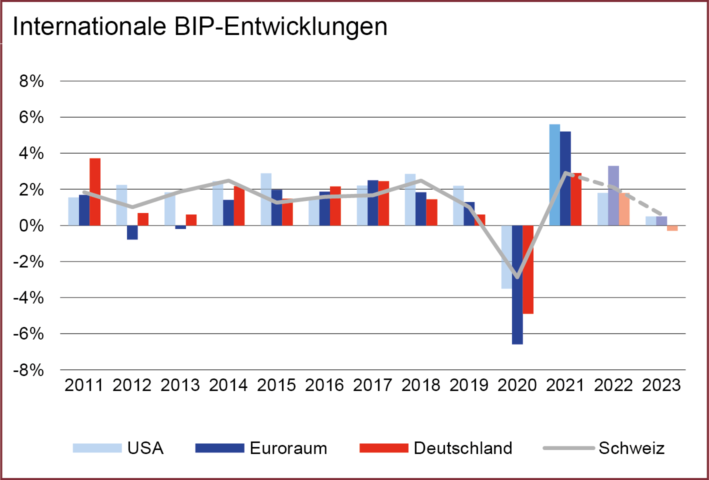
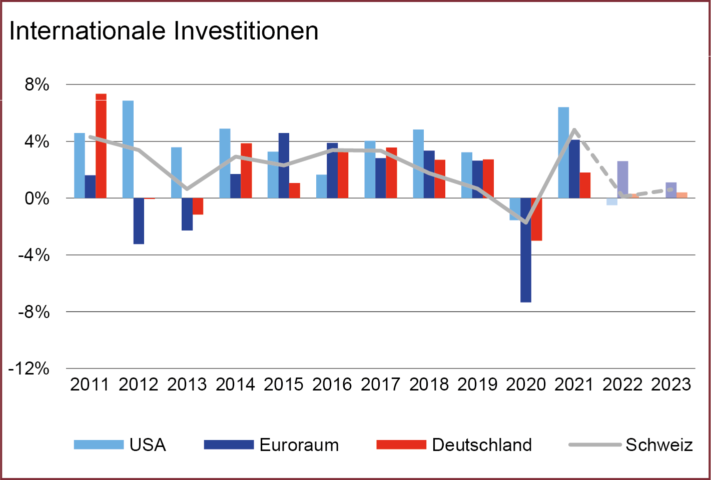
    International GDP development as well as investments have recovered excellently in 2021. However, the latest developments
    show that investment volumes are currently subdued and GDP development is cooling down worldwide. Economic analysts’ forecasts predict a slowdown in 2024 and a possible downward trend.

    The pandemic hardly plays a role in the media any more, but its consequences continue to be felt. In addition, rising energy and food prices as a result of the war in Ukraine, Corona measures by major economic players and supply chain problems have led to uncertainty, which is reflected in rising inflation rates. With the interest rate hike, the SNB was able to calm things down and is slightly above target. The forecasts of a slowdown in economic growth are reflected in a restrained development.

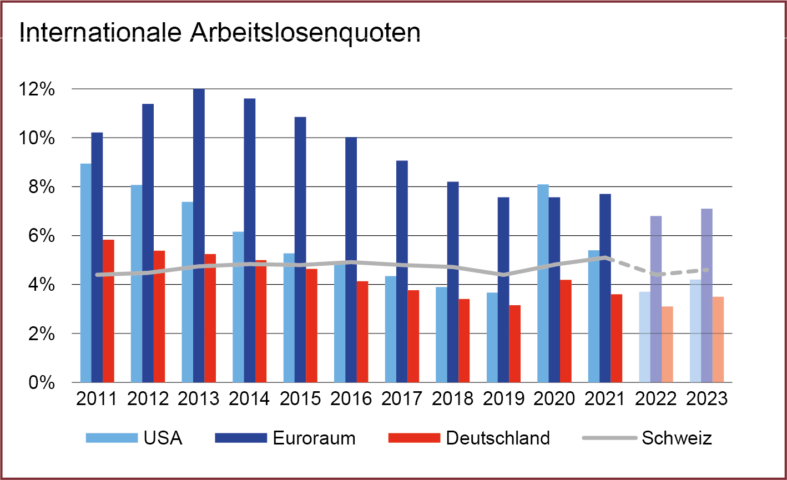
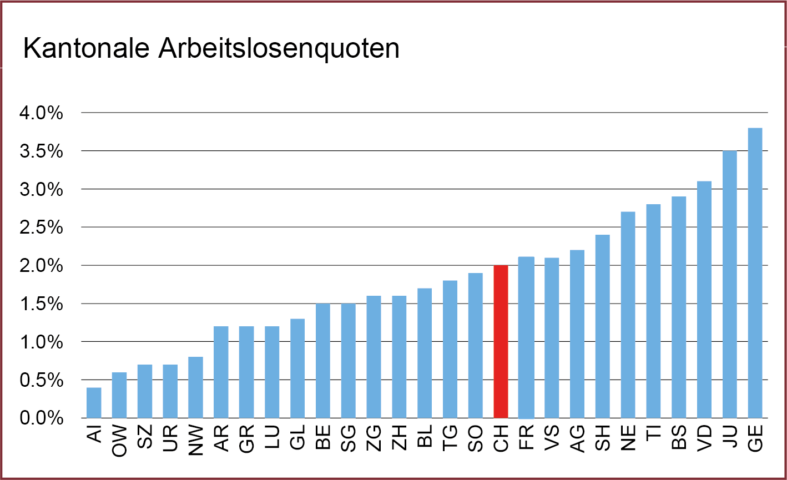
    Real incomes in Switzerland have fallen slightly, which, together with the pandemic-related pent-up demand in the consumer sector, is having a positive effect on the economy. The outlook for the labour market is good and an upswing is possible by 2024.

    The residential real estate market is robust and could not be affected by the financial crisis, the Corona pandemic or the war in Ukraine. The Swiss office market is unimpressed by the negative news from the global economy.

    Further interest rate steps by the SNB are expected and yields could rise slightly. However, due to immigration, vacancies in the periphery are falling and demand for space in the centres remains high, leading to rising market rents.

    In the area of commercial real estate, yields are not expected to rise in the near future, as interest rates could rise. There is a tendency for market values to fall, which could be cushioned by investors’ investment pressure.

  • A whole ship for the real estate industry

    A whole ship for the real estate industry

    [smartslider3 slider = "3"]

    Where does this saxophone come from? –Mr. G-Sax, one of the most renowned saxophonists in Switzerland, shortens the waiting time at the entrance control. “This is my 10th time here,” he says during a break in play. «The Immo-Boat was a hit right from the start. The whole real estate scene meets here in an almost familiar setting. You know each other, talk about the respective business situation and look forward to seeing you again. ” It is also clever that the Immo-Boat has always taken place on a Monday, which Marnie Baldessari from SVIT Zurich confirms: “We always plan the Immo-Boat on the last Monday of August. Because of Corona, it was September this year. But on Monday, unlike other days of the week, people have time. “

    After previous speakers such as Thomas Borer (2011), Valentin NJ Landmann (2013), Jean-Claude Biver (2016), Bertrand Piccard (2017) or Ottmar Hitzfeld (2018), this year Mario Gyr, Olympic champion, rowing world champion and European champion in the lightweight foursome without a helmsman as well as Olympic diploma holder from London 2012, the honor. In his presentation, he chatted freshly and freely from the sewing box of a top athlete and repeatedly drew parallels to today’s working life, and not only in the real estate industry. With his thoroughly sympathetic manner, he conquered the audience in no time and thanked him by handing around his gold medal, which feels much heavier than expected in terms of weight.

    Once again, the Lake Zurich tour on the MS Panta Rhei felt like a vacation: an idyllic ambience and wonderful landscapes, entertaining conversation partners and a cheerful after-work atmosphere among all guests are essential success factors. At the end of the evening there was not only fine wines and a generous aperitif, but also a cigar lounge on the sun deck. “Even people who normally don’t indulge in cigars come here to a Stump”, said one guest, almost cynically. Even the lighting glitch did not detract from the leisurely philosophizing. But on the contrary. Many a lady bobbed to the cool Mr. G-Sax beat almost like in the disco.

    True to the motto “Never Change a Winning Team”, along with SVIT CEO Pascal Stutz, Marnie Baldessari and Christoph M. Steiner, SRF presenter Monika Schärer was also present for the tenth time. No question: Both the Swiss Real Estate Association (SVIT) Zurich and the hosts ImmoScout24, Quooker, Raifeisen, Siemens Hausgeräte, Sunrise UPC and immo! Nvest can be satisfied. The tenth edition of the networking event for executives from the real estate industry will also be fondly remembered by all those involved. For Marnie Baldessari, every issue of Immo-Boat is a highlight: “We have many returning guests and we even have a waiting list. But because of Corona this has become shorter than it was before. ” Ship ahoy: See you again in 2022!

  • The trend is towards longer-term mortgages

    The trend is towards longer-term mortgages

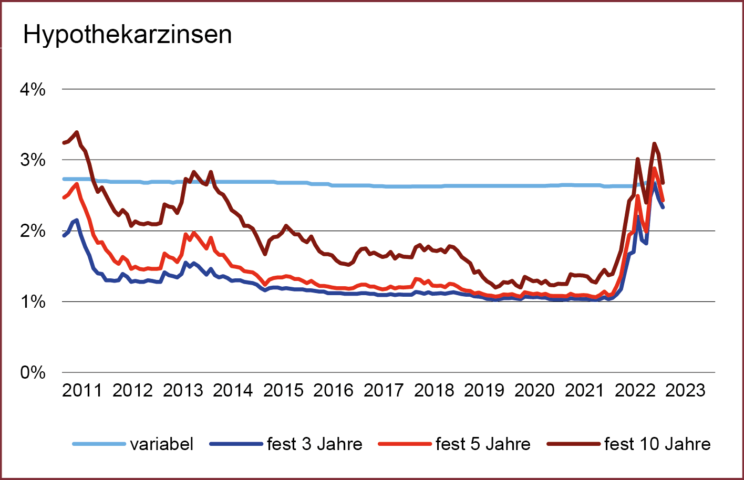
    The Swiss are increasingly tending towards longer-term mortgages. Ten years ago the five-year fixed-rate mortgage was the first choice, but now more and more people are opting for ten-year loan agreements to build or buy a property. This is the conclusion of the comparison and mediation service MoneyPark, according to a press release .

    A total of 55 percent of the brokered mortgage volume was concluded for ten years in 2020. A further 24 percent of the brokered contracts have been fixed for an even longer term, reports the company based in Freienbach. The proportion of these long-term mortgage products has doubled since 2016. The interest rate averaged a “record low” 0.92 percent.

    The reason for the trend towards longer terms are better options for comparing the products for external financing of a property. The market is also becoming more transparent and more competitive because professional intermediaries such as MoneyPark, in addition to banks, are giving new providers such as insurance companies and pension funds access. "In the past, banks preferred to sell shorter terms, also because, in relative terms, the 'risk-return ratio' is better than with longer terms", Stefan Heitmann, CEO and founder of MoneyPark, is quoted in the press release.

    Furthermore, the current low interest rate environment favors the choice of a long-term fixed-rate mortgage, as the interest rate differences between the terms are small.

  • Kompotoi feels the spring

    Kompotoi feels the spring

    With spring comes the need for toilets in public spaces again. Kompotoi , the Zurich-based provider of composting toilets, has been back in the city of Zurich with over 20 of its toilets since last Monday in March. You can find them on the Saffainstel near Landiwiese, on Bullingerplatz and in Hohensteinpark on the Uetliberg, as the company reports.

    Kompotoi is also continuing its expansion into Germany this year. After the company delivered its toilet houses in Germany from Darmstadt, this year it is also represented in Munich. In Switzerland, Kompotoi supplies not only from Zurich, but also from Basel, Bern, Freiburg, Graubünden, Lausanne, Martigny and St.Gallen, and now also from Wohlen BE.

    Kompotoi toilets process the human legacy into a soil conditioner without using chemicals or flushing. They are handcrafted in Switzerland. Kompotoi sells and rents out the facilities.

  • Repower is investing in German wind farms with partners

    Repower is investing in German wind farms with partners

    At the beginning of the year, Repower expanded its portfolio of wind turbines in Germany, the Graubünden energy supplier informed in apress release . Specifically, Repower has taken over the Berlar wind farm in North Rhine-Westphalia. The plant with five turbines and a total output of 7.5 megawatts is expected to produce around 14.4 gigawatt hours of electricity annually. The notification does not provide any information about the purchase price.

    According to the announcement, the Graubünden energy supplier already operates a number of wind farms in Italy and Germany. The new acquisition is to be integrated into the German Repartner Wind GmbH. The company is wholly owned by Bündner Repartner Produktions AG , which is 51 percent majority owned by Repower. The trucks hold the largest minority share with 10.39 percent.

    Via Repartner Produktions AG, Repower wants to offer its shareholders “access to diversified, renewable electricity production”, according to the announcement. In addition to Repower and LKW, other Swiss energy companies are involved in Repartner Produktions AG, including Eniva, WWZ and the electricity works of the Canton of Zurich (EKZ).

    “This stake is an absolute gain for LKW,” said Gerald Marxer, CEO of LKW, in a separate announcement from LKW on the takeover of the wind farm. "On the one hand, we can increase our own production and, on the other hand, we are investing in renewable production technologies in accordance with our strategy."