Tag: Industrie

  • Hydrogen can do a lot, but not everything

    Hydrogen can do a lot, but not everything

    The Fraunhofer ISI analyzed 774 individual statements as part of a meta-fact check and condensed them into 77 core statements. The result was not a new opinion paper, but a synthesis of the current state of knowledge. The result is nuanced, but the key points are unambiguous. Lead author Nils Bittner puts it in a nutshell: hydrogen can have an enormous impact where there are no equivalent alternatives. Where such alternatives do exist, its use costs valuable resources and time.

    The efficiency bottleneck
    The basic problem lies in physics. Green hydrogen is produced by electrolysis. Depending on the process, this requires around 50 to 60 kWh of electricity per kilogram. Compression, transportation and reconversion swallow up further energy. In the end, often only a fraction of the kilowatt hours originally used remain. Heat pumps and battery-powered vehicles therefore use the same electricity many times more efficiently.

    Where H₂ remains indispensable
    Nevertheless, there are areas in which hydrogen has no viable alternative. The steel industry needs it to reduce iron ore, the chemical industry as a raw material for ammonia and methanol. Aviation, shipping and heavy goods transport can hardly be directly electrified. Hydrogen is the fuel of choice here. There is also currently no comparable alternative for the seasonal long-term storage of energy over weeks and months. In Switzerland, this assessment is in line with the federal government’s hydrogen strategy, which envisages H₂ primarily for high-temperature process heat and transport sectors that are difficult to decarbonize.

    The chicken-and-egg problem is slowing down the ramp-up
    A functioning hydrogen economy requires infrastructure such as pipelines, cavern storage facilities and electrolysis plants. However, companies only invest when the supply is secured and network operators only build when there is sufficient demand. This chicken-and-egg problem is slowing down the market ramp-up considerably. The Fraunhofer ISI therefore recommends concentrating on industrial clusters instead of a nationwide network extending into residential areas.

    Imports only solve half the problem
    Germany will have to import up to 80 percent of its hydrogen requirements. Transportation over long distances usually requires conversion into ammonia or liquid hydrogen, with further energy losses. This creates new global supply chains instead of fossil dependencies. Switzerland will not become self-sufficient in hydrogen either. The cantons of Basel-Stadt and Basel-Landschaft adopted a joint hydrogen strategy for the first time in February 2026 and calculate a demand of 0.4 to 3.4 percent of total energy requirements for 2050, concentrated on industry and heavy goods vehicles.

  • Business award recognises industrial expertise and regional roots in Thurgau

    Business award recognises industrial expertise and regional roots in Thurgau

    GLATZ AG from Frauenfeld has secured the Thurgau Business Award 2026, which is presented annually by the Thurgau Chamber of Commerce and Industry, the Thurgau Trade Association, the Thurgau Cantonal Bank and the Department of Home Affairs and Economic Affairs.

    According to a press release, the family business impressed the jury with its combination of cross-generational business activities, international competitiveness and regional loyalty. With its patented sunshade frames, a high level of vertical integration, an in-house sewing workshop and uncompromising quality standards, GLATZ AG is a trendsetter in shade solutions – at a time when the international low-cost market is squeezing out many competitors. The large sunshades from Frauenfeld, which can withstand wind speeds of up to 115 kilometres per hour, are exported from Thurgau to over 50 countries.

    “The company has been firmly rooted in Thurgau for over 130 years – and at the same time carries the quality and innovative spirit of Thurgau as a centre of industry out into the world,” says Thomas Koller, jury president of the Thurgau Business Award.

    The move to the new headquarters on Langfeldstrasse in Frauenfeld in 2024 shows that GLATZ AG will remain rooted in Thurgau in the future. The new building, which combines research and development, production, administration and a modern training centre under one roof, was also built with a focus on sustainability. Photovoltaic systems, energy-efficient heating and cooling systems and shorter transport routes reduce the CO2 footprint.

    The award ceremony will take place on 15 April 2026 at GLATZ AG in Frauenfeld.

  • Where electricity will come from in 2050

    Where electricity will come from in 2050

    For Switzerland to become CO₂-neutral by 2050, transport, heat supply and industry must be largely electrified. Today’s electricity demand of 56 terawatt hours will increase to around 75 TWh by 2050. At the same time, 23 TWh will come from nuclear energy. The necessary reorganisation of the energy system is far-reaching in technical, economic and social terms.

    Massive expansion of renewable energy
    According to the EDGE report, around 60 % of electricity must be covered by new renewable energies by 2050, specifically 45 TWh per year. This would be possible with 28 TWh from photovoltaics, 13 TWh from wind power and 4 TWh from biomass. To achieve this, photovoltaic capacity would have to be quadrupled to 26.8 GW. Wind power would need to be expanded 80-fold to 8.4 GW, especially for winter operation. According to the researchers, this is hardly realisable without strong subsidies.

    Limiting electricity imports makes the system more expensive
    The new Electricity Act limits net electricity imports in winter to 5 TWh. In order to meet this target, an additional 80 % more wind power, 11 % more gas capacity and 10 % more solar capacity would be required. This would increase electricity generation costs by 20 % and electricity prices could more than double.

    Europe remains decisive
    If European electricity trading were to be severely restricted, e.g. through a 70 % reduction in cross-border grid capacities, Switzerland would have to expand wind power by a further 20 %. Supply costs would rise by an additional 8 %. A survey by the EDGE consortium shows the conflicting priorities. 60 % of the population would like to cooperate with Europe, while at the same time 70 % want energy independence and favour domestic energy sources.

    Investments flow abroad
    Another study shows that more than half of the annual investments made by Swiss energy suppliers in large-scale renewable energy projects are channelled mainly to Germany, France and Italy. Only 1 % of these funds are invested in Switzerland. There is a lack of suitable projects or framework conditions in Switzerland. This means that Switzerland is often financing the energy transition indirectly, but not at home.

    Net zero has its price
    The cost of living could rise between 2020 and 2050, for example due to CO₂ taxes, emissions trading or higher production costs. The annual consumption loss of a household could be 0.63-0.75 %, depending on the global climate protection pathway. Without offsetting options abroad, the costs could rise to up to 1%. In the long term, however, this would be more favourable than the consequences of unchecked climate change.

    The energy transition is feasible and challenging
    A CO₂-neutral electricity supply by 2050 is technically possible if photovoltaics and wind power are massively expanded, imports are used intelligently and investments are channelled in a targeted manner. Access to the European electricity market remains crucial. At the same time, we need broad social support and an understanding that inaction will be more expensive than a bold transformation.

  • New plant strengthens construction chemicals production in Central Asia

    New plant strengthens construction chemicals production in Central Asia

    Sika AG is continuing its growth course in Kazakhstan with the commissioning of a new production site. The plant is located in the city of Ust-Kamenogorsk in the east of the country and combines production lines for mortar and concrete additives and a laboratory.

    According to a press release, it is the fourth plant for Sika specialty chemical products for construction and industry. There is a high level of construction activity in the region. The mining industry in particular is experiencing strong growth. Local companies in the chemical, energy and automotive sectors are also expanding. As a result, the demand for residential buildings is increasing.

    The construction chemicals company has announced that it will also be involved in major projects. Kazakhstan is one of the most resource-rich countries in the world. Forecasts predict annual growth of 4.2 percent for the construction industry in Kazakhstan until 2028. The drivers are investments in energy projects, water reservoirs, transport infrastructure and industrial parks. According to estimates, the volume of construction projects across the country amounts to 160 billion Swiss francs.

  • Vaud economy between recovery and uncertainty

    Vaud economy between recovery and uncertainty

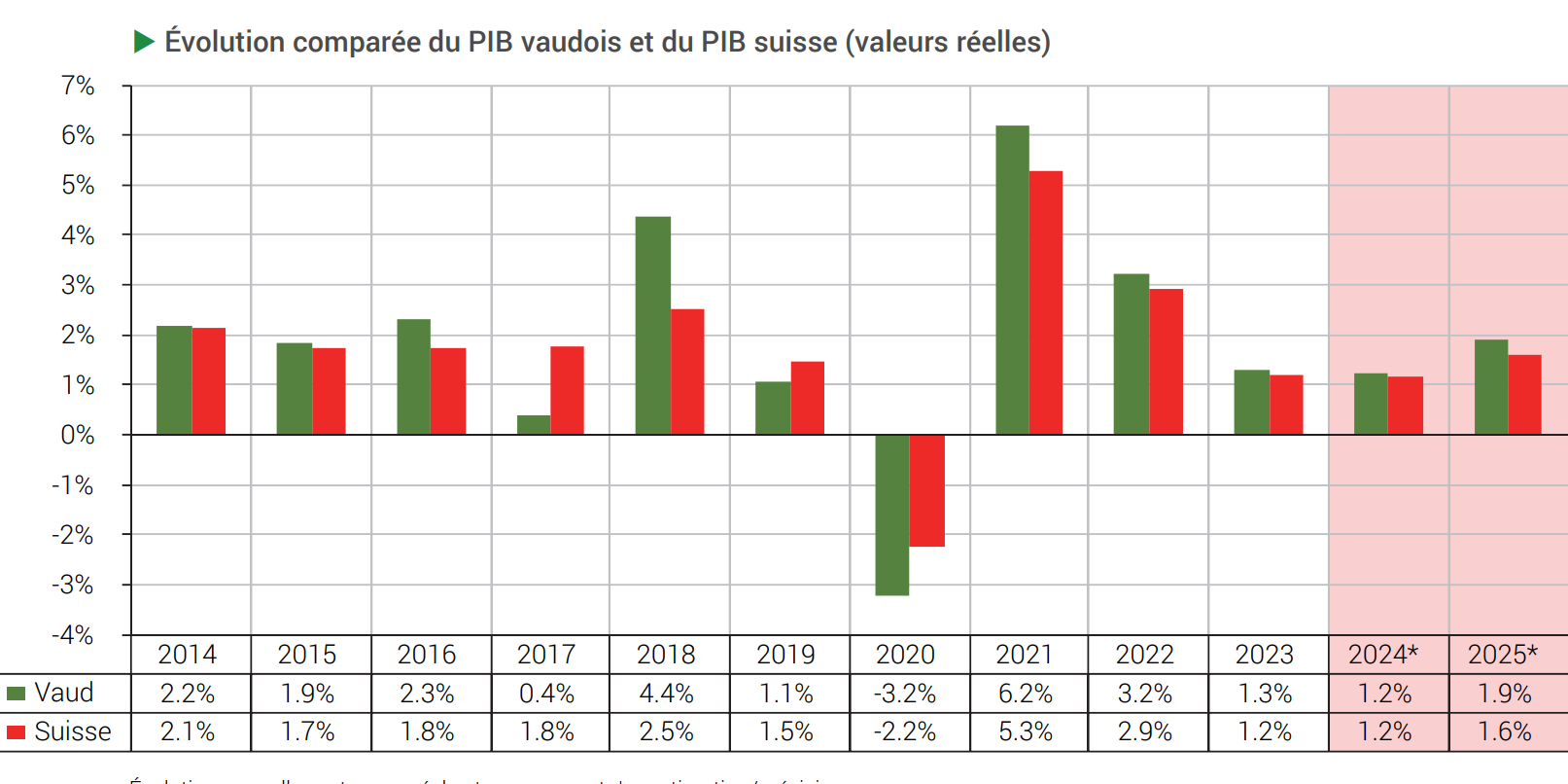
    Global economic tensions have increased in recent months. The OECD and the Swiss State Secretariat for Economic Affairs (SECO) point to risks, particularly from the new US administration and the unclear relations between Switzerland and the EU. While the US economy is growing more strongly than expected, the European economy remains weakened by structural challenges. The strong Swiss franc is slowing down export-orientated sectors, while domestic demand remains a stable pillar of the economy.

    Construction industry benefits from interest rate cuts
    The Swiss National Bank (SNB) has eased its monetary policy and lowered the key interest rate from 1.75% to 0.5%. This measure is creating a favourable investment climate, particularly in the construction industry, which is benefiting from falling financing costs. Forecasts for Switzerland as a whole predict growth of 1.5% this year and an acceleration to 1.7% next year.

    Sector development mixed picture
    While the industrial economy continues to be challenged, other sectors are showing mixed developments. The retail and hospitality sectors are struggling with a weak business climate, while the service sector is showing positive momentum. Particularly strong growth is forecast for the chemical and pharmaceutical industries, business services and the financial sector. The machinery and watchmaking industry could also benefit from the economic recovery in the medium term.

    Stabilisation with uncertainties
    The Vaud economy is looking forward to a year of opportunities, but also challenges. While key sectors are likely to benefit from a sustained recovery, geopolitical and currency policy uncertainties remain risk factors. The decisive factors will be how international trade relations and the domestic economy develop and the extent to which companies are able to react flexibly to changes.

  • Online tool for climate-neutral industrial processes

    Online tool for climate-neutral industrial processes

    Industry is facing the challenge of converting its processes from fossil fuels to renewable energies. High-temperature heat pumps offer an energy-efficient solution for temperature ranges from 100 to 200°C in particular. They can not only provide process heat, but also generate cooling at the same time, which makes them particularly attractive for many branches of industry.

    Interactive technology map for companies
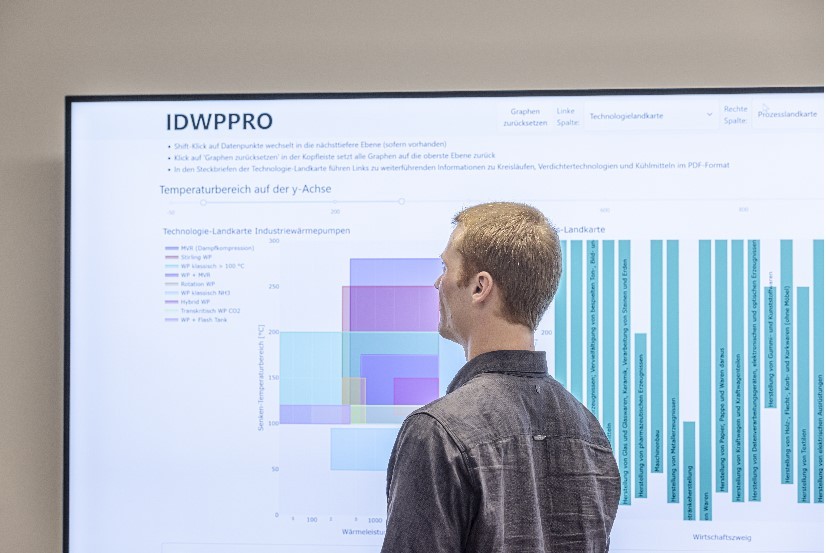
    In the research project “Identification of industrial heat pumps for process heat”, Fraunhofer ISE has developed an online tool that provides companies with targeted support in selecting the right heat pump technology.

    The tool offers

    • Visualisation of the available heat pump technologies in the temperature range and output
    • Allocation of heat pumps to specific industrial processes (e.g. cleaning, drying, cooling)
    • Interactive retrieval options for process temperatures in various industries
    • Detailed fact sheets on circulation processes, compressor technologies and refrigerants

    A contribution to climate-neutral industry
    The online tool is part of the Fraunhofer research topic “Climate-neutral industry”, which supports companies on their way to a CO₂-neutral energy supply.

    This includes:

    • Optimisation of potential energy savings
    • Utilisation of industrial waste heat
    • Integration of renewable energies (e.g. photovoltaics for in-house power supply)
    • Storage solutions for heating, cooling and electricity

    Special attention is also paid to the treatment of industrial waste water, which not only contains waste heat but often also valuable residual materials such as metals or acids. These can be efficiently recycled using modern recovery technologies.

    Participate and contribute data
    The data pool of the online tool is constantly being expanded. Manufacturers of heat pumps and industrial companies can get in touch with Fraunhofer ISE to integrate their data into the platform and thus drive development forward.

    With this new digital solution, Fraunhofer ISE offers companies an effective tool for decarbonising industrial processes and increasing energy efficiency – a decisive step on the way to climate-neutral production.

  • Revolution in materials technology

    Revolution in materials technology

    Epoxy resins are indispensable for numerous industrial applications, from adhesives to coatings and composites. While conventional two-component epoxy resins require precise mixing and fast processing, one-component epoxy resins offer simplified handling and consistent quality.

    However, previous solutions had weaknesses. They could often only be stored at low temperatures and had insufficient flame-retardant properties. This limited their potential applications in safety-critical areas such as the construction, electronics and telecommunications industries.

    Breakthrough from Korea
    A research team from the Korea Institute of Science and Technology in collaboration with Sungkyunkwan University has overcome these hurdles. Under the leadership of Dr Jaewoo Kim and Professor Chongmin Koo, they developed the “Epoxy/MXene One-Component Solution”, a combination of epoxy resin, a new type of latent hardener and the two-dimensional nanomaterial MXene.

    This innovation enables a storage stability of over 180 days at 60 °C, a significant advance compared to previous products, which lose their properties within 40 days at room temperature of 25 °C.

    MXene as the key to stability and safety
    MXene, a state-of-the-art nanomaterial, not only improves the thermal and mechanical resistance, but also makes a decisive contribution to the flame retardancy (V0 class) and electrical conductivity of the new epoxy resin. This opens up a wide range of applications in the high-performance industry, particularly for electromagnetic shielding materials, industrial coatings and adhesives.

    Industrial applications and future potential
    The combination of extended durability, improved safety features and easy handling makes the new 1-component epoxy resin particularly attractive for industries with high demands on material stability and fire protection.

    Possible areas of application

    • Electronics: Protective coatings for components and printed circuit boards
    • Construction industry: flame-retardant adhesives for safety applications
    • Telecommunications: high-performance materials for antennas and shielding housings

    With this innovation, the South Korean research team could have a lasting impact on materials technology and set new standards for single-component epoxy resins.

  • Climate-neutral industry – Vision 2026

    Climate-neutral industry – Vision 2026

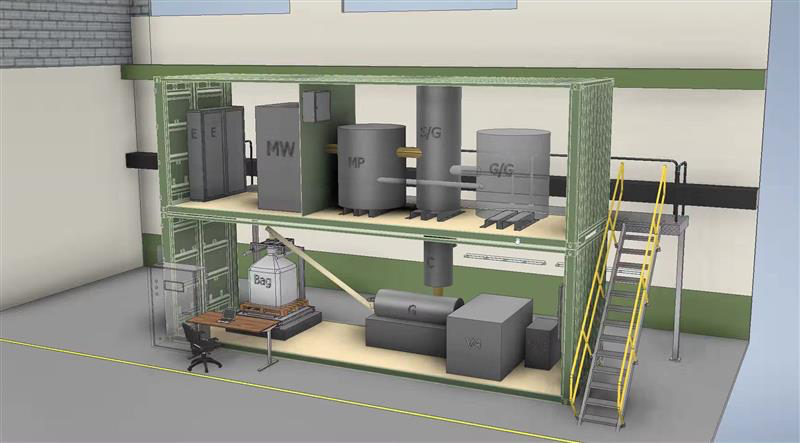
    Founded in 2022, the Association for the Decarbonisation of Industry aims to reduce emissions to a minimum through innovative technology. At the forefront is the methane pyrolysis process, which enables emission-free energy utilisation by splitting hydrogen from methane. The remaining carbon is utilised as a resource, for example as humus in agriculture or as a building material, which binds the carbon in the long term.

    Cooperation between business, research and politics
    Without the cooperation of 16 leading companies, Empa and politicians from the Canton of Zug, the project would hardly be possible. Together, they are contributing to the development and scaling up of the pyrolysis process, which is to be scaled up from laboratory to industrial size by 2026. The partners are providing funding of over CHF 8 million, thereby sending a strong signal for the decarbonisation of industry.

    Methane pyrolysis Reduction of CO2 emissions
    The association is focusing on methane pyrolysis, a process that minimises CO2 emissions when using natural gas. Instead of traditional combustion, hydrogen is obtained from methane, while the carbon is in solid form and therefore does not cause any emissions. This technology could save up to 270 g of CO2 per kilowatt hour produced and is therefore a potential key to the net-zero targets by 2050.

    Sustainable ecosystem without waste
    The association is working to create an ecosystem that optimally utilises all components of the process. Through the circular economy concept, not only hydrogen, but also carbon and waste heat are to be efficiently reused to avoid waste. This holistic strategy creates a model that is ideally suited to a climate-friendly future.

    Membership of the Association for the Decarbonisation of Industry
    Companies that are committed to the climate-neutral future of industry and would like to benefit from the findings of the association can become members. The association is tax-exempt and donations are deductible in the canton of Zug. Members gain access to advanced knowledge and support an initiative that lays the foundations for an emission-free
    industry.

  • New partnership promotes hydrogen from wood waste

    New partnership promotes hydrogen from wood waste

    H2 Bois has a new minority shareholder. According to a press release, the Vaud-based energy supplier Romande Energie will acquire a 33.7 per cent stake in January 2025. Groupe Corbat, based in Vendlincourt JU and active in the timber industry, will then hold 50.3 per cent and the consulting firm Planair Vision SA, based in La Sagne NE, 16 per cent of the company they founded in 2021.

    H2 Bois plans to build a plant to produce hydrogen from wood waste in 2025 and put it into operation in 2026. The production process also produces biochar, which can permanently store some of the CO2 contained in the wood. When fully operational in 2030, the plant will be able to produce a total of 450 tonnes of clean hydrogen from 14,000 tonnes of wood and wood waste and store 2,500 tonnes of CO2 per year. H2 Bois utilises technology from the French company Haffner Energy.

    The hydrogen is transported to an industrial zone in the village via a 1.5 kilometre long gas pipeline. There it is used by industrial companies and for mobility via a petrol station. The biochar is used in agriculture.

    For Romande Energie, the investment is a step towards a decarbonised western Switzerland. “This investment allows us to participate in a bold project that is a pioneer in Switzerland in the use of an innovative negative emissions technology,” said Jérémie Brillet, responsible for hydrogen at Romande Energie, in the press release.

    Benjamin Corbat, CEO of Groupe Corbat, welcomes Romande Energie’s involvement. “We are looking forward to the start of production, but also to breaking new ground in the local use of wood.”

  • Zug remains Zug – liveable, visionary, vibrant

    Zug remains Zug – liveable, visionary, vibrant

    How is the Zug economy doing?
    Zug is praised in numerous specialist publications and in the media for its diversified economy – services, trade, manufacturing industry and commerce. Growth is still above the Swiss economic average of 1.2% and has so far proved resilient to global or technical upheavals. Thanks to the positive financial results, the city of Zug, together with private households and the flourishing economy, is an important pillar for further growth in the coming years.

    How does the city of Zug plan to ensure its economic growth is sustainable in the coming years, especially given the strong focus on the financial and crypto industries?
    Sustainability also means that we look after the companies based here and are reliable partners and employers. It is therefore important that we continue to have strong legal certainty in Switzerland and Zug. We offer a strong education system, have short distances to the city and canton, maintain great local recreational areas and have good road and rail connections to Lucerne and Zurich.

    Zug is experiencing high demand for residential and commercial space. What long-term solutions does the city see to promote residential construction while maintaining the quality of life?
    Many years ago, we demanded the framework conditions for the V-Zug site/technology cluster development plan and the LG site development plan with a letter of intent. In both of these cases, we defined 10,000 m2 of affordable housing and affordable commercial space. We have also been working closely with Zug’s building cooperatives for over 10 years. We also recently purchased an area right next to the railway station for 65 million. This is to be used for the construction of affordable housing. The mix of flats still needs to be defined and will ultimately be put to a referendum. Here, too, it is to be sold under building rights. This is because the building cooperatives know what the people of Zug need in terms of housing. In addition, the city of Zug is working closely with landowners to develop development plans in cantonal densification areas that permit high densities. The municipal high-rise building regulations form an important legal basis for this. As part of these measures, increased attention is paid to the quality of the open spaces on the sites themselves, as well as the other public open spaces. In the spirit of a “city of short distances”, the inner-city open spaces and leisure infrastructure, as well as the natural and landscape areas, should be easily accessible, especially by public transport, on foot and by bike.

    What new projects and initiatives is the city of Zug planning to promote sustainable urban development?
    There are many new projects in the city of Zug. They all have to take equal account of social, economic and ecological aspects. In this respect, each of our projects should already support sustainable urban development. Perhaps you will allow me to give you two examples in which we are also playing a pioneering role. For example, an internal strategy project is underway to check whether we are well organised and sufficiently fit to master the future challenges of sustainable development. Or in the area of climate adaptation: we are currently installing temperature sensors throughout the city to identify heat islands and take targeted measures.

    The issue of affordable housing is becoming increasingly important. What measures is the city taking to ensure that Zug remains attractive for less affluent people?
    The city council is already calling for affordable housing to be created on at least 20% of the additional eligible floor area in residential and mixed zones when issuing ordinary development plans. Following the adoption of the “2000 flats for Zug’s middle class” initiative, affordable housing of at least 40% of the newly constructed living space must be created in residential and mixed zones located in densely populated areas when issuing ordinary development plans and in the case of rezoning and upzoning. To be honest, however, this has also halted construction projects. We are currently working on solutions.

    How important is citizen participation in municipal projects to you, and what opportunities do the residents of Zug have to contribute their ideas and opinions?
    The city of Zug has a strong and long-standing culture of participation. Public participation projects on various topics have been held regularly since the 1990s. The online participation portal “mitwirken-zug.ch” has also been available since 2020.

    Traffic in and around Zug is increasing. What is the city’s plan to bring the transport infrastructure in line with growth and strengthen public transport at the same time?
    Unfortunately, the city tunnel was rejected and solutions must be found nonetheless. The city of Zug is working closely with the cantonal civil engineering office to develop a joint transport plan for the vibrant centre of Zug. The city’s aim is to ensure that the existing road space is available to all road users equally and efficiently: Cars, public transport, bicycles and pedestrians. Fortunately, the city of Zug is small-scale, so many things can be done on foot or by bike.

    What plans are there to further expand public transport in order to relieve commuters and reduce traffic in the city?
    The next major expansion step is planned for the opening of the Zimmerberg tunnel. This will be around 2035 to 2037. Until then, public transport will continue on the current routes and the frequency will be adapted to demand. The public transport system will thus be adapted to the needs of the municipalities on a “small scale”. According to GöV, the municipalities have the option of purchasing additional services over and above those ordered by the canton. The city of Zug does this with the Zugerberg railway and on bus route 5, where it purchases additional cable cars and courses. This additional service, which is decided by the city parliament, gives the city of Zug flexibility over and above the service determined by the canton. However, it is clear that the service ordered by the canton is excellent and that the municipalities hardly need to make any improvements. The city of Zug already has excellent public transport connections in all neighbourhoods. Additional courses significantly reduce the cost recovery ratio. The cost recovery ratio to be achieved according to the GöV is 40%. Personally, I would like the S-Bahn to offer double-decker trains.

    How does the city of Zug support the expansion of educational facilities in order to address the shortage of skilled labour and at the same time strengthen Zug as a location for education?
    Education is our only resource and this is where the city of Zug invests the most money. The design of attractive school buildings as places to work and learn, with the involvement and participation of pupils and teachers in the planning process, are key concerns. In addition, there are attractive childcare and leisure facilities for children and families as well as a modern ICT infrastructure. In addition, forward-looking and innovative projects and collaborations such as the school portal – where parents can communicate online with teaching and support staff and the school administration – the DigiWerkstatt and the inclusion of AI in lessons are being driven forward. However, it is also important that we meet the needs of companies and actively support the dual education system. A great project is underway here!

    What role does the promotion of innovation play in Zug and how is the city planning to establish itself as a centre for pioneering technologies and companies?
    The promotion of innovation plays a central role in the city and canton of Zug in positioning the city as a centre for pioneering technologies and companies. One important point is: we try things out. For example, following a presentation by a student, we decided to accept Bitcoin as a means of payment in the city of Zug, which caused a worldwide furore. Today, the city of Zug is THE Crypto Valley worldwide with over 4000 employees in over 800 companies. True to the motto: “no risk, no fun”. We will continue to be innovative! Targeted measures and programmes are designed to strengthen the innovative power of the city of Zug so that the environment becomes even more attractive and motivating for companies and, above all, for employees. You can move mountains with innovative projects and motivated people. The framework for this is provided by the development strategy for the city of Zug adopted by the City Council in autumn 2021: “Zug remains Zug – liveable, visionary, vibrant”. It is an overarching management tool with a long-term perspective to help shape the future of the city of Zug. Innovative economy, green city, strong community, healthy finances – these are our credos for the future.

    What is your long-term vision for the city of Zug? What goals are you determined to achieve in the coming years?
    As a growing business location with excellent conditions for companies and skilled workers from near and far, we cultivate our economic diversity and position ourselves specifically through future-oriented industry clusters. We are developing Zug as a green city in a sustainable and resource-conserving manner and are planning mobility, space and energy in a visionary way.

    In the tension between tradition and modernity, we promote dialogue and create an inspiring framework for a vital, diverse and cosmopolitan urban community. And to maintain our healthy finances, it is important to ensure competitive framework conditions, make future-oriented investments and secure our tax base in the long term. In addition to all impact targets, we promote lifelong learning, utilise the potential of diversity in the population, economy and culture for pioneering lighthouse projects for change and use incentives to steer change.

    Zug is committed to more climate protection. Can you give us an overview of the most important measures that are currently being implemented to reduce CO2 and increase sustainability in the city?
    When it comes to climate protection, the focus is on moving away from fossil fuels. All heating systems must be able to run on local renewable energy in the medium term. Compliance with modern building standards and, together with Wasserwerke Zug (WWZ), the expansion of district heating are at the forefront here. We have brought Circulago into being. We take cold and heat from the lake and thus have a “battery” on our doorstep. At the same time, we also want to upgrade our own properties, produce our own electricity and get rid of fossil-fuelled heating systems. The introduction of CO2 monitoring and many larger and smaller measures as part of the “Energy City” programme, where we have also been certified with the “Gold” label for 2023, will help us achieve this. I am convinced that we can supply ourselves with energy. We have innovative companies such as Siemens, Landis & Gyr, V-Zug, the technology cluster and many more companies in Zug that all offer these technologies and innovations. It’s certainly been 10 years since Siemens showed us that the technology for local self-sufficiency already exists, so let’s do it!

    Where do you see the city of Zug in 20 years’ time?
    In 20 years’ time, the city of Zug should be a liveable, innovative and sustainable place that offers both economic dynamism and a high quality of life. In other words, we will have made Zug even more attractive for companies and skilled workers, while at the same time creating space for a strong community. Zug’s role as an international business and financial centre has been strengthened, particularly in the area of digitalisation and new technologies such as blockchain and AI applications. Thanks to sustainable urban planning and environmentally friendly infrastructure, the city of Zug is climate-neutral. We have attractive places to live and work, green recreational areas, attractive cultural offerings and a diverse infrastructure for education, leisure and health. Zug has made a name for itself as a centre of education and innovation that is networked with tertiary education institutions and research facilities. We have intelligent traffic management and an efficient infrastructure that meets the needs of a growing population and is designed to be sustainable. Progress is being made step by step – I am delighted!
  • Investments in the circular economy and decarbonisation strengthen CO2 strategy

    Investments in the circular economy and decarbonisation strengthen CO2 strategy

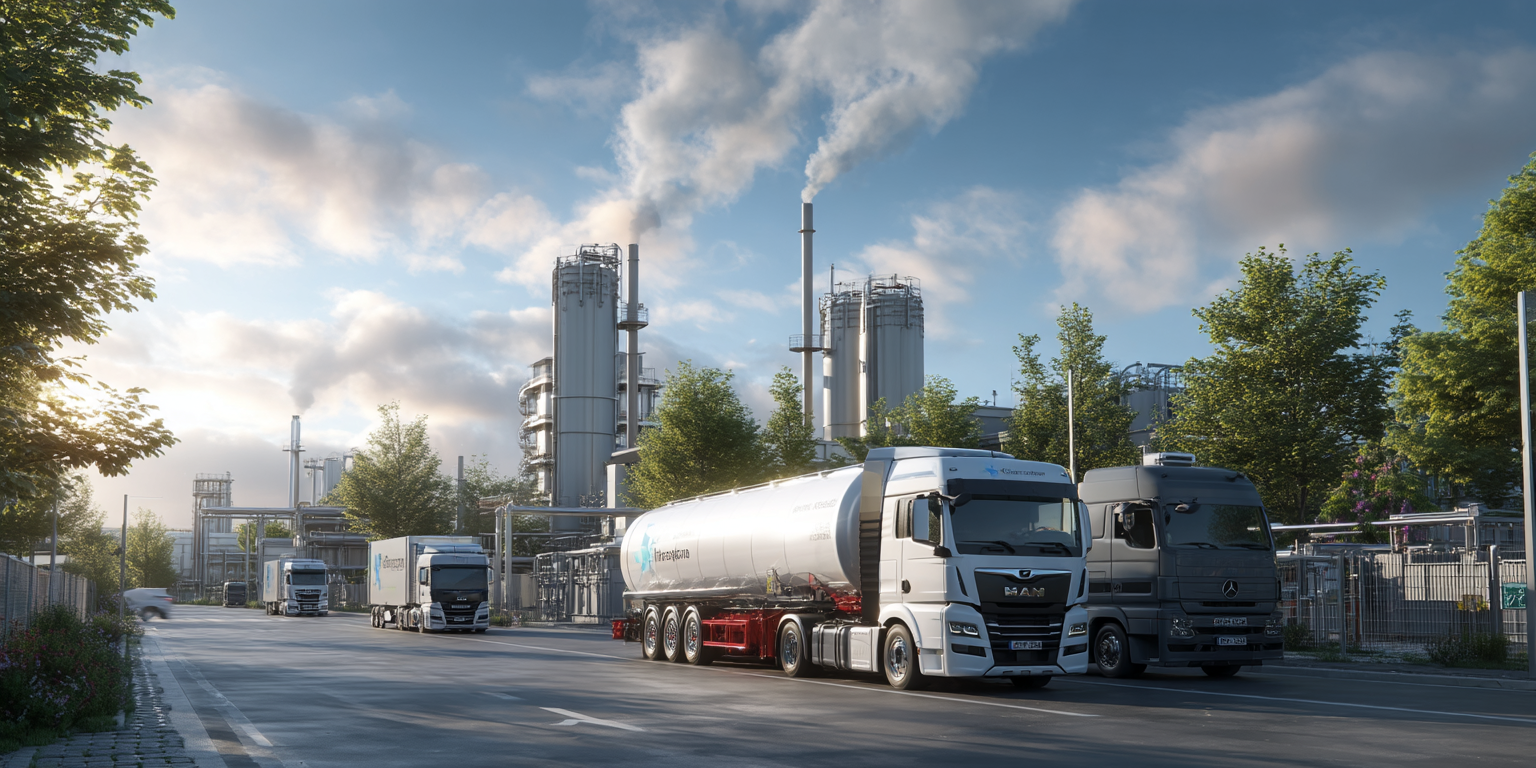
    Holcim receives a grant from the EU Innovation Fund for another major cleantech project. This brings the number of Holcim’s EU-funded CCUS projects to seven. According to a press release from the building materials manufacturer, this new carbon capture and storage (CCUS) project at its site in Martres-Tolosane in south-west France is a highly scalable plant based on mature technologies and close partnerships.

    Holcim had already announced an investment of 100 million euros in the sustainability of this cement plant in 2017. Between 2021 and 2023, Holcim invested a further 200 million euros in the decarbonisation of its French industrial facilities and made a further 60 million euros available for its continuation in May of this year.

    According to Holcim, these investments will have a leverage effect on the development of new sectors and jobs in the field of the circular economy on the one hand, and in the medium term in the field of carbon capture, storage and utilisation on the other. To this end, a new pilot platform, a real industrial test centre for open innovation, will be built at the Martres-Tolosane factory. It will be dedicated to improving new CO2 capture technologies.

    “Holcim is well on its way to making net-zero cement and concrete a reality on a large scale in this decade,” CEO Miljan Gutovic is quoted as saying in the press release. “This support from the EU Innovation Fund is a testament to the strength of our engineering teams, the maturity of our technologies and progressive partnerships across the value chain.”

  • Schaffhausen economic area – an area for makers

    Schaffhausen economic area – an area for makers

    Schaffhausen has developed very successfully as a business location in recent years. Thanks to the canton’s reliable and targeted location strategy, numerous companies have set up headquarters and expanded their activities in Schaffhausen over the past 25 years. Today, the many companies with internationally oriented headquarters functions are just as much a part of Schaffhausen’s corporate landscape as the innovative manufacturing companies that continue the canton’s industrial tradition. Schaffhausen companies are particularly successful in the pharmaceutical and chemical industries, in mechanical engineering and in the plastics industry. The life science cluster in Schaffhausen is one of the largest in Switzerland and makes up a significant part of the regional economy. Thanks to the traditionally strong manufacturing industry with its focus on exports and the high density of internationally orientated company headquarters, Schaffhausen today has the fifth highest gross domestic product GDP per capita of all cantons. A success for the canton, which accounts for around one per cent of Switzerland’s population.

    With its industrial expertise, Schaffhausen is also successfully positioning itself as a leading region in the development and application of pioneering technologies at the interface of industry and digitalisation. These include smart mobility, food tech and advanced materials. This is why Schaffhausen is investing in the development of expertise networks – with a pioneering spirit and innovative strength.

    Recipe for success for the location
    The targeted investments in the framework conditions are Schaffhausen’s recipe for success. Today, the business location impresses with the best conditions for healthy growth. With moderate taxes, real estate at attractive prices and low labour costs, companies have more to invest in. Thanks to excellent road and rail connections to the nearby Zurich international airport, Schaffhausen is quick and easy to reach. As part of the Zurich metropolitan area and closely networked with the economic region of southern Germany, Schaffhausen companies also benefit from well-trained specialists and the proximity to numerous universities. The quality of life in Schaffhausen with its many attractive residential options attracts companies and new workers, who become new residents. Short distances to authorities and network partners help to find the right contacts. Decisions are made quickly. Schaffhausen as a business location is proud of its pioneering spirit and doer mentality.

    Testimonials

    Christos Asimakopoulos

    CFO EMEA, ASPAdvanced Sterilisation Products

    “The business-friendly attitude, the short distances and the openness of the authorities and the business development organisation – that’s what convinces me about Schaffhausen.”

    Dr Stephanie Striegler

    General Manager Janssen Supply Chain Schaffhausen

    “One of the location’s main strengths is its well-trained, highly qualified specialists”

  • Industrial site in Serrières becomes Neuchâtel Innovation Park

    Industrial site in Serrières becomes Neuchâtel Innovation Park

    In collaboration with the Caisse cantonale d’assurance populaire and the Etablissement cantonal d’assurance et de prévention, the State and the City of Neuchâtel have acquired an industrial complex on Rue des Usines in Serrières. The aim is to develop and operate a new innovation centre there. To this end, the public limited company Usinnove SA was founded, in which the state holds a 40% stake and the City of Neuchâtel 20%. The remaining shares are held by CCAP and ECAP. The industrial complex covers an area of 7,000 m² and can create almost 400 new jobs.

    Central role of Microcity SA
    The new site will be managed and operated by Microcity SA. A centre of excellence for diagnostics and related technologies is to be set up, serving as a hub for companies in the fields of diagnostics and automation. Part of the complex will be converted into a business centre equipped with laboratory infrastructure and offering a collaborative project environment for large companies, SMEs and start-ups.

    Strengthening the Neuchâtel innovation cluster
    The acquired industrial complex is intended to further strengthen Neuchâtel’s position in the Swiss Innovation Park. The Serrières site offers potential for the expansion of Neuchâtel’s innovation cluster and will secure an industrial location in the long term. Neuchâtel will thus expand its offering and consolidate its position as an innovation centre.

    Strategic use of old buildings
    The purchase of the industrial complex is part of the state’s strategy to utilise old buildings for light industrial activities. This policy aims to bring start-ups, SMEs, large companies and research centres together on one site in order to meet the economic challenges facing the canton. Similar projects have already been realised at the sites Rue Jaquet-Droz 7 in Neuchâtel and Hôtel-de-Ville 7 in Le Locle, which are also home to cutting-edge applied research activities.

    An important step for Neuchâtel
    The acquisition of the industrial complex in Serrières and the planned transformation into an innovation centre are an important step for the economic development of Neuchâtel. The close cooperation between the state, the city and institutional partners will strengthen the region and create the basis for future innovations.

  • Five companies are in the final of the Prix SVC Zurich Economic Area

    Five companies are in the final of the Prix SVC Zurich Economic Area

    The finalists for the Prix SVC Zurich Economic Area 2024 have been announced. An independent jury of experts with strong regional roots has decided in favour of Hauenstein AG, Hawa Sliding Solutions AG, Luzi AG, RepRisk AG and Schneider Umweltservices AG, the SVC announced in a press release.

    “I am very much looking forward to the Prix SVC and believe the decision as to who will win the prize has never been as challenging as this year,” said jury president Christopher Blaufelder, Partner at McKinsey & Company Switzerland, in the press release. “We have consistently high-quality companies from a wide range of industries in the final selection.” According to Blaufelder, all of them are characterised by a focus on quality and innovation.

    Hauenstein AG from Rafz ZH relies on the sustainable in-house production of native, hardy plants in its tree nursery and garden centres. Hawa Sliding Solutions AG from Mettmenstetten ZH specialises in sliding solutions for rooms, furniture and façades. Globally active Luzi AG from Dietlikon ZH develops and produces fragrance creations.

    RepRisk AG from Zurich specialises in the identification of business and ESG risks. Schneider Umweltservice AG from Meilen ZH specialises in innovative and environmentally friendly solutions for reuse and recycling.

    The Swiss Venture Club is one of the largest entrepreneurial networks in Switzerland. It awards the Prix SVC in eight regions every two years. The prize honours innovative companies in the region for outstanding achievements that enable sustainable economic success to be realised.

  • Solid-state batteries made of rock

    Solid-state batteries made of rock

    Researchers at DTU have developed an innovative material that could replace lithium in batteries: Potassium silicate, a widely available mineral extracted from common rock. According to the scientists, this solid-state battery could be an environmentally friendly, efficient and safe alternative to current lithium-ion batteries in around ten years’ time.

    Challenges of current lithium-ion batteries
    Lithium-ion batteries currently used in electric cars have their limits. The capacity, safety and availability of lithium are limited. The mining of lithium is not only expensive, but often takes place under questionable conditions. The metal is also relatively rare, which makes scaling difficult and hinders the transition to sustainable electromobility.

    In view of the growing interest in electric cars, the need for new, powerful and more environmentally friendly batteries is increasing. This requires the development of new materials for the anode, cathode and electrolyte as well as innovative battery concepts. Researchers around the world are working to find these new “recipes” to reduce carbon emissions from the transport sector.

    The breakthrough with potassium silicate as a solid-state electrolyte
    Researcher Mohamad Khoshkalam from DTU has patented a superionic material based on potassium silicate. This mineral is one of the most common on earth and can be found in ordinary rocks. A major advantage of this new material is its insensitivity to air and moisture, which makes it ideal for use in batteries.

    The milky-white, wafer-thin material can conduct ions at around 40 degrees Celsius and remains resistant to moisture. These properties make the scaling and production of future batteries much easier. As the material can be produced in an open atmosphere and at room temperature, it significantly reduces production costs. In addition, it does not require expensive and environmentally harmful metals such as cobalt, which are used in current lithium-ion batteries.

    Potential and prospects
    The development of the potassium silicate solid-state battery could represent a significant turning point in the electric car industry. By utilising widely available, environmentally friendly materials, the dependence on rare and environmentally harmful metals could be reduced. This would not only reduce production costs, but also increase the sustainability and efficiency of batteries.

    The DTU researchers are confident that their discovery can be brought to market maturity in the coming years. If this is successful, solid-state batteries made of rock could have a decisive impact on the future of electromobility and make a major contribution to reducing carbon emissions.

    This ground-breaking technology proves once again that innovative approaches and research results are crucial to mastering the challenges of the modern world and finding sustainable solutions.

  • Paradigm shift in energy planning

    Paradigm shift in energy planning

    Numerous countries have committed to being climate-neutral by 2050. For building and energy systems, this requires a rapid transition from fossil fuels to renewable energies and greater networking of different sectors. Buildings, mobility, industry, electricity, heat and synthetic fuels must interact and be planned in an integrated manner. Matthias Sulzer from Empa and Michael Wetter from the Lawrence Berkeley National Laboratory argue that the current planning processes do not do justice to this complexity and that a paradigm shift is therefore necessary.

    Current planning process – a silo mentality
    Today’s planning processes are organised by discipline, which leads to inefficient and suboptimal results. Engineers and architects work one after the other instead of collaborating across disciplines. This linear, “waterfall” approach leaves little room for iteration and optimisation in the overall system. Sulzer emphasises that this approach is no longer sufficient to meet the requirements of future, flexible energy systems.

    Inspiration from the chip industry
    Sulzer and Wetter propose a planning approach inspired by the chip industry. The electronics and computer scientist Alberto Sangiovanni-Vincentelli has revolutionised chip manufacturing with his “platform-based design”. This concept uses different levels of abstraction for the holistic analysis and optimisation of systems and creates universally valid, modularly combinable models. This model could also be applied to building and energy systems in order to automate and modularise planning.

    Advantages of a model-based planning process
    A model-based planning process would mean that models are used not only to analyse, but also to specify and build systems. These blueprints could be combined in a modular way to clearly define the design and functionality of a system. This would revolutionise planning, construction and operating processes and promote the necessary digitalisation and automation to achieve the ambitious decarbonisation targets.

    Pilot project at Empa
    The EU project GOES, led by Empa, is a first step towards the application of platform-based design in the energy sector. A pilot plant with 144 geothermal probes is being developed on the Empa campus in Dübendorf as the first application of this concept. The aim is to define the various abstraction levels of decision-making and to standardise the interfaces.

    The implementation of an automated and modular planning process is crucial for achieving climate neutrality by 2050, and Sulzer and Wetter are convinced that this paradigm shift will significantly increase the flexibility and efficiency of energy systems. The approach offers a promising solution to meet the challenges of decarbonisation and ensure security of supply.

  • New mortar plant opens in Liaoning

    New mortar plant opens in Liaoning

    Sika has commissioned a state-of-the-art mortar plant in Liaoning, China. The globally active speciality chemicals company for construction and industry announced in a press release that this is its 34th production site in China. Mortar, tile adhesives and waterproofing solutions are to be produced there and supplied to customers in three provinces in the north-east of the country and in east-central Mongolia. The aim is to shorten delivery times and optimise service.

    According to the press release, the product range includes mortar products that contain up to 20 per cent recycled raw materials during production, such as waste dust and mineral residues. At the same time, the plant opening marks the start of an initiative for Sika to switch from natural to alternative sands. Sika aims to cover half of its sand requirements with alternative materials by 2028.

    The new building houses production facilities, offices, laboratories and infrastructure for warehousing and logistics. “The expansion underlines our commitment to quality and excellence and is also aligned with global sustainability goals,” said Philippe Jost, Regional Head Asia and Pacific.

  • Sustainable infrastructure renewal in the canton of Vaud

    Sustainable infrastructure renewal in the canton of Vaud

    The Schaan-based Hilcona Group is planning to invest in modernising the infrastructure at its Orbe site in the canton of Vaud. According to a press release, pipework, chillers and air compressors are to be replaced. The renovation will be carried out in such a way that the waste heat from the chillers will be used to heat water in the company once the construction work is complete. The hot water will be used for the daily cleaning work at Hilcona. According to the company, the new water heating system will save two thirds of the amount of natural gas required. CO2 emissions will also be reduced accordingly.

    “The overhaul of this chiller is another important step on our path to greater sustainability,” Lionel Monteiro from Hilcona’s Engineering department in Orbe is quoted as saying in the press release. “The CO2 footprint of the entire company can be further reduced by utilising waste heat,” adds Andrea Gerber, Head of Sustainability at the Hilcona Group.

  • Building materials and recycling industry join forces

    Building materials and recycling industry join forces

    The trade association arv Baustoffrecycling Schweiz and the FSKB Fachverband der Schweizerischen Kies- und Betonindustrie are joining forces for a sustainable future for the construction and recycling industry. They have joined forces to form the Swiss Building Materials Recycling Association, the new association announced in a press release. Baustoff Kreislauf Schweiz represents more than 1000 Swiss gravel quarries, concrete plants and recycling centres and thus covers over 80 percent of companies active in the extraction and recycling of mineral building materials.

    Baustoff Kreislauf Schweiz is convinced that the future belongs to the circular economy. The association wants to use innovative technologies and methods in its own sector to extract mineral building materials in an environmentally friendly way and keep them in circulation. Gravel pits are to be renaturalised as habitats for flora and fauna once gravel extraction has ended. In this way, nature is “naturally integrated into the circular economy”, according to the press release.

    At the same time, Baustoff Kreislauf Schweiz is focussing on supplying Switzerland with gravel and concrete. The large and localised areas required for the processing of mineral building materials are becoming increasingly scarce due to protection regulations and other uses, explains the association. It therefore wants to work to “ensure that the supply of high-quality building materials to construction sites remains guaranteed in the future and that these are professionally processed for reuse”.

  • Realisation of an extensive solar project at the production site of a pharmaceutical manufacturer

    Realisation of an extensive solar project at the production site of a pharmaceutical manufacturer

    The pharmaceutical manufacturer Takeda is currently building a photovoltaic system at its production site in Pierre-à-Bot in Neuchâtel. The solar panels are being installed on an unused plot of land and on the roofs of the car parks. The system will have a capacity of 3.7 megawatts per year and generate 4 gigawatt hours of electricity. This corresponds to 25 per cent of the annual demand. Commissioning is planned for the beginning of October 2024. The investment amounts to CHF 5 million.

    With this solar project, the Japanese pharmaceutical and vaccine manufacturer with its Swiss headquarters in Opfikon is making an important contribution to decarbonisation, according to its press release. “We are delighted to have been able to realise this ambitious project,” said Violaine Blétry-de Montmollin, city councillor for Neuchâtel. “It fits in perfectly with our energy concept.”

    Takeda is aiming to achieve net zero emissions worldwide by 2035 for its own activities. As part of this, the company is currently pursuing around ten projects at its site in Neuchâtel. In addition to electrification, they are dedicated to heat recovery, the avoidance of fossil fuels and refrigerants and biodiversity.

    Takeda acquired the production site in Neuchâtel five years ago as part of the takeover of its Irish competitor Shire. The site, which employs almost 700 people from 20 different countries, has specialised in the manufacture of medicines for the treatment of blood clotting disorders (haemophilia) for 25 years. They are supplied to over 80 countries.

  • Holcim creates 1.5 degree frames for cement industry

    Holcim creates 1.5 degree frames for cement industry

    Holcim announces the launch of the world’s first science-based framework for decarbonizing the cement industry . This emerged from a partnership with the Science Based Targets Initiative ( SBTi ). Previously, Holcim independently of the SBTi, together with a group of experts from academia, civil society and industry, had developed such a framework to achieve the decarbonization of the industry “in a rigorous and science-based way”. The building materials producer has realigned its own net zero climate targets for 2030 and submitted them to the SBTi for validation.

    For the first time, cement companies have a clear plan “on how to align their decarbonization strategies with climate science,” Alberto Carrillo Pineda, co-founder and CTO of SBTi, is quoted in the release. “The shift to low-carbon technologies is critical to the long-term viability of the industry.” That’s why the SBTi encourages all cement manufacturers to “set science-based targets and play their part in building a climate-resilient economy.”

    “With the growing population and increasing urbanization, the construction sector has a key role to play in building a net-zero future,” says Holcim CEO Jan Jenisch. It’s about “building better with less effort”. Holcim encourages all colleagues to “join us to increase our impact together”. mm

  • Branch Collab – everything is there, everything is included

    Branch Collab – everything is there, everything is included

    All the user has to do is bring their personal device – WiFi, printer, coffee bars and everything they need to work are already available in the Branch Collab. And here you not only work at your own table, but also in the work lounge and in creative zones, in lobbies, in big rooms and at the “work bar”. The opportunity to meet other entrepreneurs and exchange experiences over a casual coffee is a great advantage in creative work and networking.

    Work as a community project
    The new co-working area enables the exchange of ideas and opinions, increases productivity and enables more targeted work. More sustainable and often more unconventional results are achieved collaboratively. In addition, the Branch Collab provides meeting rooms with modern equipment, which allow presentations to be held with customers and employees in a professional environment.

    Industrial environment
    Branch Collab is an initiative of Halter AG, which also relocated its headquarters to Schlieren to JED last year. The architectural concept of JED combines sustainably converted industrial infrastructure with pioneering new office architecture and is designed entirely for knowledge transfer, creativity and innovation.

    Flexible booking packages
    Workplaces and meeting rooms can be rented flexibly and on an hourly or daily basis. Attractive packages offer individuals and smaller companies modern plug & work workplaces as well as meeting rooms, work lounges and creative rooms – all of this paired with varied gastronomy – from the Caffetino coffee bar with its own roastery to the Eve’s Kitchen restaurant.

  • Papieri Biberist – The quarter of tomorrow is created today

    Papieri Biberist – The quarter of tomorrow is created today

    In mid-2012, Hiag acquired the premises of the former paper mill in Biberist. The area with around 277,000 m² of industrial space was used for paper production for a good 150 years. Accordingly, it is very well anchored as an industrial location in the region and is considered a development area of cantonal importance. The area is strategically located along the A1 and A5, between the metropolitan areas of Zurich, Basel and Bassin lémanique. Within the Solothurn industrial cluster, the Papieri area benefits from the networking with numerous companies and research institutions as well as a unique, high-performance infrastructure on the area. In addition to the largely commercial-industrial use, places are to be created on the area where work, culture and leisure uses as well as living can be found.

    The Papieri area is ideally located and should become a destination in the suburban country.

    Revitalization of the area
    In cooperation with the municipality and the canton, work is being carried out on the transition to a binding sub-zone plan: "The sub-zone plan is currently being revised, which will encompass the entire area perimeter," says the responsible site developer Michele Muccioli to Immo! Nvest. “We expect 12 to 18 months before the zoning plan becomes legally binding. After three complete lines of paper machines have been sold in the past few years, the remaining lines are currently being sold. In addition, the settlement and provision of usable space will continue to be promoted. " Around 20 companies are currently located on the site, and around 120 people have their workplaces on the paper. Companies from a wide variety of areas are located here. The next step is the partial opening of the area in the area of the Biberist Ost train station. The aim is to activate and revitalize the area. According to Muccioli, this is now possible because the sales and dismantling of the large machines have now been completed.

  • Better late than never

    Better late than never

    Actually, Brown-Boveri-Platz should have been rebuilt now and opened in summer 2022. But private construction work on the multi-storey car park led to delays: “The reasons are the later start of construction of the multi-storey car park and extensive relocation of the works”, René Zolliker from Baden's construction planning department told Immo! Nvest. Construction is now scheduled to start in summer 2023. About a year later, in autumn 2024, Brown-Boveri-Platz is to be opened. The redesigned square fulfills two basic functions: Firstly, the square is a place of passage and residence for passers-by, employees, customers and residents for around 300 days a year. Second, public events take place on the square for around 50 days. «The present project meets both requirements. The two-row wreath of trees creates the atmosphere that should characterize the new town square, and the inner open space of 40 x 50 m creates the necessary space for events with up to 2000 people, ”says Zolliker. Basically, the place is free from motorized traffic. Exceptions are the deliveries of goods for the ABB shipping company and the transformer center as well as the journeys of emergency vehicles by the rescue services.

    Use with benchmarks
    But how do you skillfully revitalize a space above a garage these days? The basic paper on the use of space with several benchmarks was already drawn up for the competition in a broad-based process: During the day, access to industry, trade, education, culture and leisure activities should be guaranteed. In the afternoon, the square will serve as a forecourt to the transformer halls, cinemas and the hotel, as well as an outdoor space for the congress center. In the project team led by the planning and construction department, in addition to the commissioned planner, the municipal departments civil engineering, works yard, urban ecology, location marketing, development planning, culture and the city police were represented. ABB Immobilien AG, Regionalwerke AG Baden and the planning team Hochhaus Ost / Parkhaus Brown-Boveri-Platz were also involved in the planning process. The biggest hurdle was the building credit approval by the residents' council. But now it should finally start.

  • The old spinning mill in Turgi becomes a commercial and industrial center

    The old spinning mill in Turgi becomes a commercial and industrial center

    Limmatkraftwerke AG wants to turn the listed old cotton mill in the center of Turgi into a modern commercial complex by leasing 7000 square meters of space for offices, studios, production or storage in the central and western parts of the building. The premises can be rented from April 1st. In a media release from the owner Limmatkraftwerke AG, a subsidiary of Regionalwerke AG Baden , it is said that the tenants could design and expand the rooms according to their needs, as far as this is possible on site.

    "We would like to see a lively and inspiring mix of various commercial and industrial sectors in the Turgi spinning mill," said Martin Schoop, Chairman of the Board of Directors, who lives in Turgi himself. He wants to promote the character of a modern economic center in Turgi by transferring part of the income for the promotion of Turgi. Schoop: "Part of the rent is used to feed a fund that is supposed to promote this sense of community."

    The spinning mill, which was built in 1826 and was the largest spinning company in Switzerland until 1858, is located in the center of Turgi and is easily accessible. According to the announcement, there are enough parking spaces available and the spinning mill is within walking distance of Turgi train station.

    The redesign also pays attention to sustainability. two parking spaces are to be equipped with charging stations for electric vehicles. The building is to be supplied with district heating from the KVA Turgi and in future it will again draw electricity from the neighboring hydropower plant operated by Limmatkraftwerke AG.

    Limmatkraftwerke AG see the purchase as a strategic decision. Schoop: “We operate one of our power plants right next to the spinning mill building. Thanks to the purchase of the spinning mill, we can also ensure the operation of this power plant in the long term. ”As the owner, the use of the building can be optimally coordinated with the operation of the power plant.

  • The effects of the pandemic on industry and construction are weakening

    The effects of the pandemic on industry and construction are weakening

    According to a statement from the Federal Statistical Office ( FSO ), production in the secondary sector in Switzerland fell by 4.4 percent year-on-year in the third quarter of 2020. At the same time, sales by Swiss companies in industry and construction fell by 6.3 percent. The coronavirus pandemic is thus "continuing to leave its mark in the secondary sector," write the FSO analysts. Compared to the previous quarter, however, the declines were "only about half as large".

    In the industrial sector, production fell 5.1 percent year-on-year in the quarter under review. A weakening of the decline was observed over the three months. It was the strongest in July at 6.7 percent. In August production was 5.6 percent below the previous year's figure, in September the minus weakened to 3.8 percent.

    In the construction industry, production decreased by 0.4 percent in the third quarter of 2020 compared to the third quarter of 2019. A decline of 7.2 percent was recorded in building construction. In contrast, production in civil engineering and other construction trades increased by 4.6 and 2.9 percent at the same time.

    Sales in industry were 7.9 percent lower in the reporting quarter than in the same quarter of the previous year. Gradually weaker declines between 9.7 percent in July and 5.6 percent in September were observed in the individual three months.

    Sales in the construction industry fell 0.6 percent below the previous year's figure in the third quarter of 2020. Here the range ranged from a minus of 6.9 percent in building construction to a plus of 5.1 percent in civil engineering.