Tag: Inflation

  • Reaction of the Swiss interest rate markets to global and local inflation trends

    Reaction of the Swiss interest rate markets to global and local inflation trends

    In April of this year, the inflation rate in Switzerland surprisingly rose from 1.04% to 1.37%. This increase, which is reflected in almost all sub-indices, nevertheless remains below the critical level of 2.00%. This development indicates that inflation remains manageable and does not require any drastic measures. The Swiss National Bank had already expected a moderate rise in inflation and now appears to have been confirmed that this rise will not be permanent.

    Influence of global interest rate policy on Switzerland
    The latest US inflation data has brought calm not only to international markets, but also to the Swiss interest rate markets. The positive reaction to the US data has lowered interest rate swap rates in Switzerland and indicates that a rate cut in June is almost certain. The SNB’s monetary policy decisions depend heavily on how the European Central Bank (ECB) and the Federal Reserve (Fed) adjust their interest rates. Current developments show a synchronisation of interest rate policy at a global level, which influences the Swiss franc and inflation forecasts.

    Future expectations and monetary policy forecasts
    The SNB remains committed to the possibility of lowering the key interest rate by 25 basis points, with a potential further reduction by the end of the year, depending on the actions of the ECB and the Fed. These adjustments are essential to stabilise the Swiss franc in the context of global currency dynamics and prevent excessive appreciation, which could weigh on the export economy. Despite the current inflation expectations and the weaker position of the franc, the SNB remains proactive and adaptable in its monetary policy strategy.

  • Distressed debt will further strengthen the trend towards private debt financing

    Distressed debt will further strengthen the trend towards private debt financing

    While in the past the financing needs of property investors were primarily covered by traditional bank loans (real estate loans), banking regulation has created scope for alternative financing models. As a result, there is unlikely to be a major wave of purchases of non-performing loans (NPLs). This is because the capital structure of financing is completely different today than it was during the financial crisis, as the banks’ senior share is significantly lower. Back then, it was worthwhile for NPL specialists to buy large NPL portfolios from the banks at a discount and realise them because valuable collateral was available. Today, however, mezzanine financing is under water because activity on the transaction market has decreased enormously.

    In the increasingly fragmented financing landscape, we see a growing need for advice on refinancing. This is because a number of standstill agreements with financiers are expiring in the current market shakeout phase. In the course of refinancing negotiations, project developers and portfolio holders are finding that they are unable to fulfil additional requirements. At the latest when companies with high debt ratios present their annual financial statements for 2023, we therefore assume that further market participants could run into acute difficulties.

    In this situation, we expect more products to come onto the market: both in the form of non-performing loans that are sold and in the form of properties that serve as collateral. However, the turnaround in interest rates means that supply and demand on the transaction market have not yet come together for long stretches. Many market participants are acting cautiously and there is a lack of liquidity on the market. As a result, it is becoming increasingly difficult for investors to find an exit for non-performing exposures.

    At the same time, it can be observed that increasingly strict regulatory requirements and valuation specifics (rating, equity backing) mean that certain industry segments, submarkets or projects are hardly being financed by banks, or only at very unfavourable conditions. Banks typically adopt a pro-cyclical market behaviour. Economic downturns lead to lower corporate profits and therefore to rating downgrades. The capital backing required by banks increases, leaving little room for manoeuvre for new business. In addition, after the expiry of fixed interest rates, there are more risky loans on the books whose property income can no longer generate the higher interest rates. Anti-cyclical investment and financing strategies are very difficult to implement in this phase. It is precisely in this situation that alternative, entrepreneurial financing partners are becoming increasingly important.

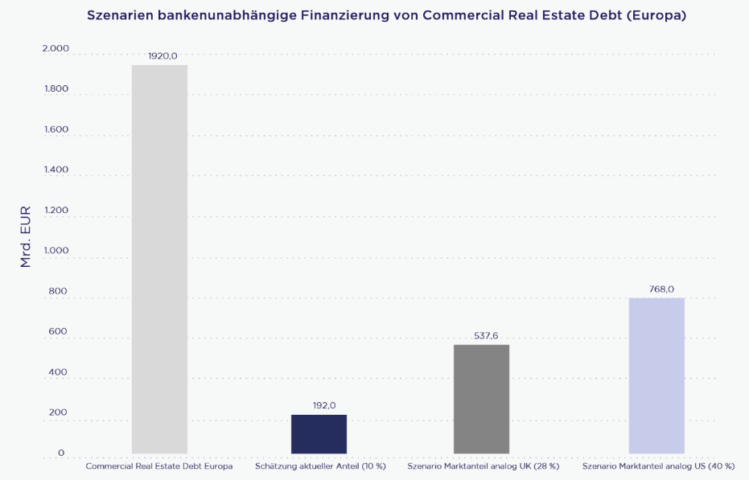
    As we pointed out in a study at the beginning of the year, the trend towards B2B and private debt financing will therefore continue to strengthen, although this growth will take place almost exclusively in the B2B sector for regulatory reasons.

    The high financing volumes and customised structures require professional management and controlling. Efficient real estate private debt funds will therefore play a key role in the expected market growth in the private debt financing segment. Providers who can handle the entire process from origination to reporting and repayment have an advantage here.

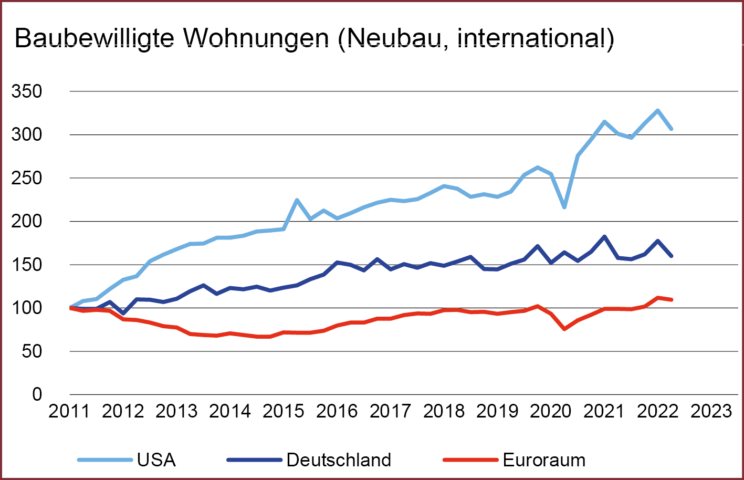
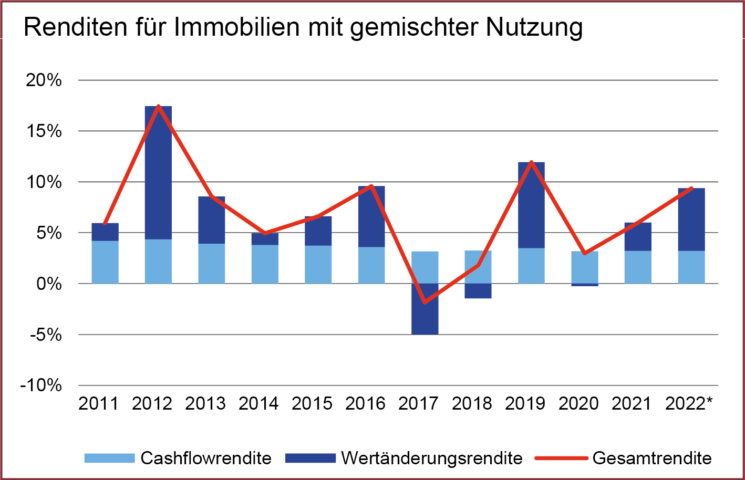
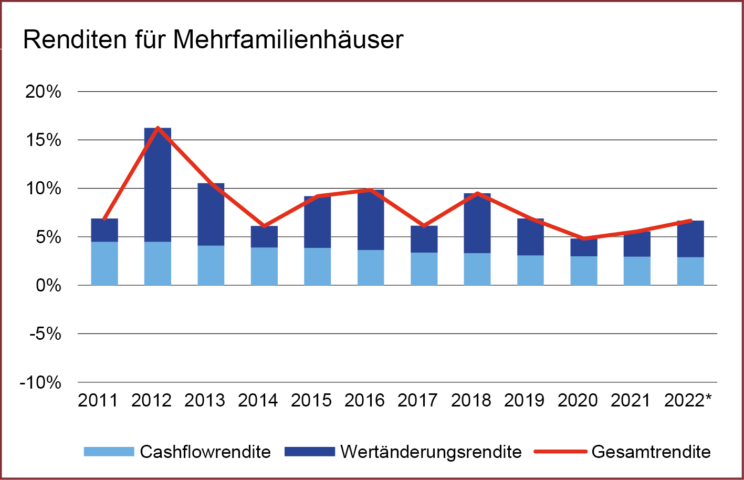
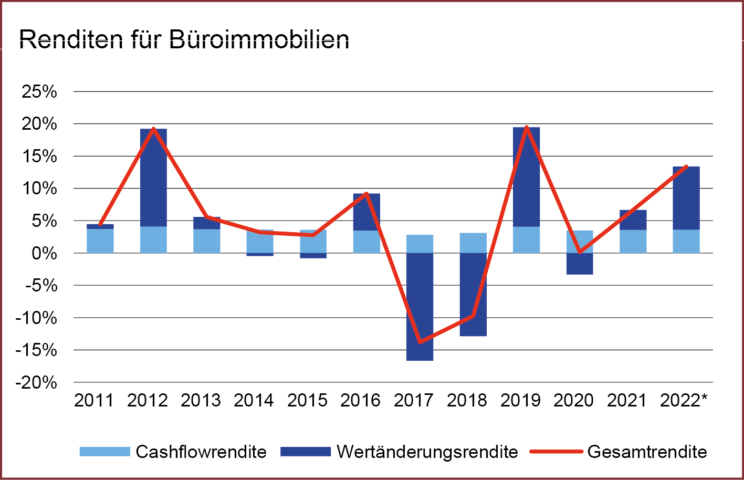
    Source graphic: Barings Bank, PGIM RE, Bayes Business School, London; Empira – own calculation and presentation as at December 2022.

  • Adaptation strategies for property professionals in a changing world

    Adaptation strategies for property professionals in a changing world

    The effects of the global pandemic are still being felt years later and have led us into a new reality. This requires property investors to re-evaluate their strategies in order to position themselves in a balanced way while remaining disciplined and flexible in responding to changing market conditions.

    The pandemic led to unprecedented, globally synchronised economic shutdowns, followed by a rapid restart. This resulted in a return of inflation, labour market bottlenecks and rising interest rates. At the same time, geopolitical upheavals, including conflicts in oil regions and the emergence of national industrial and environmental policies, are reshaping the global landscape.

    Against this backdrop, property investors should expect subdued growth in the USA, moderate growth in Europe and an adjustment to a new economic normal in China in 2024. These developments favour a focus on quality stocks, including in the technology sector, and a cautious stance towards government bonds as central banks are expected to start cutting interest rates.

    Political developments will also play an important role and could harbour both opportunities and risks for the global markets. Investors should therefore be prepared to adjust their market strategies accordingly and consider capital protection strategies.

    The next decade will be characterised by the ongoing development of artificial intelligence, a changing Chinese economy, the energy transition and persistently high levels of debt. These factors will have a far-reaching impact and offer investors new opportunities, particularly in sectors that benefit from technological innovation.

    In this new world, it is more important than ever for investors to have a clear plan, invest in a balanced way and remain flexible. Lessons from the past emphasise the value of diversification and the importance of patience and adaptability in an ever-changing environment.

  • Einschätzung des Zinsmarktes durch Avobis

    Einschätzung des Zinsmarktes durch Avobis

    Die aktuellen Daten zur Inflation zeigen eine Kerninflation von 1,50%, was als positives Zeichen gesehen wird. Miet- und Energiekosten tragen wesentlich zu den jüngsten monatlichen Anstiegen bei, wobei Mieten sowohl im Quartals- als auch im Jahresvergleich gestiegen sind. Zukünftige Auswirkungen von Mietpreisanpassungen, die durch den im Juni 2023 aktualisierten hypothekarischen Referenzzinssatz verursacht wurden, werden ab November sichtbar sein.

    Das Bundesamt für Wohnungswesen hat bestätigt, dass der Referenzzinssatz im September bei 1,50% bleibt. Dennoch könnte eine Erhöhung des Durchschnittszinssatzes auf über 1,625% im Dezember zu weiteren Mietpreisanstiegen und damit zu Inflationsspitzen im kommenden Jahr führen.

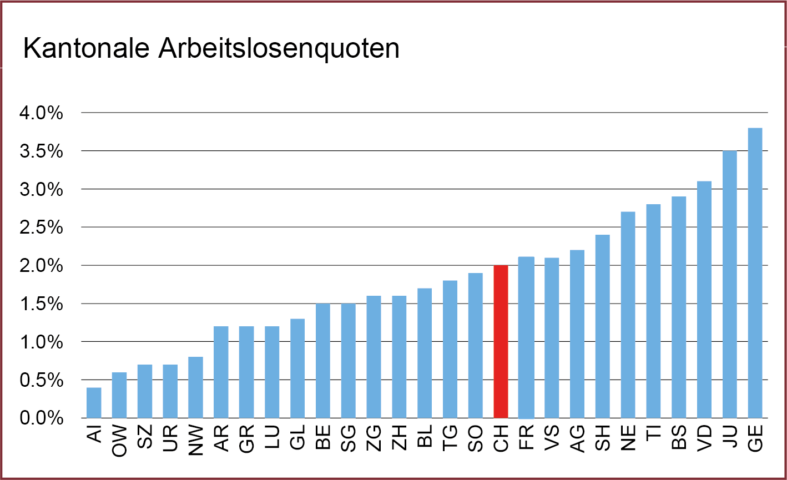
    Die verzögerten Auswirkungen der Geldpolitik werden zunehmend spürbar, insbesondere auf dem Arbeitsmarkt der Schweiz, wo die Arbeitslosigkeit allmählich ansteigt und die Zahl der offenen Stellen abnimmt.

    Die Quartalsdaten für das zweite Quartal zeigen im Vergleich zum starken ersten Quartal (+0,90%) nur ein geringes Wachstum von 0,02%. Die SECO erwartet dennoch ein positives Wirtschaftswachstum für das Jahr 2023 und einen kontinuierlichen Rückgang der Inflation. Diese Trends untermauern die Erwartung, dass keine weiteren Zinsanpassungen durch die SNB erforderlich sind.

    Die Swapkurve hat sich im Vergleich zum letzten Monat abgeflacht und zeigt weiterhin eine gewölbte Struktur. Die kurzfristigen Swapsätze deuten auf eine geringe Chance für eine Zinserhöhung im September hin.

    Prognose von Avobis
    Es erscheint sehr wahrscheinlich, dass die SNB den Leitzins in der kommenden Sitzung am 21. September unverändert lassen wird. Der Einfluss von Mietpreissteigerungen auf die Inflation bleibt eine Variable, die genau beobachtet werden sollte. Falls bis zum Jahresende keine besorgniserregenden Inflationsanstiege festgestellt werden, könnte die Zinskurve eine inverse Struktur annehmen.

  • Assessment of the interest rate market in March by Avobis

    Assessment of the interest rate market in March by Avobis

    Fears of inflationary dynamics getting out of hand seem to be confirmed. In February, almost all nine CPI segments recorded price increases compared to the previous month. This is due to increasing prices for services and goods regardless of their origin (Figure 1). An easing of inflation is currently not in sight and with the first adjustment of the mortgage reference rate expected in June, inflation is likely to move further away from the SNB target. The market then adjusted its interest rate and inflation expectations significantly upwards, as can be seen from the strongly inverted yield curve.

    However, the problems at Silicon Valley Bank and later at Credit Suisse led to fears of a possible banking crisis, which pushed the inflation issue into the background. The concern that further interest rate steps by the central banks could cause a systemic collapse in the banking sector also led to a rethink in the Swiss interest rate market, causing market interest rates to correct sharply downwards. The takeover of Credit Suisse by UBS and the global injection of liquidity into the banking system subsequently partially alleviated fears. Ultimately, the SNB’s monetary policy decision on 23 March and its signal caused a certain disillusionment in the markets, whereupon the focus returned to the inflation problem and higher interest rate steps were thus again priced in.

    Although the swap curve at the end of the month is roughly the same as at the beginning of the month, the initial situation has changed noticeably, which is particularly evident in the higher expected interest rate volatilities at the end of the month compared to the beginning of the month.

    The impact of the banking turmoil on economic growth is uncertain. A decline in demand could dampen inflationary pressures. The impact on financing conditions is equally unclear, as banks may become more cautious and reluctant to lend. This would be similar to an interest rate hike in the fight against inflation. These effects now need to be monitored and assessed accordingly, which is why the swap curve implies only moderate interest rate steps for the next two meetings despite decoupled inflation.

    Our expectations
    Inflation in Switzerland has been decoupled from normal conditions. The Swiss franc as a monetary policy instrument to combat imported inflation is only effective to a limited extent in the fight against rising domestic inflation. Additional restrictive measures are therefore necessary. If the global financial system continues to prove robust, another 50 bps hike could be implemented at the next meeting. However, should further systemic risks emerge, a smaller rate hike or even a pause in interest rates could be considered. It is crucial to monitor the situation carefully and evaluate various scenarios comprehensively.

    Abroad
    Growing concerns about a possible banking crisis following the collapse of three regional banks in the US have prompted central banks to respond with liquidity injections. Nevertheless, a recent study suggests that the US banking system has unrealised losses of two trillion USD, which strongly questions the possibility of further interest rate hikes. Thus, while inflation remains unimpressed despite the unexpectedly rapid rise in interest rates, cracks are beginning to appear in the banking system.

    The rise in interest rates since last year has led to considerable losses in the value of mortgage-backed bonds and other virtually risk-free bonds, which make up a large part of banks’ assets. One study shows that the market value of the assets of the US banking system is two trillion USD lower than the binancial value. Combined with a high proportion of uninsured deposits at some US banks, loss realisations could threaten their stability.
    If half of the uninsured depositors were to withdraw funds, close to 190 banks would be potentially exposed to risk. This would also affect insured depositors, with potentially $300 billion of insured deposits at risk.

    Although the banking system is currently sound, there could be a lack of liquidity in the event of a bank run, leading to a cascading effect in loss realisation and ultimately jeopardising solvency. This could expose both American and other banks to a looming liquidity crisis. Therefore, the Fed, the ECB and other central banks are taking coordinated measures to strengthen liquidity.

    The market is already pricing in interest rate cuts for the Fed and only small interest rate steps for the ECB due to fears of possible systemic risks (Figures 5 and 6). The reasons for this are, on the one hand, the restrictive effect of the liquidity problem on lending and, on the other hand, the aggravation of the liquidity problem or even the emergence of systemic risks in other areas through a continued restrictive monetary policy. Both would lead to a decline in economic growth and thus a dampening effect on inflation. Thus, market-implied inflation expectations have not risen despite continued high inflation figures and falling interest rate expectations.

    Our expectations
    The current situation in the banking sector seems to have calmed down for the time being, but there is still a risk that the rapid rise in interest rates since last year could burden other areas of the financial system besides the banking sector. Therefore, we rule out further interest rate hikes for the time being. At the same time, however, we also consider interest rate cuts unlikely. Inflation is still too high and must be fought with a restrictive monetary policy. Moreover, besides the key interest rate, central banks have a wide range of instruments at their disposal to deal with problems such as liquidity difficulties. For these reasons, we expect the Fed to pause on interest rates at its next meeting and to keep a close eye on the situation surrounding the banks and the inflation trend in the coming months. For the ECB, on the other hand, we expect a rate hike of at least 25 bps due to the devastating inflation trend.

  • Figures on the Swiss economic area

    Figures on the Swiss economic area

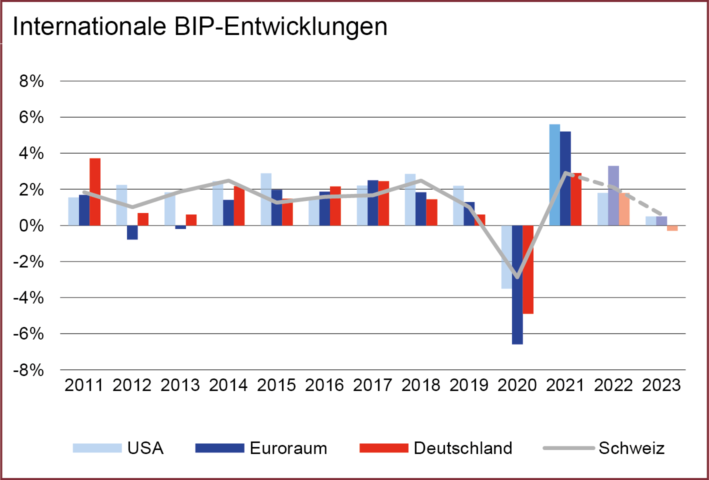
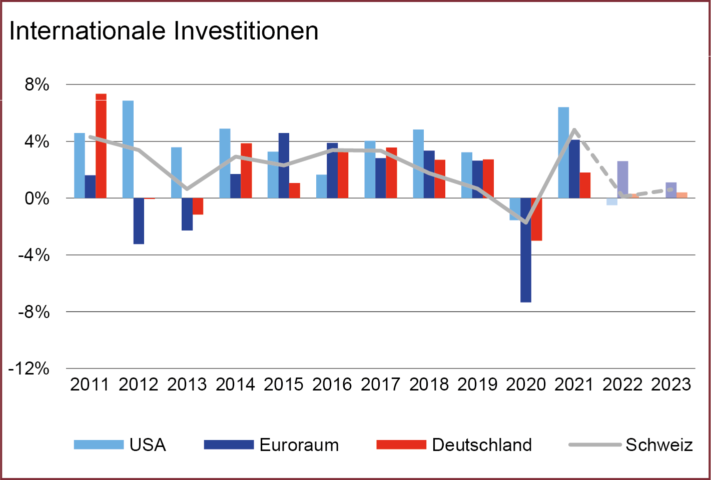
    International GDP development as well as investments have recovered excellently in 2021. However, the latest developments
    show that investment volumes are currently subdued and GDP development is cooling down worldwide. Economic analysts’ forecasts predict a slowdown in 2024 and a possible downward trend.

    The pandemic hardly plays a role in the media any more, but its consequences continue to be felt. In addition, rising energy and food prices as a result of the war in Ukraine, Corona measures by major economic players and supply chain problems have led to uncertainty, which is reflected in rising inflation rates. With the interest rate hike, the SNB was able to calm things down and is slightly above target. The forecasts of a slowdown in economic growth are reflected in a restrained development.

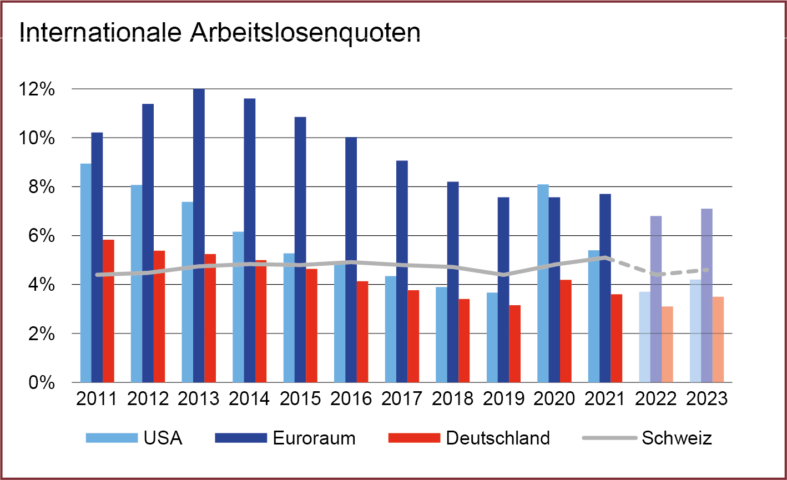
    Real incomes in Switzerland have fallen slightly, which, together with the pandemic-related pent-up demand in the consumer sector, is having a positive effect on the economy. The outlook for the labour market is good and an upswing is possible by 2024.

    The residential real estate market is robust and could not be affected by the financial crisis, the Corona pandemic or the war in Ukraine. The Swiss office market is unimpressed by the negative news from the global economy.

    Further interest rate steps by the SNB are expected and yields could rise slightly. However, due to immigration, vacancies in the periphery are falling and demand for space in the centres remains high, leading to rising market rents.

    In the area of commercial real estate, yields are not expected to rise in the near future, as interest rates could rise. There is a tendency for market values to fall, which could be cushioned by investors’ investment pressure.

  • Tangible assets become indispensable

    Tangible assets become indispensable

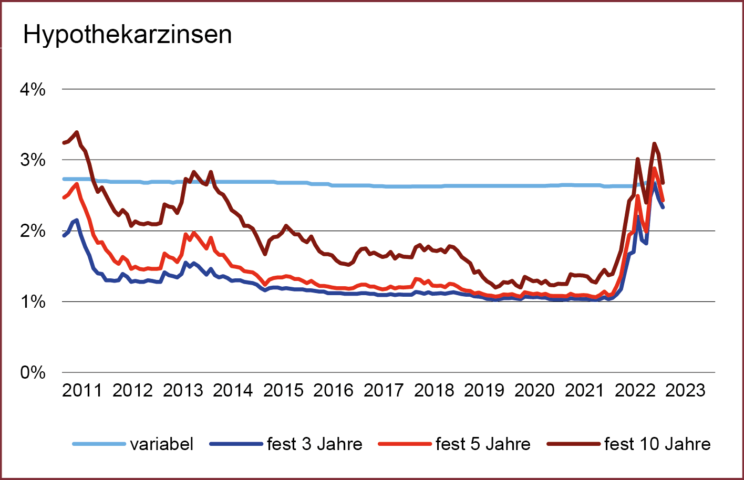
    Many are still talking about whether she’s coming – but she’s already here. The turnaround in interest rates has also reached Switzerland. The word turning sounds a bit bigger than what actually happened. It is simply a matter of a change of sign: For the first time in many years, the yields on medium- and long-term Swiss franc bonds are again nominally in positive territory. The same trend can be observed in the euro area and spreads in the peripheral countries are also widening.

    Is the real estate boom coming to an end?
    The reason for the nervousness on the interest rate markets is quickly found. Inflation is rising on both sides of the Atlantic – and now so fast that the US Federal Reserve is now clearly tightening the reins. That’s why everyone is now staring at the European Central Bank (ECB): Will it follow the USA and thus also burden the local economy with higher capital costs? And what would that mean for the Swiss National Bank (SNB)? Are we threatened with an end to the good economic environment and the long-standing real estate and material asset boom?

    Neither nor. Because the situation in Europe is fundamentally different than in the USA. First of all, real interest rates and, in some cases, nominal interest rates have been negative in the euro area and in Switzerland for years. This has never happened in the USA. Negative interest rates, such as those demanded by the ECB and the SNB for deposits for many years, are also unknown in the USA. Just like the negative interest rates for larger sight deposits that are now common here from commercial banks. Second, growth in Europe is structurally weaker than in the US. The American gross domestic product grew by 5.7% last year and even increased by 6.9% in the fourth quarter. This even puts inflation into perspective, which at 7.5% recently reached its highest level in 40 years. Employment in the USA has risen sharply and unemployment is falling. And at the same time, after two years of the pandemic, US citizens are sitting on a lot of money. All of this enables the Fed to fight inflation vigorously.

    Slow rate hikes
    The ECB, on the other hand, is stuck at low interest rates. Even if it did so to curb inflation, there’s no way it can raise rates as quickly and decisively as the Fed. Because the large amount of cheap money that they pumped into the market over the past ten years has increased the debt burden of the EU countries so massively that the central bank not only chokes off the upswing with a rise in interest rates, but also gives their own member states the air to breathe would take. Even the triple-A nation Germany is now stuck in the interest rate trap.

    As a result, the hands of the SNB are largely tied. On the one hand, the franc is stronger against the euro than it has been since January 2015. On the other hand, inflation in Switzerland is currently contained. The economic research center Kof expects consumer prices to rise by 2.0% in 2022 and by 1.3% in 2023. Rising energy costs are having less of an impact on the Swiss economy than the economic areas of the USA and the euro zone, and the strong currency generally has a price-inhibiting effect. If the SNB does not want to take the risk of an even stronger currency, it will have to wait for the ECB’s first interest rate hikes before it can move its key interest rates closer to zero.

    In other words, the monetary policy turnaround is here. But in Europe, including Switzerland, we do it in slow motion. The ECB will scale back its bond-buying programs; it doesn’t have the leeway for large rate hikes. The ECB must and will let inflation run its course for a while. The SNB is unlikely to be under pressure as inflation will remain moderate. It will proceed cautiously with regard to rate hikes.

    Tangible assets remain trumps
    In such an environment, investors are dependent on real assets, the only investments that offer them protection against inflation and prospects for returns. Investments in real estate and other tangible assets are therefore becoming indispensable, and because investment pressure is increasing, prices in the segment are also continuing to rise. What we are witnessing here is not bubble formation. Normal market forces are at work here. Anyone who fears a bubble in the USA can also relax: There, the yield levels for most asset classes – especially on the real estate markets – are structurally higher than in the euro area. This in turn acts as a buffer against rising capital costs. If the Fed is now planning to return to interest rate normality, this is no cause for concern, but rather proof of economic strength.

    We are a long way from that in Europe and in Switzerland. Instead, we must brace ourselves for a phase of persistently low real interest rates. In this environment, which penalizes holding cash and investments that pay nominal interest, equities, real estate and commodities continue to promise the greatest success. Against this background, securities of globally active real estate companies continue to show good prospects. In Switzerland, the real estate market has moved up sharply in terms of prices in recent years. From an economic perspective, however, there is little reason why prices should fall as long as negative real interest rates persist.