Walo Bertschinger AG, based in Dietikon, is participating in the renovation of the main runway at EuroAirport Basel-Mulhouse together with its partner TRBA from Péruwelz in Belgium. The large-scale project involves the dismantling and restoration of parts of the runway, according to a Facebook post.
The work is being carried out at high intensity. Within 29 hours, 38,000 square metres of runway were dismantled. Over 15,000 cubic metres of concrete had to be demolished and replaced. At the same time, 500 people are working on the project at peak times. The work is being carried out in parallel with flight operations on the secondary runway 07/25. According to the airport, flight movements with larger A319 and A320 aircraft, which normally use the main runway, will also take place there. Work has been underway since 15 April and will continue until 20 May 2026, with the new runway due to reopen on 21 May.
The Spreitenbach municipal council has adopted a new strategy for municipal properties, as detailed in a press release. The property strategy is of central importance for both the residents’ and the local citizens’ municipality. The decision serves as the basis for the medium to long-term development of publicly owned properties.
The aim is to manage the municipality’s own property portfolios holistically rather than in isolation according to individual properties. The municipality of Spreitenbach expects this to lead to better harmonisation of the long-term needs of the population, school, administration, associations and other users.
According to the press release, the new strategy is particularly relevant for the municipality of Spreitenbach, which as a public corporation has a portfolio of 69 properties and five developed building rights plots, in view of upcoming investment decisions. In the coming years, the focus will be on the further development of the school and sports infrastructure, the renovation and expansion of existing facilities, securing additional space for school administration and day-care centres and the development of a municipal park, among other things.
The local community should also benefit from the holistic approach. It manages a portfolio of 130 properties with a land area of around 2.77 million square metres and a building insurance value of around CHF 13.6 million. The strategy focuses on the areas of housing, the local museum, building rights in the industrial area, agriculture and forests.
The property strategy is to be reviewed at least every five years and adjusted if necessary. The planning horizon currently extends to the year 2040.
Sika is expanding its presence in Central Asia with a new subsidiary in Bishkek, Kyrgyzstan. According to a press release, the aim of the new branch is to increase customer proximity in the region and improve regional market access for the company.
One of the reasons for the expansion into Kyrgyzstan is the positive economic outlook for the former Soviet republic. Forecasts predict annual growth in gross domestic product of up to 7 per cent until 2030, according to the press release. Growth drivers in the construction sector include large-scale industrial construction projects as well as infrastructure and energy investments, which further emphasise the strategic importance of Central Asia for Sika.
“The local organisation in Kyrgyzstan complements our existing activities in Kazakhstan and Uzbekistan and strengthens our regional network in Central Asia. This creates a basis for the targeted further development of our market position in the region and for further growth,” Christoph Ganz, Regional Head EMEA at Sika, is quoted as saying.
The construction chemicals group Sika focuses on the development and production of systems and products for bonding, sealing, damping, reinforcing and protecting in construction and industry. With the opening of the Kyrgyz site, the company is expanding its global network to 103 national subsidiaries. The company generated sales of CHF 11.20 billion in 2025.
The Schlieren-based construction company STRABAG has begun dismantling and rebuilding the Kopfholz reservoir on behalf of the municipalities of Horgen, Thalwil, Rüschlikon and Kilchberg. According to a statement from STRABAG, the modernisation project is intended to secure the local drinking water supply until 2050. In order to ensure a continuous supply of water, three construction phases are planned for the planned replacement construction. The first construction phase is to be completed by February 2026, with the project scheduled for completion in March 2027.
According to the press release, the municipalities have been operating a joint water supply since 1905. The connection will be continued with the project, which the municipalities believe sends a “strong signal for a sustainable, safe and future-oriented water supply”. Rüschlikon’s storage capacity is expected to increase from 1000 to 1600 cubic metres, and Kilchberg’s from 1500 to 2800 cubic metres.
The press release emphasises the particular challenge faced by the construction teams from the four clients in building the reservoir during ongoing operations. “The reservoir supplies more than 6,000 households with drinking water and the supply must be guaranteed at all times,” Beat Spörndli, Construction Manager, Civil Engineering and Road Construction North-East, is quoted as saying. He also emphasised the “high demands on coordination and hygiene on the construction site”. In addition to compliance with SIA standards (Swiss Society of Engineers and Architects), the use of a special drinking water concrete is a prerequisite. As the construction is subject to the Foodstuffs Act, germ-free water storage must be ensured. The close cooperation between the municipalities enables coordinated planning, minimises interference with the forest area and triggers synergies in tenders and construction processes.
Commissioning is scheduled for mid-2028, with SBB, the canton of Ticino, the city of Bellinzona and the federal government investing a total of around CHF 755 million in the ultra-modern site. In doing so, SBB is not only securing its maintenance of new multiple-unit trains, but also sending a strong signal for the economic development of the region.
Investment in Ticino as a centre of industry In future, the NSIF will offer 360 full-time jobs and 80 apprenticeships, a clear commitment to the future of Ticino as a centre of industry. The new facility represents a milestone in the maintenance and repair of the modern Giruno, ETR and Flirt TILO multiple-unit trains. Compared to the existing Bellinzona plant, the level of digitalisation will be significantly increased. One focus is on electromechanical work, with digitalisation and automation making processes more efficient, flexible and sustainable. The green roof with solar panels and the renunciation of fossil fuels emphasise the ecological focus of the project.
Sustainability and infrastructure With a total area of 150,000 square metres, the plant also sets new standards in terms of sustainability and infrastructure. The main building measures 40,000 square metres, as much as eight football pitches. In addition to the factory building, a modern train washing facility, rooms for apprentice training and common areas for staff are being built. The building integrates a comprehensive sustainability concept that minimises the ecological footprint with solar panels and green spaces.
Progress with the construction work Initial work began in June 2025 with site installation, excavation and the design of the foundations. Construction will be accompanied by extensive adjustments to the railway infrastructure. New tracks, points and technical buildings will ensure optimal connections and logistics. In December 2024, the new track group 600 was put into operation in order to efficiently control operating processes and better connect the Coop distribution centre. The extensive railway construction work will run in parallel until the plant is completed.
Agriculture and compensation A total of around 150,000 square metres are required for the NSIF, including 8.4 hectares of crop rotation areas. Together with the Ticino Farmers’ Association, SBB has found alternative agricultural land in Camorino, Bellinzona, Preonzo, Iragna and Biasca in order to fulfil the legal compensation obligations in full.
Significance for the region The ground-breaking ceremony was attended by prominent representatives from politics and business. SBB is thus emphasising the importance and significance of the canton of Ticino and the long-term safeguarding of jobs. In a region that is particularly affected by industrial change, this project symbolises the future, stability and innovation.
The new SBB Arbedo-Castione plant will bring innovation and sustainability to the Swiss railway sector, consolidate Ticino as an industrial centre and offer prospects for future generations. A ground-breaking ceremony with symbolic power and a project that accelerates the pulse of the region.
The Federal Council is preparing the next expansion of rail, road and agglomeration transport. It has instructed the Federal Department of the Environment, Transport, Energy and Communications(DETEC) to prepare a consultation draft for a first expansion phase in 2027 by the end of June 2026, the Federal Council announced in a press release. DETEC will base its work on an ETHreport commissioned by the Federal Council. In this report, the university sets out which projects should be realised as a matter of urgency over the next 20 years from a technical perspective.
By the end of January 2026, DETEC is also to draw up a proposal based on the report as to which transport infrastructure projects should be implemented by 2045. Additional revenue must be generated in the railway sector. The existing financial framework will be maintained for road expansion and the agglomeration transport programme.
“The prioritisation by ETH Zurich and the subsequent political decision by the Federal Council should ensure an orderly, financially viable and holistically coordinated development of transport infrastructure by 2045,” the press release states. The Federal Council is sticking to a staggered expansion programme when determining the expansion stages. The consultation proposal for the first expansion phase in 2027 is intended to bundle all planned measures for rail, road and urban transport. At the same time as its presentation, the Federal Council intends to provide an outlook for the further expansion stages in 2031 and 2035.
The new factory deserves to be called intelligent, as its construction control is linked to a digital twin via sensor data, writes EuroTube. In this way, material flows, processes and CO2 emissions can be continuously optimised during construction. The factory, which is set up in a few standard containers, can also be moved and flexibly set up along infrastructure projects.
At the IPZ, the Smart Mobile Factory will not only produce components for DemoTube, but will also be available to other researchers and start-ups who want to develop and test their own technologies directly on an active construction site. To this end, the EuroTube Foundation has launched the Real Laboratory for Infrastructure Construction educational programme. “As a research partner of the Innovation Park Zurich, we are proud to support projects, start-ups and companies in the development of new products for the transition to sustainable mobility infrastructures,” said Antoine Juge, Managing Director of the EuroTube Foundation, in the press release.
A new border bridge has been spanning the Oder near Küstrin since last year. It is held in place by a network arch with a span of 130 metres and 88 carbon girders. According to a recently published Empapress release, these carbon tensioning cables were developed by Carbo-Link, an Empa spin-off from Fehraltorf. The carbon carriers are made of carbon fibre reinforced plastic (CFRP).
This innovative material not only enables flexible processing, but also saves a large amount of carbon dioxide that would be released by conventional steel constructions. The use of carbon fibre beams significantly reduces the dead weight compared to conventional flat steel hangers. Around 500 tonnes of steel and 1350 tonnes of reinforced concrete were saved in the construction.
A major advantage of the new suspension cables is their high tensile strength and lower fatigue than steel. Most of the fatigue tests were carried out by a team from Empa’s Structural Engineering department and confirmed the necessary fatigue strength of the new CFRP material. “We have thus created the basis for a new generation of filigree network arch bridges with carbon hangers as load-bearing elements,” Giovanni Terrasi, Head of Empa’s Mechanical Systems Engineering department, is quoted as saying in the press release.
Visually, the new materials offer design freedom, as the Oder bridge shows. Carbon girders have already been used in other bridge constructions, but the special feature of the Oder bridge is that it is being used for the first time for heavy goods railway transport. Trains can pass over it at a speed of 120 kilometres per hour. The bridge has been honoured with both the German Bridge Construction Award and the British Bridges International Award.
With a total length of 266 metres, the bridge replaces an outdated structure from 1926 that no longer met the requirements of modern rail traffic. The central component is a gleaming white network arch with a span of 130 metres, which spans the border river Oder without supports. Instead of classic flat steel cables, 88 carbon tension members made of carbon fibre-reinforced plastic are used. These hangers were largely developed, tested and assessed at the Empa Institute in Dübendorf. They replace the steel segments weighing several tonnes and thus significantly reduce the overall weight of the supporting structure. An advantage for material efficiency and design freedom.
Economic and sustainable benefits The innovative bridge technology made it possible to save around 600 tonnes of steel and 1,350 tonnes of reinforced concrete. A project-specific scaffolding solution was used in the construction process to ensure efficient assembly and welding of the bridge segments. Thanks to the high fatigue, tensile and corrosion resistance of the carbon fibre cables, both the maintenance effort and the service life of the bridge are positively influenced. A sustainability study shows that the use of carbon causes around 20 per cent less CO₂ emissions than a conventional steel structure.
International appeal and future potential The railway bridge can be used by freight and passenger trains at speeds of up to 120 km/h and fulfils the highest safety standards. Extensive tests by Empa confirmed the fatigue strength of the material under real loads. The bridge has received several awards, including the Bridges International Award and the German Bridge Construction Prize. It is regarded as a pioneer for the use of high-performance composite materials in infrastructure construction.
New aesthetics and symbolic significance The striking, elegant arch creates an architectural accent in the border region and emphasises the connection between the countries. The network arch bridge with carbon hangers symbolises both technical innovation and ecological responsibility. In future, it could serve as a standard for comparable major projects in European rail transport.
The Cargo sous terrain(CST) underground freight transportation system has failed in its previously planned form. The private company Cargo sous terrain AG writes in a press release that its implementation is not economically viable at the present time. Private financing of the construction phase would require a different legal framework. The key is to embed the metro in an overall logistics system and to establish stable partnerships with the federal government, cantons and cities.
According to CST, the technical and structural feasibility of the project has been proven. The plans for the underground logistics system with fine distribution in cities were confirmed as part of an independent review in spring 2025. It is now up to the authorities to proceed on this basis.
CST remains in dialogue, but is shifting its focus: the company now wants to advise national and international organizations on urban logistics issues. In this context, CST must reduce costs and also cut ten jobs. According to the press release, CEO Christoph Späth deeply regrets this step. However, by restructuring, CST is setting the course for a sustainable future.
“We do not currently have the resources to continue the organization with its current focus and are therefore adapting to the realities of the situation,” said Chairman of the Board of Directors Marco Rosso. It will take time until CST is firmly anchored in transport policy and can mobilize long-term investments.
The plans for the freight metro had envisaged an underground network from Geneva to St. Gallen and from Basel to Lucerne with a branch from Bern to Thun. The first section of the freight metro from Härkingen to Zurich was originally scheduled to go into operation in 2031.
Energy Vault announces the foundation of its subsidiary Asset Vault. This is to be financed by a preferred equity investment of USD 300 million from an unnamed multi-billion dollar infrastructure fund. According to a press release, the Lugano and California-based developer of energy storage systems expects this to release more than 1 billion dollars in investment. The aim is to accelerate the deployment of energy storage projects with a newly installed capacity of 1.5 gigawatts in the USA, Europe and Australia.
Asset Vault will reportedly be dedicated to developing, building, owning and operating energy storage assets in the world’s most attractive energy markets, either independently or in conjunction with generation assets. Crucially, Energy Vault will retain voting and operational control of Asset Vault. Energy Vault expects the transaction to close within the next 30 to 60 days. Asset Vault will then be established as a fully consolidated subsidiary. All energy storage facilities, which are secured by long-term purchase agreements and which guarantee the monetisation of the projects, are to be bundled in this subsidiary. Asset Vault is expected to generate recurring EBITDA of over 100 million dollars over the next three to four years, complementing Energy Vault’s existing energy storage business.
This “unlocks the full potential of our own-and-operate strategy for storage IPP with immediate investment flexibility,” Robert Piconi, Chairman and CEO of Energy Vault, is quoted as saying. “By combining long-term contracted revenue with strategic capital and integrated, self-executed project delivery, we are well positioned to scale a resilient, mission-critical energy infrastructure to meet the current demands of renewable energy expansion and the massive increase in energy demand from data centre AI infrastructure.”
Sika generated global sales totalling 5.68 billion Swiss francs in the first half of 2025. Year-on-year growth of 1.6 per cent in local currencies was thus achieved, the speciality chemicals group for construction and industry reported in a press release. Organic growth was reported at 0.6 per cent, while the remaining 1.0 per cent growth was generated through acquisitions. In Swiss francs, sales were 2.7 per cent lower than in the same period of the previous year, mainly due to the weaker dollar.
The operating result at EBITDA level was also impacted by foreign currency effects. At CHF 1.07 billion, it was 2.1 per cent below the previous year’s figure. However, the EBITDA margin increased from 18.7 to 18.9 per cent.
“In a challenging market environment, we once again succeeded in growing above the industry trend and gaining further market share,” said Sika CEO Thomas Halser in the press release. He believes the Group is particularly well positioned in the project and infrastructure sector. “With more than 1,000 data centres built with our technologies to date and a strong project pipeline”, Sika has also “established itself as a preferred partner for technology leaders”.
In the semester under review, Sika acquired a total of four companies and inaugurated seven new plants. The targeted investments are intended to strengthen the Group’s future growth. In the press release, Sika cites the minority stake acquired in Giatec Scientific in June as a strategically important step. The company from Ottawa in the Canadian province of Ontario specialises in digital concrete technologies.
Holcim has acquired the Canadian Langley Concrete Group Inc. Jaime Hill, Head of the North America region at Holcim, described this strategic step in a company statement as “a natural extension of our growth strategy”. This combines the technical expertise of the Langley Concrete Group in precast concrete parts with Holcim’s own activities. The enlarged portfolio also increases Holcim’s reach.
The acquisition reportedly includes two state-of-the-art production facilities in the province of British Columbia, located in the cities of Chilliwack and Duncan. From there, the region will be supplied with dry and wet mix concrete products for above and below ground infrastructure applications, including manholes, pipes, boxes and other components for municipal, commercial and industrial applications.
Langley Concrete President Mark Omelaniec says he is proud of what his family has built over 75 years. The family is “confident that Holcim is the right partner to take it forward as the growth opportunities in British Columbia continue. This transition offers long-term opportunities for our team and our customers.”
DB InfraGO AG has commissioned Implenia to build the inner-city section of the Nordmain suburban railway in Frankfurt. Specifically, the construction and real estate company from Opfikon is to realise the underground section of the S-Bahn from Konstablerwache via the new S-Bahn station Frankfurt (Main) Ost (tief) to Fechenheim for the Deutsche Bahn subsidiary. The contract is worth over 200 million euros, Implenia announced in a press release.
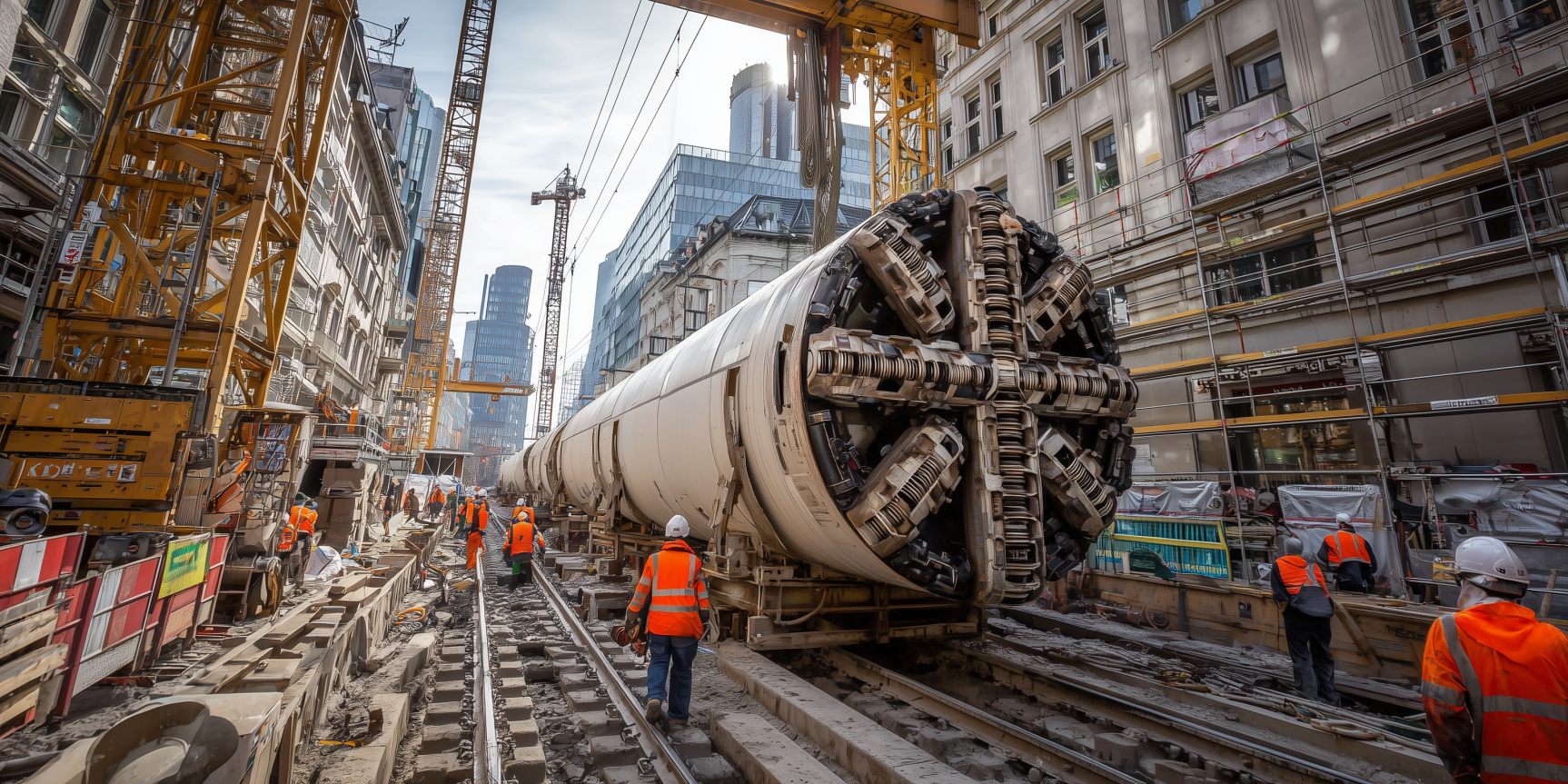
The contract includes the starting excavation pit Trog and the excavation pit for the underground S-Bahn station Frankfurt (Main) Ost (tief), a series of ancillary excavation pits and engineering structures, as well as two tunnel tubes approximately 1.2 kilometres long. They will be constructed by mechanised tunnelling. Implenia will also carry out extensive dewatering measures and provide a range of specialised civil engineering services. Work is scheduled to start at the beginning of 2026 and be completed by 2031.
“The further expansion of a functioning transport infrastructure is central to the sustainable development of our cities,” said Erwin Scherer, Head Division Civil Engineering at Implenia, in the press release. “I am delighted that Implenia, with its many years of experience and extensive expertise, is able to contribute to improving public transport in the densely populated Rhine-Main region.”
The canton of Glarus has a long industrial tradition. What impetus are you providing to strengthen economic competitiveness and create sustainable jobs? The canton of Glarus has always been extremely business-friendly. We were one of the first Swiss cantons to regulate economic development by law (1978). Glarus is also a Swiss pioneer in social legislation with the Factory Act (1864) and compulsory old-age insurance (1916). Against this background, Glarnerland is traditionally a modern business location with competitive advantages for employers and employees that may only become apparent at second glance. For example, the Glarnerland is large enough to offer companies sufficient space, but also small enough to make decisions quickly and unbureaucratically. The contact point for business provides pragmatic and reliable support to both company founders and existing companies or companies wishing to relocate. In our three large municipalities, which have merged in an exemplary manner throughout Switzerland, investors can find affordable real estate and employers can find well-trained, motivated employees who enjoy living in an intact environment with the advantages of a modern environment.
How does the Department of Economic Affairs promote innovative digital business ideas? On the one hand, the possibilities of digital transformation serve to redesign processes and products, but they also form the basis for the circular economy. This involves both greater resource efficiency and data management. As a result, tomorrow’s employees will know which materials were used in which processes. Supply chains are another opportunity: New digital processes enable a more robust, efficient and transparent supply chain. With this in mind, we are supporting the digital transformation in the Glarus economy with digitalization loans. The funding program has two million francs available until the end of 2027. Funding is available for innovative projects that incorporate new technologies in processes and production, create new products and business models and establish collaborations. Specifically, we carry out an analysis of the current situation in participating companies with the expertise of the Innovation Network Eastern Switzerland (INOS). The analysis is financed by the new regional policy (NRP) and includes an assessment of the current situation, including an action plan and roadmap for implementation. This basis is required for the application for financial support of up to CHF 100,000 for individual companies and CHF 300,000 for inter-company and/or industry-wide projects.
How do you think the real estate sector will develop in the industrial and commercial sector? The pressure from the agglomeration is noticeable in Glarnerland. However, population growth is moderate, which is conducive to sustainable development. The municipality of Glarus North has particularly high capacities in terms of industrial and commercial space, which are currently being used in several projects at the Bilten site. With active land management, we are focusing on sustainable development with high-quality industrial and commercial projects.
What trends do you see in the development of supply and demand in the residential sector? The majority of new residential construction projects are being implemented in the municipalities of Glarus and Glarus North. This also has to do with land use planning, which can take a holistic and progressive view thanks to the municipal merger. In Glarus South, land use planning is still undergoing a challenging political process, which is also being monitored by the canton.
How can you ensure that the development of the real estate market meets the needs of the population? Anyone who lives in one of our 29 villages, towns or districts appreciates the special features of their place of residence. These are reflected, for example, in the location or club life. Life is completely different in Elm or Braunwald than in the cantonal capital or in Näfels. And there again different from the Kerenzerberg or Lake Walen. This creates a sense of identity and solidarity, which keeps people here. This is consistent with the moderate pace of population growth and the comparatively stable real estate prices.
How can you ensure that your real estate market develops sustainably? With our unique combination of closeness to nature and urban proximity, with its manageable size and compact living and economic area, Glarnerland scores highly. Careful management of these advantages is therefore essential – they are our resources, our capital.
What infrastructure projects are planned by FEDRO and SBB and what potential for improvement do you see? Glarnerland is perceived as a rural region, but thanks to its location between Zurich and Chur, it has very good transport connections. The city of Zurich and the airport are only an hour away by car or train, one of the most important north-south axes runs through the canton, and private planes and helicopters can take off and land in Mollis.
Naturally, the canton of Glarus is also dealing with the increasing mobility requirements. In recent years, the canton has implemented three of four major road construction projects, in particular to provide future-oriented access to the Mollis airfield development focus. The fourth project to optimize access to the industrial area in the south of the municipality of Glarus is currently in the planning phase. The focus of our efforts is close cooperation with the federal government on the bypass projects to relieve congestion on the current main axis. We have received assurances from the federal government that the Netstal and Glarus bypasses will be combined into one overall project under the leadership of FEDRO. The aim is to relieve the canton of Glarus of all its road traffic problems.
In terms of public transport, we have had a new legal basis for future public transport services since the Landsgemeinde 2025. Our region is already well connected today with direct connections to Zurich and Rapperswil as well as transfer options in Ziegelbrücke to St. Gallen, Chur and Zurich. Our population and businesses depend on this convenience and the continuous half-hourly service agreed at the Landsgemeinde 2025. We are working hard to achieve this with the federal government and in cooperation with SBB and SOB. We are actively cooperating with companies to make commuting by public transport more attractive for employees – for example, the Bonus Pass creates incentives to switch from car to public transport.
Short distances within and between our localities also play a key role in mobility. For example, it only takes 20 minutes to cycle from Näfels, Glarus North, or from Schwanden, Glarus South, to the cantonal capital. The trend towards cycling is also reflected in the cantonal Cycle Path Act, which was passed by the Landsgemeinde 2024.
How does location promotion help to present Glarus as a liveable and future-oriented region? The canton of Glarus is the third most financially attractive place to live: in addition to low housing costs, we offer a moderate tax burden and comparatively low health insurance premiums. These are our major advantages in terms of financial factors. Added to this is the high quality of the living environment, which combines the advantages of the countryside with urban amenities. This is evident at first glance when you arrive in the canton of Glarus. Together with the impressive mountain scenery, the witnesses of early industrialization shape the landscape and life in our canton. The historic industrial areas, factory owners’ villas and workers’ settlements from the 19th century and the landscape are also the backdrop for films and TV series for good reason. In people’s everyday lives, this is reflected in a contrasting and lively environment with contemporary settlements for professionals and families who value living, working, culture and leisure in our modern communities. With this in mind, Glarus has been actively marketing the canton in a targeted manner for over ten years. This year, we are using our role as host of the Swiss Wrestling and Alpine Festival (ESAF) to put the spotlight on the canton of Glarus as a center of life. With the upcoming major event, the whole of Switzerland is turning its attention to the Glarus region. Under the motto “Really fabulous”, the focus is on working, living and leisure. The face of the campaign is the popular Glarus chef and influencer Noah Bachofen. He and his colleague are accompanied on their mission to create an authentic image film about the Glarus region. The campaign aims to make the unique Glarus lifestyle visible and tasty.
Why do skilled workers stay in the region and what does location promotion contribute to this? Of course, a good campaign alone is not enough. The municipal location promotion agencies make a major contribution to the high quality of life. They continue to develop their residential and leisure areas with new projects and in cooperation with investors – examples include the optimally developed development focal points at the Näfels/Mollis and Glarus railroad stations. The municipalities provide modern schools and supplementary family services, operate sports facilities and offer retail, gastronomy, medical care, industry, commerce and culture space for a lively and functioning everyday life. The canton ensures the operation of the cantonal school, the sports school, the vocational schools, the cantonal hospital, security and social services. The lean administrative structures enable an efficient and direct exchange between the cantonal specialist offices and those responsible at municipal level.
What is your long-term vision for Glarus as a business location? In the coming years, it is crucial for the canton of Glarus that the initiated development is implemented in a coordinated manner. It is important to support and accompany the private initiatives and at the same time create the right framework conditions for companies and skilled workers. If this succeeds, the canton of Glarus will be a secure, networked and economically strong canton with a strong middle class, surrounded by unspoiled nature.
Future-oriented and efficient structures are decisive for the success of a company. This also applies to the public sector. Glarus is the only canton that has consistently adapted its own structures to the new circumstances. With today’s highly efficient administration, we are fit for the future.
Amberg Technologies AG from Regensdorf, part of the Amberg Group, is joining forces with Topcon Positioning Systemsfrom Livermore in the US state of California. The aim of the cooperation is “to enable interoperability between Topcon’s sensor solutions and Amberg Technologies’ software and hardware platforms for rail and tunnel applications”, the two international partner companies write in a joint press release. The background to this is the endeavor of Amberg and Topcon to be able to offer joint customers “fully integrated solutions”.
Amberg Technologies specializes in measurement solutions for the construction of roads, railways, subway railroads and other infrastructure. Founded in 1981, the Regensdorf-based subsidiary of the Amberg Group also offers measurement solutions for monitoring such infrastructure. Topcon Positioning Systems, which belongs to the Tokyo-based Topcon Corporation, develops, produces and distributes precision measurement and workflow solutions for the construction, geodata and agricultural sectors.
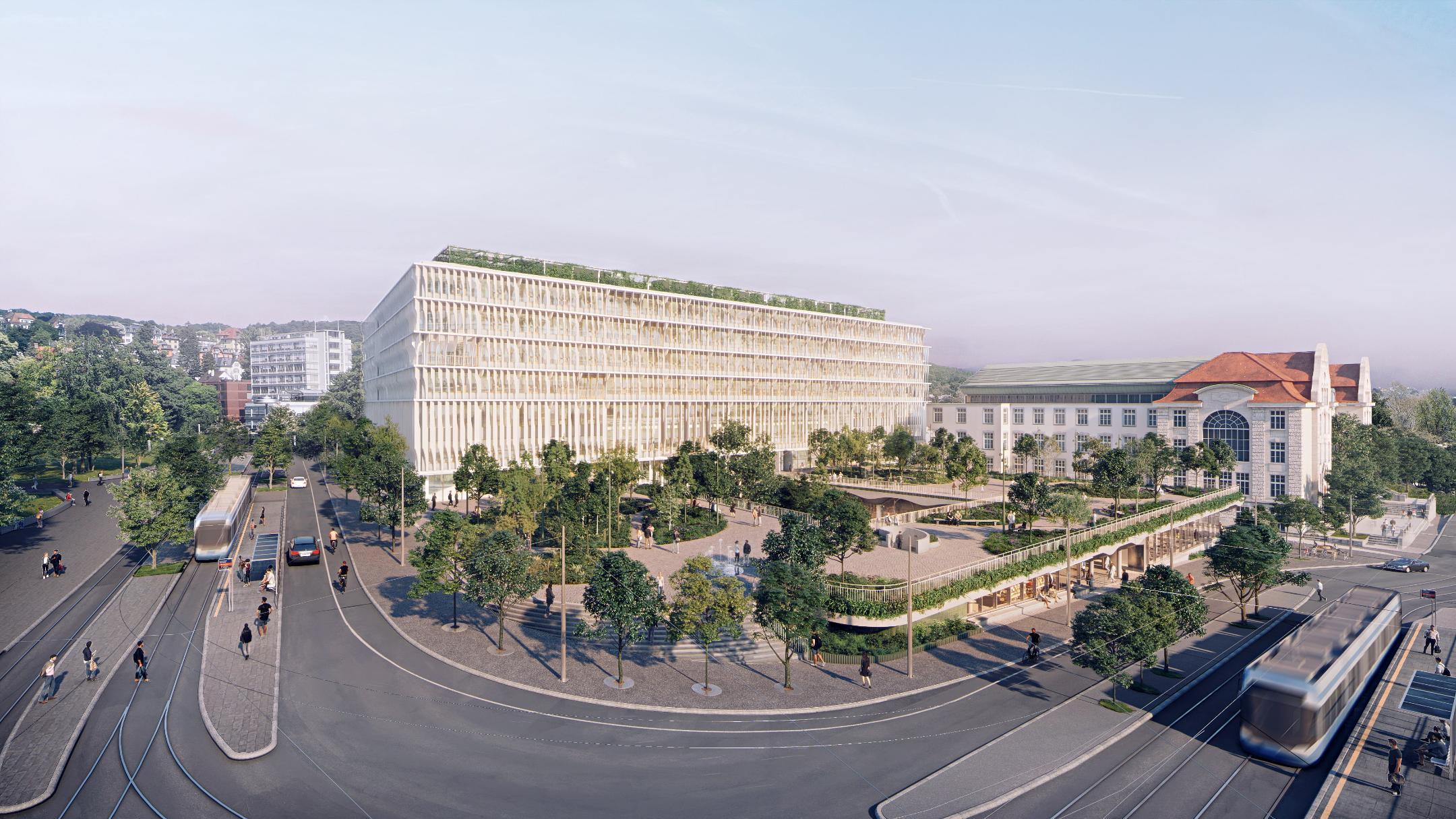
The FORUM UZH is a milestone for the structural and academic development of the University of Zurich. The new building comprises a total of 37,000 m² of usable space and will not only accommodate the predicted growth in student numbers, but also set new standards in teaching, research and sustainability. The new centre will bring together the faculties of law, economics and modern philology. These will be complemented by modern libraries, sports facilities for secondary schools and the Academic Sports Association as well as publicly accessible cafeterias and commercial areas.
Architecture and spatial concept The FORUM UZH consists of a terraced base for teaching and university life, a trapezoidal structure hovering above for research and a central courtyard. The structure is set back from Rämistrasse to create a spacious front zone with city balconies that blends in with the urban surroundings. The façade design with horizontal ceiling panels and vertical brise soleils gives the building a striking depth effect and allows for flexible light regulation inside.
At the centre of the building is the eponymous Forum, a light-flooded hall that is a lounge, meeting and work space all in one. It connects all levels and can be used for university and public events for up to 2,000 people.
Flexible learning environment and modern infrastructure The FORUM UZH offers a variety of innovative teaching and learning spaces. Five lecture theatres and several seminar rooms can be used flexibly and are equipped with state-of-the-art technology to enable hybrid teaching models. There will also be a spacious teaching and learning centre with over 700 student workstations. The university library will be united under one roof on the upper floors.
Sustainability and innovative construction The FORUM UZH is based on a sustainable timber-concrete hybrid construction method that reduces CO² emissions while offering a high quality of stay. The intensively greened roof not only serves as a fifth façade, but also as an ecological compensation area with a habitat for flora and fauna. A photovoltaic system supplies its own electricity, while over 50 large trees on the redesigned town square have a positive impact on the microclimate.
Thanks to the modular design, UZH saves as much CO² as would be released by the construction of 77 detached houses. The building will be certified in accordance with the SGNI Gold standard and Minergie P.
Integration into the urban environment The FORUM UZH will not only be open to the university community, but also to the city’s population. The libraries, catering areas and neighbourhood shops will be open to the public and the Gloriaterrasse will be a green meeting place where people can linger. The urban design will create a direct link between the university quarter and the surrounding neighbourhoods.
Construction schedule and next steps Following the completion of the preliminary project, construction work began in August 2024. Completion is scheduled for 2028 and the building will be occupied in 2029. Until then, students and researchers at the University of Zurich will be able to follow the development of this project of the century at close quarters.
Cyber attacks are increasing in their sophistication and reach. The latest BACS semi-annual report shows how perpetrators operate internationally and what methods they use to bypass filters and reach new victims. Over 62,000 reports of cyber incidents were received in 2024. Private individuals are particularly frequently affected, but companies are also increasingly reporting CEO fraud, phishing and fraudulent prize draws.
New technologies, new tricks Attackers are adapting. Instead of traditional text messages, they use RCS and iMessage to bypass security mechanisms. Deceptively genuine fake calls or the targeted flooding of email accounts with spam are now also part of the repertoire. Criminals do not shy away from misusing well-known brand names for their own purposes and spreading malware.
Digital dependencies as a risk Global incidents such as the faulty CrowdStrike software update, which affected over 8.5 million systems, show just how fragile the digital infrastructure is. Delays in security standards such as the CVE program also underline the risks of one-sided technological dependency.
Swiss response Mandatory reporting On April 1, 2025, the statutory reporting obligation for cyberattacks on critical infrastructure came into force in Switzerland. Operators in the energy, transport, administration and healthcare sectors are obliged to report serious attacks to the BACS within 24 hours. The regulation has been closely coordinated with international standards and EU directives and strengthens cross-border cooperation in the event of an emergency.
Early warning through international networking In order to better manage global risks, Switzerland is intensifying bilateral exchanges with partner countries and organizations. The aim is to achieve an efficient, internationally coordinated flow of information on current threat situations and robust protection for critical infrastructures, both nationally and internationally.
Crushed stone, sand, gravel and petroleum-based bitumen in asphalt roads are the same materials that make up new roads. The only difference is that the asphalt has already been heated and laid.
For this reason, Dutch officials from the Rijkswaterstaat infrastructure agency in Utrecht, part of the Ministry of Infrastructure and Water Management, have invested in the Asphalt Recycling Train (ART or Asphalt Recycling Train). This is a vehicle-like machine that reuses old roads on site instead of tearing them up and disposing of them and then using new materials and thus emitting more carbon. This allows new asphalt to be laid in the same place.
“With the ART, we can renew roads in a far more sustainable way,” Fredy Sierra-Fernandez, who is developing the ART at the ministry, is quoted as saying in a press release. “At the moment, we are testing a single machine to see how it performs in practice.”
ART loosens the worn surface layer of roads, heats the old asphalt, picks up the melted material, stirs and mixes it and then applies the renewed asphalt back onto the road. The machine also compacts the road to create a smooth surface.
Fernandez is now investigating how the roads behave after this process. Since June and from October last year, a provincial road in Gelderland in the east of the Netherlands and a section of the A2 highway have been monitored after the ART was used there.
The road in Gelderland is in good condition. The section of the A2 highway is somewhat more worn, but still adequate. “We will continue until we are 100 percent satisfied,” says Fernandez. Tests in other regions are planned for April and May 2025.
The Dutch government hopes to have three or four ARTs in operation across the country by 2030 to create a circular economy for asphalt.
Sika AG is continuing its growth course in Kazakhstan with the commissioning of a new production site. The plant is located in the city of Ust-Kamenogorsk in the east of the country and combines production lines for mortar and concrete additives and a laboratory.
According to a press release, it is the fourth plant for Sika specialty chemical products for construction and industry. There is a high level of construction activity in the region. The mining industry in particular is experiencing strong growth. Local companies in the chemical, energy and automotive sectors are also expanding. As a result, the demand for residential buildings is increasing.
The construction chemicals company has announced that it will also be involved in major projects. Kazakhstan is one of the most resource-rich countries in the world. Forecasts predict annual growth of 4.2 percent for the construction industry in Kazakhstan until 2028. The drivers are investments in energy projects, water reservoirs, transport infrastructure and industrial parks. According to estimates, the volume of construction projects across the country amounts to 160 billion Swiss francs.
Implenia AG is to carry out several contracts in Switzerland, Germany and Austria in the data center, energy and transport infrastructure and healthcare sectors. The total volume of the projects amounts to over 150 million Swiss francs, the construction and real estate company based in the Glattpark district of Opfikon announced in a press release. They are also “in line with the Group’s strategic focus on large and challenging projects and its sector-oriented specialization in areas with high demand”.
In Germany, Implenia is involved in the construction of the new Heidekreis Clinic in Bad Fallingbostel. Implenia Fassadenbau will be supplying the façade. In Austria, the Group and two partner companies have been awarded the main construction lot for the Imst-Haiming hydroelectric power station. It includes a 14-kilometer-long headrace, the cavern and the underwater basin for the power plant on the Inn.
The other orders are for projects in Switzerland. Implenia will build another high-performance data center for data center provider Green on the Zurich West metro campus in Lupfig. In Basel, Implenia is part of the USB K2 consortium, which has been commissioned by Basel University Hospital to carry out the construction work for the new Clinic 2 building. Implenia is also working with partner companies to build a new streetcar line in the canton of Geneva. The Group is renovating the Hagenholz tunnel in the canton of Zurich for SBB. The Federal Roads Office has entrusted Implenia with the redesign of the Versoix junction in Bellevue GE.
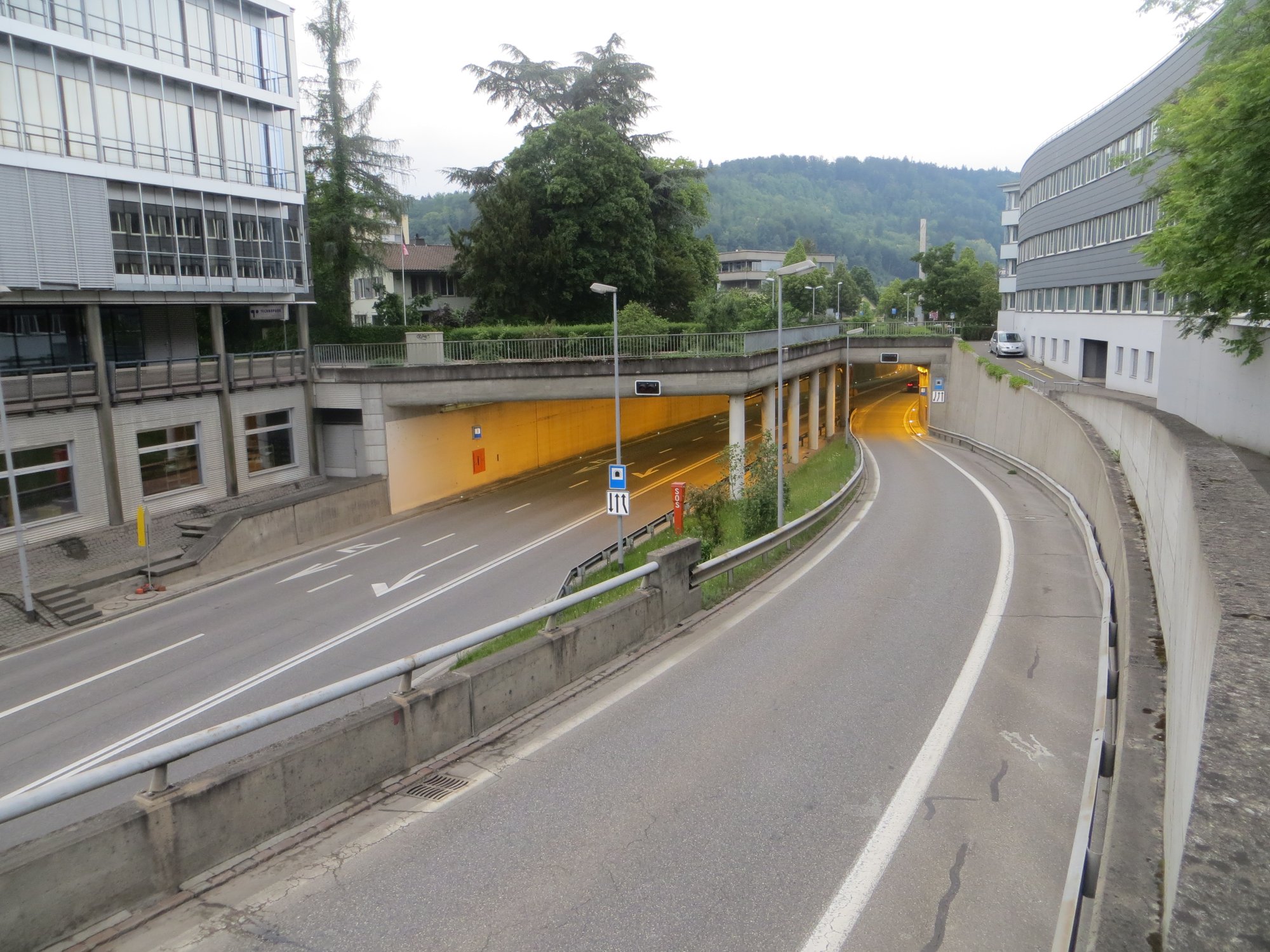
The Rosengarten tunnel and the Casino bridge in Brugg are being renovated. According to a press release from the Canton of Aargau, the two structures are to be upgraded so that they can be used for the next 50 years. The cantonal government has approved a loan of CHF 13.6 million for both construction projects.
The refurbishment will start in 2027 at the earliest. Prior to this, the project submission, approval procedure, land acquisition, tendering and awarding of work must be completed. The work is expected to take a year. The Brugg central bypass with the 205 metre-long Rosengarten tunnel was opened in 1981. The Casino Bridge was built in 1980 and carries the K117 over the River Aare.
According to a statement from the Department of Construction, Transport and Environment, the supporting structure of the tunnel is intact. However, the tunnel must be adapted to meet current safety requirements. The tunnel walls, fire protection and environmental protection are to be improved, as are the tunnel safety systems. In addition, the control centre at the north portal will be expanded and the operating and safety systems will be brought up to current standards.
The bridge surface on the Casino Bridge has reached the end of its service life. The kerbstones, the waterproofing and the mastic asphalt covering of the carriageway and pavement will therefore be replaced, according to the press release. Defects in the bridge structure, abutment boxes and piers will be repaired. The corrosion protection will be renewed on the bearings, shaft gratings and railings, among other things. The expansion profiles of the carriageway expansion joints will also be replaced.
The costs for the repair of the Rosengarten tunnel and the Casino bridge will be borne by the canton.
The Schlieren-based construction company STRABAG is renovating Grütstrasse in Gossau, according to a press release. The road, which is described as an important transport link, shows signs of damage to the carriageway. The road is now being renovated in order to modernise the infrastructure and improve road safety. “A central component of the measures is the structural redesign to increase safety for cyclists and pedestrians,” it continues. In addition, traffic noise is to be reduced with new 30 km/h zones. Completion is planned for the end of 2026.
In addition to the renovation of the road surface, the project also includes other extensive work. The Gossauerbach stream, which runs under the greenway, will be upgraded to make it flood-proof. STRABAG is also renewing combined water pipes and drinking water pipes. Energy and shaft systems are being modernised and the infrastructure required for telecommunications is being expanded.
“The renovation will provide the people of Gossau and all road users with greater road safety, modern infrastructure and improved flood protection,” says Remo Hürlimann, head of the construction department of the municipality of Gossau.
Scientists at the Swiss Federal Institute of Technology in Zurich(ETH) are researching ways in which artificial intelligence (AI) can be used to optimise the maintenance, repair and construction of railway bridges. In collaboration with SBB, researchers at the Institute of Structural Analysis and Design are creating AI models of reinforced concrete bridges, according to a press release. With the help of large data sets, the machine learning programmes will provide information on the durability and service life of the bridges and assess which structure would be in a critical structural condition.
“In Switzerland, too, a considerable proportion of infrastructure structures are approaching the end of their planned service life and need to be reviewed and, if necessary, reinforced,” said Sophia Kuhn, PhD student and member of the research group, in the press release. “We are developing a tool that helps to keep bridges in operation for as long as possible and thus conserve resources without taking disproportionate risks of accidents.”
The models not only provide information on structural safety, but also deliver more precise data than conventional data acquisition for analysing stability. This should save engineers both time and resources in the maintenance of bridges.
In a further step, the AI assistants developed by the research team will also help with the design of new bridges.
According to a press release, the Dietikon-based construction company Walo Bertschinger is starting civil engineering work on the cable systems of the Elektrizitätswerk der Stadt Zürich(ewz) directly at Zurich-Stadelhofen railway station. Walo has been awarded an annual contract by ewz from 2024 to 2028. This makes Walo one of four companies involved in important infrastructure projects. Walo Bertschinger will start civil engineering work on ewz’s cable systems directly at Stadelhofen station in February.
ewz is responsible for the secure and efficient operation of the distribution grid in the city of Zurich and parts of the canton of Graubünden, ewz says. ewz’s modern and intelligent metering and grid infrastructure ensures security of supply in the city of Zurich. In the long term, this infrastructure supports Zurich’s net-zero target for 2040 and the preservation of quality of life in the city. At the same time, it is a prerequisite for further networking and digitalisation.
The city of Winterthur and SBB developed the “Winterthur 2045” railway station expansion concept between 2019 and 2021. A new Vogelsang Nord terminus station was identified as the preferred solution to cope with increasing passenger volumes. At the same time, the platforms of the existing seven through tracks are to be widened.
With these changes, the urban space around the station must also be rethought. Test planning is to analyse the potential and challenges and develop an overall strategy for the area around the station.
Testplanning as the basis for a new master plan The test planning focuses on the areas of Bahnhofplatz and St. Georgenplatz, Rudolfstrasse and the southern railway station subway. The aim is to develop an overall urban development and transport strategy.
Quality of stay and climate adaptation in public spaces
Reorganisation of bus stops for better traffic routing
Optimisation of pedestrian and bicycle traffic
Categorisation of other modes of transport
The area of the future Vogelsang Nord terminus station is excluded from this planning and will be dealt with separately.
Involvement of the population and interest groups In order to ensure broad acceptance and viability of the solutions, the test planning is accompanied by a participatory process. Around 40 neighbourhood organisations, interest groups, political representatives and landowners will be actively involved in the design and discussion of the interim results.
An electronic participation portal and participatory events are planned for the wider population. An initial echo chamber was held in February 2024 to clarify the planning brief.
Starting signal for the new planning in 2025 The City Council has approved a loan of CHF 780,000 to carry out the test planning. The planning will start in 2025 and is expected to last until 2026. It will form the basis for a new masterplan for the railway station urban space.
The first masterplan has almost been implemented The first masterplan for Winterthur’s main railway station was developed back in 2009. Many measures from this were realised, including the redesign of the bus station with a mushroom roof, the northern pedestrian subway, new bicycle stations and the Neuwiesen traffic concept. The final work on the western side of the station should be completed by summer 2025.
With the new test planning for the station urban space, Winterthur is now setting the course for the coming decades. The aim is to create a modern, sustainable and functional urban space.
IWB and the Department of Construction and Transport of the Canton of Basel-Stadt are starting the construction of a new district heating pipeline in the Bachletten neighbourhood. Construction work is due to begin on 3 February, the two partners announced in a joint press release. The work is divided into five stages, running from Paulusgasse via Arnold-Böcklin-Strasse and Therwilerstrasse to Rütimeyerplatz.
As part of the installation of the new heating pipeline, the canton also wants to renew the electricity and water pipes in the affected streets. There are also plans to “partially green and unseal the road surface”, according to the press release. To this end, trees are to be planted in small hollows and car parks are to be laid out with grass paving stones so that water can seep into the ground. However, the redesign of the surface is currently still dependent on the outcome of pending objections.
IWB will also be laying district heating pipes and renewing the service lines in other streets in the Bachletten neighbourhood by 2031. Work is expected to begin in the fourth quarter of this year in the Kluserstrasse, Marschalkenstrasse and Bernerring perimeters.
The “An der Aa” project aims to repurpose and densify the ZVB site. Key elements include increasing the living and working space, a modern infrastructure for public transport and emergency services and opening up the neighbourhood to the local population. Of the planned flats, 40% are to be offered at an affordable price in order to meet the demand for affordable housing in Zug.
Infrastructure for mobility and emergency services In the centre of the new district, a state-of-the-art building will be constructed to house the Zug rescue service and the cantonal administration. The proximity to the new ZVB main base will enable synergies, for example in vehicle maintenance. The new infrastructure will meet the increasing demands of public transport and rescue services and contribute to future-proof mobility.
Focus on quality of life The site is being densified and ecologically upgraded. The Siehbach stream will be uncovered and a barrier-free footpath integrated. Green spaces and public squares will enliven the neighbourhood and provide space for recreation. The Schleifendamm will be secured as a biodiversity-rich oasis for plants and animals and contribute to the quality of life in the neighbourhood.
Legitimisation and broad support Work on the “An der Aa” project has been ongoing for 14 years, involving various stakeholders from politics, administration and the public. With 81.3% approval in March 2024, the people of Zug have given their support to the development plan. Construction is scheduled to begin in 2025 and be completed by 2032. Thanks to this broad support, the neighbourhood will become a flagship for innovative urban development in Zug.
Future prospects The project will change the face of Zug and meet the growing demand for residential and commercial space. The new infrastructure will create capacity for a significantly higher volume of public transport passengers and secure the operation of the emergency services.
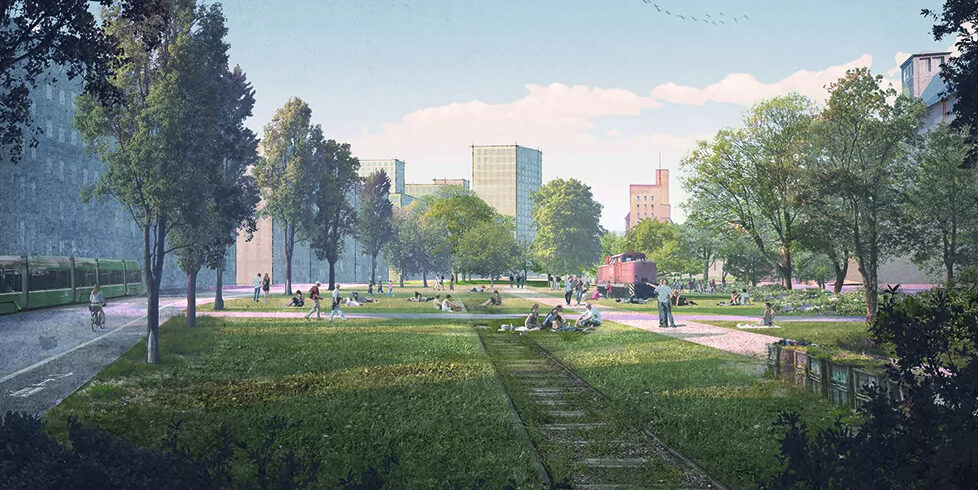
The city of Basel is planning a large-scale transformation of the Klybeck and Westquai areas. Living and working space for around 8,000 people is to be created there, complemented by green and open spaces. In order to better connect the neighbourhoods to the Rhine and the meadow, the existing harbour railway will have to be removed.
The Grand Council approved a loan of CHF 36 million for this in June 2024. These funds will be used to relocate the harbour railway and other infrastructure facilities, including the customs metering station of Gasverbund Mittelland AG (GVM).
Replacement construction of the customs metering station as the first step The first step will be to relocate the customs metering station, which feeds the regional gas network, to a new site in the Lange Erlen near Freiburgerstrasse. Construction work will begin in March 2025 and should be completed by the end of 2026. As the construction of a high-pressure gas pipeline in a residential area is not permitted, this location was chosen as the only solution that could be authorised.
Special protective measures apply to the existing trees and the water protection zones. Any necessary tree felling will be compensated for by reforestation and replacement areas.
Construction site coordination to minimise disruption Other major projects are being carried out in the surrounding area in parallel with the construction of the new customs measuring station. Deutsche Bahn is building a new Wiesenbrücke bridge, while the Basel-Stadt civil engineering office is working with IWB to renovate Freiburgerstrasse. All the work is being closely coordinated in order to clearly signal diversions for traffic and minimise disruption.
With these measures, Basel-Stadt is taking an important step towards sustainable urban development and creating the basis for new, liveable neighbourhoods on the waterfront.
Siemens Smart Infrastructure raises the bar. The Zug-based Siemens business unit increased its revenue by an average of 11 per cent annually between 2020 and 2024, Siemens announced in a press release. A record operating result margin of 17.3 per cent was achieved in 2024. This is well above the medium-term target of 11 to 16 per cent set in 2021.
In the coming years, the company is aiming for sales growth of 6 to 9 per cent and an earnings margin of 17 to 18 per cent. “We have set ourselves ambitious targets and achieved them,” said Matthias Rebellius, member of the Managing Board of Siemens AG and CEO of Smart Infrastructure, in the press release. “Now we are raising the bar even higher to reach the next level of value creation.”
In the coming years, SI intends to strengthen its global presence and expand local capacities. At the same time, it plans to promote talent in high-growth markets such as India and the USA. Both should lead to scalable results in SI’s established end markets, such as data centres, healthcare and energy utilities. The company expects the market it addresses to grow by 5 to 6 per cent annually in the medium term. According to the press release, SI has realised “above-market growth in all areas”.
Wir verwenden Cookies zur Unterstützung und Verbesserung unserer Dienste. Mit der Nutzung dieser Website erklären Sie sich mit der Verwendung von Cookies einverstanden. Weitere Informationen finden Sie in unserer Datenschutzerklärung.