Tag: Infrastrukturprojekt

  • New police headquarters sets new standards for the workplace

    New police headquarters sets new standards for the workplace

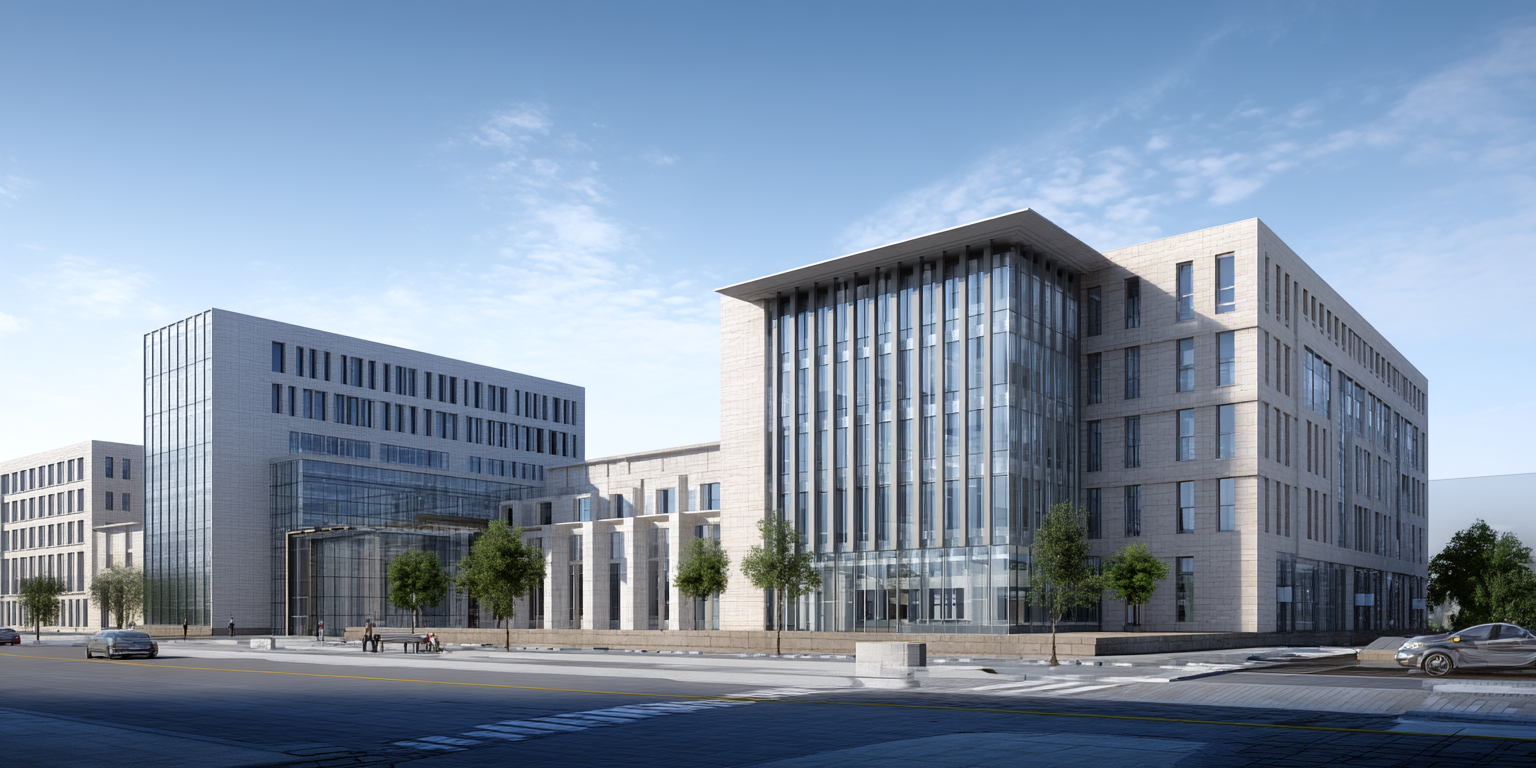
    The construction group Implenia is building the new police headquarters in Münster, Germany, on behalf of the project company PPMS Immobilien GmbH & Co. KG, to accommodate more than 1,400 staff. According to a press release, the building will provide much-needed additional space for the police force, as well as a modern headquarters featuring short walking distances and attractive new-work concepts. The project is worth more than €200 million.

    As the main contractor, Implenia is responsible for the planning and construction of a functional and administrative building designed to bring together virtually all of Münster Police’s existing departments. The turnkey new building will include modern office and laboratory workspaces, a police station, a canteen, training areas, detention facilities and an underground car park.

    According to the press release, the project is in line with the strategic focus on “large, complex and specialised property projects”. In the words of Matthias Jacob, Head of the Buildings Division Germany, Implenia is focusing on “partnership-based contract models that allow us to make optimal use of our capabilities for the benefit of our clients and Implenia”.

    Construction work is scheduled to begin in summer 2026, following the early completion of the excavation, and is expected to last until October 2029.
  • Major project to boost rail capacity in the Zurich area in the long term

    Major project to boost rail capacity in the Zurich area in the long term

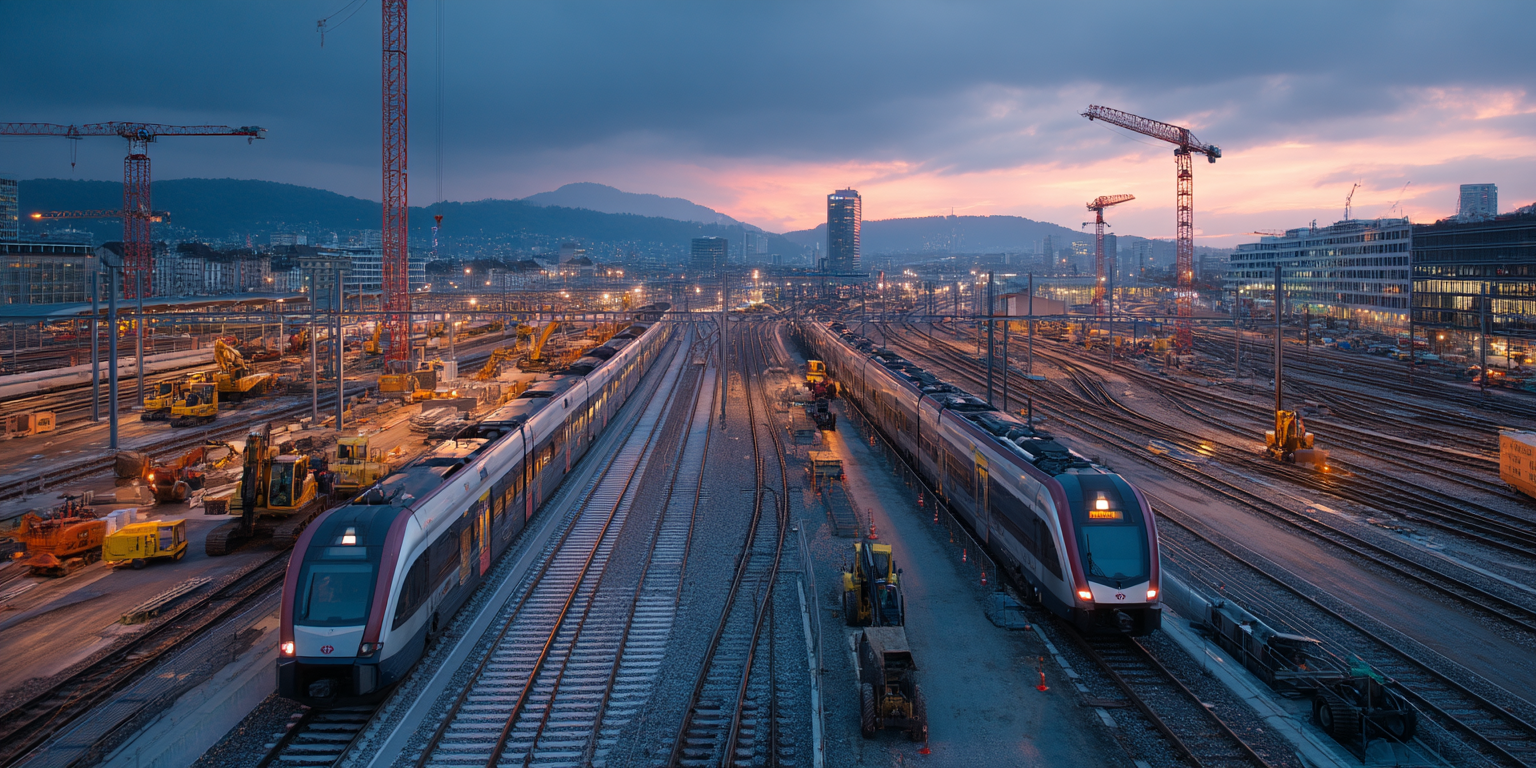
    According to a press release, SBB has begun work on upgrading the line between Zurich and Winterthur to four tracks throughout. As part of the ‘MehrSpur Zurich-Winterthur’ project, SBB is constructing a new tunnel, upgrading several stations and carrying out further improvements.

    SBB and the construction firms involved have now started work on upgrading the stations at Wallisellen, Dietlikon, Bassersdorf and Winterthur Töss. This includes widening platforms, constructing new and modified underpasses, and building footbridges and bridges. Work in Bassersdorf is due to be completed by 2030, in Wallisellen and Dietlikon by 2031, and in Töss by 2034.

    The Brütten Tunnel is set to be 9 kilometres long. Tunnel boring is scheduled to begin in 2029, with the tunnel due to open in 2037.

    The expansion is expected to cost a total of 3.3 billion Swiss francs. This major project, together with other initiatives such as the expansion of Zurich Stadelhofen station, is set to significantly improve rail services in the Greater Zurich area.

  • Riet II makes the supply more crisis-proof

    Riet II makes the supply more crisis-proof

    The St.Gallen region is making its drinking water supply fit for the coming decades. With the decision in favour of the new Riet II lake water plant in Goldach, the existing plant in Frasnacht is being given a second pillar of equal value. Today, the supply of the twelve participating municipalities in Eastern Switzerland depends largely on this one source of supply in the event of an emergency. A risk that no longer fulfils the federal requirements for severe shortages. Riet II is intended to close precisely this gap and ensure supplies even if a plant fails or Lake Constance can only be used to a limited extent at times.

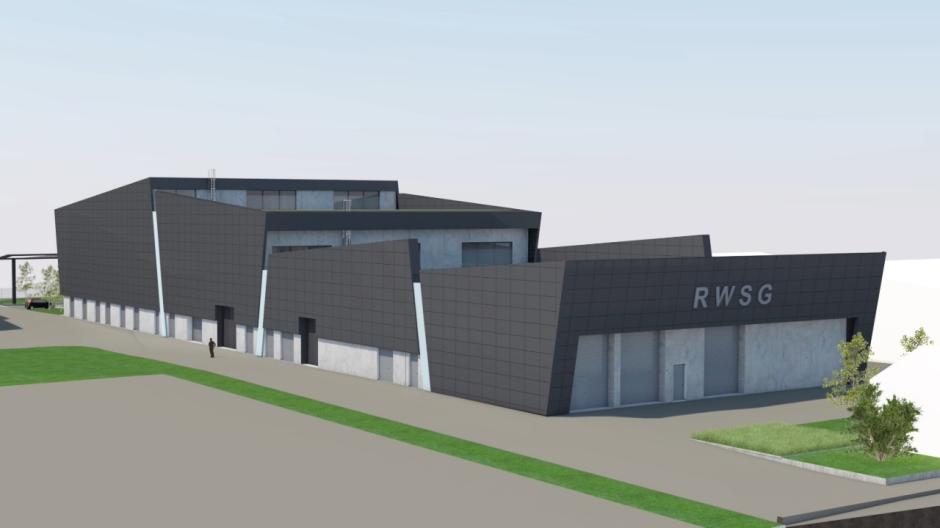
    The new plant will be realised on the site of the existing Riet high-pressure pumping station in Goldach. Around 60 million Swiss francs have been budgeted for construction and equipment. The costs will be borne by the twelve shareholder partners of RWSG Regionale Wasserversorgung St.Gallen AG in accordance with a new distribution model, which will be passed on to end customers via the water prices in future. The fact that all partner municipalities are unanimously in favour of the project and financing shows the high strategic importance: drinking water is treated as a critical infrastructure that must function just as robustly in the event of a crisis as it does in everyday life.

    With Riet II, the RWSG is expanding its role as the backbone of the regional water infrastructure. It is responsible for collecting raw water, treating it and transporting it to the municipal networks and supplies more than 150,000 people with drinking, process and extinguishing water. In future, it will operate two lake water works, Frasnacht and Goldach, as well as the Riet high-pressure pumping station and the associated transport pipelines. This will benefit urban centres such as St.Gallen and Arbon as well as smaller partner communities from Abtwil-St.Josefen to Teufen. The new plant is therefore more than just a construction project: it is a long-term promise of security for an entire region.

  • New double-track line relieves congestion on the route between Zurich and Winterthur

    New double-track line relieves congestion on the route between Zurich and Winterthur

    SBB has commissioned a consortium consisting of the construction companies Implenia from Opfikon and Marti from Zurich to build a new double-track line. As part of the Zurich-Winterthur multi-track project, the Swiss Confederation and SBB are planning to build a new line and expand the stations in Dietlikon, Bassersdorf, Wallisellen and Winterthur Töss. According to a statement, Implenia and Marti will each take on 50 per cent of the construction of five of the six lots in the project. The total contract is worth around CHF 1.7 billion, with Implenia’s share amounting to around CHF 830 million. The project is expected to take around ten years to complete.

    As part of the project, Implenia and Marti will take on the construction of the Brüttener Tunnel (lot 240), the Winterthur section (lots 140 and 141), the Dietlikon section (lot 340) and the Wallisellen section (lot 540). The new double-track line through the Brüttener Tunnel is intended to eliminate the 8.3-kilometre capacity bottleneck in the rail network between Zurich and Winterthur. Part of the bottleneck is a branch line towards Zurich Airport. The underground double-track expansion will involve the construction of a single-track tunnel with a diameter of around ten metres for each direction of travel.

    According to the announcement, the infrastructure project is geared towards the mobility needs of future generations and is therefore in line with Implenia’s strategy. “We are delighted that Implenia, together with our consortium partner Marti, will be able to contribute our many years of experience and comprehensive expertise in infrastructure construction to make this important section fit for increasing frequencies and future requirements,” said Implenia CEO Jens Vollmar in the press release.

  • First station of India’s first urban cable car completed

    First station of India’s first urban cable car completed

    “Construction work on Varanasi’s first urban cable car is progressing rapidly,” announced Bartholet Maschinenbau AG in a press release. According to the company, the installation of the first station was recently completed. In addition, six supports have already been erected and further supports are under construction. The foundations for the third station have also been completed.

    The first urban cable car in India is being realised by Bartholet in collaboration with Vishwa Samudra Engineering on behalf of National Highways Logistics Management Ltd. It runs at a height of up to 40 metres from the main railway station to Godowalia Chowk station. It will connect five stations over a distance of around 3.7 kilometres. After completion, which is expected in 2025, it will be possible to transport up to 3,000 passengers per hour and direction. A total of 150 panoramic gondolas will be used for this purpose.