Tag: Innovationscampus

  • From industrial heritage to innovation campus

    From industrial heritage to innovation campus

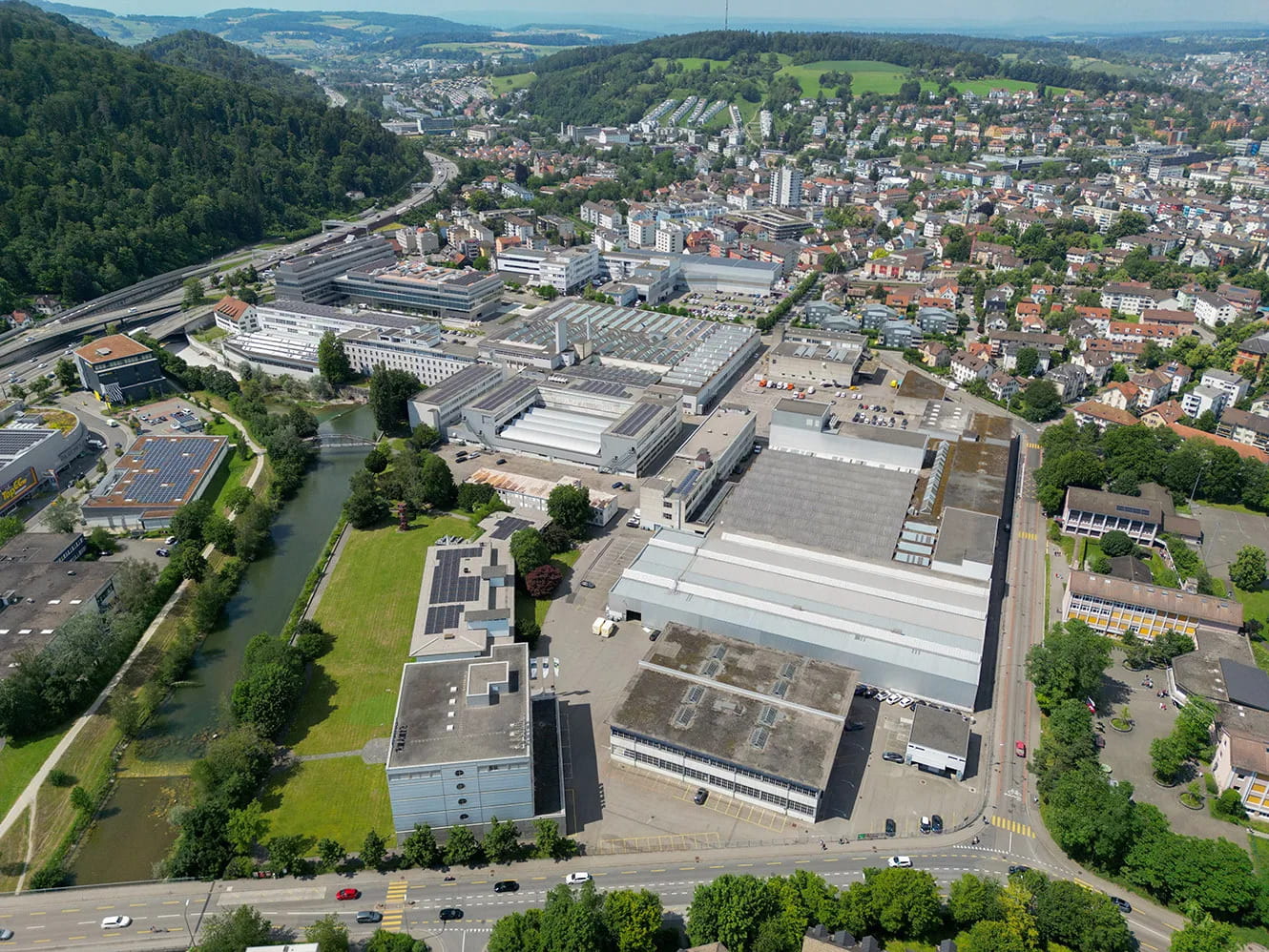
    Where textile machines and industrial production used to set the pace, a new focus for technology, trade and entrepreneurial development is now being created. The approximately 75,000 square meter site is not being conceived as an isolated business park, but as a networked innovation location with a direct link to the Töss district. Existing buildings, paths and spaces form the backbone of the transformation.

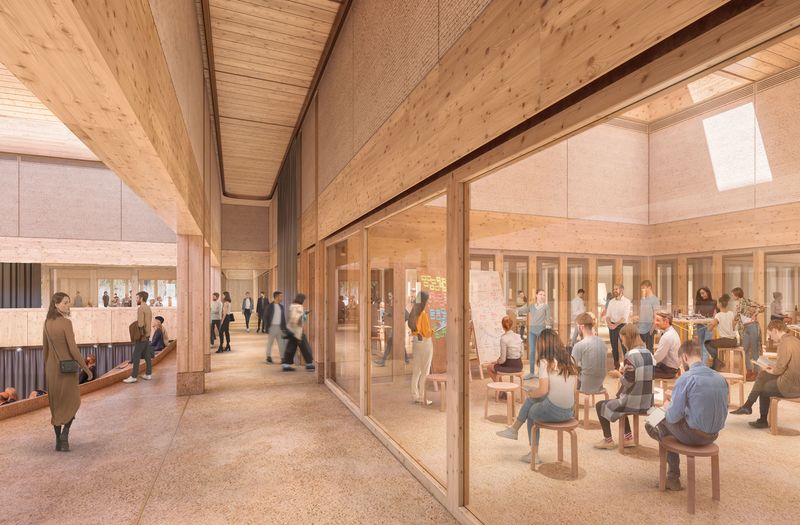
    Historical substance remains where it creates character and identity. At the same time, structures will be opened up, paths made more permeable and new places for encounters, collaboration and exchange created. The Vitus site will thus become a visible driver of Winterthur’s economic development.

    Mission statement and site strategy
    The guiding principle is both simple and ambitious. A tech and innovation cluster that brings together companies, start-ups, education and research in one place. The focus is on work, not living. Office and commercial space is planned for technology-oriented companies, research-related businesses, service providers and creative players. Co-working facilities, flexible spaces and space for young companies will also be added.

    At the same time, the site development focuses on atmosphere. Urban meeting zones, restaurants, cultural offerings and publicly accessible outdoor spaces are intended to ensure that the area also comes alive outside of traditional office hours. The planned Vitus Promenade connects the site with the Töss river and creates an identity-forming open space axis that enables movement, recreation and interaction.

    Development in stages
    The transformation is deliberately taking place in several stages. In the first phase, existing buildings will be activated, renovated or upgraded through targeted conversions. Interim uses, co-working, events and cultural formats will ensure that the area gains appeal even during the planning phase. The first companies from the fields of technology, sustainability and future mobility are already using the Vitus site as a place to work and develop.

    At the same time, structural foundations are being laid for the next steps, such as improved access, sharper utilization concepts, mobility and sustainability approaches. Individual construction projects, such as the new LANDI site, fit into this picture and strengthen the commercial character of the area. In a later stage, the eastern part of the site in particular will be redeveloped in greater depth. Additional, contemporary space for production, laboratories, offices and services will be created here – tailored to market needs and demand.

    Prospects for Töss and Winterthur
    The Vitus site will give Winterthur-Töss a strong economic anchor point. The site offers potential for several thousand jobs and thus strengthens the district’s role as a productive yet urban location. Open spaces, permeable paths and cooperation with local players should prevent the creation of an isolated commercial area.
  • Future model for life sciences, research and cluster power

    Future model for life sciences, research and cluster power

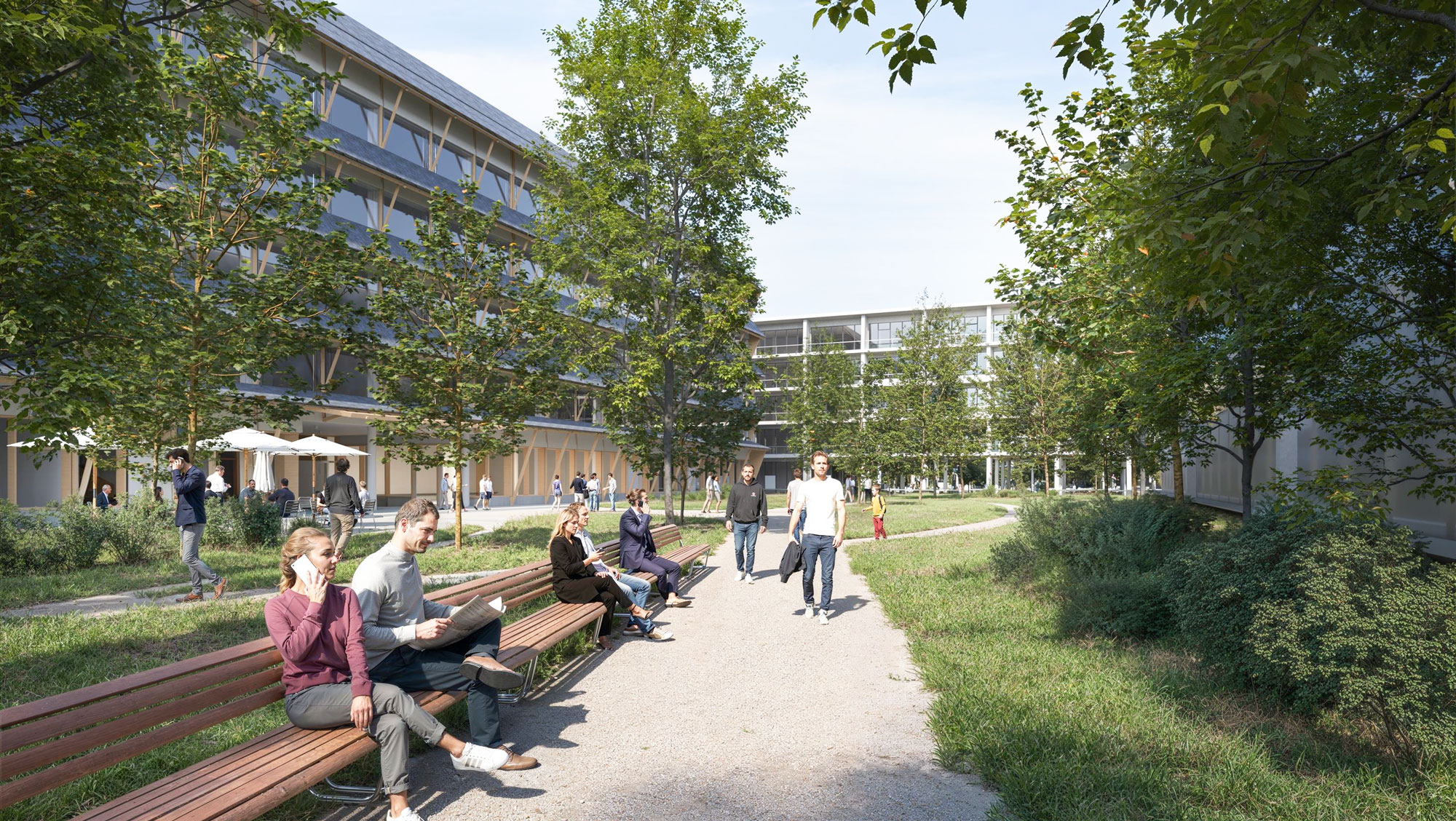
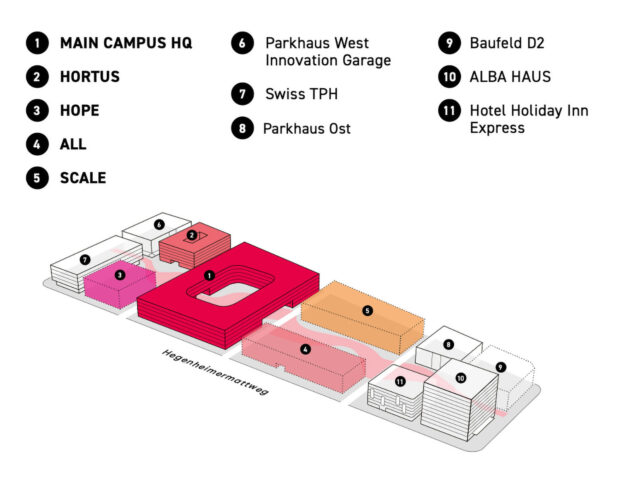
    The centrepiece of the campus is a kilometre-long, continuous park that physically and socially connects all the buildings. The striking buildings Main Campus HQ, HORTUS, ALL, HOPE, SCALE as well as Swiss TPH, ALBA Haus and many more are grouped around the green ribbon and create a space for dialogue, recreation and networking with more than five football pitches of park space. With over 5,000 workplaces on completion and more than 115,000 m² of usable space, the site will set new standards for infrastructure and collaboration in Switzerland and Europe.

    Architecture and sustainability as drivers
    The architecture by Herzog & de Meuron and Felippi Wyssen visibly conveys the idea of innovation to the outside world. The Main Campus HQ is practically fully let and, as a multifunctional research and communication centre, is a magnet for companies such as JNJ, SKAN, Basilea, the University of Basel and other players. Flexible multi-storey car parks and mobility services support the sustainable use of the site. SENN is acting as investor, developer and total contractor – from planning and realisation through to long-term marketing. The project is being developed in close collaboration with Basel Area Business & Innovation, the Canton of Basel-Landschaft and other partners from the worlds of science and business.

    HORTUS, an office building that amortises its production energy in 30 years, is outstanding. It was built from wood, clay and waste paper, generates energy via photovoltaics and fulfils the highest ESG criteria. Every component is part of the circular economy and prepared for future utilisation cycles. The inner courtyard garden by Piet Oudolf contributes to biodiversity and the indoor climate. HOPE and SCALE will offer further flexible spaces suitable for the public and production from 2028. Neighbours Swiss TPH and ALBA Haus strengthen the health science focus of the site, while the Holiday Inn Express complements the international business and network offering.

    Image: Switzerland Innovation Park Basel Area Main Campus

    Cluster, community and innovation
    More than 100 companies – from global players and spin-offs to young scale-ups – characterise the area and use programmes such as BaseLaunch and DayOne for start-ups, networking and knowledge transfer. Cluster events, community platforms and modern co-working infrastructures promote dialogue and the creation of joint projects. Educational facilities, childcare, catering, sports and conference facilities create a fully-fledged urban working ecosystem.

    The Botnar Institute of Immune Engineering as a beacon
    The Botnar Institute of Immune Engineering (BIIE), which will move into the ALL, a new, sustainable building on the campus in 2027, will provide a special boost. The decision in favour of this location underlines Basel’s importance as a research location. The institute, funded by the Fondation Botnar with around 1 billion dollars, brings together up to 300 top researchers from all over the world to develop innovative immune-based diagnostics and therapies. The aim is to close gaps in health technologies and improve quality of life worldwide. The BIIE community will have a significant impact on the cluster and the Basel region and will strengthen global networks with partners such as Oxford and ETH Zurich.

    Impact and perspective
    The Switzerland Innovation Park Basel Area Main Campus brings together knowledge, infrastructure and community in an internationally visible innovation centre. By integrating sustainability, empathy and excellence, a global hub for cutting-edge research, vibrant entrepreneurship and future-oriented urban development is being created in Allschwil. The model shows how site development, architecture and science clusters can pave the way for economic and social transformation today and tomorrow.

  • Visionary campus project takes shape

    Visionary campus project takes shape

    Construction work on the entrance to the InnHub La Punt began in March. A new chapter in the project for an innovation campus in La Punt was opened on 9 July, InnHub La Punt announced in a post on LinkedIn: “The start of construction of the InnHub marks the transition from vision to reality”.

    The InnHub La Punt is designed as a mixture of sports, health and educational facilities as well as a number of second homes. The innovation campus is intended to serve as a place of creation and exchange for locals, guests and companies. The internationally renowned British architect Norman Foster, who lives in the Engadin, is responsible for the design of the new coworking space, which covers a total area of 7,700 square metres. By using local wood, granite and lime mortar, he wants to set an example for sustainability and the circular economy.

    Construction work on the InnHub is due to be completed by the end of 2028. From then on, the innovation campus will offer companies a place of retreat and inspiration in the Engadin. If you don’t want to wait that long, you can already utilise the services of the InnHub PopUp in La Punt.

  • Innovation campus in the heart of the Engadin

    Innovation campus in the heart of the Engadin

    The Engadin is known for its cultural diversity and breathtaking nature. At the same time, the region is increasingly focussing on innovation and sustainable development. The InnHub La Punt is a place where research, entrepreneurship and education come together.

    The centre offers a wide range of uses over an area of 7,700 square metres. These include workshop and classrooms, coworking workspaces, an auditorium with 250 seats, a sports training infrastructure, a spa, a restaurant with bar and lounge, a sports shop, a tourist information centre, 44 hotel rooms and 8 tourist flats. The multifunctional premises create a dynamic environment for innovation and interdisciplinary dialogue.

    Construction begins in spring 2025
    Following a comprehensive planning phase in which the concept was further refined, construction of the InnHub La Punt will begin in spring 2025. The municipality issued the building permit in autumn 2023. The existing buildings will be demolished first, followed by the excavation and construction of the underground car park by summer 2026. The shell will be completed by mid-2027 before the interior work begins. The opening is scheduled for the end of 2028.

    In parallel with the municipality of La Punt Chamues-ch’s future projects, including the road bypass and the renaturation of the Chamuerabach stream, the InnHub will create a new centre that will revitalise the town and provide new impetus.

    Sustainability as a central building block
    A key component of the project is its sustainable approach. The building is being constructed from local wood, granite and lime mortar and is an example of the circular economy and ecologically responsible construction. “The InnHub is a matter close to my heart, as I have lived in the Engadin for years. It is an example of sustainability and innovative construction methods,” emphasised architect Norman Foster in a video message.

    The operation of the campus is also designed to be sustainable. The initiators, including Caspar Copetti, are not focussing on short-term profits, but on long-term positive effects for the region. The InnHub is intended to create new jobs, promote year-round tourism and establish an innovation ecosystem in the Engadin.

    New impetus for the economy and the community
    The InnHub La Punt will not only attract companies, start-ups and skilled workers, but also facilitate strong networking with the local population. The municipality of La Punt Chamues-ch sees the project as an important step for the further development of the region. “The campus will create a cultural and social meeting point in our village. The projects that are being created here will inspire future generations to come to La Punt,” says mayor Peter Tomaschett.

    In addition to the long-term effects for the region, the InnHub offers an InnHub PopUp even before its completion, which can be used as a co-working and event venue for locals, holiday guests and professionals until it opens.

    A milestone for the Engadin
    The InnHub La Punt combines innovation, sustainability and community in a unique way. With a clear focus on responsible development, it will radiate far beyond the Engadin and serve as a model for sustainable innovation centres in the Alpine region. The combination of state-of-the-art architecture, innovative working environments and regional roots makes the InnHub a forward-looking project that will provide new impetus for the Grisons as a business location.

  • Implenia is building a climate change laboratory in Düsseldorf

    Implenia is building a climate change laboratory in Düsseldorf

    The construction services company Implenia has won the general contractor contract for the EUREF campus in Düsseldorf . According to the client EUREF AG , “a visible place of the future will be created as a real model on this innovation campus for the energy and mobility transition, which can be implemented in many major cities around the world”. EUREF has already set up a first campus of this kind in Berlin .

    The Düsseldorf campus will offer 3,500 employees from established companies, start-ups, science and research an inspiring environment on 105,000 square meters of gross floor space. In addition, it is to become part of a network of environmentally friendly energy producers and storage facilities in the region and meet all of the federal government’s CO2 climate protection targets for 2045 from the start. The project volume amounts to CHF 186 million.

    “Sustainability is one of Implenia’s five corporate values,” CEO André Wyss is quoted as saying in a press release . “We are therefore very pleased that we can build a research and development campus whose work focuses on sustainability and which is itself geared towards CO2-neutral operation.”

    According to Implenia, the schedule is “ambitious”: The first phase of construction should be completed and ready for occupancy by mid-2024. The second construction phase will run continuously with a time delay and will be completed by mid-2025. In order to be able to keep to this schedule, Implenia has been working with BIM (Building Information Modeling) right from the start, i.e. with digital modelling, combining and recording all relevant planning, construction and management data. In addition, a so-called lean cycle plan is used for execution.