Tag: Innovationsstandort

  • Zurich sharpens its innovation profile

    Zurich sharpens its innovation profile

    The canton of Zurich is one of the strongest economic regions in Europe. However, even a top location comes under pressure when there is a shortage of skilled labour, development costs rise and global competition becomes tougher.

    This is precisely where the cantonal government comes in. It does not want to boost the innovation centre with individual actions, but rather strengthen it with reliable framework conditions. This Zurich approach is intended to bring research, entrepreneurship and application closer together.

    Five fields with a leverage effect
    The cantonal government has defined five key areas for the years 2027 to 2030. Semiconductors, space, environmental technologies, health and venture capital. The selection is no coincidence. All five areas combine technological dynamism with real growth opportunities.

    At the same time, they show where Zurich is heading. Not in short-term trends, but in fields in which industrial strength, research expertise and new markets overlap. This makes the strategy relevant in terms of economic policy.

    From the laboratory to the market
    The focus on implementation is particularly interesting. Innovation should be applied more quickly. This is precisely where many strong research centres are losing pace.

    For semiconductors, it is about access to chip design, clean rooms and technology transfer. In aerospace, Zurich wants to facilitate the development and scaling of new applications. In the healthcare sector, digital solutions are to be tested, validated and transferred to facilities more quickly. The ambition is clear. Not only invent, but also apply.

    Sustainability is becoming a location factor
    The focus on environmental technologies is also exciting. Sustainable mobility and recyclable construction are not only seen as an ecological task, but also as an economic opportunity.

    That is an important signal. Thinking about security of supply, climate targets and location quality together shifts sustainability from a niche to the centre of location policy. For Zurich in particular, this can create a new profile with international appeal.

    Capital is crucial
    Innovative companies need more than just good ideas. In the growth phase, they need capital that enables scaling. This is why the strategy also focuses on venture capital.

    For the first stage, the Government Council is applying for a framework credit of CHF 23 million. This is not a huge amount. But it marks a political decision of direction. Zurich not only wants to manage its innovative strength, but also translate it into added value and jobs.

  • The silent ascent south of the Gotthard

    The silent ascent south of the Gotthard

    The EU’s Regional Innovation Scoreboard 2025 confirms Ticino’s “Innovation Leader” status. Only Zurich performs better in Switzerland. There are measurable drivers behind the ranking. The USI and SUPSI universities form the academic backbone, complemented by institutes such as the IDSIA for artificial intelligence and the national supercomputing center. At the same time, SMEs in the canton invest above average in research and development.

    Three competence centers, one park
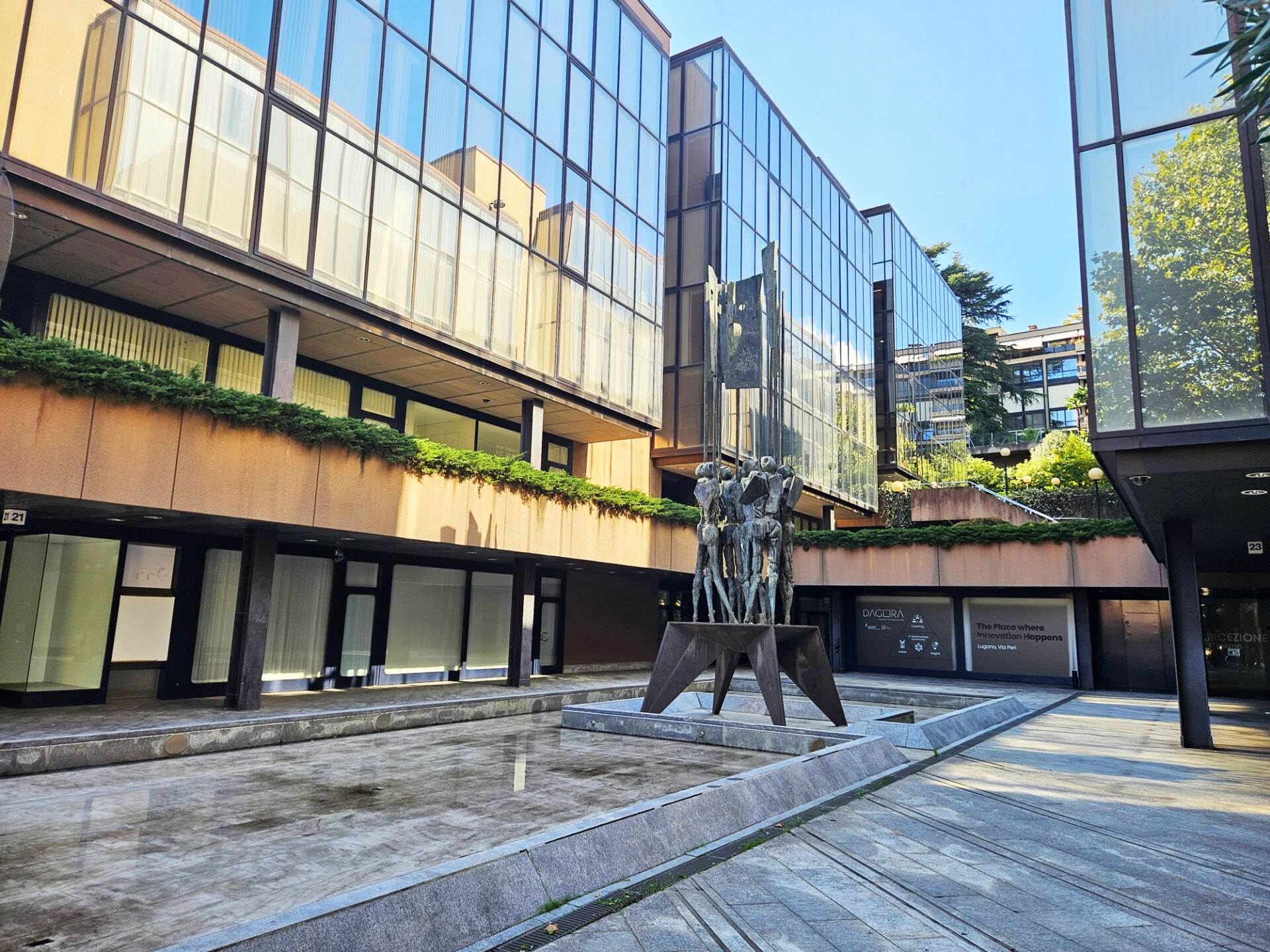
    The Switzerland Innovation Park Ticino pools forces at three locations. The Swiss Drone Base Camp at Riviera Airport tests drone technology in real airspace. In Lugano, the Lifestyle Tech Competence Center is driving forward the digitalization of fashion, food and wellness. In Bellinzona, the Life Sciences Competence Center conducts research into biomedicine and oncology. From 2032, the park will move to the Nuovo Quartiere Officine, a 120,000 square meter urban development area in the heart of the cantonal capital.

    Lugano relies on digital infrastructure
    The city of Lugano has gone its own way in the area of crypto. Over 400 businesses already accept digital means of payment, and more than 100 fintech and blockchain companies have set up shop. Phase II was launched in March 2026 in collaboration with the company Tether. Five million Swiss francs will flow into digital resilience, AI ecosystems and decentralized urban infrastructure by 2030. Lugano is thus positioning itself as Switzerland’s third-largest financial center with technological ambitions.

    cHF 60 million and a clear signal
    The Grand Council sent a clear signal at the end of 2023. A credit line of CHF 60 million will secure the promotion of innovation, research cooperation and regional economic policy until 2027. CHF 25 million will flow directly into innovation and research synergies. Fondazione Agire, the canton’s innovation agency for over 10 years, supports 20 startup ideas every year via its Boldbrain accelerator and coaches SMEs on digitalization.

    What the real estate sector needs to learn from this
    Location promotion only develops its full value when it grows beyond strategy papers. Ticino is faced with the task of developing land availability, process reliability and urban quality at the same pace as its innovation projects. For investors, this means a region on the move with high potential and a simultaneous need for patience. Anyone who has the south of Switzerland on their radar today will find a location that wants to deliver and has the means to do so.

  • How Basel-Landschaft creates spaces for innovation and living

    How Basel-Landschaft creates spaces for innovation and living

    Basel-Landschaft is building for the future. Former industrial sites are being transformed into innovative campuses, flexible business parks and urban neighbourhoods. Dreispitz combines art, education and high-tech on the cantonal border and creates space for 4,000 jobs, research and sustainable architecture at the highest level. Uptown Basel in Arlesheim is positioning itself as a hotspot for Industry 4.0 and medtech with quantum computing pioneers and an ecological beacon character. New neighbourhoods in Muttenz, BusinessCity and AM SCHÄNZLI combine living and working spaces, green open spaces and climate-friendly mobility, further enhancing the location’s profile as a centre of knowledge and innovation.

    In Pratteln, Bredella, the Campus der Wirtschaft and Zentrale Pratteln are creating modern urban living spaces that focus on sustainable development, smart infrastructure and flexible usage concepts. In Allschwil, Bachgraben is developing into a leading life sciences location with the Switzerland Innovation Park Basel Area, where biotech, medtech and pharmaceutical companies are driving forward cutting-edge research and high-tech innovations. The Laufen Industrial Park and Ziegelei Ost in Allschwil are creating momentum for regional production, craftsmanship and community, with a focus on the circular economy and CO² reduction. GETEC PARK is a growth engine for chemistry and life sciences, driven by decarbonisation and ESG standards.

    Basel-Land thus demonstrates how diversity, sustainability and innovative strength are driving transformation.

    Dreispitz
    Dreispitz in Münchenstein (Basel-Landschaft) is one of the most diverse areas in the Basel region. It combines art, education and business. Over 380 companies and around 4,000 jobs characterise the Dreispitz business park, flanked by universities such as the FHNW and creative clusters. The intercantonal site offers space for innovative companies, start-ups, culture and modern educational institutions. A vital location for the future of the entire region.

    uptownBasel
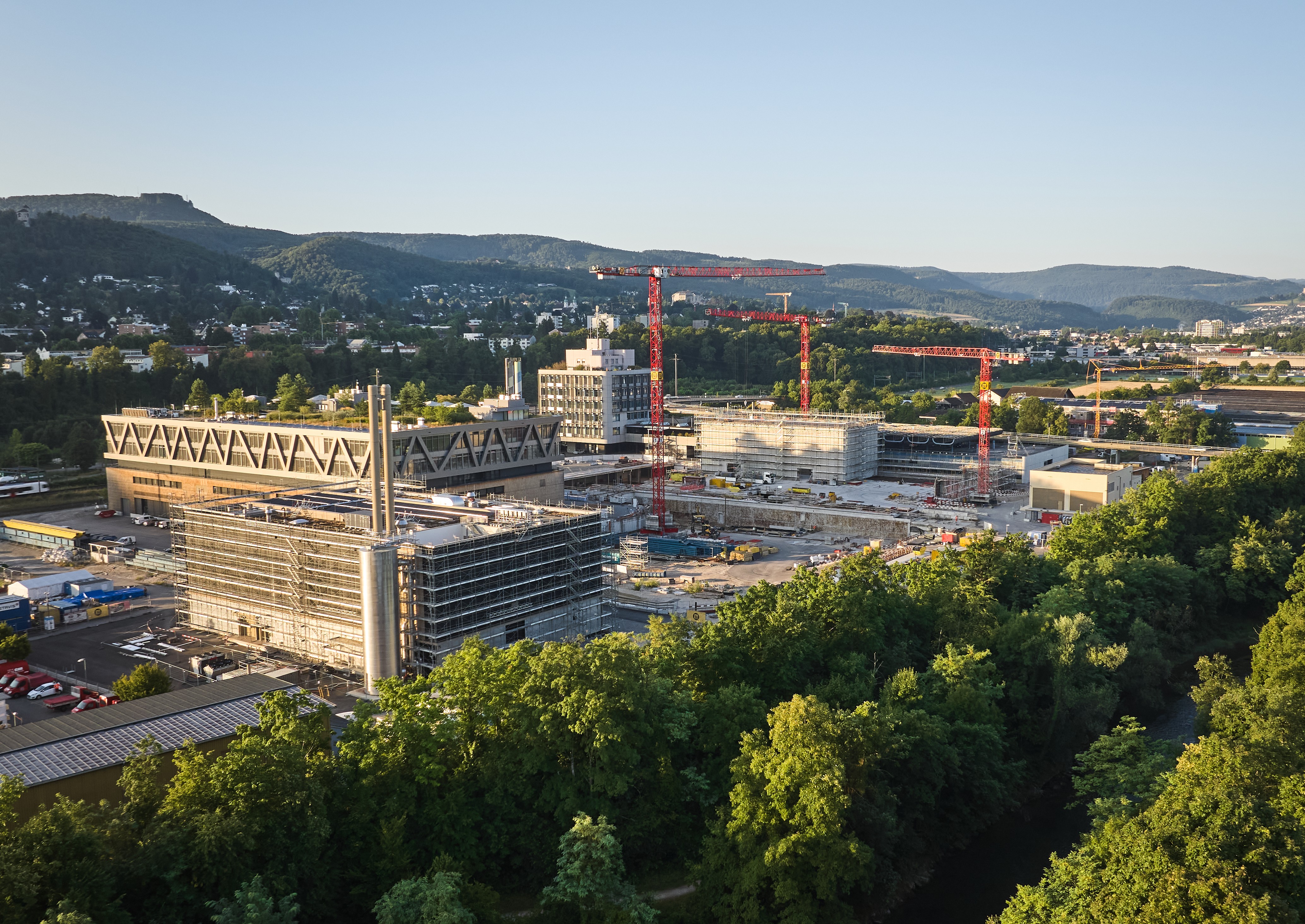
    uptownBasel is currently building the future. Since 2019, a state-of-the-art innovation campus has been under construction for the jobs of the coming decades. The world-renowned dental implant manufacturer Straumann will relocate a total of 1,000 jobs to the forward-looking development area by 2028. Arlesheim will thus become the most important hotspot for medical technology in Switzerland. The campus, which is being rapidly developed by the Staehelin family and Fankhauser Arealentwicklungen, features several buildings already under construction with sustainable architecture of the highest standard. The roof deck has attracted worldwide attention and, together with the seminar and event rooms, is helping to make the site the state-of-the-art centrepiece of the Baselland industrial location.

    Laufen Industrial Park
    The Laufen Industrial Park is located on the former tile factory site of Keramik Laufen AG on the south-eastern edge of the city and has been owned by the Abendrot Foundation since 2017. Following the major fire in 2020, which destroyed around 80% of the building, the commercial site will be rebuilt between 2025 and 2027 as single-storey timber frame buildings. The aim is to create a modern, affordable offering for small regional businesses, craftsmen and creative professionals, with flexible rental spaces and individual expansion options. A network of commercial streets ensures good access, lighting and promotes networking among users. Densification and multi-storey extensions are possible in order to respond flexibly to regional demand. The focus is on sustainability. The concept is characterised by the reuse of building components, wood instead of concrete and renewable energy. An area association is to strengthen cohesion. The overall result will be a regionally relevant, versatile and sustainable commercial centre.

    AM SCHÄNZLI
    The new AM SCHÄNZLI district in Muttenz marks an urban reinterpretation of living, working and leisure at the gateway to Basel. By 2029, three high-rise buildings with 385 apartments and 14,000 m² of commercial space will be built on the 74,000 m² “Hagnau Ost” site. A central square and intensive greening lend urban density a quality of life right next to the Birs recreation area. The focus is on resource-saving construction, energy efficiency (SNBS Gold), photovoltaics and optimised mobility for pedestrians and cyclists. AM SCHÄNZLI stands for modern location development and the sustainable integration of city and nature.

    BaseLink site
    The Bachgraben site in Allschwil has developed into a driver of innovation in Basel. The location combines international life science companies, state-of-the-art research and sustainable urban development. Projects such as the BaseLink site and new public transport and cycling initiatives are creating attractive jobs and an urban environment. Close cooperation between the canton, municipality and business community ensures dynamism and makes the area a showcase project in the tri-national region.

    Business campus
    The new business campus is located directly next to the railway station in Pratteln and is developing into one of the most important event and work locations in the Basel area. By 2028, the H² building will become a state-of-the-art centrepiece. Six floors offer over 10,000 m² of flexible laboratory, event and office space, complemented by a congress hall for up to 1,900 people and a total of more than 6,000 m² of event space. The campus is aimed at companies from industry, research and services, with sustainable architecture, optimal accessibility, infrastructure from a single source and synergies with the Bredella district. The development strengthens the region’s competitiveness and positions Pratteln as an international centre for innovation, exchange and major events.

    GETEC PARK.MUTTENZ
    GETEC PARK.MUTTENZ is the leading industrial cluster in north-western Switzerland for chemicals, pharmaceuticals and life sciences. It combines state-of-the-art infrastructure, secure laboratory and logistics space, and sustainable energy and resource concepts on 50 hectares. The park, which emerged from Infrapark Baselland and Schweizerhalle, is home to global corporations and numerous SMEs. Innovative solutions such as Waste2Value and ESG-based processes make GETEC a growth engine for the industry.

    Pratteln headquarters
    The Pratteln headquarters project is transforming the former Coop site north of the railway station into a lively, ecologically and socially oriented neighbourhood. By 2026, around 480 cooperative apartments for 1,200 people will be built, complemented by a new school, around 15,000 m² of commercial space and a variety of open spaces. Construction and planning are consistently focused on preserving existing structures, reusing building components and sustainable energy supply. Historic industrial buildings such as the sugar silo will be preserved. The cooperation of six developers and the innovative utilisation concept make Pratteln Headquarters a showcase project for non-profit and sustainable neighbourhood development in the Basel region.

    Bredella in Pratteln
    Bredella in Pratteln represents the large-scale transformation of a central industrial area into an innovative urban quarter. In the immediate vicinity of the railway station, 87,000 m² of diverse residential, work and leisure facilities are being created, interspersed with green spaces and renovated industrial buildings. The master plan and neighbourhood plans focus on gradual development, sustainable mobility and a high quality of life. With a perimeter block, high-rise buildings, commercial and studio space, car-free areas and lively ground floors, a model for urban living in the Basel area is being created. Bredella boldly combines modernity, history and sustainable development.

    Ziegelei Ost
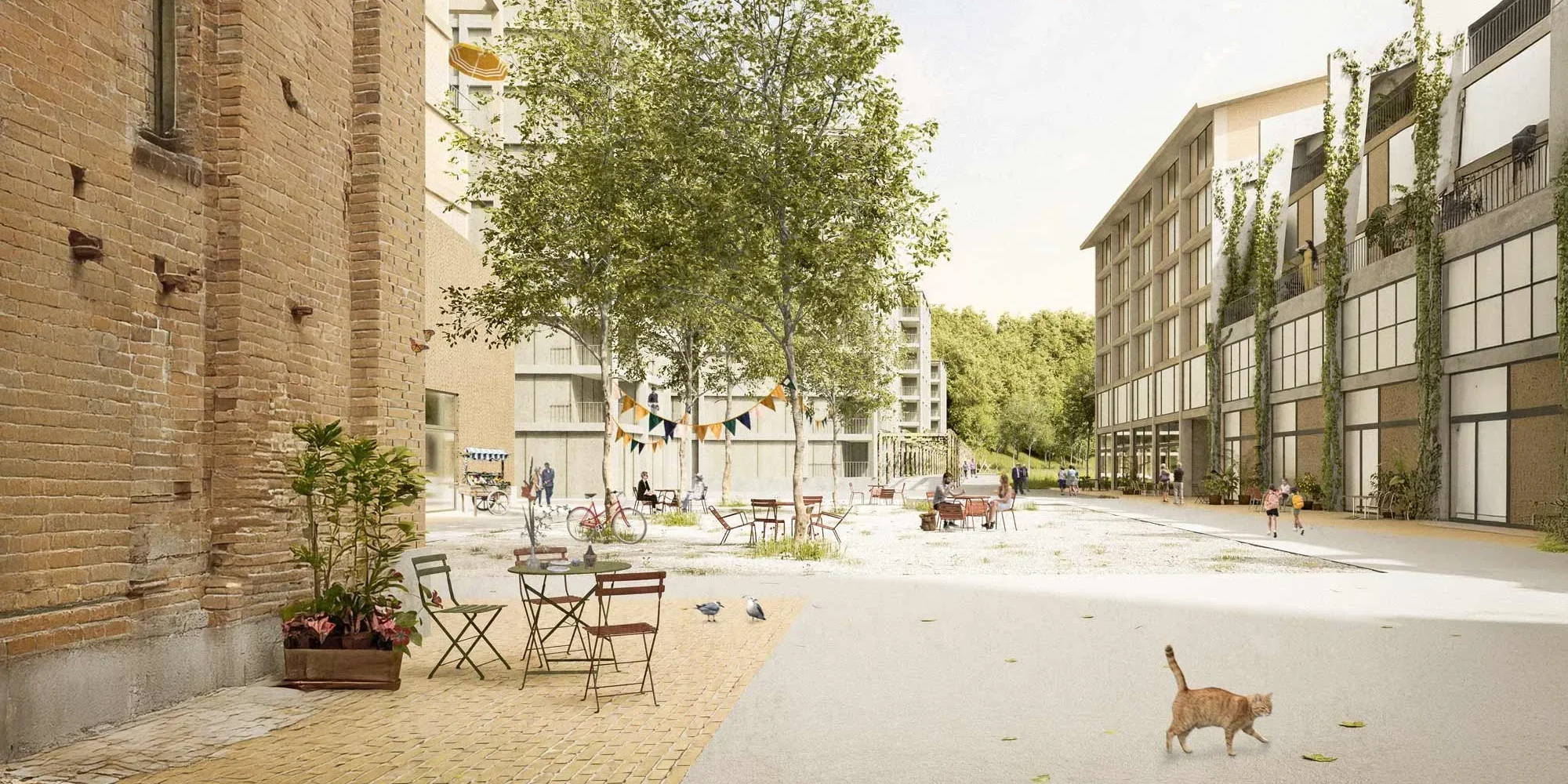
    Ziegelei Ost in Allschwil is undergoing a comprehensive transformation into a lively, mixed-use neighbourhood. Historic buildings are being carefully preserved and combined with new uses for living, working and recreation. The neighbourhood is characterised by large green spaces, diverse public spaces and a finely meshed network of paths connecting three central squares: Kulturplatz, Quartierplatz and Lettenwiese. The industrial tradition remains evident through the preservation of the brickworks halls and their integration into modern structures. The project focuses on circularity, the reuse of building components and flexible new buildings to ensure climate protection, sustainability and a high quality of life.

  • How Basel-Landschaft creates spaces for innovation and living

    How Basel-Landschaft creates spaces for innovation and living

    Basel-Landschaft is building for the future. Former industrial sites are being transformed into innovative campuses, flexible business parks and urban neighbourhoods. The Dreispitz combines art, education and high-tech on the cantonal border and creates space for 4,000 jobs, research and sustainable architecture at the highest level. Uptown Basel in Arlesheim is positioning itself as a hotspot for Industry 4.0 and MedTech with quantum computing pioneers and ecological lighthouse character. New districts in Muttenz, BusinessCity and AM SCHÄNZLI combine living and working spaces, green open spaces and climate-friendly mobility, further raising the location’s profile as a centre of knowledge and innovation.

    In Pratteln, modern urban living spaces are being created with Bredella, the Campus der Wirtschaft and Zentrale Pratteln, which focus on sustainable development, smart infrastructure and flexible utilisation concepts. In Allschwil, Bachgraben is developing into a leading life sciences location with the Switzerland Innovation Park Basel Area, where biotech, medtech and pharmaceutical companies are driving forward cutting-edge research and high-tech innovations. The Laufen Industrial Park and Ziegelei Ost in Allschwil create impetus for regional production, craftsmanship and community, focussing on the circular economy and CO² reduction. GETEC PARK is a growth driver for chemistry and life sciences, driven by decarbonisation and ESG standards.

    Basel-Land demonstrates how diversity, sustainability and innovation are driving transformation.

    Dreispitz
    Dreispitz in Münchenstein (Basel-Landschaft) is one of the most diverse areas in the Basel region. Art, education and business come together here. Over 380 companies and around 4,000 jobs characterise the Dreispitz business park, flanked by universities such as the FHNW and creative clusters. The intercantonal area offers space for innovative companies, start-ups, culture and modern educational institutions. A vital future location for the entire region.
    www.dreispitz.ch

    uptownBasel
    uptownBasel is building the future. A state-of-the-art innovation campus for the jobs of the coming decades has been under construction since 2019. The world-famous dental implant manufacturer Straumann is relocating a total of 1,000 jobs to the future-oriented development site by 2028. Arlesheim will thus become the most important hotspot for medical technology in Switzerland. The campus, which is being realised at a rapid pace by the Staehelin family and Fankhauser Arealentwicklungen, is characterised by several buildings already under construction with sustainable architecture at the highest level. The Roofdeck has now attracted worldwide attention and, together with the seminar and event rooms, serves to make the site a state-of-the-art centrepiece for the industrial location of Baselland.
    uptownbasel.ch

    Laufen Industrial Park
    The Laufen Industrial Park is located on the former Keramik Laufen AG tile factory on the south-eastern edge of the city and has been owned by the Abendrot Foundation since 2017. Following the major fire in 2020, which destroyed around 80% of the substance, the industrial site will be rebuilt as a single-storey timber system building from 2025 to 2027. The aim is to provide modern, affordable accommodation for small regional businesses, tradespeople and creative professionals, with flexible rental space and customised expansion options. A network of commercial lanes ensures good access and lighting and promotes networking between users. Densification and multi-storey extensions are possible in order to respond flexibly to regional demand. The focus is on sustainability. Re-use of building components, wood instead of concrete and renewable energy characterise the concept. An area association is intended to strengthen cohesion. Overall, a regionally relevant, versatile and sustainable commercial centre is being created.
    www.abendrot.ch

    AM SCHÄNZLI
    The new AM SCHÄNZLI neighbourhood in Muttenz marks an urban reinterpretation of living, working and leisure at the gateway to Basel. Three high-rise buildings with 385 flats and 14,000 m² of commercial space will be built on the 74,000 m² “Hagnau Ost” site by 2029. A central square and intensive greening will lend urban density and quality of life directly on the Birs recreational area. The focus is on resource-conserving construction, energy efficiency (SNBS Gold), photovoltaics and optimised mobility for pedestrians and cyclists. AM SCHÄNZLI stands for modern site development and sustainable integration of city and nature.
    am-schaenzli.ch

    BaseLink site
    The Bachgraben site in Allschwil has developed into Basel’s innovation engine. The site combines international life science companies, cutting-edge research and sustainable urban development. Projects such as the BaseLink site and new public transport and cycling initiatives are creating attractive workplaces and an urban environment. Close cooperation between the canton, the municipality and the business community is creating momentum and making the area a showcase project in the tri-national region.
    sip-baselarea.com/maincampus/

    Campus of the economy
    The new Campus der Wirtschaft is located directly next to the railway station in Pratteln and is developing into one of the most important event and work locations in the Basel region. By 2028, the H² building will be a state-of-the-art centrepiece. Six storeys will offer over 10,000 m² of flexible laboratory, event and office space, supplemented by a congress hall for up to 1,900 people and a total of more than 6,000 m² of event space. The campus is aimed at companies from industry, research and services, with sustainable architecture, optimal accessibility, infrastructure from a single source and synergies with the Bredella neighbourhood. The development strengthens the region’s competitiveness and positions Pratteln as an international centre for innovation, exchange and major events.
    h2-pratteln.ch

    GETEC PARK.MUTTENZ
    GETEC PARK.MUTTENZ is the leading industrial cluster in north-west Switzerland for chemicals, pharmaceuticals and life sciences. State-of-the-art infrastructure, safe laboratory and logistics areas as well as sustainable energy and resource concepts are concentrated on 50 hectares. The park, created from Infrapark Baselland and Schweizerhalle, is home to global corporations and numerous SMEs. Innovative solutions such as Waste2Value and ESG-based processes make GETEC the growth engine of the industry.
    www.getec.swiss

    Pratteln headquarters
    The Zentrale Pratteln project is transforming the former Coop site north of the railway station into a lively, environmentally and socially oriented neighbourhood. By 2026, around 480 cooperative flats for 1,200 people will be built, supplemented by a new school, around 15,000 m² of commercial space and a variety of open spaces. Construction and planning consistently focus on preserving existing buildings, reusing building components and sustainable energy supply. Historic industrial buildings such as the sugar silo will be retained. The cooperation between six property developers and the innovative utilisation concept make Zentrale Pratteln a showcase project for non-profit and sustainable neighbourhood development in the Basel region.
    centralpratteln.ch

    Bredella in Pratteln
    Bredella in Pratteln stands for the large-scale transformation of a central industrial site into an innovative urban neighbourhood. In the immediate vicinity of the railway station, 87,000 m² of diverse living, working and leisure facilities are being created, interspersed with green squares and renovated industrial buildings. The masterplan and neighbourhood plans focus on gradual development, sustainable mobility and a high quality of stay. With perimeter blocks, high-rise buildings, commercial and studio spaces, car-free areas and lively ground floors, a model for urban living in the Basel region is being created. Bredella boldly combines modernity, history and sustainable development.
    bredella.ch

    Brickworks East
    Ziegelei Ost in Allschwil is undergoing a comprehensive transformation into a lively, mixed neighbourhood. Historic buildings are being carefully preserved and combined with new uses for living, working and recreation. Large green areas, diverse public spaces and a finely meshed network of paths connecting three central squares – Kulturplatz, Quartierplatz and Lettenwiese – are characteristic of the area. The industrial tradition remains tangible through the preservation of the brickworks and their integration into modern structures. The project emphasises circularity, the reuse of building components and flexible new buildings in order to ensure climate protection, sustainability and a high quality of life.
    www.ziegelei-ost.ch

  • Dynamics of the economic future in Ticino

    Dynamics of the economic future in Ticino

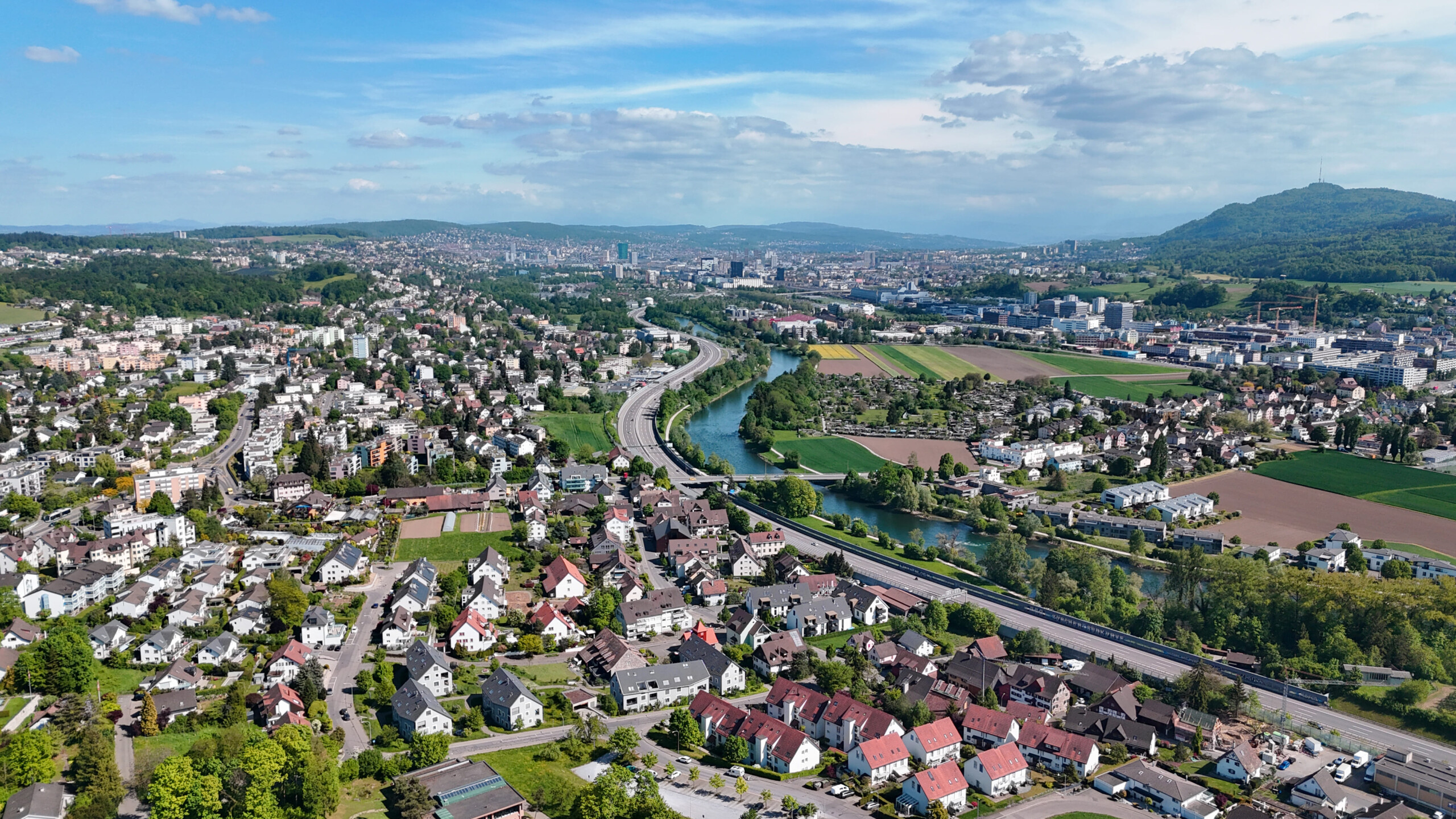
    The urbanisation of Pian Faloppia was a strategic project for the future. Modern transport connections, a high-performance electricity network and an advanced water supply system create optimal conditions that are particularly attractive to companies with innovative aspirations. The specific site planning of the Balerna municipal association was developed in close dialogue with owners and entrepreneurs in order to sustainably strengthen the settlement area.

    Innovation dynamics and network expertise
    Companies from the precision engineering, watchmaking, solar technology and advanced logistics sectors operate in the centre. The interaction between research, industry and entrepreneurship is a key success factor. Companies located here benefit from links to research centres and universities as well as access to a qualified workforce, creating a powerful and future-oriented economic dynamic.

    Management with vision and synergies
    With the newly created role of Area Manager, Pian Faloppia is focussing on actively supporting and developing the quality of the location. This position bundles regional development structures and ensures targeted networking between companies, authorities and other stakeholders. This creates synergies that continuously strengthen the economic region and ensure attractive conditions for companies to settle here.

    Quality of life as a location argument
    The location is not only characterised by economic advantages, but also by a high quality of life. A wide range of leisure and cultural activities as well as the natural surroundings guarantee attractive conditions for specialists and managers. The temperate climate and Swiss stability offer additional planning security for long-term developments. The Pian Faloppia development centre is an example of future-oriented regional development in Ticino. The consistent focus on sustainable innovation, networking and synergy creates an attractive economic area that offers prospects for companies and skilled workers alike.

  • ImmoTable Basel – Of superclusters, new bridges and the path out of digital antiquity

    ImmoTable Basel – Of superclusters, new bridges and the path out of digital antiquity

    [smartslider3 slider=”51″]

    Christof Klöpper, CEO of Basel Area Business & Innovation, kicked things off. He painted a picture of a region that is far more than “just” a pharmaceutical location. Although the life sciences supercluster remains a global leader, the innovation ecosystem has diversified.

    Supported by the three cantons of Basel-Landschaft, Basel-Stadt and Jura, the organization focuses on international start-ups and a public-private partnership that is strongly driven by industry. Klöpper’s message was clear: the task is not just classic location promotion, but the active provision of innovation infrastructure for an ecosystem that is constantly growing.

    Basel-Stadt and the 500 million lever
    Julian Kamasa from the Office of Economy and Labor underlined how the canton of Basel-Stadt intends to further expand its position as a leading innovation location, supported by around 800 life sciences companies and numerous start-ups. At the heart of this offensive is the new “Basel location package”, with which the canton will take on a pioneering role throughout Switzerland from 2025.

    With an annual budget of 150 to 500 million francs, targeted investments will be promoted. 80% of the funds will flow into an innovation fund that rewards research and development activities at the location in particular. The remaining 20 percent supports social and ecological goals such as parental leave or climate protection measures.

    The core message is clear. Those who conduct substantial research in Basel benefit the most. The canton wants to use this financial leverage to consolidate its position as a leading European healthcare location, build up targeted tech expertise and transform the economy towards a circular economy. The great potential of urban transformation areas plays a key role in this.

    An urban planning liberation
    The presentation by Marko Kern (SBB) and Marc Février (Canton of Basel-Stadt), who presented the winning project for the new Margarethenbrücke bridge and platform access, took a concrete turn. A key project for future mobility. In view of the massive increase in passenger numbers due to the SBB expansion phase 2035 and the desire for more space for streetcar and bicycle traffic, the old bridge needs to be replaced.

    Following a study commission process, in which the listed SNCF hall posed a particular challenge, the project by Penzel Valier AG won out. It envisages a slender, elevated bridge with a green roof. This creates more space for all road users and integrates a new, barrier-free streetcar stop in the middle of the bridge.

    The benefits of the project are manifold. It improves the transfer at the SBB railroad station, relieves the Centralbahnplatz, optimizes the bicycle and pedestrian connections between Gundeldingen and the city centre and creates clear added value in terms of urban development with over 11,000 new bicycle parking spaces and additional green spaces. The costs in the low to mid three-digit million range are being borne jointly by the federal government and the canton, and the project is a prime example of successful cooperation.

    Out of the “digital antiquity
    Isabel Gehrer (pom+) held up a critical mirror to the industry. Her presentation “From digital antiquity to the industry of the future” showed the discrepancy between Switzerland as a world champion of innovation and a construction and real estate industry that provocatively remains in “digital antiquity” in terms of digital maturity.

    While Switzerland once again takes first place in the Global Innovation Index 2025 and Basel is home to three of the top 10 investors in Roche, Novartis and Syngenta, the real estate industry invests significantly less in innovation than other sectors. Only BIM has really caught on.

    Gehrer referred to Bill Gates’ concept of the “Green Premium”. Sustainable solutions must become so efficient that they no longer cost a premium. She cited the automotive industry as an example of success, where battery costs have fallen by 80 percent since 2010, making electric cars suitable for mass production.

    Her approach comprises four points. Securing research infrastructure through better networking between universities and industry, increasing research and development intensity, mobilizing venture capital for PropTechs and conducting strategic foresight in order to use transformation areas such as Klybeckplus as experimental spaces. Her appeal to the industry: “Let’s make it real.”

    Real Estate Award 2026
    To conclude the ImmoTable, Mara Schlumpf turned her attention to the coming year. The next Real Estate Award will take place on October 22, 2026 at Trafo Baden and will bring together around 300 decision-makers from the industry. The gala combines award ceremonies with top-class networking. Outstanding projects and companies will be honored in five categories, such as sustainability, digital, marketing, project development & innovation and the real estate personality of the year. The target group includes project developers, real estate and construction companies, investors, politicians and the media. For partners, the award offers exclusive visibility and access to a first-class network.

    The immoTable event impressively demonstrated that Basel has the capital, the infrastructure and the political will to change. Now it is up to the real estate industry itself to use the funds and areas provided with the necessary innovative spirit and to take the leap from digital antiquity into the future.

  • Basel Area has developed into a life sciences supercluster

    Basel Area has developed into a life sciences supercluster

    Specifically, Basel Area Business & Innovation works on the one hand to attract foreign companies that are expanding to the Basel region. On the other hand, the non-profit organization supports innovative start-ups in their foundation. In both areas of activity, the focus is on the region’s leading industries of life sciences, healthcare technology and production technology.

    As a third pillar, Basel Area Business & Innovation operates the Switzerland Innovation Park Basel Area, which is also home to its own accelerator programs BaseLaunch and DayOne. At its three locations on the Main Campus in Allschwil, the Novartis Campus in Basel and in the canton of Jura, the Innovation Park offers a large number of start-ups a state-of-the-art infrastructure and a wide range of services so that they can concentrate on research and promising projects.

    The Basel Area has undergone enormous economic development in recent decades. The constant transformation of the business location has been decisive. Silk ribbon production in the 19th century gave rise to the chemical and pharmaceutical industries. At the end of the 20th century, the chemical and pharmaceutical industries finally went their separate ways and the pharmaceutical companies Roche and Novartis subsequently left their mark on the location. Over the past 20 years, small, agile biotech start-ups and private research institutions have enriched the ecosystem. Today, the Basel Area is regarded as Europe’s most important location for pharma and biotech and as an actual life sciences supercluster, in which the healthtech and medtech sectors are also strongly represented.

    The Basel Area’s life sciences ecosystem currently consists of more than 800 companies, over 1,000 research groups and around 35,000 specialists. It is unique in Europe that the entire value chain is represented in the Basel Area. From basic research at university institutes to the further development of innovations in the laboratory by start-ups or the research and development departments of established pharmaceutical companies through to the market launch, production and distribution of medicines.

    The Basel Area also offers the opportunity to conduct clinical trials at local hospitals and to be supplied with active ingredients by various pharmaceutical suppliers. CDMO Lonza, Bachem, Primopus, Celonic, Corden Pharma and ten23 health are all present in the Basel Area. There are also plenty of local service providers that are necessary for the functioning of the life sciences industry, for example in the areas of logistics, consulting and ICT.

    The academic landscape has developed in parallel with the growth of the industry. While the University of Basel has long focused on life sciences, the Department of Biosystems Science and Engineering at ETH Zurich was added a few years ago. It expands the research capacities of privately financed institutes such as the Friedrich Miescher Institute, Roche’s Institute of Human Biology and the Botnar Institute of Immune Engineering.

    Finally, the infrastructure is another ace up the Basel Area’s sleeve. Additional laboratory space has been created in recent years, and more will follow in the coming years. Companies that need laboratories can now choose from numerous providers such as Superlabs, iCITY Reinach, Tech Park Basel or Switzerland Innovation Park Basel Area. Office space with meeting rooms is also easy to find, whether in a coworking area, a dedicated office or an open-plan office.

    In short, the Basel Area boasts a uniquely high density of companies and specialists in the life sciences sector. No other location in the world has so much to offer in so little space.

    Find out more:
    www.baselarea.swiss
    www.baselsupercluster.com

  • Private investors drive innovation in Zurich

    Private investors drive innovation in Zurich

    The Zurich financial centre is not only an important centre for banks and insurance companies, but also a key factor for the development of young companies. Private investors such as private equity and venture capital companies, multi and single family offices as well as foundations support start-ups with targeted investments that promote innovation and economic growth.

    According to the new study “Zurich Financial Centre 2025/2026”, which was commissioned by the cantonal Office of Economic Affairs and the city’s Urban Development Department, 208 private equity and venture capital companies and over 2,800 foundations are active in the Zurich region. They employ a total of around 3800 people and have made a significant contribution to the development of Zurich as a centre of innovation over the last ten years.

    Growth and financing gaps in the start-up ecosystem
    Between 2014 and 2024, over 900 start-ups were founded in the Zurich region, raising a total of CHF 9.6 billion in various financing rounds. Almost half of the total financing volume of start-ups in Switzerland. In the case of companies whose investor structure is known, around one third of the funds come from regional investors.

    However, the study shows that many start-ups encounter financing hurdles in the next growth phase after initial support from accelerators, incubators and foundations. While private equity and venture capital companies are increasingly getting involved in expansion financing, a financing gap remains. This can lead to young companies moving abroad in order to secure capital for scaling up.

    Zurich as an attractive location for venture capital
    The Zurich region offers ideal conditions for investors thanks to its strong market environment, international network and the availability of highly qualified specialists. Single family offices in particular are playing a growing role, as they enable long-term investments in innovative projects. Swiss single family offices invest an average of 12 per cent of their assets under management in venture capital, of which around CHF 24 billion flows into projects within Switzerland.

    According to Michael Grass from BAK Economics, which conducted the study, it is crucial to close the financing gap in the growth phase of start-ups. This would not only secure the region’s innovative strength, but also reduce the risk of emigration.

    “Strengthening the investor location” initiative launched
    Based on the results of the study, the canton of Zurich is launching the “Strengthening the investor location” sub-project as part of the “Innovation Location 2030” initiative. The Department of Economic Affairs has been tasked with developing targeted measures to improve the attractiveness of the location for venture capitalists. The aim is to optimise the investment conditions for start-ups and scale-ups and expand financing opportunities in the region.

    Concrete strategies are to be developed through dialogue between politics, business and investors in order to further strengthen Zurich as a leading location for venture capital. The city of Zurich is already actively involved in promoting start-ups, including with incubators such as BlueLion and Startzentrum Zürich as well as the city’s KlimUp programme for sustainable innovations.

    The results of the initiative should help to further develop Zurich as a dynamic and competitive investment location and secure the business centre in the long term.

  • The next step towards realising the vision of the Davos medical campus

    The next step towards realising the vision of the Davos medical campus

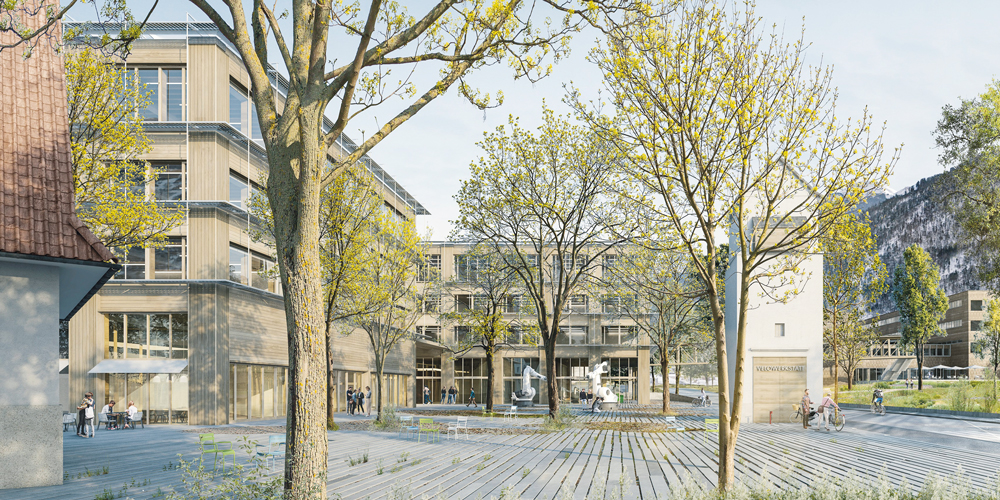
    The new research building “Research II” marks a step forward in the masterplan for the Davos medical campus designed by OOS. This plan aims to establish Davos as a centre of innovation with research activities, particularly in the fields of allergies, asthma and cardiology. Various structural measures have been undertaken to date, including the reorganisation of existing buildings and the introduction of a new therapy and catering wing.

    The Research II building creates additional space for various research activities and complements the existing campus building, which already serves as a training campus and research laboratory with offices. In addition, Research II offers space for external partners who benefit from the expertise and innovative atmosphere. Research II will thus be used by a large number of different institutions to pool their strengths with the aim of translational research.

    The project was developed taking into account the diverse requirements of various research projects such as CK-CARE, Cardio-Care and Davos BioSciences. The architecture and interior fittings were designed to be flexible and modular in order to facilitate future changes of use. Particular attention was paid to incorporating the needs of all users into the planning process, using a fixed budget as a guideline.

    The design is kept as flexible as possible to allow for a variety of uses. Although the building is currently designed for offices and laboratories, other uses can also be easily integrated. In addition, the interior design allows for flexible division into up to three separate areas.

    Aesthetically, “Research II” integrates seamlessly into the existing medical campus. One striking element is the cascading staircase that runs vertically through the building and encourages encounters between users. In addition, the use of shared labs and shared facilities encourages dialogue between different user groups and reduces investment costs. The BSL-2 laboratories are flexible and tailored to the needs of the users.

    Overall, “Research II” not only expands the capacities of the Davos Medical Campus, but also helps to realise the vision of the master plan step by step.

  • University of Applied Sciences on the way to the future

    University of Applied Sciences on the way to the future

    Die Fachhochschule Graubünden (FHGR) – die achte öffentlich-rechtliche Fachhochschule der Schweiz – ist heute auf fünf Standorte in neun Gebäuden innerhalb der Stadt Chur verteilt. Die Anzahl Studierender sowie das Forschungsvolumen der FHGR nehmen weiterhin zu. Die bestehenden Standorte bieten zu wenig Räumlichkeiten und Ausbaumöglichkeiten, um die Hochschule in Zukunft optimal aufzustellen. Bislang fehlt beispielsweise der Raum für den Austausch zwischen den Disziplinen sowie für die informelle Kommunikation zwischen den Studierenden und den Dozierenden. Darüber hinaus sind derzeit zu wenige studentische Arbeitsplätze vorhanden, die den heutigen Anforderungen genügen. Durch die Verteilung der Gebäude über die Stadt fehlt der Hochschule zudem die architektonische Visibilität.

    Aus diesen Gründen hat der Kanton Graubünden entschieden, das Fachholschulzentrum am Standort Pulvermühle neu zu erstellen. Hier befindet sich seit 1993 der Hauptsitz der FHGR. Der Neubau soll ein zusammenhängendes Bildungs- und Forschungszentrum ermöglichen, das von der Diversität und interdisziplinären Zusammenarbeit aller Organisationseinheiten lebt. Die Projektleitung wurde dem Hochbauamt Graubünden übertragen. In einem Wettbewerbsverfahren wurde aus den 57 eingegangenen Bewerbungen ein Generalplanerteam selektioniert, welches die Vorgaben und Ziele der Regierung bezüglich Funktionalität, Ortsbau und Architektur überzeugend umsetzt und die Realisierung in der geforderten Qualität und Wirtschaftlichkeit sowie unter Einhaltung der Kosten- und Terminvorgaben garantieren kann.

    Das Siegerprojekt überzeugt mit Nachhaltigkeit und Funktionalität
    Die Entscheidung fiel auf das Team rund um das Projekt «Partenaris». Den Lead übernimmt dabei das Zürcher Architekturbüro Giuliani Hönger Architekten. Überzeugt hat das Projekt die Jury durch die gleichmässige Berücksichtigung der Kriterien Architektur, Tragwerk, Nachhaltigkeit und Funktionalität. «Partenaris» sieht eine städtebauliche Positionierung des Neubaus vor – unter Einbezug der bestehenden Gebäude und durch die sorgfältige Gestaltung eines parkähnlichen Aussenraums. So wird ein attraktives Hochschulareal geschaffen. Die Planung berücksichtigt ausserdem die gewünschte Nutzungsflexibilität.

    Die erste Etappe sieht einen viergeschossigen U-förmigen Baukörper mit einer zentralen, rund 1200 Quadratmeter umfassenden Eingangshalle vor. Dabei öffnen sich die drei Gebäudeflügel nach Süden zur Pulvermühlestrasse hin und interagieren mit den bestehenden Gebäuden. Der Neubau wird als Hybrid-Skelettbau ausgeführt.

    Mittels Passerelle wird es mit dem Neubau verbunden. Die Obergeschosse sind für Nutzungen der Institute und Departemente vorgesehen, wobei der Öffentlichkeitsgrad und damit die Publikumsintensität mit jedem Stockwerk abnimmt. Das Raumprogramm wird mit vergleichsweise wenig Geschossfläche flächeneffizient umgesetzt. Dank der strukturierten Bauweise und ressourcenschonenden Materialisierung können die Werte bei der Grauen Energie auf einem guten Niveau gehalten werden. Im Westen entsteht zudem eine neue Terrasse. In der zweiten Etappe wird das bestehende Gebäude P57 in Richtung Westen erweitert.

    Aus Sicht des Kantons Graubünden ist die Realisierung des Fachhochschulzentrums hinsichtlich Bildung, Forschung und auch innovationspolitisch von grosser Wichtigkeit. Denn der Mangel an Fachkräften, insbesondere in den technisch-naturwissenschaftlichen Disziplinen, hat Auswirkungen auf die Bündner Unternehmen: Diesen fehlen das nötige Wachstum und die gewünschte Entwicklung. Die neue Fachhochschule soll junge Leute ausbilden, fördern und damit die Wettbewerbsfähigkeit der Bündner Volkswirtschaft stärken.

    Das Siegerprojekt wird in einem nächsten Schritt planerisch weiterbearbeitet. Danach muss es vom Grossen Rat genehmigt werden. Erhält «Partenaris» grünes Licht, soll Ende 2024 mit den Bauarbeiten begonnen werden. Im Jahr 2028 soll der Neubau bezugsbereit sein. Der Studienbetrieb läuft während den Umbauarbeiten weiter wie gewohnt.

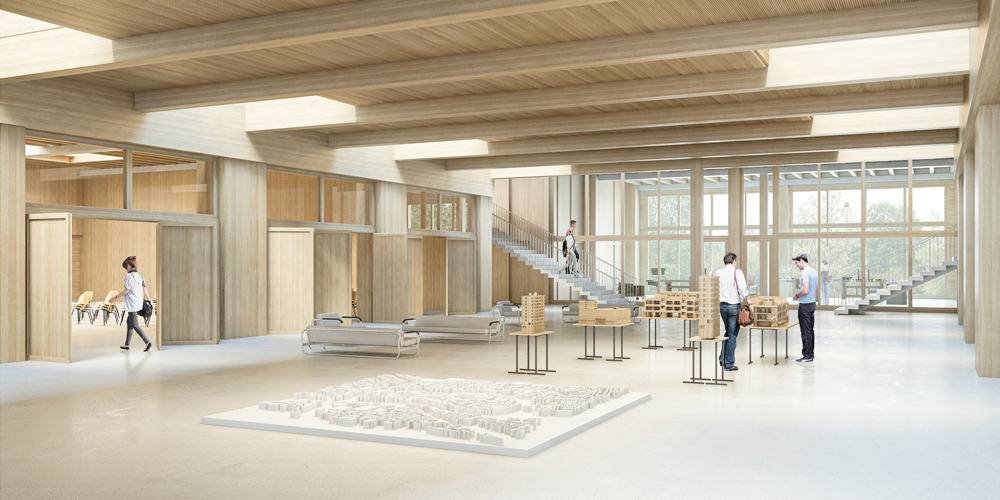
    Die Visualisierung zeigt den zukünftigen Campusplatz.
    So soll das Foyer des Neubaus dereinst aussehen.
  • Stefan Metzger takes over at digitalswitzerland

    Stefan Metzger takes over at digitalswitzerland

    According to a media release , Stefan Metzger will take over the management of digitalswitzerland from January 2022. The previous managing director, Nicolas Bürer, is stepping down at his own request. Bürer led the initiative for around five years. Last year he was also responsible for the operational merger with the ICTswitzerland association.

    “I would like to thank Nicolas for his commitment to digitalswitzerland,” said President Sascha Zahnd. Bürer has “successfully further developed the initiative and transformed the once regional vision for Zurich into a nationwide and now even global movement,” he adds. According to Marc Walder, digitalswitzerland founder and Ringier CEO, digitalswitzerland has grown to become “the most relevant location initiative in Switzerland” under the leadership of Bürer.

    With Metzger, digitalswitzerland is gaining “a proven expert in the field of digital transformation” with global experience, according to Walder. The press release describes Metzger as a digital expert. For 13 years he served the Swiss business of the global IT consulting firm Cognizant as Country Managing Director. Metzger has been committed to digitalswitzerland for a year and was also a member of the Executive Committee.

    Diana Engetschwiler, head of the Swiss Digital Day launched five years ago, will also become the deputy managing director of digitalswitzerland from the beginning of 2022. She succeeds Sébastien Kulling, who is moving to the digitalswitzerland foundation as managing director.

    The aim of digitalswitzerland is to position Switzerland as the world’s leading, digital innovation location. The initiative currently has 240 organizations among its partners.

  • "Zurich should become even stronger as an innovation location"

    "Zurich should become even stronger as an innovation location"

    At the beginning of this year you took over the management of location promotion. What measures have you taken to settle in well and quickly?
    Fabian Streiff: An important point for me was networking with cantonal actors, representatives from business and science. Due to the circumstances, this first had to be done virtually. But even more relevant for me was the question of how we can support companies – especially during the pandemic. The companies’ need for information was enormous. Especially in times when instruments such as short-time work and hardship aid were used.

    What exactly have you done to support the companies?
    The Office for Economy and Labor sought an intensive exchange with entrepreneurs early on in order to find out which issues we need to address at national level and which we can solve within the canton. We have also set up a hotline for companies and continuously updated various websites. Now we are looking to the future and addressing the question of how we can positively influence the attractiveness of Zurich as a business location.

    What is this plan like?
    Discussions with Zurich-based companies confirmed that we should focus even more on an attractive innovation location. Innovations are increasingly emerging in networks, which is why strong innovation ecosystems make a significant contribution to the future success of Zurich’s economy. This needs to be strengthened. A central theme are new hybrid forms of work such as home offices or working from co-working spaces. We have to ask ourselves what this means for the location and its development. It is also exciting to see how Zurich can remain an attractive business location for companies. Are there opportunities to improve access to talent and specialists, especially in the context of mobile working? What role can the state play in making a contribution here? These are all open questions – we are already seeing trends, but of course also the consequences of them, such as the discussion about making labor law more flexible.

    Is Zurich really losing its attractiveness as a business location?
    Many companies answer this question with a resounding no. But shifts are becoming apparent. Large companies are forecasting a concentration on individual locations within the next two years. This means that certain properties could become vacant. On the other hand, these could quickly be used again for new forms of work such as co-working spaces. Rural centers are likely to be revitalized thanks to home office options. The business location Zurich is also strengthened by the universities, which do a great job with their successful spin-offs and research work and are right at the top of the rankings. The companies in the canton of Zurich were also able to attract risk capital on a large scale last year, which is very gratifying.

    How did this positive development come about despite the pandemic?
    Zurich has positioned itself well in recent years, especially with a view to digital transformation. Top talent is needed here and can be found at the Zurich location. This is thanks to the universities and the talent pool, which has been able to develop significantly in recent years. At first the banks had a magnetic effect, now it is the large companies from the information and communication technology sector. The interaction of the various industries is very promising for the future. We are also registering positive developments in the area of research. The points mentioned are becoming more and more relevant in the location competition. But other locations don’t sleep and have positioned themselves very well nationally and internationally, which is why the leading position of the Canton of Zurich cannot be taken for granted. It must continue to be strengthened in the area of innovation.

    The canton of Zurich is Switzerland’s leading business location. Why?
    The attractiveness of Zurich is based on various factors. Starting with education, through a highly qualified workforce, to strong sectors from the financial sector and increasingly from the areas of life science technology, cleantech and information and communication technology. This diversity of competencies enables strong ecosystems, which strengthen cross-industry learning and innovation. The quality of life per se also speaks in favor of Zurich as a location.

    What are you doing to secure this status in the future?
    Our new strategy has three focal points: The first is the strong focus on innovation topics in the areas of financial technology, digital health, biotech, cleantech and new mobility. Here we want to create more networking and opportunities for cooperation. The second focus is on cooperation with regional location subsidies in order to strengthen the diversity of the industry. The size of the Canton of Zurich requires networked work in order to do justice to the diversity of the individual regions. In this way, we can also support exciting regional projects, such as was the case with the Bio-Technopark in Schlieren. We are currently also seeing this at the Digital Health Center in Bülach. The third focus is on creating attractive framework conditions, especially in the area of innovation. Here we can work to ensure that the regulations at federal level are adapted for specific innovation topics.

    Which regulations are in urgent need of adjustment?
    With Zurich as a strong innovation location, the focus is currently on the consequences and solutions following the failed framework agreement with the EU. The exclusion from Horizon Europe weighs heavily. Adjustments to labor law due to changed needs must also be checked – such as when working on the move.

    Which areas are companies currently looking for the most?
    From the customer side, we see a need for space in well-developed locations that are integrated into an ecosystem. Connections to universities are being sought more and more. Biotech laboratories are also becoming increasingly important. Schlieren was able to develop enormously in this area. Nevertheless, we are registering a demand here that cannot yet be satisfied nationwide.

    What is the problem?
    In the biotech sector, the space that comes onto the market is occupied again very quickly. More and more investors are needed who are willing to invest in laboratories. Such a project usually takes two years or more to develop. Appropriate foresighted planning is imperative.

    How do you see the future for the office buildings in the canton of Zurich in light of the changing work models?
    We are currently grappling with this question. In general, employers want to become even more attractive. The demands on an office workplace will therefore increase. But whether that means that more space is required for each employee, or whether there will be mergers, we will only see in one or two years. But we believe that co-working will become even more important. However, in a more comprehensive form than today – in the sense of a meeting place where an in-depth exchange with science, the authorities and other actors in the ecosystem can take place. Quasi a co-working plus.

    Which locations are most desirable?
    The city of Zurich and the airport region remain very attractive. At the airport, we are seeing high demand for the newly built The Circle. And the Limmattal has become even more attractive with the Limmattalbahn and the Bio-Technopark. The city of Winterthur and the Zimmerberg region are also popular locations thanks to the ZHAW.

    Which companies are interested in The Circle?
    The Circle not only attracts companies from the information and communication technology sector such as Microsoft or Oracle, but also from the life sciences sector. Digital health is an important topic here. After a difficult start-up phase caused by Corona, the business on the Circle is now picking up, and 85 percent of the space is already rented.

    What are the most important source markets for the Canton of Zurich?
    The USA is still by far the strongest market. Europe, especially Germany, as well as China and Japan are also important. We are now concentrating on Korea and Israel. Companies are increasingly thinking in terms of research and development hubs. For many companies, Zurich is not only an international business location, but also such a hub. Marketing abroad is handled by the Greater Zurich Area location marketing organization for us.

    How should Zurich as a business location develop over the next 10 years?
    It should become even stronger as an innovation location. Zurich has a long history and is well known as a financial center. That is important – also with a view to future settlements in the area of financial technology. Zurich should also distinguish itself in the areas of artificial intelligence and new mobility, such as the development of autonomous systems. We believe in a move away from the traditional Zurich financial center towards a business location that will be very strong in the new topics mentioned and in digitization. The Zurich economy is already well positioned and is resistant to crises – but in the future Zurich should become even more innovative, attractive and thus even stronger.

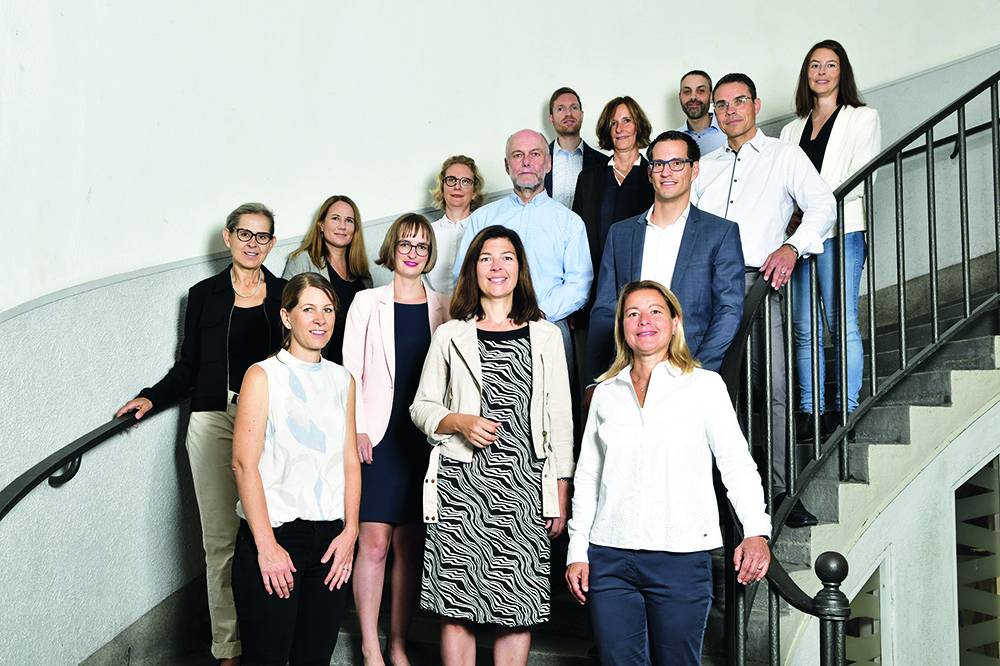
    Fabian Streiff with his team.