Tag: innovativ

  • Introduction of the Swiss circularity indicator for sustainable construction projects

    Introduction of the Swiss circularity indicator for sustainable construction projects

    In order to comply with the principles of the circular economy, which aims to minimise resource consumption, waste and emissions through the circular use of materials, the measurable circularity of construction projects is of crucial importance. The newly introduced guidelines create a basis for objectively assessing and increasing circularity in the construction and property sector in Switzerland. It aims to make the effectiveness of measures to achieve resource efficiency comparable and invites all industry participants to actively contribute feedback and implement the guidelines in their projects.

    The guidelines, which can be used for both new buildings and renovations, offer planners and architects a practice-orientated methodology for estimating the material circularity of their construction projects. It is based on European standards and the specific requirements of the Swiss market and supports the industry in implementing circular construction methods.

    The application of the guideline in initial pilot projects has already shown how material flows can be optimised and disposal routes made more efficient as early as the planning phase. Based on this experience, building owners can now include quantifiable circularity requirements in tenders, which enables architects and planners to evaluate different construction alternatives in terms of their sustainability. The guide also makes it easier for authorities and legislators to quantify and systematically demand circular economy principles in the construction sector.

    The guide was developed through the initiative of the Madaster Switzerland association in collaboration with a wide range of stakeholders, including the Federal Office for the Environment (FOEN), property owners, standardisation and certification organisations as well as experts from science and practice. The Madaster platform serves as a central tool for calculating and analysing the circularity data.

    The open invitation to feedback from the industry ensures a continuous improvement process and promotes the further development of the guideline. This approach underlines the joint endeavour to make the construction and real estate industry in Switzerland more sustainable and to effectively implement the principles of the circular economy.

  • The new Lokstadt: urban, versatile, steeped in history

    The new Lokstadt: urban, versatile, steeped in history

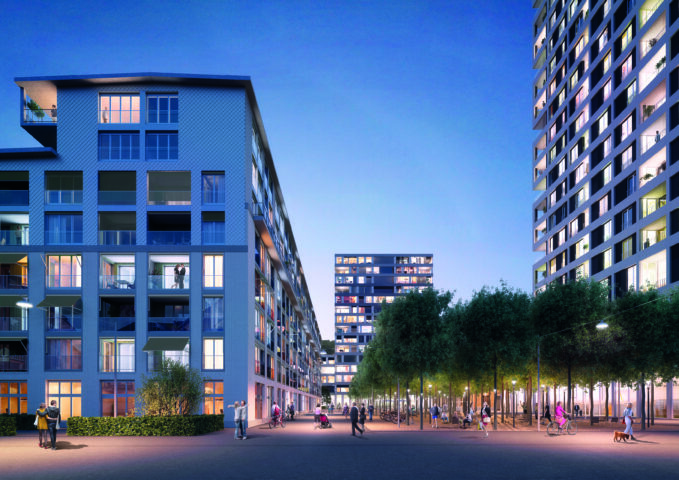
    With Lokstadt, Implenia is developing a new, urban and versatile quarter with 750 flats for around 1500 people. Lokstadt is located to the south-east of Winterthur railway station. The area used to be home to the workshops of the Swiss Locomotive and Machine Factory (SLM) – the most important locomotive forge in Switzerland. The neighbouring Sulzer factory took over SLM in the 1960s.

    Some of the locomotives produced by SLM serve as namesakes for the various construction fields. For example, the “Tender”: condominiums were built here, which are ready for occupancy since the beginning of 2023, as well as commercial space. The flats of the 17 “townhouses” were also for sale: these are four- to five-storey maisonettes that have already been completed. In a second construction phase, six four-storey “townhouses” were built: these comprise a total of 24 flats and will be ready for occupancy in spring 2023. The “Elefant” office building, which is located directly on Zürcherstrasse, will also be ready for occupancy soon.

    The central dialogue square will be framed by three buildings in the future. The first is the “Krokodil”, a wooden building. Here, 254 flats have been created to meet the diverse living needs of three cooperatives as well as individual homeowners. Vertical window bands are reminiscent of the former industrial halls and give the building a clear structure. BIGBOY” is located at the front of Dialogplatz:

    BIGBOY offers 125 flats and a roof terrace for the residents…

    The building, which is over 50 metres high and 16 storeys high, is home to 125 rental flats as well as five office and commercial spaces between 55 and 370 square metres. The roof terrace offers a unique view over Lokstadt and the whole of Winterthur. The industrial past of the site is reflected in the brick façade. Bigboy will be ready for occupancy in summer 2023. The third building is still under development and is currently the tallest planned wooden high-rise in the world: “Rocket”, developed and realised on behalf of Ina Invest, will be 100 metres high and with 32 storeys will be the landmark of the new district and the Winterthur skyline. The plan is for 255 flats. In addition, non-profit flats are planned in the “Tigerli” base building. A hotel is also planned. The occupancy date is planned for 2027.

    Lokstadt offers a unique residential atmosphere.

    Lokstadt stands for the sustainable use of resources, a prudently planned variety of uses and the innovative revitalisation of listed buildings. These include the former factory buildings. Under Implenia’s leadership, these are being transformed into spaces for experience that reflect local history and modern city life. The quarter is being developed step by step in accordance with the requirements of the 2000-watt society. Despite the dense construction, importance is attached to sufficient open spaces and a high quality of stay. The area will be made accessible to motorised traffic by means of an underground car park spanning all the buildings. Above ground, pedestrians and cyclists have priority thanks to a generously designed pedestrian zone.

    Despite the dense construction, Lokstadt attaches importance to sufficient open spaces and a high quality of stay.

    With Lokstadt, Winterthur links the 19th century with the 21st century: Here, the city’s industrial history is brought together with Winterthur’s future as a residential, educational and service city. The quarter is being built for people who love city life and who care about sustainability. A Lokstadt app will serve as a communication and interaction channel for all tenants, owners and employees in the future.

  • Climate Foundation Switzerland awards 683,000 Swiss francs for innovative projects

    Climate Foundation Switzerland awards 683,000 Swiss francs for innovative projects

    The quality of the applications received by the Swiss Climate Foundation for the first round of funding in 2023 is “as high as ever”, according to a statement by the organisation. It has granted funding totalling 683,000 Swiss francs for six of them. Last year, the Swiss Climate Foundation decided on a change of strategy: since 1 January 2023, it has focused exclusively on climate-relevant innovations. In this way, “our funds develop their maximum leverage effect”, said Thomas Hügli, President of the Foundation Board, at the time. SMEs in Switzerland and Liechtenstein are eligible for support.

    In its latest announcement, the Swiss Climate Foundation cites the Sursee-based company HammerDrum as an example. It is receiving funding for its space-saving drilling technology for extracting geothermal energy. Instead of the area of a football field usually required for a deep geothermal probe, their drilling technology manages with 25 square metres, as is usual for two parking spaces. This gives even large properties in confined urban spaces the opportunity to switch to CO2-neutral geothermal energy.

    Overall, the balance of this first pure innovation year is strong, even if the influx of projects has declined as expected, says the press release, which also presents the 2022 annual report. Four new companies joined as partners last year: Mirabaud as well as the Graubündner, Basler and Basellandschaftliche Kantonalbank. This means that 31 companies in Switzerland and Liechtenstein are now involved in the Swiss Climate Foundation. They finance the Climate Foundation with the refunds they receive from the CO2 tax.

    This year, the Climate Foundation is celebrating its 15th anniversary with two events: on 25 July in Zurich at the Allianz Cinema Night and on 13 September at the Raiffeisen Forum in Bern.

  • Recycling Centre Ostschweiz sets new standards with innovative processing plant

    Recycling Centre Ostschweiz sets new standards with innovative processing plant

    A new soil washing plant has been built at Niederstettenstrasse 28 in Niederstetten near Wil SG. With the fully automated plant, RCO now also processes contaminated construction waste and returns it to the building materials cycle as high-quality materials. RCO expects about 200,000 tonnes of processed building material per year that can be reused in this way. This means that more than 500 single-family homes could be built each year from sustainable building materials.

    Washing instead of landfilling
    The wet-mechanical processing plant replaces the dry-mechanical plant that has been in operation for about two decades. “With the soil washing plant, we can now accept and process materials that previously had to be landfilled. This includes, for example, contaminated excavated materials,” says Samuel Graf, a member of the RCO board of directors. “This not only saves valuable landfill space, but also conserves natural gravel resources.” The materials are then widely used in civil engineering, for example as sand or gravel for concrete production.

    Taking building materials recycling to the next level
    The state-of-the-art process technology sorts, classifies and doses the various material components. “In addition, pollutants and foreign substances can be removed efficiently, which ensures a significantly improved quality of the products,” explains Stefan Eberhard, Delegate of the Board of Directors. “The building materials produced in this way are of high quality and conform to standards – this is also demonstrated by our company building.” This consists to a very large extent of recycled building material and serves RCO as a showroom to visually demonstrate the many advantages of sustainable building materials to customers and the public.

    About the R CO
    The RCO was founded in 2018 by the two companies Holcim Kies und Beton AG and Zürcher Kies und Transport AG. With their joint know-how, Holcim and Zürcher are driving innovations in building materials recycling, closing material cycles even more consistently and serving the eastern Swiss market with high-quality building materials.

  • Jury nominates three projects for the SVIT Award 2023

    Jury nominates three projects for the SVIT Award 2023

    The SVIT AWARD is given to property management companies that have implemented innovative solutions to minor or major challenges in the management of rental properties or condominiums over the last three years.

    The jury assesses the submissions on the basis of three sets of questions:

    • How innovative is the approach?
    • How well can the effect be measured?
    • how easily can the solution approach be transferred and scaled up?

    The selection of the projects for the public vote was not easy. The jury was unanimous in its choice of the projects digital interfaces by Welcome Immobilien, online navigator for housing estates by Previs Immobilien and an app solution for condominiums by Matma Immobilien.

    SVIT members now have until 12 June 2023 to find out about the solutions on the Svit homepage and choose their favourite.

  • New business card for Sursee

    New business card for Sursee

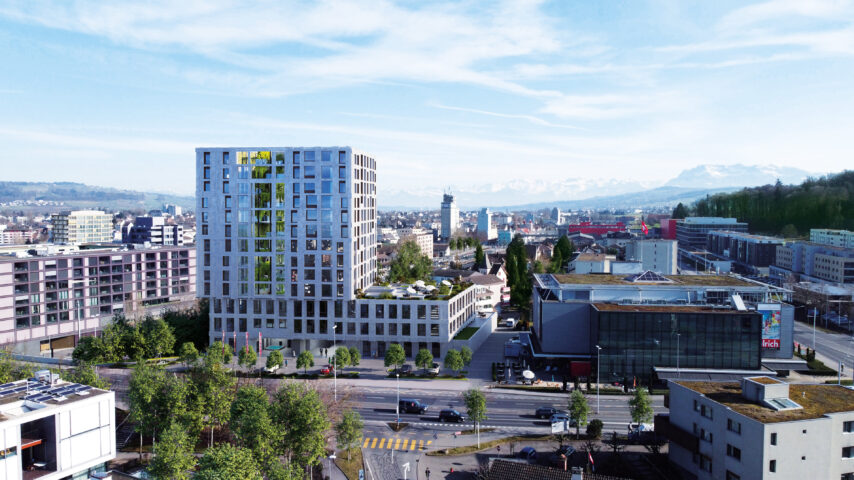
    Möbel Ulrich AG and Truvag AG, which have been based in Sursee for around 60 years, are jointly planning an office, commercial and residential building on the Ulrich site between Ringstrasse and Pilatusstrasse, which will complement and revitalise the existing furniture store. The project, called ALEA, is intended to become the new calling card for the location: The plan is to build 70 affordable rental flats with between 2.5 and 4.5 rooms using timber construction. In addition, there will be 2400 square metres of commercial and 1600 square metres of retail and restaurant space. The project scores not least with its central location directly at the railway station.

    The approximately 49-metre-high CO2-neutral timber construction was developed by the planning consortium Leuenberger Architekten AG from Sursee and Deon AG from Lucerne. The flats will have visible wooden beams and partly also wooden walls. The environmentally friendly material is breathable, insulating, very stable and load-bearing. In ancient Greek, ALEA means “warmth and protection” – these features should be visible and tangible for the future residents and employees. For fire protection reasons, only the façade design had to do without domestic and sustainable wood.

    But ALEA also does justice to its Latin meaning with its cube shape. The lower part of the building comprises three storeys – this is integrated into the slope. The silhouette is thus visible at a height of around 41 metres. While the upper part of the building is intended for residential use, the base area is available for offices, shops, commerce and gastronomy. A walkway creates a safe and fast pedestrian connection between the Kotten quarter and the railway station. All squares and connections in the new building are open to the public.

    The carefully thought-out traffic concept is intended to keep motorised individual traffic to a minimum: to this end, sharing services for cars, bicycles and e-scooters are planned. Accordingly, the parking garage will be equipped with a minimum number of parking spaces. The rental price structure is also intended to offer incentives for a life without a car. Generous parking spaces for bicycles have been designed to encourage non-motorised traffic.

    ALEA combines living and working.

    So that the tenants do not live anonymously, togetherness and mixing are to be promoted: A public square with a restaurant on the same level as the railway station creates meeting opportunities with various seating options around the building. The residents also have access to a green roof terrace for common use. Furthermore, several green terraces are planned.

    It is important to the initiators, who have strong regional roots, that “Surse residents build for Surse residents”:

    Not only were the partners chosen to carry out the construction work based on regional roots, but preference was also given to people who live or work in Sursee when renting out the apartments. In addition, Truvag AG, with around 80 employees, will relocate its headquarters to the new building. With the building planned by Möbel Ulrich AG and Truvag AG, the two traditional companies want to create added value for Sursee and enrich the area. The construction costs are expected to be in the double-digit millions.

  • Werkstadt Zurich: Transformation into a climate-friendly neighbourhood

    Werkstadt Zurich: Transformation into a climate-friendly neighbourhood

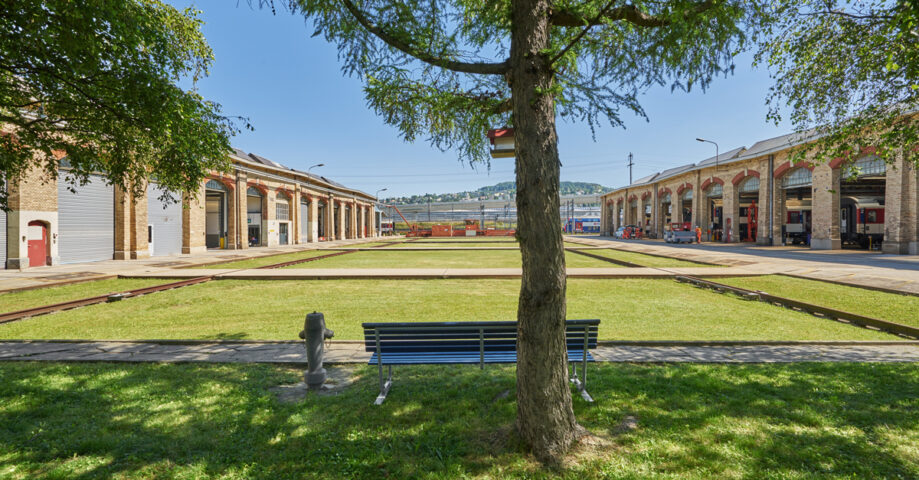
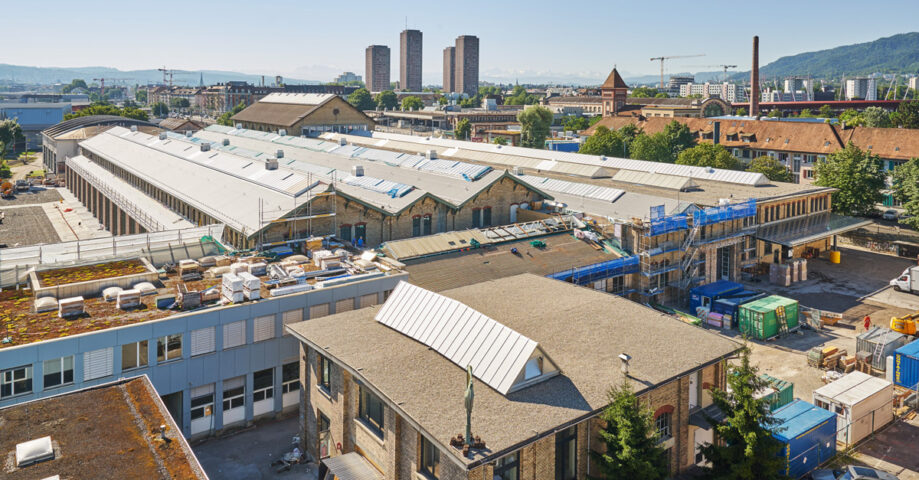
    SBB is transforming the 42,000-square-metre Werkstadt site in Zurich into a vibrant urban space, to be completed by 2035. This will preserve the fabric of its historic buildings, which will one day be joined by both new buildings and extensions to create an exciting cluster. The transformation of the former SBB workshops will be exceptionally sustainable, featuring climate-conscious building measures, circular economy elements and an innovative energy concept.

    Developing existing buildings
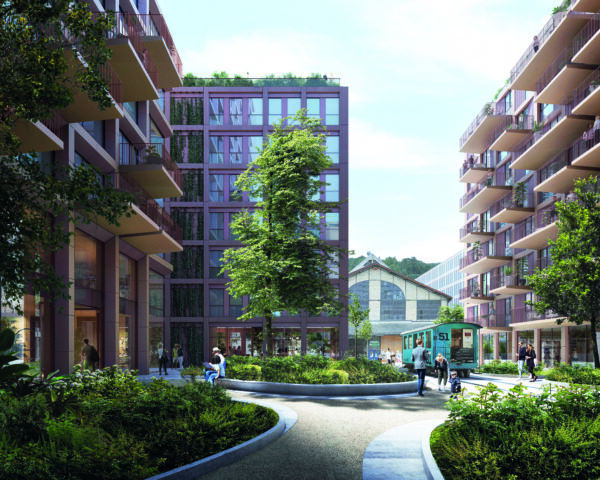
    In close coordination with the monument preservation authorities, the existing buildings will be gradually renovated and joined by new buildings and extensions in the coming years. At the heart of the site, the former carriage workshop ‘Building Q’ will allow for a diverse usage mix under one roof from 2023. The development will offer an exciting interplay between the fabric of historic buildings, structural densification and public use of outdoor space.

    © SBB AG, Martin Zeller

    Environmentally friendly construction
    ‘SBB wants to be climate-neutral by 2030, and climate-compatible construction is an important factor in achieving this objective,’ said Gabriele Bühler, Project Manager at SBB. Various climate-conscious building measures have been incorporated into the planning of the site. That includes configuring the new buildings to promote the circulation of cool air currents. Where possible, the roof water will be allowed to seep into an above-ground system for further cooling. Surfaces will remain unsealed where possible. The transformation follows a systemic approach that considers the building along its entire life cycle. The aim is to keep CO2 emissions as low as possible. To ensure circularity, all construction components are recorded on the Madaster platform. There is also a particular focus on reusing components. 

    Energy concept: 100% renewable
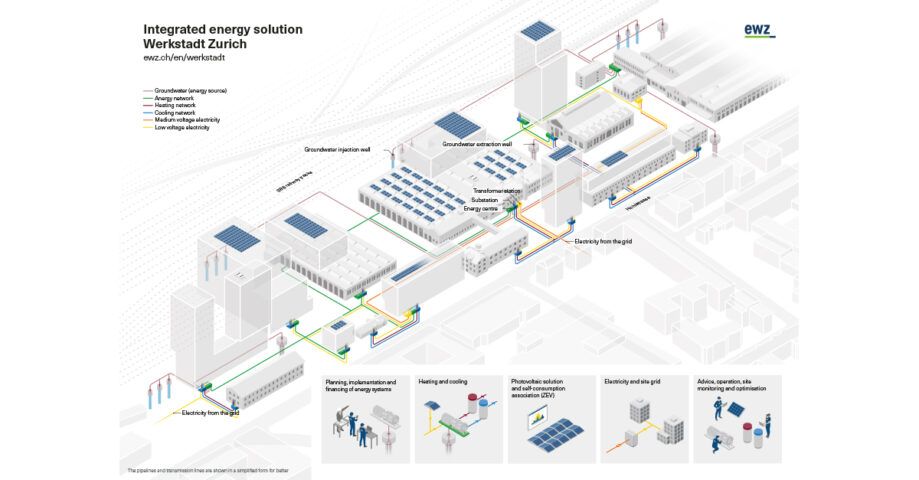
    ewz was able to win SBB’s public tender with an energy solution based on 100 per cent renewable energies. Groundwater, which is collected in four wells on the site, serves as a source of heating and cooling. From these wells, the water flows to the energy centres in the larger buildings, which house heat pumps and cooling machines that bring the water to the required temperature. An anergy network connects all the buildings and ensures that excess energy is exchanged between the building groups. For example, excess heat or cold in one building can be used in another. This system also has the advantage of not requiring groundwater boreholes in every building: the smaller buildings are connected to the energy centres via a local heating network. Heating and cooling is generated without any CO₂ emissions, as the rest of the electricity also comes from renewable sources. The use of a monovalent energy system will ultimately lead to a CO2 reduction of over 2,100 tonnes per year.

    High self-consumption of solar power
    ewz also plans, finances, creates and operates the transformer systems and medium-voltage lines to supply the site with electrical energy. ‘Some of the electricity that the people in the Werkstadt use on the site is produced there using photovoltaics,’ explains Markus Fischer, Head of Sales at ewz Energy Solutions. To this end, SBB and ewz want to make the best possible use of the roof areas for solar power production. Both the roof of Building Q, at the centre of the site, and the roofs of other buildings with a suitable structure and orientation for generating solar power are to be kitted out with photovoltaic systems. SBB requires its tenants on the site to form a self-consumption association (ZEV). ‘When completed, the ZEV will consist of around 300 parties that will use locally produced electricity on the site. This allows us to achieve a high self-consumption rate, which, in turn, makes a significant contribution to the cost-effectiveness of the photovoltaic systems,’ says Markus Fischer. He expects self-consumption on the Werkstadt site to be almost 100 per cent when completed.

    © SBB AG, Martin Zeller

    The benefits of contracting
    For the owner, this form of collaboration has various benefits, including keeping financial risks and management costs very low. If a system fails, ewz makes sure it gets back into operation as quickly as possible. To ensure that the system can be operated efficiently, ewz will start undertaking energy-related operational optimisations shortly after commissioning. As part of an ongoing process, the systems will be optimised and adapted to the actual needs relating to their use. By extension, this ensures that they consume as little energy as possible, generate minimal costs and offer maximum convenience for users.

    Werkstadt Zürich is a successful example of a forward-looking approach to repurposing a historic industrial site. With the targeted renovation and expansion of existing buildings and a ground-breaking energy concept, the developers – together with the planners and ewz – are creating added value for future users and the environment alike. Find out more about the Werkstadt site’s innovative energy concept here.


    https://www.ewz.ch/en/business-customers/real-estate.html

  • Winner of the Svit Award 2022 H&B Real Estate AG

    Winner of the Svit Award 2022 H&B Real Estate AG

    In order to make condominium mandates more attractive, the winner of the award, H&B Real Estate AG, has adapted a proptech solution with which condominium owner meetings and the upstream and downstream processes can be digitised. The condominium owners can view documents independently and around the clock, and managers can record agenda items throughout the year, which are then effortlessly compiled and distributed. Votes can be counted more easily and decisions recorded immediately. A ticketing system simplifies communication; in addition to owners, tenants can also be informed directly.

    To ensure that the software solution adequately takes into account the needs of property management, H&B Real Estate AG entered into an innovation partnership with the developers in 2020. The cooperation ensured that management processes were correctly mapped and problematic media and system discontinuities were eliminated. Thanks to more efficient processes, the company was able to acquire additional mandates. It was also possible to save specialised staff through the improved structuring of meetings. Thanks to the task and order system, enquiries can be dealt with more quickly. Conclusion from the first experiences: The management of condominiums has not only become more efficient overall, but also more transparent.

    Certimo’s employees can now digitally handle the work steps from the tendering of rental properties and tenant selection to the signing of contracts and deposit payments. The company thus saves a lot of time and can use it for other tasks and projects that were previously neglected in day-to-day business. Another benefit of digital filing and processes is the flexibility of the work location. This means that skilled workers can be recruited from a larger catchment area.

    Behind the success is not simply a proptech solution, but the willingness to try out digital products, to actively support the further development of a promising solution with expertise and know-how, and to make the introduction of new processes and functions in the company as easy and convenient as possible. Facilitations were demonstrated for step-by-step onboarding and new procedures were documented in concise checklists. The decision to digitise new business completely and to digitise existing business only in the event of changes enabled a resource-saving rollout. Building on the successes, the next digitisation steps were planned.

    Roche shows how Big Data enables smart management of commercial space. The jury particularly appreciates that the Roche team is not simply oriented towards what is technically feasible. The insight that the added value is generated by end users and that technical innovations require a use case sharpens the focus on the essentials, especially in complex digitalisation projects: the company’s success. As part of the Smart Building Initiative, Roche collects building and facility data that supports employees and service providers in their work and makes the company more attractive, efficient and sustainable. In order to prepare relevant information and decision-making bases for buildings with varying degrees of automation, the Digital & Site Engineering team uses an open IoT (Internet of Things) platform and “use cases” that are developed with users.

  • Public voting SVIT AWARD 2022

    Public voting SVIT AWARD 2022

    The SVIT AWARD honors property management companies that have implemented innovative solutions for smaller or larger challenges in the management of rental properties or condominiums in the last three years. What is needed are exciting solutions that inspire SVIT members to question working methods, rethink processes, further develop business models or offer new services.

    The entries make it clear where the shoe pinches for managers: Increasing work volumes have to be managed more efficiently and difficult business areas have to be made more attractive. Changed customer needs must also be recognized and satisfied. The solution approaches are dominated by digitization projects that simplify processes, integrate systems, facilitate communication with customers and service providers or process big data in such a way that smart buildings can also be managed smartly.

    Even if the pandemic has done a lot in terms of digitization, innovation cannot simply be reduced to the introduction of new proptech solutions. Rather, the decisive factor is whether digitized work processes and information flows create measurable added value for employees, customers and service providers – and whether companies find ways to break the power of habit and to incorporate user needs as well as specialist knowledge and expertise into the development of technical solutions.

    The jury evaluated the entries based on three sets of questions: How innovative is the approach? How well can the effect be measured? And how easily can the solution be transferred and scaled? Solutions were shortlisted that have proven themselves in practice, make companies more competitive, and can inspire and advance the industry.

    The choice of the three candidates for the public vote was not easy, but it was unanimous. From August 10th to September 11th, SVIT members have the opportunity to vote for their favourites. The winner will be presented at the SVIT AWARD evening on September 26, 2022 at the Selnau power plant in Zurich.

    Smart buildings for user-oriented management: F. Hoffmann-La Roche AG
    Roche employs around 14,400 people in research, development, production, marketing and sales at three Swiss locations. The approximately 1 million [CB1] m 2 office, laboratory, production and logistics areas are managed in-house. The Digital & Site Engineering team has the task of optimizing buildings and sites for the two business areas Pharma and Diagnostics.

    As part of the Smart Building Initiative, Roche collects building and facility data that supports employees and service providers in their work and makes the company more attractive, efficient and sustainable. In order to prepare relevant information and decision-making bases for buildings with different degrees of automation, the Digital & Site Engineering team uses an open IoT (Internet of Things) platform and use cases that are developed with users.

    Thanks to the open architecture, sensors and actuators can be easily and inexpensively integrated into the IoT platform and linked to data from building management systems, WIFI access points, systems and devices. The information gained from this on the use of space, workplaces, technical systems and devices is visualized using use cases in apps or integrated into decision-making aids. The use cases cover a wide range of needs that not only connect buildings, but also tasks: employees are made easier to work together in agile teams. Those responsible for the location can optimize the space available or the use of space. FM knows when rooms need to be cleaned, and lab device asset tracking enables researchers to share expensive facilities and equipment.

    Many farmers struggle with not having enough data. With smart buildings, however, large volumes of data quickly become a challenge. Roche shows how Big Data enables smart management of business premises. The jury appreciates in particular that the Roche team does not simply focus on what is technically feasible. The insight that the added value is generated by end users and that technical innovations require a use case sharpens the focus on what is important, especially in complex digitization projects: the company's success. The jury appreciates that the approach not only makes property management companies more competitive, but also explicitly makes tenants more competitive.

    Making digitization as easy and convenient as possible: Certimo AG – Zurich
    Certimo AG is a small company with two locations in the canton of Zurich. Well-established teams with long-standing employees manage around 1,000 rental apartments and 100 condominium apartments. Even before the pandemic, the company started digitizing the management process and reorganizing processes.

    Thanks to a dedicated specialist and a boss with an affinity for technology, employees can now digitally process work steps from the tendering of rental properties and the selection of tenants to the signing of contracts and deposit payments. This allows the company to take on additional mandates. Employees can devote themselves to tasks and projects that were previously neglected in day-to-day business. Because digital filing and processes save the daily (detour) trip to the office, new employees can be recruited from a larger catchment area.

    Behind the success is not simply a proptech solution, but the willingness to try digital products, to actively support the further development of a promising solution with technical and specialist knowledge, and to make the introduction of new processes and functions in the company as easy and convenient as possible . Facilitations were demonstrated for step-by-step onboarding and new procedures were documented in concise checklists. A resource-saving rollout was made possible with the decision to completely digitize new business and the portfolio only in the event of changes. Building on the successes, the next digitization steps were planned.

    Digitization is not a sure-fire success: many experienced employees fear that supposedly innovative solutions will not prove themselves in practice, that innovations will make established processes more confusing and error-prone, or that switching to new systems will tie up too many financial and human resources. Certimo shows that a paradigm shift is possible thanks to a clear focus on user needs and results. The jury appreciates that Certimo, as a small company, not only advanced the digitization of management processes far-sightedly and anchored it organizationally with a light hand, but also actively supported the further development of a proptech solution in terms of content, thereby taking the entire industry one step further.

    Managing condominiums with less stress: H&B Real Estate AG
    H&B Real Estate AG is an SME that offers a wide range of real estate and transaction management services in the greater Zurich area. In the specialized condominium team, five employees take care of a portfolio of around 500 apartments [CB2] .

    In order to make condominium mandates more attractive and to relieve the team during the meeting season, the SME has adopted a proptech solution with which condominium meetings and the upstream and downstream processes can be digitized. Condominium owners can view documents independently and around the clock. Farmers can record agenda items throughout the year. Agenda lists can be easily compiled and distributed. Votes can be easily counted and decisions can be quickly logged. A ticketing system simplifies communication, in addition to owners, tenants can also be informed directly.

    H&B Real Estate AG entered into an innovation partnership with the developers in 2020 so that the software solution appropriately takes management needs into account. The cooperation ensured that management processes were mapped correctly and problematic media and system breaks were eliminated. Thanks to more efficient processes, the company was able to acquire additional mandates, thanks to better structuring of the meetings, larger meetings require less specialized staff, thanks to the task and order system, inquiries can be dealt with more quickly, the management of condominiums is not only more efficient overall, but also more transparent become.

    Condominium ownership is unpopular in the industry and often onerous during congregation season. With its innovation project, H&B Real Estate AG is signaling that the business area is important to it and that it wants to relieve the STWE team. Digitization simplifies processes, reduces misunderstandings and enables up-to-date communication with owners and their tenants. The jury recognizes that H&B Real Estate AG, with its innovation partnership, has provided important impetus for the development of a proptech solution that benefits the entire industry and helps to make the management of condominiums more attractive again, especially for young employees.

    Link to public voting (for SVIT members): www.svit-award.ch

    Voting from August 10 to September 11, 2022

    20 tickets for the award ceremony on September 26, 2022 at the Selnau power plant in Zurich will be raffled off among the participants.

  • Holcim buys Belgian building materials specialist Cantillana

    Holcim buys Belgian building materials specialist Cantillana

    Building materials producer Holcim has announced the takeover of Belgian building materials dealer Cantillana . With Cantillana’s presence and portfolio, Holcim can advance the expansion of the solutions and products division, which is expected to account for 30 percent of Group net sales by 2025, according to a press release .

    For Holcim, the decision in favor of the provider of special solutions means a further optimization of its market position in facade construction systems and thermal insulation composite systems. “This expansion further strengthens our presence in Europe, particularly in the area of building renovation and energy efficiency,” said Miljan Gutovic, head of Holcim’s Europe, Middle East and Africa region.

    The investment ties in with the adopted strategy of “green growth”. Both companies announce that they aim to “take a bigger role in providing innovative and sustainable solutions for energy-efficient buildings”.

    After acquiring the French PRB Group , the Belgian PTB-Compaktuna and Izolbet in Poland, Holcim is adding Cantillana, a privately held company, to the “Holcim family”. Originating as a branch of a construction company, Cantillana has specialized since it was founded in 1875 in the sale of and trade in building materials and building material accessories for the construction and related trades. Today, Cantillana is part of the Stadsbader Group and employs more than 200 people at nine production sites in Belgium, France, Germany and the Netherlands.

    Holcim AG has focused on innovative and sustainable construction solutions in building construction, civil engineering and infrastructure. At 55 locations across Switzerland, the company produces concrete, gravel and cement suitable for all construction projects and recycles demolition materials into resource-saving products.

  • Tech Cluster Zug: More than just hot air

    Tech Cluster Zug: More than just hot air

    V-Zug employs around 2000 people at the Zug location. A few years ago, the former subsidiary of Metall Zug – Metall Zug is still the largest shareholder – was faced with an all the more serious decision: Where should production be in the future? The choices were a land reserve in Risch-Rotkreuz or moving abroad. In the end, the decision was made in favor of the previous location in Zug; a strong commitment with a vision: on the 80,000 m2 site, the production of V-Zug and other Metall Zug subsidiaries will be concentrated on around a third of the total area. In the coming years, a tech cluster is to be built on the free space. When completed, the area will offer around 3,000 jobs and living space for 300 people. The goal is an actual ecosystem of innovative technologies and services. The future users should come from areas such as cleantech, simulation technology or sensor technology or be related to the core competencies of Metall Zug – i.e. building technology, kitchen, food and cleaning.

    Climate neutrality as a goal
    Now the idea of such a cluster is neither new nor groundbreaking. On the other hand, the goal that Metall Zug has set itself for the realization is innovative: the area should be largely energy self-sufficient. Therefore, together with the local energy supplier, a separate energy system, the so-called Multi Energy Hub, is being implemented. The various areas of the energy sector and industry are linked – a holistic approach in which the areas interact and are connected to one another. Thanks to this sector coupling, the Tech Cluster Zug is not only supplied with energy, but also generates some of it itself. The area will have its own power grid for medium and low voltage. Several water networks with different temperatures enable the generation of cold and heat from the groundwater. The waste heat from industrial production is used to heat the apartments on the one hand and the seasonal groundwater and earth storage tanks on the other. In addition, comprehensive photovoltaics ensure a further step towards CO2 neutrality. Incidentally, the Tech Cluster Zug will be car-free: An intelligent mobility and parking system – the Mobility Hub Zug Nord – is intended to create sustainable solutions for urban areas.

  • Swiss Prime Site Immobilien enters into a partnership with Superlab Suisse

    Swiss Prime Site Immobilien enters into a partnership with Superlab Suisse

    Laboratory and research space provider soon with locations in Basel and Schlieren
    The company Superlab Suisse, which already operates a location in Lausanne, provides operational and fully equipped research and laboratory space ("Lab as a Service"). The offer also includes operating services and other important services. Swiss Prime Site Immobilien and Superlab Suisse are planning to develop locations in Basel and Schlieren with a total area of over 10,000 m2 from 2022. The Stücki Park in Basel already houses a laboratory building and a technology park in which various life science start-ups come together. Right next door, another state-of-the-art building with laboratory and research areas is to be built by Superlab Suisse over the next 18 months. The second location is planned in Schlieren near the city of Zurich. The Limmattal is the seat of the Swiss Federal Institute of Technology (ETH), the University of Zurich (UZH) and research centers of numerous national and international pharmaceutical companies. There is correspondingly strong demand for laboratory space. Swiss Prime Site Immobilien is planning a modern new building project on the JED site in Schlieren. In cooperation with Superlab Suisse, research and laboratory areas for start-ups, spin-offs or established companies are to be created on two floors. «We are very pleased about the cooperation with Swiss Prime Site for the two upcoming locations in Basel and Zurich, the two most important life science clusters in Switzerland. Due to the direct proximity to the Wagi area in Schlieren and the technology park in Basel, companies from the life sciences sector can benefit from significant synergy effects of these ecosystems," says Zhang Xi, CEO of Superlab.

    Great strides are being made towards making the areas more flexible .
    The demand for flexible office and commercial space has been increasing for years. The market trend towards making rental space more flexible for other types of use is also steadily increasing. Swiss Prime Site Immobilien recognized this early on and successfully implemented it through the development projects YOND in Zurich and JED in Schlieren (existing buildings). Martin Kaleja, CEO of Swiss Prime Site Immobilien: “The key success factors are the modern standard of construction, the flexibility of the space and the guarantee of support and services. As with other areas that have already been made more flexible, the needs of our customers are also in the foreground in the Life Science area.» Swiss Prime Site Immobilien and Superlab Suisse together have the necessary know-how to ensure the space required in the laboratory and research area. While Superlab Suisse provides its innovative platform, Swiss Prime Site Immobilien manages the necessary
    Real estate knowledge and related development resources. Martin Kaleja, CEO of Swiss Prime Site Immobilien, once again: “We are very pleased to have found the perfect partner for making laboratory and research areas more flexible and scaling in Superlab Suisse. While Superlab Suisse contributes the 'software', we have the right knowledge of the real estate market, the knowledge of what our customers want
    and thus provide the 'hardware' in this partnership.»

  • Swarm is supposed to give wings to solar folding roofs

    Swarm is supposed to give wings to solar folding roofs

    Dhp technology , based in Zizers, wants to raise fresh funds from investors for further growth. To this end, the manufacturer of the folding solar roof called Horizon is now starting a swarm financing campaign, according to a media release . The goal is between 1 million and 3 million francs. The minimum investment is estimated at 120 francs. The campaign is expected to last until the end of January 2022. It will be carried out on the platform of the Zug-based provider Conda.ch .

    With the solar folding roof from dhp, solar modules are retracted and extended on a cable construction. The control takes place automatically and is based on the weather data. For example, the system can protect itself from a storm.

    According to dhp, the roof is particularly suitable for sewage treatment plants. There are 800 of these in Switzerland and around 80,000 in Europe. In addition, Horizon can be used in park, commercial and logistics areas. The company estimates the economic potential in Europe at around 60 billion euros.

    The solar folding roofs have been manufactured in a factory in Zizers since 2019. Twelve dhp systems are currently in operation. The next ones are already waiting for delivery.

    On the one hand, the solar folding roof is to be further developed with the fresh money. On the other hand, sales abroad are to be promoted.

  • Jaisli-Xamax is building underground in Bern

    Jaisli-Xamax is building underground in Bern

    The Dietiker electrical company Jaisli-Xamax AG carried out the electrical work for connecting innovative X-ray devices in the newly designed radio-oncology department at Inselspital in Bern. According to the press release , the special thing about the construction work was that the new building within the Bern University Clinic, which belongs to the Insel Group, is located underground. A three-story, underground building has been erected there. In the so-called intermediate building, which is not visible from the outside, there are treatment and examination rooms with waiting rooms as well as the technology rooms of the tumor center.

    According to a press release from Inselspital, a state-of-the-art center for the radio-oncological treatment of cancer patients has been put into operation on three floors, 20 meters below ground, in two years' time. Three devices of the latest generation are available to treat patients with precise radiation therapy.

    The demanding task of connecting these Ethos devices was in the hands of Jaisli-Xamax. At peak times, there were 20 employees working there, three of whom were apprentices. Construction manager Eduard Harder is quoted as saying that Jaisli-Xamax is proud “that we were able to make our contribution to such an important and forward-looking project”.

  • Live and work in stackable towers

    Live and work in stackable towers

    The plans of the association Vision Zukunft Bösch are ambitious: 3000 jobs for 600 companies are to be created on 30 hectares in Hünenberg on the Bösch site. The aim is to upgrade the area and make it a leading location for innovative SMEs in the service, trade and industry sectors. Keeas designed the first development model in 2018 on behalf of the Zugwest Economic Region Association. At the same time the club was
    Vision of the future of Bösch founded.

    The challenge in developing the area: space is limited. So that numerous companies can still settle, three high-rise buildings are to be built. These are not classic high-rise buildings, but stackable towers: Energy self-sufficient boxes are attached to large lifts. Companies could easily grow taller here: Additional boxes can be flexibly stacked.

    Creative SMEs in particular are likely to feel addressed by this location: there are slides instead of stairs. But the topics of energy and sustainability are also taken into account. Due to its high daily consumption, Bösch offers optimal conditions for the installation of photovoltaic systems on the roofs. The waste heat from the nearby Perlen paper mill could be used as heating and cooling energy.

    A range of e-cars, car sharing and e-bikes through to pooled company and visitor parking spaces is conceivable. The so-called energy and mobility hub works with large batteries. These optimize the energy consumption of the solar systems and charge electric vehicles at the same time. Truck and commercial ramps are to be built around existing commercial buildings. In addition, an autonomous bus is planned that will provide direct access to the IT campus and the Rotkreuz train station.

    The municipality of Hünenberg owns a piece of land in the immediate vicinity of the International School im Bösch, which it would make available for the construction of a reference company. This future “Campus Bösch” is likely to lay the foundation for the overall project. The vision is constantly being developed.