Tag: Investitionen

  • Renewable energies remain on course for growth despite difficult market conditions

    Renewable energies remain on course for growth despite difficult market conditions

    Aventron has announced its key financial figures for the 2025 financial year. In total, the producer of electricity from renewable energies generated around 1.3 billion kilowatt hours of electricity – around 15 per cent less than in the previous year (2024: 1.498 billion kilowatt hours). Aventron cites historically weak weather conditions and high price volatility, including negative electricity prices, as the reasons for this.

    Despite the decline in production, the result remains “solid” according to a statement. Net revenue amounted to 120.5 million Swiss francs (2024: 134.9 million Swiss francs), while the EBIT margin (earnings before interest and taxes) was around 21 per cent. Net profit after taxes reached CHF 10.3 million.

    In 2025, aventron continued its diversification strategy with solar, wind and hydro technologies and further developed its portfolio. In Switzerland, construction began on the Sedrun Solar (Grisons) and APV Sidenplangg (Uri) alpine photovoltaic projects. In Italy, realisation of the 25-megawatt Lazio 01 solar power plant began, while two wind farms are under construction in France and Germany. The company invested a total of CHF 67 million. At the end of the year, the portfolio comprised a consolidated total output of 819 megawatts (previous year: 797 MW) in operation or under construction.

    In the medium term, aventron intends to focus increasingly on successful electricity marketing and the expansion of data management and monitoring systems. The aim remains to build up a portfolio with a total output of 1000 megawatts. The Münchenstein-based company operates and develops power plants in the areas of hydro, solar and wind energy in Switzerland and selected European countries.

  • Investments strengthen production capacities in the medical technology sector

    Investments strengthen production capacities in the medical technology sector

    The Burgdorf-based medtech company Ypsomed has invested 25 million Swiss francs in the remodelling and construction of a new machine tool park in Solothurn. In order to meet the growing global demand for injection systems and offer customers the highest quality, Ypsomed intends to significantly expand its position and capacity in the production of injection moulds, according to a press release. At the Solothurn site, the company intends to concentrate on the design and manufacture of plastic injection moulds for pens and autoinjectors.

    The commissioning of the mould construction facility marks the start of the implementation of a 200 million Swiss franc investment package to develop the site. Two new high-volume assembly systems with associated injection moulding systems for autoinjectors are to be opened in the coming months. The company has also announced plans to build a fully automated high-bay warehouse at the Solothurn site by the end of 2027. At the same time, a conference centre (Ypsomed Forum) is to be built there with space for around 300 guests. “The investment in the new toolmaking facility in Solothurn is a clear commitment to the development of our sites in Switzerland,” said Simon Michel, CEO of Ypsomed.

    The company also wants to continue to grow internationally in order to consolidate its position in the medical technology market and meet the increasing demand for injection systems for self-medication. in 2025, Ypsomed opened its first own plant in Changzhou, China, and started the expansion of its production site in Schwerin, Germany. A new site is currently under construction in Holly Springs in the US state of North Carolina.

    The investment also serves to double the number of staff in this area. The current number of 35 employees plus trainees is set to grow to 100 employees and apprentices.

  • Ticino economic area between energy, housing and investment

    Ticino economic area between energy, housing and investment

    [smartslider3 slider=”52″]

    At the 108th immoTable Ticino in Savosa, representatives from the real estate industry, energy, planning and investment discussed the future of the Ticino economic region. The focus was not only on individual projects, but also on the fundamental question of how Ticino can continue to develop as a modern business and real estate location.

    The discussion made it clear that Ticino today is much more than just a vacation and second-home region. A high quality of life, strategic location and exciting development potential meet challenges in terms of processes, living space, mobility and regional cooperation.

    Roberto Fantoni from Volta RE showed how much the energy market has changed. While the feed-in tariff for photovoltaic electricity has fallen massively in recent years, new models for property owners, municipalities and site developments are emerging in the form of energy communities, virtual associations and local electricity communities. The new CLE models from 2026 in particular could have a lasting impact on the real estate market. At the same time, it became clear that owners and administrations are increasingly looking for solutions that reduce energy costs, improve the energy efficiency of buildings and simplify investments.

    Monique Bosco-von Allmen from CASSI focused on the issue of housing. She made it clear that Ticino is lagging far behind the rest of Switzerland in terms of non-profit housing construction and that the discussion about affordable housing, demographic change and sustainable forms of housing is becoming increasingly important. The topics discussed included gentrification, rising rental costs, the low proportion of non-profit housing and the question of how politicians, municipalities and private stakeholders can work together to promote new housing models. At the same time, it was emphasized that housing is much more than just a roof over one’s head, but is closely linked to social balance, intergenerational dialogue and quality of life.

    Manuel Gamper from Leading Investors presented Ticino from the perspective of national and international investors. Ticino remains attractive, but finds itself in a more demanding market environment that requires significantly more professionalism, data competence and strategic thinking. Particularly important are predictability, speed, larger volumes and a professional ecosystem along the entire real estate value chain. At the same time, it became clear that Ticino, despite its limited market size, has interesting returns and considerable development potential if projects are of high quality, flexible and long-term.

    The future of the Ticino economic region will not be decided by individual construction projects or investments alone, but by cooperation, quality, innovation and the ability to think about economic development, energy, mobility and housing together.

    The next immoTable will take place on June 18, 2026 at the StartUp Space in Schlieren.

  • Energy provider reports declining results alongside rising investments

    Energy provider reports declining results alongside rising investments

    According to a press release,Repower achieved a total operating performance of CHF 1986 million in 2025. This was 20 per cent less than in the previous year. The operating result before interest and taxes fell by 24 per cent to CHF 133 million, while Group profit fell by 27 per cent to CHF 101 million. According to the press release, the international energy trading business made the largest contribution to earnings. At the same time, the Graubünden-based energy supplier increased its investments by 80 per cent to 142 million. The equity ratio rose from 53 to 59 per cent.

    The low rainfall in spring 2025 in particular had a negative impact on Repower’s result. The wind farms in Italy and Germany also recorded a slight decline. The Teverola gas-fired combined-cycle power plant was out of operation for an extended period. Only solar production increased significantly in 2025. According to the press release, Repower produced a total of 2147 gigawatt hours of electricity in 2025. In the previous year, this figure was 2639 gigawatt hours.

    Repower achieved a very strong result of CHF 371 million and a profit of CHF 300 million in 2023. However, the company also reported a very good annual result for 2025. This was above the long-term average. The company also expects a good result for 2026.

  • Energy supplier boosts profits despite lower turnover

    Energy supplier boosts profits despite lower turnover

    The AEW Group has had a successful financial year in 2025. According to a press release, the Aargau-based energy supplier achieved total revenue of 833.1 million Swiss francs. This is 4.2 per cent less than in the previous year. At the same time, operating profit before interest and taxes increased by 24.4 million to 131.4 million Swiss francs. The adjusted net profit stands at 159.7 million Swiss francs. The canton can expect a dividend of 53.0 million Swiss francs.

    The company attributes this growth to one-off effects. These included not only the efficient management of the energy business but also the early sale of own-generated electricity on the power exchange, as well as the strong performance of the Leibstadt Nuclear Power Plant (KKL) decommissioning and disposal fund, the Axpo dividend and a write-down in the power plant portfolio. AEW holds a 5.4 per cent stake in KKL.

    Investments stood at 94.3 million, slightly above the previous year’s figure (93.0 million).

    “Operationally, 2025 was a very good year for AEW,” CEO Marc Ritter is quoted as saying in the statement. “Our organisation has picked up pace and, at the same time, demonstrated that it can perform effectively even in a very challenging and dynamic market environment.”

  • The future of the Ticino real estate market at the heart of immoTable Ticino

    The future of the Ticino real estate market at the heart of immoTable Ticino

    Under the moderation of Natascia Valenta, Michele Bertini (La Mobiliare), Nicolas Daldini (SVIT Ticino), Gian-Luca Lardi (Swiss Association of Building Contractors) and Sandro Montorfani (Private Construction Department, City of Lugano) spoke.

    The debate touched on key issues such as the replanning and densification of the territory, the simplification of procedures for building permits and the need to streamline legislation in order to speed up decision-making processes.

    It was also emphasized that investments in Ticino are positive today, thanks to the decrease in vacancies, which are mainly concentrated in obsolete properties.

    Future challenges also included the issue of PPPs (public-private partnerships) and shrinking funds for renovation in the context of an ageing population and the building stock in need of renewal. This is an issue that will be of crucial importance in the coming years.

    The strategic role of Italy as an economic partner and source of skilled labor was also mentioned, as well as the effects of the recent votes on the imputed rental value, which will have a significant impact on the finances of the canton and the municipalities.

    Despite the challenges, the Sonnenstube remains a dynamic and attractive region for real estate investment, ready to take advantage of the opportunities offered by a changing market.

    [smartslider3 slider=”50″]
  • Digital management of real estate portfolios

    Digital management of real estate portfolios

    Real estate is very different in terms of use, typology and construction method. What they all have in common is a life cycle with different renewal intervals. In order to balance out the structural ageing process with targeted measures and to plan the portfolio with an eye to the future, up-to-date data on the condition, use and potential of the individual properties is required. The systematic consolidation of this information ensures that both short-term maintenance work and long-term investment projects can be managed in a timely and appropriate manner

    System levels and life cycles as a management tool
    Classification into system levels is helpful for planning adaptations and renovations.

    • The primary system comprises the load-bearing structure
    • The secondary system comprises the building envelope and durable installations
    • Further levels relate to interior fittings, technical equipment and short-lived elements

    If the useful lives of the system levels are defined in stages (e.g. 12, 24, 48, 96 years), coordinated renewal cycles are created almost automatically, from which investment packages can be derived. The overall renewal is particularly relevant. This is a turning point in the middle of the building’s life cycle, when all important components can be thoroughly overhauled and the property can be adapted to new requirements

    Lever for transparency and control
    Digitalization has long been the central driving force for targeted and sustainable property management. Specialized software solutions such as portfolio and asset management platforms enable the efficient collection, evaluation and analysis of large volumes of data. Application examples show that renewal cycles and investment volumes can be easily calculated, simulated and documented. Overall portfolio performance becomes more transparent, management more flexible and decisions are fact-based rather than intuitive

    A particularly effective approach is the visualization of portfolio data in the form of matrices or bubbles. Individual properties are strategically positioned in terms of key valuation figures, while historicizations make long-term development lines visible. This allows weaknesses, opportunities and critical points in time for investments to be identified and addressed in a targeted manner

    Life cycle management and networking
    The integration of a life cycle perspective and digital tools is becoming the standard for sustainable portfolio management. Early analyses and forecast-based investment planning create added value for owners, users and management bodies. Technology, such as cloud solutions or AI-supported analytics, increases the scalability and efficiency of management, facilitates the interaction between demand and supply and creates a reliable basis for sustainability and ESG reporting

    These approaches are essential for owners of public real estate portfolios, as the focus is on long-term usage strategies and maintenance management. The overall refurbishment of a building becomes a strategic decision point for further development, conversion or sale. Successful portfolio management means that all relevant data is consolidated and continuously reflected in the dialog between stakeholders – supported by digital tools that actively drive change in the real estate sector.

  • The Landolt site in transition

    The Landolt site in transition

    What significance does the development of the Landolt site have for Glarus as a business location? What specific impetus do you expect for the local economy and the creation of new jobs?
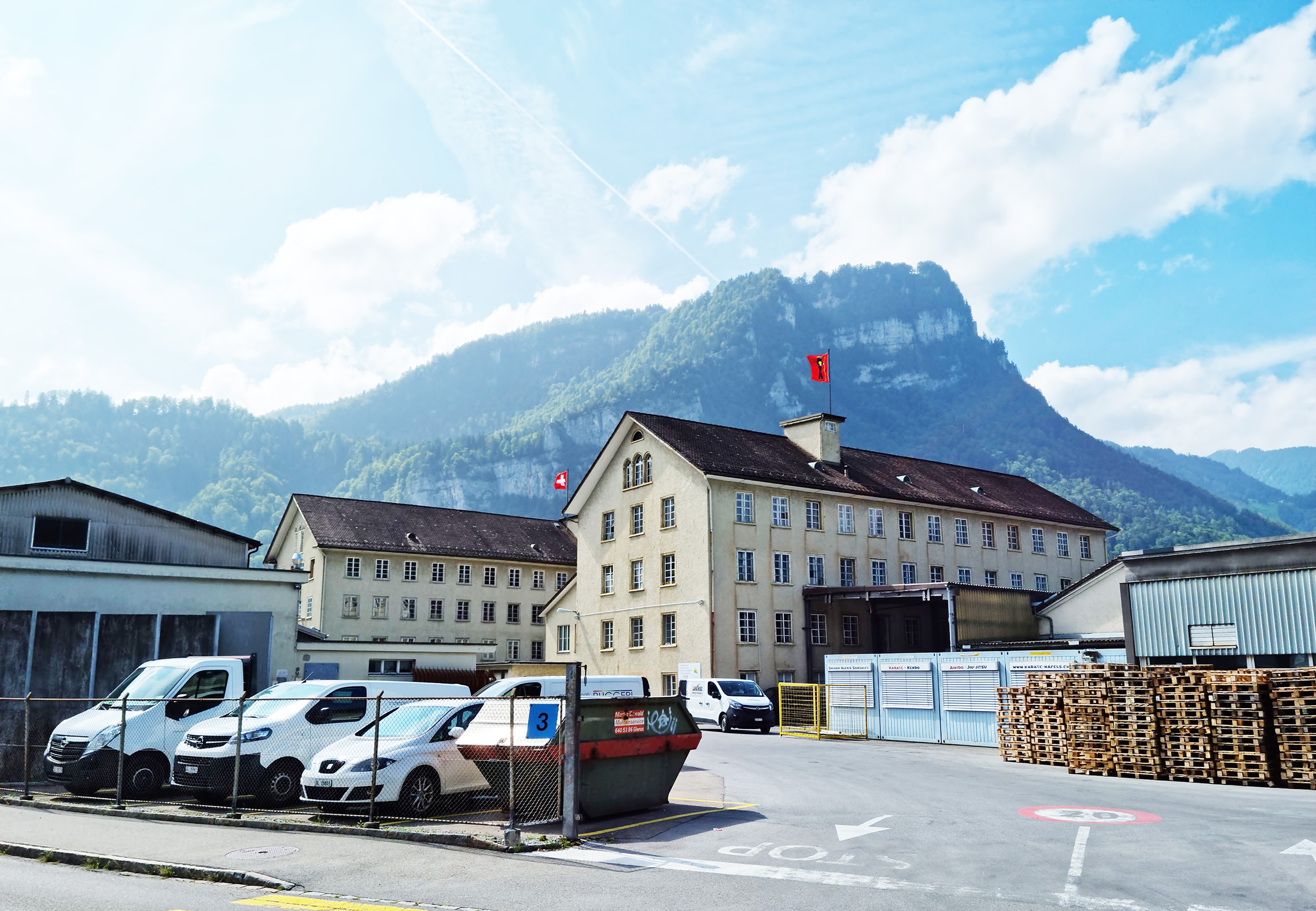
    The site is already well utilised with many different SMEs. When the Landolt company moves out in the medium term, the old stock will be freed up. The Shedhalle, which we have already renovated and equipped the roof with a large PV system, is particularly interesting. We are in the process of attracting new tenants and offer a very attractive location with optimal logistics connections. Attractive new jobs are being created here.

    Temporary uses such as the planned mobility hub are a central element of the concept. What opportunities do you see in these temporary uses to revitalise the site during the development phase?
    This is one of the most important parts of the transformation. We would like to keep all of the existing tenants if possible. We maintain direct contact with them so that they can continue to develop within the site. The buildings with interim uses are let cheaply but not for long, whether as storage, car parks or hubs, but without major investment on our part. There is also room for creativity here.

    How are the canton of Glarus and the location promotion organisation involved in the project? Is there strategic coordination with cantonal development goals?
    We are in regular dialogue with the location promotion agency and are confident that the good location and the size of the space on offer will also attract larger SMEs to the canton of Glarus. Several companies are already interested in setting up here.

    Participatory planning is emphasised. How were local residents and businesses able to get involved and what findings from this process will be incorporated into the next steps?
    With well-supported representation from the authorities and a specialist committee from the worlds of business and urban planning, as well as an international team of planners, the urban design, the relationships with the neighbours and the use and building distribution of the site were reworked. Many of the old spinning mill buildings are to be preserved and given a new lease of life.

    The current purely commercial area will be supplemented with various commercial offerings, and a small proportion of housing will also be possible. The very attractive location between the Chli Linthli and Mühlibach streams also invites walkers and residents to experience this beautiful and idyllic place.

    The planners are currently working with the design commission and the heritage conservation organisation to draw up the basic project. By the summer of 2025, it will be possible to show the future shape of the site, the expanded commercial offer and the variety of flats. We are very pleased with the excellent cooperation and are convinced that the careful handling of the existing buildings and the new buildings will create great added value for the users of the site, as well as for local residents.

    The development will take place in four stages. How will you ensure that the site remains lively, usable and attractive in the intermediate phases and does not become a long-term construction site?
    As already mentioned, part of the existing industrial buildings will be used for new purposes. The very old existing buildings, which will be vacant in the medium term after the Landolt company moves out, are to be rented out again quickly after conversion or modernisation. The various talent zones were defined for this purpose, and these form the stages. The development will be successively finalised with the completion of the respective zones.

    The innovation campus at Chli Linthli is intended to develop independently and in line with demand. Which target groups would you like to address here and which sectors could settle here?
    This site is already fully occupied with a wide range of businesses. The needs of the future will be accommodated here. The idea is to create a diverse range of businesses that require good networking within this area and function like a campus. However, we are also open to other ideas. Only time will tell what these are.

    How do you create long-term identity and loyalty on the site? What role do social, cultural or ecological offerings play for future users?
    The site already has a rich history. You can see this everywhere here. With a new use and the right approach, the culture will be preserved but also redefined. With our goal of sustainability, this process will also conserve resources. The use of natural building materials and simple architecture will create affordable working and living space that is healthy and worth living in. With its watercourses, green spaces, newly created neighbourhood squares, etc., the site offers a lot of spatial quality, but also a very attractive place to work, live and stay.

  • Investment plans weaken in 2025, record high in 2026

    Investment plans weaken in 2025, record high in 2026

    According to the latest KOF Investment Survey, Swiss companies are planning to increase their gross fixed capital formation by 2.9% in nominal terms in 2025 compared to the previous year. This means that the expected growth is not only below the historical average, but also below the forecasts of the last survey in autumn 2024. Construction investment in particular, which has been the main driver of Swiss investment activity to date, is expected to increase by 4.5%, but is showing a noticeable slowdown compared to expectations from the previous year. Equipment investment is expected to grow by 2.2% and research expenditure by 2.5%.

    In the services sector, optimism has dampened noticeably. Instead of the previously forecast growth of 4.7 percent, companies are only expecting an increase of 3.1 percent. In the construction industry, fixed asset investments are even forecast to fall by 1.1%, a significant correction compared to the previously expected stagnation. In manufacturing, on the other hand, the outlook remains largely stable, with a forecast increase of 1.4%.

    Tariff announcement weighs on investment security
    A key reason for the subdued expectations is the US tariff announcement from April 2025, which envisages a tariff rate of 31% for Swiss imports into the USA. With the help of a quasi-experimental analysis, the KOF was able to show that the announcement had a noticeable effect on investment decisions. Companies that completed their questionnaire after April 2 reported an increase in reduced investment plans. Before the announcement, around 30 percent of companies were planning to reduce their investment in equipment. After the announcement, this proportion rose to 35%, while the proportion of companies with unchanged plans fell from 40% to 36%.

    Similar patterns can be seen in construction investment, while research expenditure appears to have remained largely unaffected. Companies that were already planning expansion investments stuck to their plans. In contrast, many companies that had not previously planned any changes scaled back their plans, a clear indication of the increased uncertainty.

    Significant increase in investment uncertainty
    The certainty of investment realization also deteriorated following the customs announcement. The proportion of companies that rate their investment plans as more uncertain rose from 12% to 22%. At the same time, the proportion of those who did not notice any change in security fell from around two thirds to 56%. The proportion with an improved security assessment remained constant at around 21%.

    Focus on rationalization and climate investments
    The changed environment has influenced companies’ investment motives. Expansion investments, traditionally risky, are increasingly viewed with caution. Instead, the idea of rationalization is gaining in importance. The role of environmental and climate protection investments is also growing. While 60% of companies took corresponding measures last year, 69% intend to invest in climate protection and adaptation to extreme weather conditions over the next three years. This is despite the fact that almost a third of companies state that they are not currently directly affected by climate change. At the same time, the proportion of companies that see the transition to more climate-friendly standards as an opportunity has fallen from 42% to 39%. The proportion of those who see it as a risk, on the other hand, has risen to 28%.

    Optimistic forecasts for 2026
    The picture for 2026 is completely different. Never before since the KOF surveys began have so many companies planned to increase their investments. 28% of the companies surveyed are planning to invest more in equipment, while the figure for construction investment is as high as 29%. At the same time, the proportion of companies expecting a decline has fallen significantly to just 14%. Companies from the manufacturing and service sectors are particularly optimistic.

    Opportunities and risks at a glance
    The KOF analysis underlines the high adaptability of Swiss companies. While geopolitical risks such as US customs policy are leading to investment cuts and uncertainty in the short term, many companies are focusing on growth and climate investments in the long term.

  • Swiss tax landscape in transition

    Swiss tax landscape in transition

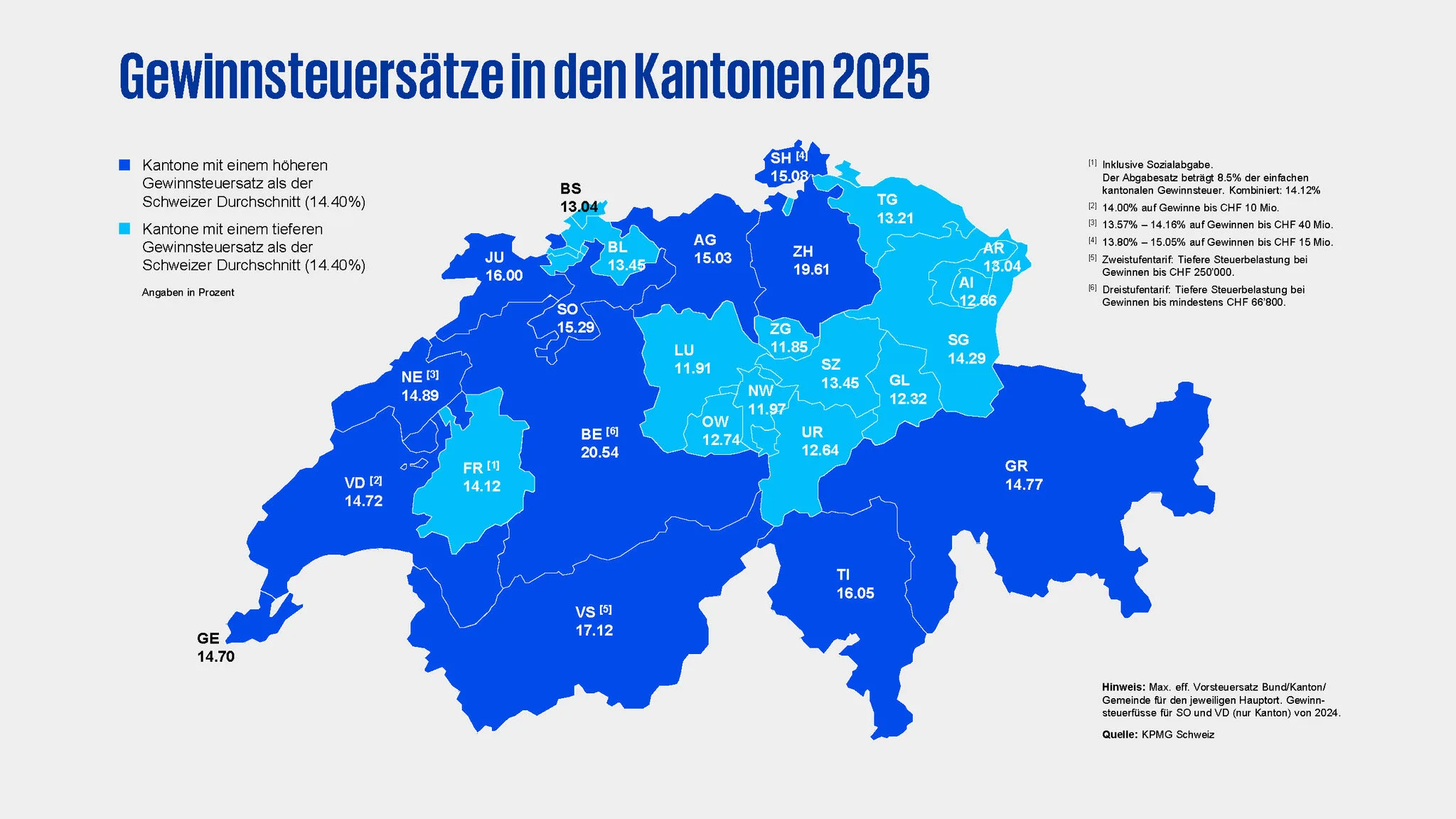
    In 2025, the average corporate income tax rate in Switzerland fell from 14.6% to 14.4%. The canton of Zug remains the front-runner with just 11.85%, while Bern (20.54%), Zurich (19.61%) and Valais (17.12%) occupy the upper ranks in the tax ranking. At first glance, this is a sign of the attractiveness of the business location, but the dynamics are more nuanced.

    In fact, some cantons have even increased their tax rates slightly. Geneva, for example, rose from 14 to 14.7 percent, while Basel-Stadt will increase its rate to 14.53 percent in 2026. This is due to the introduction of the global minimum tax rate of 15% for companies with high profits. Cantons that were previously regarded as low-tax locations are adapting in order to cushion the threat of the additional tax and retain revenue themselves. For investors, this means that while the tax advantage remains, flexibility is required in order to be able to react to cantonal differences and future adjustments.

    Location remains competitive
    There has also been a slight decrease in the top tax rates for private individuals. From an average of 32.7 percent to 32.5 percent. Geneva (-1.7 percentage points) and Schwyz (-0.61) in particular have lowered their rates. However, the ranking remains stable. Schwyz (21.98%), Zug (22.68%) and Nidwalden (24.1%) remain at the top. Geneva, Vaud and Bern remain the most expensive cantons for top earners. For real estate developers and highly skilled workers, these locational differences in income tax remain a decisive factor, especially for international projects.

    Global minimum tax Stability in Switzerland, uncertainties internationally
    Over 50 countries worldwide have already implemented the minimum tax of 15 percent for large companies. However, the USA, the original driving force behind the initiative, has not yet adopted the OECD guidelines into national law. On the contrary, the new US administration is increasingly questioning the project. Experts such as Stefan Kuhn from KPMG Switzerland emphasize that, in the worst-case scenario, these uncertainties could lead to a return of tax competition or special digital taxes. For Switzerland, however, the signal is clear: the global minimum tax is becoming a reality here too. The stability of implementation and the ability to plan remain a locational advantage over uncertain international developments.

    Cantons boost location attractiveness with targeted projects
    In parallel to the tax adjustments, many cantons are investing in location promotion projects. Lucerne, Basel-Stadt, Zug and others have already adopted programs to support local companies and new relocations. For real estate developers, this means opportunities for new projects, incentives for investment in commercial and residential space and a solid basis for long-term viable business models.

    At the same time, it is clear that it is not tax policy that determines the attractiveness of a location, but also the accompanying measures such as infrastructure, securing skilled workers and digitalization. This is where new spaces for innovative projects are created for developers and investors,

    especially in a market environment that is characterized by growing demands for sustainability and resource efficiency.

    Industrial policy and tariffs
    In addition to taxes, international trade issues are once again gaining in importance. Discussions about US tariffs, bilateral trade agreements and strategic industrial policy are driving reindustrialization worldwide. For Swiss locations, this means that the demand for suitable production and logistics space could increase. At the same time, the protection of strategic industries is once again receiving greater political support, which could open up new areas for investment in high-tech and industrial production.

    Switzerland remains strong – eyes on Ireland and Asia
    In an international comparison, Switzerland remains on a par with other top European locations. Ireland taxes corporate profits at 12.5 percent, Hungary at 9 percent. Guernsey, the Bahamas and the Cayman Islands remain low-tax havens with zero percent, but this is no comparison for Switzerland. Instead, the location competes with attractive metropolises such as Hong Kong (16.5%) or Singapore (17%), which entice with additional incentive programs. China, India and Brazil also continue to rely on other tax strategies with high rates (25-34%), but selectively offer low effective burdens for strategic industries. Switzerland remains competitive and complements this advantage with a stable political and legal framework.


  • Direct investment as a driver of growth

    Direct investment as a driver of growth

    Direct investments are a central component of the global economy. They comprise equity investments in foreign companies with the aim of permanently influencing their business activities. The focus is on strategic control, market access and securing resources. In contrast to portfolio investments, which are primarily aimed at capital gains, direct investments have far-reaching economic effects for the countries of origin and recipient countries.

    Switzerland’s locational advantages
    Switzerland is one of the most attractive investment locations in the world. Factors such as legal certainty, a stable economy, highly qualified skilled labour and a well-developed infrastructure make the country particularly attractive for multinational companies. Many international corporations such as ABB and Novartis have their headquarters here, while global companies such as Google and Liebherr have branches in Switzerland.

    Global networking and economic effects
    As an investor and investment location, Switzerland benefits from international capital flows. Swiss companies expand abroad through direct investment, while foreign investors invest in Swiss companies. This not only promotes the exchange of expertise and technologies, but also strengthens economic dynamism. The pharmaceutical sector in particular plays a key role in bilateral investment flows, especially between Switzerland and the USA.

    Direct investments and their influence on growth
    Direct investments have a measurable influence on economic performance. Capital gains from Swiss investments abroad flow back into the domestic economy and have a positive impact on consumption and investment. At the same time, foreign direct investment in Switzerland creates employment and increases productivity. in 2022, foreign-controlled companies accounted for around 24 per cent of total gross value added, while 11 per cent of jobs were directly dependent on them.

    Increasing regulation as a challenge
    In recent years, direct investments have been subject to increasing political regulation. Tax adjustments and investment controls are intended to create transparency and prevent tax avoidance. At the same time, there is a growing debate about tighter controls on takeovers by foreign investors, particularly with regard to national security interests. These developments could impair the growth potential of future direct investments.

    Direct investment as a stabiliser and growth factor
    Switzerland benefits greatly from direct investment, both as a country of origin and as a recipient country. It promotes innovation, strengthens economic power and secures prosperity. However, increasing regulatory intervention could pose long-term challenges for the global flow of investment and economic growth.

  • Europe needs more capital for start-ups

    Europe needs more capital for start-ups

    Europe’s economic strength depends to a large extent on technological innovation. However, access to capital remains a challenge for many start-ups in the growth phase. The new study “Mapping investors for European innovators”, published by the EPO’s Patent and Technology Observatory, shows that private and public investors play a crucial role in promoting new technologies. Compared to the USA, however, there is a lack of capital in Europe for later financing phases, which hinders the growth of innovative companies.

    Technology Investor Score as a guide
    To make it easier for technology-oriented companies to find investors, the EPO is introducing the Technology Investor Score. This new indicator shows the proportion of companies with patent applications in an investor’s portfolio. The TIS helps start-ups to identify suitable partners and promotes targeted investment in technological innovations.

    The study analysed over 6100 investors in Europe and 8000 investors in the USA and shows that 88% of European investors have companies with patents in their portfolio. However, only 8% of these investors focus primarily on start-ups with patents. A clear sign of restrained capital flows into innovative growth companies.

    Europe needs to invest in scaling
    A key problem in the European innovation ecosystem is insufficient funding in the late stages of development. While public investors such as the European Innovation Council, the European Investment Bank or national innovation agencies strongly support early-stage financing, there is a lack of private investors for scalable start-ups in Europe.

    The analysis shows that 62% of the 100 largest European private investors focus on early-stage financing, while only 22% invest in later stages. In comparison, 98 of the top 100 investors in the US are private investors, of which more than half invest specifically in scaling start-ups. This funding gap in Europe means that promising technology companies are moving abroad to find better conditions for growth.

    Targeted solutions for more access to capital
    To overcome these challenges, the EPO has added a new filter function to its Deep Tech Finder. The free online tool enables start-ups to conduct a targeted search for investors based on criteria such as financing phase, location and technology focus. This enables technology-driven companies to efficiently find investors who specialise in their specific needs.

    In addition, the Observatory for Patents and Technology offers a new information platform that provides detailed insights into financing strategies, investor profiles and the use of patents to raise capital. The aim is to support start-ups and SMEs so that they can realise their full innovation potential.

    Strengthening Europe’s innovative power
    The results of the study underline the need to optimise financing structures in Europe. Public funding alone is not enough to ensure the transition from idea to market maturity. More private capital is needed for later growth phases in order to keep innovative companies in Europe and remain competitive in the long term.

  • Potentials and challenges of repurposing

    Potentials and challenges of repurposing

    Technical and economic challenges
    The conversion of commercial buildings into residential space requires considerable structural adjustments. Building depths, lighting conditions and infrastructure pose challenges that require high levels of investment. At the same time, conversion can be economically attractive if the rental potential for residential space is higher than that of office space. Creative concepts such as modular building elements or alternative living models such as co-living can facilitate realisation.

    Legal hurdles and political factors
    Building regulations, zoning plans and the NIMBY phenomenon (Not In My Back Yard) can delay or prevent projects. Early dialogue with authorities and residents can help to minimise resistance. In addition, politicians are increasingly willing to adapt the regulatory framework in order to facilitate conversions.

    Innovative practical examples
    Successful projects such as the conversion of the Rennbahnklinik in Muttenz or the pilot project on the former ZWHATT industrial site in Regensdorf show that sustainable living space can be created through flexible concepts, reduced construction costs and intelligent space solutions.

    Future prospects
    Conversions offer great potential for overcoming the housing shortage and for resource-saving urban development. Success requires innovative planning, political support and a co-operative approach between investors, authorities and the population.

  • Property market remains attractive

    Property market remains attractive

    The Swiss property market remains attractive for 93 per cent of property investors, EY Switzerland reports in a press release. The auditing and consulting firm based its findings on the latest edition of its annual “Real Estate Investment Market Trend Barometer”. EY Switzerland surveyed a representative cross-section of 106 property market players.

    Six out of ten respondents anticipate growth in investment volumes this year. 85 per cent expect property to become more attractive than alternative investment opportunities. “This result demonstrates a remarkable consensus regarding the assessment of future developments on the property investment market and reveals the collective confidence that investors have in the real estate asset class,” Daniel Zaugg, Sector Leader Real Estate, Construction & Building Material at EY in Switzerland, is quoted as saying in the press release.

    Within the property market, residential property continued to gain in attractiveness. A total of 74 per cent of respondents now want to focus more on residential property, compared to 67 per cent in the previous year. Investments in apartment buildings are seen as a safe investment strategy by 96 per cent. The willingness to invest in logistics and office properties increased by 9 to 10 percentage points year-on-year to 52 and 48 per cent respectively. The overwhelming view is that demographic change and interest rate trends will have the greatest impact on the property market in the coming years.

  • Strategy presented for increasing operating result by 2030

    Strategy presented for increasing operating result by 2030

    BKW presented its Solutions 2030 strategy on 8 November. According to a press release, this strategy aims to increase the operating result before interest and taxes to CHF 1 billion by 2030. according to the annual report, the operating result in 2023 was CHF 620.3 billion.

    The operating result for the Energy Solutions division is set to rise to CHF 650 million. in 2023 it was 534.6 million. The result for the Grids division is expected to be CHF 150 million in 2030 (2023: CHF 146.7 million). The strongest growth is targeted in the area of infrastructure and building solutions. in 2023, the result should be CHF 200 million, with a loss of CHF 40 million in 2023. General planning in infrastructure and building construction as well as building technology solutions are to be expanded and profitability steadily increased.

    The Bern-based energy supplier plans to invest CHF 4 billion to achieve this, at least half of it in Switzerland. The investments are to be financed from free cash flow, which is expected to total over CHF 5 billion during this period.

    “With the comprehensive further development of the strategy, BKW is supporting its customers even more strongly in the transformation of the energy system with forward-looking solutions”, BKW Chairman of the Board of Directors Roger Baillod is quoted as saying in the press release. CEO Robert Itschner emphasises the breadth of the targeted growth: “All of BKW’s business areas will contribute to achieving these goals. BKW is investing in its strong Swiss base and growing in other European countries in a targeted manner.”

    BKW aims to reduce its net greenhouse gas emissions to zero by 2040.

  • Property developer reduces profits to strengthen future investments

    Property developer reduces profits to strengthen future investments

    SitEX Properties Holding AG generated gross sales of CHF 10.86 million in the first half of the year, the Schwyz-based property development company announced in a press release. In the same period last year, gross sales totalled 32.70 million Swiss francs. Net profit after tax fell from CHF 7.34 million to CHF 1.51 million in the same period.

    “Over the past ten years, sitEX has been fortunate enough to achieve profitable half-year and annual results without exception,” CEO Beat Kähli is quoted as saying in the press release. However, the company, which specialises in real estate in Switzerland and the USA, is currently “in an investment phase, which is why only small profits could be achieved compared to previous years”. According to Kähli, sitEX currently has a development pipeline totalling more than CHF 5 billion. This “secures the basis for future sustainable profits”, according to the company boss.

    In recent years, sitEX has distributed around CHF 60 million of its profits to shareholders. This year and next, however, the company intends to concentrate on repaying liabilities and investments, explains Christoph Stutz, Chairman of the Board of Directors of sitEX.

  • Public consultation on the Lucerne agglomeration programme

    Public consultation on the Lucerne agglomeration programme

    The fifth generation of the Lucerne agglomeration programme (AP LU 5G) includes the towns of Sursee and Sempach for the first time, as well as several new municipalities such as Meierskappel and Neuenkirch. This expansion of the perimeter emphasises the increasing importance of regional cooperation in the sustainable development of settlement and transport structures. The focus of AP LU 5G is on coordinating transport development with settlement planning in order to optimally meet the challenges of growth and mobility in the region.

    Key projects through station and bypass
    The key projects of the LU 5G AP are the Lucerne through station and the A2 Lucerne motorway bypass. These major projects financed by the federal government form the backbone of long-term transport planning in the Lucerne region. In addition, accompanying measures and projects are planned by the canton and municipalities, such as the expansion of parking facilities and the creation of continuous bus lanes, in order to further improve the efficiency and flexibility of the transport system.

    Investments in overall transport and walking and cycling
    The LU 5G AP plans extensive investments in transport and settlement development. Overall transport, including important transport hubs such as the expansion of Ebikon railway station, will receive CHF 216 million in funding up to 2031. Pedestrian and bicycle traffic, with measures to optimise the cantonal bicycle network and improve local recreation, will also be given high priority. Projects in this area will be supported with a total of CHF 129 million.

    Public participation and future steps
    Public participation offers municipalities, experts and interested members of the public the opportunity to play an active role in shaping the AP LU 5G. The comments and suggestions, which can be submitted until 1 October 2024, will be incorporated into the revision and finalisation of the programme. An information event will be held in Rothenburg on 2 September 2024 to explain the draft and the planned measures in detail. Registrations are possible until 28 August 2024.

    The programme will be reviewed and adjusted once the public consultation has been completed. Adoption by the government is planned for 2025, before the AP LU 5G is submitted to the federal government for review.

  • Construction investment increased slightly in 2023

    Construction investment increased slightly in 2023

    Construction investment in Switzerland rose by 0.2 per cent in nominal terms in 2023 compared to the previous year. According to a press release, investments in building construction fell by 0.3 per cent and those in civil engineering increased by 2.7 per cent. Compared to the previous year, 2.5 per cent less was invested in new construction projects and 4.4 per cent more in renovation projects. These are the provisional results of the construction statistics from the Federal Statistical Office(FSO).

    Total construction expenditure, i.e. construction investment plus public maintenance expenditure, increased by 0.3 per cent in 2023, although a price-adjusted decline of 2.5 per cent was recorded.

    Public clients – the federal government, cantons and municipalities – increased investment in civil engineering by 3.9% and in building construction by 8.5%. By contrast, private clients spent less on civil engineering (-2.3%) and building construction (-1.9%) in 2023.

    A decline of 2.5 per cent was recorded for investment in new construction. Private clients spent 4.8 per cent less on new construction projects. In contrast, investment in conversions increased by 4.4 per cent.

    In addition to private renovation activity, which increased by 3.9 per cent, the public sector also invested more in new buildings (6.9 per cent) and renovations (5.2 per cent) compared to the previous year, according to the FSO press release.

  • Canton of Zurich proposes areas for the utilisation of wind power

    Canton of Zurich proposes areas for the utilisation of wind power

    The Zurich cantonal government wants to create the planning basis for increased utilisation of wind power in the canton. According to a press release, it has now submitted 20 highly suitable and 15 well-suited areas for consultation. The highly suitable areas are mainly located in the north-east of the canton between Cholfirst, Stammerberg, Zünikon and Bergbuck. Other areas in the south of the Knonauer Amts, on the Pfannenstiel and in the Oberland are considered to be well suited. The canton looked at a total of 52 potential areas.

    The consultation will last until 31 October. The cantonal government will then prepare the corresponding proposal for the cantonal council. Wind turbines can only be erected in areas that are listed as suitable in the structure plan.

    The cantonal government is also proposing measures to involve the municipalities and the population in the construction of the turbines. For example, municipalities and private individuals should be able to participate voluntarily in the investments. Conversely, plant operators should voluntarily allow municipalities to share in the profits.

    In contrast, the cantonal government sees little potential for the expansion of hydropower in the canton. Only at the Rhine Falls could 20 per cent of the water be used for an underground power plant. It proposes a corresponding entry in the structure plan.

  • Stable economic development in Vaud

    Stable economic development in Vaud

    In 2023, the Vaud Economic Development Agency provided financial support for 733 business projects. Support for internationalisation increased by almost 20%, while support for the cleantech sector rose by 23.7%, reflecting the growing importance of innovation in the energy and climate sector. The number of branches of foreign companies remained stable at 28 new branches.

    Network and partnerships
    Isabelle Moret, Head of the Department of Economy, Innovation, Employment and Heritage (DEIEP), emphasises the importance of a strong network: “In 2023, more than a thousand companies and project promoters benefited from the Vaud government’s support measures, particularly in the areas of innovation and sustainability.” These measures supported 3722 jobs.

    Strong growth in the medtech sector
    Vaud start-ups raised CHF 444 million, with 29 of them among the top 100 best start-ups in Switzerland. The medtech sector is particularly noteworthy: 52% of investments in medical technology across Switzerland were channelled into Vaud start-ups.

    Attracting foreign companies
    Innovaud, the agency for the promotion of innovation and foreign investment, supported the establishment of 28 new companies in the canton of Vaud. The life sciences sector had a particularly strong presence, accounting for more than a third of the new companies.

    Promotion of research and development
    The innovation parks in the canton of Vaud were home to a total of 661 companies and 8326 jobs at the end of 2023. The new unlimitrust campus and the expansion of the EPFL Innovation Park with the Ecotope project are examples of growth and support for research and development.

    Support from the Innovation Promotion Fund
    The Innovation Promotion Fund was endowed with an additional CHF 50 million in 2023. This fund supports the Foundation for Technological Innovation (FIT) and various programmes such as Tech4Trust, Trust Valley’s leading acceleration programme for start-ups, and FIT Impact for young projects in the field of impact entrepreneurship.

    Sustainability as a central task
    Sustainability plays a central role in the 2022-2027 legislative planning. The “4-season tourism” framework credit of CHF 50 million aims to improve the quality and sustainability of tourism infrastructure. in 2023, 84 projects totalling almost CHF 4 million were supported to help companies make the transition to sustainability.

    A strong economic ecosystem
    The PESI also supported organisations such as Innovaud, which accompanied 328 companies and contributed to the creation of 31 new companies. Genilem, specialised in project diagnostics and entrepreneurship consulting, supported 24 companies. The Foundation for Technological Innovation (FIT) awarded over CHF 4 million in grants and loans to start-ups.

    Regional economic promotion and territorial advertising
    The regional economic promotion offices supported 712 companies and provided over 1,000 services. Vaud Promotion encouraged 165 local producers to label their products with the VAUD CERTIFIES D’ICI label. The attractiveness for tourists increased by 8.6%, with most visitors coming from Switzerland, France and the USA.

    These comprehensive measures and partnerships emphasise the successful strategy of the Vaud Economic Development Agency, which focuses on sustainability, innovation and strong networks.

  • Expertise and strategic partnerships in hotel development

    Expertise and strategic partnerships in hotel development

    The hotel property sector is currently undergoing a profound structural change. The demands of guests are changing rapidly and the structures of owners and operators are becoming increasingly complex. Patrick Vogler, former CEO of the Grand Resort Bad Ragaz, and Professor Norbert Hörburger, researcher and lecturer in hospitality at the University of Applied Sciences Graubünden, have founded Hotelinvest GmbH. Their goal: the sustainable utilisation and further development of high-quality accommodation properties through targeted consulting and brokerage.

    Targeted strategies for sustainable success
    Hotelinvest GmbH attaches great importance to the careful selection of investment properties and investors. Comprehensive analyses, feasibility studies and plausibility checks are carried out before each transaction. The team consists of highly qualified senior consultants, including Eva White, an internationally experienced specialist in hospitality property transactions, and Annette Fink, an expert in wellness and spa management as well as marketing and positioning. “Our focus is on the sustainable success of our clients,” emphasises Norbert Hörburger. “We offer optimal market access for buyers and sellers thanks to our excellent network.”

    Diverse hotel concepts and flexible solutions
    Thanks to its extensive experience and large network of international investors, Hotelinvest GmbH is an ideal partner for various types of hotels, from city hotels and serviced flats to holiday resorts. Patrick Vogler emphasises that the trend in the city hotel industry is towards young, digitalised hotel concepts that manage with fewer staff. Innovative forms of service living are also emerging in other areas of commercial accommodation that can react flexibly to different property situations.

    Strategic cooperation and comprehensive support
    Hotelinvest GmbH focuses on developing trusting partnerships and offers comprehensive support throughout the entire investment and development process. Thanks to their network, they can accompany project developers, property owners and architects before, during and after the transaction and support them in the conceptual orientation of their investments and construction projects. “Our outside perspective and wealth of experience often result in completely new, promising concepts,” explains Norbert Hörburger.

    This strategic and comprehensive approach to the development of hotel properties makes it possible to create innovative and sustainable solutions that meet the current and future requirements of the industry.

  • Why Next Property AG?

    Why Next Property AG?

    Why does the property industry need Next Property AG?
    To create favourable framework conditions that enable industry players to operate as independently and self-determinedly as possible in a digital world without becoming a pawn in the hands of dominant companies.

    What is Next Property AG’s vision and how do you achieve it?
    We are committed to fair competition in the Swiss property industry on behalf of our shareholders. This includes the monitoring and risk assessment of technological developments and co-determination in the design of customer interfaces as well as the processing and monetisation of data generated by our shareholders in their day-to-day business.

    To realise this vision, we primarily need industry players who are willing to invest in their entrepreneurial future and share the idea that effective alliances are needed to have a say in a digital world. This is not about short-term success, but about ensuring that the provision of professional real estate services as we know them today remains attractive in the future.

    Doreal estate agents and managers have to fear for their business model?
    If we look at developments outside the real estate industry, digitalisation is undoubtedly leading to radical changes to long-established business models. In other words, digitalisation offers new opportunities to meet the current needs of employees, employers and customers. This realisation is not new, but we are finding that the maturity of the development is now such that the changes are increasingly being felt by companies in the property industry. Companies that adapt to the dynamics of the digital world need not worry about their business model.

    How can the property industry prepare for the challenges of the digital future?
    It has become clear that even large established industry players are too small to play a significant role in the digital developments of an industry. We therefore recommend that property companies join forces in a powerful interest group such as Next Property AG in order to work together for favourable framework conditions.

    Is there an example of this?
    A current example of this is the promotion of the property marketplace newhome, which adheres to agreed industry principles and in which the more than 500 Next Property AG shareholders are indirectly involved. Together, early or exclusive advertisements and targeted marketing campaigns are used to ensure that newhome becomes a regionally competitive marketplace alternative for professionally marketed properties. We recommend “newhome first”.

  • DHG launches sale of its first residential project in Dubai

    DHG launches sale of its first residential project in Dubai

    DHG Properties, the real estate development division of DHG Holding based near Zurich, is realising its first project in Dubai, the Helvetia Residences. It is being built in Jumeirah Village Circle in the centre of Dubai. It has now been officially unveiled. According to a press release, the company intends to participate in the boom in the property sector in the capital of the Emirate of Dubai. The investment is expected to amount to the equivalent of over 144 million Swiss francs.

    According to the information, property prices there rose by 19 per cent in 2023. DHG expects Dubai’s real estate market to grow by around 15 per cent in 2024. In addition, the United Arab Emirates expects the population to increase from 3.5 million people in 2023 to 5.5 million in 2030. As a result, more living space will be needed. “In response to the evolving market needs, DHG Properties will be at the forefront of this change and committed to developing premium and affordable housing options that cater to a key demographic in Dubai.”

    As Miloš Antić, Vice Chairman and member of the Board of Directors, says, DHG recognises “the importance of aligning with market dynamics”. He considers Dubai to be “one of the hottest markets, if not the hottest for property at the moment”. Accordingly, this property project will offer its buyers a high return.

    The luxuriously appointed Helvetia Residences will comprise 430 flats of varying sizes. They will also offer urban amenities such as a rooftop pool, a fitness centre, a restaurant and a pharmacy.

  • Uster Technologies focusses on clean electricity

    Uster Technologies focusses on clean electricity

    Uster Technologies, a company specialising in textile quality control, only uses electricity from 100% renewable energy sources at its headquarters in Uster, according to a press release. The press release on LinkedIn also states that electricity consumption in the production facilities and offices has been falling since 2019 thanks to investments to increase energy efficiency and energy-saving measures by employees.

    “Our internal awareness campaign has led to a reduction in energy consumption. Employees are increasingly following the guidelines for saving energy at their workplace,” Daniel Schlegel, Logistics Manager at Uster Technologies in Switzerland, is quoted as saying. Schlegel also gives employees tips on how to save electricity by taking simple steps. For example, he recommends switching off the PC or laptop at the end of the day instead of leaving it in standby mode. More energy can also be saved by reducing screen brightness and ambient light.

    The awareness-raising campaign run by the company’s management is also looking at ways to save energy through intelligent lighting and heating. “We are on the right path to a more sustainable operation. We are measuring and analysing our energy consumption in order to learn from this and make further improvements,” Schlegel is quoted as saying.

    Uster Technologies only published a bulletin on sustainable management in the textile industry in November 2023. It is intended to provide practical tips and specific industry knowledge in all areas of the textile value chain. In particular, yarn manufacturers are to be informed about which recycled materials they can use in the production of their fibres.

  • Large number of exhibitors for BAU 2025

    Large number of exhibitors for BAU 2025

    Last year saw the fourteenth round of competitive tenders aimed at increasing energy efficiency in various sectors. With the approval of 77 new projects, which were funded with a total of CHF 17.9 million, 2023 set a new standard in the history of this initiative. This development is also reflected in the total number of project applications submitted, which rose by around 30% year-on-year to 126. A simplified and accelerated approval procedure, which was introduced at the end of 2021, contributed significantly to this increase.

    Total funding in 2023 amounted to CHF 33 million, spread across eight programmes and 77 projects, with a cost-benefit ratio of 3.1 centimes per kWh including implementation costs. The energy savings made possible by these initiatives are estimated at around 62 gigawatt hours per year. This corresponds to the consumption of around 14,000 Swiss households and emphasises the potential of these measures to reduce energy consumption.

    The spectrum of funded projects ranges from the renovation of commercial kitchen and refrigeration systems to the optimisation of production processes by replacing electrical drives in industry. This shows the range of approaches to improving energy efficiency covered by the calls for proposals.

    A special submission round for projects with higher investment costs will be continued for 2024 in order to promote targeted large-scale investments in energy efficiency. Project applications can be submitted on an ongoing basis and completely digitally, with specific deadlines applying for larger projects with a funding volume of more than two to a maximum of six million francs.

    These developments emphasise the increasing importance of energy-efficient measures in the Swiss economy and the role of competitive tenders as a key instrument for promoting these efforts. The continuous adaptation and expansion of the programme signals a strong commitment to reducing energy consumption and supporting sustainability goals in real estate management and beyond.

  • SSF presents ESG guidelines for property investments

    SSF presents ESG guidelines for property investments

    SSF ‘s new publication provides guidance on how to integrate sustainability factors into direct property investments. According to a press release, the SSF Spotlight publication entitled Sustainable Real Estate Investments offers concrete instructions on how investment decisions can be harmonised with the ESG (Environmental, Social, Governance) criteria for sustainable management. It is also intended to provide orientation in the diverse landscape of labels, benchmarking and monitoring tools. The publication was produced in collaboration with the ZHAW School of Management and Law at the Zurich University of Applied Sciences(ZHAW).

    SSF points out that residential and commercial buildings are responsible for almost a quarter of Switzerland’s CO2 emissions. And it emphasises that incorporating sustainability into real estate brings numerous benefits: higher rental income, lower vacancy rates, improved operational efficiency of real estate investments and portfolios and attractive economic positioning.

    “With Switzerland now legally committed to the net zero target, it is crucial for property investors to develop clear strategies to reduce the carbon footprint of their portfolio,” SSF CEO Sabine Döbeli is quoted as saying. In addition, the integration of ESG factors into risk analyses can reduce risks, increase resilience to environmental and market fluctuations and contribute to a more stable investment environment.

  • Holcim sets itself more ambitious climate targets

    Holcim sets itself more ambitious climate targets

    Holcim documents the progress it has made on its climate strategy in its second climate report, which has just been published. With this report, the company, one of the world’s largest producers of building materials, also announces its accelerated climate targets, according to a media release.

    These have been updated in line with the 1.5 degree framework of the Scienced Based Targets Initiative, according to sustainability and innovation chief Magali Anderson. Holcim wants to be “a pioneer in low-carbon and circular construction”.

    According to the report, Holcim has increased its investment in green technologies by 15 per cent to 403 million Swiss francs in 2022. As a result, the group reportedly reduced its CO2 emissions per unit of net sales by 21 per cent. this is expected to increase by a further 10 percent in 2023.

    Furthermore, Holcim commits to invest a cumulative CHF 2 billion in mature technologies for capturing CO2 from the air by 2030. This should remove more than 5 million tonnes of CO2 from the atmosphere per year.

    6.8 million tonnes of construction and demolition waste recycled into new buildings. With this interim result, the company is expected to exceed its target of achieving around 10 million tonnes by 2025. “We are committed,” says CEO Jan Jenisch, “to driving low-carbon and circular construction and using buildings more sustainably to build cities that work for people and the planet.”

    This second climate report will be submitted to the General Assembly for a vote on 4 May. According to the statement, this reflects Holcim’s commitment to giving its shareholders a say in its climate strategy.

  • Andermatt Swiss Alps Invests CHF 350 million

    Andermatt Swiss Alps Invests CHF 350 million

    The CHF 149 million investment by Vail Resorts consists of two parts: CHF 110 million for Andermatt-Sedrun Sport AG to improve the guest experience, for example in the area of lifts, snow-making systems, gastronomy, leisure activities and other infrastructure on the mountain .

    ASA will invest the proceeds of CHF 39 million in the further development of its core business in hotels, infrastructure and the expansion of Andermatt Reuss over the next three to five years, in addition to the CHF 350 million already earmarked. The investments are shared between Andermatt and Sedrun.

    Following shareholder and regulatory approval, Vail Resorts now owns 55 percent of the shares in Andermatt-Sedrun Sport AG. ASA continues to hold 40 percent of the shares, the remaining 5 percent are in free float. The aim of the partnership between Vail Resorts and ASA is the expansion of Andermatt and Sedrun into the common vision of "The Prime Alpine Destination".

    Effective August 4, management of the company will be the responsibility of Vail Resorts. Mike Goar is appointed Chairman of the Board of Directors and Managing Director of Andermatt-Sedrun Sport AG. There will be no changes to the ongoing operations of Andermatt-Sedrun, in particular the SkiArena Andermatt-Sedrun.

    "I'm looking forward to working with the incredible team at Andermatt-Sedrun Sport AG, our passionate partners and the committed authorities – and learning from them," says Mike Goar. “I can't wait to move forward with these important investments in the destination as together we are working to make Andermatt-Sedrun one of the leading Alpine destinations in Europe. We are proud of this special

    ski area in the Vail Resorts network, and I personally vouch for operational excellence and a good working relationship." Raphael Krucker, CEO of Andermatt Swiss Alps AG and member of the Board of Directors of Andermatt-Sedrun Sport AG, says: "Vail Resorts is the ideal partner to achieve our goal. Together we will develop Andermatt and Sedrun into Prime Alpine Destinations. I am really looking forward to a successful cooperation and the additional experience and skills that Vail Resorts will bring to the destination of Andermatt and Sedrun."

  • Swiss Prime Site buys Akara Group

    Swiss Prime Site buys Akara Group

    Swiss Prime Site buys the Zug-based Akara Group . The transaction is to be completed in mid-January retrospectively to the beginning of the year, the Solothurn real estate company informs in a message .

    The takeover is intended to strengthen the real estate fund division (Swiss Prime Site Solutions) at Swiss Prime Site. According to the announcement, Akara manages real estate investments totaling around CHF 2.3 billion. The partner companies have agreed not to disclose the purchase price.

    "We are very pleased to be able to acquire an innovative, dynamic and at the same time established company with the Akara Group", René Zahnd, CEO of Swiss Prime Site, is quoted in the press release. "The fund provider's business model and corporate culture are a perfect match for Swiss Prime Site Solutions."

    The Akara Group consists of Akara Funds AG, Akara Real Estate Management AG and Akara Property Development AG. They are to be integrated into Swiss Prime Site Solutions in the course of next year. The portfolio of real estate assets under management, including the projects under development, will thus reach a volume of over CHF 6.5 billion, writes Swiss Prime Site. The real estate company expects to post a contribution to the operating result at EBIT level of CHF 27 to 28 million in the real estate funds division in 2022.