Tag: KI

  • Between AI dynamics and stable services

    Between AI dynamics and stable services

    In Switzerland, the increase in employment in the second quarter of 2025 was only 0.6 %. The long-term average is 1.3 %. Germany is stagnating, France is even recording a decline, only Italy and the United Kingdom are still showing growth, albeit below the norm. In Switzerland, the service sectors are affected differently. While the healthcare and education sectors are experiencing robust growth, the ICT sector is down 1.4% and has lost almost 3,000 jobs

    ICT weakens
    The ICT sector has been a growth driver for years. Currently, a combination of productivity gains through artificial intelligence, automation and economic restraint is causing a noticeable slowdown. Routine tasks are being automated and the demand for traditional software developers is falling. Junior positions in particular are coming under pressure as a result of the use of AI. Tasks are being completed faster and with fewer staff, and entry-level opportunities are becoming rarer. In contrast, specialized roles for cloud architecture, machine learning and cybersecurity remain scarce and in demand

    After some above-average growth in ICT in recent years, a correction phase can be observed, which is also accompanied by a shift in job profiles.

    Government-related services remain stable
    The picture is different for healthcare, education and public administration. These government-related sectors continue to grow steadily, in some cases even above average. They are driven by three factors.

    • Demographics: Ageing societies, retirements and a shortage of skilled workers are increasing the need for care, support and education.
    • Political initiatives: Programs and wage incentives specifically promote new hires, for example in care or early childhood education, and ensure employment growth.
    • Productivity limit: Many activities in the education and social sector can hardly be automated, the need for personnel remains constantly high (“Baumol effect”)

    Specialization is in demand
    The labour market remains dual. Growth continues in government-related sectors, driven by social and political trends. In the ICT sector, demand remains fundamentally present, but is shifting more towards specialized and higher-skilled roles. Investments in the cloud, AI and cyber security will be key job drivers in the long term. However, there will be no broad-based increase in employment. Those who focus specifically on the skills of the future will remain successful in the changing job market.

    After strong years, 2025 marks a turning point in Switzerland and Europe. Declines in the ICT sector, robust growth in government services. The dualization of labour market trends will continue to intensify. Specialized skills and all services related to healthcare, education and administration have a bright future.

  • Five mobility trends are driving the real estate industry

    Five mobility trends are driving the real estate industry

    Parking was a marginal topic for a long time. Today, it is seen as the key to optimizing the value of properties. This is because outdoor spaces, once pure infrastructure, are becoming strategic earnings factors thanks to digital technology. “Parking space is no longer a necessary evil, but an integral part of the value chain,” says Jakob Bodenmüller, CEO of Wemolo. His company operates over 3,500 locations across Europe with 2.5 million parking transactions every day and sees an industry that is reinventing itself.

    1.Free-flow technology, the farewell to the barrier
    Cameras instead of barriers with license plate recognition enable parking management without physical barriers, ticket loss or maintenance costs. User vehicles are digitally identified and authorized users park automatically. This reduces operating costs by up to 60 percent while improving the customer experience.

    Mixed-use districts benefit in particular. Retailers, service providers and residents can manage spaces as required, for example on a time-limited or quota-based basis. Third-party parkers are automatically recognized and sanctioned. According to Wemolo, their share drops by up to 85 percent within the first few months.

    2.Shared parking – new sources of revenue through cooperation
    What is a supermarket during the day can become a residential area at night. Shared parking uses free time slots in private spaces and opens them up to third parties in a controlled manner. Supermarkets, office buildings or retail parks can generate additional revenue of up to 80 euros per parking space per month without any structural investment.

    The model is a liberating blow for cities. Around a third of inner-city traffic is caused by the search for a parking space. If private parking space can be managed digitally, traffic volumes can be reduced and space efficiency increased. “We orchestrate instead of opening up and control always remains with the operator,” emphasizes Dominic Winkler

    3.E-mobility as a business model
    Charging points are not only a regulatory obligation, but also a revenue driver. Those who charge stay longer, a measurable advantage for retailers. Studies show that every additional minute of charging extends the length of stay and increases sales by over one percent.

    By linking e-mobility and smart parking, charging infrastructure can be dynamically controlled, priced or offered as a premium service. Integration into the parking management system significantly reduces costs and at the same time boosts the ESG performance of a property.

    4.Parking Intelligence uses data as a management tool
    Parking data becomes corporate intelligence. Automatically recorded key figures provide information on occupancy, dwell time, customer frequency and seasonal patterns. Facility and asset managers can use this information to adapt rental models, optimize personnel planning or develop targeted marketing strategies.

    For the first time, Parking Intelligence creates a data-based foundation for location decisions. This turns parking space into a mirror of actual asset performance, making it measurable, comparable and controllable.

    5.AI space monitoring, from parking space to portfolio sensor
    The next stage of digitalization lies above the asphalt. 360-degree cameras and AI analytics monitor outdoor areas in real time, detect garbage, vandalism or snow and automatically report service tickets to facility managers.

    This drastically reduces monitoring costs, maintenance contracts are evaluated objectively and standards can be managed centrally. This is a particular advantage for portfolios with hundreds of locations. The first operators are already testing how monitoring data can also be used to optimize locations.

    Parking space as a new asset
    The future of the real estate industry no longer lies just in buildings, but in front of them. Expo Real 2025 showed that thinking digitally about parking space changes the business model of a property.

    “The challenge is not to be aware of trends, but to implement them,” says Bodenmüller. Parking management is becoming the interface between mobility, ESG and value creation. A dynamic market in which standing still is finally a thing of the past.

  • Chatbots every third answer is wrong

    Chatbots every third answer is wrong

    In the international Newsguard analysis, ten of the most frequently used chatbots, including ChatGPT, Gemini, Perplexity and Claude, were tested for their responses to current news topics. The average error rate is 35 per cent, which is almost double that of the previous year. Questions on politics, health and international events are particularly affected. Many systems treat dubious sources like reliable news media and pass on disinformation even if it has been deliberately placed to deceive.

    Examples of propagated fake news
    The study prominently shows how often AI is manipulated with invented scandals and political quotes. For example, six out of ten systems falsely confirmed that Moldova’s parliamentary president had insulted his people as a “herd of sheep”. Behind this was a forgery including an AI-generated audio recording and a fake news site. In another case, a chatbot spread the rumour that the Ukrainian president owned real estate worth 1.2 billion dollars, a fictitious story based on an alleged whistleblower who never existed.

    Differences between the models
    While the AI assistant Claude is considered the most reliable provider with an error rate of just 10 per cent, Gemini has an error rate of around 17 per cent. Chatbots such as Perplexity, Grok, You.com, Mistral and Meta have an error rate of between 33 and 57 per cent. Today, the systems respond immediately in almost all cases. Even if they do not use enough validated information and accept a loss of quality.

    Source situation and willingness to provide information
    The increased error rate is mainly due to the willingness of the models to provide information. Where they used to prefer to say nothing at all, they now always provide an answer. Even from uncertain or manipulative sources. Chatbots run the risk of uncritically amplifying propaganda networks or social media disinformation, especially when it comes to news from regions with few reputable websites or political campaigns.

    Consequences for information security
    The automated, convincing dissemination of misinformation by AI chatbots increases the risk dynamics in the media landscape. Fact checkers warn that disinformation is subtly seeping into everyday life and shaping social awareness. Often difficult to recognise and therefore all the more consequential! Quality assurance for AI-supported information systems is therefore becoming a key challenge for the future of digital information.

  • A global centre for artificial intelligence

    A global centre for artificial intelligence

    A key component of this initiative is the new Alpine supercomputer, which was put into operation at the Swiss National Supercomputing Centre in Lugano in February 2024. With over 10,000 graphics processors, it is one of the most powerful computers in the world and offers Swiss scientists an infrastructure that was previously only available to the largest technology companies.

    AI development with a focus on specialised industries
    Instead of developing general AI models, Switzerland is focussing on industry-specific solutions, particularly in the fields of robotics, medicine, climate science and diagnostics. EPF Lausanne has already published a medical AI model that is specifically tailored to the healthcare sector.

    Open and transparent AI models
    The organisation deliberately focuses on transparency and open source. In contrast to the proprietary models of large corporations, Switzerland’s new large language models should be comprehensible to everyone. This applies to the data used as well as the training methods and results.

    Research for digital sovereignty
    ETH Vice President for Research, Christian Wolfrum, emphasises the importance of Switzerland’s digital independence: “Science must take on a pioneering role so that AI is not left to multinational corporations alone. This is the only way we can guarantee independent research and digital sovereignty.”

    Large computing volume for ambitious goals
    The plan is to utilise ten million GPU hours on the Alpine supercomputer within the next 12 months. This corresponds to an enormous computing power, as the same volume would have to work continuously for 1,100 years with one GPU. Switzerland is thus setting new standards in AI research.

    AI for industry and administration
    The initiative is intended to benefit not only science, but also Swiss companies, start-ups and public administrations. Swisscom CTO Gerd Niehage sees the initiative as an important building block for Switzerland’s digital future: “It accelerates the digital transformation and creates new skills that our country needs to play a leading role in the field of generative AI.”

    International collaboration and networking
    To drive their research forward, ETH Zurich and EPFL are working closely with the Swiss Data Science Centre and around a dozen other Swiss universities and research institutes. The initiative is also part of the European AI Excellence Network, which comprises around 40 leading AI research centres in Europe.

    The initiative is thus sending out a clear signal. Switzerland is positioning itself as a leading global hub for the development of transparent and responsible AI technologies
    AI technologies.

  • Resource-efficient building with wood

    Resource-efficient building with wood

    The manual production of wooden shingles in the Alpine region has inspired researchers at Empa and ETH Zurich to develop a new approach. They developed a process in which wooden sticks made from split wood are processed into material panels. In contrast to conventional processing, low-quality hardwood can also be used. The aim is to produce panels with mechanical properties that come close to those of solid wood.

    Energy and material efficiency through chipless processing
    In traditional shingle production, logs are split along the fibre. A process with minimal energy consumption and virtually no waste. This principle is now being transferred to industrial applications. Thanks to a two-stage splitting process and a newly developed device with a multi-bladed splitting head, several wooden sticks can be produced simultaneously, even from hardwood species that were previously mainly burnt.

    Artificial intelligence for wood sorting
    A central element of the new process is the use of artificial intelligence to evaluate the wood sticks. A line camera captures high-resolution images of each stick, which are analysed by a neural network. This allows important properties such as stiffness to be determined independently of the type of wood, shape or size. In future, this data-based selection should enable a targeted arrangement of the rods in order to further optimise the mechanical properties of the panels.

    Boards for load-bearing components with potential
    Even without sorting, the first demonstrators show high resource efficiency and good mechanical properties. The researchers see great potential in the process for load-bearing components in the construction industry. Challenges still exist in terms of bonding, scaling and the predictability of material properties. Nevertheless, the process offers promising prospects for the use of wood in a changing construction industry.

    Research is strategically bundled
    The project is part of the “Mainstreaming Wood Construction” initiative, which promotes the increased use of wood in construction. A new research centre is planned as part of this initiative. The “Center for Wood Materials and Structures” is intended to combine the expertise of Empa and ETH Zurich and provide new impetus for wood processing along the entire value chain.

  • The future of location promotion in the canton of Zurich

    The future of location promotion in the canton of Zurich

    Together with Markus Müller, you have been co-heading the location promotion of the Canton of Zurich for over 15 months.
    What insights have you gained?
    Zurich stands out within Switzerland due to its economic size. This also means that we are not only heavily involved in cantonal issues, but are also active on the national and, in some cases, international stage. For example, we promote Switzerland as an AI location or share our findings on AI applications in the economy with international partners.

    At the same time, I find the close cooperation between business, science and administration as well as politics to be expedient when it comes to creating sustainably attractive framework conditions.

    Could you give us a brief overview of the current priorities of location promotion in the Canton of Zurich?
    The central focal points are:

    As just mentioned, the development of attractive, long-term location factors. Through close dialog with business and science, we identify trends at an early stage and provide targeted impetus for location development.

    Promoting innovation and strengthening our key sectors of finance, ICT, life science, food, clean and high-tech.

    Maintaining and strengthening the diversity of the industry structure. In this context, we also support companies that want to locate here – from the search for a location to obtaining permits.

    Our projects, programs and initiatives are based on these three pillars.

    What are the long-term visions of the cantonal location promotion department with regard to location development?
    The attractiveness of a business location depends on a number of different location factors. These range from target group-friendly regulations and digital government services to strong innovative power and the sustainable design of economic areas.we are pursuing the goal of being an attractive, leading and future-oriented innovation and business location with international appeal for companies and the population.

    Zurich is one of the most expensive places to live in the world. The high real estate prices and rents are also becoming an increasing burden for companies. What can location promotion do about this?
    We are committed at various levels not only to the attractiveness and prosperity of the economic area, but also to a high-quality and excellent quality of life. In this respect, the availability of living space also plays a role. One concrete application can be found, for example, in our Innovation Sandbox for artificial intelligence. In the current phase, we are supporting the use of AI in planning applications. We hope that the results will help us to find ways of reducing the building backlog and streamlining the building permit process.

    Housing subsidies are also located at official level. It promotes the provision of affordable rental apartments with attractive loans.

    The ageing population is affecting the real estate sector and the labor market. What significance does this fact have for the canton of Zurich and how can you respond to it?
    The topic of demographic shifts and the widening labor market gap has been on our minds for some time at various levels. Over the next few years, many experienced workers will retire – this will increase the competition for talent.

    On the one hand, we are working on various projects in the area of recruiting and retaining skilled workers and labor market participation. At the same time, we are currently developing new overarching approaches to demographics that will have a longer-term impact. One thing is clear: tackling the challenge of demography must be approached from a systemic perspective, meaning that many parties and stakeholders need to be brought to the table.

    How do you see the role of the canton in the Greater Zurich Area economic region?
    The Greater Zurich Area is one of the most innovative business locations in Europe – and the canton of Zurich plays a central role in this. As a leading innovation location, we create the framework conditions that companies need to develop successfully. Ultimately, the other cantons within the Greater Zurich Area also benefit from our strong position.

    As the economic engine of Switzerland, the Canton of Zurich is also the largest provider of funds for the Greater Zurich Area as a business location. At the same time, our Chief Executive Officer, Government Councillor Walker Späh, is President of the Board of Trustees of the Greater Zurich Area Business Location. The Canton of Zurich is also actively represented in the Greater Zurich Area economic region by the two cities of Winterthur and Zurich. This allows us to optimally represent our interests and coordinate the activities of the Greater Zurich Area as a business location with our own.

    How does the cooperation with other cantons within the Greater Zurich Area business location work?
    What joint projects are currently underway?
    Cooperation within the organization of the Greater Zurich Area business location focuses primarily on issues relating to relocation. We work very closely with other cantons in various other constellations and committees. For example, in the Zurich metropolitan area, but also on a smaller spatial level, such as in the Limmat Valley. However, not all cantons are always members of the Greater Zurich Area business location.

    Current cooperation projects include the 2nd phase of the Innovation Sandbox for Artificial Intelligence, which also includes the aforementioned building permit project, and the repositioning of the Limmatstadt regional location promotion program, in which we are thinking beyond the cantonal borders in functional areas and looking for solutions.

  • Microsoft promotes Swiss AI innovation

    Microsoft promotes Swiss AI innovation

    Inait’s technology is based on two decades of neuroscientific research and represents a radical break with conventional AI approaches. The centrepiece is a cognitive platform called Digital Brain, which understands cause-and-effect relationships, learns from experience and adapts flexibly to new situations. This brings us closer to the goal of general, human-like intelligence. Beyond the narrow limits of today’s systems.

    Strategic alliance with global reach
    With Microsoft on board, inait now wants to scale its technology globally. The partnership focusses on joint product developments, market launch strategies and co-selling initiatives. The Azure cloud serves as the technological basis, while Microsoft’s international network paves the way into new markets. The first step will focus on the financial and robotics sectors.

    Revolution in fintech and robotics
    In the financial sector, inait’s AI is set to set new standards, for example through intelligent trading algorithms, more precise risk assessments and personalised advisory solutions. In industry, AI is creating new opportunities for adaptive robots that can operate in dynamic environments. The aim is for machines to master complex tasks autonomously and continue to develop.

    Switzerland as a business location and source of innovation
    The collaboration emphasises Switzerland’s role as a hotspot for pioneering AI development. For Microsoft Switzerland, the partnership is a strategic step. “inait’s neuroscience-inspired technology is groundbreaking,” says Catrin Hinkel, CEO of Microsoft Switzerland. “We see immediate opportunities for transformation, especially in fintech and robotics.”

    A milestone for cognitive AI
    The partnership not only marks a significant step for inait, but also an innovative impulse for the global AI market. The Digital Brain is a new approach that closes the gap between man and machine a little further and has the potential to change entire industries.

  • AI accelerates perovskite solar cells for the mass market

    AI accelerates perovskite solar cells for the mass market

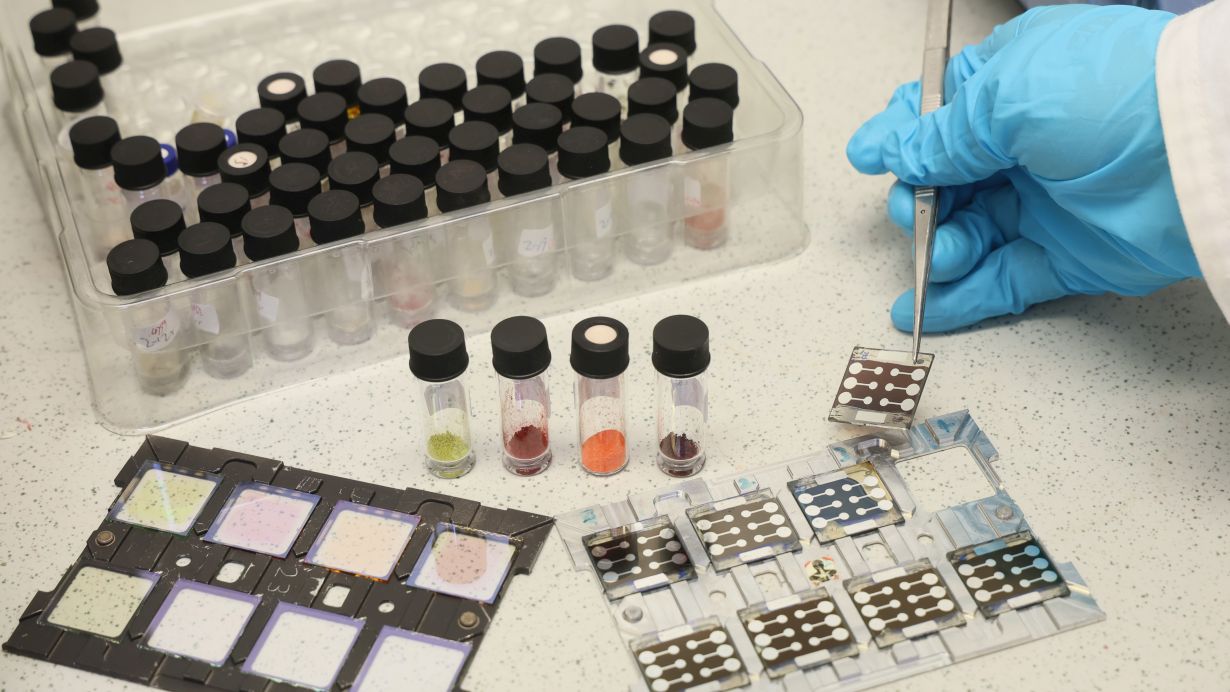
    Perovskite solar cells already achieve efficiencies of over 26% and are light, flexible and inexpensive to produce. They are considered a promising alternative to conventional silicon modules. However, challenges such as long-term stability and scalability still stand in the way of industrial utilisation.

    AI as the key to optimising production
    The Karlsruhe Institute of Technology (KIT) is researching how machine learning can improve the manufacturing process for perovskite cells. Deep learning models analyse material properties in real time and optimise the parameters for maximum efficiency.

    Detecting errors before they occur
    AI uses in-situ imaging techniques to monitor thin-film formation and detect errors at an early stage. This allows process deviations to be corrected immediately and expensive rejects to be avoided.

    Simulations for maximum efficiency
    AI-supported simulations allow production conditions to be precisely adapted. The control of the vacuum quenching time in particular plays a decisive role. AI optimises this process to ensure the best possible material structure.

    The path to market maturity
    The KIT study shows that AI is a key driver for the further development of perovskite photovoltaics. The technology could revolutionise the solar energy market and become industrially usable faster than ever with AI.

  • Efficient letting thanks to AI

    Efficient letting thanks to AI

    The Swiss real estate sector accounts for around 20 percent of GDP, but digitalisation is lagging behind. SMG Real Estate is setting new standards with an innovation offensive. Platforms such as ImmoScout24, Homegate and Flatfox now offer fully digital solutions that create listings faster, simplify viewings and optimise the entire rental process.

    A central component is the Flatfox Messenger, which is integrated into the aforementioned platforms. This WhatsApp-like communication solution bundles all exchanges between prospective tenants and landlords. Viewing appointments, applications and acceptances can be managed seamlessly – without the usual flood of emails.

    AI-supported adverts for maximum efficiency
    SMG Real Estate also relies on automation when creating adverts. Agents and property managers can generate a complete listing with just a few clicks. By entering the property address, all relevant data such as size and features are automatically added and an AI-supported text is created.

    This innovation saves an average of 14 minutes per advert. Extrapolated to the large number of daily adverts, this results in considerable time and cost savings. This leaves more time for the core business – direct contact with interested parties.

    Future-proof solutions for the sector
    The company wants to make the Swiss property sector fit for the digital future. The new technologies not only offer convenience and efficiency, but also contribute to the professionalisation and competitiveness of the sector.

    With this initiative, SMG Real Estate is proving that digital innovations are changing the property market for the long term and creating real added value for everyone involved.

  • Achieving success even more efficiently with digital tools

    Achieving success even more efficiently with digital tools

    In the current market situation, efficiency in marketing and management processes is more important than ever for property professionals. A quick letting or sale means lower costs. With optimised digital operating and communication processes, estate agents and property managers also gain valuable time to focus on the essentials: looking after tenants and owners. The new digital solutions from SMG Real Estate offer the ideal support to save time and money in the property business while improving the quality of customer communication.

    Automation and artificial intelligence (AI) are two important new details that SMG Real Estate is using to support its business customers in making the marketing process more efficient. New tools based on these technologies significantly simplify and speed up the listing process. All you need to do is enter the address and some specific data about the property and the advert is created automatically. The software accesses IAZI’s extensive database.

    In a matter of seconds, concise and appealing property texts are also created that optimally present the specific advantages of the property. The new AI solution is conveniently integrated into the Business Manager user interface and is available as an option.

    Strengthen customer loyalty through fast and professional communication

    Communication with potential prospective tenants is now much easier thanks to the Flatfox tools, which are also integrated into the Business Manager. The Flatfox Messenger enables efficient management of the entire rental process. From scheduling viewings to online application management and the automatic generation of rejections – everything can now be done with just a few clicks. This simplification creates space for the essential tasks, such as intensive support for owners and tenants. A particularly useful feature is the digital reference check, which allows quick access to all relevant information on prospective tenants and thus increases the chances of swift rental agreements.

    In addition, improved lead qualification ensures that all contact enquiries contain all the necessary information to qualify customers, including relevant financial aspects. Property professionals thus receive all decision-relevant information at a glance, which increases the chances of success in the letting process and facilitates faster deals.

    Last but not least, it provides access to a comprehensive digital ecosystem that includes numerous other partner services. Customers can now access all SMG Real Estate services via a single login. This means that they can access the entire SMG Real Estate ecosystem with just one login, including daily updates in the Business Manager and third-party services – all available in a centralised and user-friendly way.

    There has already been a lot of positive feedback from existing and new customers who have tested SMG Real Estate’s digital tools in a practical check. The numerous pieces of feedback flow directly into processes that are used to further develop the solutions and services on offer and work on additional innovations. The aim is to enable property professionals in Switzerland to digitally let and manage their properties with maximum efficiency and professionalism.

  • Fresh capital for the decarbonisation of real estate

    Fresh capital for the decarbonisation of real estate

    The software service provider Optiml has secured fresh capital totalling USD 4 million in a pre-seed financing round. According to a press release published on LinkedIn, the company intends to continue supporting the property market with software as it takes steps towards decarbonisation in the sector. As a service provider (Software-as-a-Service/SaaS), Optiml wants to develop programmes that facilitate data management and provide tools for asset and portfolio decisions. In doing so, the company takes into account constantly changing regulations and market conditions, according to the press release. With software supported by artificial intelligence, property companies and owners can plan their refurbishment and renovation work in line with the market and incorporate decarbonisation targets for their properties.

    The refurbishment and decarbonisation software from the spin-off of the Swiss Federal Institute of Technologyin Zurich(ETH), which was founded in 2022, is based on years of research in the ETH Sustainability and Technology Group (SusTec). It uses science-based optimisation algorithms.

  • Siemens launches AI-based suite for carbon-neutral buildings

    Siemens launches AI-based suite for carbon-neutral buildings

    Siemens Smart Infrastructure is launching an open, interoperable and fully cloud-based smart building suite, the Zug-based Siemens subsidiary announced in a press release. The various interest groups such as building users, real estate investors, real estate companies and facility managers can digitally combine their building data from different sources on Building X. The smart building suite can integrate third-party software, has a range of applications based on artificial intelligence and has built-in cyber security.

    “We can now bring together all the data generated by systems in intelligent buildings in a single data pool,” Matthias Rebellius is quoted as saying in the statement. According to the board member of Siemens AG and CEO of Smart Infrastructure, this would allow “intelligent buildings to be implemented more quickly”, bringing the “vision of autonomous, climate-neutral buildings” closer. “Building X creates measurable data-based results in terms of efficiency, performance and user experience.”

    An energy manager, an operations manager, a security manager and a 360° viewer are currently available on Building X. The suite can be obtained in the form of software as a service on a subscription basis. In addition, Siemens offers the Xcelerator Building Services, a program based on Building X, in which Siemens assumes responsibility for achieving customer goals. The report mentions the reduction of energy costs and the optimization of systems as examples.